New Paths – South Woodham Ferrers

Last weekend I walked the two new local sections of the King Charles III England Coast Path (KC3ECP), this is my second account focusing on the new route between South Woodham Ferrers and Battlesbridge, part of the section WIB 3: Hawk Hill Bridge to Clementsgreen Creek [pdf]
After reaching South Woodham Ferrers, as described in the previous post, I left the sea wall at the western terminus of Clementsgreen Creek on to Creekview Road and walked across town to the railway station on pavemented streets.

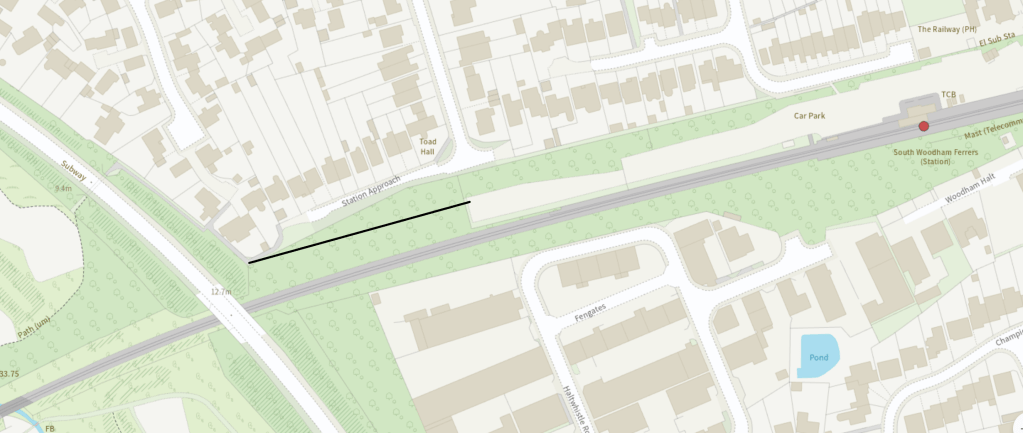
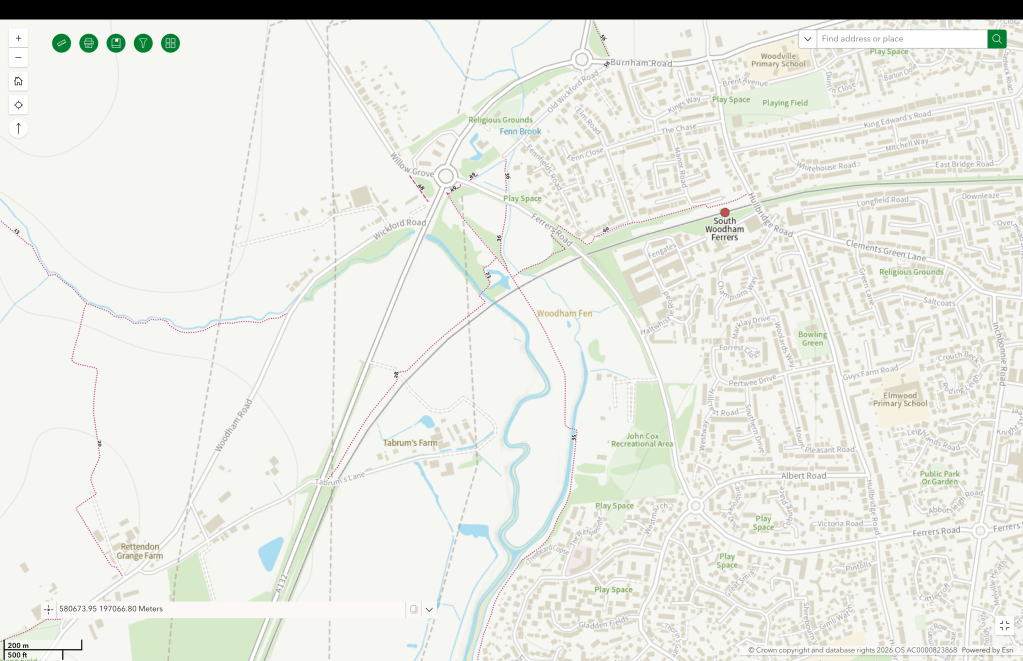
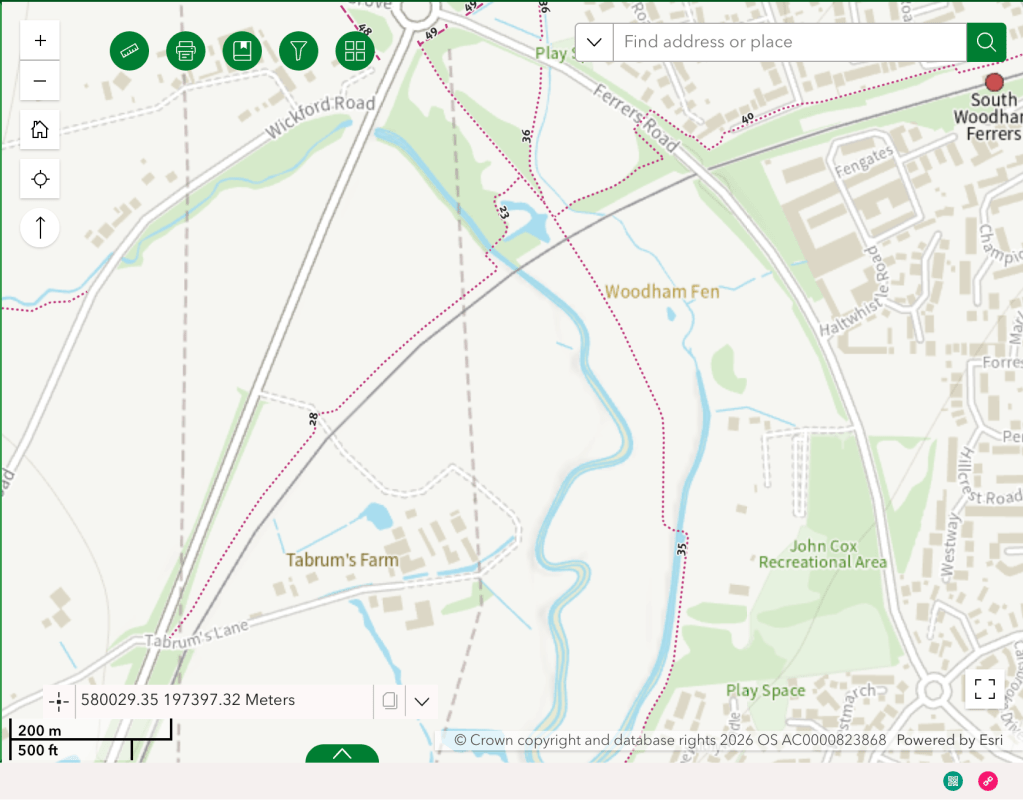
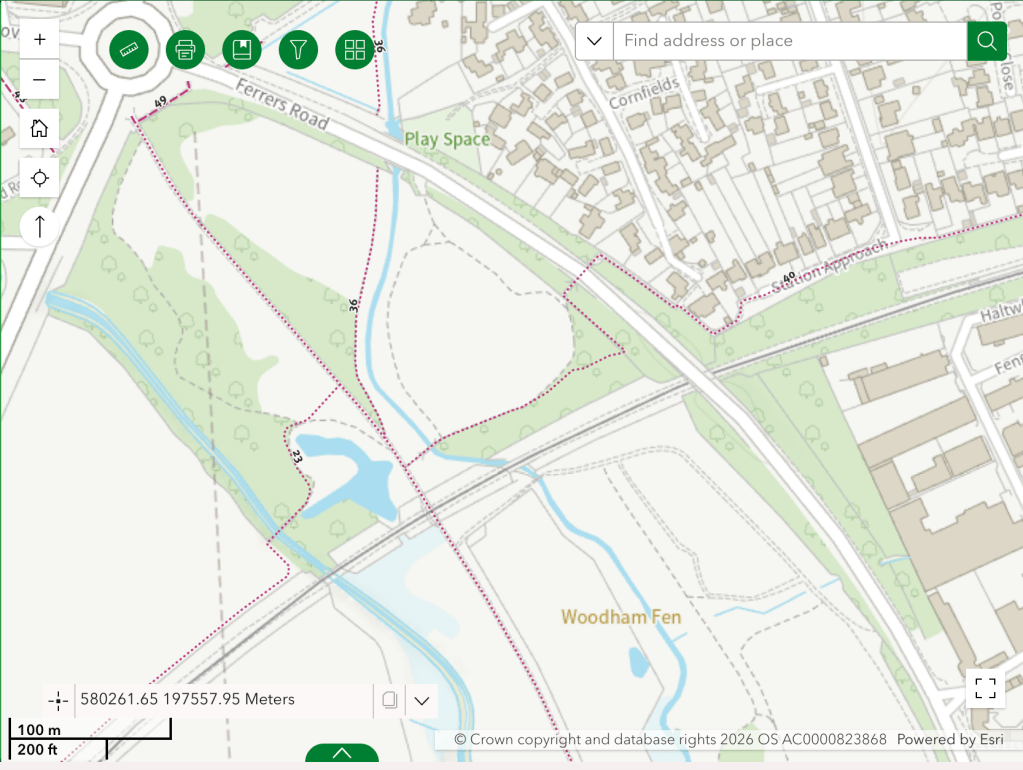
I left the railway station through the station car park on to footpath FP 40 298 which travels west, through an underpass below Ferrers Road, into and part-way across Woodham Fenn nature reserve.
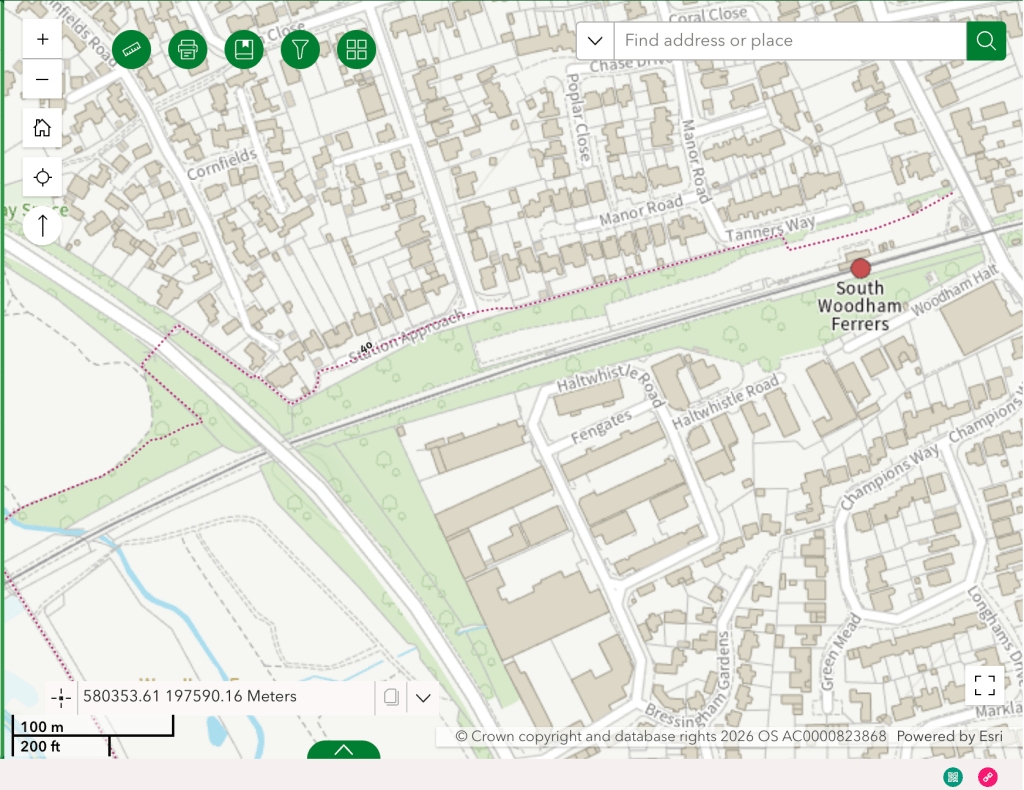
Essex Highways PROW map showing footpath FP 40 298
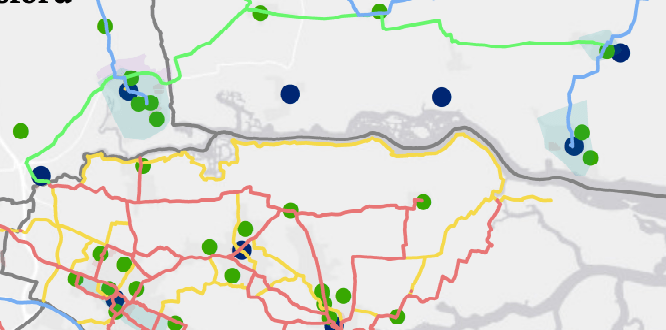
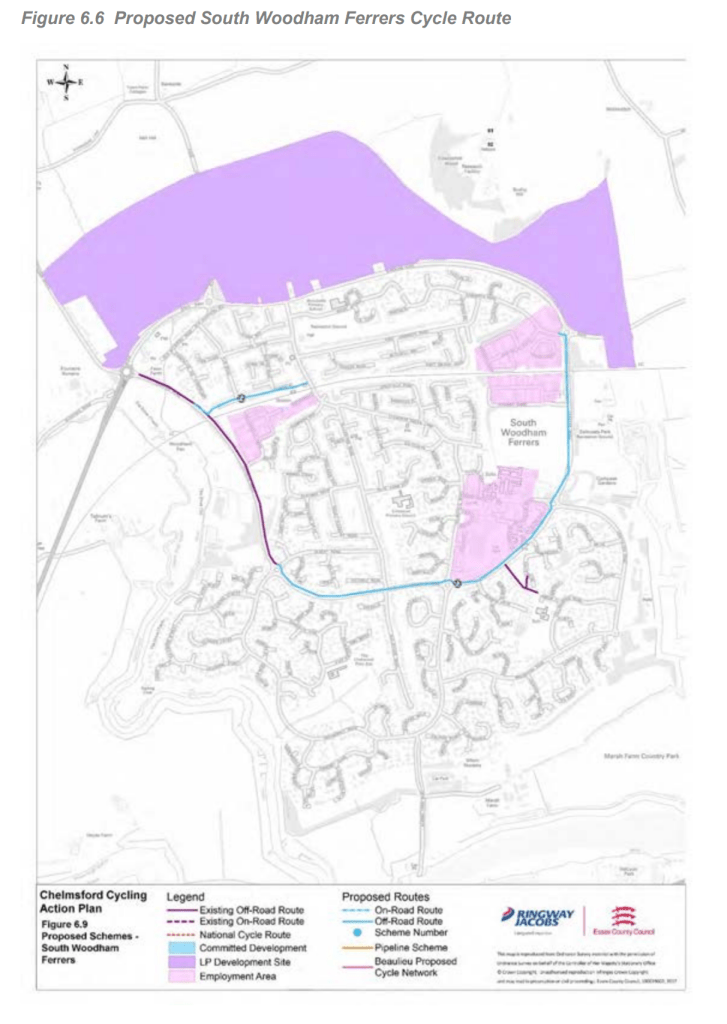
Map of existing /proposed cycle routes in the Chelmsford Cycling Plan, blue line in left middle is footpath FP 40 298 route (poor quality image in uploaded copy)
Proposed cycle route using station carpark and railways owned land to avoid narrow sections of FP 40 298

The section between the station and the underpass was proposed to be ungraded to a shared use path available to cyclists in the Chelmsford Cycling Action Plan (March 2017) [pdf]. It notes

‘there is also the possibility to connect to the station from the west by upgrading an existing footpath (Figure 6.6). However it appears the footpath uses an underpass to cross Ferrers Road and so to connect to the existing cycle route the levels difference would need to be addressed.’

(do the people who write these documents actually do site visits?)

(FP 40 298 has sections that are fairly narrow for a shared used path, but this could be easily addressed by using more of the railway station carpark and establishing a section of new route through land owned by the railways, as show in a map above)

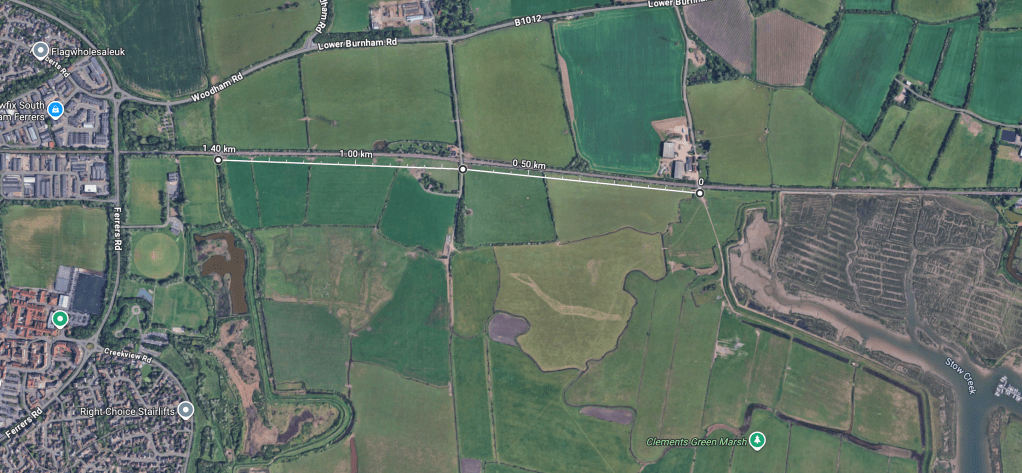
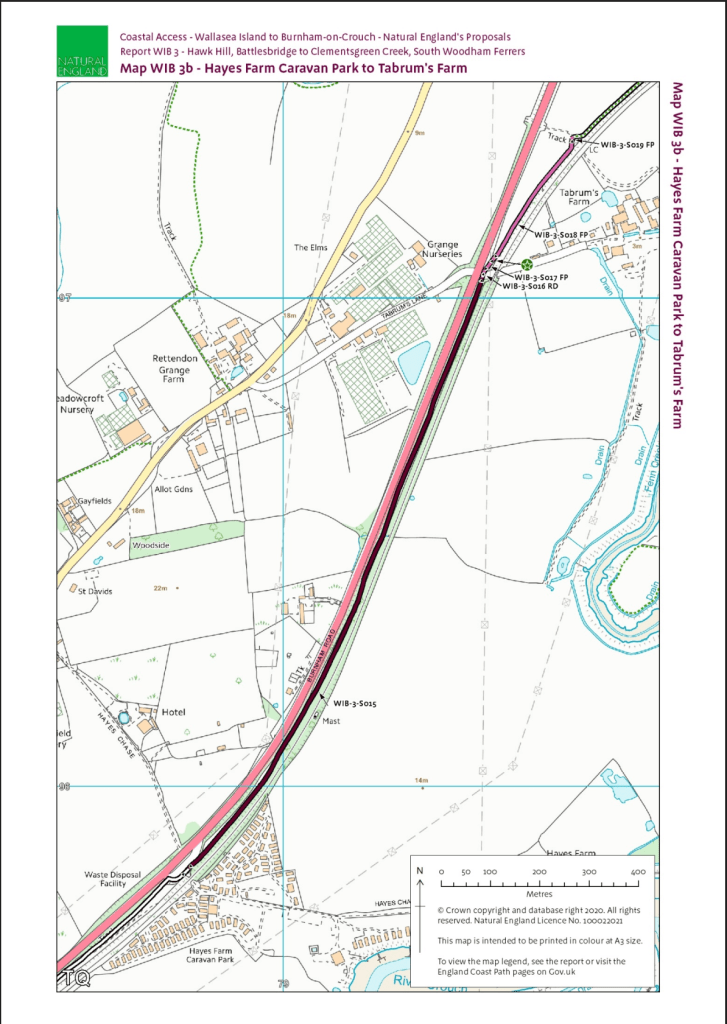
It would be useful to connect this path into the Ferrers Road cycle route, but it would also be valuable to upgrade the full length of this footpath for cycle use, alongside sections of FP 35 298, FP 23 298 and FP 28 229 to provide a walk/wheel/cycle route from South Woodham Ferrers all the way to where Tabrum’s Lane is split by the A132 (this is the route I walked). The westerly section of Tabrum’s Lane, opposite where the route ends is a country lane ideal for being designated with Quiet Lane status. Immediately to the south the new Right of Way established parallel to the A132 commences for the KC3ECP.
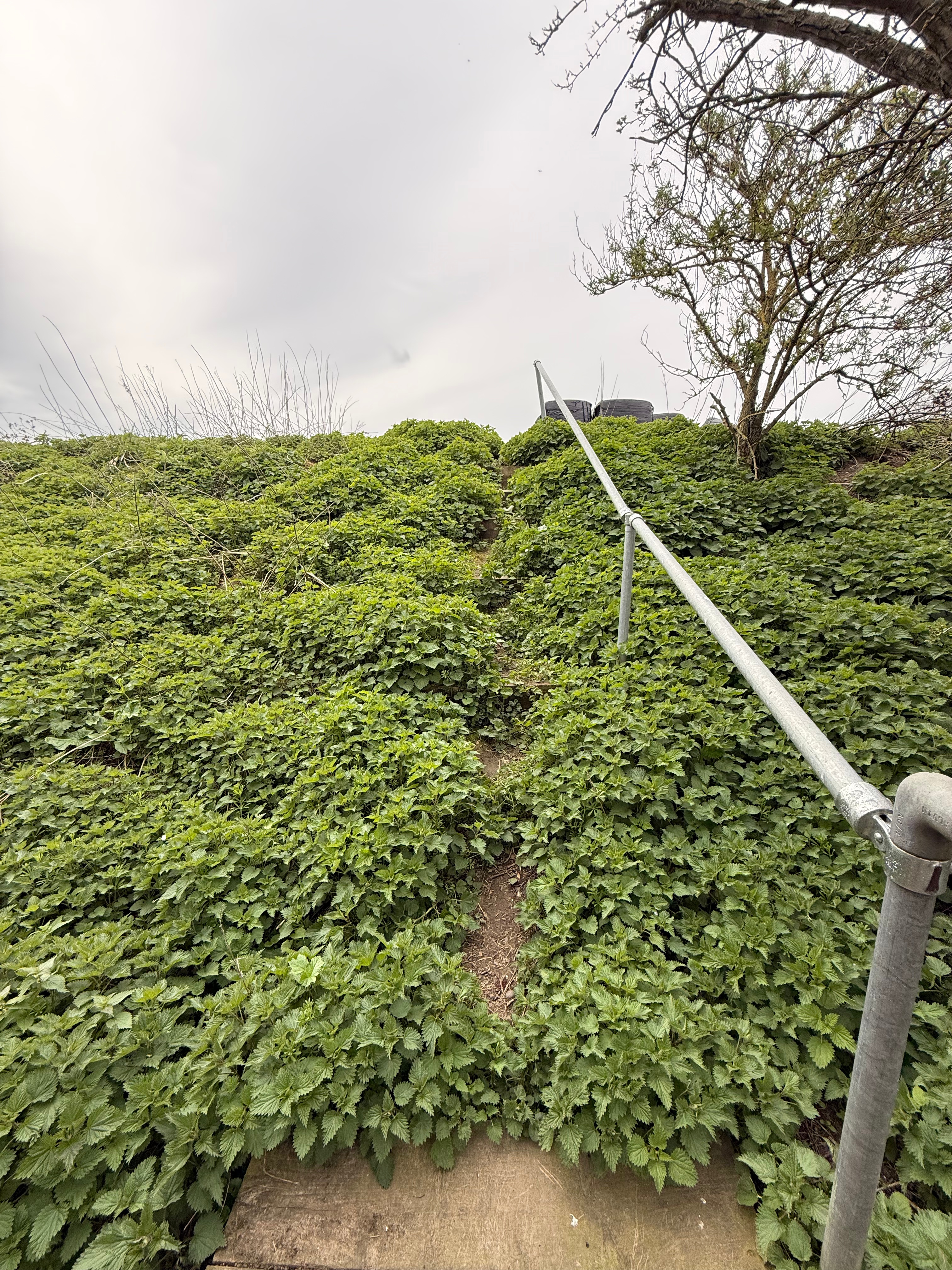
As with the new section discussed in the previous post, it is disheartening to discover the lack of consideration for accessibility paid in the new stretch of Right of Way beginning at this point (WIB-3-S015). Across Tarbrum’s Lane, users are immediately confronted with steps.
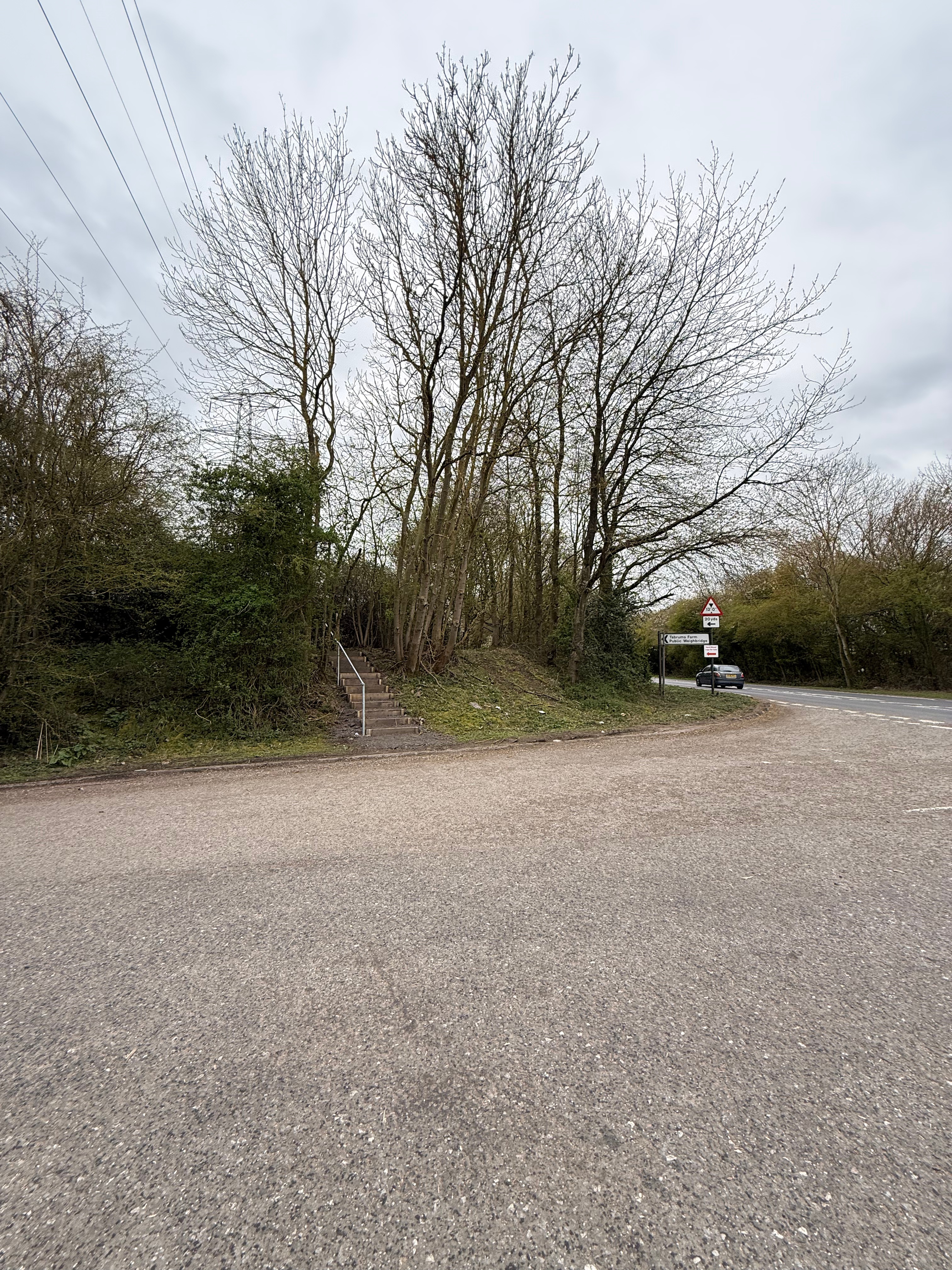
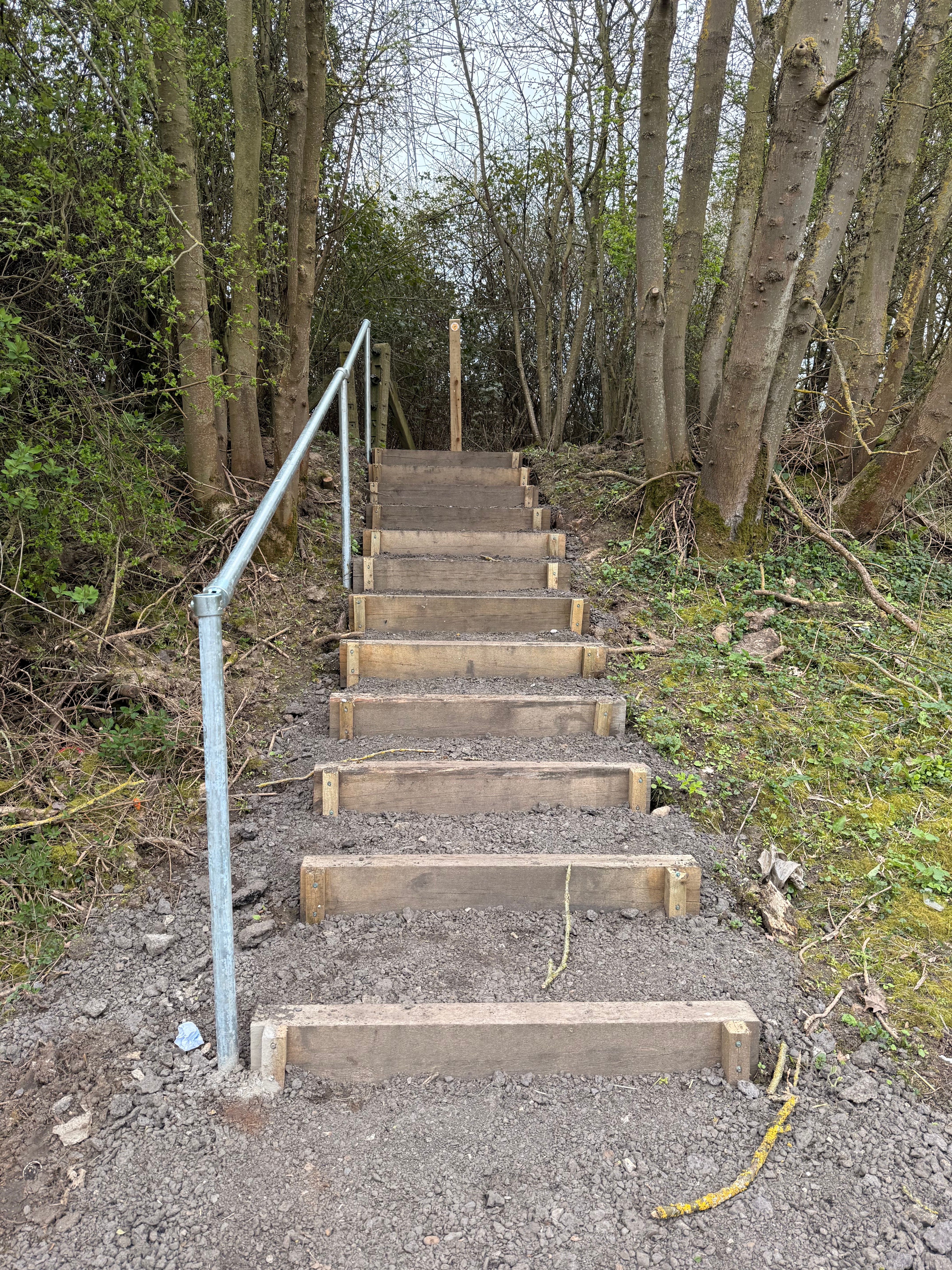
There is a level change here, and the new path takes an elevated route, so some mechanism is necessary – but why not a slope accessible to a wider range of users? There is enough room here.

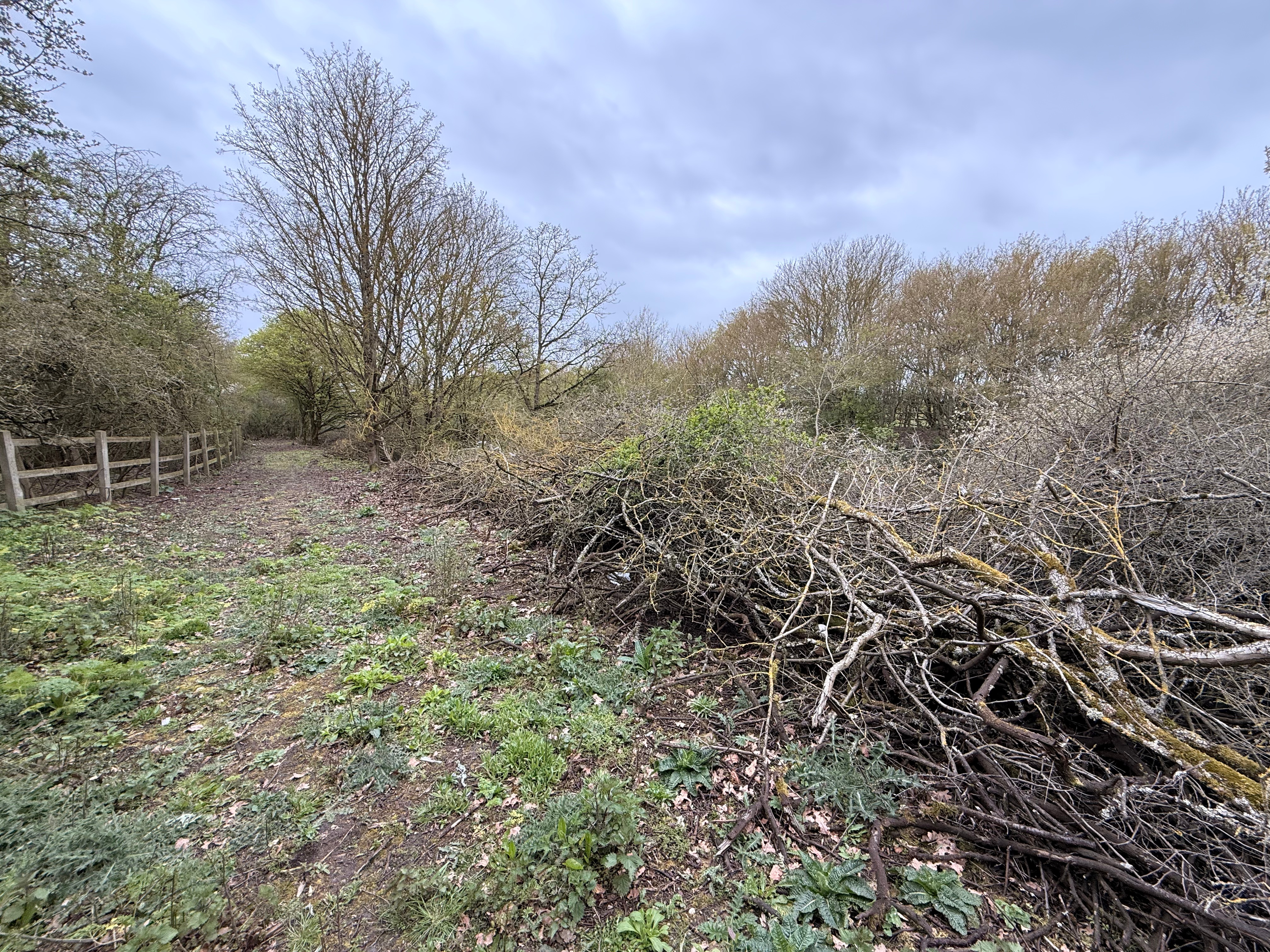
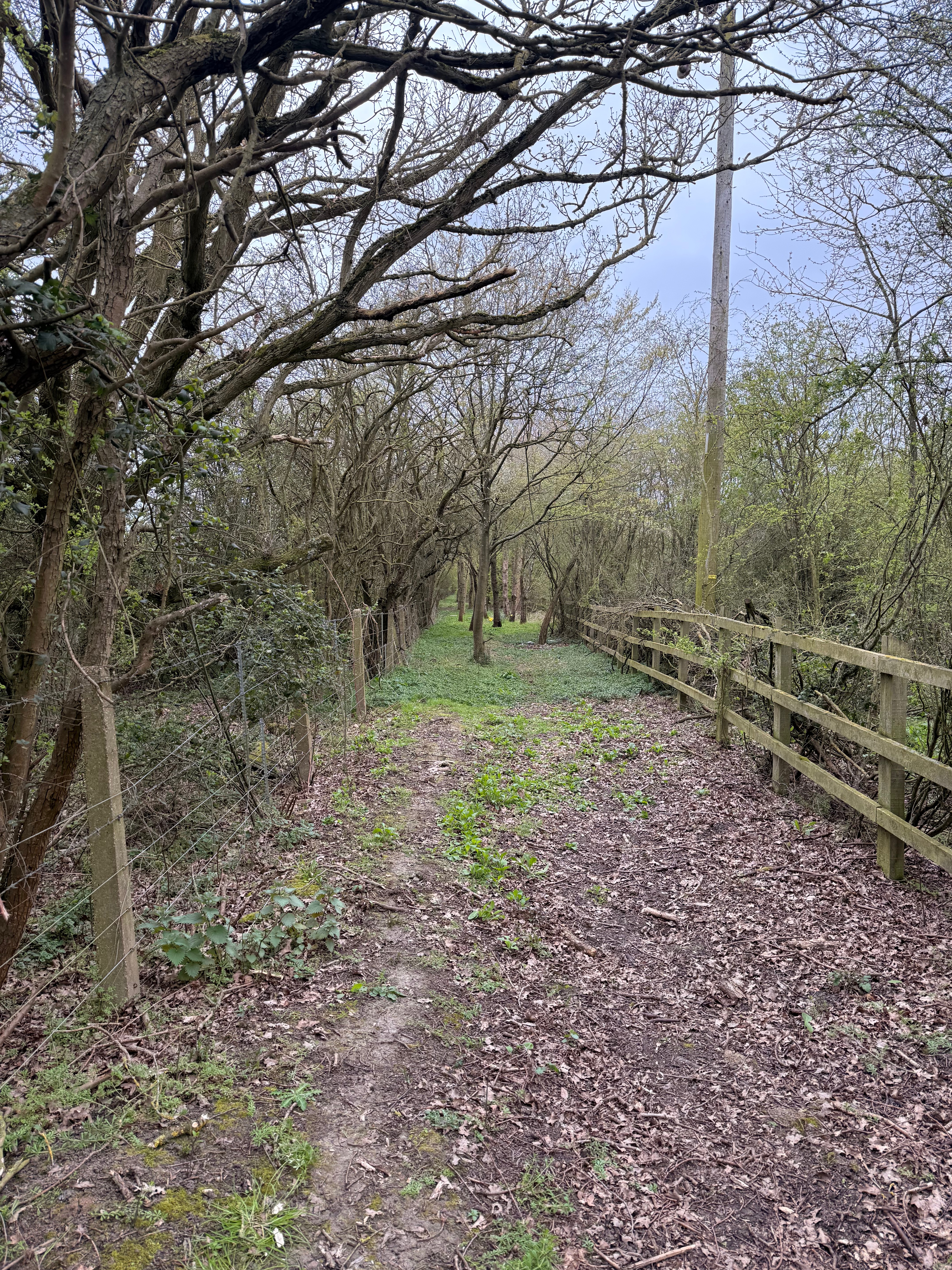
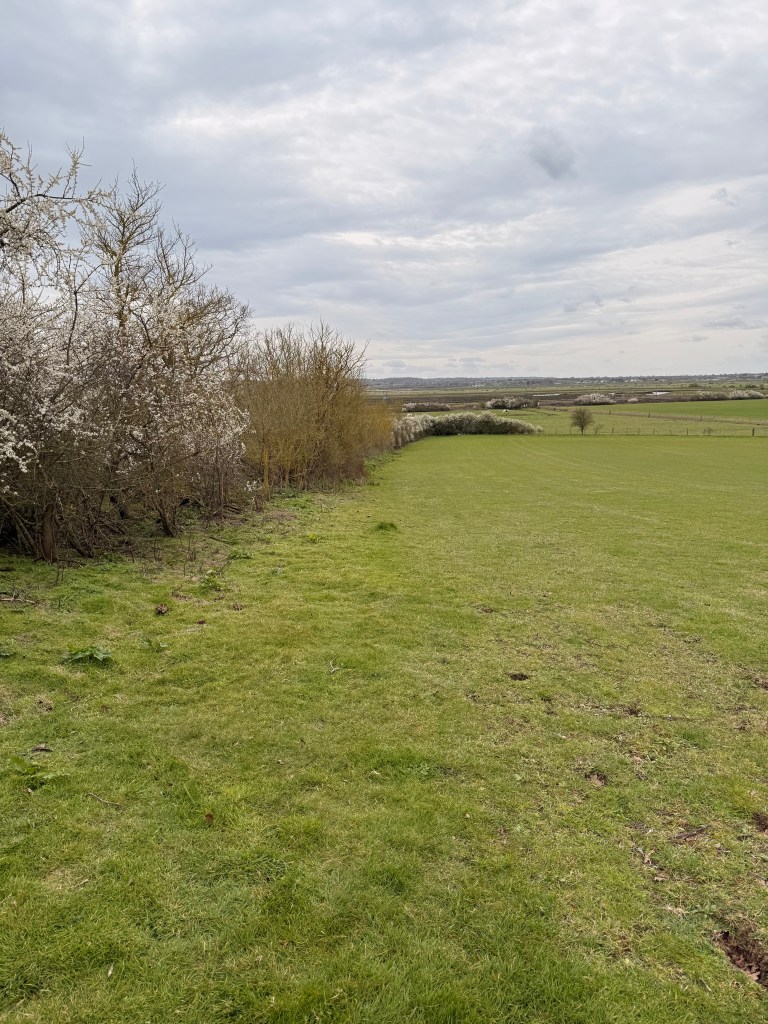
The route from here is recently cleared of trees and undergrowth. There’s no surface work, but its reasonably level. Foliage seems to have been cut at ground level rather than uprooted. Despite taking care, I stumbled on four occasions when I tripped on woody stumps protruding just above soil level. It seems pretty clear that there will be extensive regrowth here. Ground cover plants were already spreading and I suspect that many of the trees have effectively been coppiced and there will be new shoots from the stumps before too long. Side growth is also likely to be an issue, and the light newly reaching the floor will likely encourage blackberry incursion. As the path gains foot traffic, there will be some suppression through use but the maintenance task here should not be underestimated. My contact at Natural England noted:

‘I have previously discussed with colleagues at ECC that just clearing the scrub may not be sufficient and that there may need to be some form of surfacing (not metalled) if as I believe the enclosed nature means the ground lies wet for longer. The newly cleared areas will also encourage more vigorous side growth and spread of the likes of bramble and nettle. I encouraged them to consider seeding the length and then cutting it frequently (at least 4 times a year) to encourage a good grass cover but I don’t think this was undertaken.’
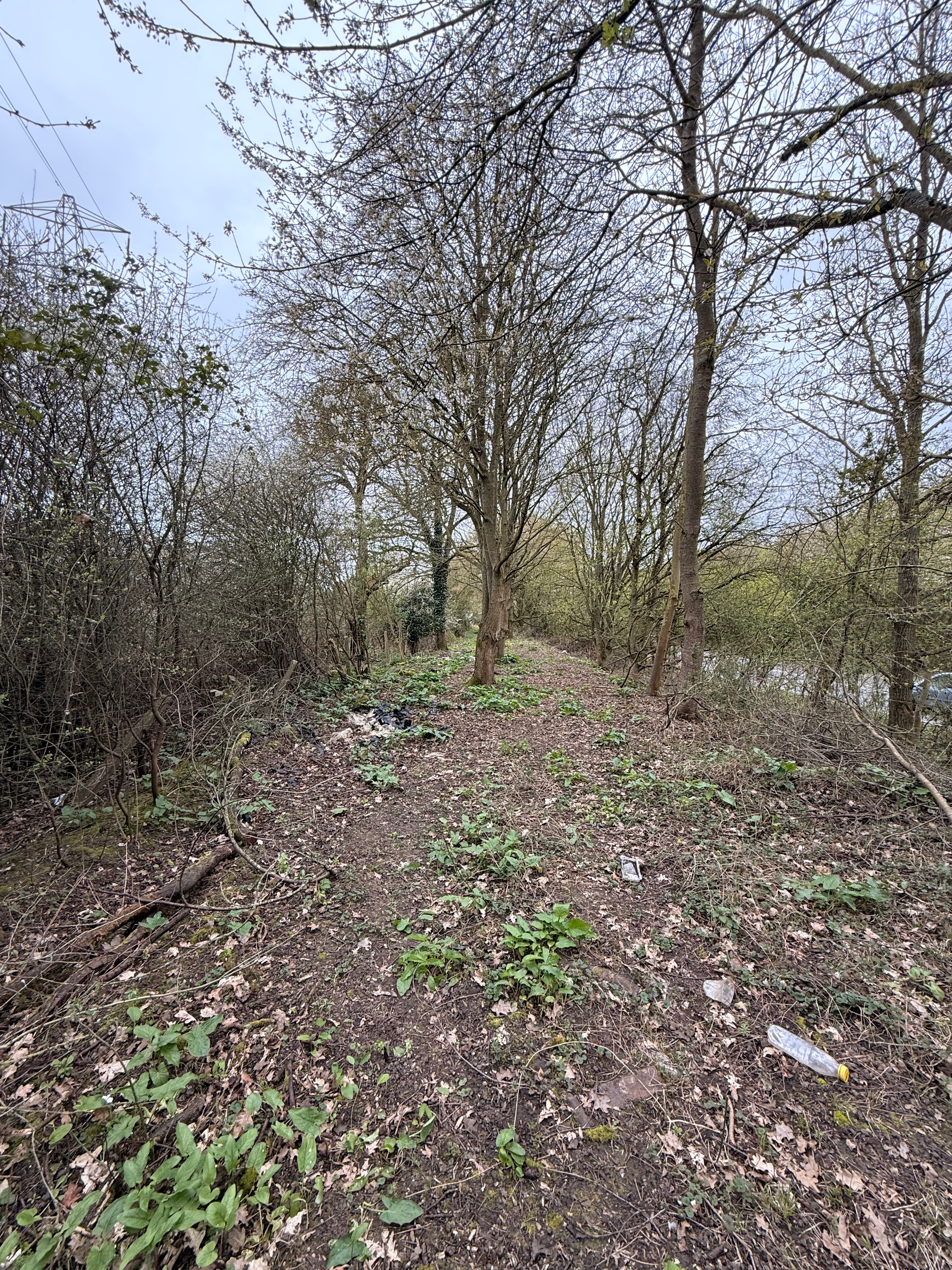
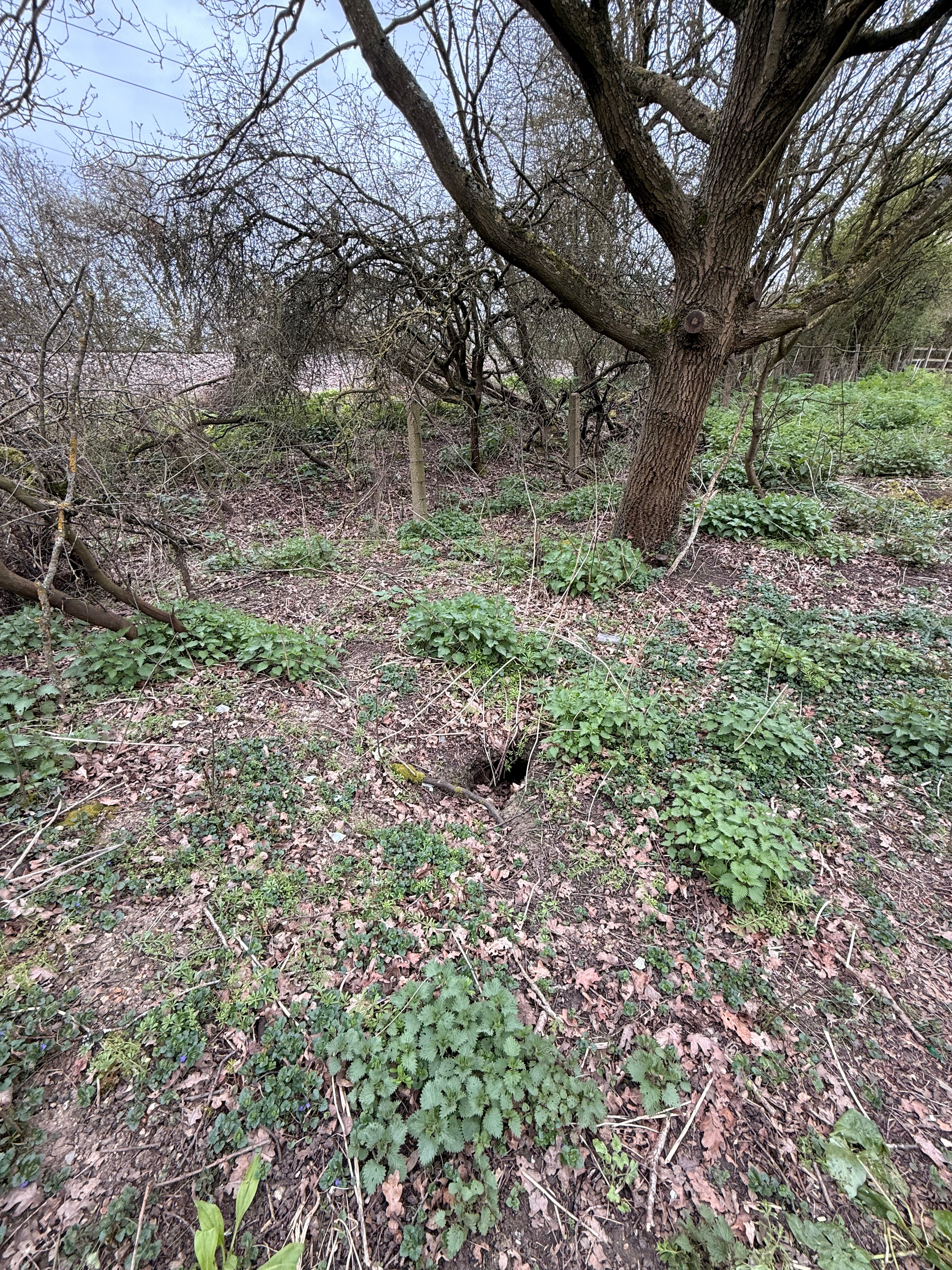
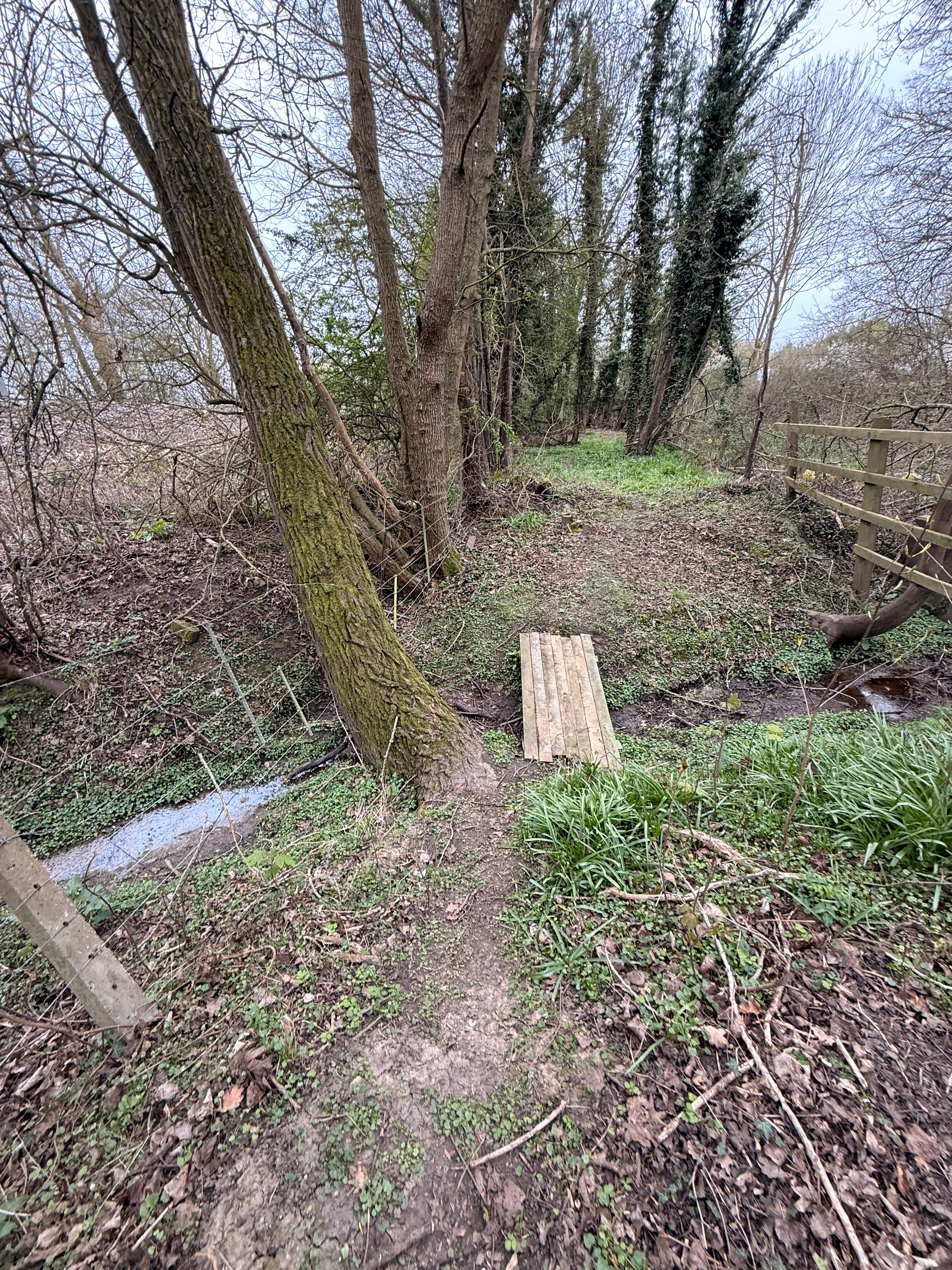
There’s an opportunity here for an infrastructure intervention that would decrease the maintenance task and expense by providing a surface suitable for bicycle use and giving the route the higher rights that would allow it. Making the route accessible to cyclists, with some surface work, slopes rather than steps and attention to a footbridge would also improve wider accessibility for walkers and wheelers.
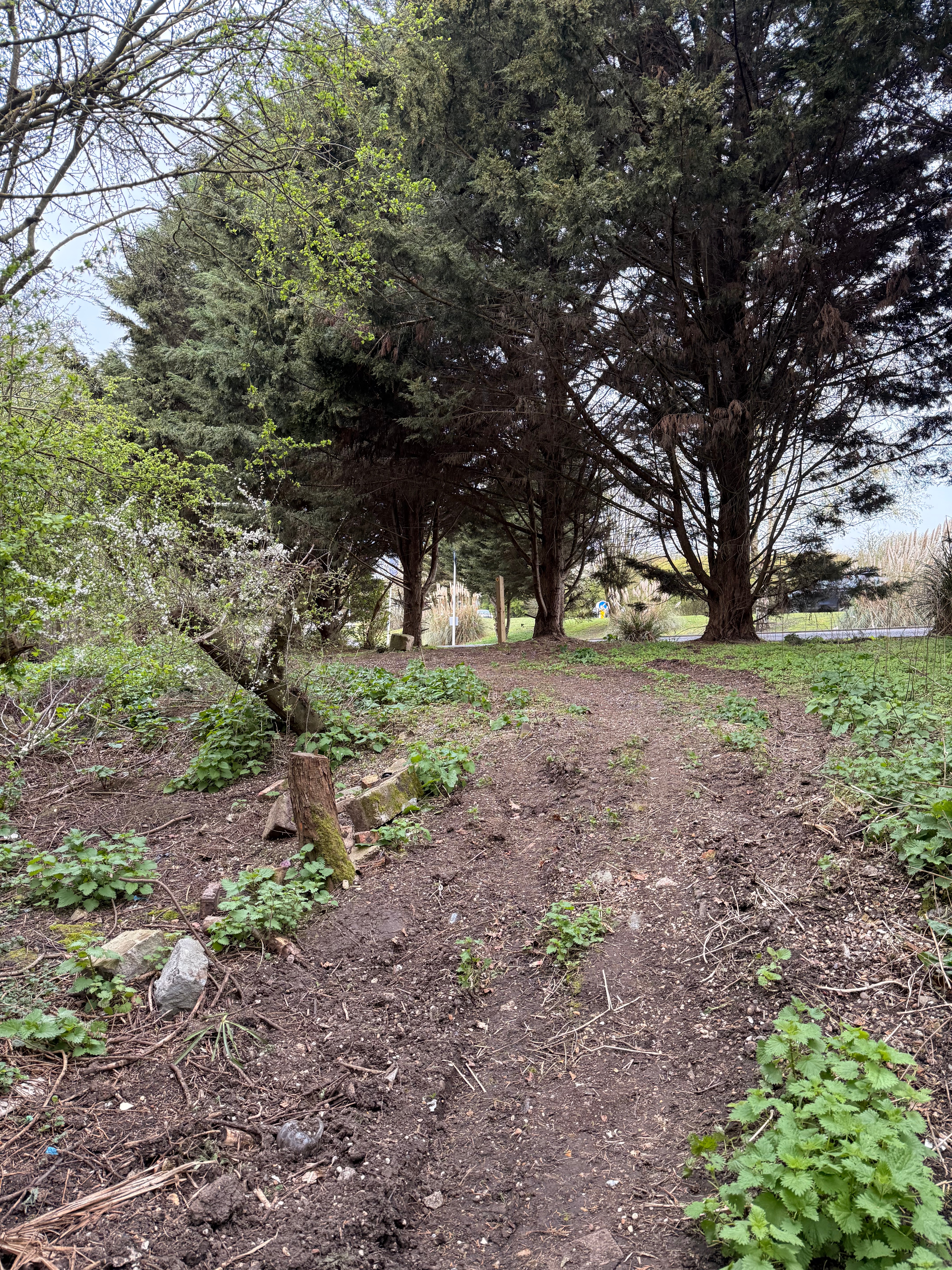
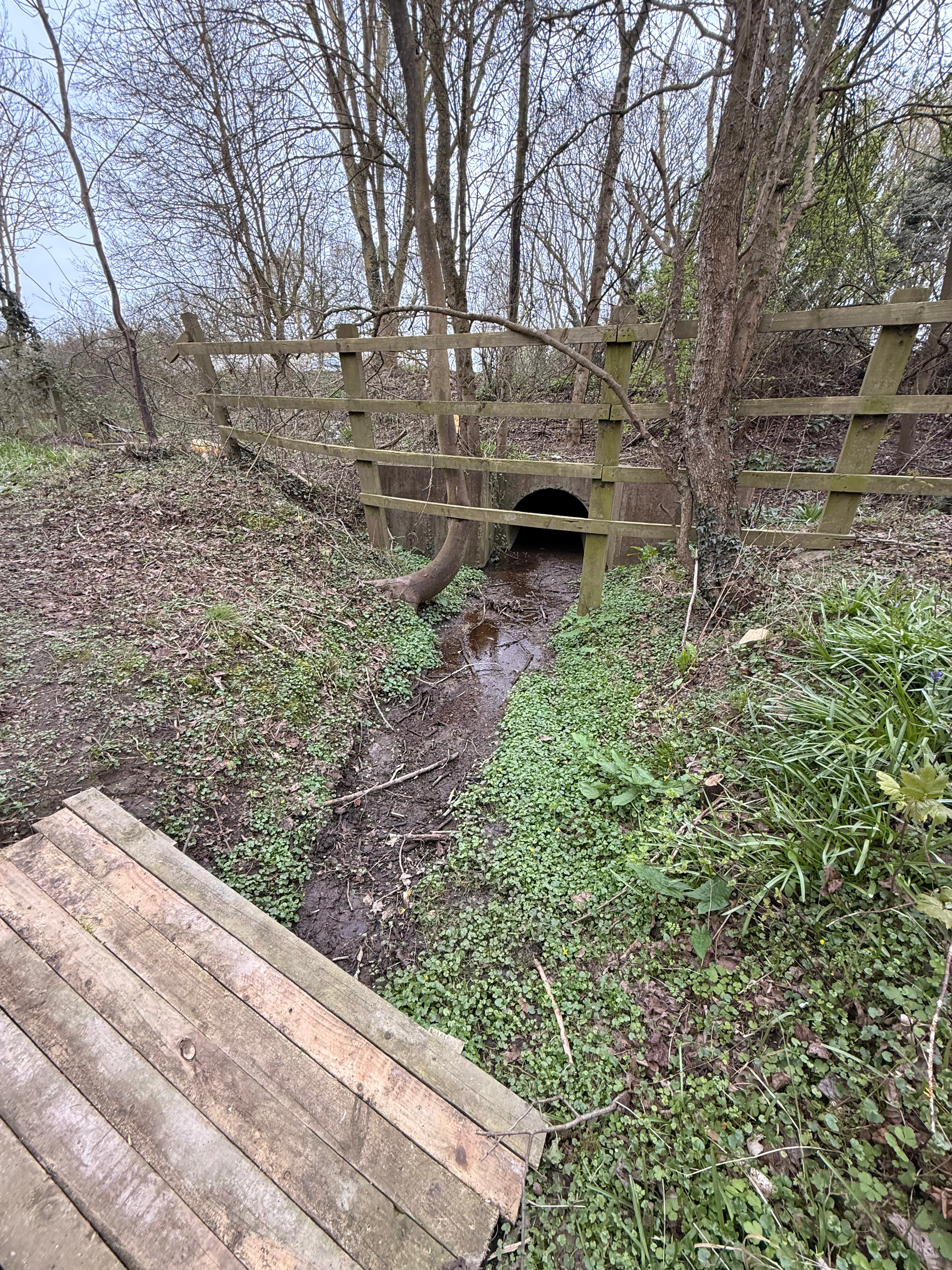
There’s a scramble up where the path meets Hayes Chase. There’s no assistive infrastructure here at all yet, so it’s a clear opportunity for an accessible alternative to more steps.
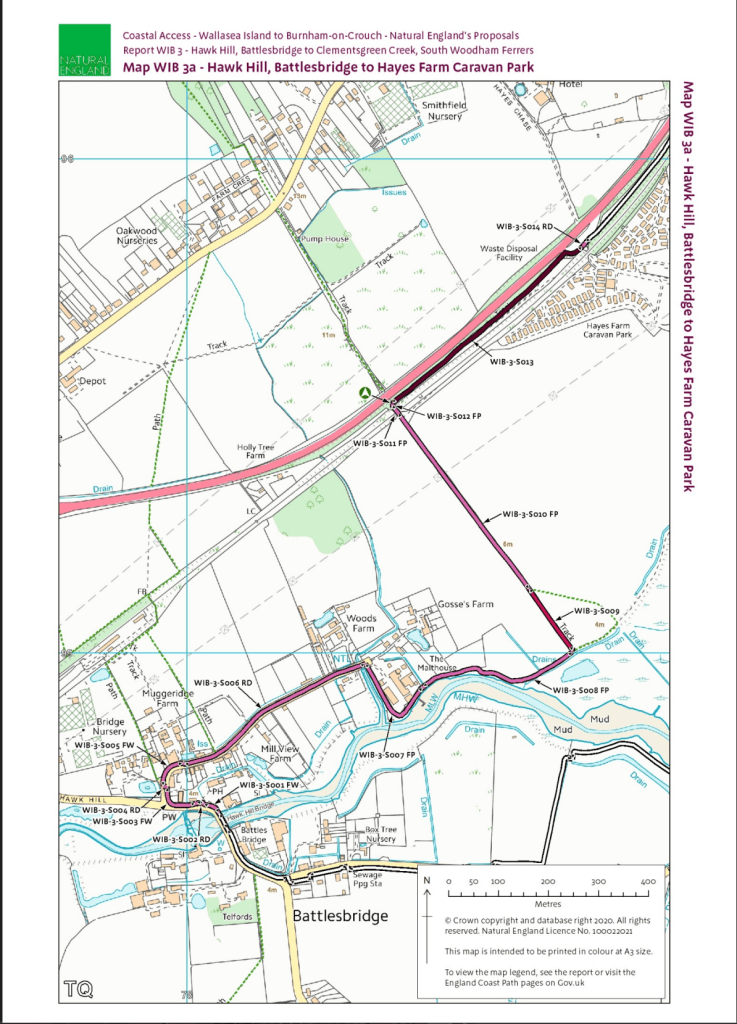
The route continues from Hayes Chase in much the same way it got there, on a path parallel to both the A132 and the railway line, with the dame challenges as before.

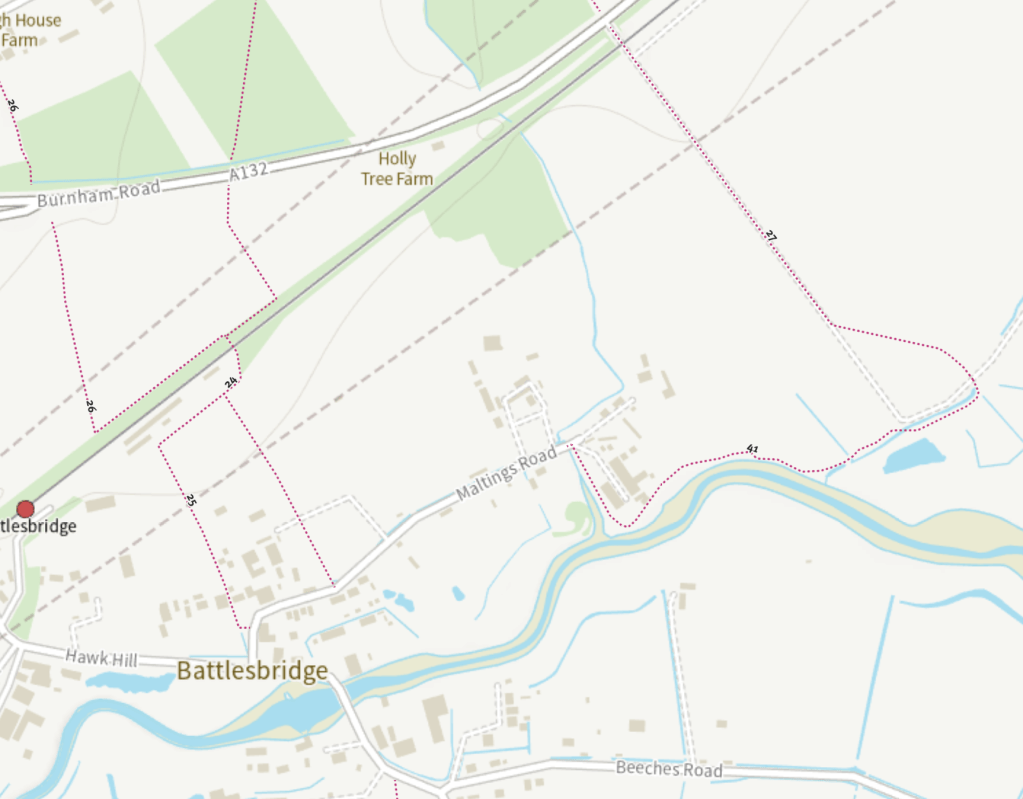
The new section concludes when it reaches footpath FP 27 229 and a bridge (Wis/803 (meesons)) over the railway line. It’s an easy walk from here down a gravel track to the sea wall and west on that to join Maltings Road.

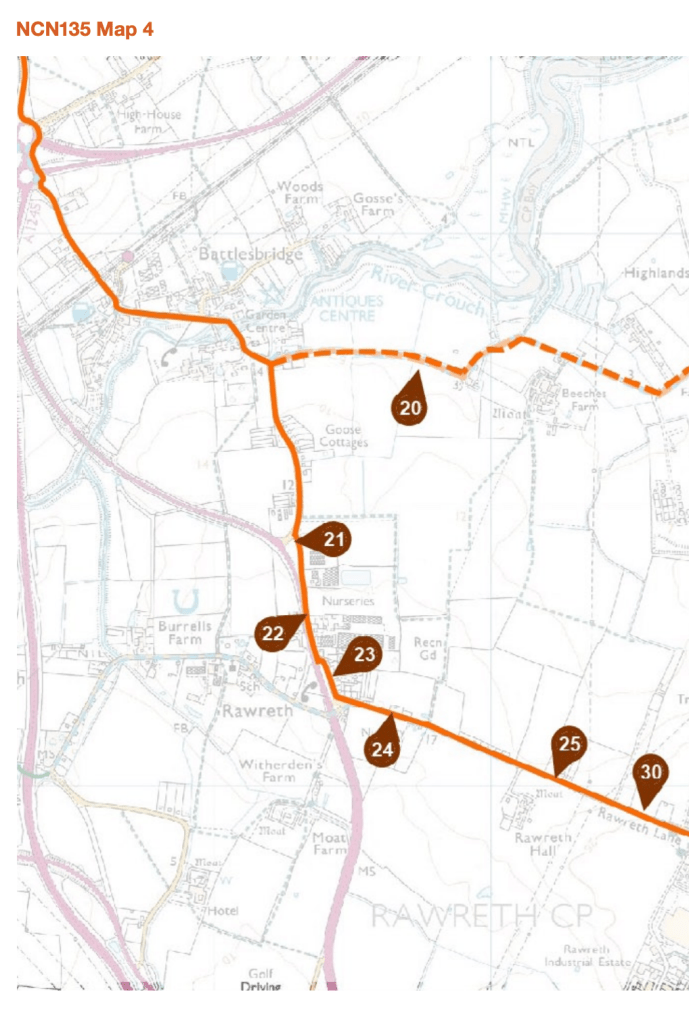
What about cyclists though? At this point we are very close to the proposed route of National Cycle Route 135 (Stock to Southend) [pdf] and potential for connecting South Woodham Ferrers and the Dengie peninsula into the national cycle network (as well as Battlesbridge railway station and local attractions Battlesbridge Antiques Centre, pubs and cafes). It’s not an opportunity we want to miss!
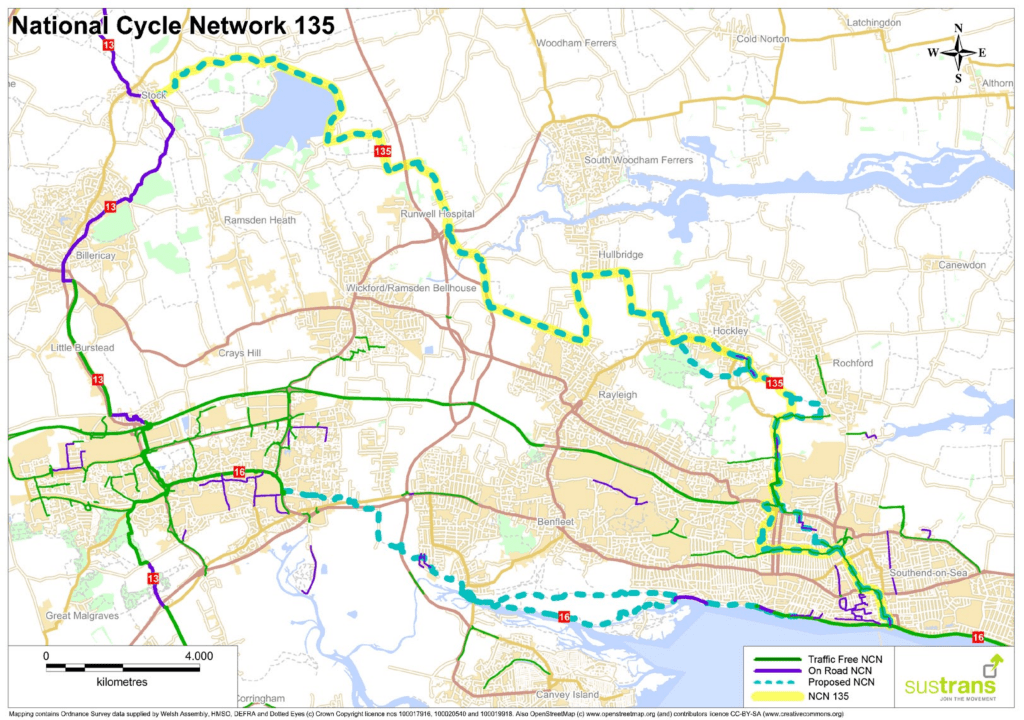
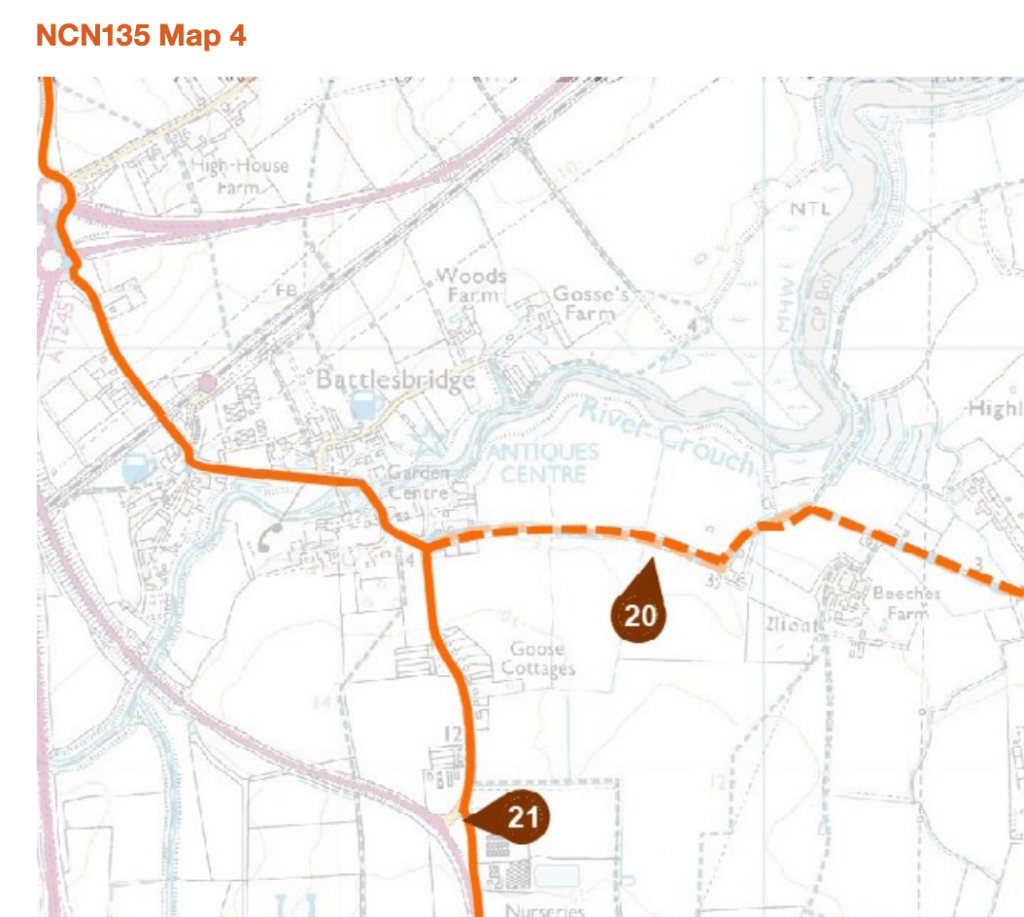
There’s the option again of upgrading existing footpaths and following the walking route, but are there better options?

Why not carry on the logic of the KC3ECP in using Network Rail land between the railway line and the A132?
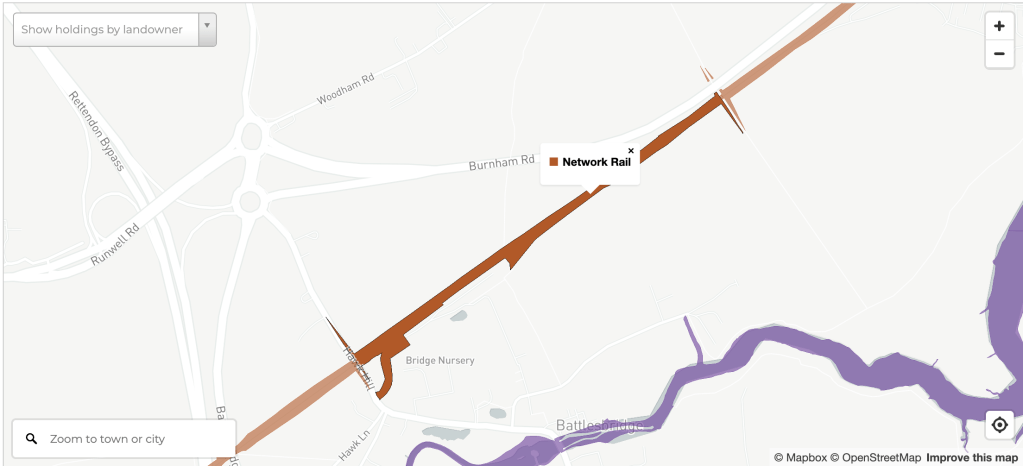
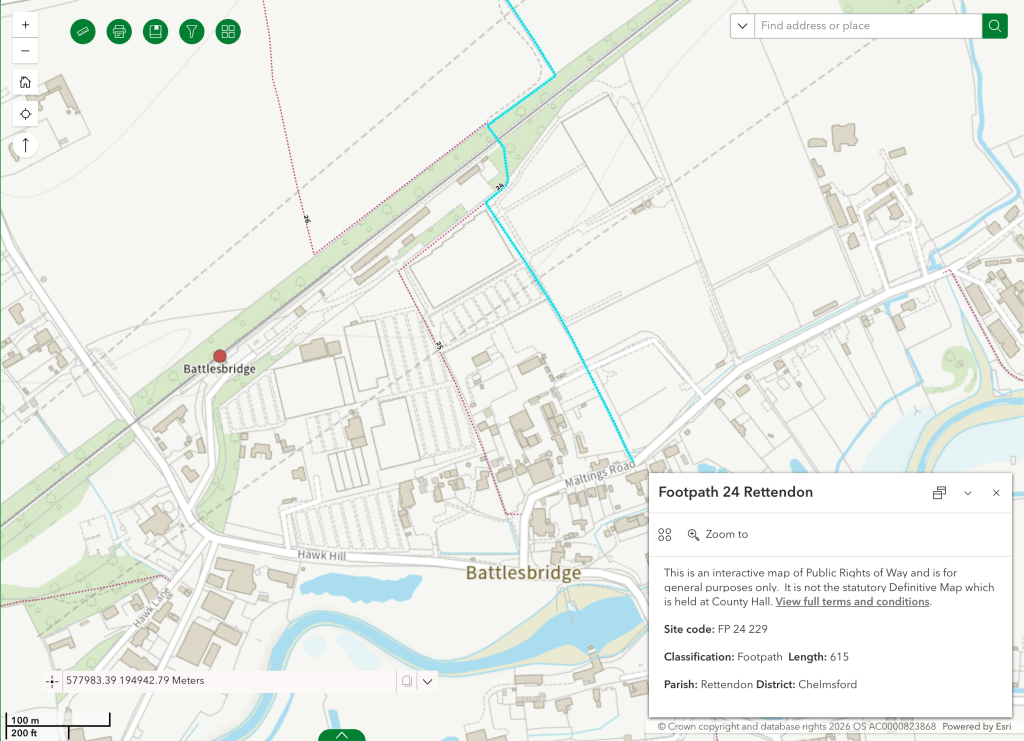
This could potentially offer a route all the way to Battlebridge railway station, although an interesting alternative might be offered where the railway crosses long-distance path the Saffron Trail (footpath FP 24 229 at this point) to then take that path south to Maltings Road instead.
If we want to ‘Connect Essex through Cycling and Walking‘ then we have to think about cycling and walking, and identify opportunities where infrastructure for one can offer opportunities for the other – making wheeling easier in the process too. This is what a true Local Cycling and Walking Infrastructure Plan for rural Essex looks like.

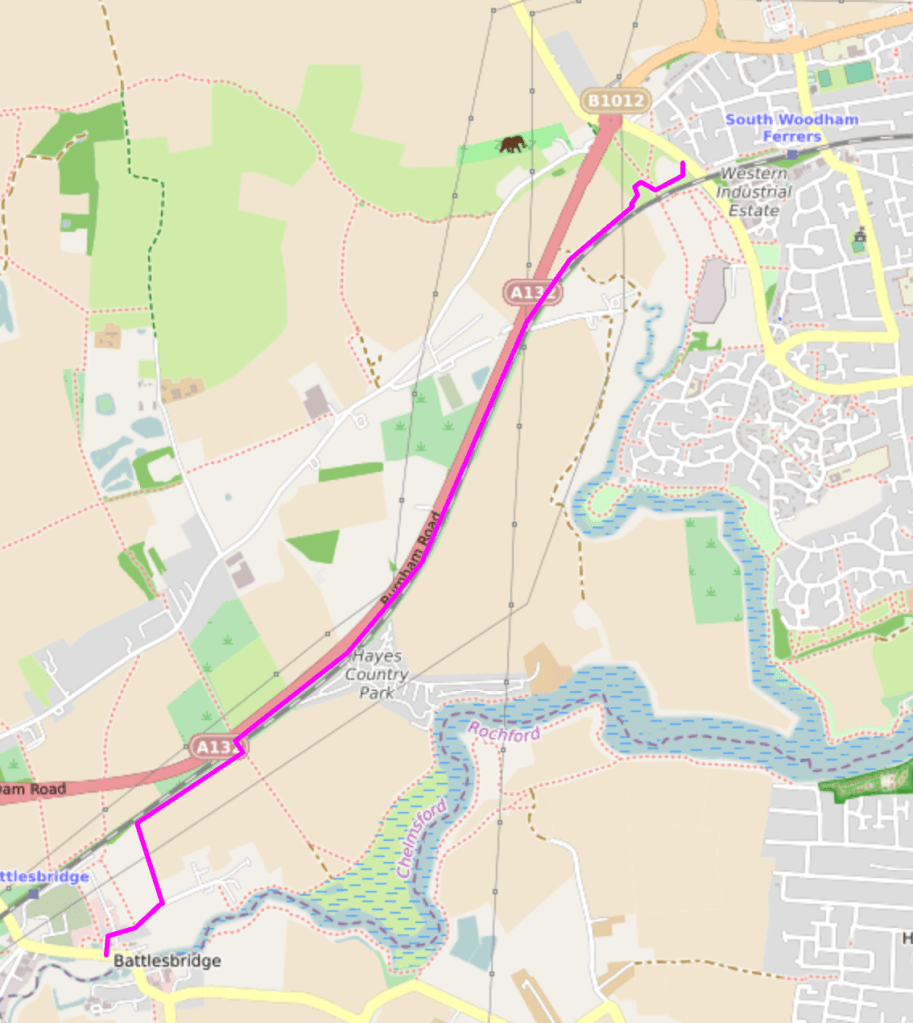
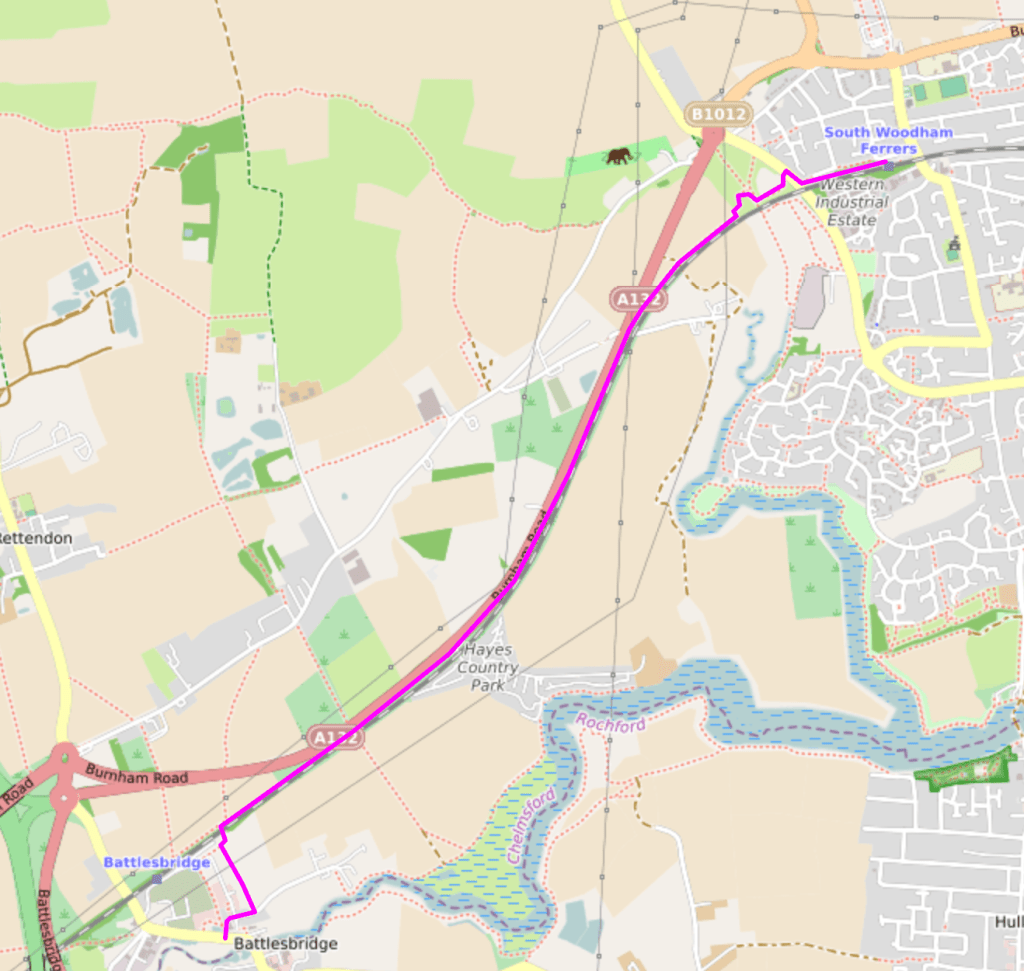
Here’s my vision for what a cycle route between South Woodham Ferrers/The Dengie and Battlesbridge/National Cycle Route 125 looks like in total:
New Paths – North Fambridge

Last weekend I walked the two new local sections of the King Charles III England Coast Path (KC3ECP) that I mentioned in the previous post. As pre-warned, these were open but unfinished. In this post I review the WIB4 section: Clementsgreen Creek, South Woodham Ferrers to The Quay,
North Fambridge
[pdf]

North Fambridge section

This begins on pre-exisisting rights way:

I travelled on the train bus replacement from Burnham-on-Crouch to North Fambridge railway Station, took the stairs to the road bridge from the westbound platform and went north on Fambridge Road.

Read more: New Paths – North Fambridge


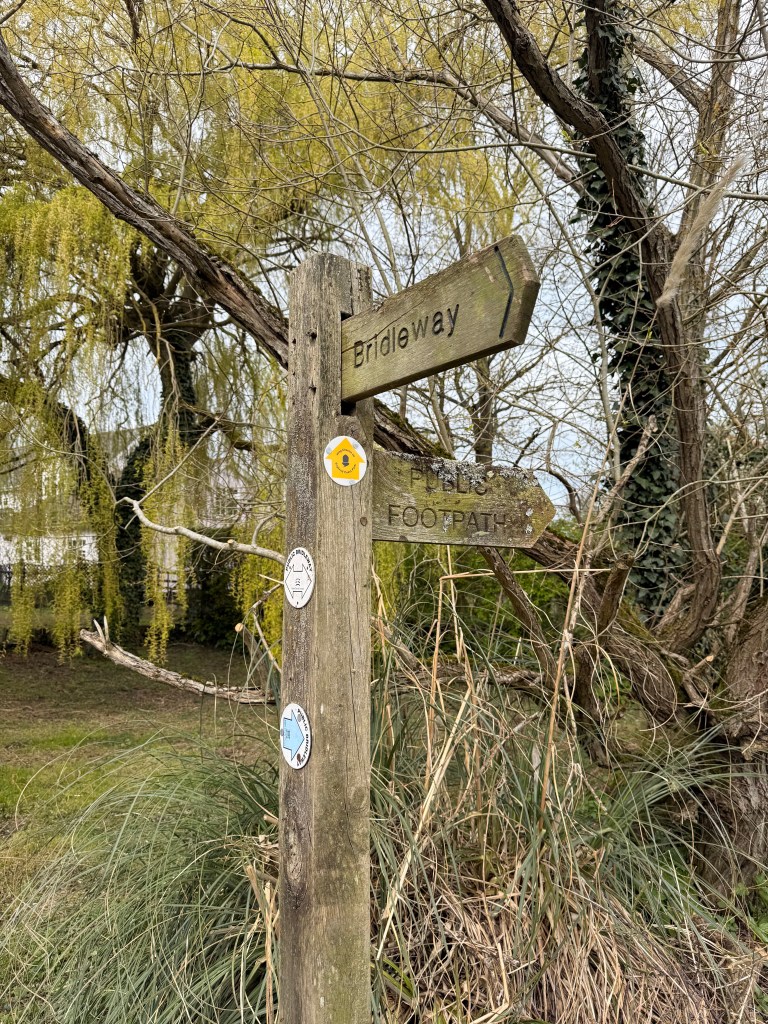
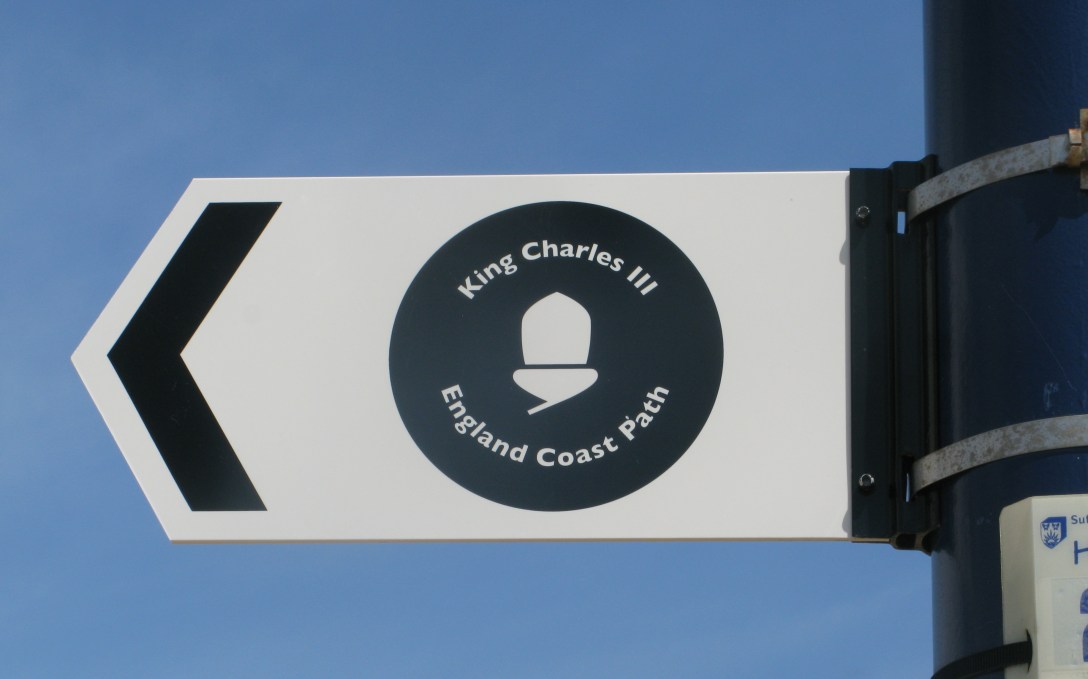
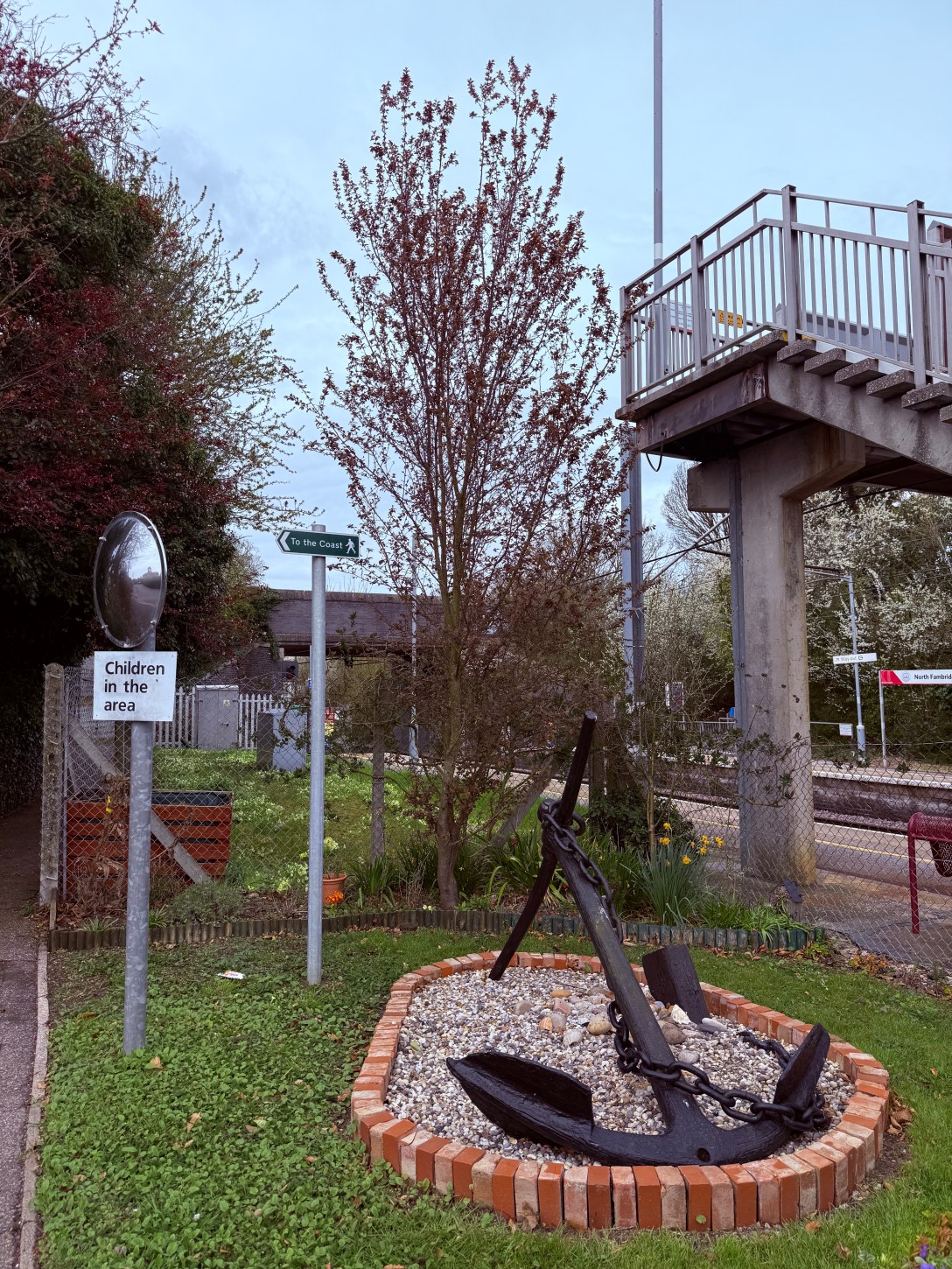
Footpath FP 5 256 goes west off Fambridge Road, opposite Franklin Road, on a short paved path leading on to Rectory Road. Rectory Road’s metalled surface peters out as it becomes the bridleway BR 17 256 which connects it to the metalled surface of Rookery Lane. A KC3ECP waymark disc appears on a post at teh start of Rookery Lane – the first seen on this route, and also the last for some time.

Apart from the 41 metres of Footpath FP 5 256, this already provides a good cycle route west out of North Fambridge.

[It’s also a potential walk/wheel/cycle connection route through to Stow Maries and the dismantled railway line using bridleways, residential streets and country lanes. Some attention would need to be paid to improving the Rookery Lane junction with the Lower Burnham Road (B1012), so as to afford safe access to Honey Pot Lane. Rookery Lane and Honey Pot Lane are only 100 metres apart but there is currently no footway, cycleway or controlled crossing facilitating safe transit.]

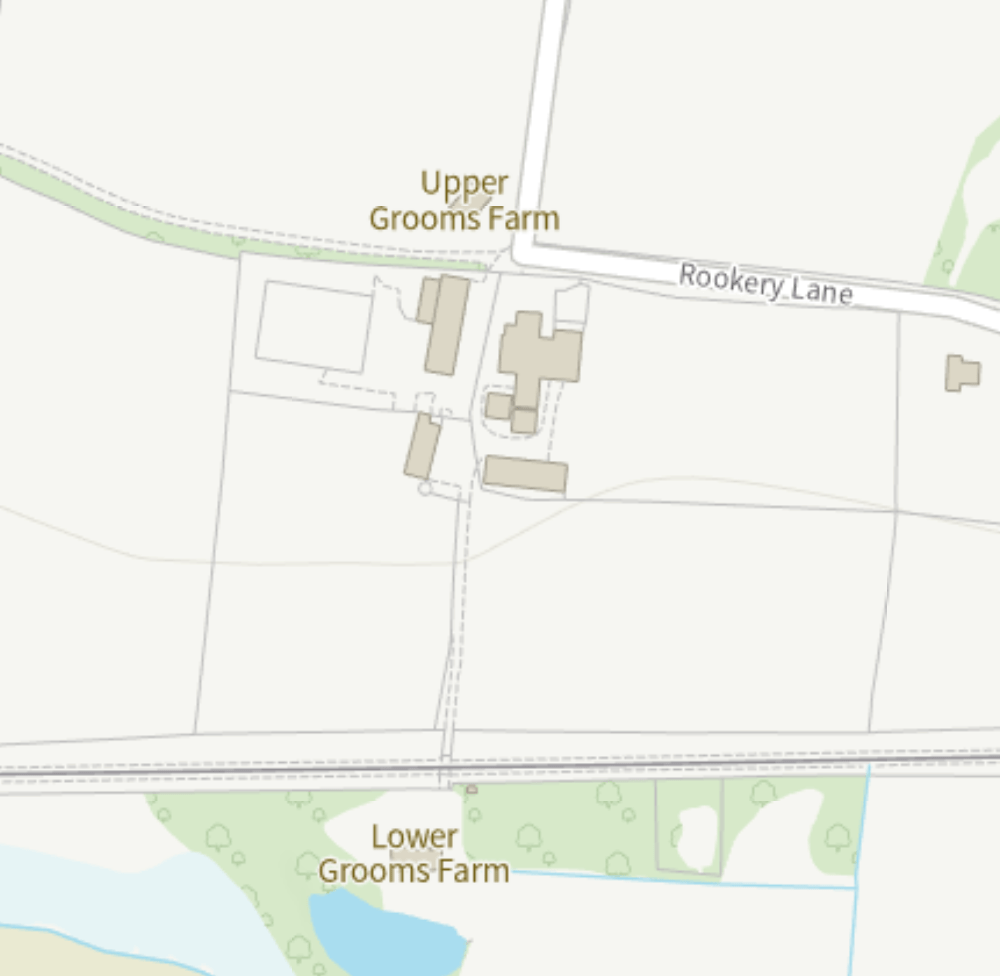
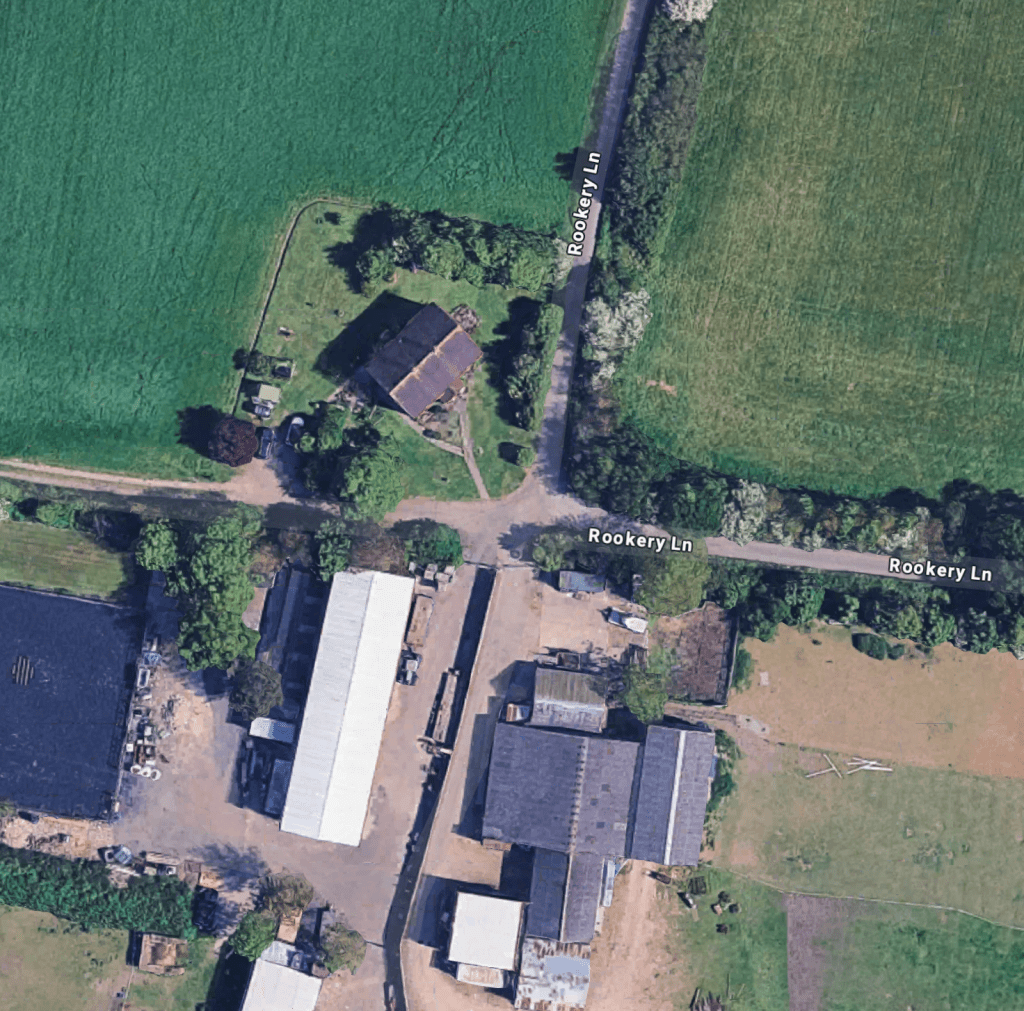
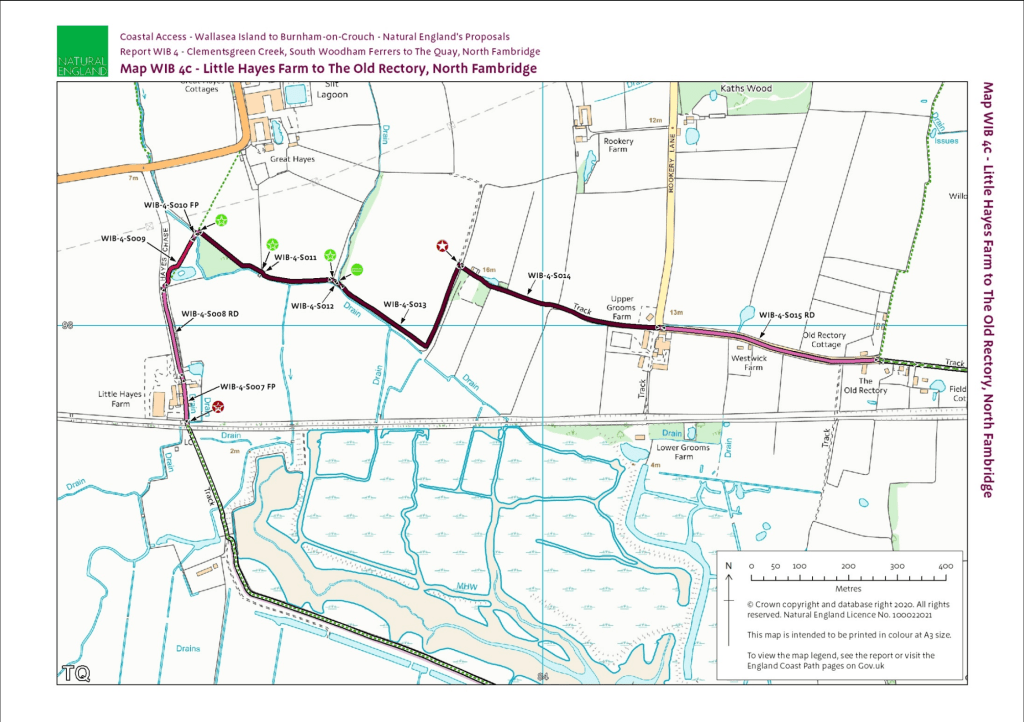
The new section of Right of Way begins where Rookery Lane takes a right angle turn north at Upper Grooms Farm (///fully.blushed.lecturers). The new Right of Way instead proceeds straight on along a farm track. There is no sign to be seen though, no fingerpost or waymark disc anywhere evident. This is exactly where a walker needs confidence, both on the route direction and that they have permission to go forward. The new Right of Way does not appear yet on the Essex Highways PROW interactive maps.

The Upper Grooms Farm junction point on the Essex Highways PROW interactive map
Google Maps image of the same junction
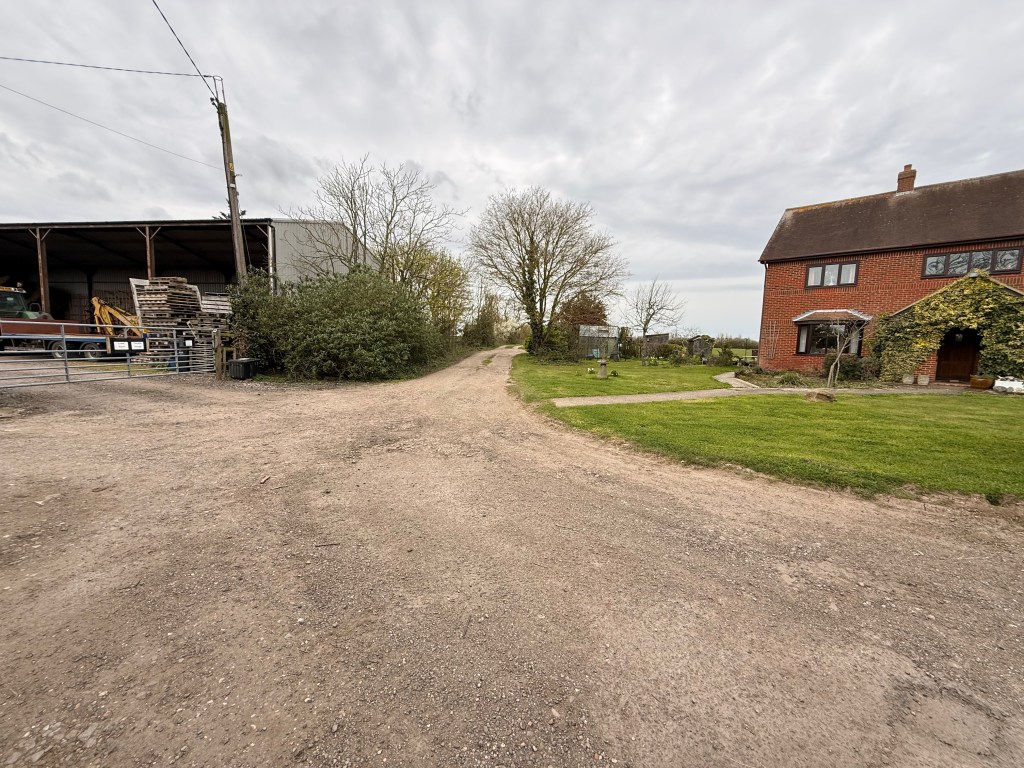
My photo of the junction. No sign assures of the right of way ahead.

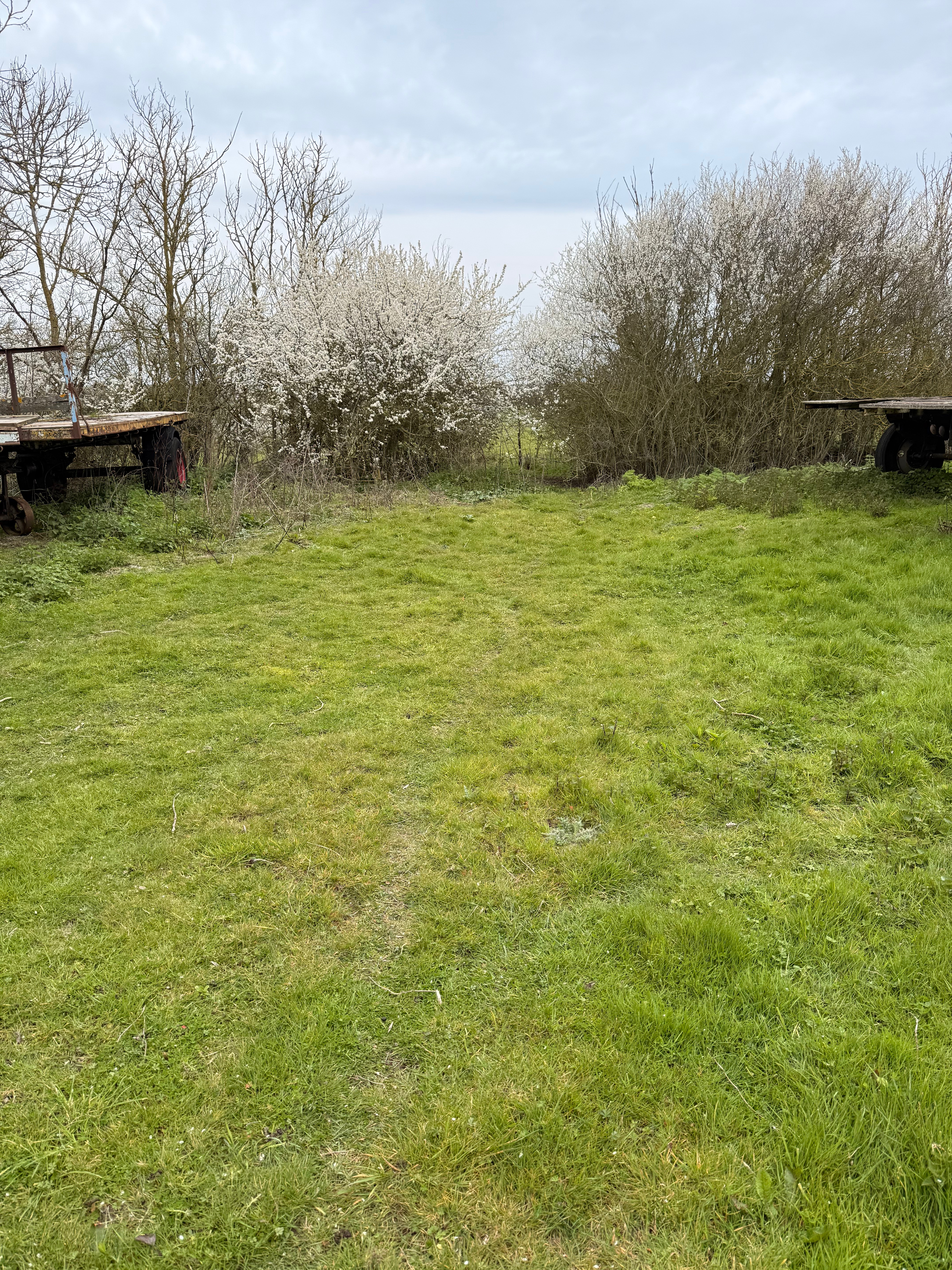
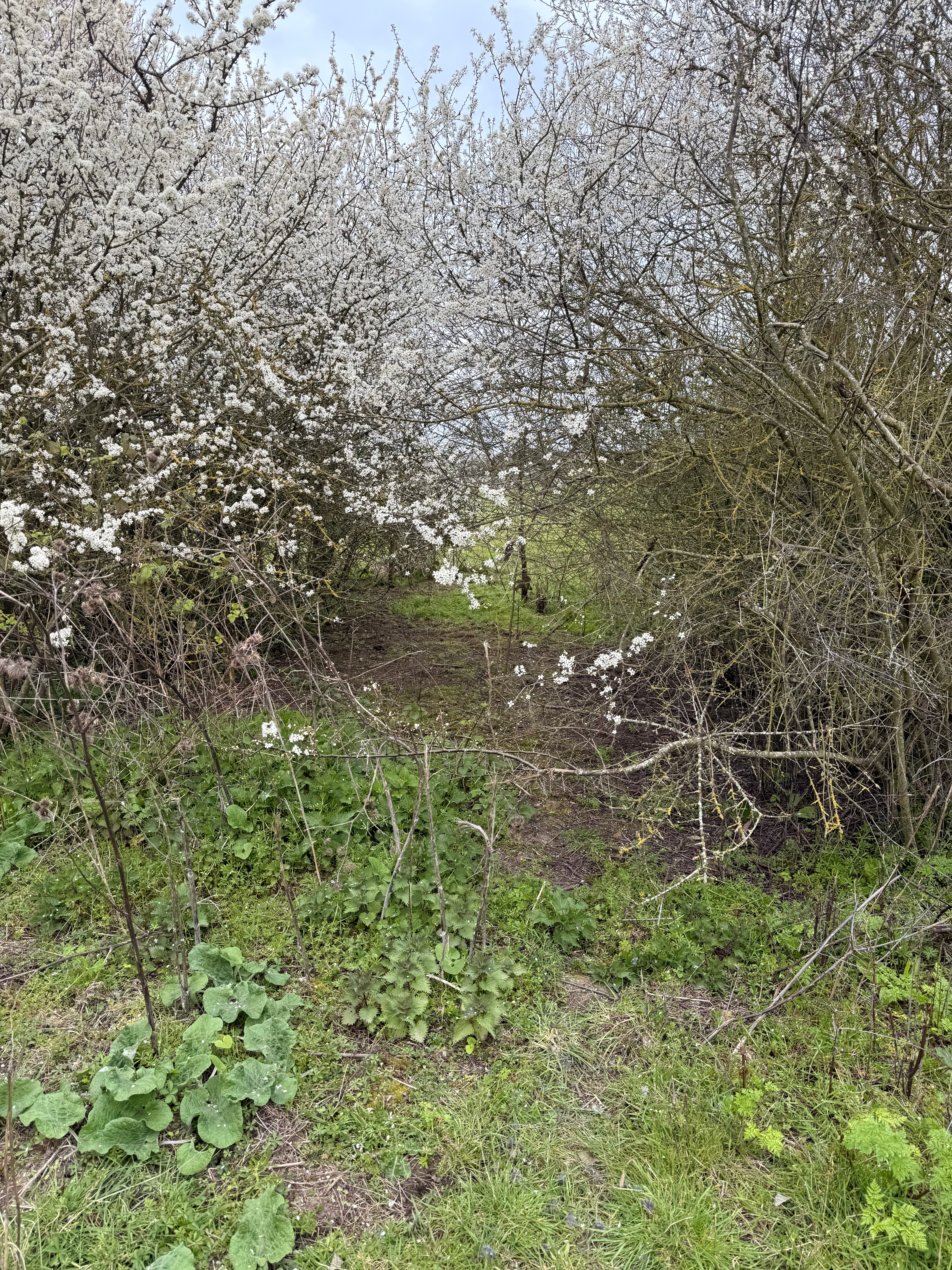
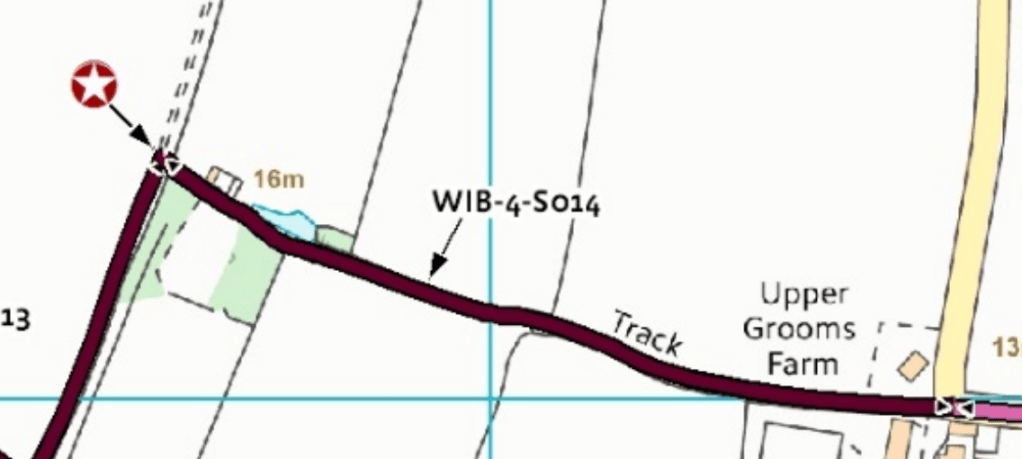
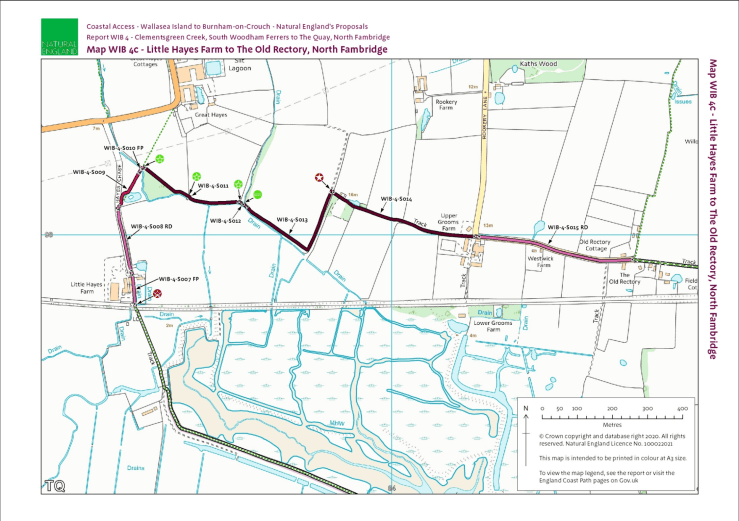
The route immediately ahead is simple enough if you are brazen enough to take it following a gravelly farm track westwards for about 200m until it opens up into a defoliated area with a metal pole barn to the north and a static caravan to the south (this was once the site of Skinner’s Wick farm). Logic would suggest that you proceed directly across this area and through the hedgerow ahead. There’s no signage anywhere however. The hedgerow hints at having once had a path though it, but there is both side and surface growth preventing easy passage. North of the pole barn a farm track goes through the hedgerow and I took this. Reviewing the Natural England map for this section however, it is clear that the intended route is through the hedgerow where it was overgrown and that an existing field gate should be here but is not. (///utensil.monorail.submits)

The overgrown gap in the hedgerow.

The white star is a red circle indicates where a pedestrian gate should provide passage through the hedgerow.

To this point, the route from North Fambridge seems usable by both walkers and wheelers, and could be used by cyclists were higher rights allocated.

The route south-west along the field edge

On the west side of the hedgerow, the route proceeds south-west along the field edge, turning north-west when it meets a land drain and the south field edge. A 1.5m width of trail is to be established on the field edge, but there’s currently no evidence of that. The field is laid to grass and slopes southwards from the hedgerow entrance, dropping about 12m over 180m to the drain. This section could be improved in a way that would improve access for wheelers and also make it suitable for a cycleway.

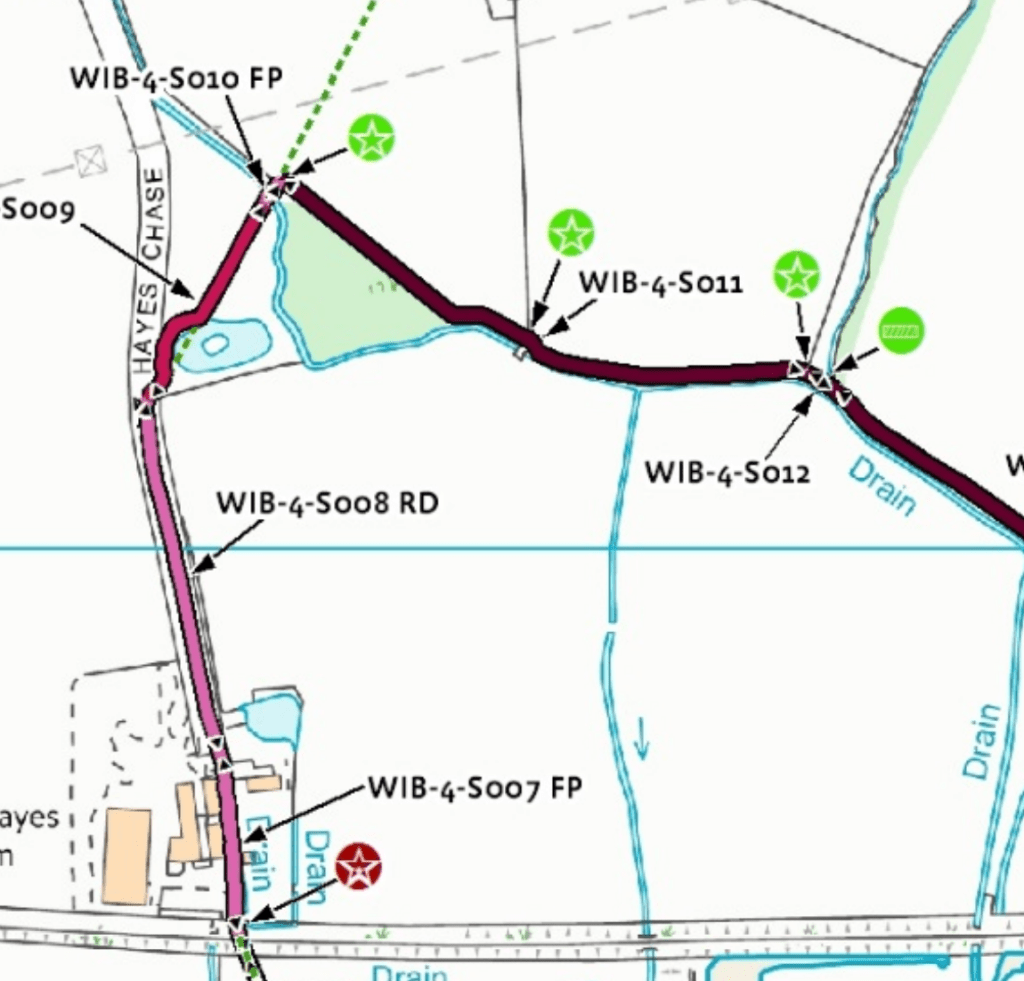
The route leaves this field at an intersection of gates, stiles and a footbridge where the need for construction work is most clearly evident. What isn’t clearly evident is where you are supposed to go. There’s no signage, the Essex Highways interactive PROW map remains useless and the Natural England map is not detailed enough (///powerful.truckload.balconies). A farm gate leads into a field to the south, but the Natural England map suggests that the route goes north of the drain and involves a new footbridge and a new farm gate.

A direct route to Little Hayes Chase

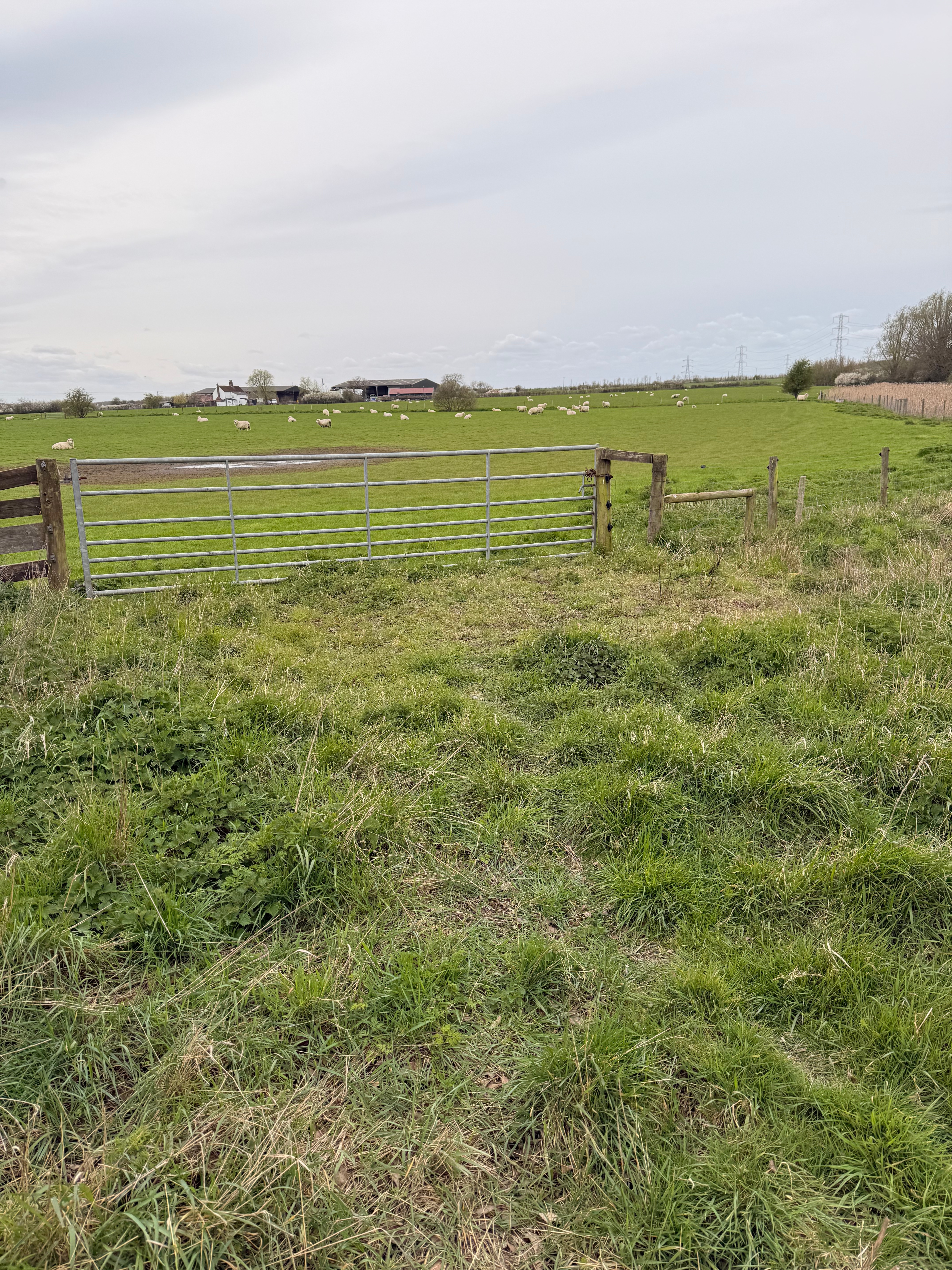
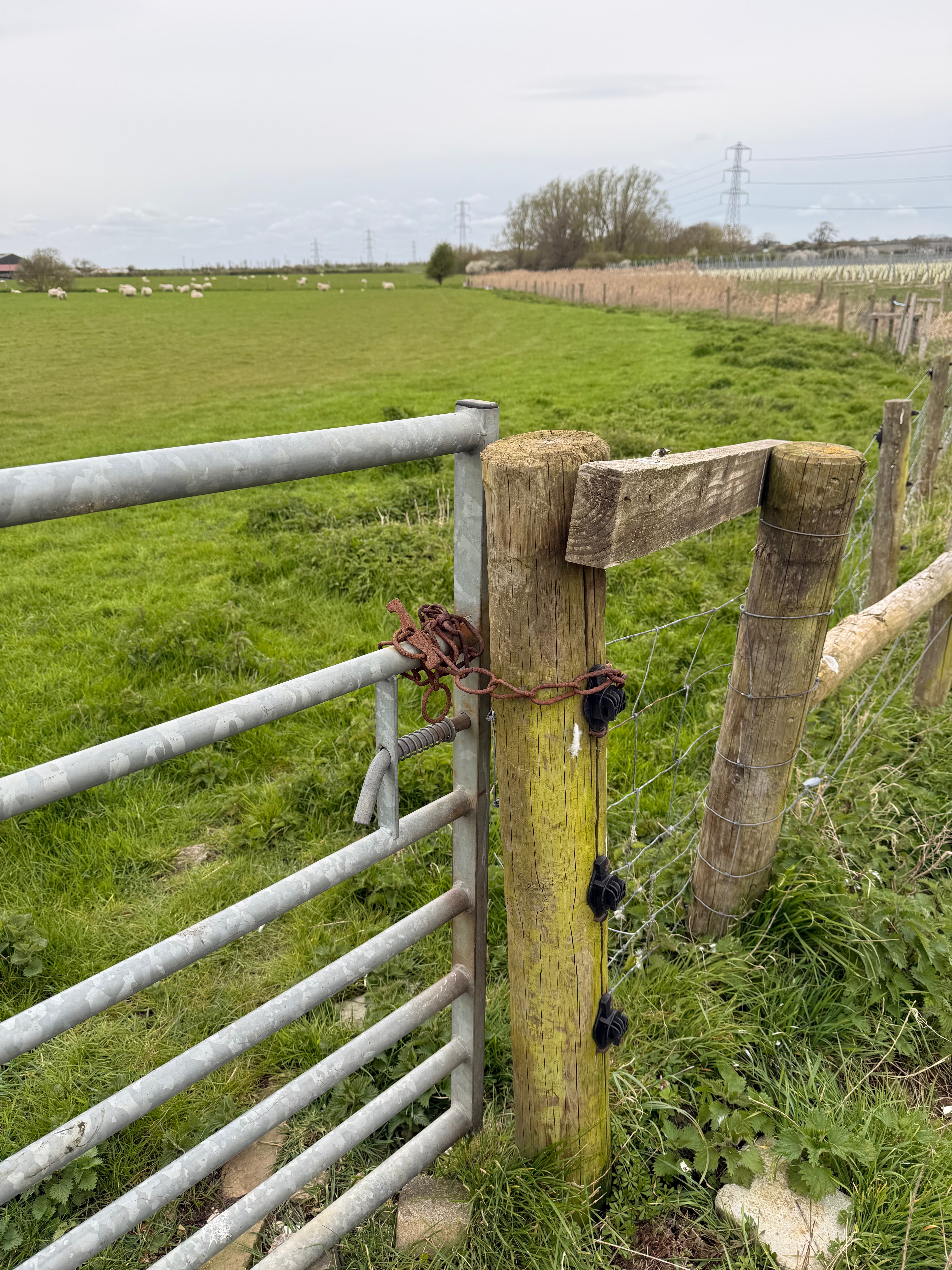
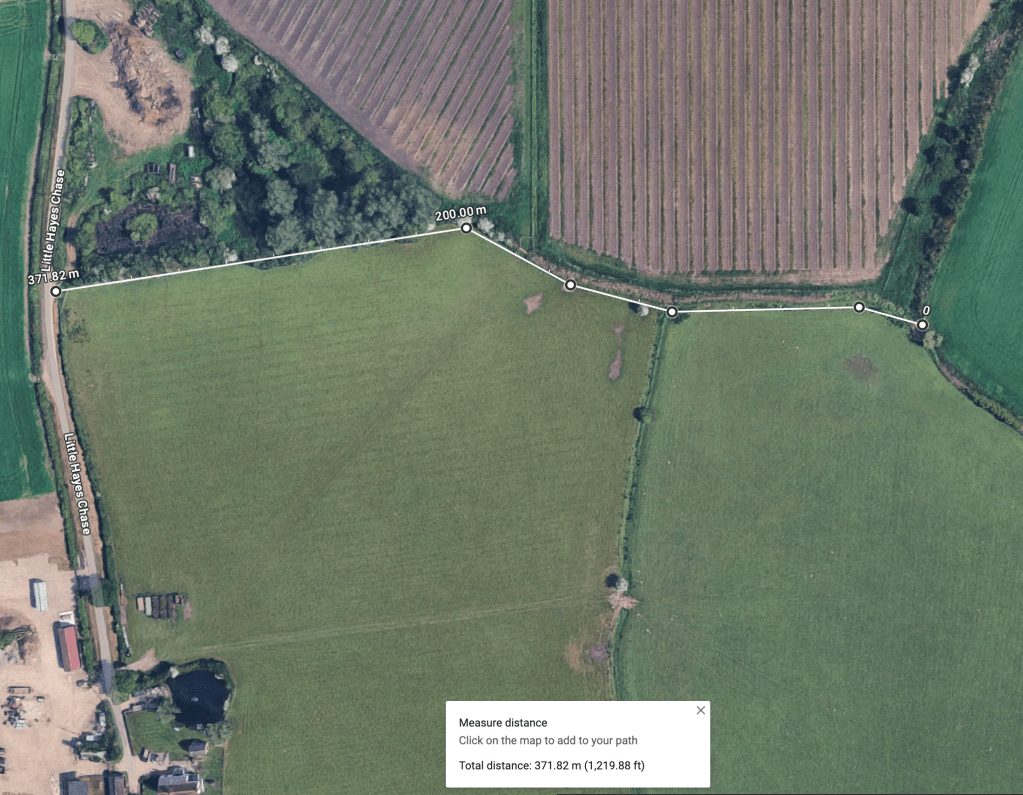
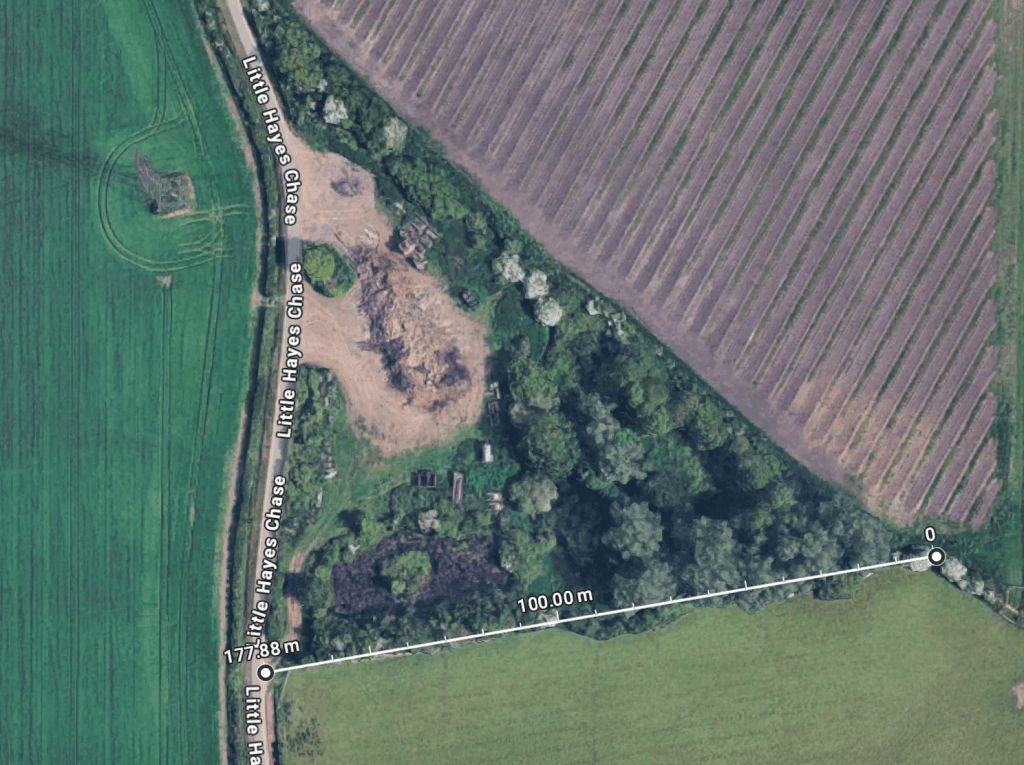
Directly to the west, about 360m as the crow flies, is the road Little Hayes Chase which forms part of the KC3ECP. Following the north field edge, its about 370m away. The only evident way forward from the last field is through the metal farm gate (which was chained shut) and into the field to to the south, where the logical way forward would be to follow that north field edge to Little Hayes Chase. This is a relatively flat route that could provide a good walk/wheel/cycle route.

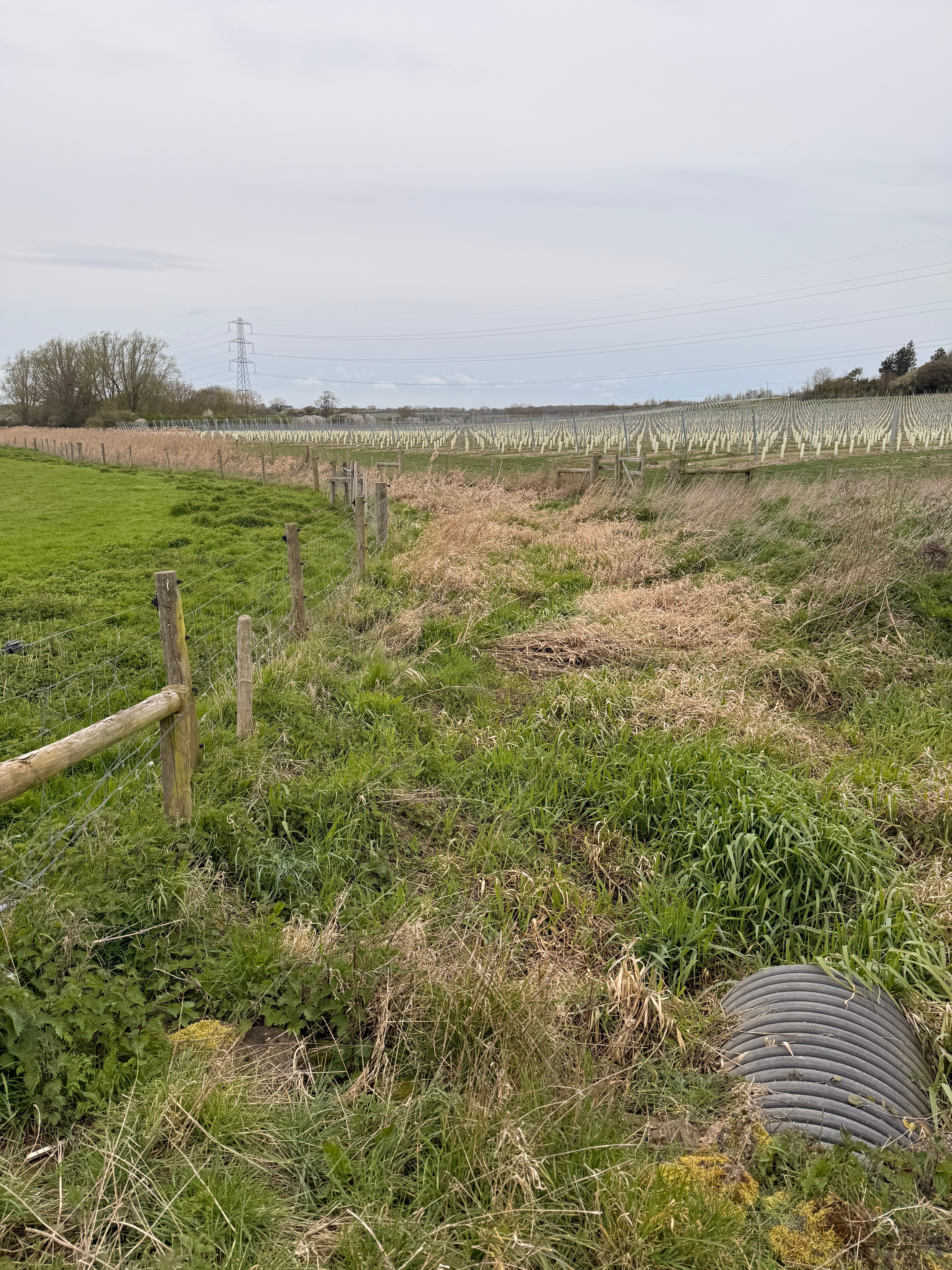
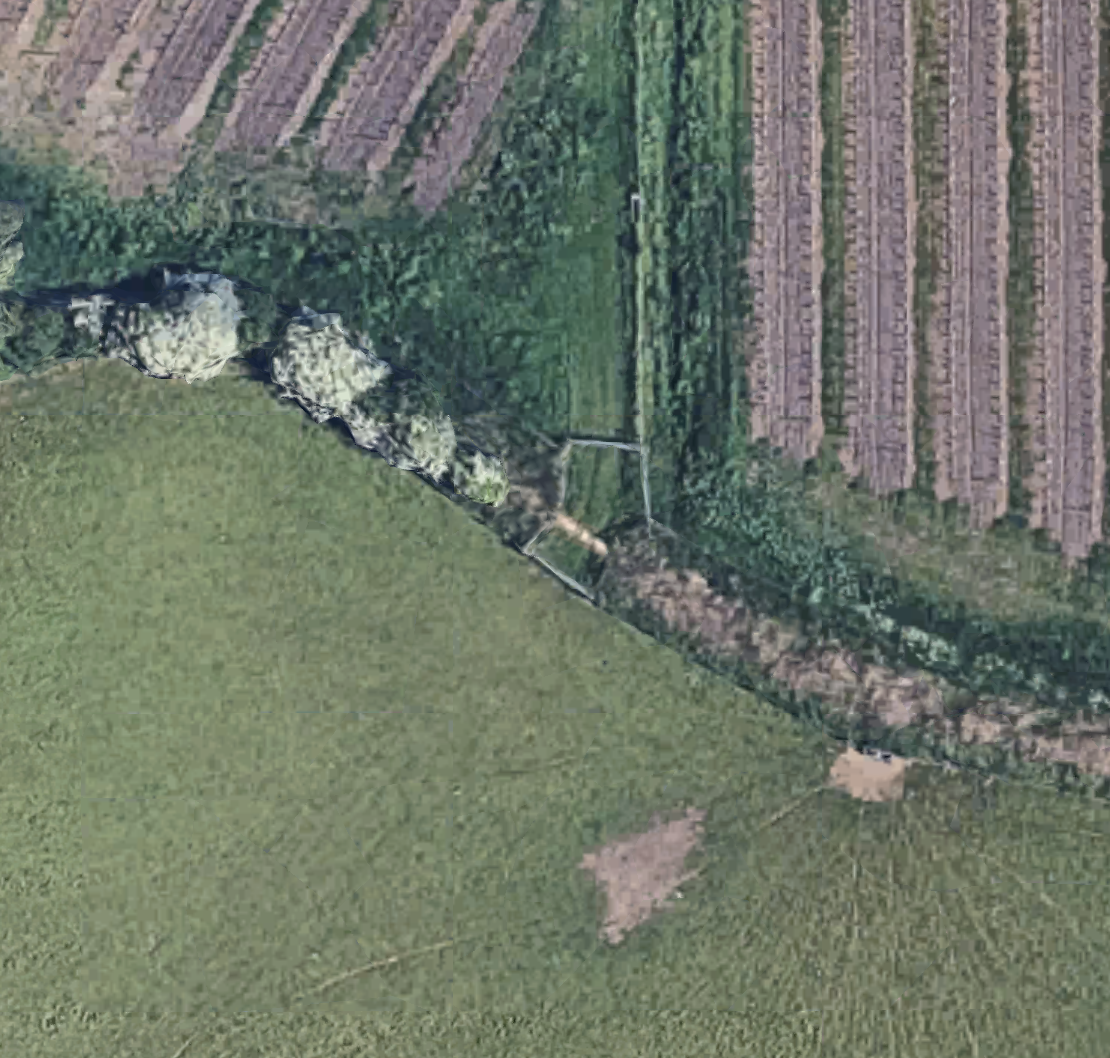
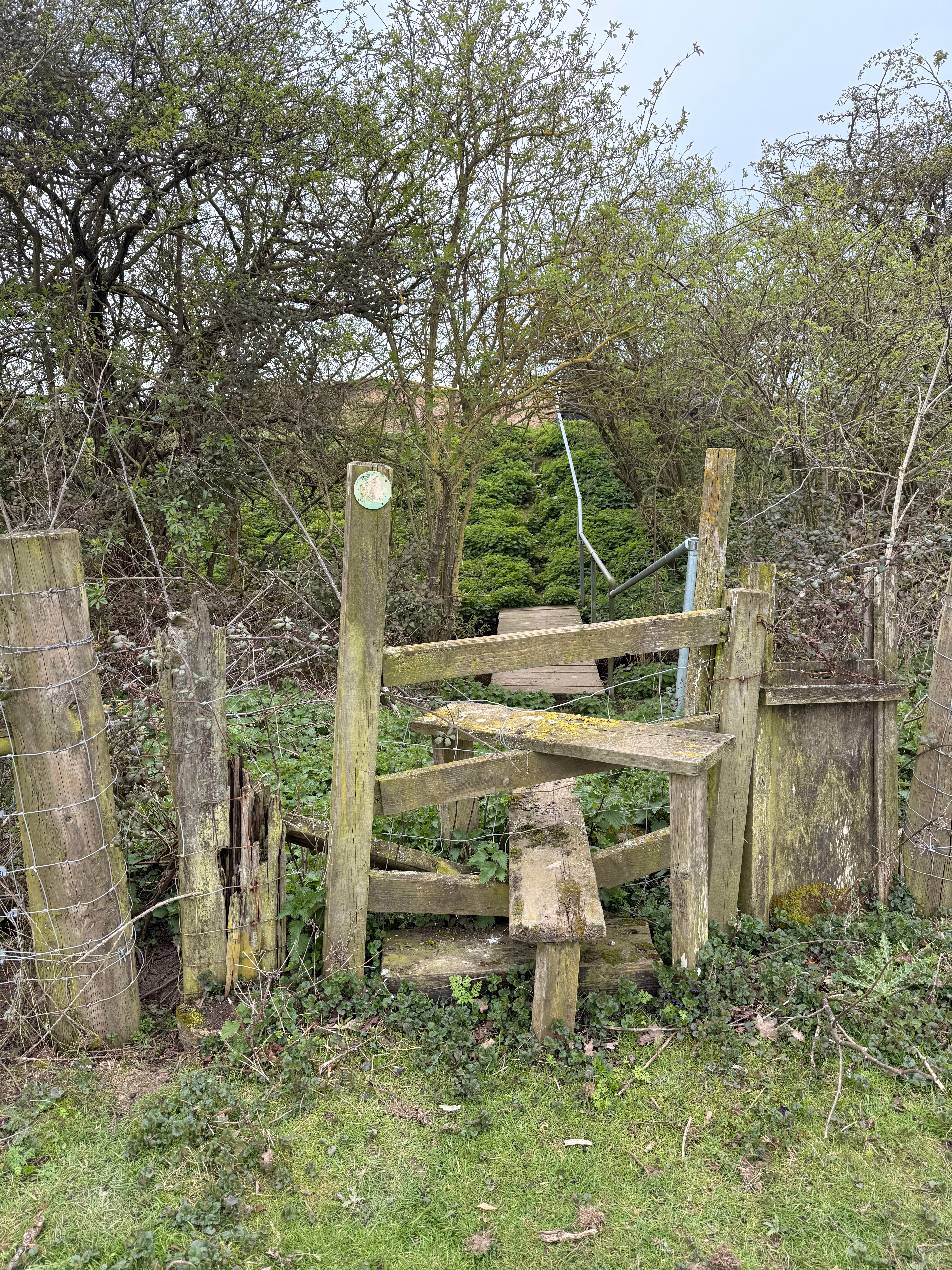
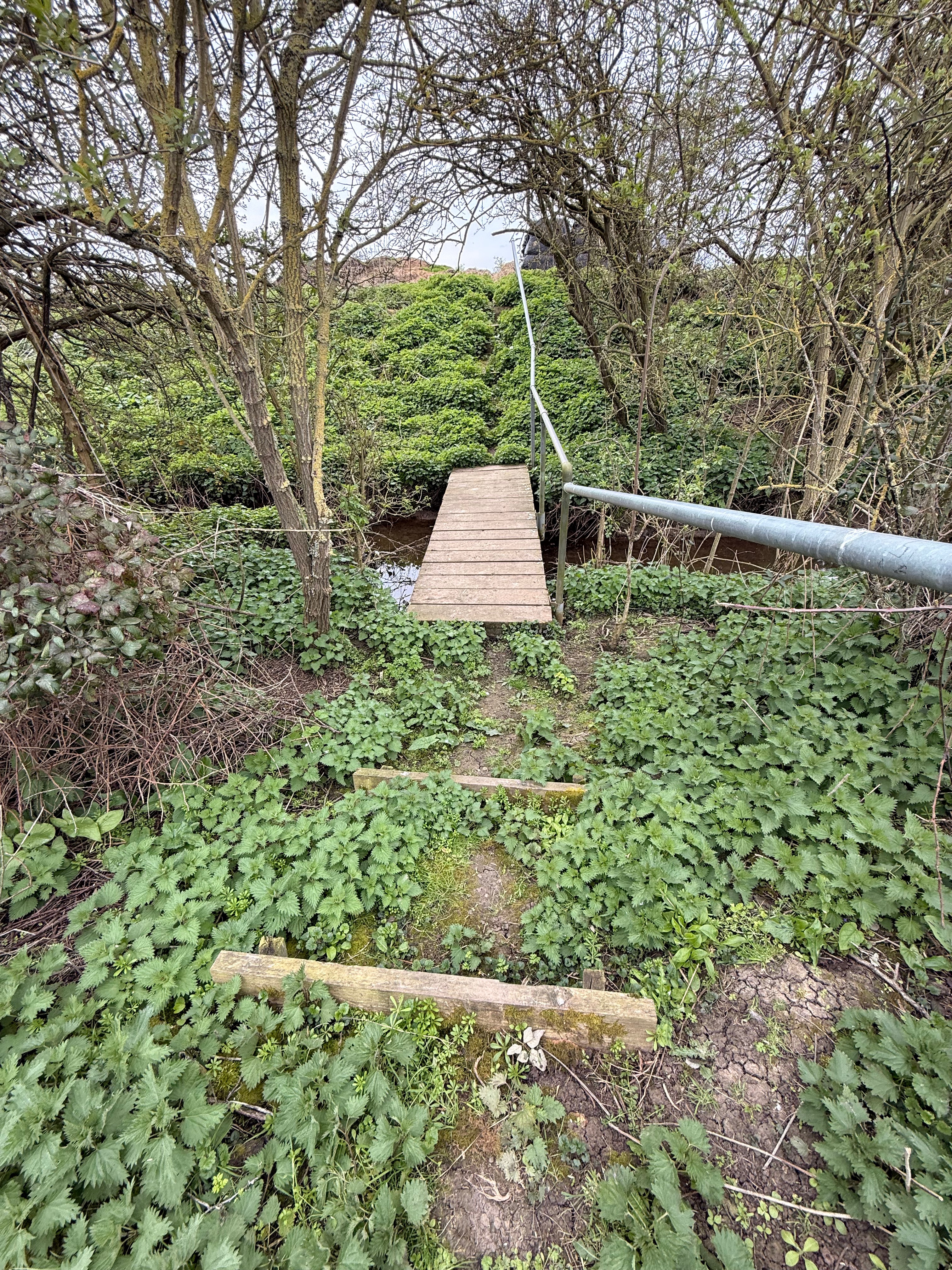
I clambered over the farm gate into the south field from where I could see a nearby step stile on the north field edge leading towards a filed of vineyards. Comparing my GPS position on an electronic version of the OS175 map with the Natural England map, this appeared to be the route to take. It led on to a footbridge over a land drain. Once again, there was no signage to help here and the infrastructure is in a poor state. Both the step stile and the footbridge are in stages of decay and are unsafe, they lead to a pedestrian gate with broken fittings that provides access to the vineyard field. It’s a very fussy nexus, in need of redesign as much as repair or replacement. It’s unclear why it is proposed to have replacement pedestrian gates here rather than wheelchair/mobility device gates or, thinking ahead, bicycle-friendly gates.

From here the new route follows the south edge of the vineyard field. This runs parallel to the route described above on the other side of the drain until it reaches a copse, whereupon it follows the field edge north west until it meets footpath FP 23 261. The descriptive text in the natural England documents states that they opted for the proposed route because ‘it utilises existing rights of way, readily links land uses over several properties and generally follows a permitted route for an
annual long distance running event’. I think this event is the Stow Maries Trail Challenge, but it’s unnamed in the document and the Stow Maries Trail Challenge route is not public. The ‘other options considered’ in the document do not include a more direct route to Little Hayes Chase.

A break from the described route at the copse, to go more directly west to Little Hayes Chase could produce a more accessible option suitable for upgrading to a cycle way.

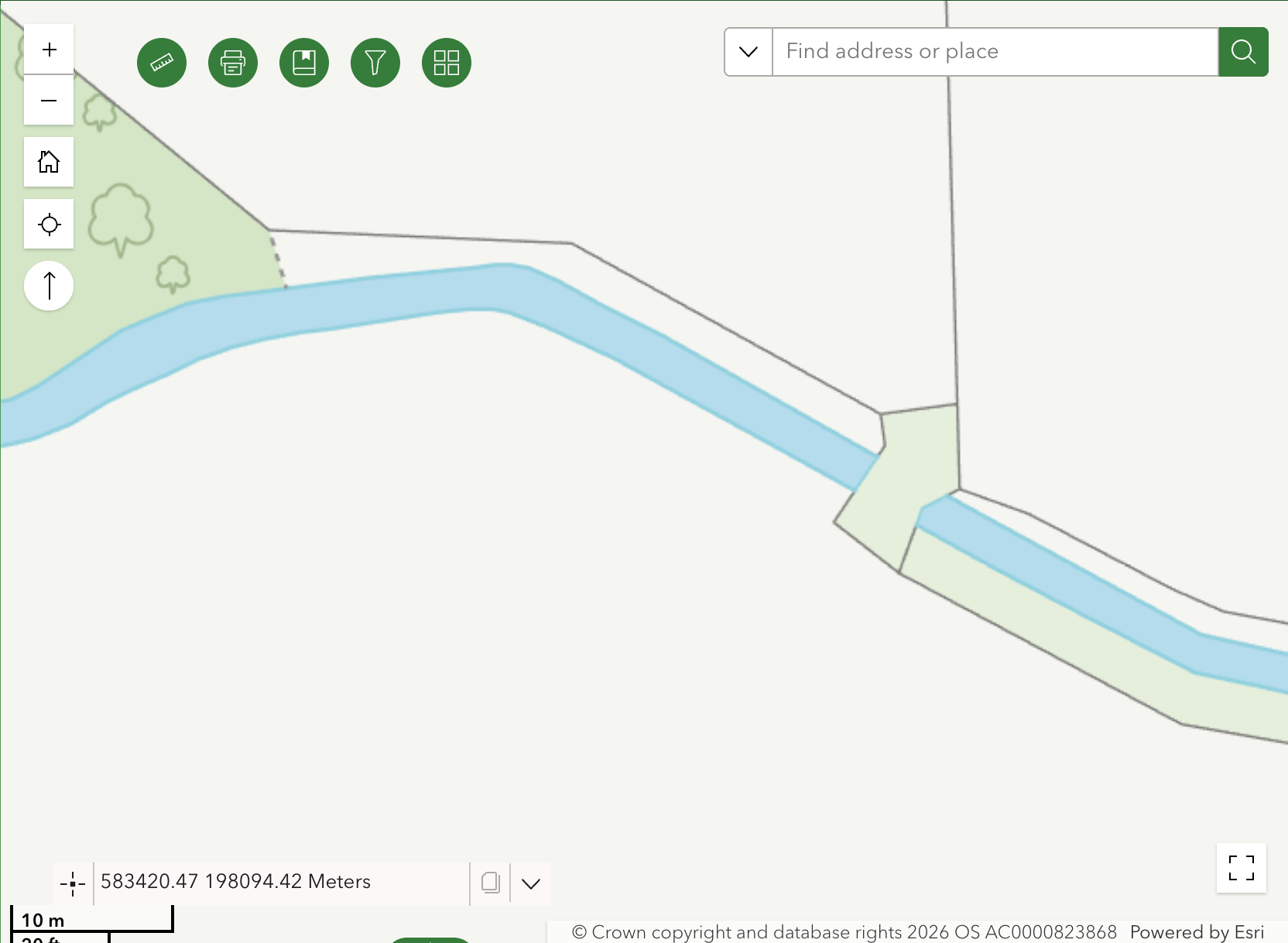
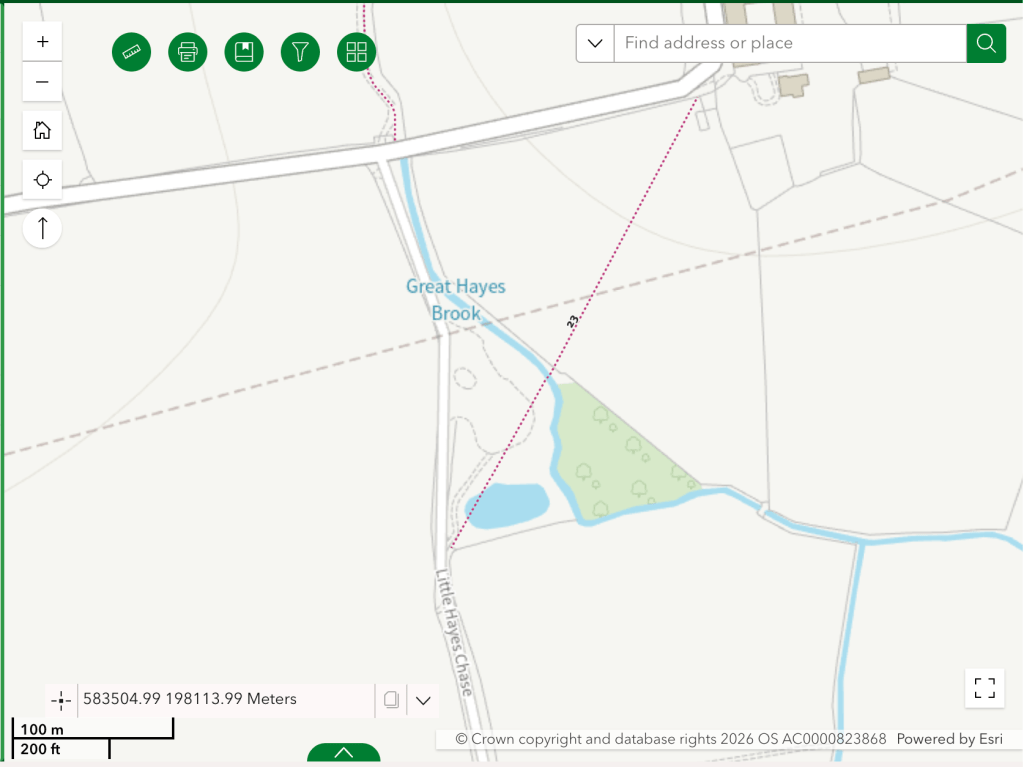
Around the point that a new pedestrian gate is proposed, there is a bridge over Great Hayes Brook and gate access into the field that leads to Little Hayes Chase (///widely.courts.fixtures).

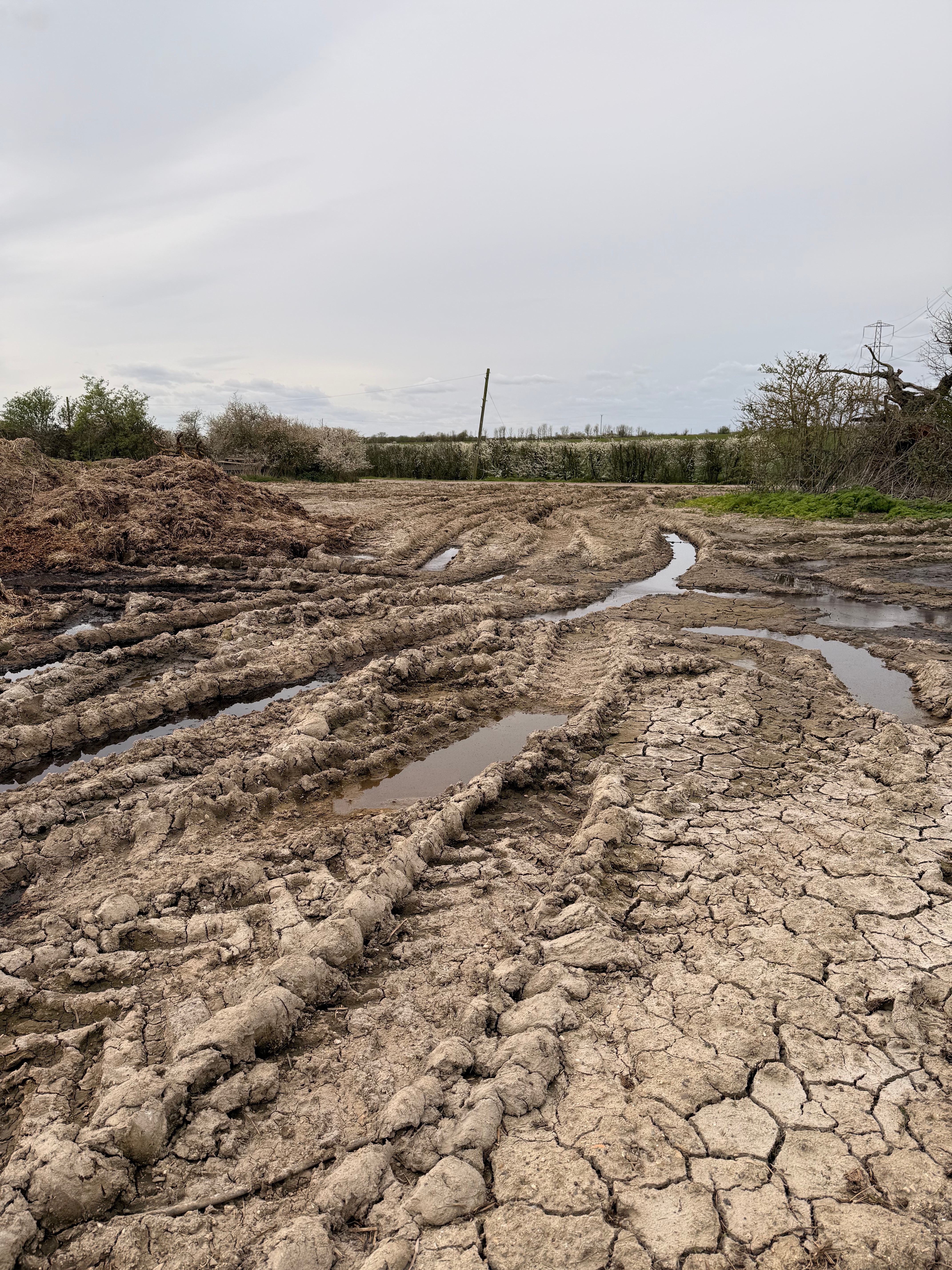
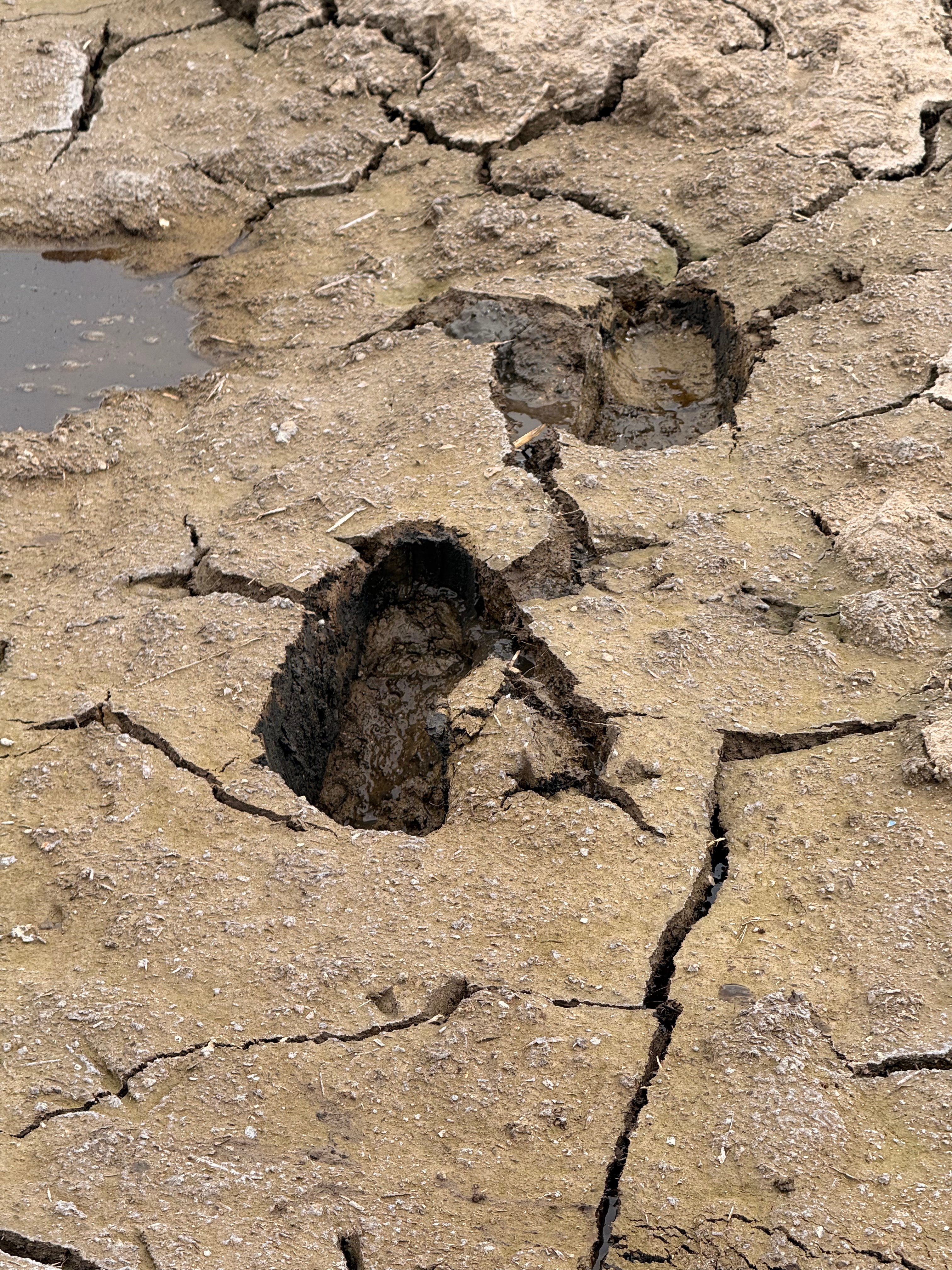
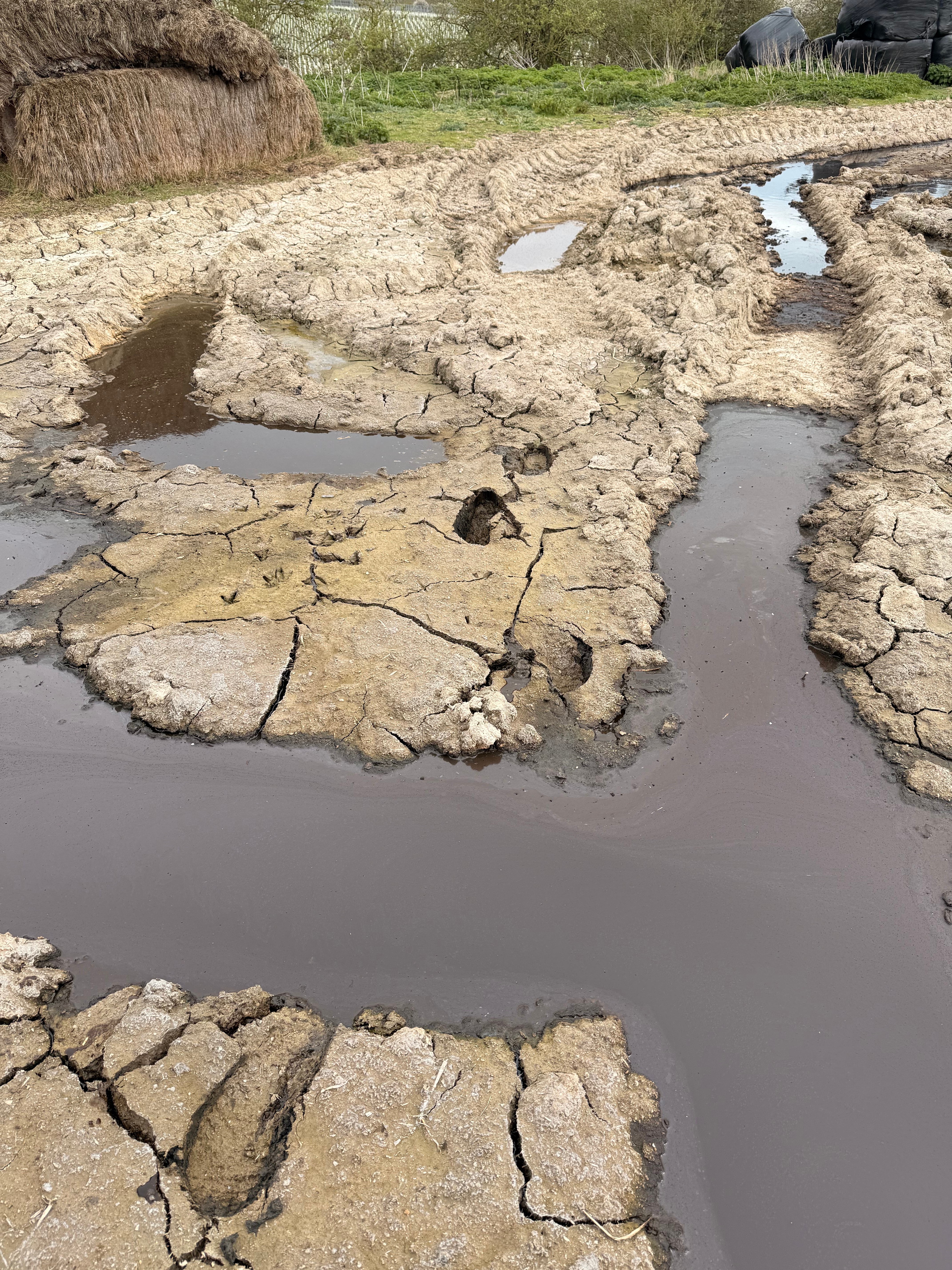
I can see the attraction of connecting with, and utilising, an existing Right of Way (footpath FP 23 261) as the new route does, but this produces its own problems. When FP 23 261 leaves the vineyard field, it crosses Great Hayes Brook at a more difficult spot which involves a step stile, steps down to the brook, a footbridge and more steps up from the brook. This limits the accessibility of the route. The infrastructure here is, again, in poor condition. At the top of the steps the footpath proceeds across an area used by the local farm as a store of manure and a general dump. The route through this is poorly marked. When I walked it, the surface was very uneven and apparently solid earth was actually an unsound crust on fluid runoff from the manure pile into which feet began to sink. The route as shown on the Essex Highway PROW map goes through a body of water.

The step stile, footbridge and steps down to and up from the brook on FP 23 261

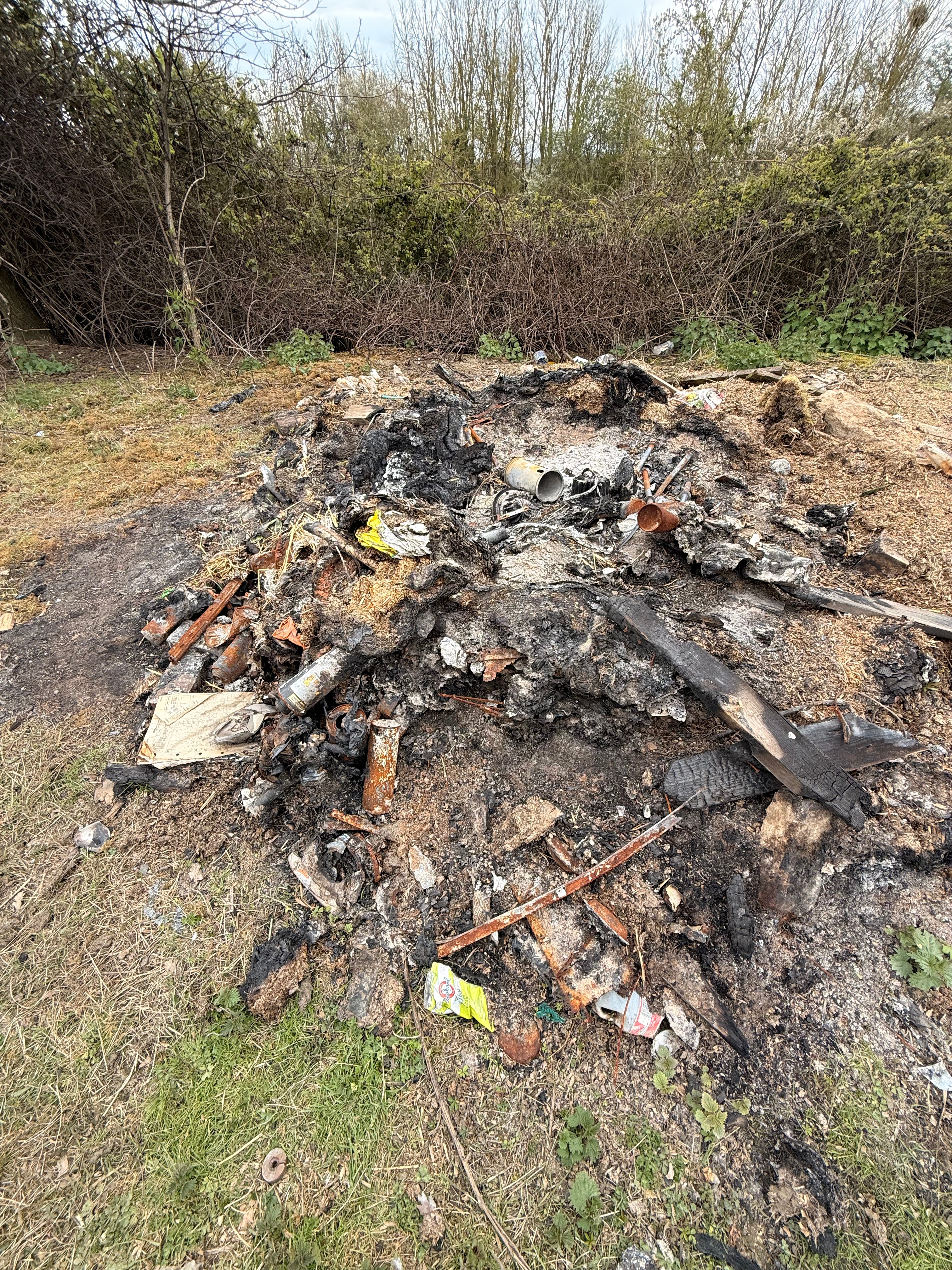
The unwelcoming manure swamp and dumping ground at the top of the steps

Cyclists unwelcome ahead

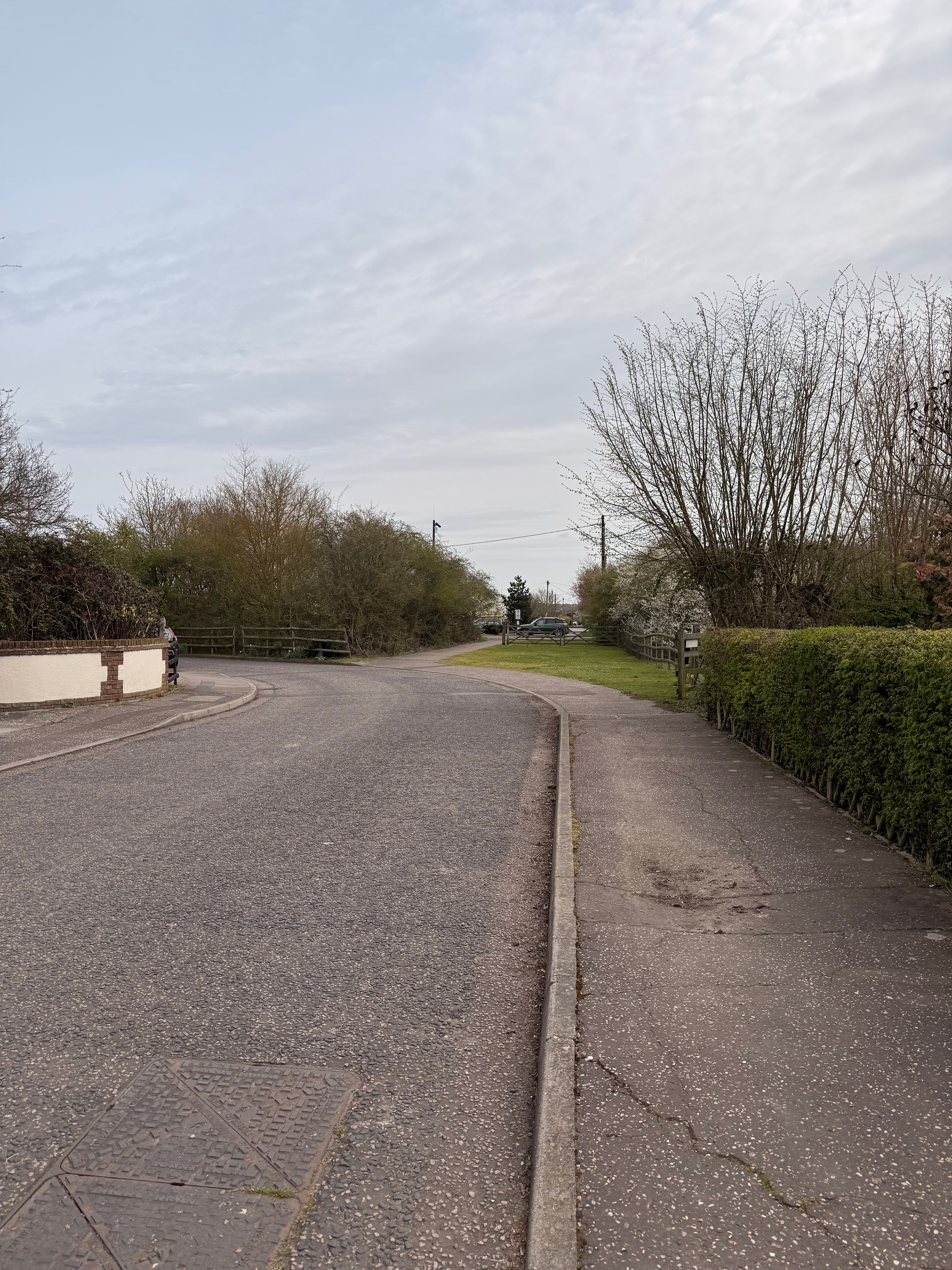
The ongoing route is all on pre-existing rights of way. Little Hayes Chase is a metalled road down to the railway crossing, beyond which a gravel track leads to a kissing gate and a slope up to the sea wall around Stow Creek (neither the gate or the slope are accessible for those using mobility aids). To travel onwards to South Woodham Ferrers, you must walk the sea wall along Stow Creek and Clements Green Creek. This serves the purpose of a coastal path well, keeping you close to the water. The purpose of the KC3ECP diverges here from the needs of the person simply travelling between North Fambridge and South Woodham Ferrers. The KC3ECP route is therefore frustrating if you are walking for utility rather than leisure. An additional westward route aligned seaward of the railway line from the crossing to Saltcoats Park would provide a useful quicker route here.

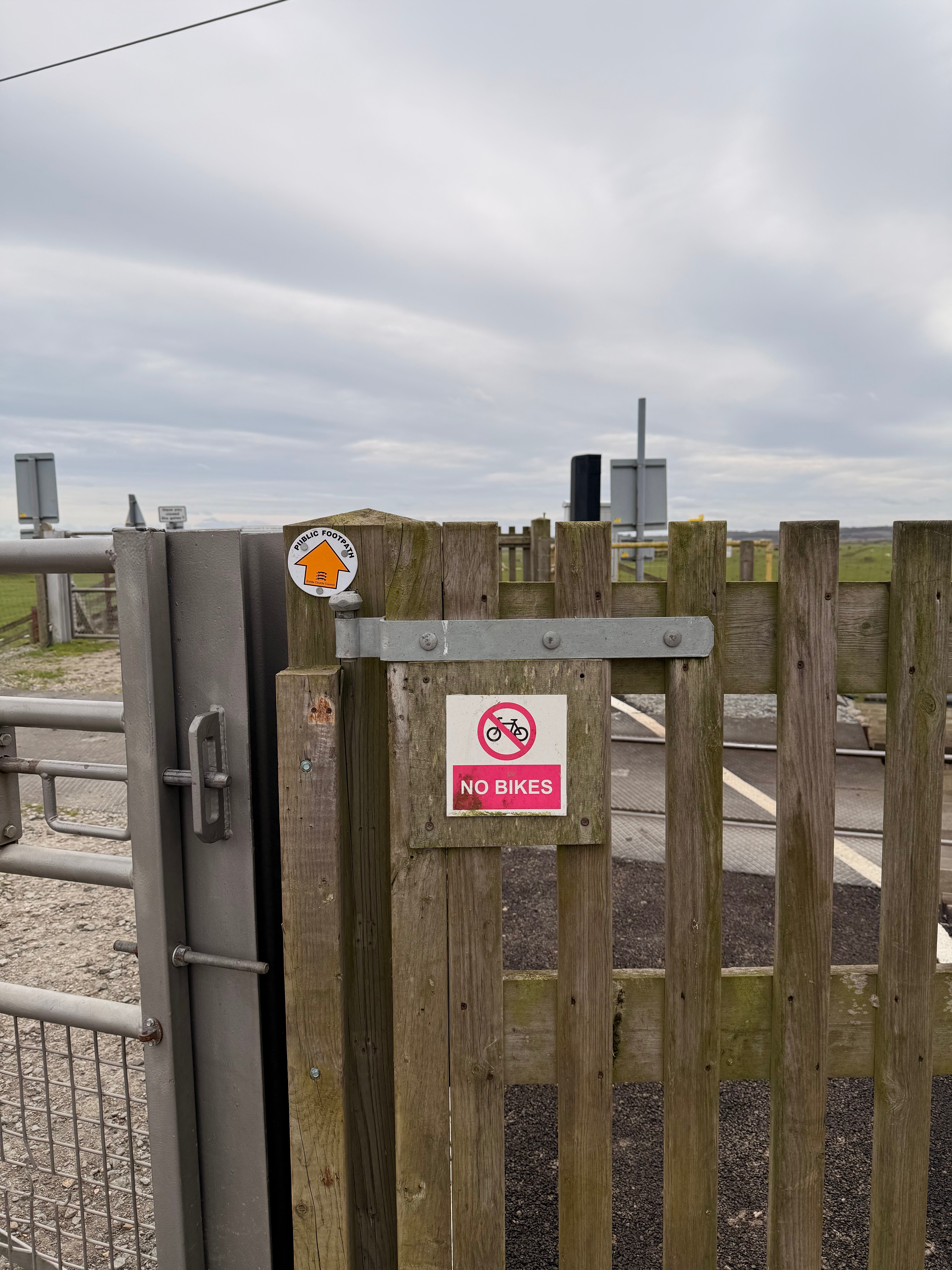
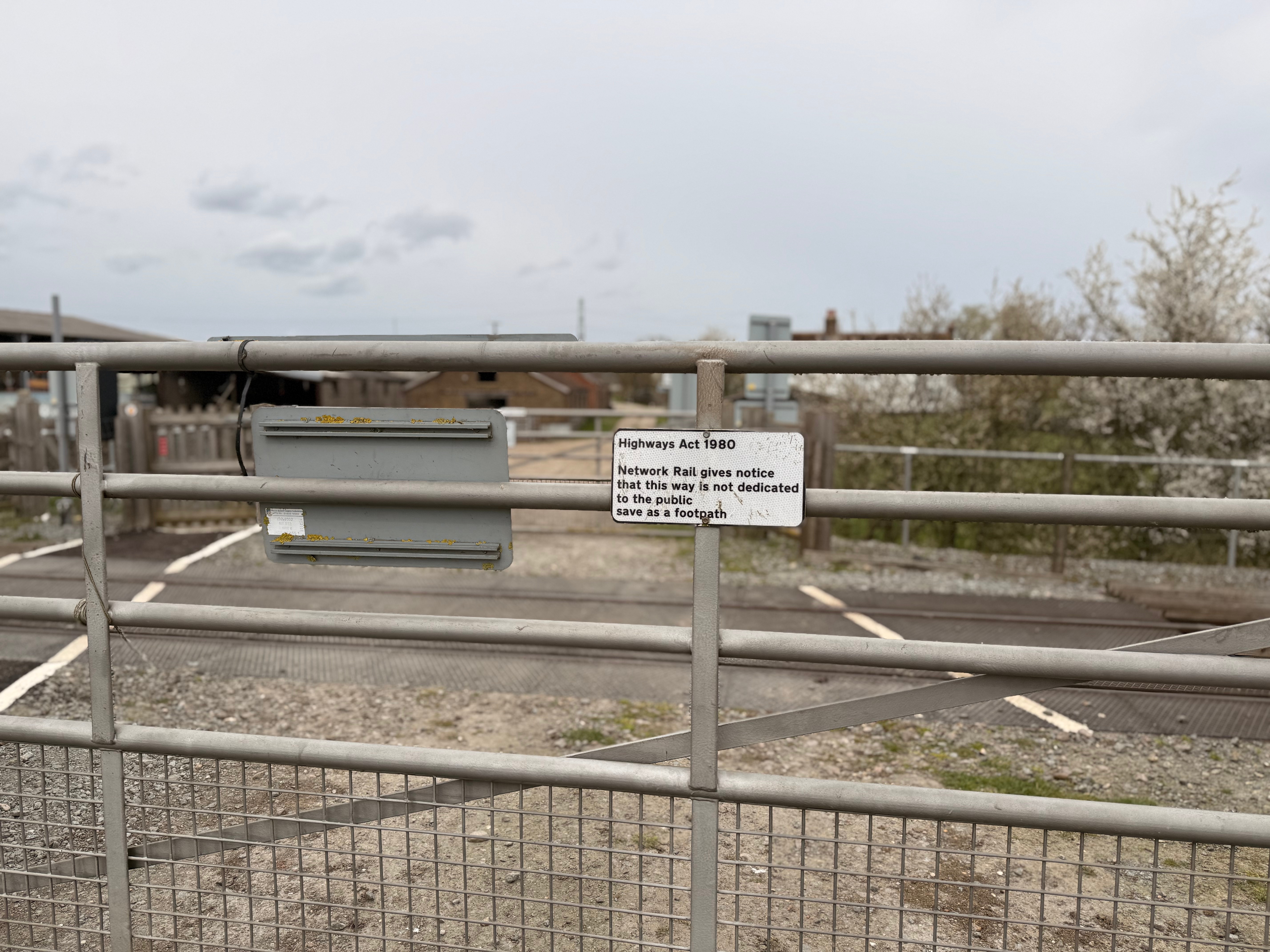
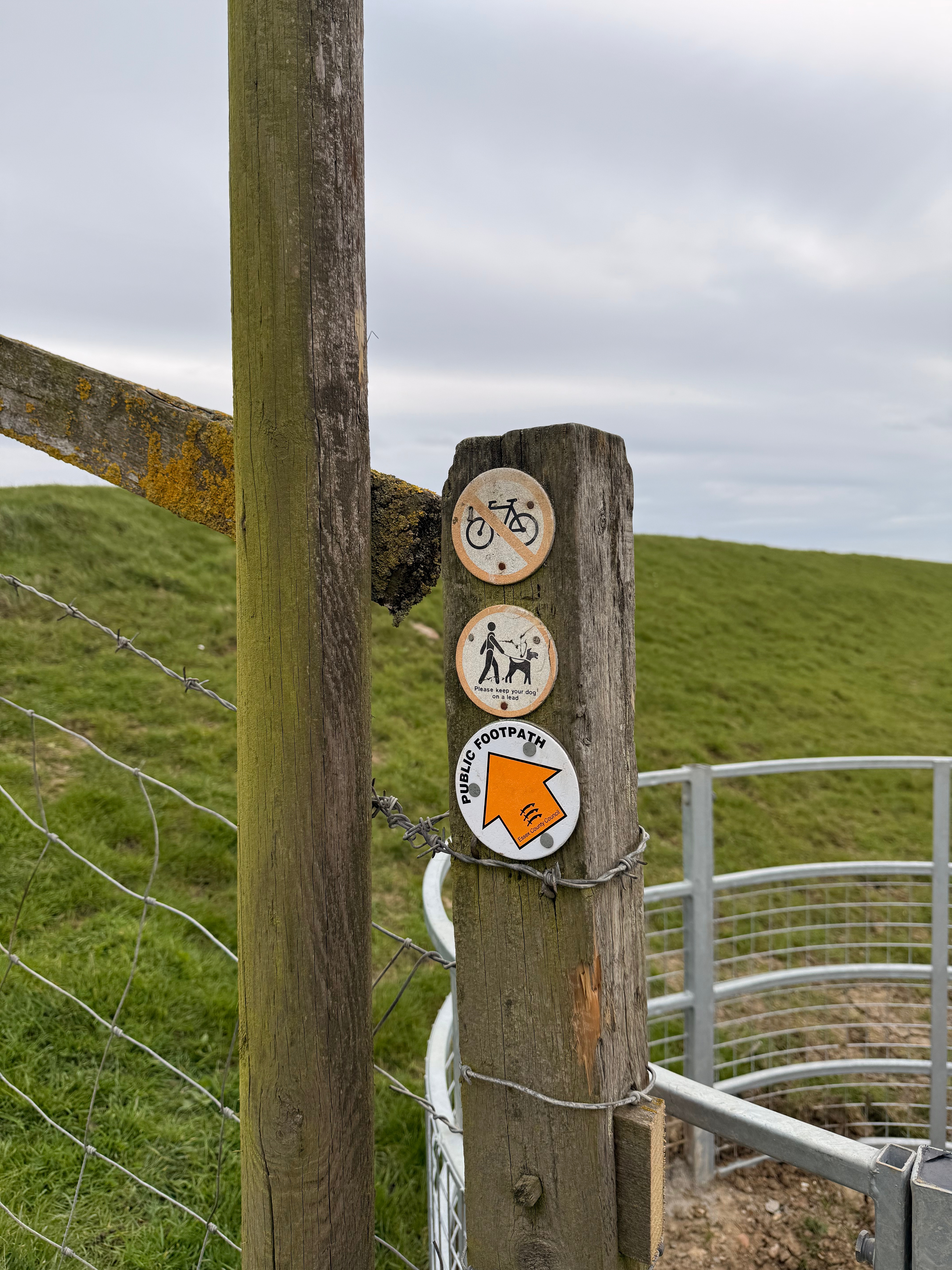
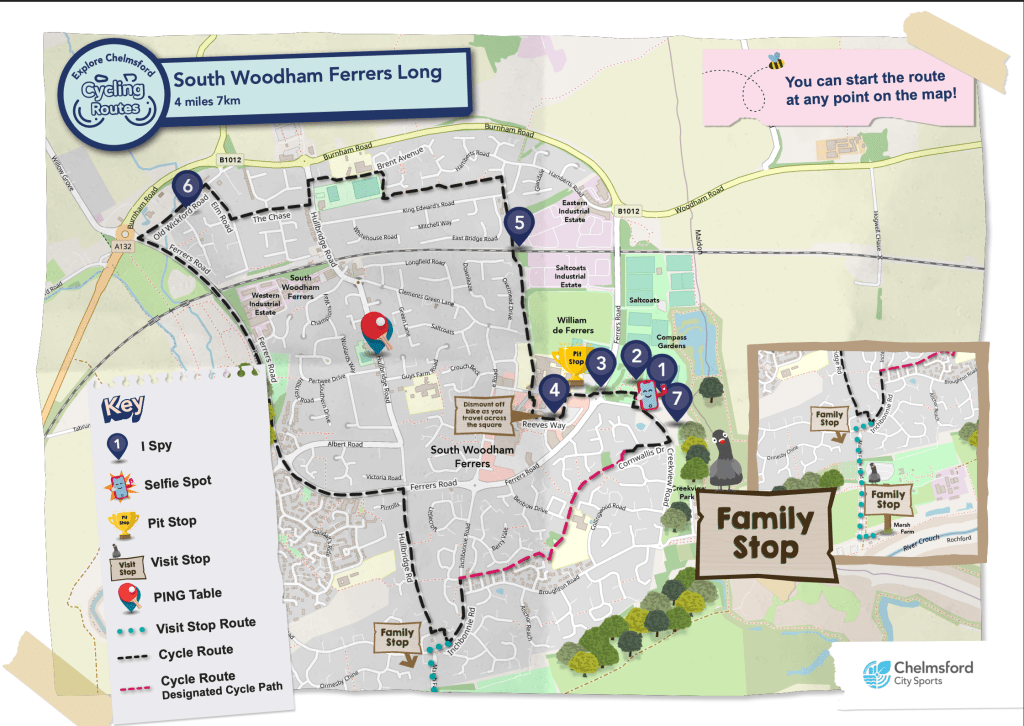
Where Little Hayes Chase reaches the railway crossing there is lots of communication warning off cyclists from going forward. Warnings repeated at the kissing gate by the sea wall. A new westward route from the crossing could take cycle traffic however. A small amount of work improving transfer from the Saltcoats Park entrance to Cutlers Road/Saltcoats Industrial Estate (just 67m away) would afford onward cycle journeys a connection with the Chelmsford City Council promoted cycling route around South Woodham Ferrers, including the fully segregated cycle path into the town centre.

There’s clearly still work for Essex Highways to do on this new section of the Coast Path, including signage, gates, stiles, steps and bridges on the ground, as well as adding the route the Essex PROW map. It’s frustrating that in the week the KC3ECP was announced as fully open, a section approved over two years ago is incomplete because of the recent illness of a contractor. This delay provides an opportunity to think more creatively about the possibilities offered by this route however and to ensure it is accessible to the widest set of users.

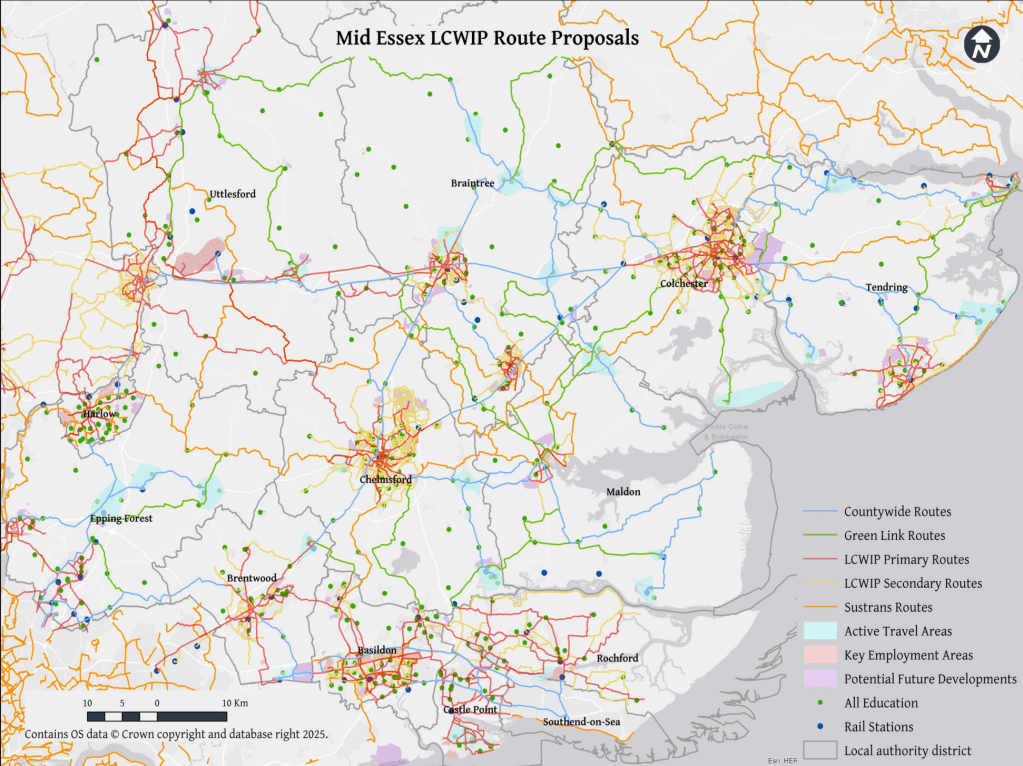
Mid-Essex LCWIP proposals (detail from larger map) around the Crouch Valley

The Mid Essex Local Cycling and Walking Infrastructure Plan failed to identify a route connecting the settlements along the north bank of the Crouch Valley. As I’ve noted previously, the Essex Local Cycling and Walking Infrastructure Plan states that rural routes will draw on bridleways, byways and quiet lanes – but we have don’t have much of that locally and a broader approach to identifying routes needs to be made. This will necessarily include upgrading rights and infrastructure on some footpaths to form shared use paths accessible by walkers, wheelers and cyclists. It will also require the establishment of entirely new rights of way, just at the England Coast Path has done here.

There’s more on this to be said in relation to the other new section of the KC3ECP I walked last weekend. The section between South Woodham Ferrers and Battlesbridge, but that will have to wait for the next post.


Way to Go

[This article develops a recent Facebook post with more maps and discussion of cycle route potentials]

I received communication this week that ‘the King Charles III England Coast Path (KC3ECP), and its associated accessible coastal margin is now open around the full Dengie peninsula.’

There were some caveats in the communication, which I copy below

the King Charles III England Coast Path between Wallasea Island and Burnham-on-Crouch opened this morning.

Unfortunately with 2 weeks to go before the commencement date one of the contractors working for Essex County Council, on the north side of the Crouch, fell seriously ill. This has meant that although we continued with the commencement of the access rights, there may be a few pieces of infrastructure to finish off. Essex County Council are managing this as best as they can. It shouldn’t stop the onward journey, but under foot conditions may not be ideal at this point in time.

Now that the stretch is open, and in common with all other open stretched of the National Trail, responsibility for maintenance and related issues lies wholly with Essex County Council. If you ever have any concerns, I’d encourage you to reach out to Essex Council Highways/Rights of Way teams.’

There were 2 useful additions approved locally:

Read more: Way to Go
  • a path alongside the A132 Burnham Road connecting South Woodham Ferrers and Battlesbridge.
  • new permissions over a farm track between North Fambridge and Little Hayes Farm – allowing the route between North Fambridge and South Woodham Ferrers to avoid the long detour up around Stow Maries which involved crossing the B1012.
New KC3ECP route connecting with footpath FP 28 229 to the North, which leads toward South Woodham Ferrers
Continuation of the new KC3ECP path to where it meets footpath FP 27 229 providing access to Battlesbridge
New section of KC3ECP path/PROW on farm tracks connecting Rookery Land North Fambridge at Upper Grooms Farm with Little Hayes Chase and footpath FP 22 261 around Stow Creek.

I hadn’t seen much action on the A132 section last time I passed, so it might not be more than cutting foliage back on the verge. I’ll take a look at both the South Woodham Ferrers and North Fambridge this weekend, but I welcome comment from anyone else too!

UPDATE: I had confirmation from Natural England regarding the A132 section:

‘The major works undertaken along the sections WIB-3-S012 and S016 is the clearance of the vegetation and the creation of a route within the scrub, which I know has happened. There were some bridges and I believe some steps (at the S012 end) and these were being installed by the contractor that has fallen ill.

That said I believe the route is passable. I certainly managed to walk it this time last year in low walking boots and managed to pass without any bridges being in place.

I have previously discussed with colleagues at ECC that just clearing the scrub may not be sufficient and that there may need to be some form of surfacing (not metalled) if as I believe the enclosed nature means the ground lies wet for longer. The newly cleared areas will also encourage more vigorous side growth and spread of the likes of bramble and nettle. I encouraged them to consider seeding the length and then cutting it frequently (at least 4 times a year) to encourage a good grass cover but I don’t think this was undertaken. I hope they keep an eye on the condition of this section. It will not be Natural England’s responsibility to do so.’

Improving the surface of A132 section to make it suitable for cycle traffic could provide part of a useful connector between the SWF/Dengie and the proposed National Cycle Route 135 at Battlesbridge.

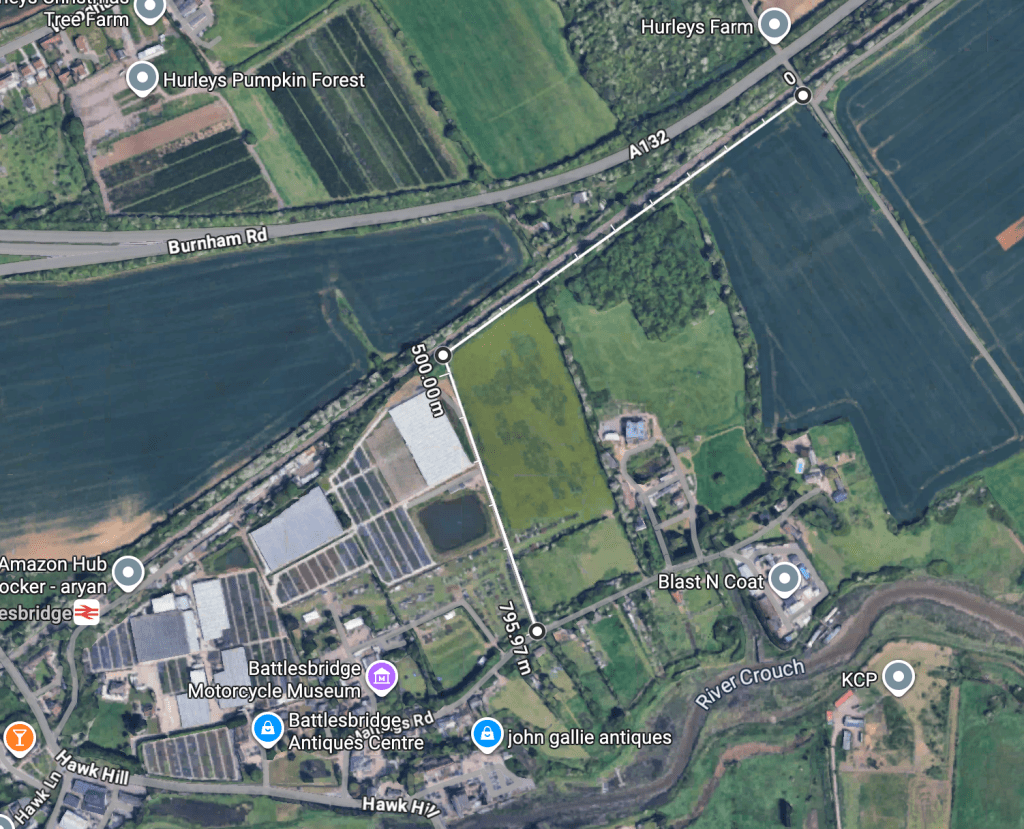
If higher rights allowing bicycle use were allocated to footpaths FP 40 298 (772m), FP 23 298 (119 m), FP 28 229 (650m) and a short section of FP 35 298 (connecting FP 40 298 and FP 23 298) then South Woodham Ferrers, and its railway station, would have a safe, segregated, westward route out for cyclists (the footbridge in Woodhasm Fen might also need some adjustment).

Similarly, where the new A132 path meets FP 27 229, some higher rights for bicycles on FP 27 229 (670) and FP 41 229 (654m) would provide access to Maltings Road, Battlesbridge allowing connection to the proposed National Cycle Network route 135 and Battlesbridge railway station at Hawk Hill.

Section of proposed NCN 135 around Battlesbridge

Higher rights on specific footpaths to allow use bicycles, whether by upgrading to bridleways or otherwise, is one thing – but this doesn’t in itself ensure that the route is suitable for cycling. Soem surfacing work may also be necessary to achieve that.

At the Battlesbridge end, I’m not convinced the footpath route described above is ideal. It would be better I think to create a new track, on Dons Farm land, from the bridge – parallel to the railway, before going South on the existing farm track to Maltings Road. Dons Farm belongs, I believe to DJ Fisher Farms.

Proposed new route from Bridge (803?) to Maltings Road
Full proposed route South Woodham Ferrers to Battlebridge

The Essex-wide LCWIP

Like me, many of you may have responded to the Essex County Council consultation on the ‘Essex Wide Walking and Cycling Infrastructure Plan’. The results of that consultation were quietly released last August (2025), so you may not have seen them. I’m still working through the documents and I welcome comment and feedback from anyone else who braves them!

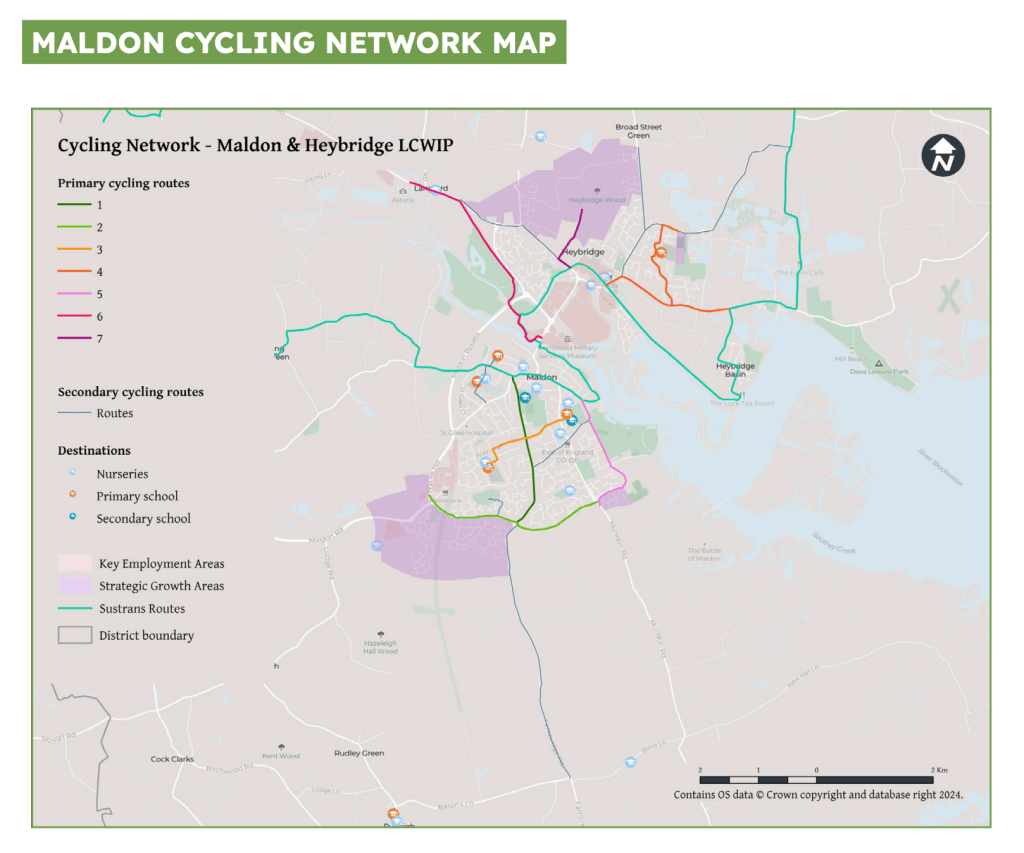
[As a reminder, settlements of 20k+ population each got their own Local Cycling and Walking Infrastructure Plan (LCWIP) while everywhere else in Essex was covered by the ‘Essex Wide’ plan. As no settlement on the Dengie reached the 20k threshold, the entire peninsula is covered by that plan. Maldon & Heybridge’s population combined exceeds 20K so they have a separate LCWIP. One of the maps in that document indicates a ‘secondary cycle route’ from Maldon into the Dengie using the B1010/Fambridge Road and ending abruptly at the Baron’s Lane junction]


The Consultation response consists of three documents :

  1. A Summary Report [pdf]
  2. A Consultation Report [pdf]
  3. A Technical Report [pdf]
Read more: The Essex-wide LCWIP

Al of these can be accessed here

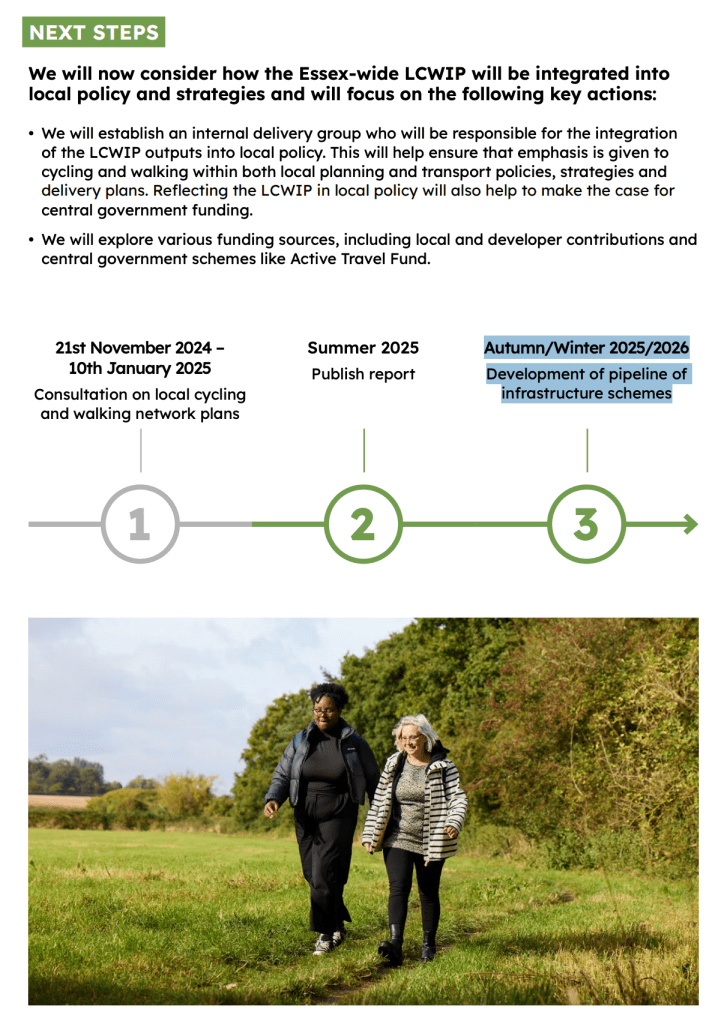
  1. The Summary Report is not particularly informative. It contains a timeline of three steps which ends with ‘Autumn/Winter 2025/2026 Development of pipeline of infrastructure schemes’ – we are in the last weeks of that period now but I can find no further information on these infrastructure schemes.

  2. If you commented on the consultation, you should find your remarks reflected in the Consultation Report (the Dengie is poorly represented in the maps included in this document with just a glimpse of the south of the peninsula to the top of the South Essex Map)

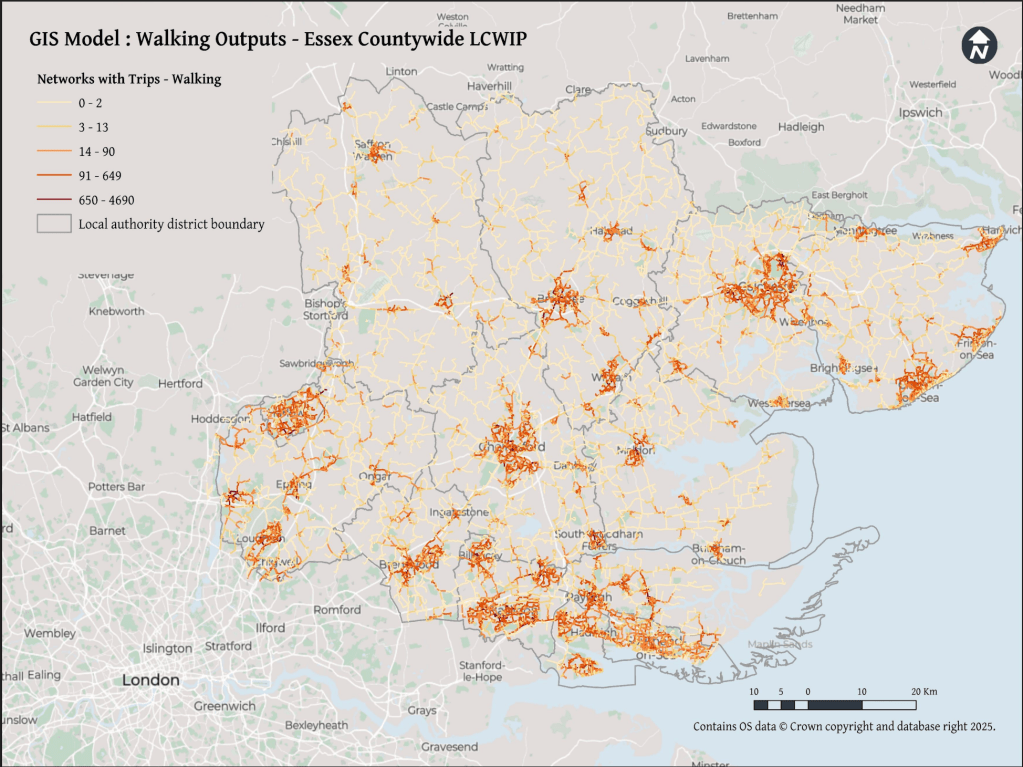
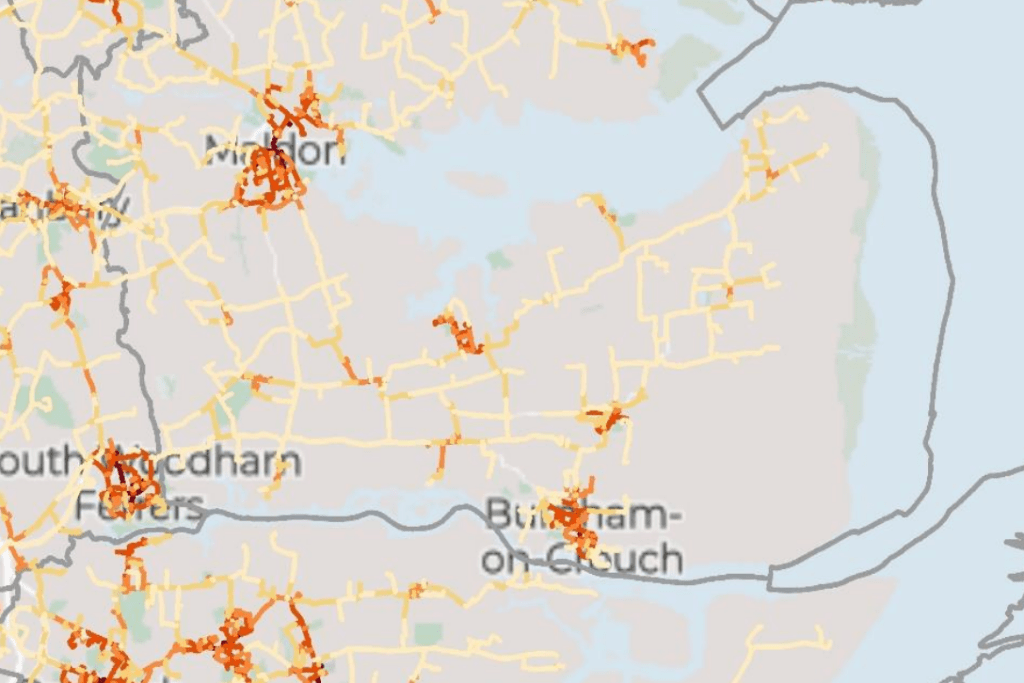
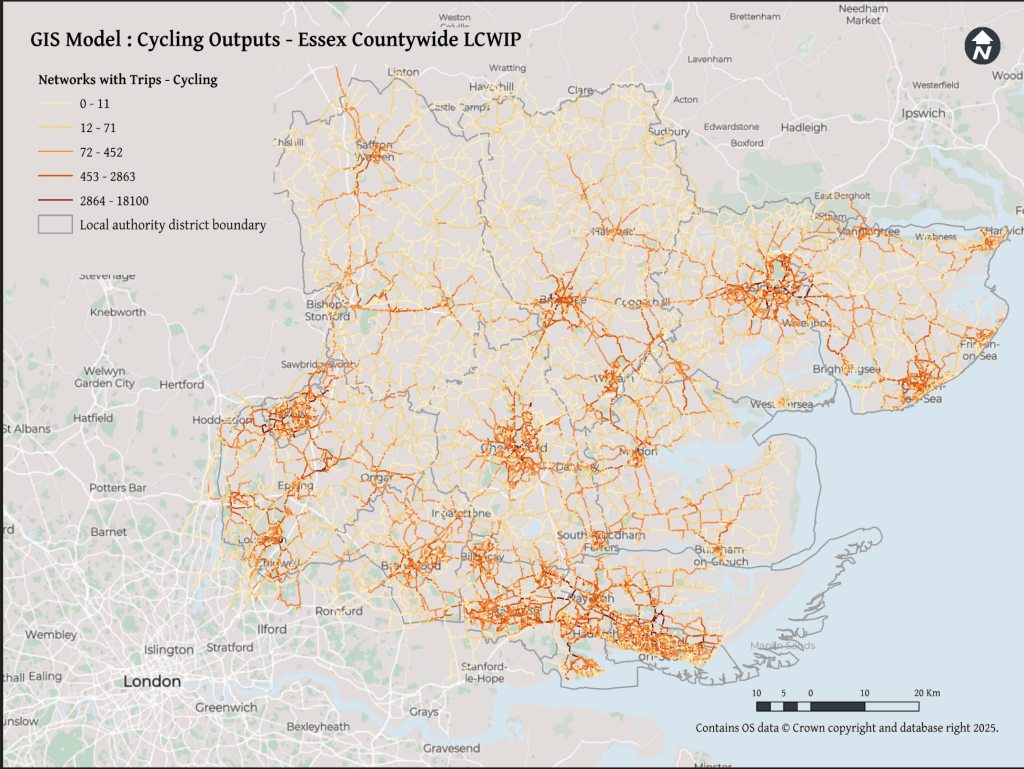
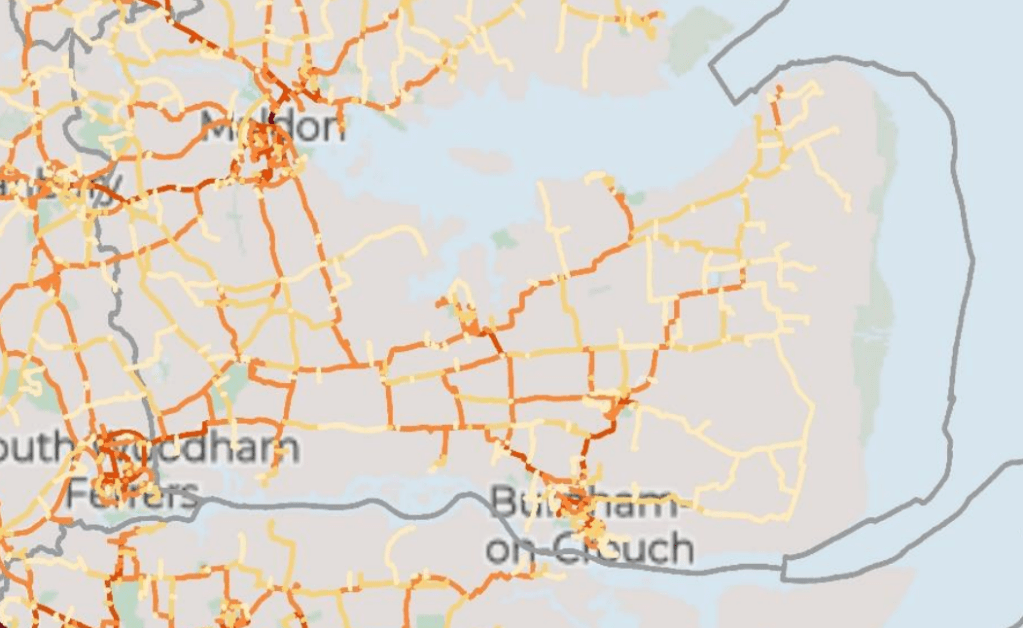
  3. The most interesting of the three documents is the Technical Report which includes new maps identifying potential key walking and cycling networks which I share below, with zoomed in images of the Dengie.

The ‘route proposals’ in the Final Network Plans look identical to those in the Consultation document however, they don’t reflect these key walking and cycling networks, and they follow existing roads without a clear sense of how walking and cycling will be made safe on these highways.

The Technical report notes that:

‘Given the rural nature of the area [Essex], the plan prioritises cross-boundary connections between towns and cities, utilising off-road routes like Public Rights of Way (PROWs) and bridleways, and innovative on-road cycling solutions in constrained networks.‘

The Summary Report expands this slightly in it’s introduction:

‘Given the mainly rural nature of Essex, the Essex-wide plan prioritises links between villages, towns and cities. The proposals aim to make use of off-road routes such as byways and bridleways, alongside innovative on-road cycling solutions on space-limited networks such as quiet lanes to deliver the LCWIPs.’

The nod to rural areas is appreciated but I’m dismayed that the strategy seems to depend on:

  1. existing byways (there are 3 on the Dengie totalling 2714m in length)
  2. existing bridleways (there are 8 on the Dengie totalling 9,178m in length)
  3. existing ‘quiet lanes’ (there are none designated in Maldon District totalling 0m in length)

That’s a total of a bit over 7 miles of ways that already exist and that we know are not fit to provide a continuous cycling route – they are isolated, dispersed, poorly connected and provide no east-west connections. I haven’t yet found any reference to improvement works on these already existing paths, so its unclear what the consultation/strategy/plans have added to the status quo.

It may be that the plan is for new off-road routes, new byways, bridleways and quiet lanes – which would be great! I haven’t found any hint of that in the documents yet though.

You’ll also have noted that the walking and cycling plans often seem to just talk about cycling. New cycling routes would also increase capacity for those walking and wheeling but it would be good to see some more reference to the particular needs of all active transport users in these reports

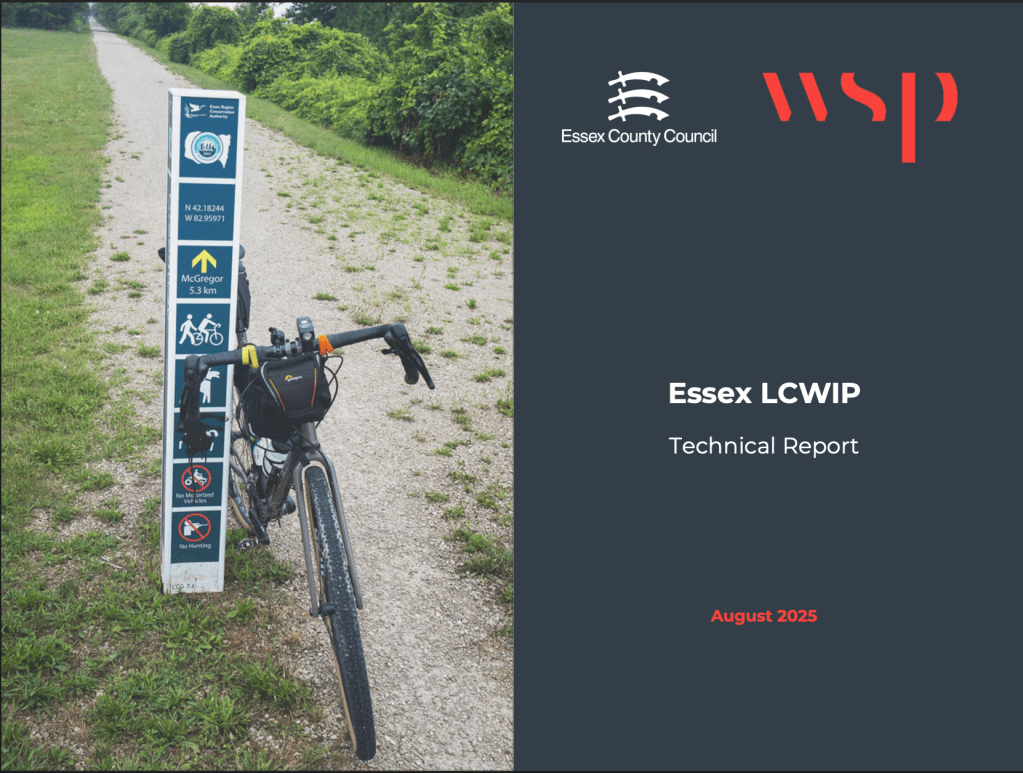
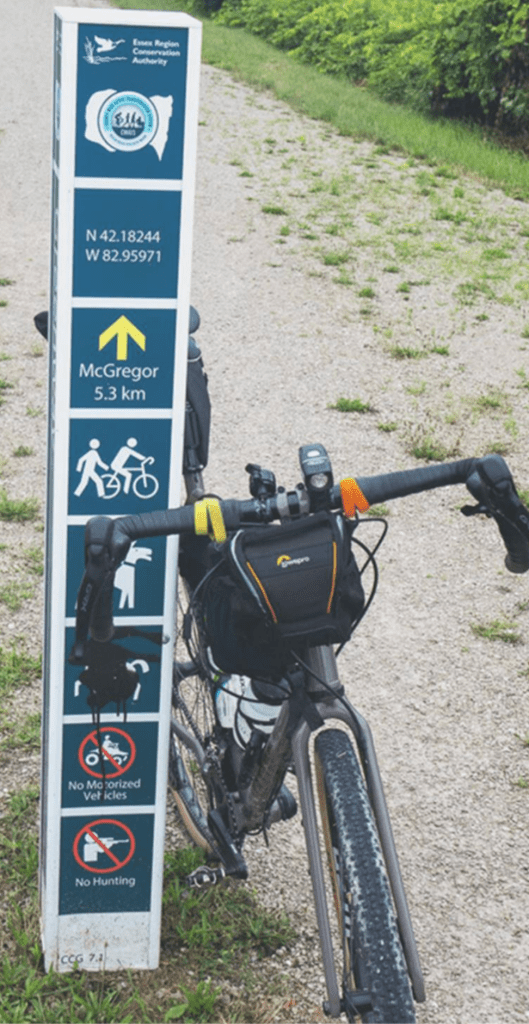
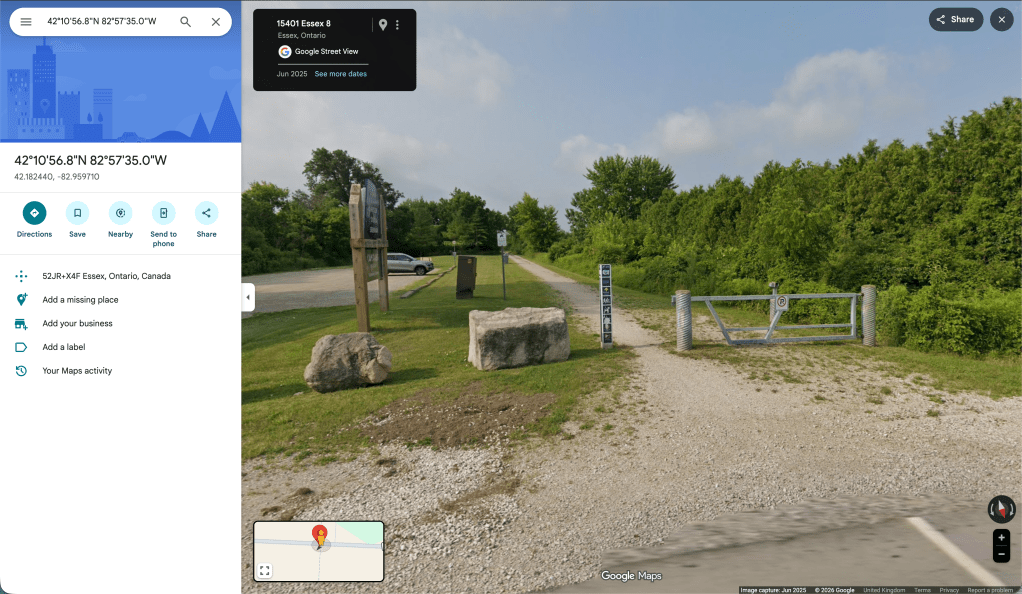
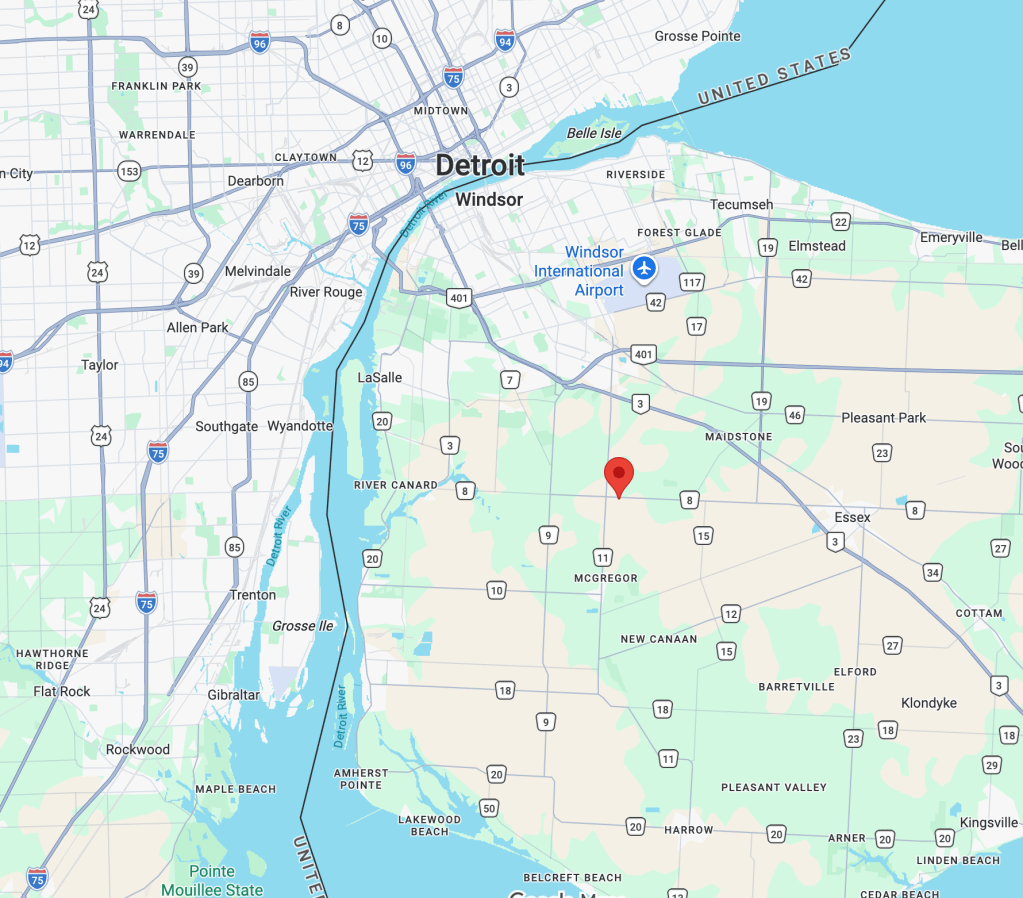
The Technical Report prepared by consultants WSP has a photograph on its first page of a rural cycle path, with a bike propped up against a smart wayfinding post which immediately had me wondering where in Essex this was, as I haven’t seen anything like it in the county before. I zoomed in to see more detail – at the top there’s a logo and text for the ‘Essex Region Conservation Authority’, neither of which I recognise, and the phrase ‘Essex Region’ sounds off. Below this are some co-ordinates that seem off too and a distance marker to somewhere called McGregor. The final square on the post has a person with a rifle on it and the legend ‘No Hunting’.

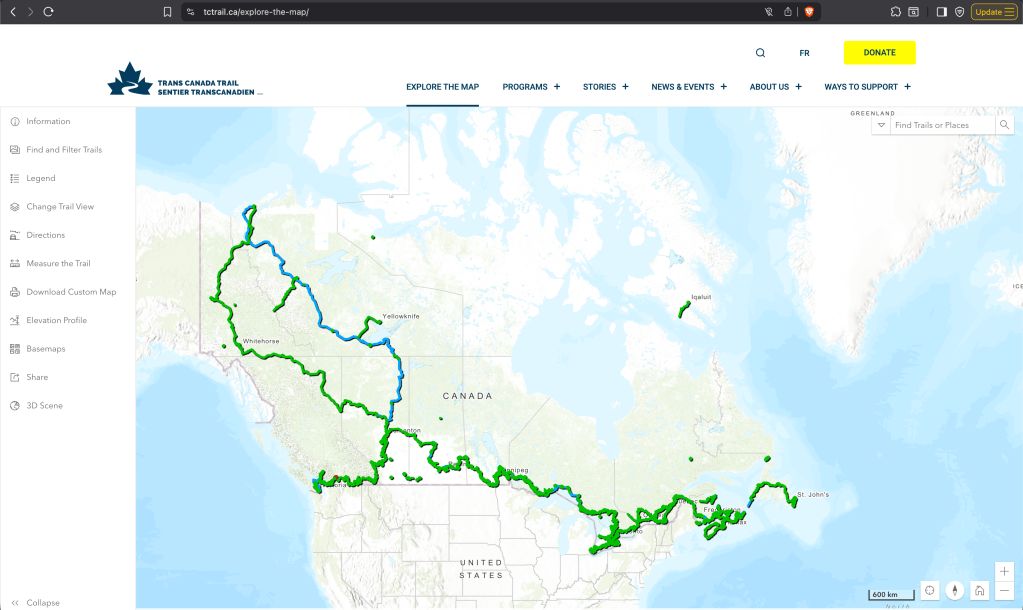
If you hadn’t guessed it yet, this photograph isn’t from the English county of Essex, it’s from 6000km away in Essex County, Ontario, Canada – close to the motor city of Detroit. It’s a photo on the Chrysler Greenway, a 50-kilometre nature trail that comprises the southernmost link of the Trans Canada Trail – at 28,000 km (17,000 mi) the longest recreational, multi-use trail network in the world.

I trust that this indicates the scale and ambition of Essex County Council’s plans rather than a stock photography fail by a WSP intern and I look forward to the Autumn/Winter 2025/2026 announcement of the infrastructure schemes to make it happen!

Better Walk/Wheel/Cycle Routes

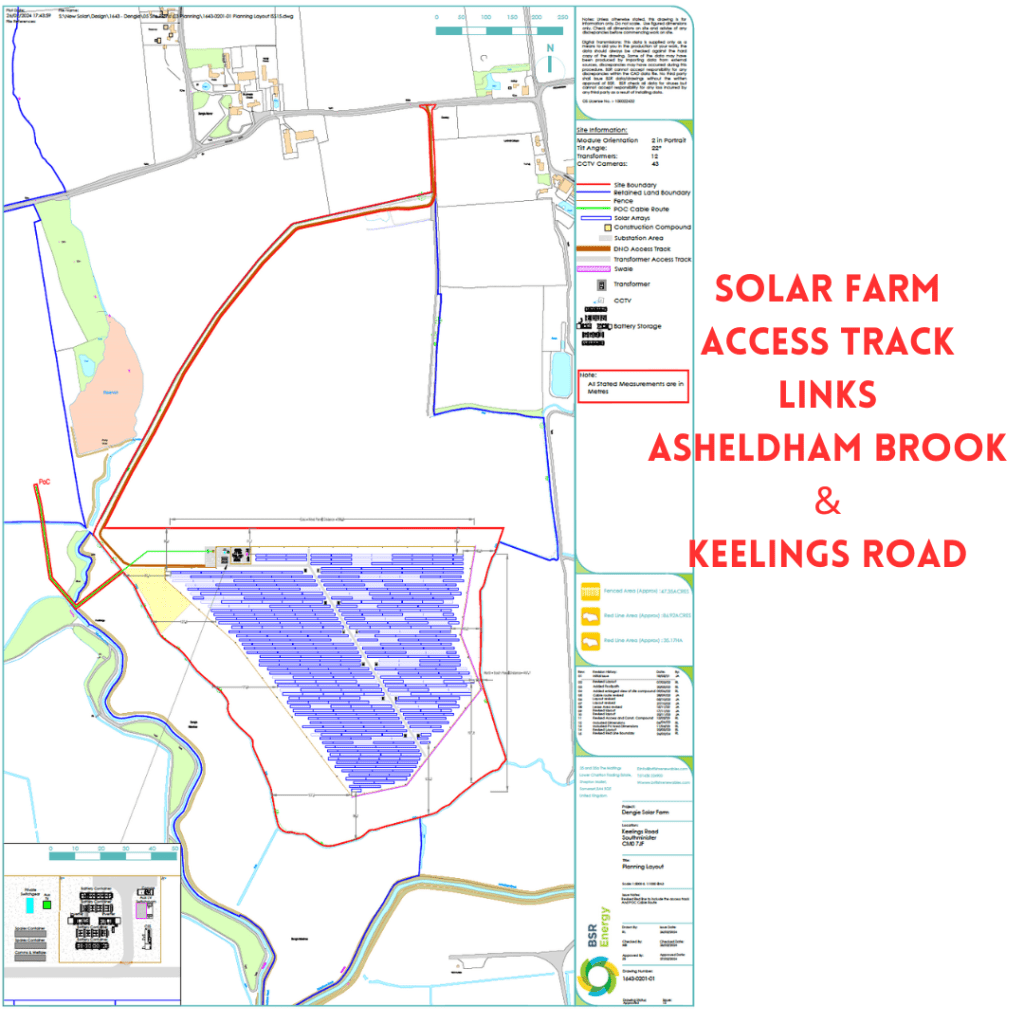
Next week, work commences on a solar farm south of Keelings Road, Dengie.

This will involve constructing an access road from Keelings Road to Asheldham Brook, which could be made suitable for cycle access.

From Asheldham Brook it’s only 2km to The Marshes, Southminster through land (Northwycke Farm) with a single owner: Lincoln College, Oxford.

Continue reading “Better Walk/Wheel/Cycle Routes”

Weeknotes 02025 Q1 Week 3

DCAP

Various admin tasks – registration as trustee, bank account stuff. The Trustees are considering our Membership model and how best to manage it

I’ve received hints of a local actor taking an interest in the organisation and seeking information about us without just coming and asking us. For me, this reinforces the need to protect ourselves from malign intentions.

Continue reading “Weeknotes 02025 Q1 Week 3”

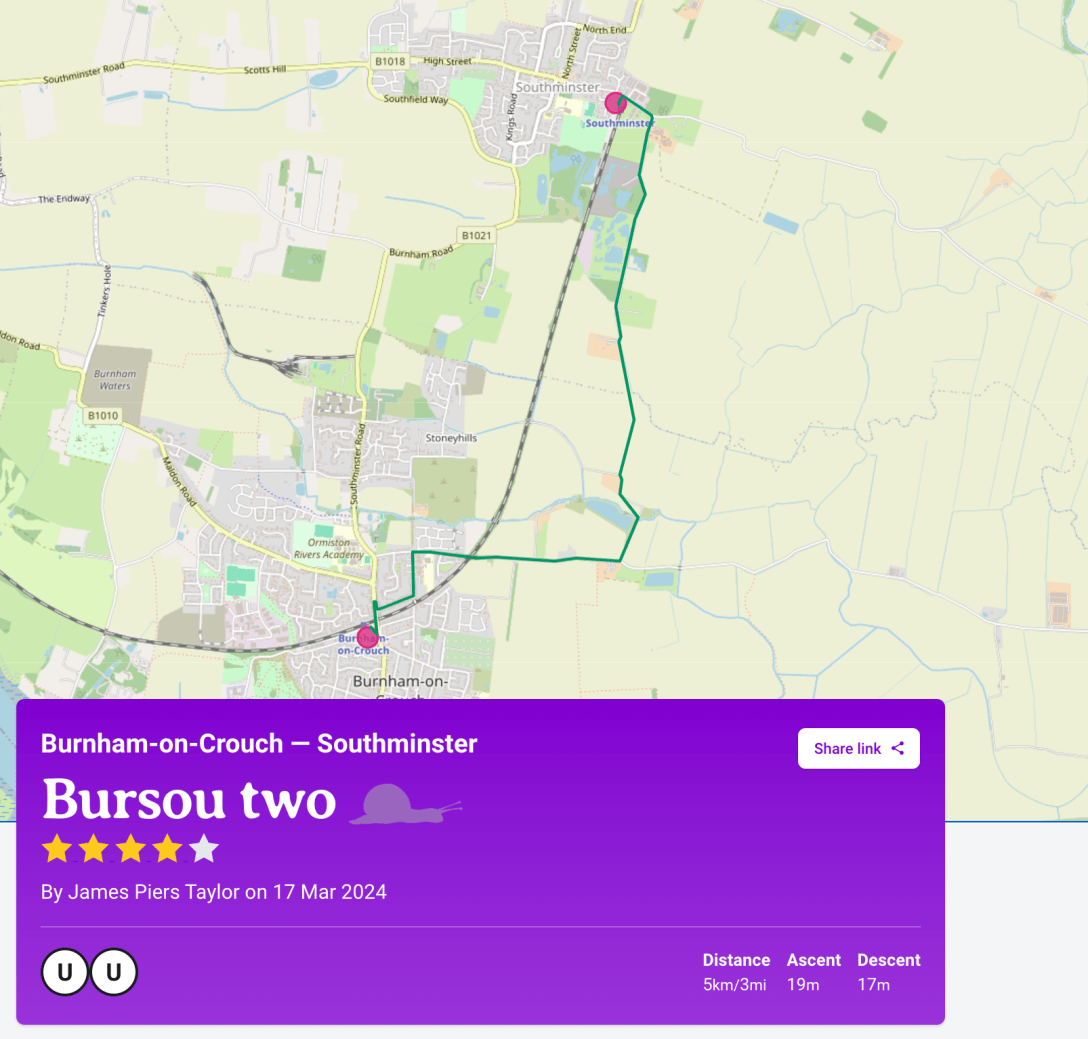
Bursou Two

In the previous post, I mentioned that the Slow Ways route Bursou One is one of three footpath-orientated ways between Burnham and Southminster. I committed to adding my preferred walking route between the two as an additional Slow Way. It’s now been added as Bursou Two. Below, I have appended my route description from the site, plus a review of walking it on Sunday 17th March.

Continue reading “Bursou Two”