New Paths – South Woodham Ferrers

Last weekend I walked the two new local sections of the King Charles III England Coast Path (KC3ECP), this is my second account focusing on the new route between South Woodham Ferrers and Battlesbridge, part of the section WIB 3: Hawk Hill Bridge to Clementsgreen Creek [pdf]
After reaching South Woodham Ferrers, as described in the previous post, I left the sea wall at the western terminus of Clementsgreen Creek on to Creekview Road and walked across town to the railway station on pavemented streets.

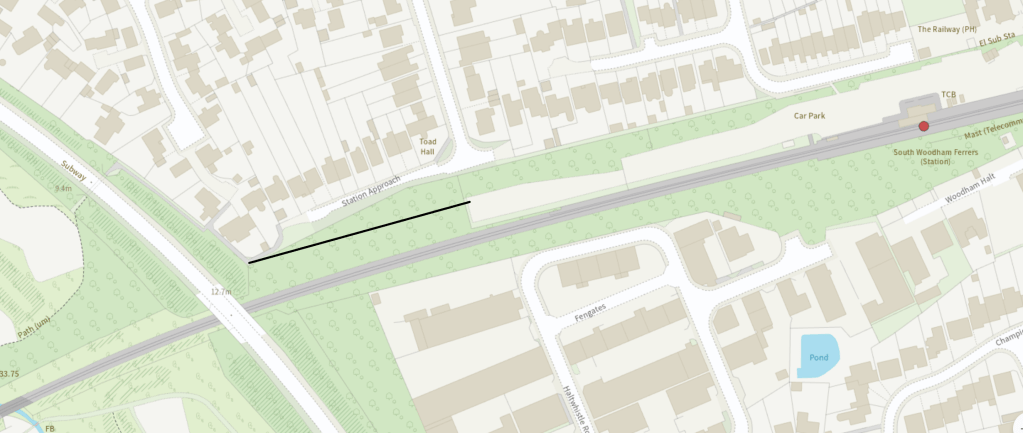
I left the railway station through the station car park on to footpath FP 40 298 which travels west, through an underpass below Ferrers Road, into and part-way across Woodham Fenn nature reserve.
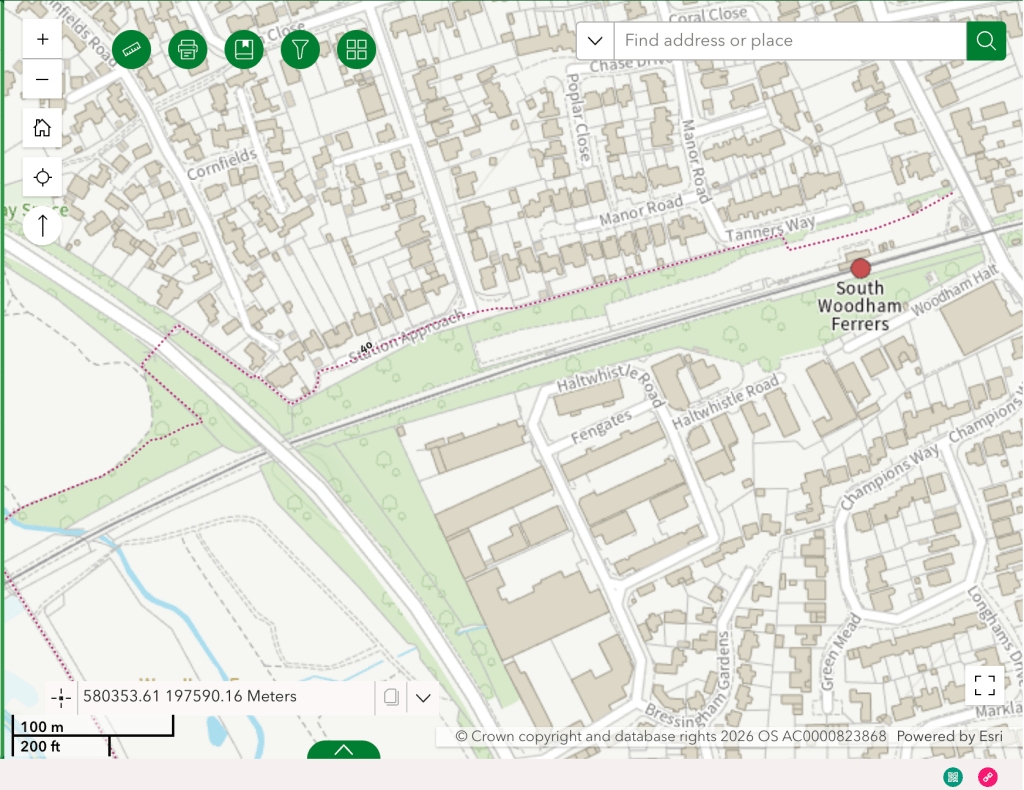
Essex Highways PROW map showing footpath FP 40 298
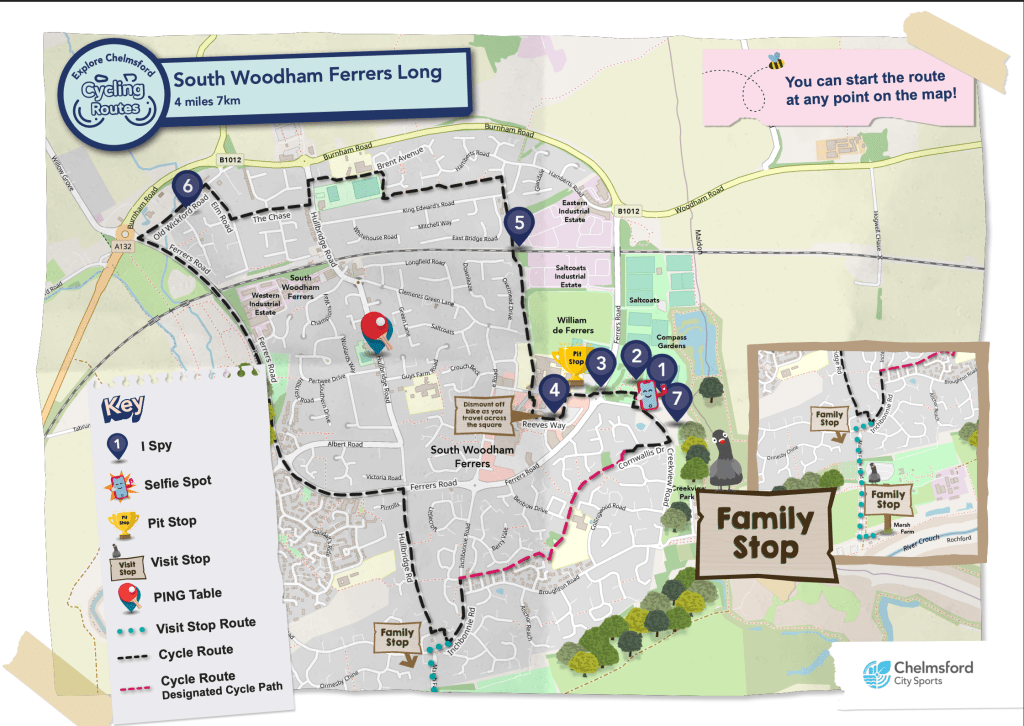
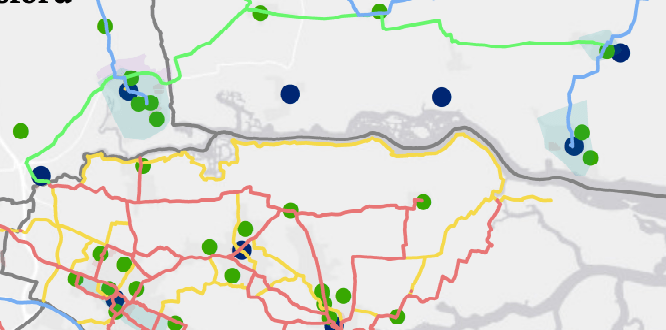
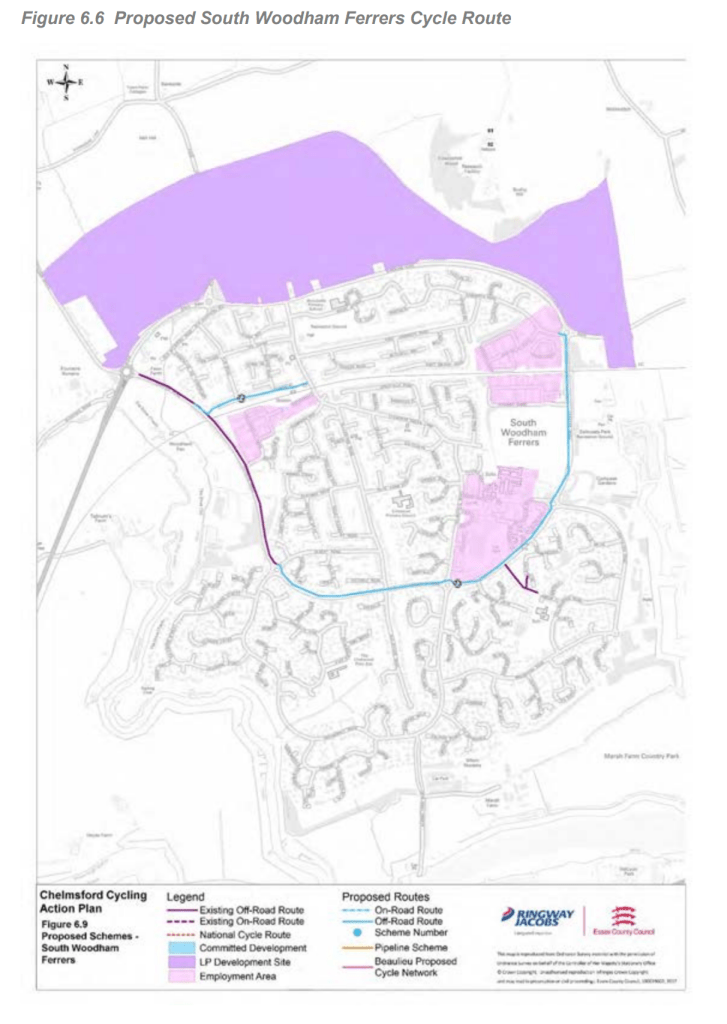
Map of existing /proposed cycle routes in the Chelmsford Cycling Plan, blue line in left middle is footpath FP 40 298 route (poor quality image in uploaded copy)
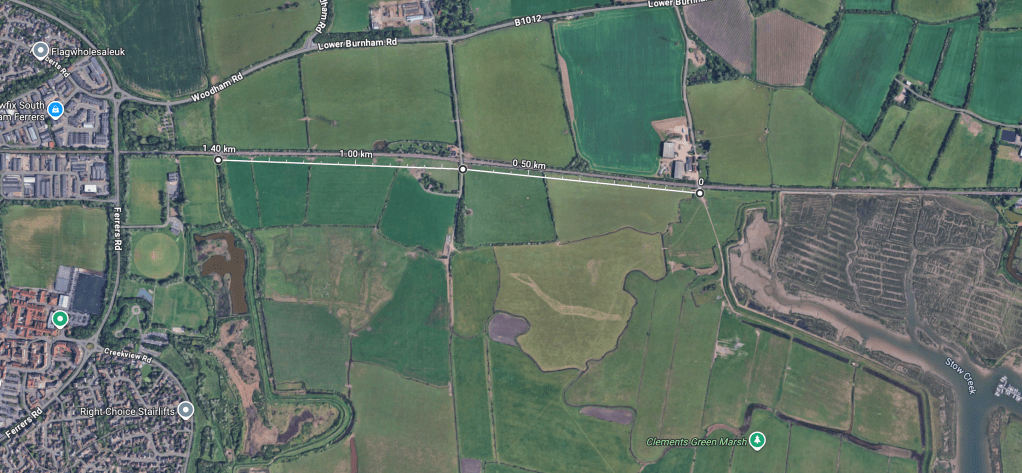
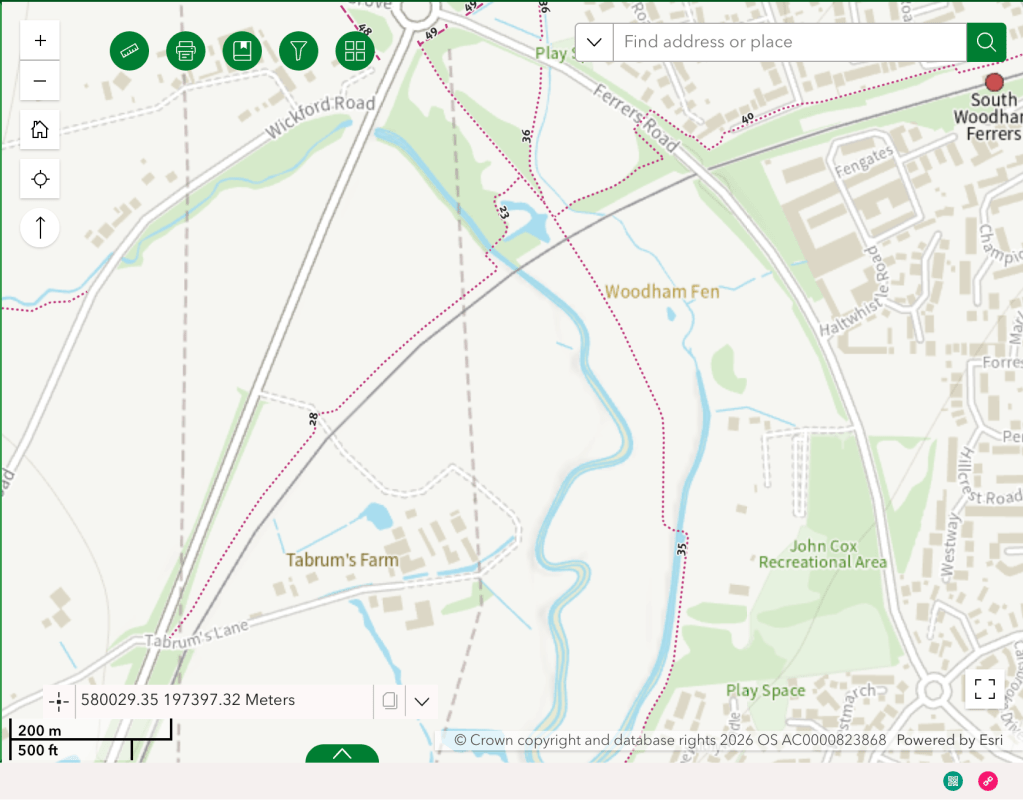
Proposed cycle route using station carpark and railways owned land to avoid narrow sections of FP 40 298

The section between the station and the underpass was proposed to be ungraded to a shared use path available to cyclists in the Chelmsford Cycling Action Plan (March 2017) [pdf]. It notes

‘there is also the possibility to connect to the station from the west by upgrading an existing footpath (Figure 6.6). However it appears the footpath uses an underpass to cross Ferrers Road and so to connect to the existing cycle route the levels difference would need to be addressed.’

(do the people who write these documents actually do site visits?)

(FP 40 298 has sections that are fairly narrow for a shared used path, but this could be easily addressed by using more of the railway station carpark and establishing a section of new route through land owned by the railways, as show in a map above)

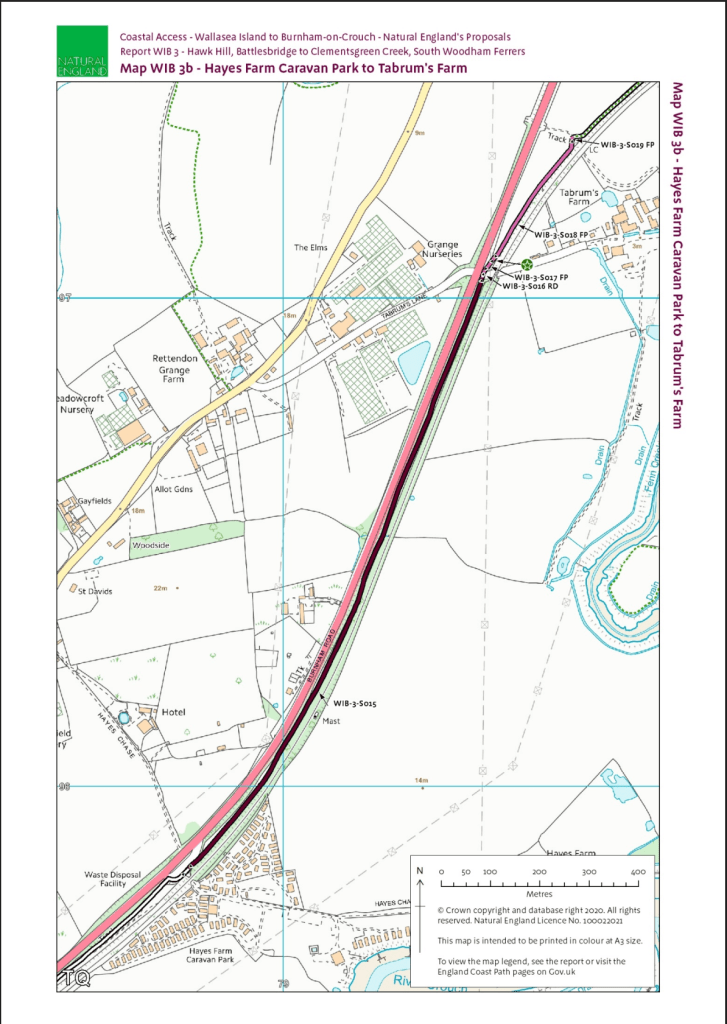
It would be useful to connect this path into the Ferrers Road cycle route, but it would also be valuable to upgrade the full length of this footpath for cycle use, alongside sections of FP 35 298, FP 23 298 and FP 28 229 to provide a walk/wheel/cycle route from South Woodham Ferrers all the way to where Tabrum’s Lane is split by the A132 (this is the route I walked). The westerly section of Tabrum’s Lane, opposite where the route ends is a country lane ideal for being designated with Quiet Lane status. Immediately to the south the new Right of Way established parallel to the A132 commences for the KC3ECP.
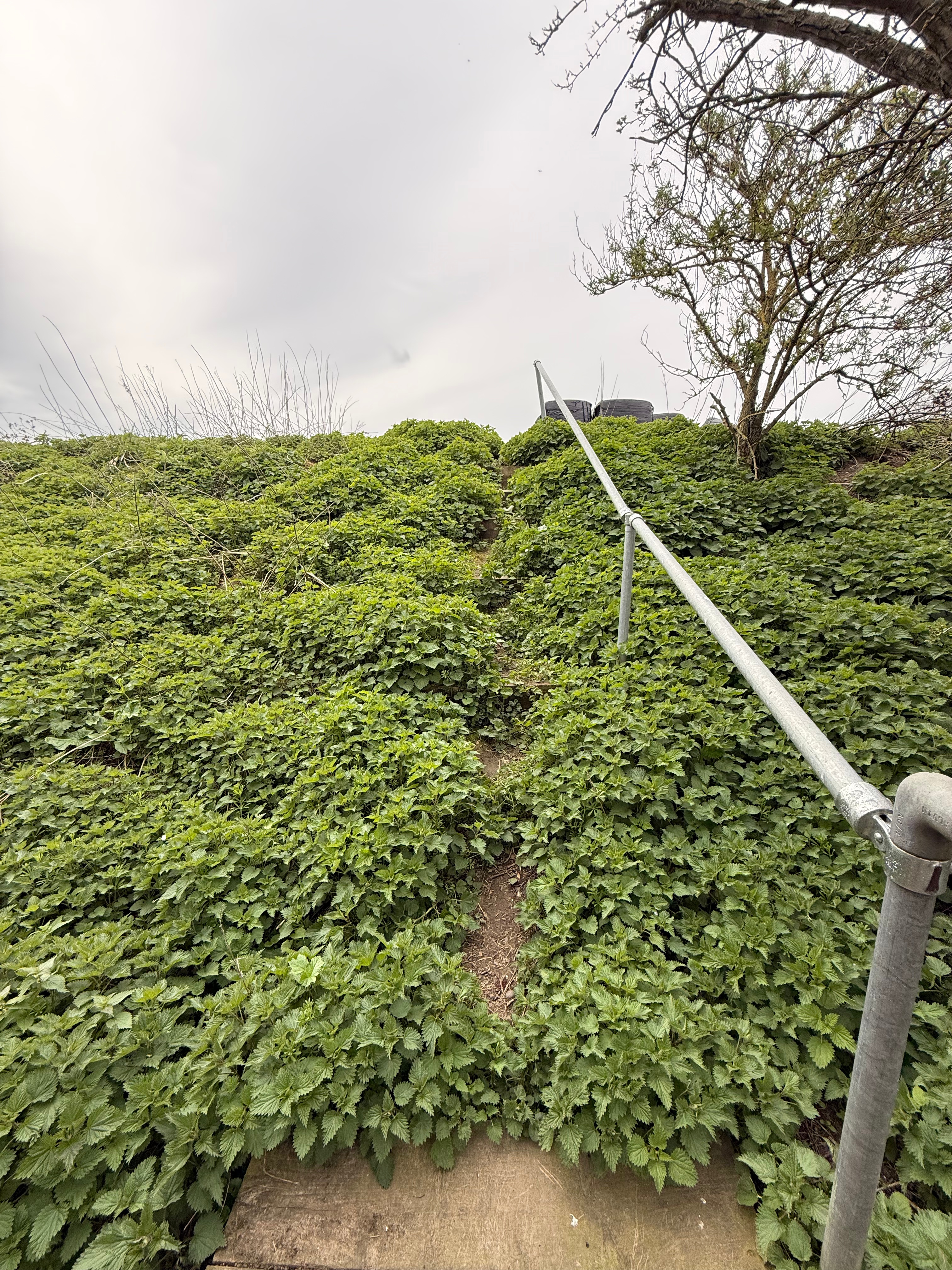
As with the new section discussed in the previous post, it is disheartening to discover the lack of consideration for accessibility paid in the new stretch of Right of Way beginning at this point (WIB-3-S015). Across Tarbrum’s Lane, users are immediately confronted with steps.
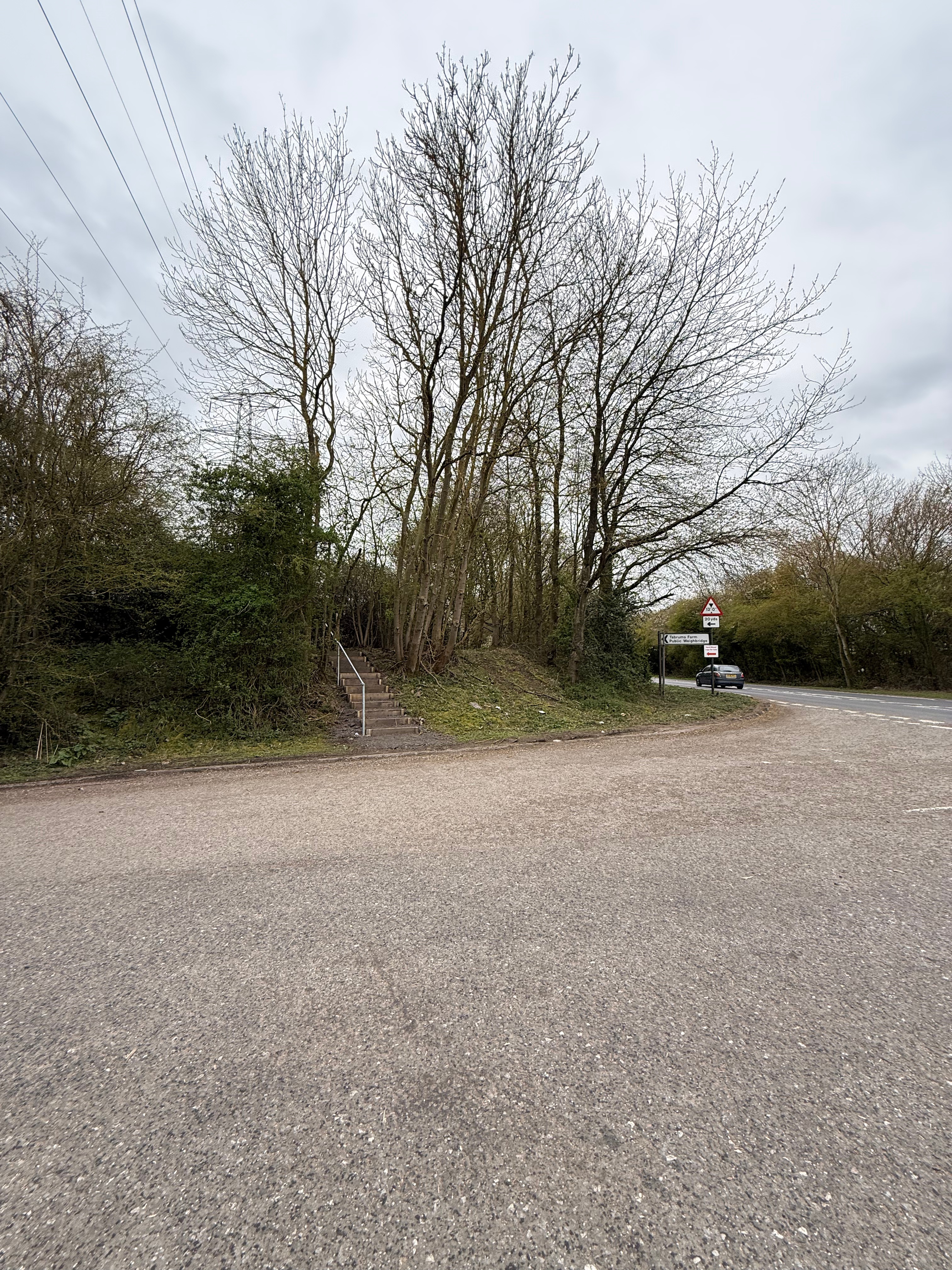
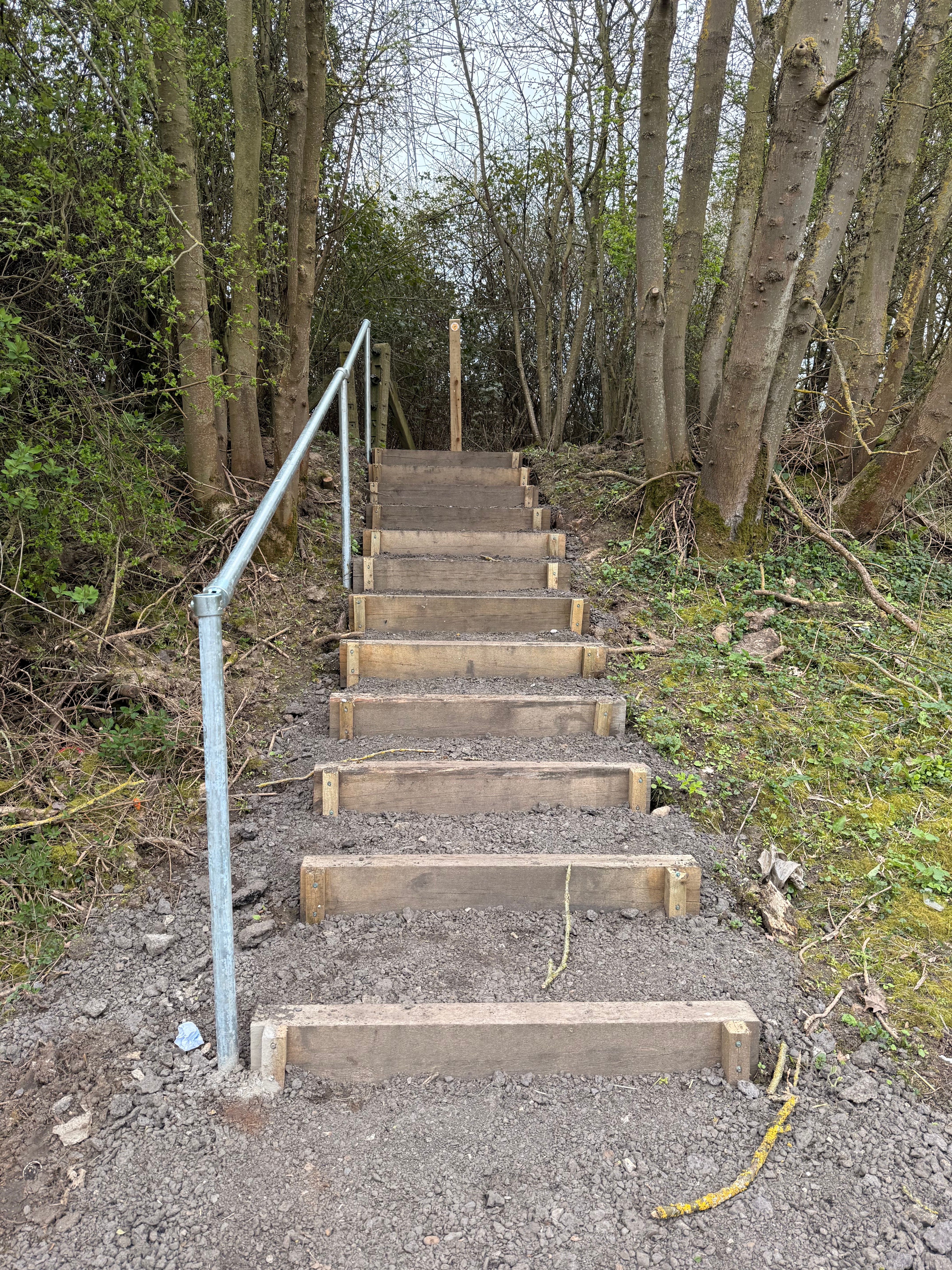
There is a level change here, and the new path takes an elevated route, so some mechanism is necessary – but why not a slope accessible to a wider range of users? There is enough room here.

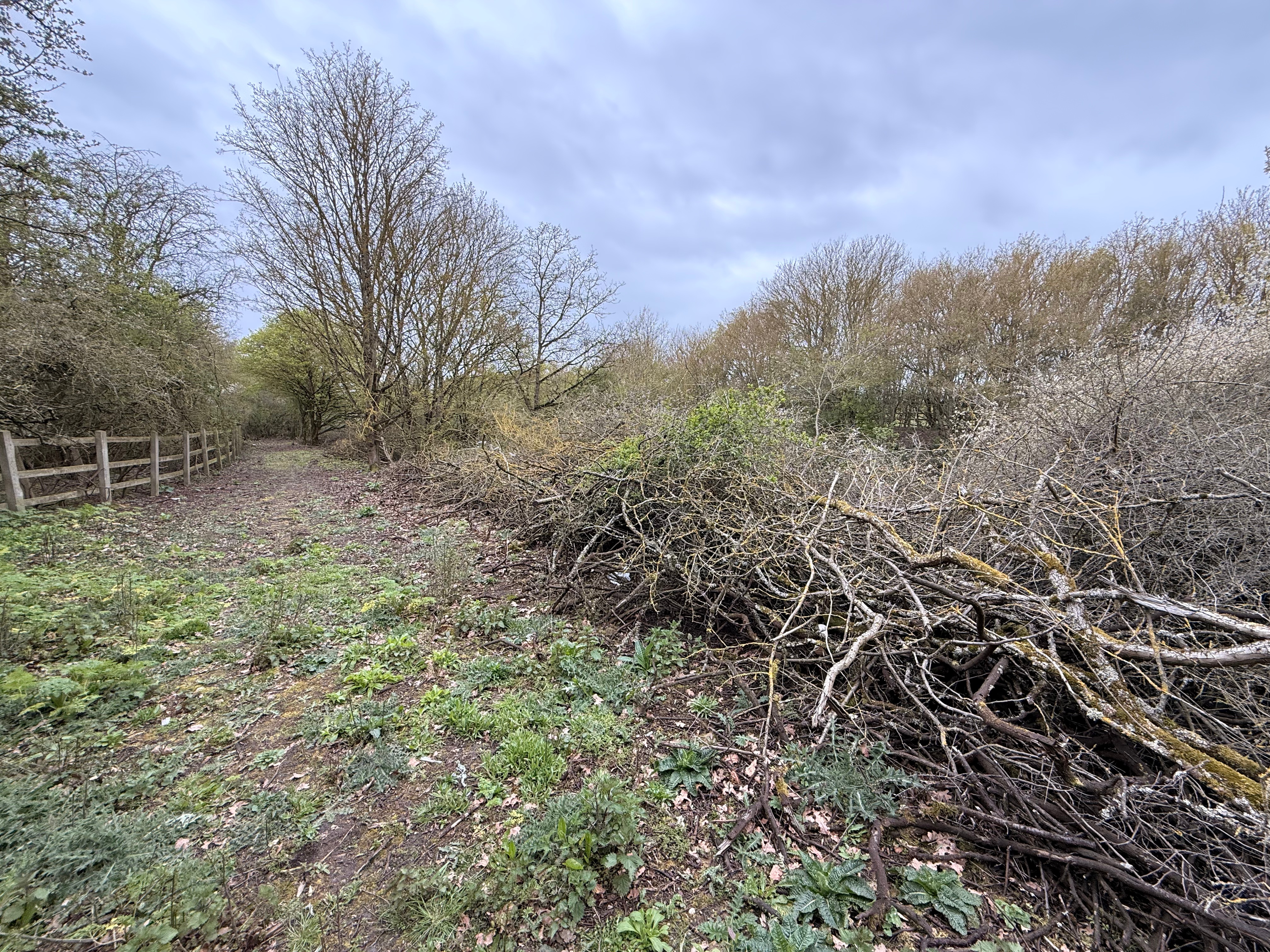
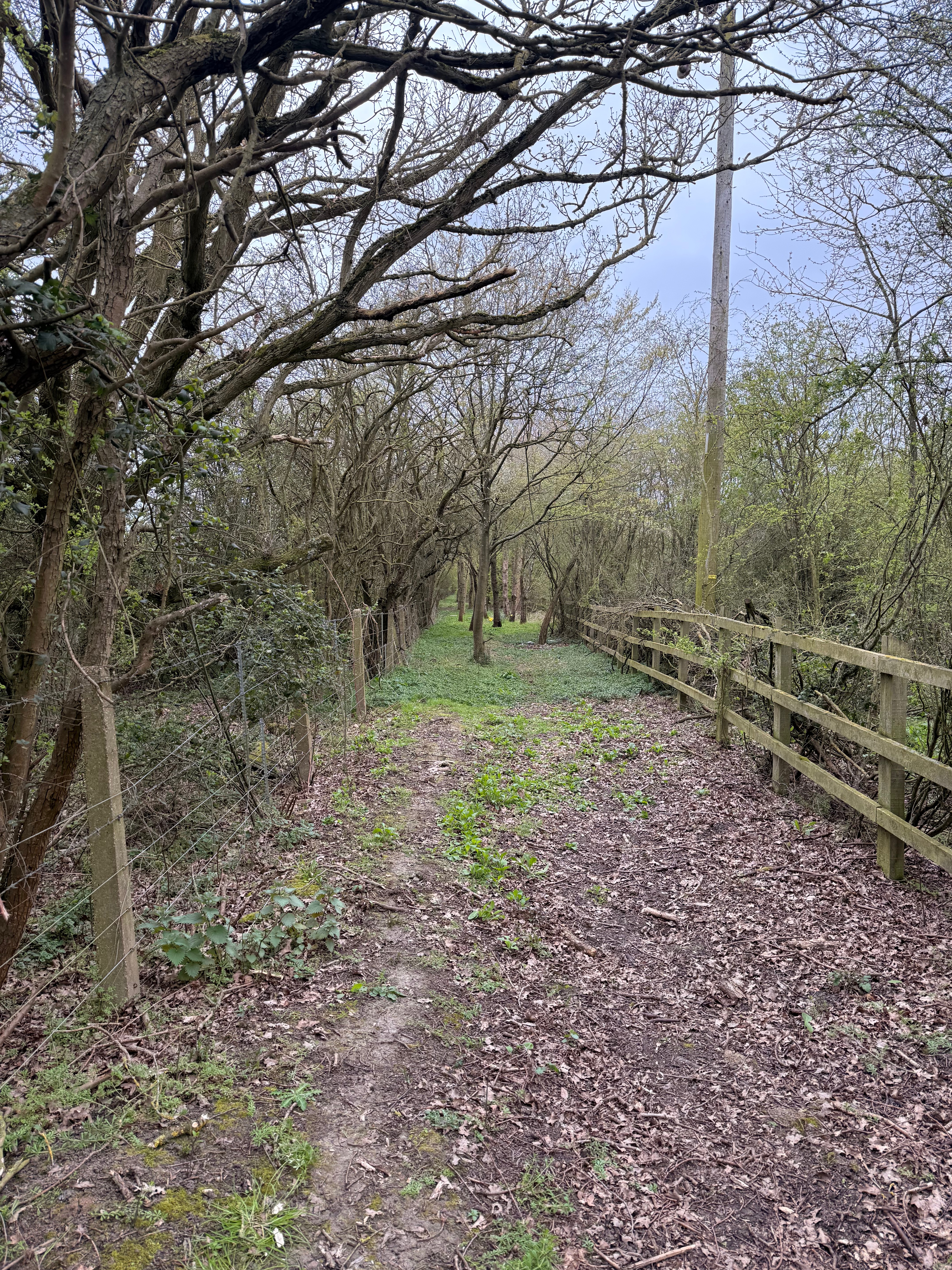
The route from here is recently cleared of trees and undergrowth. There’s no surface work, but its reasonably level. Foliage seems to have been cut at ground level rather than uprooted. Despite taking care, I stumbled on four occasions when I tripped on woody stumps protruding just above soil level. It seems pretty clear that there will be extensive regrowth here. Ground cover plants were already spreading and I suspect that many of the trees have effectively been coppiced and there will be new shoots from the stumps before too long. Side growth is also likely to be an issue, and the light newly reaching the floor will likely encourage blackberry incursion. As the path gains foot traffic, there will be some suppression through use but the maintenance task here should not be underestimated. My contact at Natural England noted:

‘I have previously discussed with colleagues at ECC that just clearing the scrub may not be sufficient and that there may need to be some form of surfacing (not metalled) if as I believe the enclosed nature means the ground lies wet for longer. The newly cleared areas will also encourage more vigorous side growth and spread of the likes of bramble and nettle. I encouraged them to consider seeding the length and then cutting it frequently (at least 4 times a year) to encourage a good grass cover but I don’t think this was undertaken.’
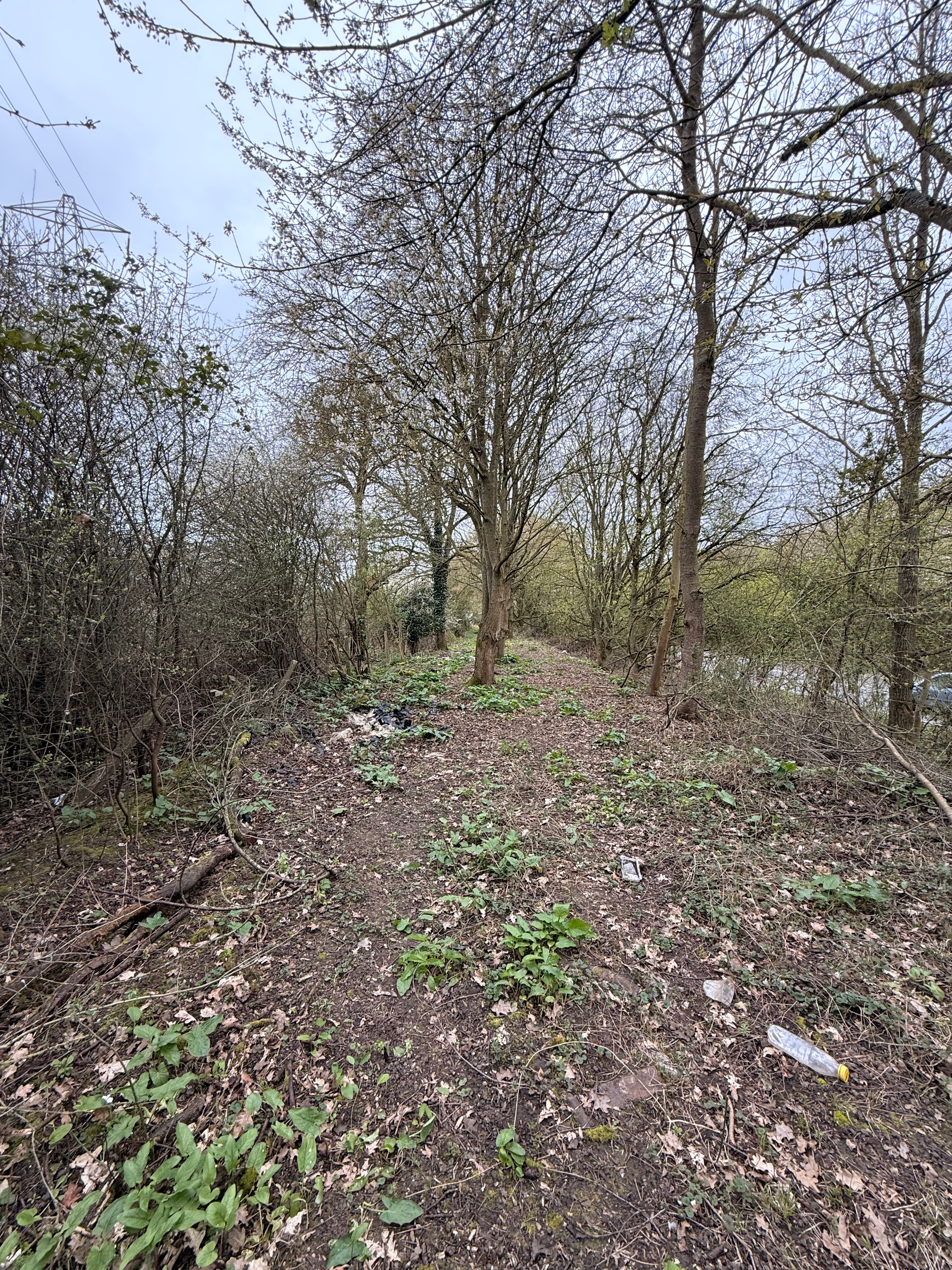
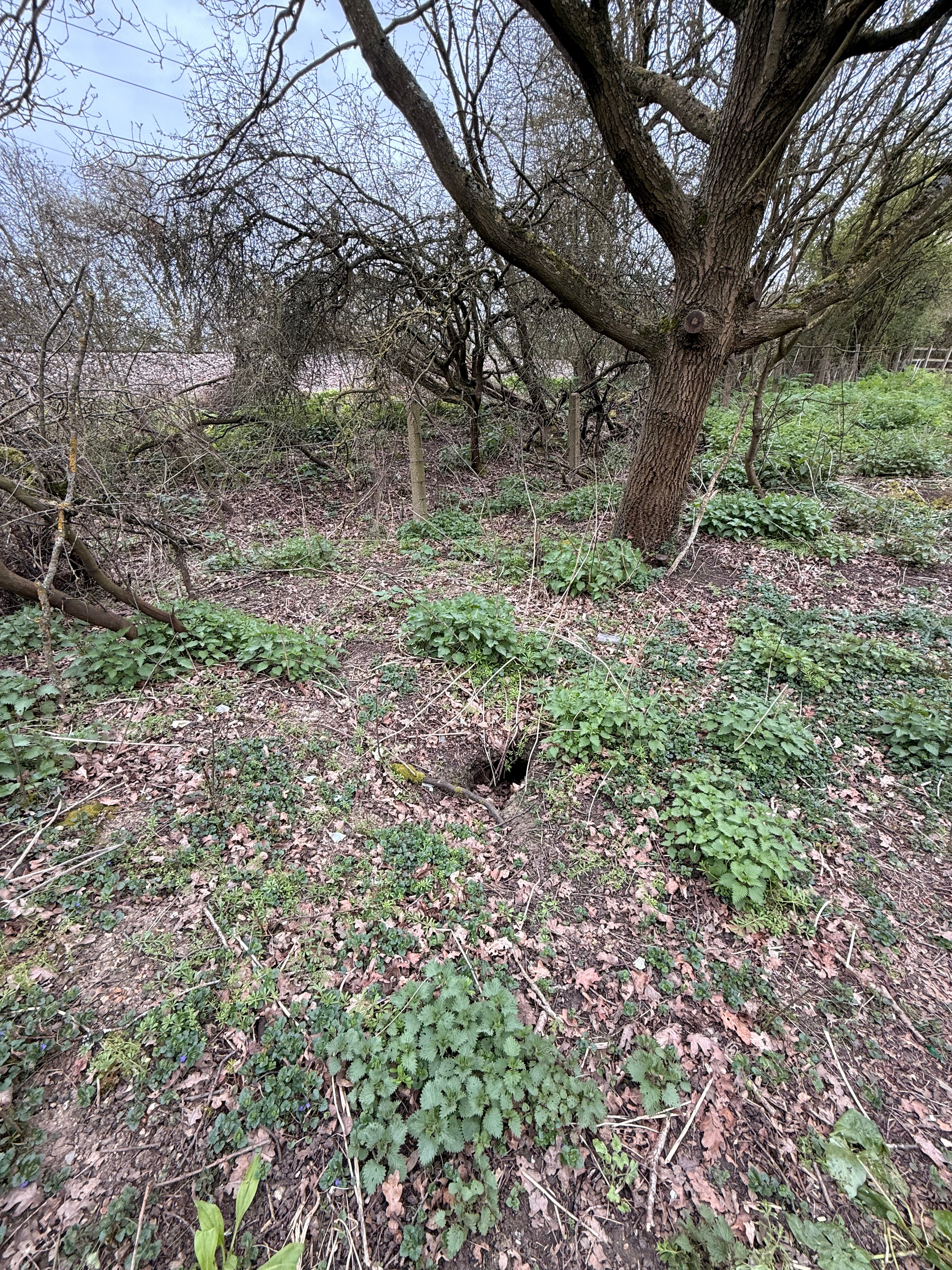
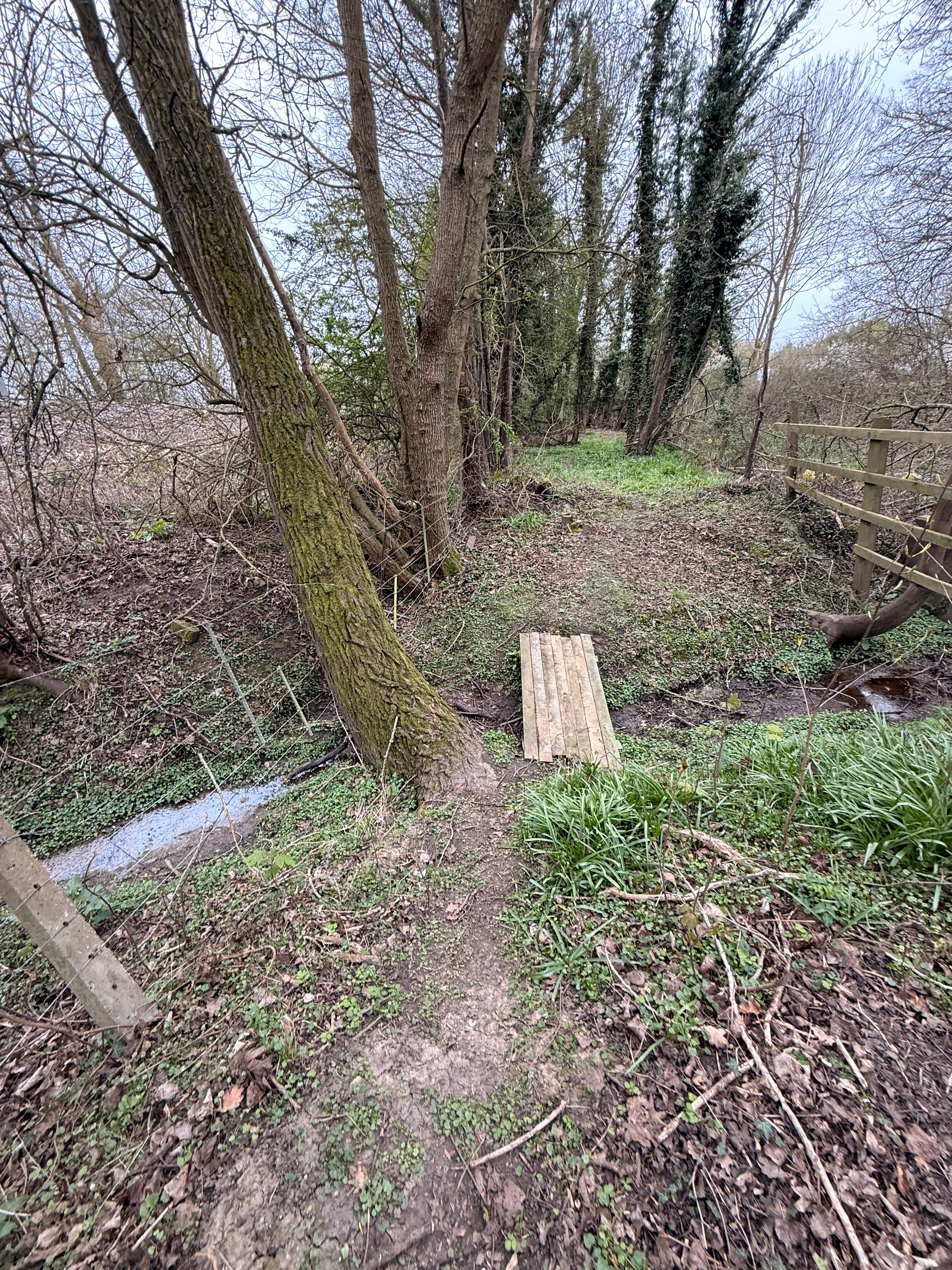
There’s an opportunity here for an infrastructure intervention that would decrease the maintenance task and expense by providing a surface suitable for bicycle use and giving the route the higher rights that would allow it. Making the route accessible to cyclists, with some surface work, slopes rather than steps and attention to a footbridge would also improve wider accessibility for walkers and wheelers.
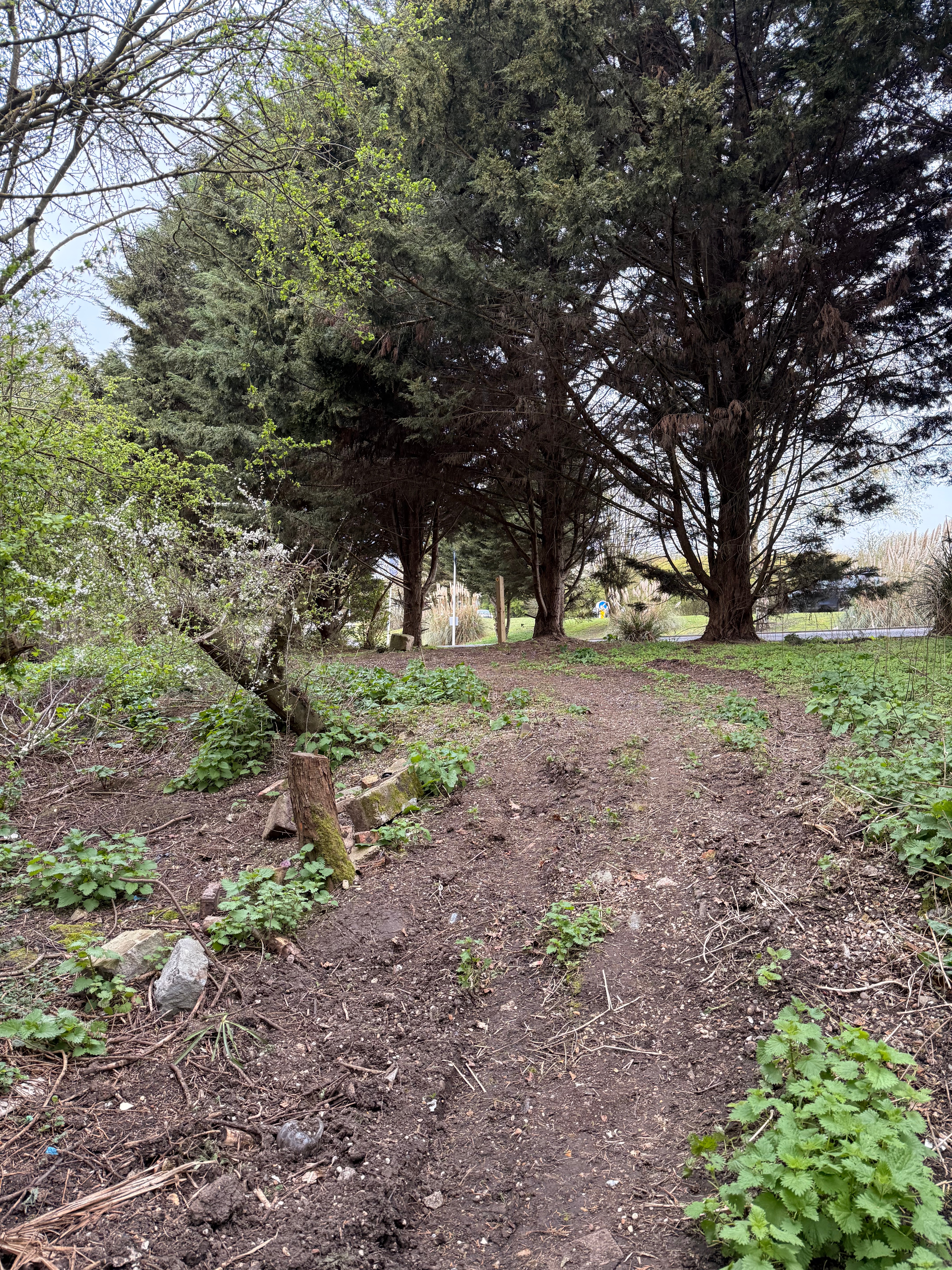
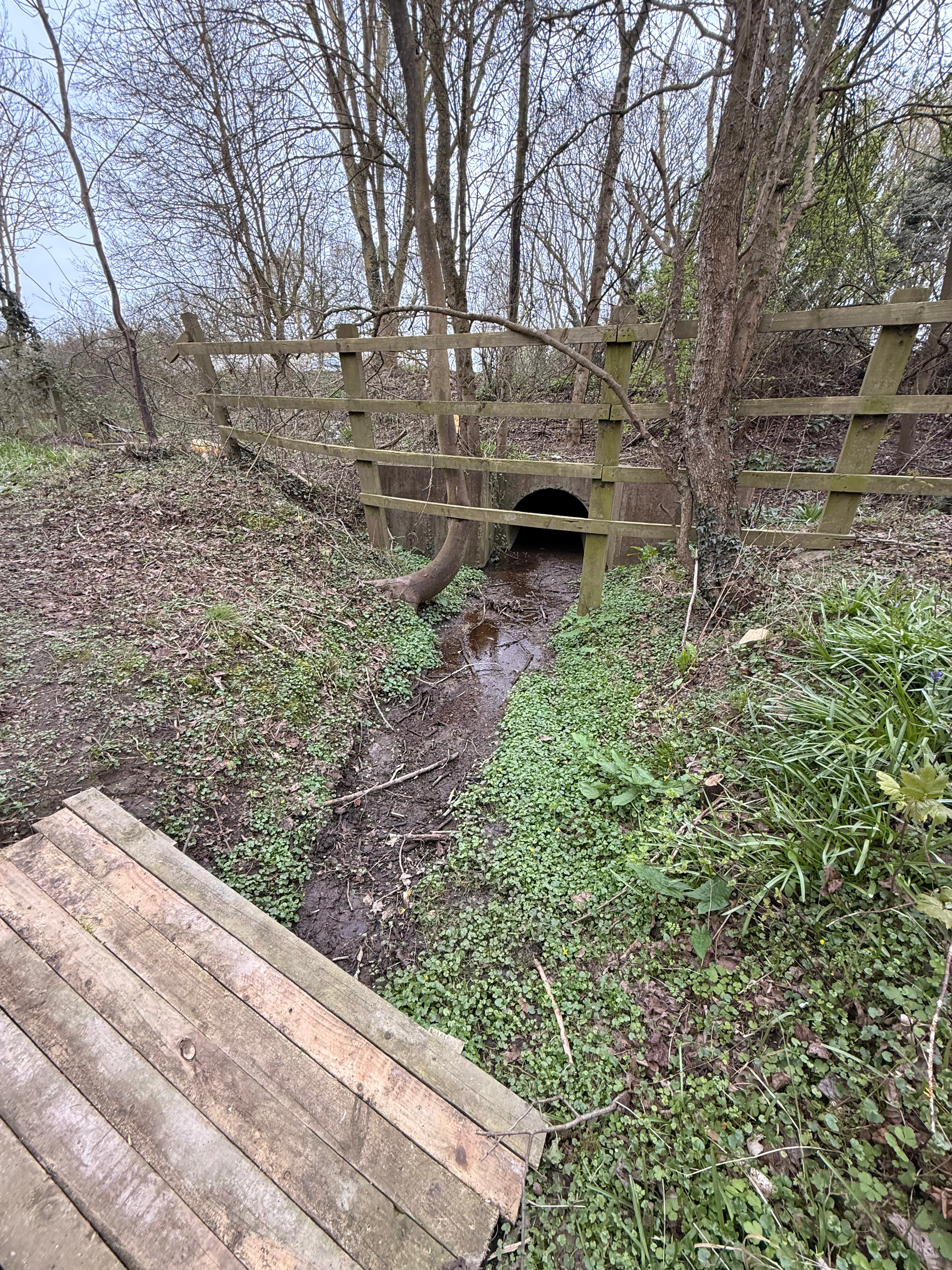
There’s a scramble up where the path meets Hayes Chase. There’s no assistive infrastructure here at all yet, so it’s a clear opportunity for an accessible alternative to more steps.
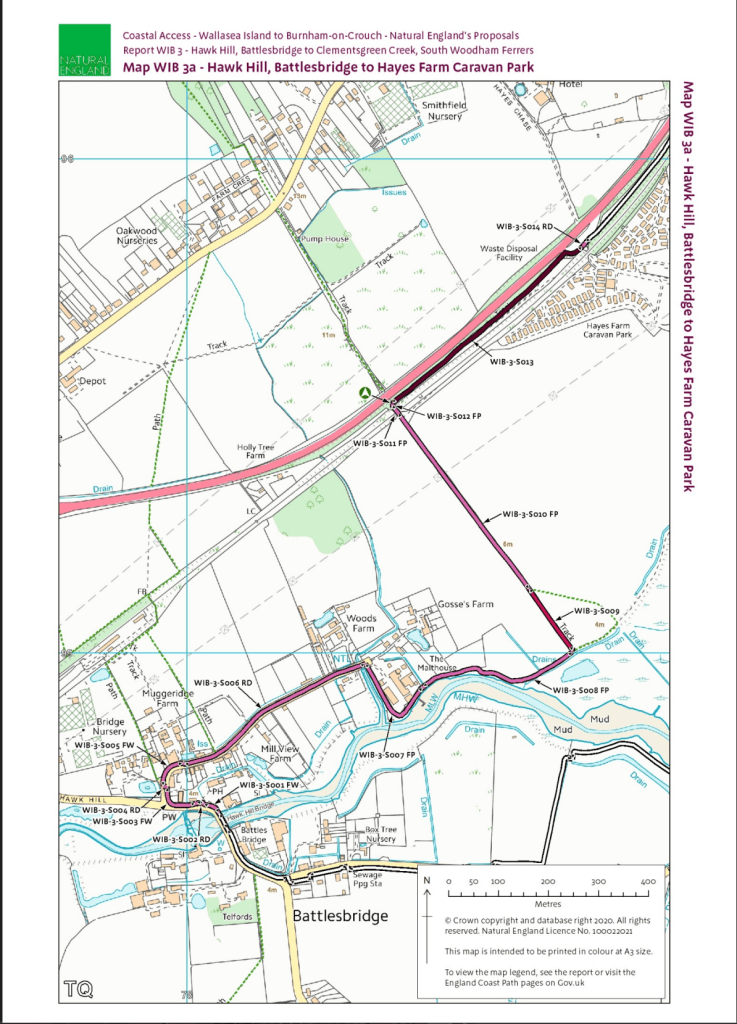
The route continues from Hayes Chase in much the same way it got there, on a path parallel to both the A132 and the railway line, with the dame challenges as before.

The new section concludes when it reaches footpath FP 27 229 and a bridge (Wis/803 (meesons)) over the railway line. It’s an easy walk from here down a gravel track to the sea wall and west on that to join Maltings Road.

What about cyclists though? At this point we are very close to the proposed route of National Cycle Route 135 (Stock to Southend) [pdf] and potential for connecting South Woodham Ferrers and the Dengie peninsula into the national cycle network (as well as Battlesbridge railway station and local attractions Battlesbridge Antiques Centre, pubs and cafes). It’s not an opportunity we want to miss!
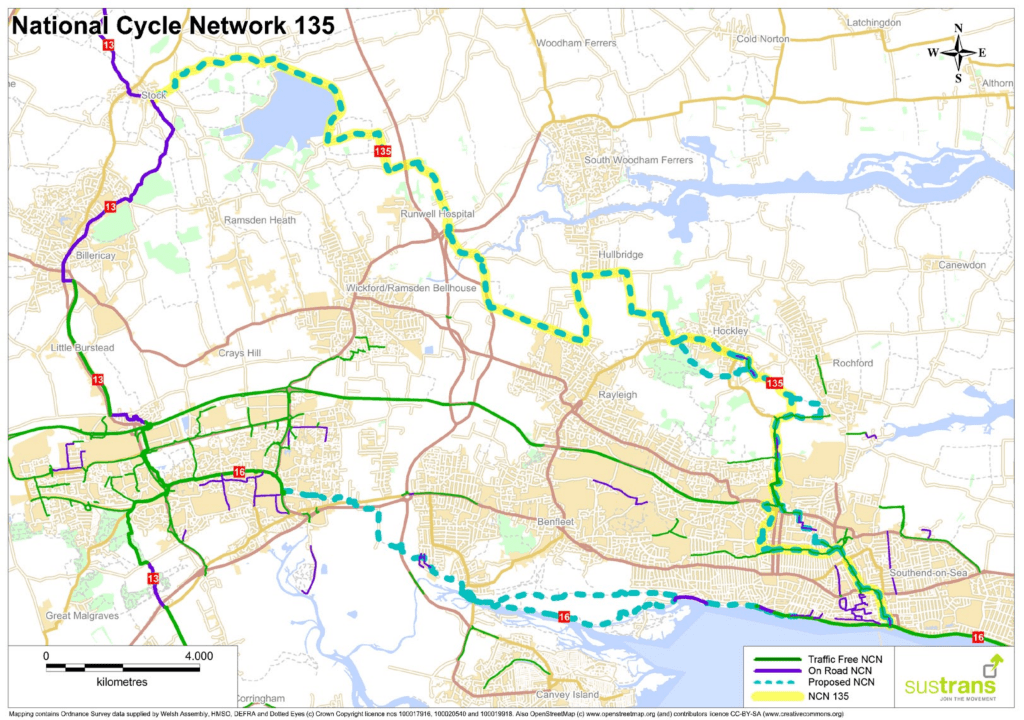
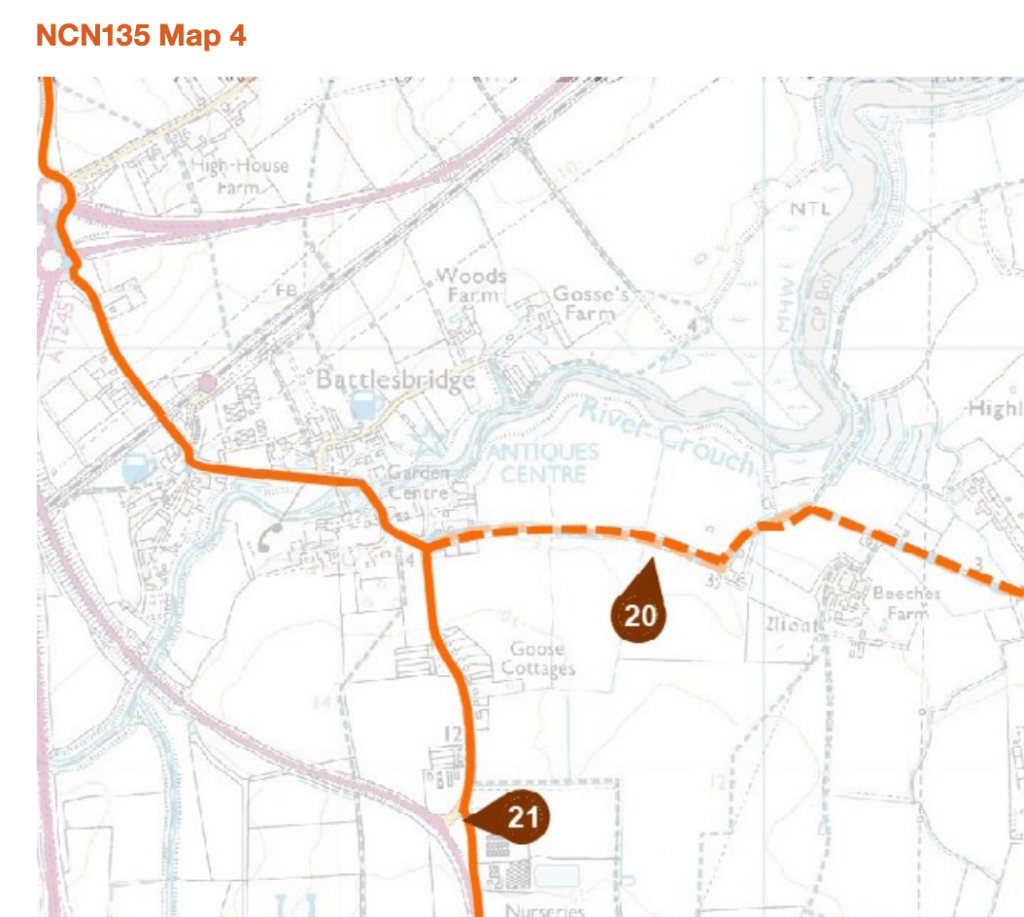
There’s the option again of upgrading existing footpaths and following the walking route, but are there better options?

Why not carry on the logic of the KC3ECP in using Network Rail land between the railway line and the A132?
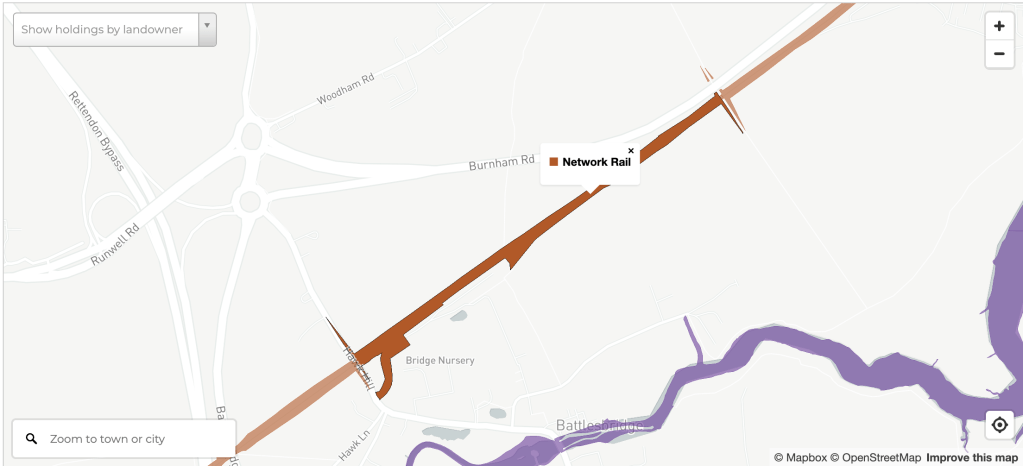
This could potentially offer a route all the way to Battlebridge railway station, although an interesting alternative might be offered where the railway crosses long-distance path the Saffron Trail (footpath FP 24 229 at this point) to then take that path south to Maltings Road instead.
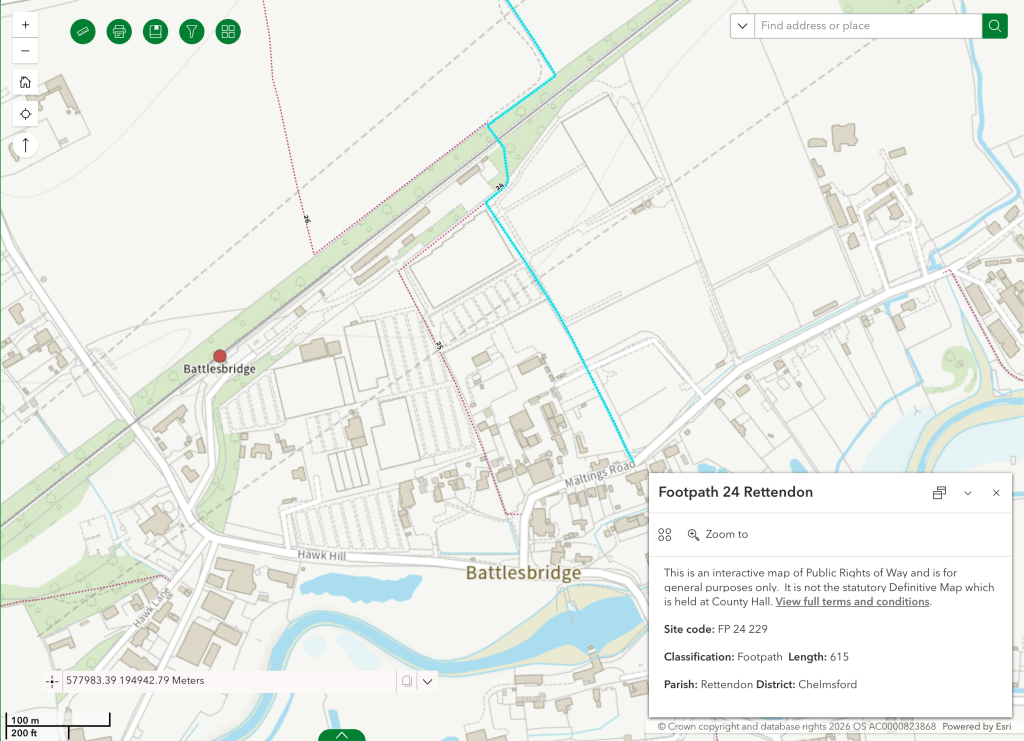
If we want to ‘Connect Essex through Cycling and Walking‘ then we have to think about cycling and walking, and identify opportunities where infrastructure for one can offer opportunities for the other – making wheeling easier in the process too. This is what a true Local Cycling and Walking Infrastructure Plan for rural Essex looks like.

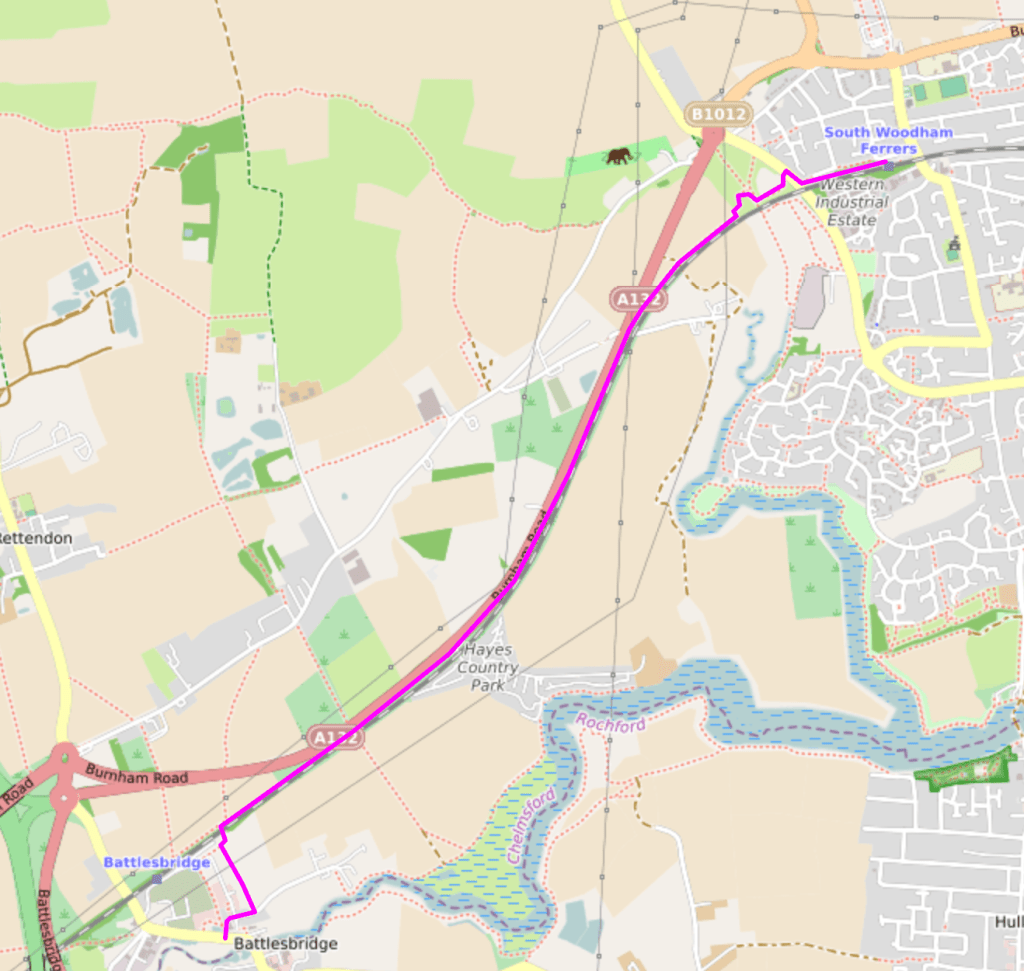
Here’s my vision for what a cycle route between South Woodham Ferrers/The Dengie and Battlesbridge/National Cycle Route 125 looks like in total:
New Paths – North Fambridge

Last weekend I walked the two new local sections of the King Charles III England Coast Path (KC3ECP) that I mentioned in the previous post. As pre-warned, these were open but unfinished. In this post I review the WIB4 section: Clementsgreen Creek, South Woodham Ferrers to The Quay,
North Fambridge
[pdf]

North Fambridge section

This begins on pre-exisisting rights way:

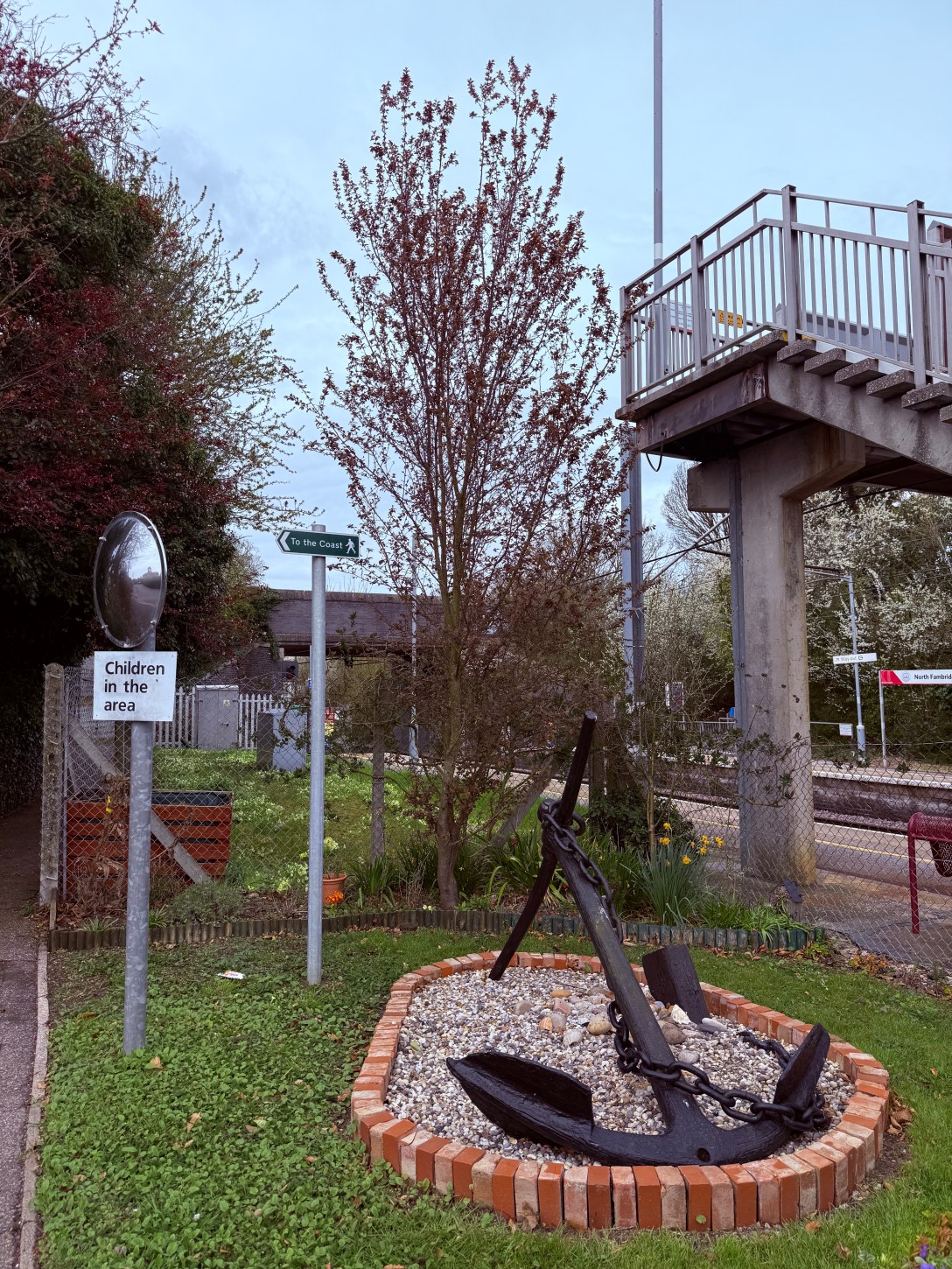
I travelled on the train bus replacement from Burnham-on-Crouch to North Fambridge railway Station, took the stairs to the road bridge from the westbound platform and went north on Fambridge Road.

Read more: New Paths – North Fambridge


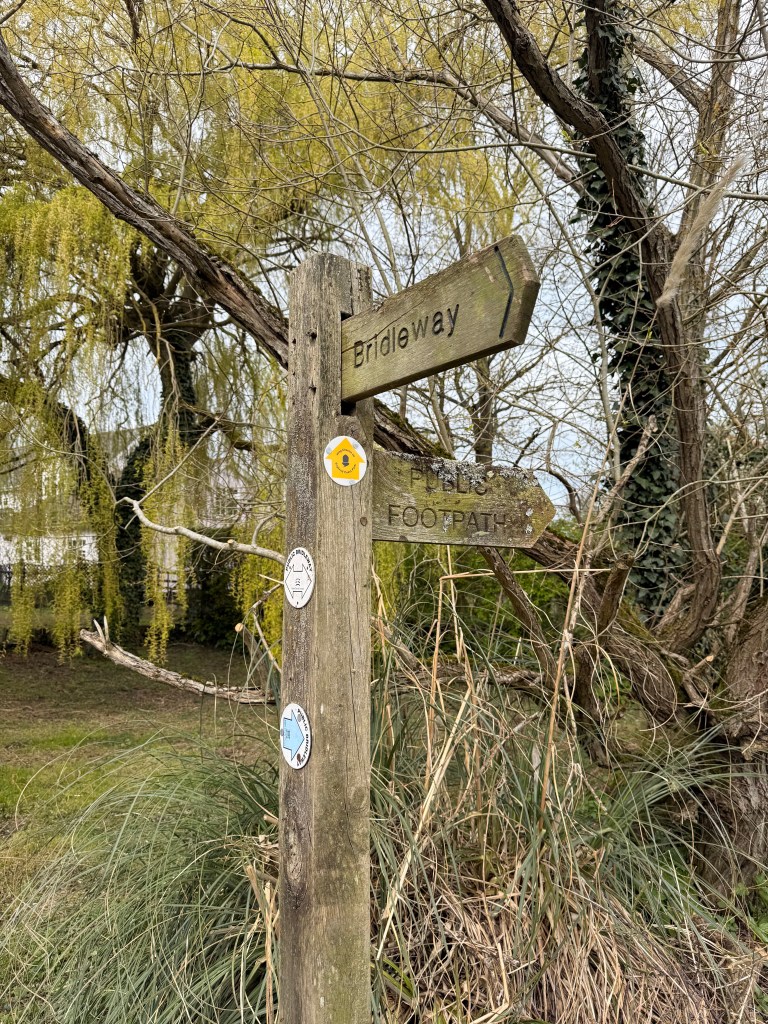
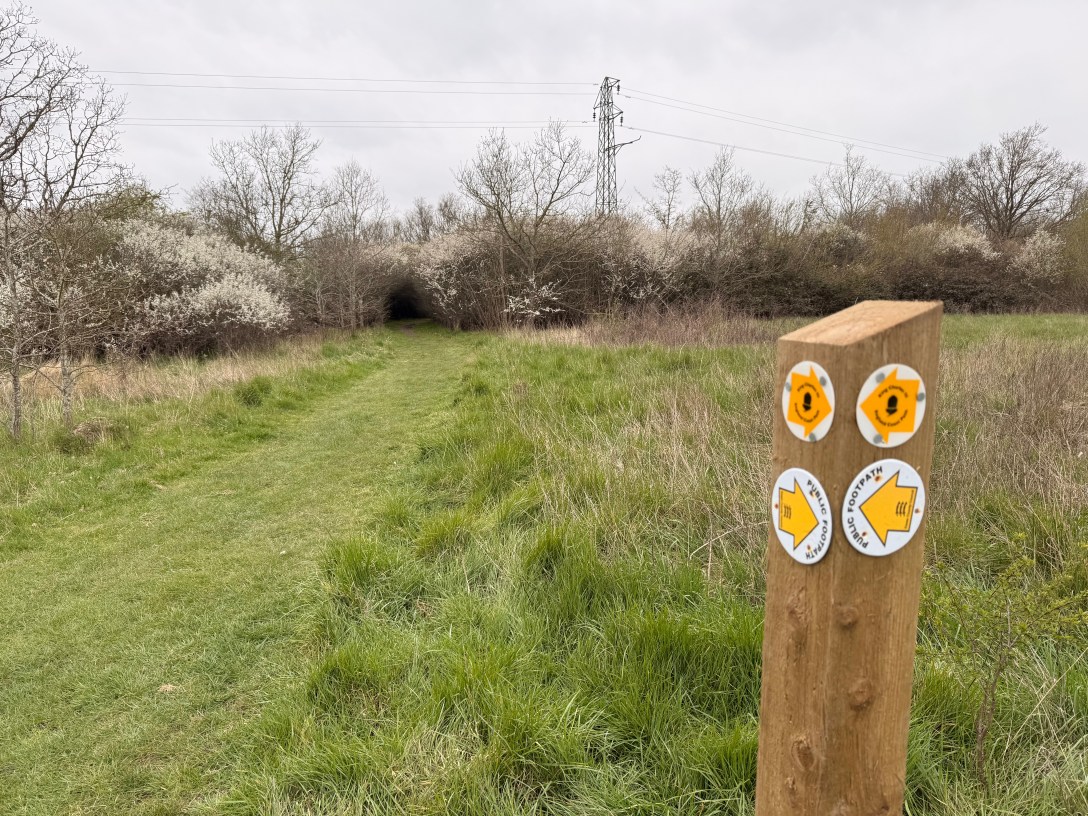
Footpath FP 5 256 goes west off Fambridge Road, opposite Franklin Road, on a short paved path leading on to Rectory Road. Rectory Road’s metalled surface peters out as it becomes the bridleway BR 17 256 which connects it to the metalled surface of Rookery Lane. A KC3ECP waymark disc appears on a post at teh start of Rookery Lane – the first seen on this route, and also the last for some time.

Apart from the 41 metres of Footpath FP 5 256, this already provides a good cycle route west out of North Fambridge.

[It’s also a potential walk/wheel/cycle connection route through to Stow Maries and the dismantled railway line using bridleways, residential streets and country lanes. Some attention would need to be paid to improving the Rookery Lane junction with the Lower Burnham Road (B1012), so as to afford safe access to Honey Pot Lane. Rookery Lane and Honey Pot Lane are only 100 metres apart but there is currently no footway, cycleway or controlled crossing facilitating safe transit.]

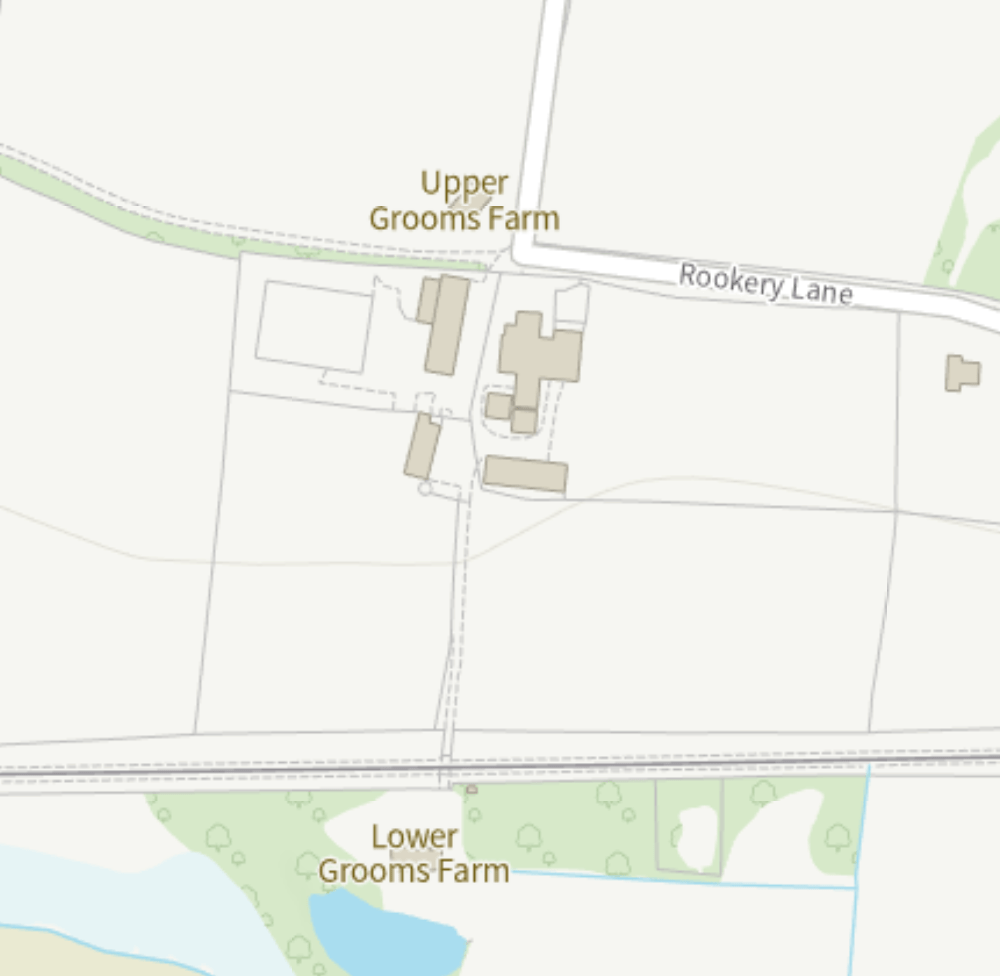
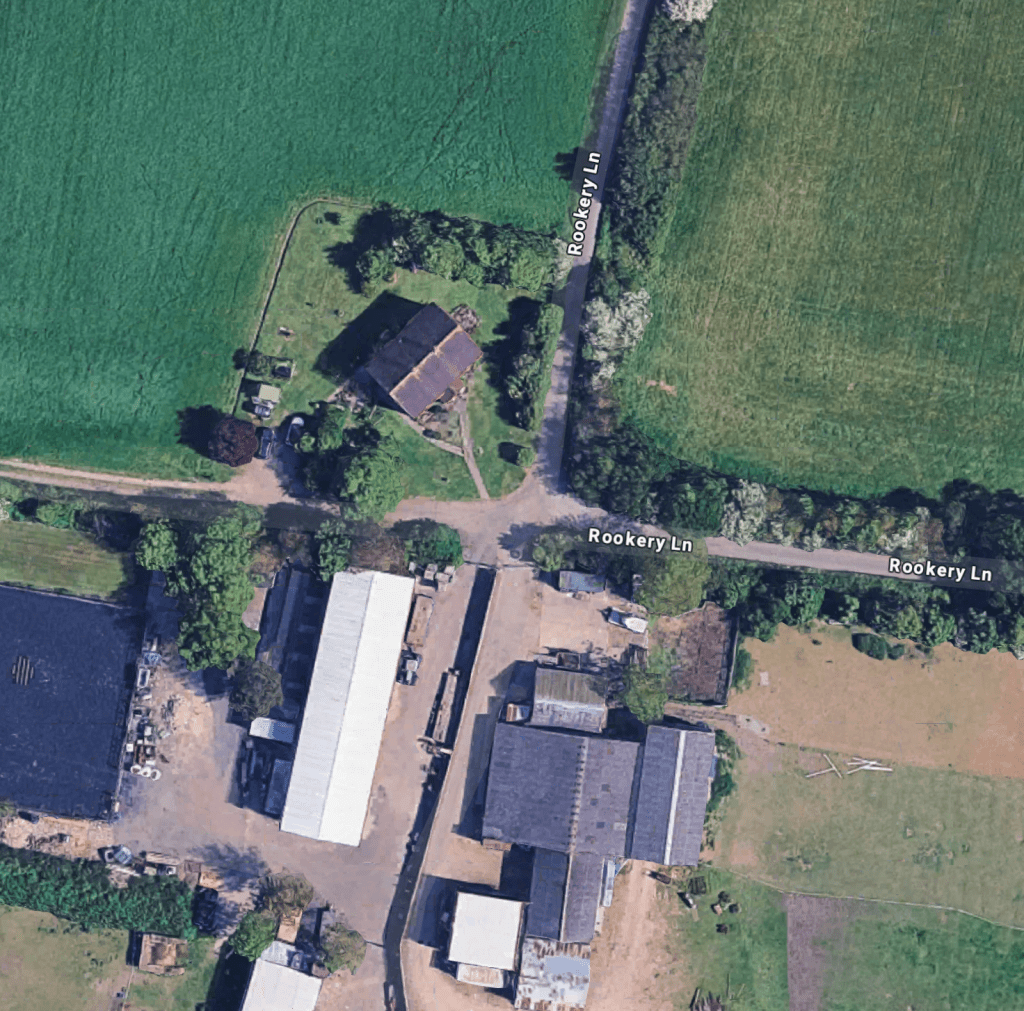
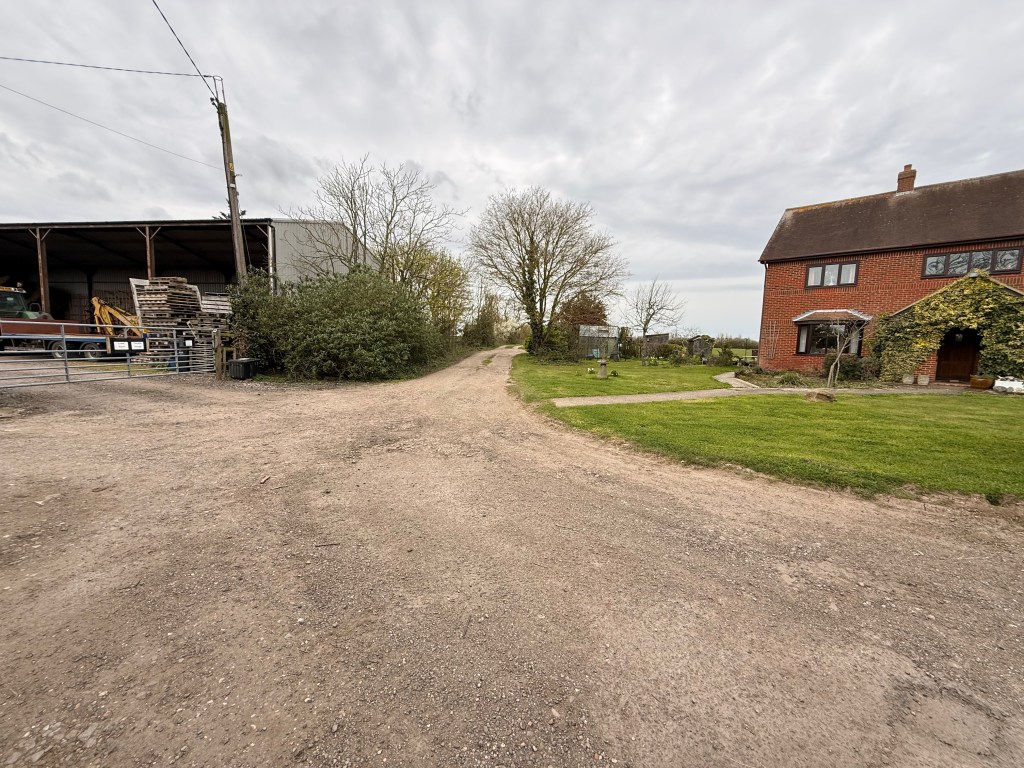
The new section of Right of Way begins where Rookery Lane takes a right angle turn north at Upper Grooms Farm (///fully.blushed.lecturers). The new Right of Way instead proceeds straight on along a farm track. There is no sign to be seen though, no fingerpost or waymark disc anywhere evident. This is exactly where a walker needs confidence, both on the route direction and that they have permission to go forward. The new Right of Way does not appear yet on the Essex Highways PROW interactive maps.

The Upper Grooms Farm junction point on the Essex Highways PROW interactive map
Google Maps image of the same junction
My photo of the junction. No sign assures of the right of way ahead.

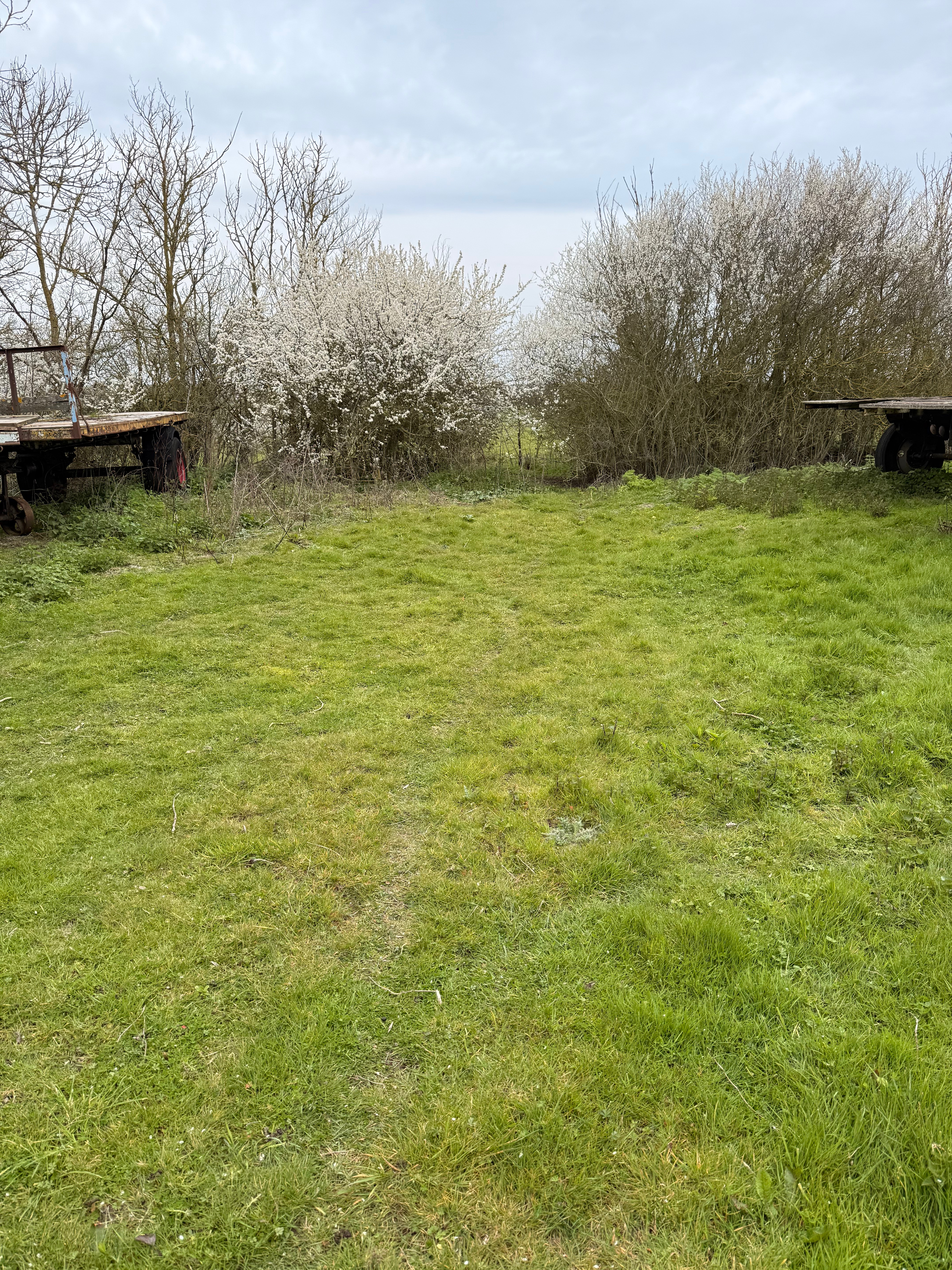
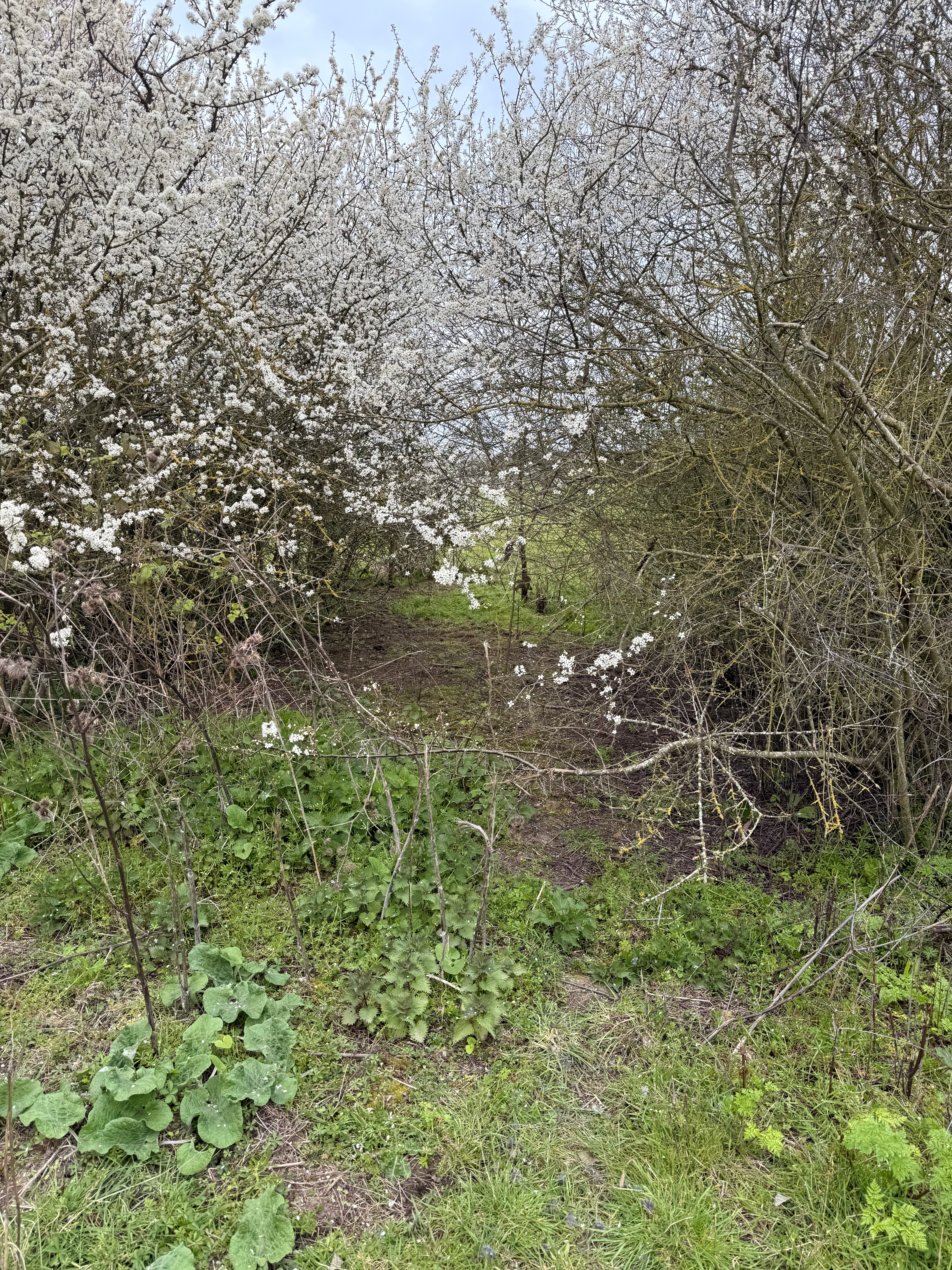
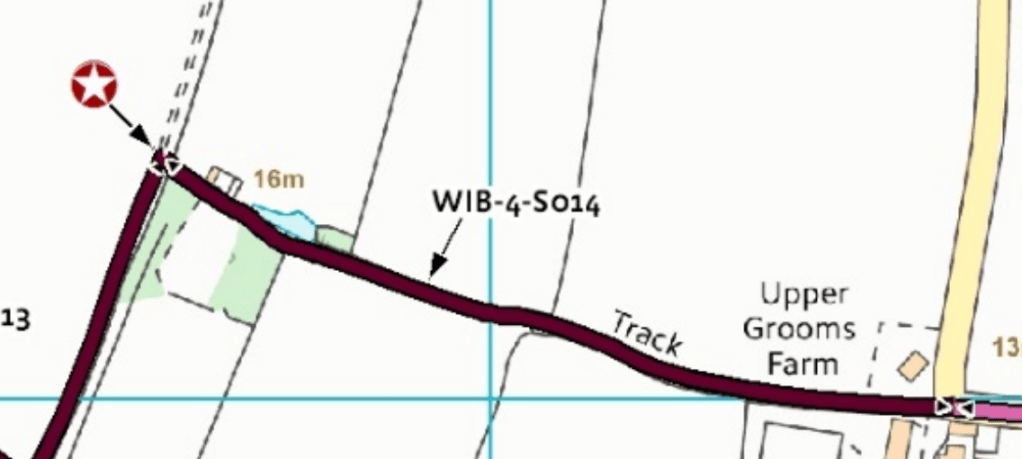
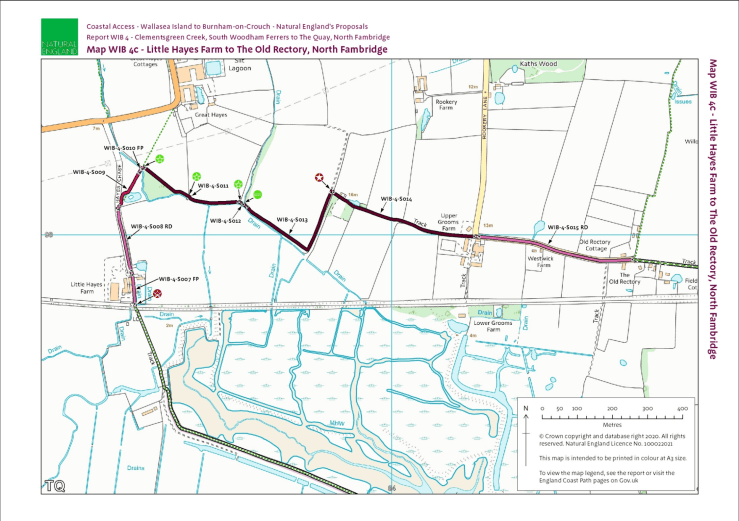
The route immediately ahead is simple enough if you are brazen enough to take it following a gravelly farm track westwards for about 200m until it opens up into a defoliated area with a metal pole barn to the north and a static caravan to the south (this was once the site of Skinner’s Wick farm). Logic would suggest that you proceed directly across this area and through the hedgerow ahead. There’s no signage anywhere however. The hedgerow hints at having once had a path though it, but there is both side and surface growth preventing easy passage. North of the pole barn a farm track goes through the hedgerow and I took this. Reviewing the Natural England map for this section however, it is clear that the intended route is through the hedgerow where it was overgrown and that an existing field gate should be here but is not. (///utensil.monorail.submits)

The overgrown gap in the hedgerow.

The white star is a red circle indicates where a pedestrian gate should provide passage through the hedgerow.

To this point, the route from North Fambridge seems usable by both walkers and wheelers, and could be used by cyclists were higher rights allocated.

The route south-west along the field edge

On the west side of the hedgerow, the route proceeds south-west along the field edge, turning north-west when it meets a land drain and the south field edge. A 1.5m width of trail is to be established on the field edge, but there’s currently no evidence of that. The field is laid to grass and slopes southwards from the hedgerow entrance, dropping about 12m over 180m to the drain. This section could be improved in a way that would improve access for wheelers and also make it suitable for a cycleway.

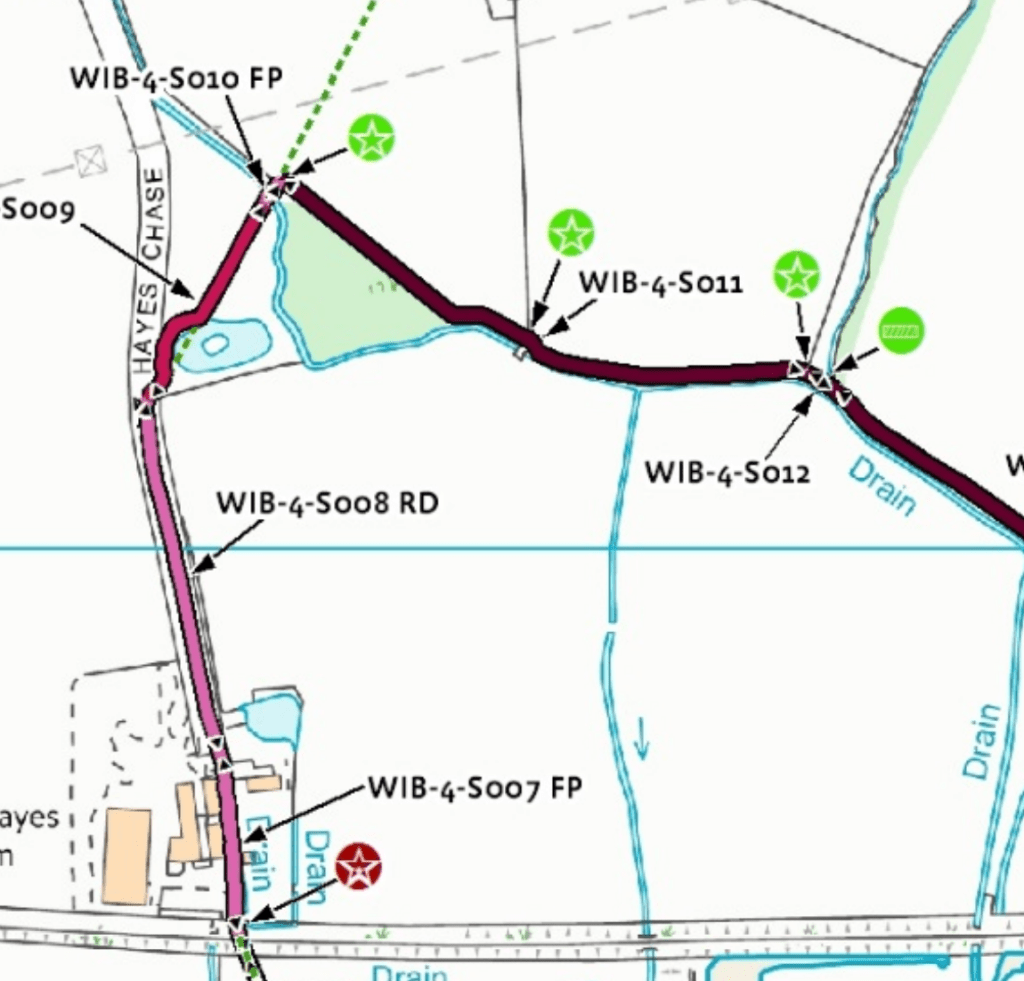
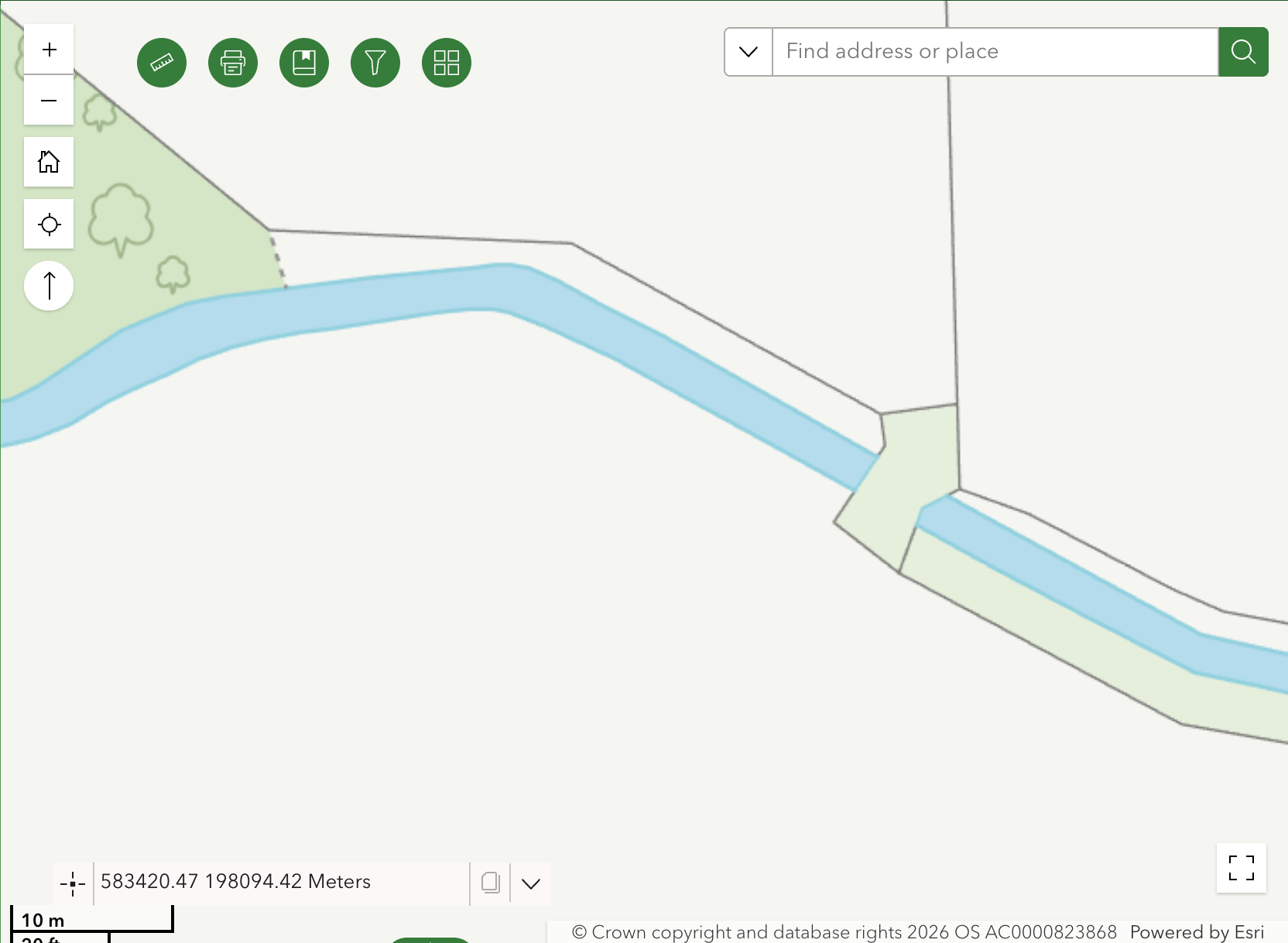
The route leaves this field at an intersection of gates, stiles and a footbridge where the need for construction work is most clearly evident. What isn’t clearly evident is where you are supposed to go. There’s no signage, the Essex Highways interactive PROW map remains useless and the Natural England map is not detailed enough (///powerful.truckload.balconies). A farm gate leads into a field to the south, but the Natural England map suggests that the route goes north of the drain and involves a new footbridge and a new farm gate.

A direct route to Little Hayes Chase

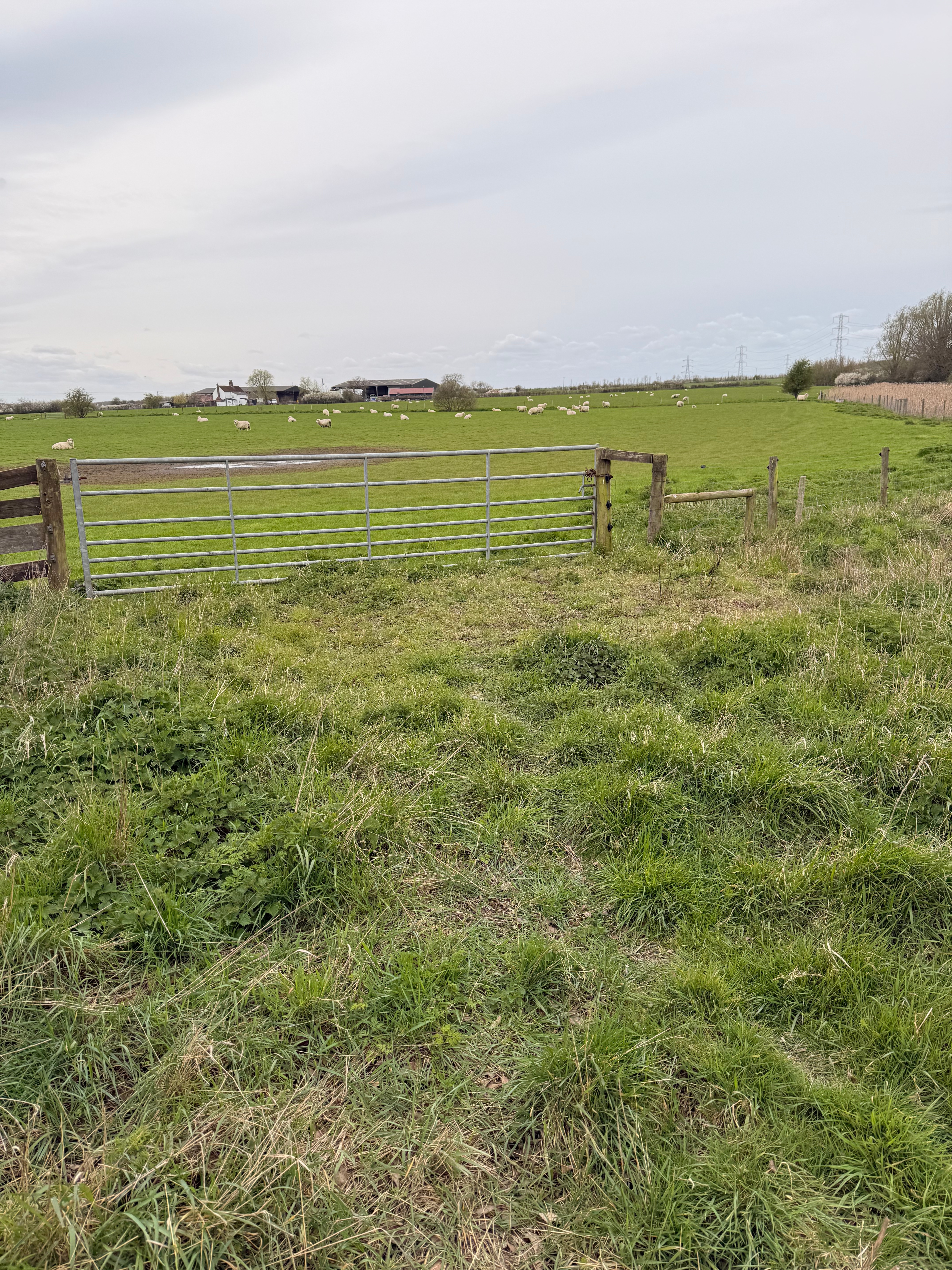
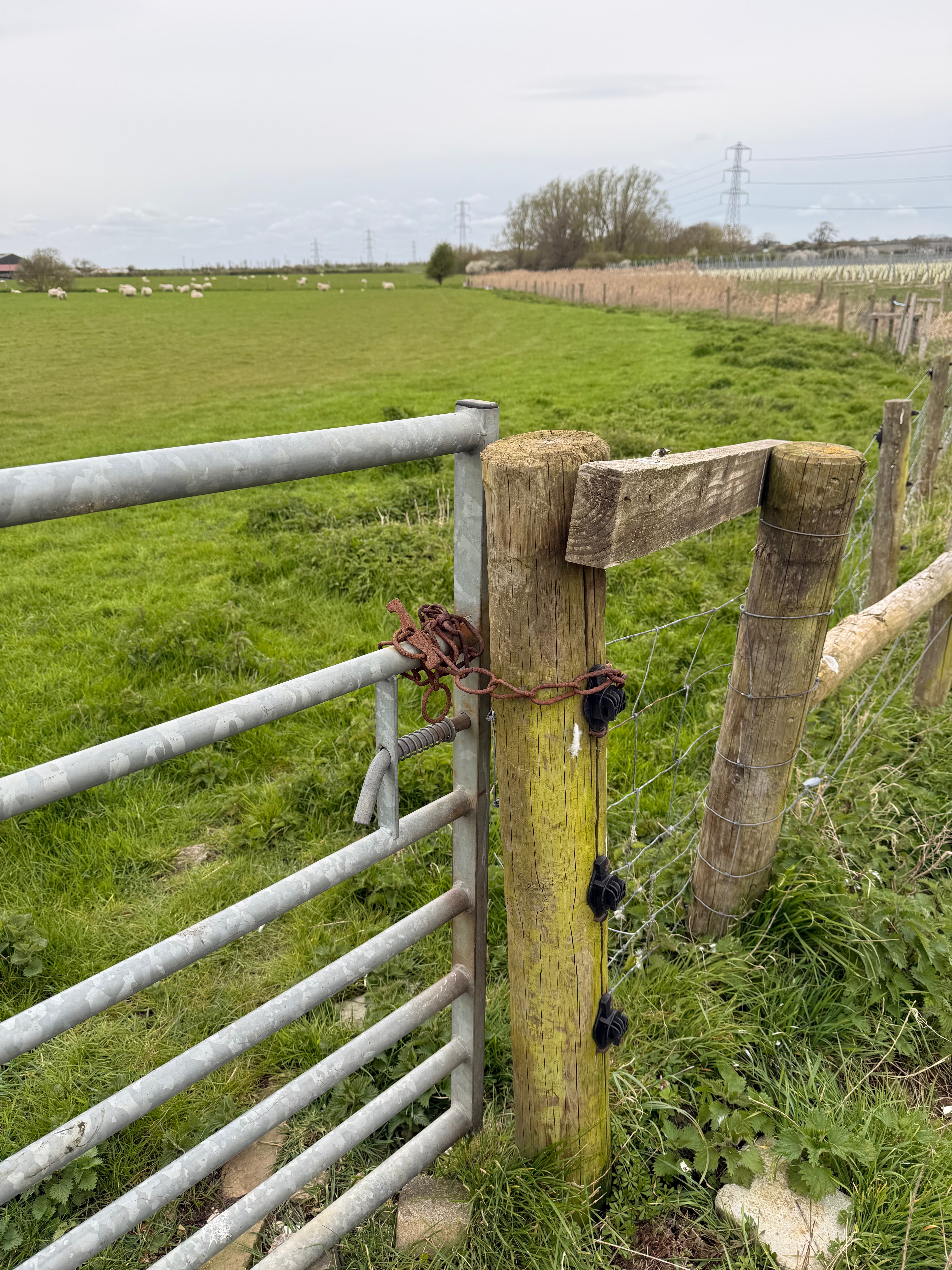
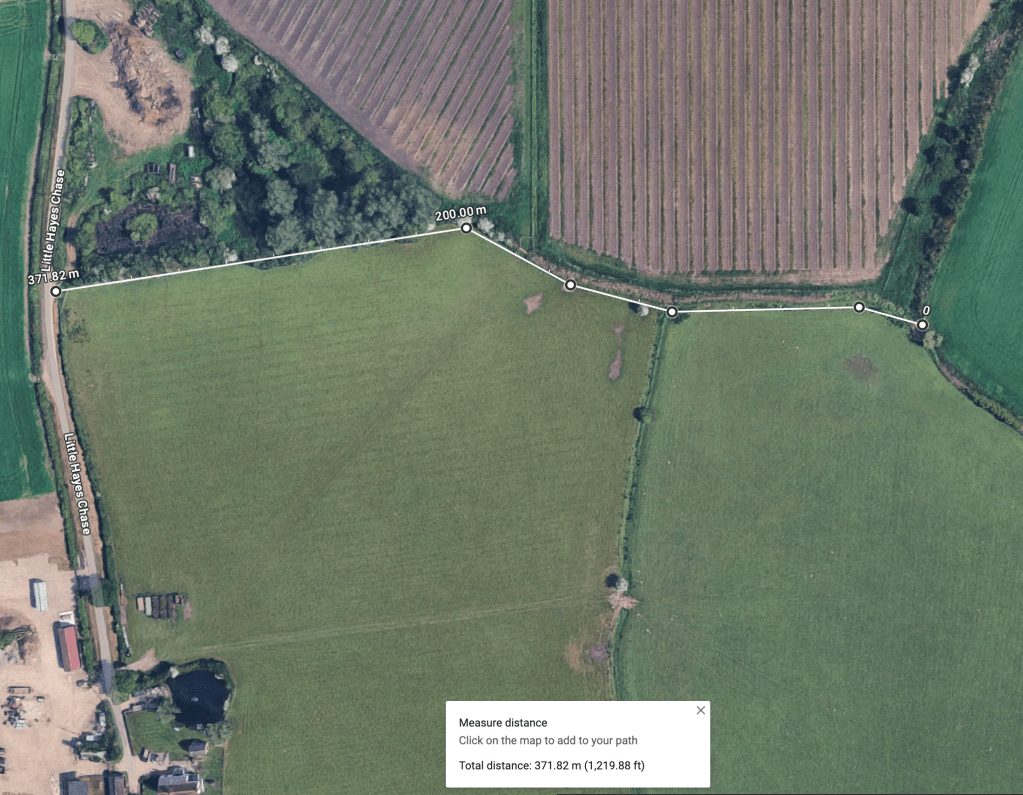
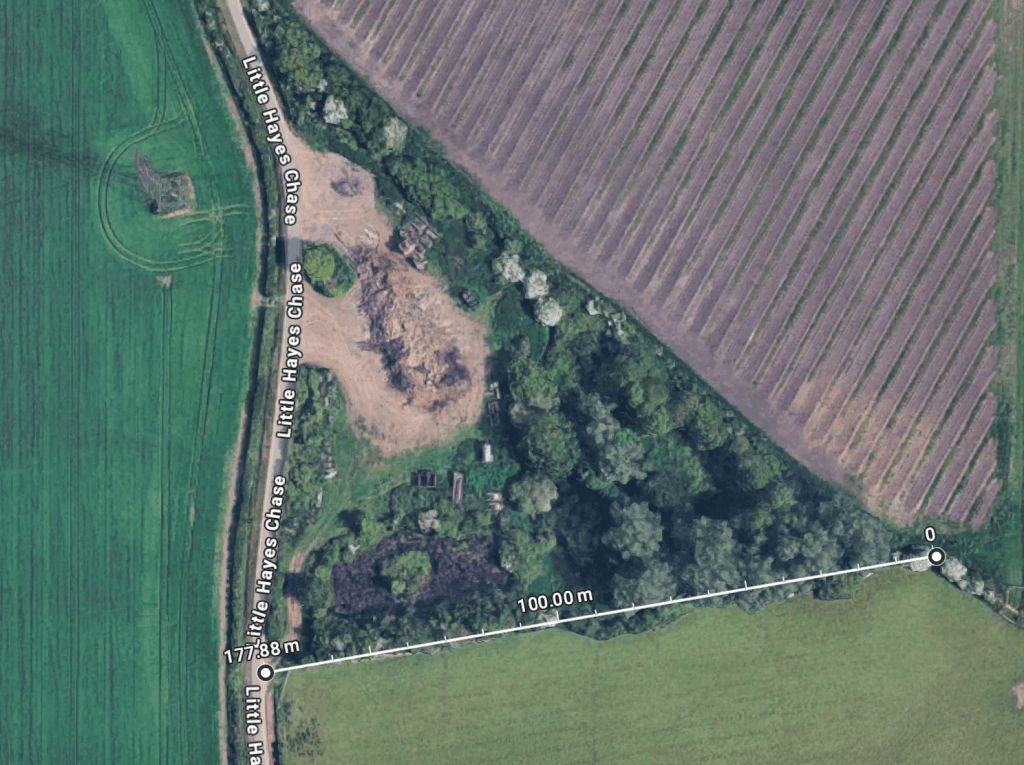
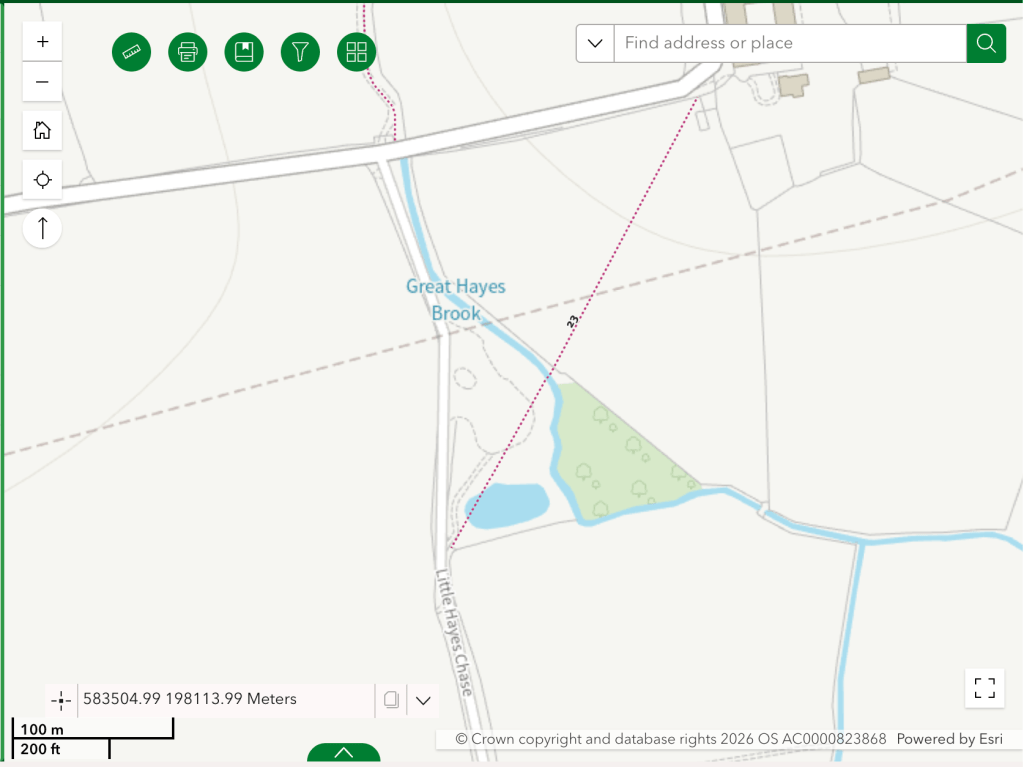
Directly to the west, about 360m as the crow flies, is the road Little Hayes Chase which forms part of the KC3ECP. Following the north field edge, its about 370m away. The only evident way forward from the last field is through the metal farm gate (which was chained shut) and into the field to to the south, where the logical way forward would be to follow that north field edge to Little Hayes Chase. This is a relatively flat route that could provide a good walk/wheel/cycle route.

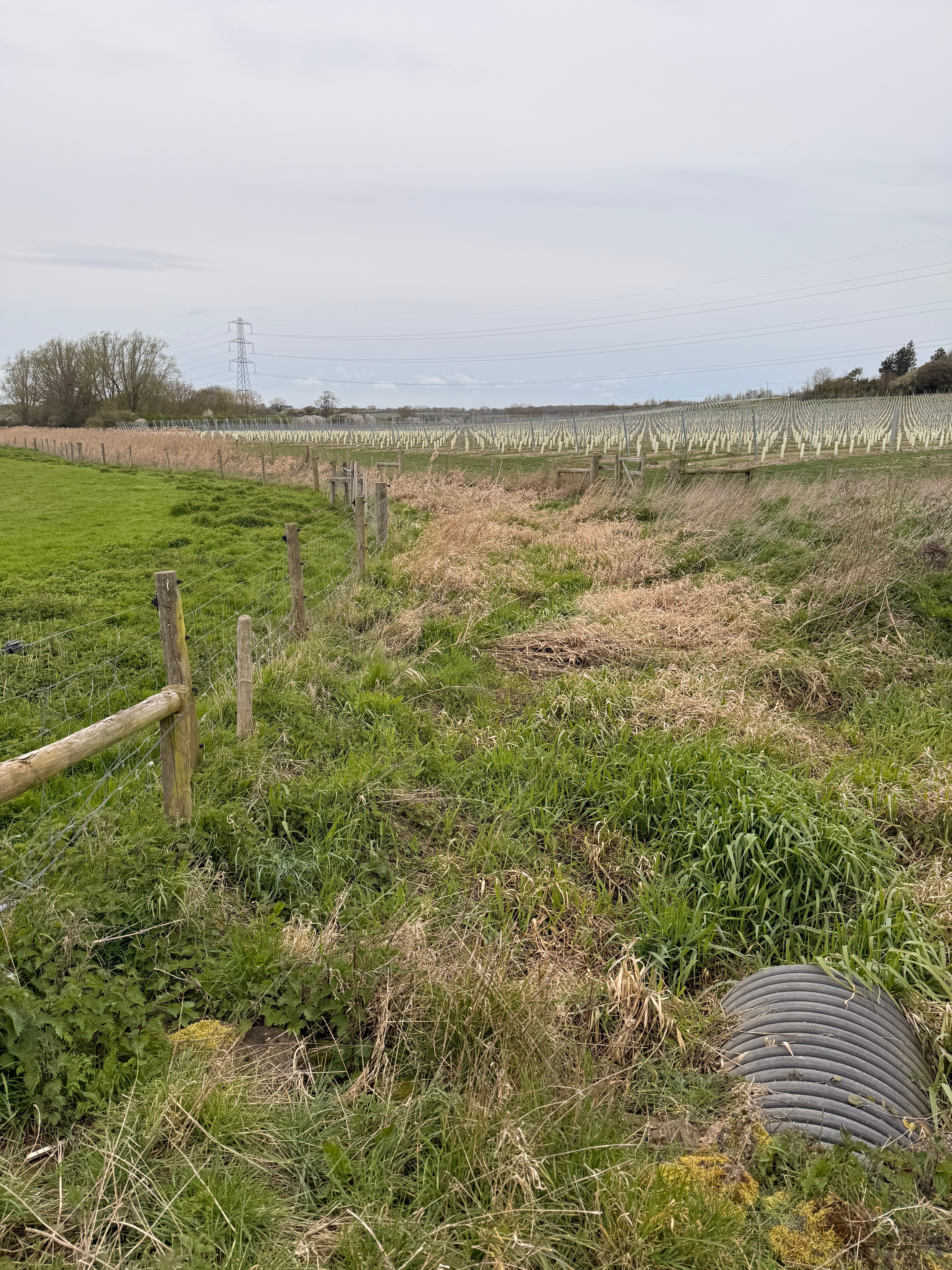
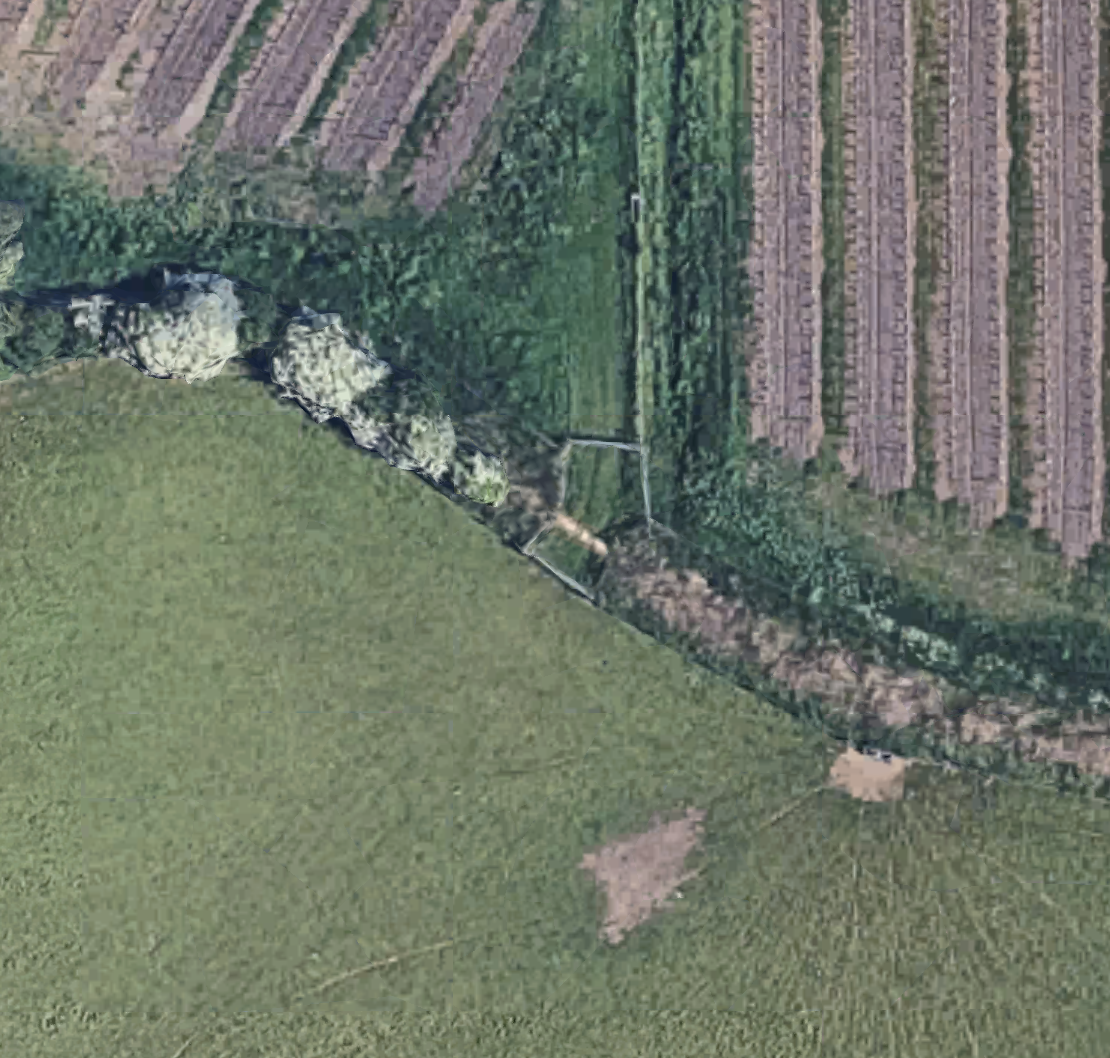
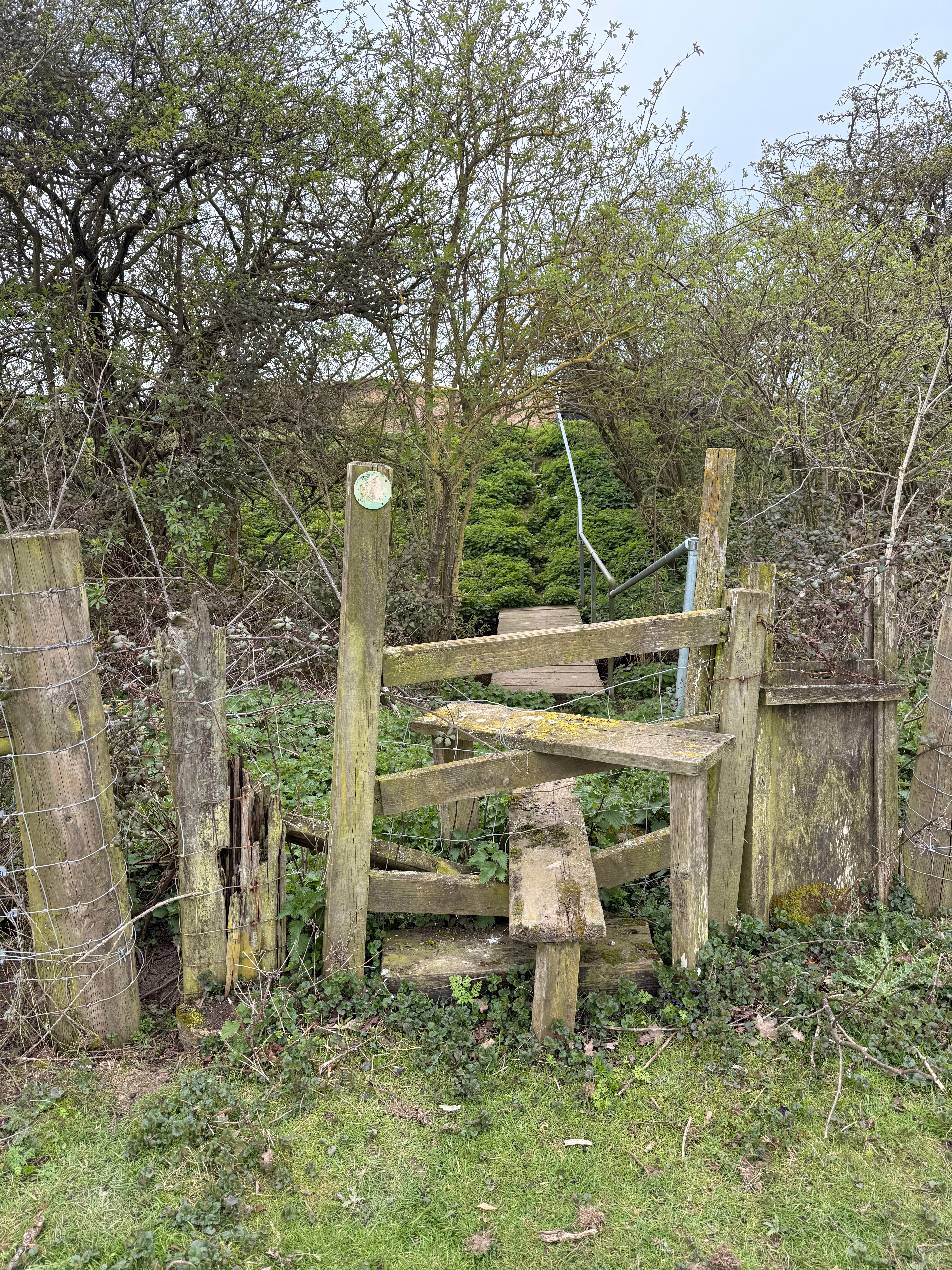
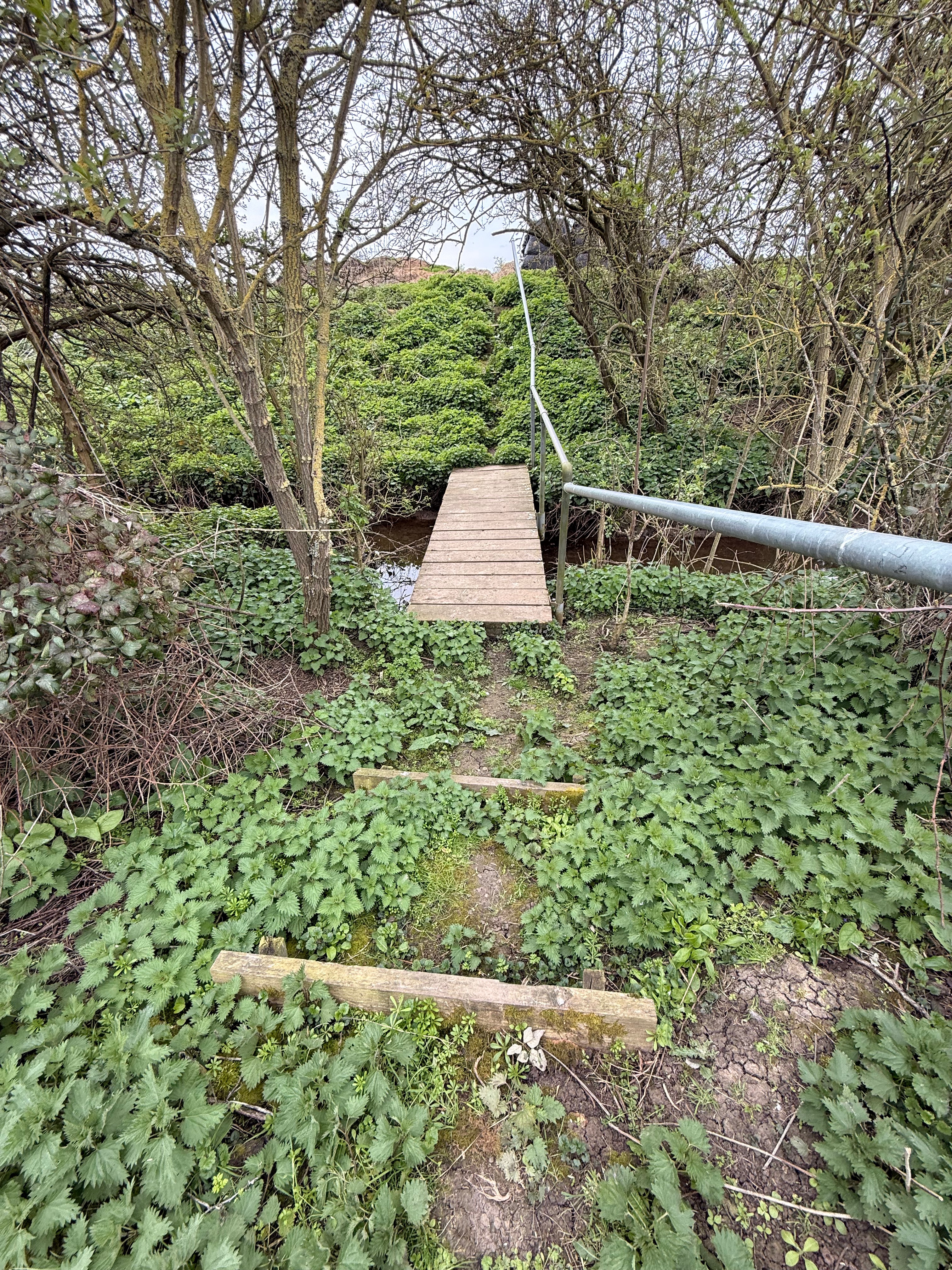
I clambered over the farm gate into the south field from where I could see a nearby step stile on the north field edge leading towards a filed of vineyards. Comparing my GPS position on an electronic version of the OS175 map with the Natural England map, this appeared to be the route to take. It led on to a footbridge over a land drain. Once again, there was no signage to help here and the infrastructure is in a poor state. Both the step stile and the footbridge are in stages of decay and are unsafe, they lead to a pedestrian gate with broken fittings that provides access to the vineyard field. It’s a very fussy nexus, in need of redesign as much as repair or replacement. It’s unclear why it is proposed to have replacement pedestrian gates here rather than wheelchair/mobility device gates or, thinking ahead, bicycle-friendly gates.

From here the new route follows the south edge of the vineyard field. This runs parallel to the route described above on the other side of the drain until it reaches a copse, whereupon it follows the field edge north west until it meets footpath FP 23 261. The descriptive text in the natural England documents states that they opted for the proposed route because ‘it utilises existing rights of way, readily links land uses over several properties and generally follows a permitted route for an
annual long distance running event’. I think this event is the Stow Maries Trail Challenge, but it’s unnamed in the document and the Stow Maries Trail Challenge route is not public. The ‘other options considered’ in the document do not include a more direct route to Little Hayes Chase.

A break from the described route at the copse, to go more directly west to Little Hayes Chase could produce a more accessible option suitable for upgrading to a cycle way.

Around the point that a new pedestrian gate is proposed, there is a bridge over Great Hayes Brook and gate access into the field that leads to Little Hayes Chase (///widely.courts.fixtures).

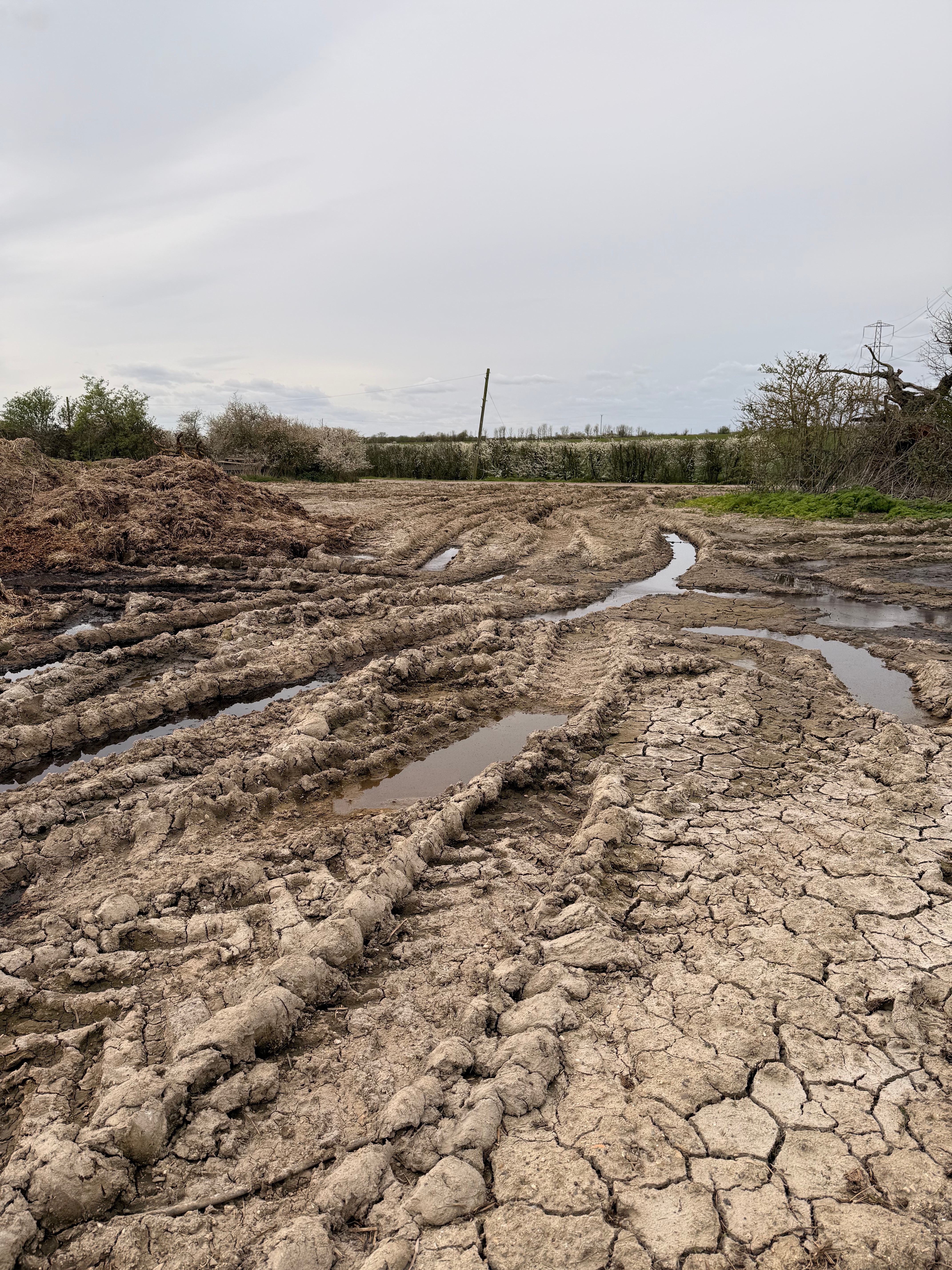
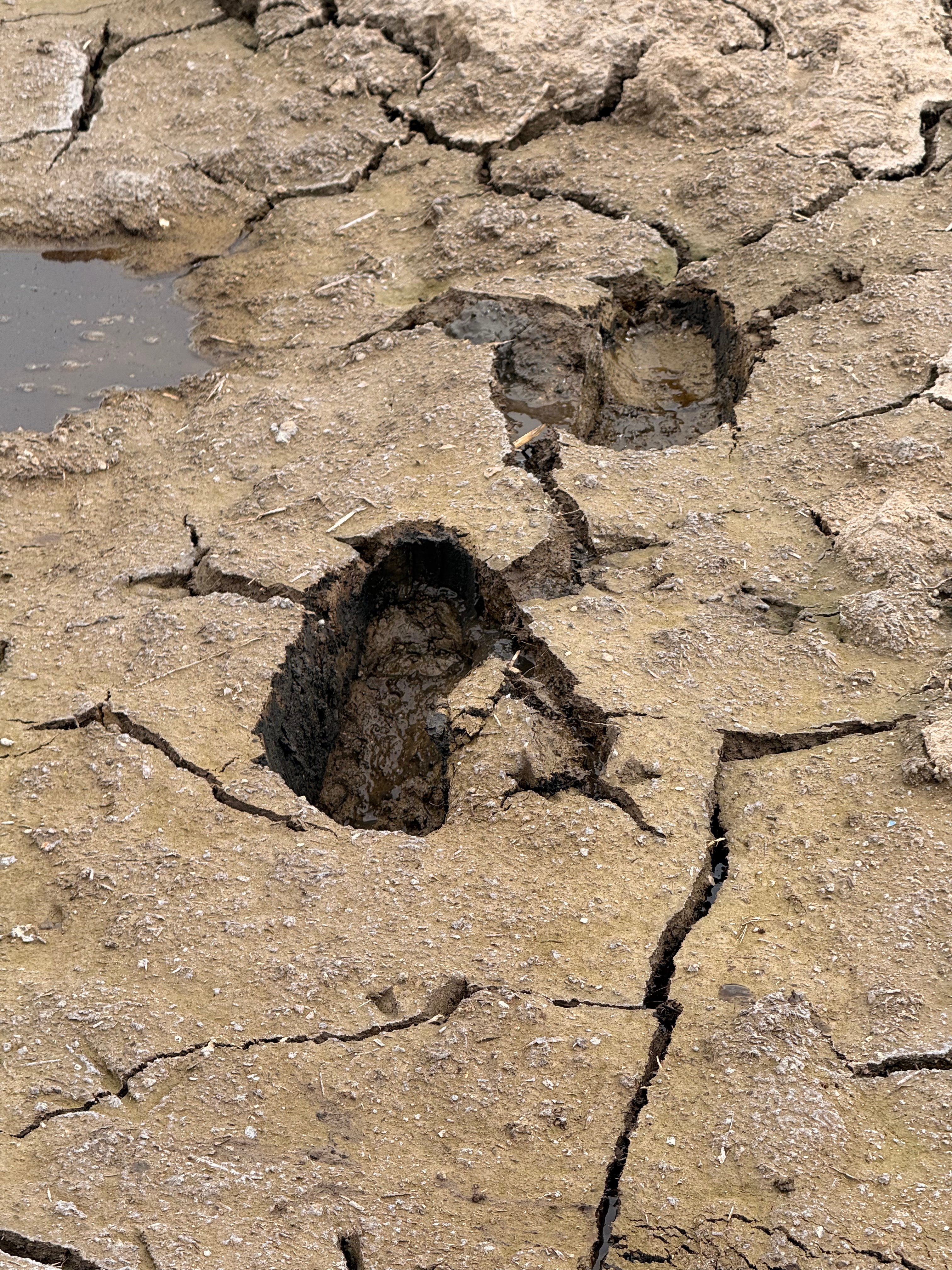
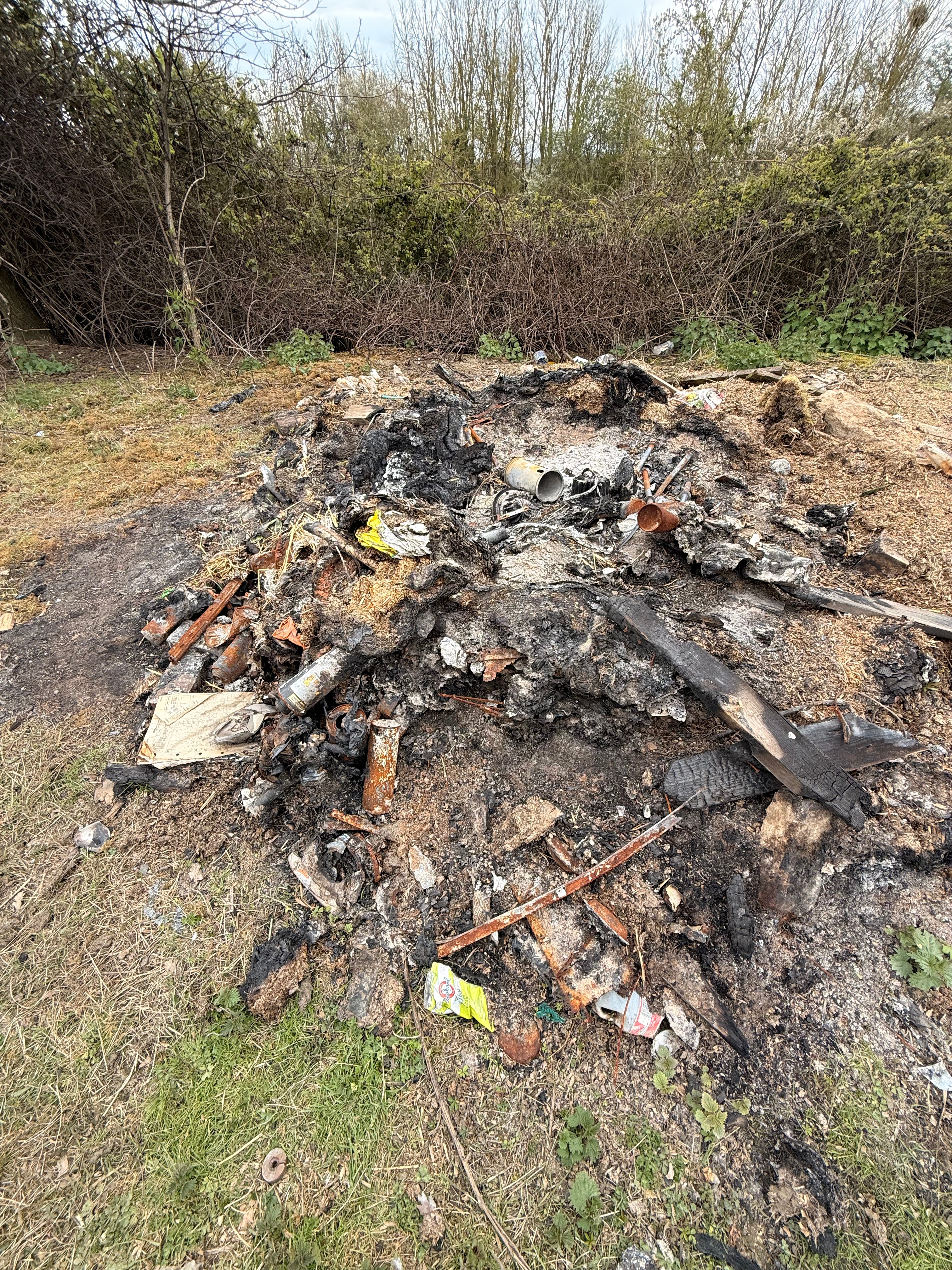
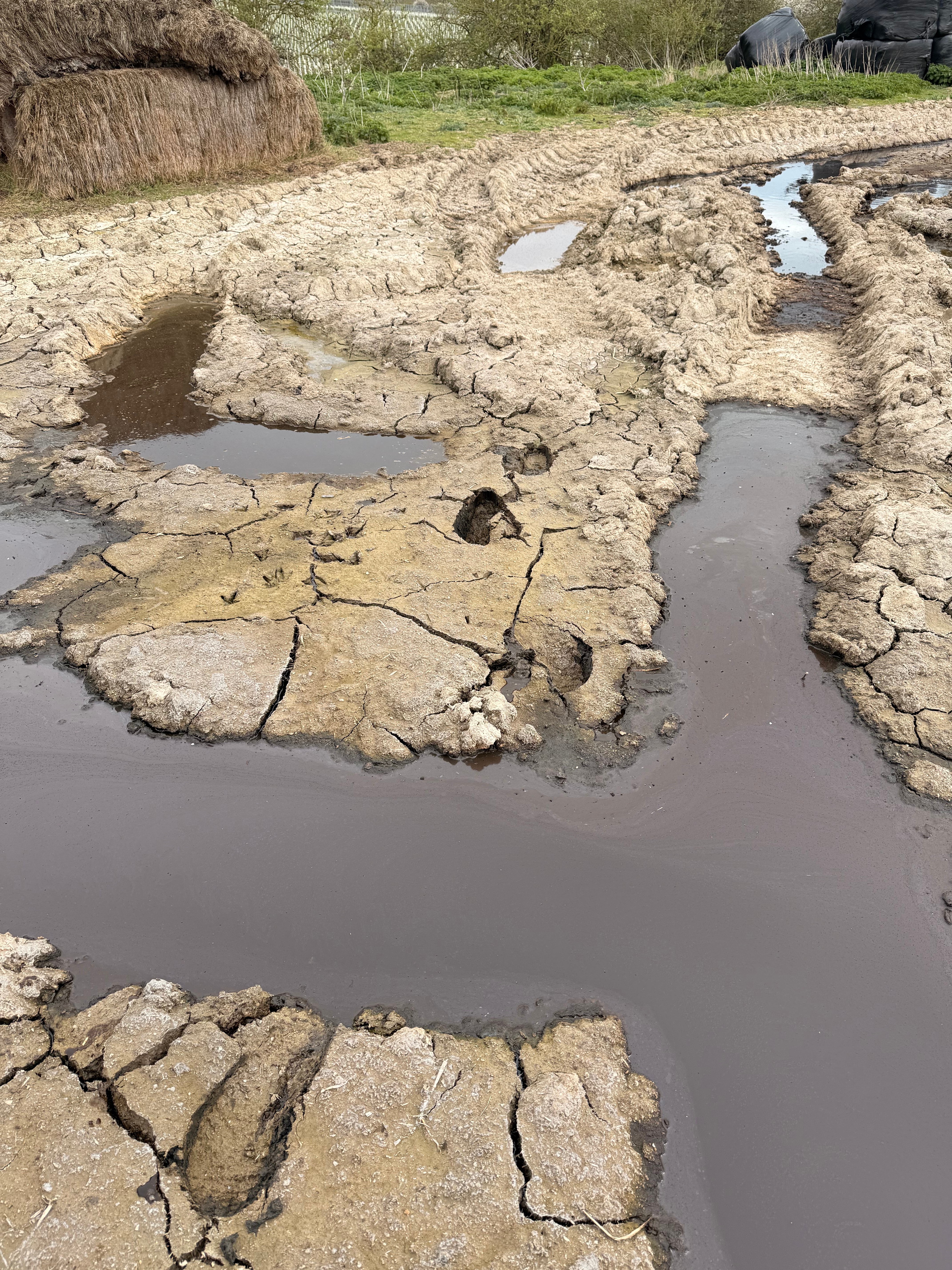
I can see the attraction of connecting with, and utilising, an existing Right of Way (footpath FP 23 261) as the new route does, but this produces its own problems. When FP 23 261 leaves the vineyard field, it crosses Great Hayes Brook at a more difficult spot which involves a step stile, steps down to the brook, a footbridge and more steps up from the brook. This limits the accessibility of the route. The infrastructure here is, again, in poor condition. At the top of the steps the footpath proceeds across an area used by the local farm as a store of manure and a general dump. The route through this is poorly marked. When I walked it, the surface was very uneven and apparently solid earth was actually an unsound crust on fluid runoff from the manure pile into which feet began to sink. The route as shown on the Essex Highway PROW map goes through a body of water.

The step stile, footbridge and steps down to and up from the brook on FP 23 261

The unwelcoming manure swamp and dumping ground at the top of the steps

Cyclists unwelcome ahead

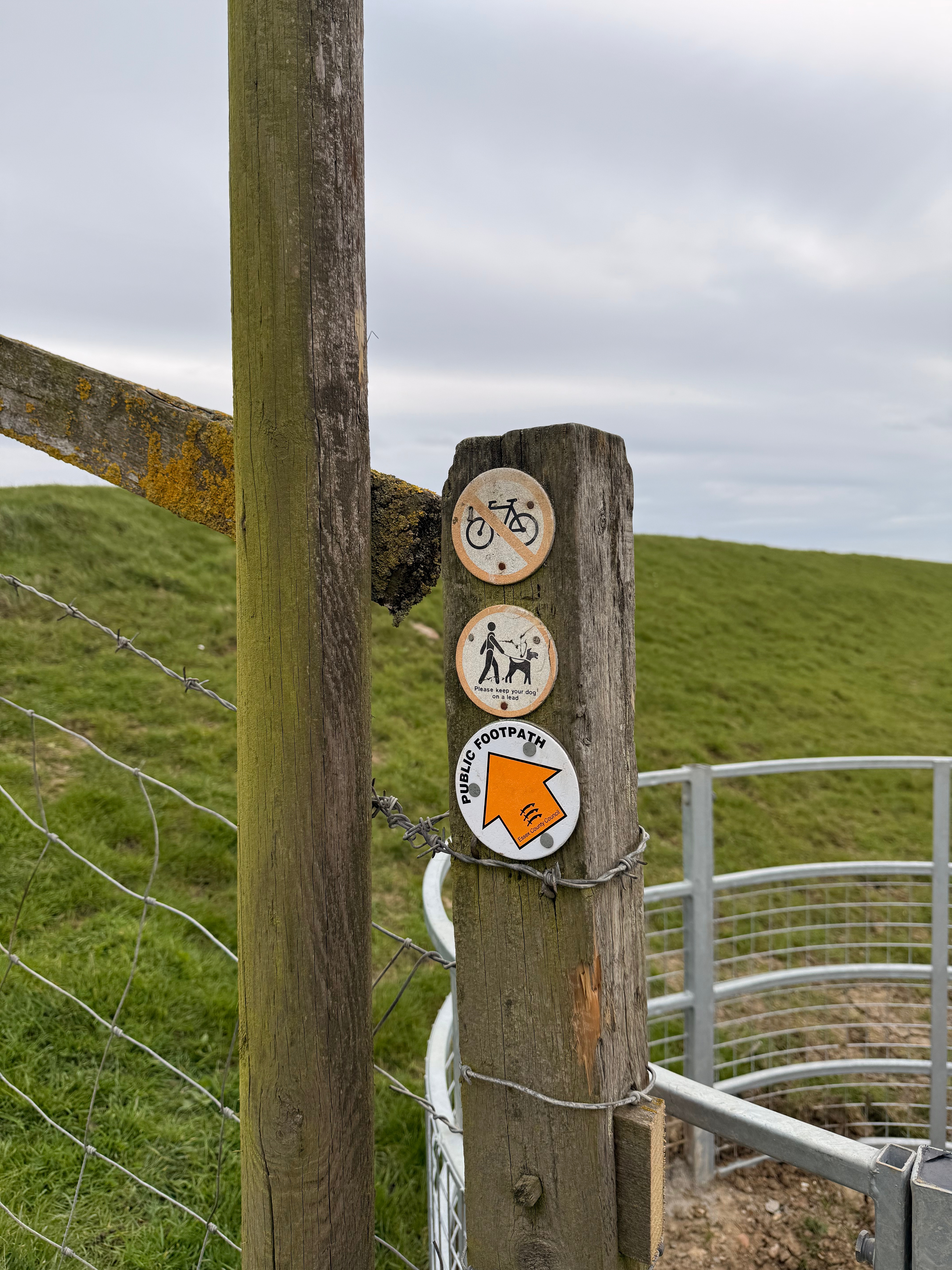
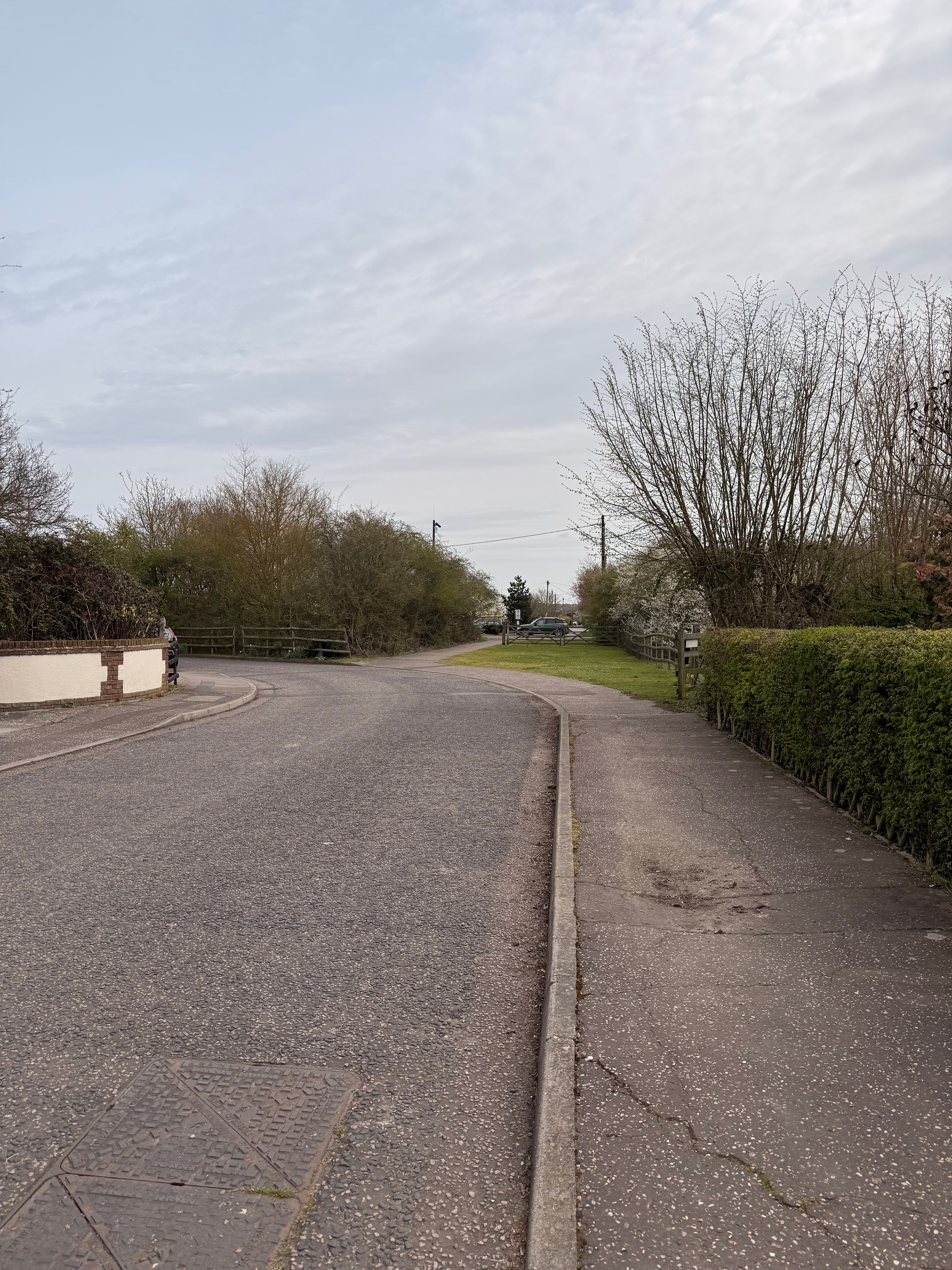
The ongoing route is all on pre-existing rights of way. Little Hayes Chase is a metalled road down to the railway crossing, beyond which a gravel track leads to a kissing gate and a slope up to the sea wall around Stow Creek (neither the gate or the slope are accessible for those using mobility aids). To travel onwards to South Woodham Ferrers, you must walk the sea wall along Stow Creek and Clements Green Creek. This serves the purpose of a coastal path well, keeping you close to the water. The purpose of the KC3ECP diverges here from the needs of the person simply travelling between North Fambridge and South Woodham Ferrers. The KC3ECP route is therefore frustrating if you are walking for utility rather than leisure. An additional westward route aligned seaward of the railway line from the crossing to Saltcoats Park would provide a useful quicker route here.

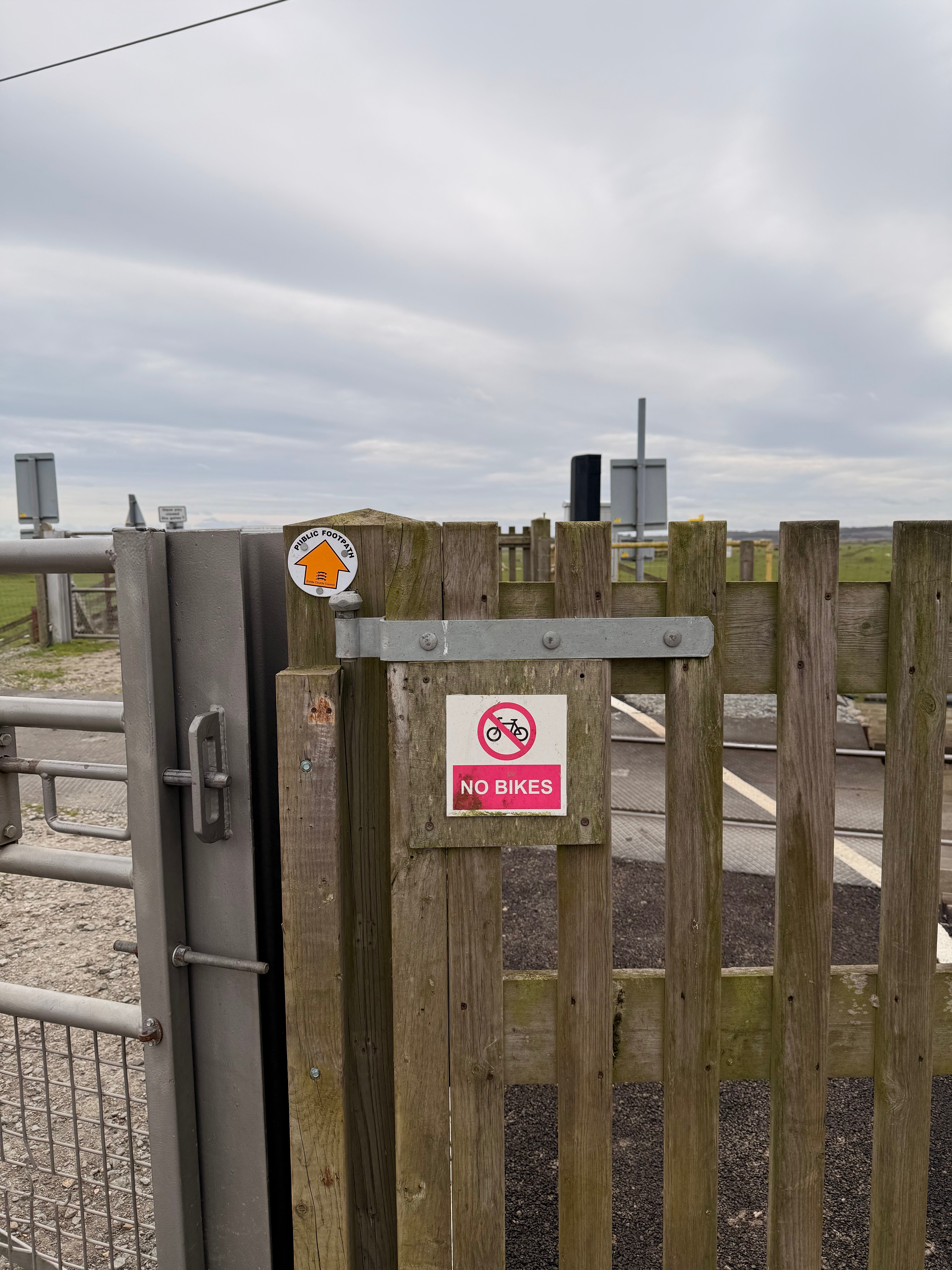
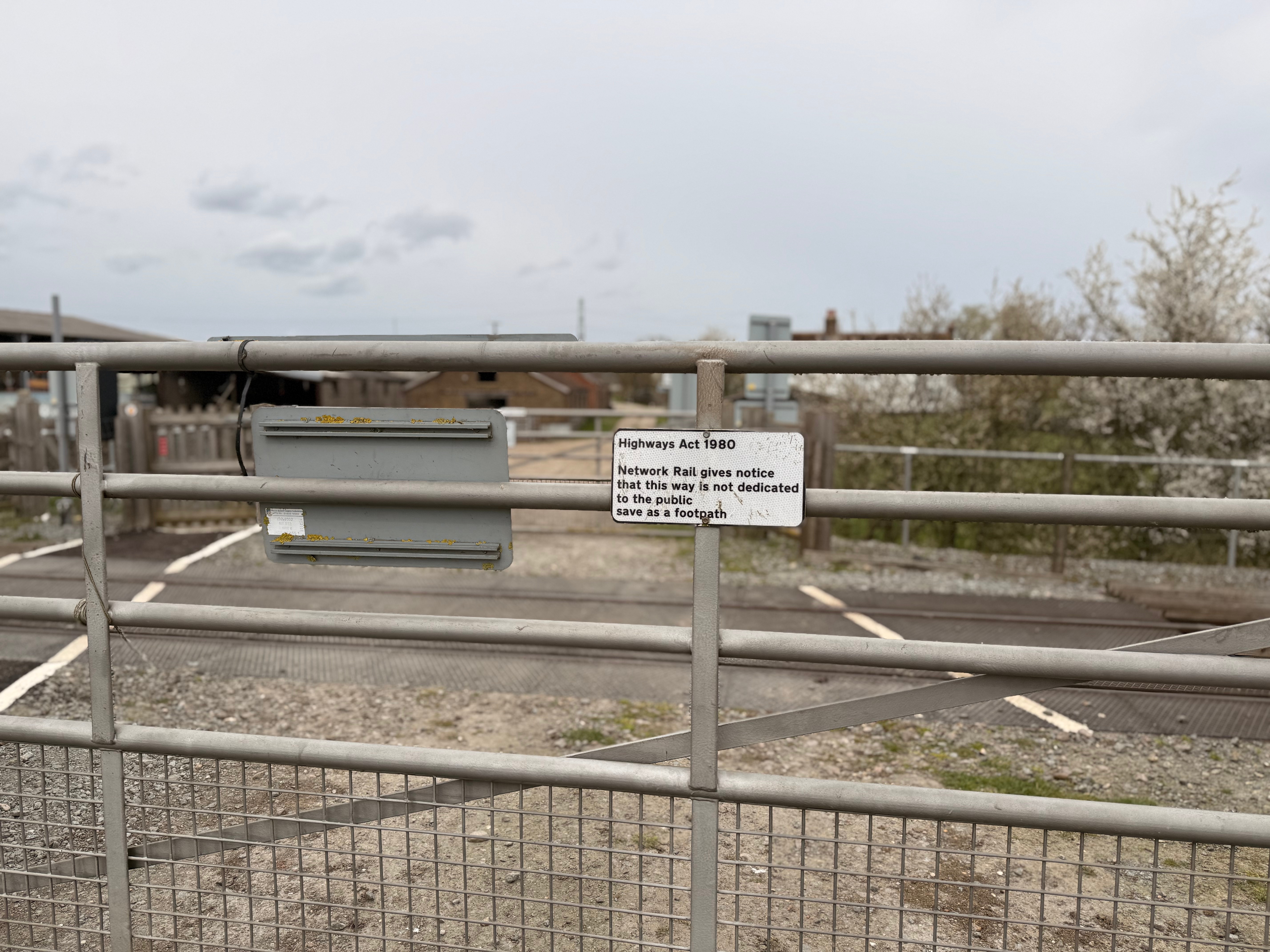
Where Little Hayes Chase reaches the railway crossing there is lots of communication warning off cyclists from going forward. Warnings repeated at the kissing gate by the sea wall. A new westward route from the crossing could take cycle traffic however. A small amount of work improving transfer from the Saltcoats Park entrance to Cutlers Road/Saltcoats Industrial Estate (just 67m away) would afford onward cycle journeys a connection with the Chelmsford City Council promoted cycling route around South Woodham Ferrers, including the fully segregated cycle path into the town centre.

There’s clearly still work for Essex Highways to do on this new section of the Coast Path, including signage, gates, stiles, steps and bridges on the ground, as well as adding the route the Essex PROW map. It’s frustrating that in the week the KC3ECP was announced as fully open, a section approved over two years ago is incomplete because of the recent illness of a contractor. This delay provides an opportunity to think more creatively about the possibilities offered by this route however and to ensure it is accessible to the widest set of users.

Mid-Essex LCWIP proposals (detail from larger map) around the Crouch Valley

The Mid Essex Local Cycling and Walking Infrastructure Plan failed to identify a route connecting the settlements along the north bank of the Crouch Valley. As I’ve noted previously, the Essex Local Cycling and Walking Infrastructure Plan states that rural routes will draw on bridleways, byways and quiet lanes – but we have don’t have much of that locally and a broader approach to identifying routes needs to be made. This will necessarily include upgrading rights and infrastructure on some footpaths to form shared use paths accessible by walkers, wheelers and cyclists. It will also require the establishment of entirely new rights of way, just at the England Coast Path has done here.

There’s more on this to be said in relation to the other new section of the KC3ECP I walked last weekend. The section between South Woodham Ferrers and Battlesbridge, but that will have to wait for the next post.


The Lost Words

By national government edict the 15 councils in ‘Greater Essex’ must reorganise to form new unitary authorities through a process of Local Government Reorganisation. This will change the current two-level council system into one in which there are new, bigger councils called unitary councils.

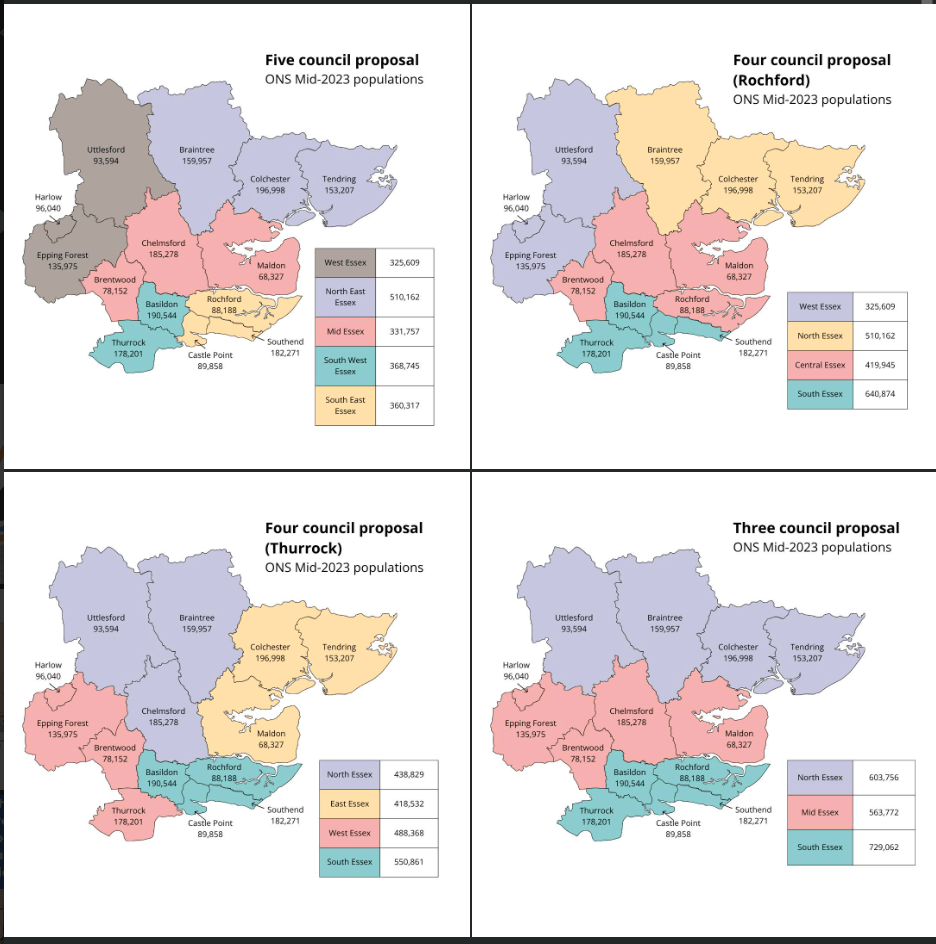
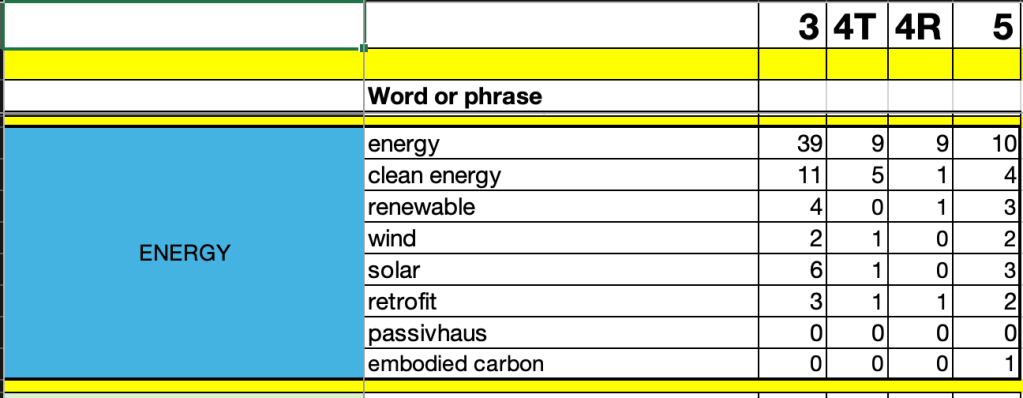
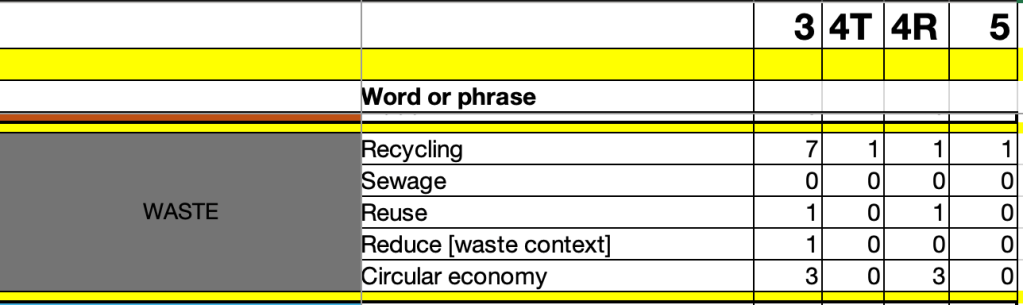
I’ve been reviewing the four competing proposals submitted by existing councils as to how that reorganisation should take shape. (They’re all published here). They divide Essex into 3,4 or 5 new unitary authorities:

*Three unitary council proposal [3]
*Four unitary council proposal (led by Thurrock) [4T]
*Four unitary council proposal (led by Rochford) [4R]
*Five unitary council proposal [5]

(in square brackets I’ve added a number used in the figures below)

There are several hundred pages to go through here (874 pages to be precise), so I’ve done a bit of barefoot textual analysis as a first attempt to see what they have to say about the climate and nature emergencies.

My quick and dirty approach was to quantify how many times some key words and phrases related to these issues appear in the respective documents. I chose words to search for that are either words ordinary people might use or they are part of the common lexicon used by governments, NGOs and the climate movement. I began with general terms.

Read more: The Lost Words

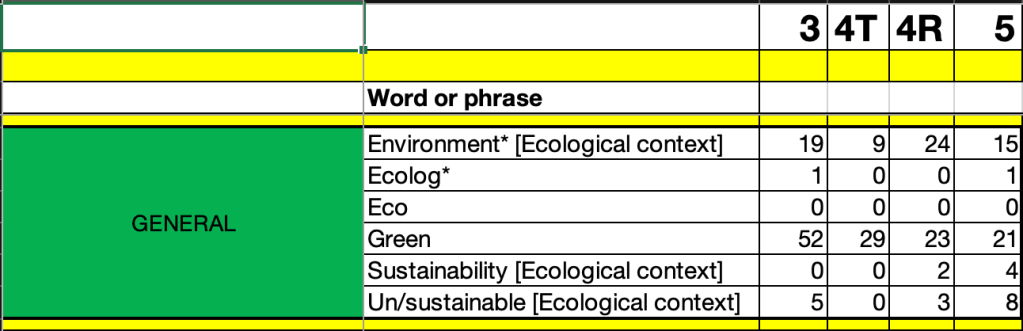
It’s pretty clear that the old favourite ‘sustainability’ is out of favour. That word and sustainable or unsustainable feature often across the documents – 502 times in fact – but very rarely in an ecological context. Only 22 instances of the words relate to ecological sustainability or bear any relationship to the famous definition of “sustainable development” in Our Common Future: ‘Development that meets the needs of the present without compromising the ability of future generations to meet their own needs.’ The words are used primarily as part of the phrase ‘financial sustainability’.

Words derived from the root ecology – ecology itself, ecological, ecologist etc, are almost entirely absent, appearing once each in two of the documents. The contraction ‘eco’ does not appear at all,

The favoured words are clearly ‘environment/al’ and ‘green’ which feature much more often – and to be fair are terms that ordinary people will commonly use. It’s probably worth noting that 45.6% of the times that the word ‘green’ appears in an ecological context it is within the phrase ‘green belt’ (68.6% in the Three unitary council proposal and 65.2% in the Four unitary council proposal (led by Rochford))

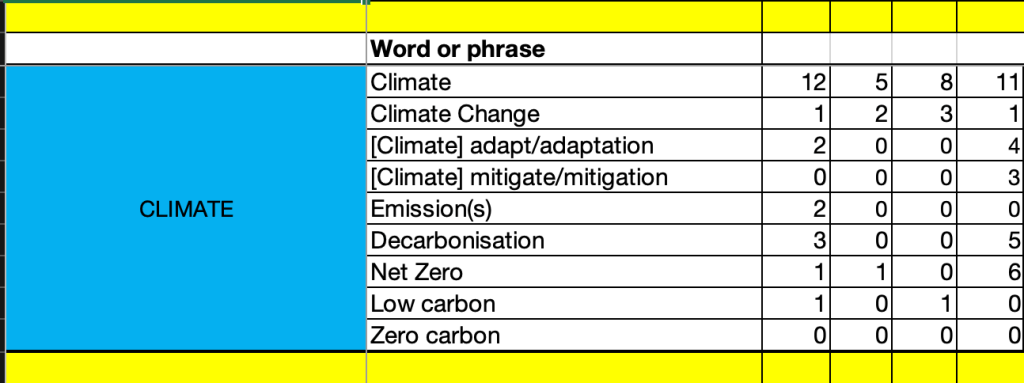
Turning to the climate emergency declared by the UK parliament in May 2019, I looked for where these documents referred to the climate and the national legal commitment to decarbonising all sectors of the UK economy to meet our net zero target by 2050. The phrase ‘climate change’ appears only 7 times across all four documents, ‘net zero’ appears 8 times (and is completely absent from the Four unitary council proposal (led by Rochford)). Decarbonisation also appears 8 times but is completely absent from both the Four unitary council proposal (led by Thurrock) and the Four unitary council proposal (led by Rochford). The word ’emission/s’ appears twice in the Three unitary council proposal but nowhere else. ‘Low carbon’ appears once a piece in the Three unitary council proposal and the Four unitary council proposal (led by Rochford) but not at all in the other two. ‘Zero carbon’ appears in none of them.

What then of the ecological emergency? England is ‘widely considered to be one of the most nature-depleted countries in the world following historic and ongoing declines. Government has made legally-binding commitments to end these declines and for nature to recover‘. Essex County Council is one of the responsible authorities delegated to prepare a Local Nature Recovery Strategy [LNRS] designed to: deliver the necessary action to reverse the current path of decline in our biodiversity; and, bring about a recovery for nature. Essex published its LNRS in July this year.

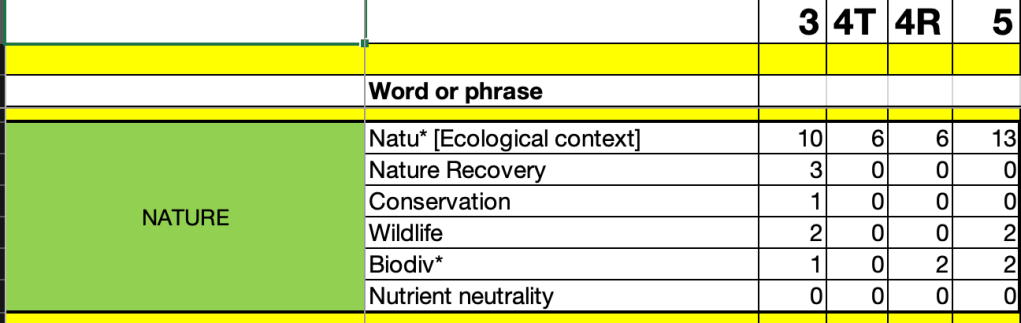
The phrase ‘nature recovery’ only appears in the Three unitary council proposal. This proposal was made by Essex County Council and the absence of ‘nature recovery’ in all the others perhaps indicates a failure to fully engage the other authorities in the county with this task.

Despite the new planning mandates for ‘biodiversity net gain’, the words biodiversity or biodiverse barely appear. The commonly recognisable terms ‘conservation’ and ‘wildlife’ are fewer and far between.

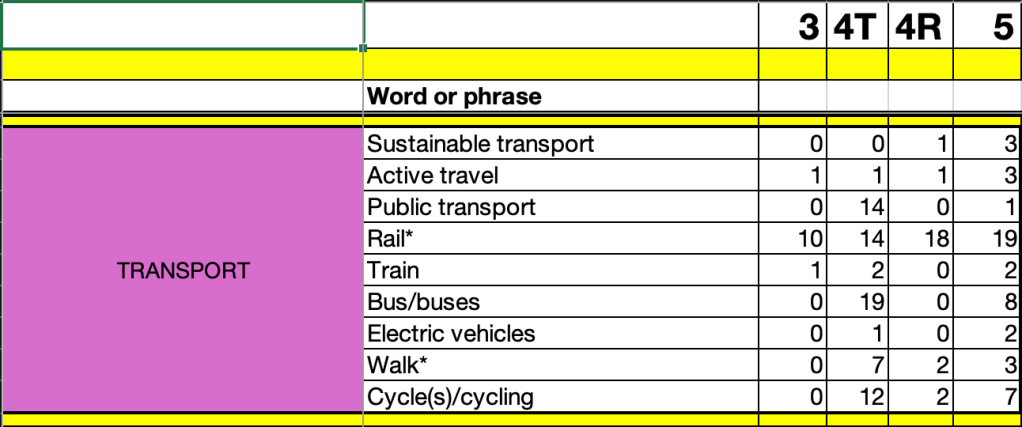
Domestic transport is the largest source of emissions in the UK, accounting for 29.1% of greenhouse gas emissions in 2023. The largest source of emissions from UK transport is road vehicles, which includes passenger cars and freight vehicles using petrol and diesel. Addressing this is key to a lower carbon future and one of the reasons I’m trying to rECOnnect Dengie. What do these proposals have to say about sustainable transport? Two of them don’t use the phrase.

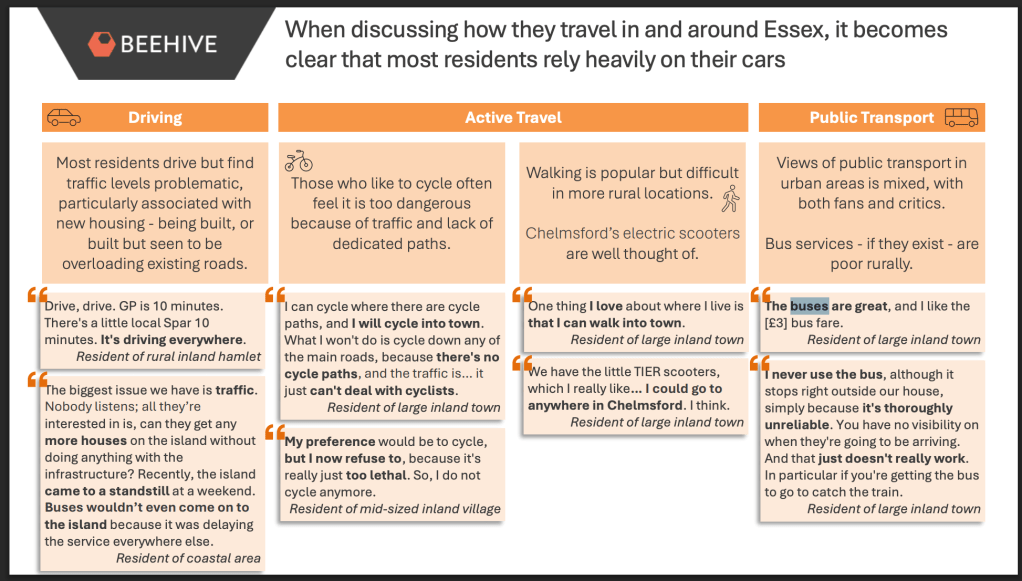
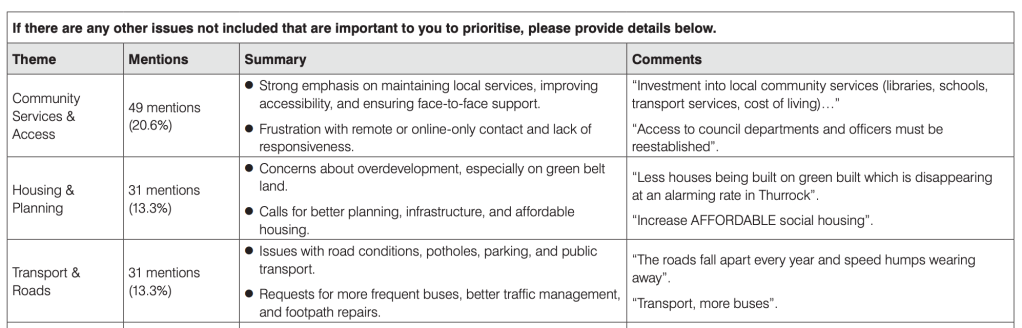
‘Public transport’, ‘bus/buses’, and ‘electric’ [vehicles], are all missing from the Three unitary council proposal and the Four unitary council proposal (led by Rochford). The Three unitary council proposal is particularly lacking in this area with no mentions of ‘sustainable transport’, ‘public transport’, ‘bus/buses’, ‘electric vehicles’, ‘walk/walking/walker(s)’ or of ‘cycle(s)/cycling’. The amount of attention apparently given to this area by the the Four unitary council proposal (led by Rochford) is also deceptive as many of these words appear primarily in summaries of public responses to surveys saying what they would like rather than any clear strategy to deliver them (see slides below).

A couple of slides from the Four unitary council proposal (led by Rochford) with the public’s transport issues

On the topic of clean/renewable energy there’s a bit more attention, but still surprisingly little on some of the keys areas in which we need to act to reduce carbon emissions.

Concerning waste there’s very little, especially in the key areas of reduction and reuse. It’s good to see some nods to the ‘circular economy’ but the county still seems to be celebrating ending landfill by burning rubbish rather than anything more transformative. Despite the massive public outcry against shit in the river and the pollution of our watercourses, none of the proposals dare say ‘sewage’.

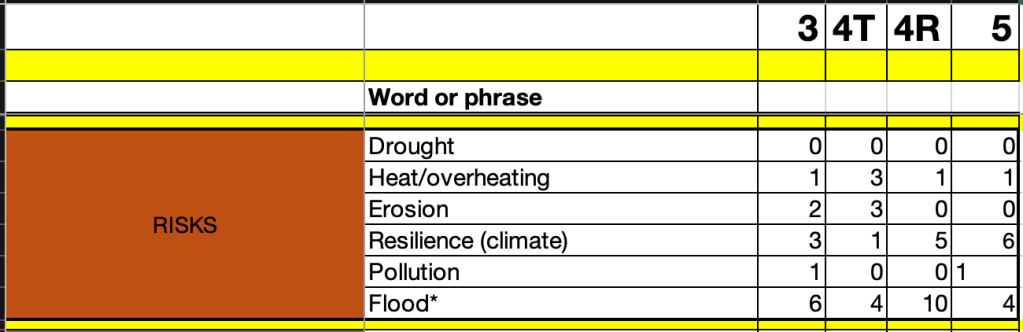
The less we mitigate climate change, the more risks we will face and the greater adaptation we will need to make. There’s not much about this in these forward looking documents and some risks get more attention than others.

As I said at the start this is a quick and dirty analysis – adding up the numbers here won’t tell you which proposal is best – you still need to read the documents and work that out for yourself. More of these words appear in the Three unitary council proposal (279) than any other, the fewest appear in the Four unitary council proposal (led by Thurrock) (189) – but more isn’t necessarily better. A lot of good words have been written in various documents over the years – but what matters is what actually happens not the words.

Let a Thousand Knepps Bloom

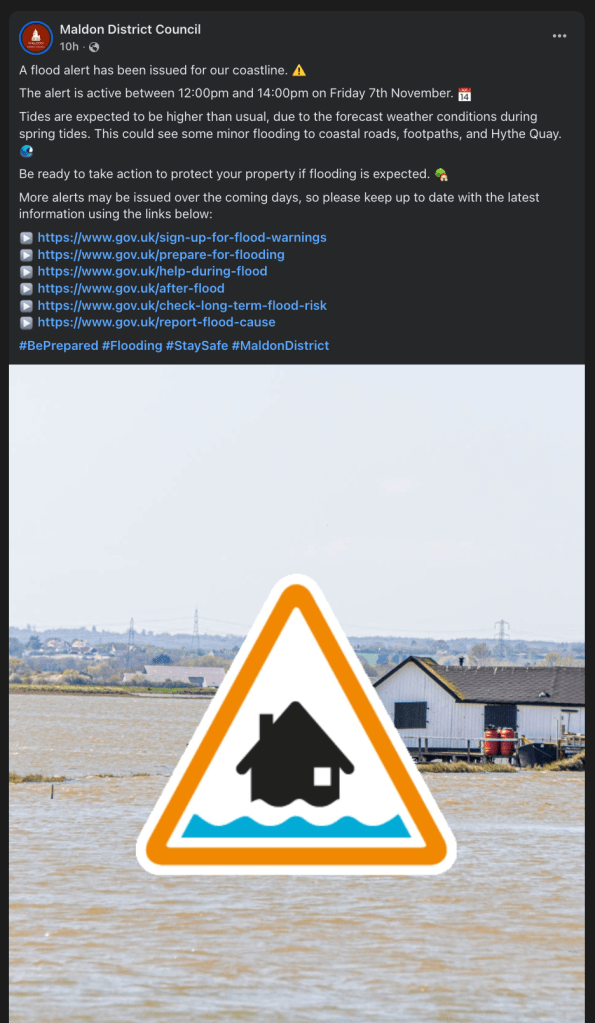
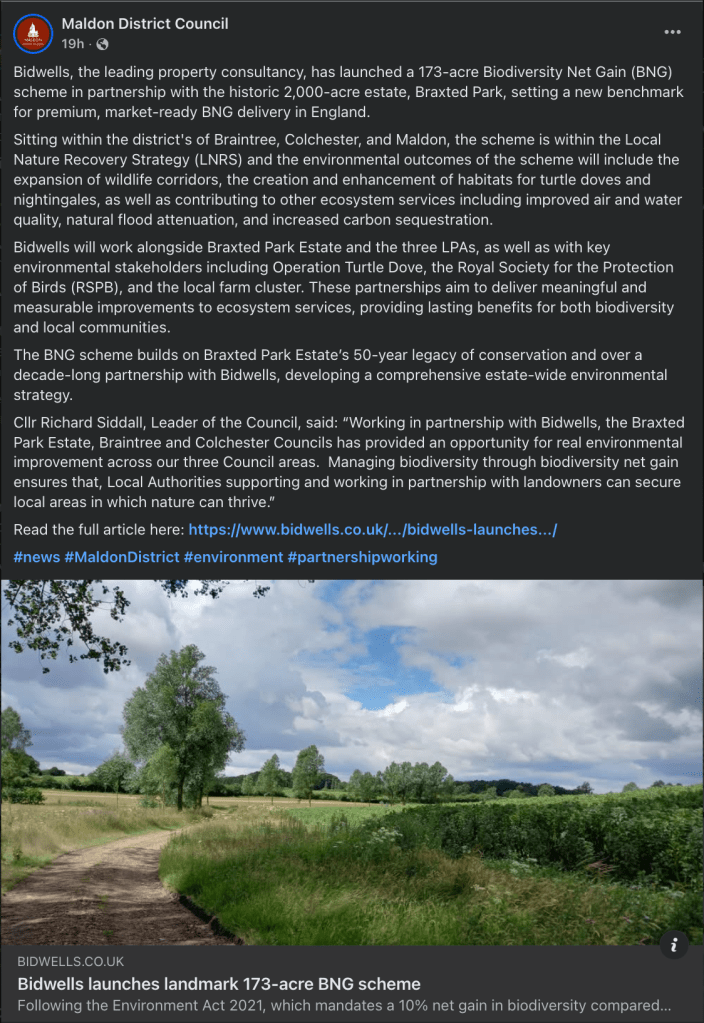
Yesterday, Maldon District Council (MDC) shared on social media that they would be working in partnership with a property consultancy company that has launched a Biodiversity Net Gain (BNG) scheme with the Braxted Park estate.


The post and linked article are light on detail, and there’s nothing about it on the MDC website, but this looks like MDC shaping up to allow developers to meet their ‘increase biodiversity’ requirements by paying someone else to do the nature recovery off-site.

Read more: Let a Thousand Knepps Bloom

Local District Councillor Wendy Stamp informs me that this scheme has not been discussed by Councillors and is seeking further detail.

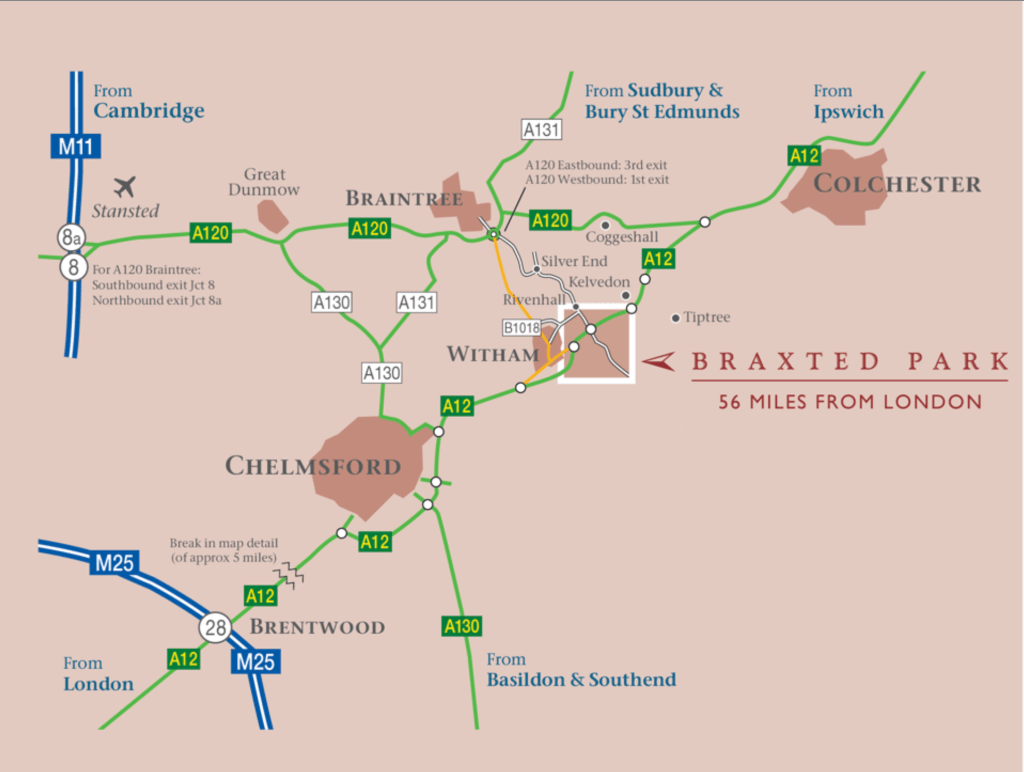
Map on the Braxted Park website illustrating that it is ‘well connected’ shows no connection to locations in Maldon District


I can see some advantages in consolidating nature recovery activities in the best sited locations and that working at a landscape scale can have environmental outcomes not available to smaller sites

but…


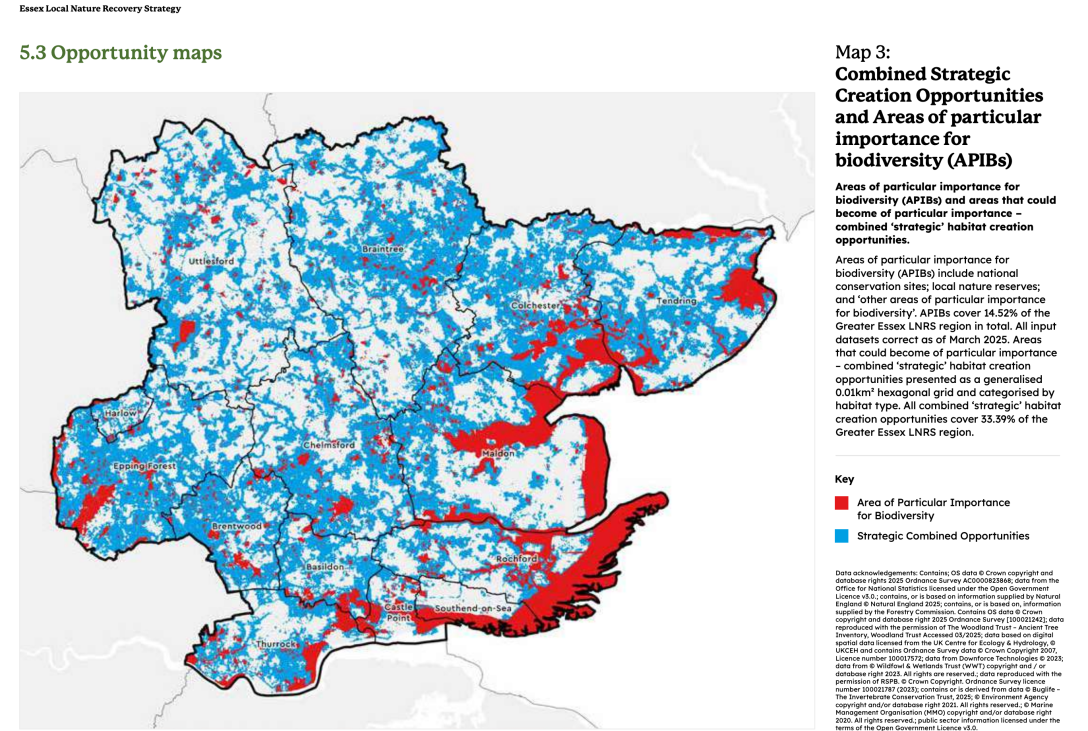
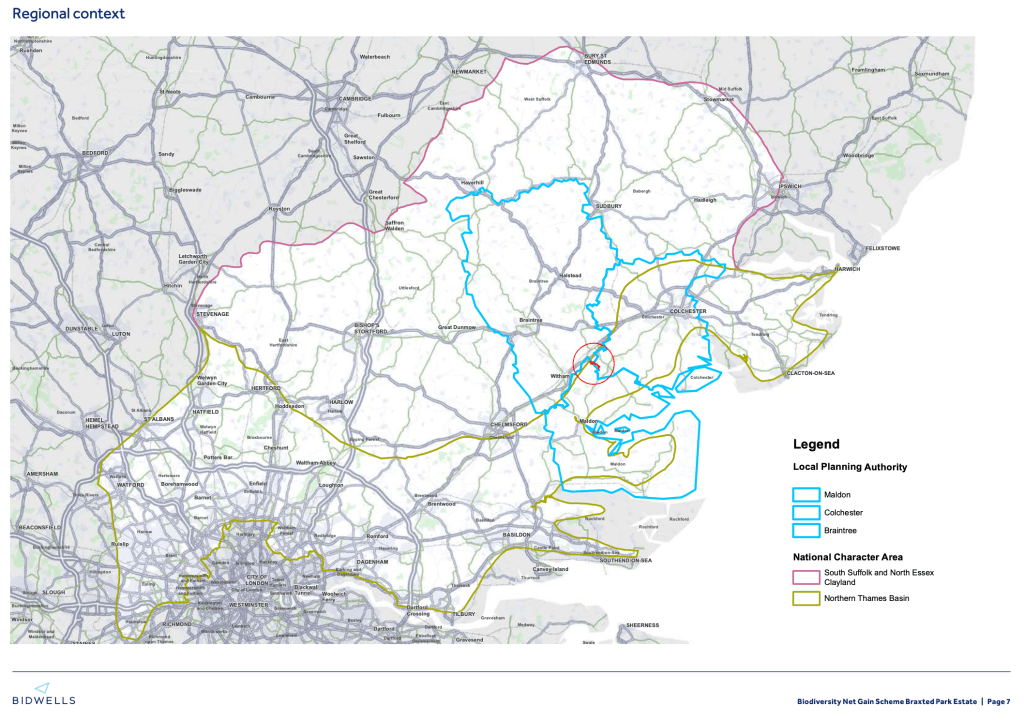
Braxted Park is barely in Maldon district (it’s on the North-west border with Braintree District, near to Witham) and it’s a long way from the Dengie peninsula. (It’s over 20km as the turtle dove flies from Braxted Park to the proposed Romans Farm development in Burnham on Crouch for example)
It’s hard to see how the environmental outcomes of the scheme will improve nature recovery out here.

Location map in the Bidwells document Biodiversity Net Gain Scheme Braxted Park Estate [pdf]

We must demand that nature recovery schemes happen locally to us, no biodiversity offsetting in distant locations!


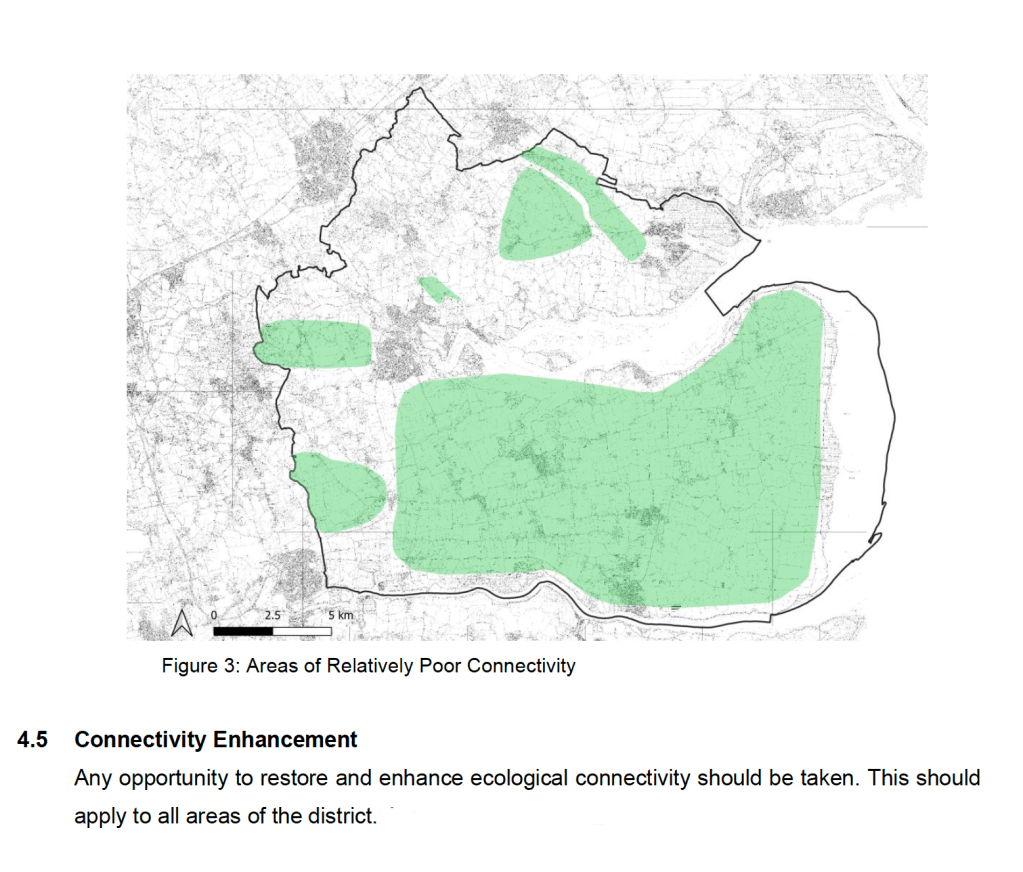
The Maldon Nature Conservation Study (February 2023) produced by Essex Ecology Services (EECOS) for MDC spoke of the importance of wildlife corridors in the district and stated that ‘[t]he taking of measures to enhance connectivity would be worthwhile anywhere in the district… Certain areas suggest themselves as potential priority targets… Any part of the Dengie peninsula

Map from the ‘Maldon Nature Conservation Study 2022′ (February 2023) [pdf]


The whole peninsula was mentioned because the Study notes that ‘[t]he Dengie peninsula has few [local wildlife] sites and many of these are isolated in a landscape dominated by intensively managed farmland, with few areas of natural or semi-natural habitats aside from the coast’


It notes that ‘[t]he woodlands of Maldon are heavily concentrated in the north west of the district [where Braxted Park is located] and are virtually absent to the east of Northey Island, both north and south of the Blackwater estuary. The Dengie peninsula, in particular, is virtually devoid of woodland.’


Elsewhere in the document the Dengie is described as an ‘impoverished landscape dominated by large arable fields with few hedgerows’ and that ‘[t]he planting of new hedges and appropriate management of these features would be of great benefit to wildlife, including breeding birds, and any measures that can be taken to encourage this should be considered. The establishment of a well-connected network of hedgerows would represent a major landscape-scale enhancement.’


MDC knows where, and what, nature recovery interventions on the Dengie would be effective because the Study they commissioned informs them.

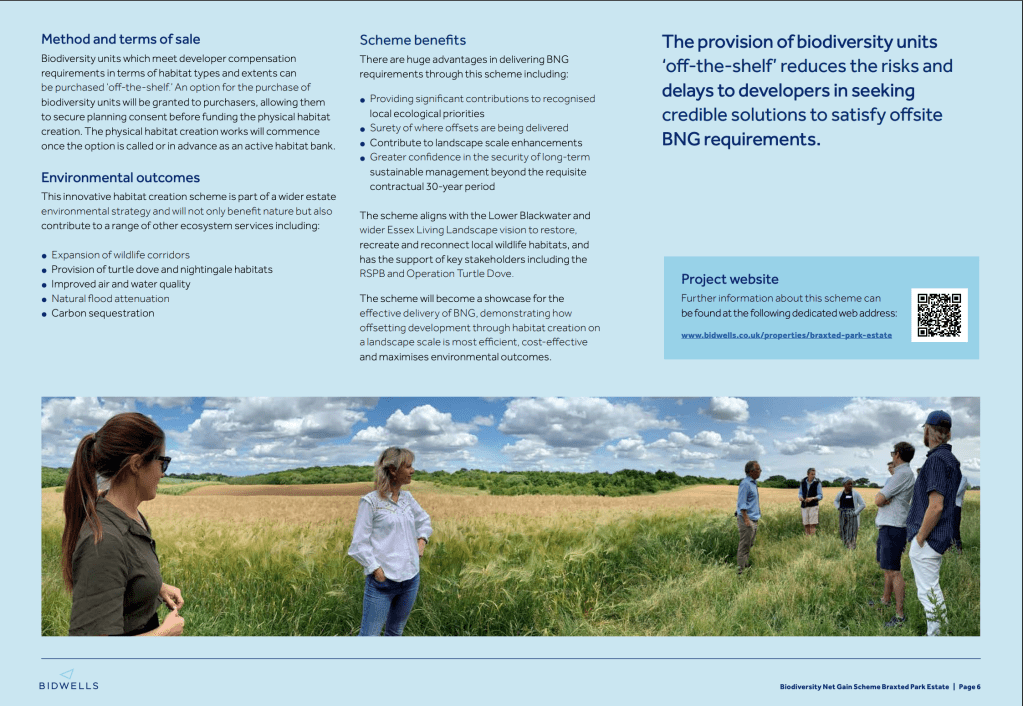
The pitch to developers in the Bidwells document Biodiversity Net Gain Scheme Braxted Park Estate [pdf]


This new scheme looks like a way for developers to avoid caring for and improving the natural world where they build by just paying a fee for someone else, to do something, somewhere else.

It should not be ignored that replacing an intensively managed, chemically dosed, arable monoculture field in our ‘impoverished landscape’ with houses and gardens will in itself create new niches for wildlife. Housing developments don’t in themselves, however, create a well-connected network of hedgerows, they don’t establish new woodlands, areas of natural or semi-natural habitats, or wildlife corridors between existing sites of biodiversity. Construction of these developments too often begins with violently making their site a tabula rasa, removing mature trees, bushes and hedgerows, blocking access to fauna, filling in scrapes, stripping topsoil, compressing the earth. It concludes with establishing neat show homes, where the ‘messiness’ of the wild is manicured away – no care to share the territory with what came before – no hedgehog holes or bee bricks, no bird and bat boxes, no quarter given to burrowing badgers and foxes, insects starved of fodder. In the amenity spaces, sapling trees are planted and then neglected to dry out and die. A councillor once told me that developers are generally contracted to support these trees for 5 years, but that it’s cheaper for them to replace those that die at the end of their period of responsibility than to maintain them for the intervening period. Any survey of the new estates in Burnham swiftly finds the desiccated evidence

BNG seemed to me from the get-go to be ‘biodiversity off-setting’ in the disgraced mode of carbon off-setting before it. So, it comes as no surprise that we are immediately seeing nature commodified and traded by third-party intermediaries.

When a developer grubs out a 300 year old oak tree near me, and the squirrels who ate the flowers disappear, the moths that relied on it don’t return, the oak-mining bee loses its pollen, the badger and wood mouse find no acorns, the jay has nothing to bury, and the caterpillar doesn’t come that the blue tit might consume, when the bat doesn’t roost, the fungus doesn’t feed, the lichen don’t spot the bark, the mushroom doesn’t fruit from its subterranean romance with roots – then I guess I can take solace in the knowledge that a seven hour walk from where I live, on the country estate of a retired banker, that an ‘off-the-shelf’ purchase by the developer will have financially contributed to the ‘creation of high-quality biodiverse habitats targeting ‘good’ condition as defined by the DEFRA Statutory Metric’. Call me a romantic if you will, but I prefer stewardship to the spreadsheet.

Chancellor vows to go further and faster to kickstart economic growth’ Rachel Reeves at Siemens Healthineers in Oxfordshire on 29 January 2025.

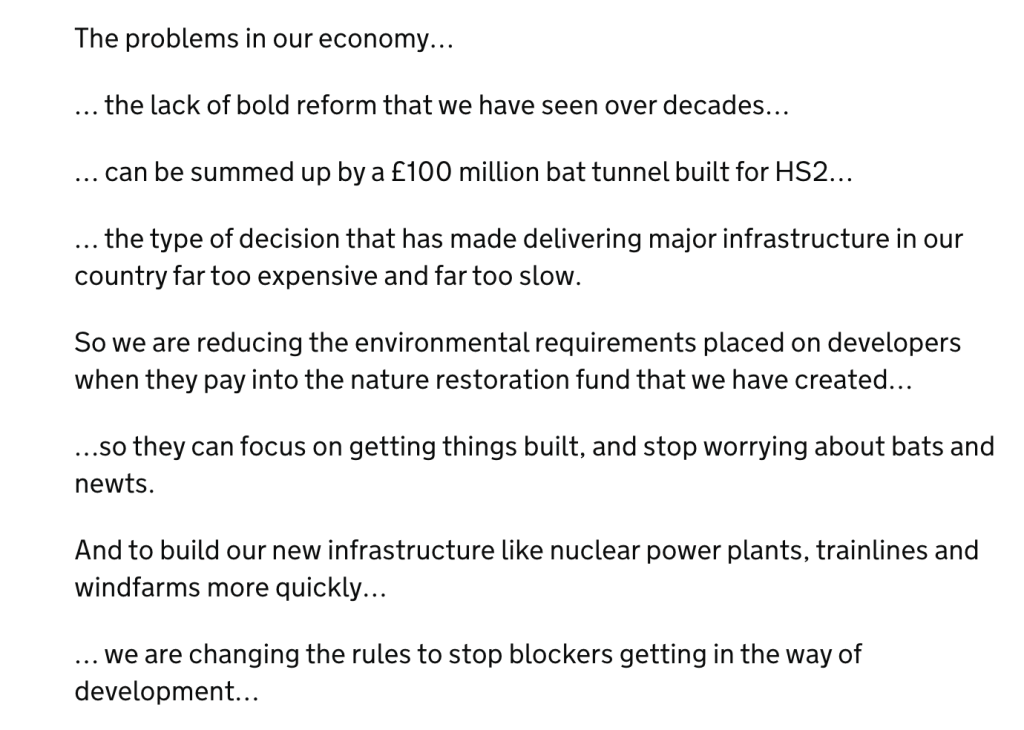
An ‘abundance’ YIMBYism is on the rise, an attitude on both the left and right of politics, and on both side of the Atlantic, that the future has been cancelled out of a gratuitous consideration for ‘bats and newts’, that we must just BUILD. Increasingly often this comes with a sanctimonious sneer that pits mitigating climate change against nature conservation “we could accelerate the construction of renewable energy infrastructure and energy efficient homes if you would just leave it out with bat tunnels and newt-counting delays”.

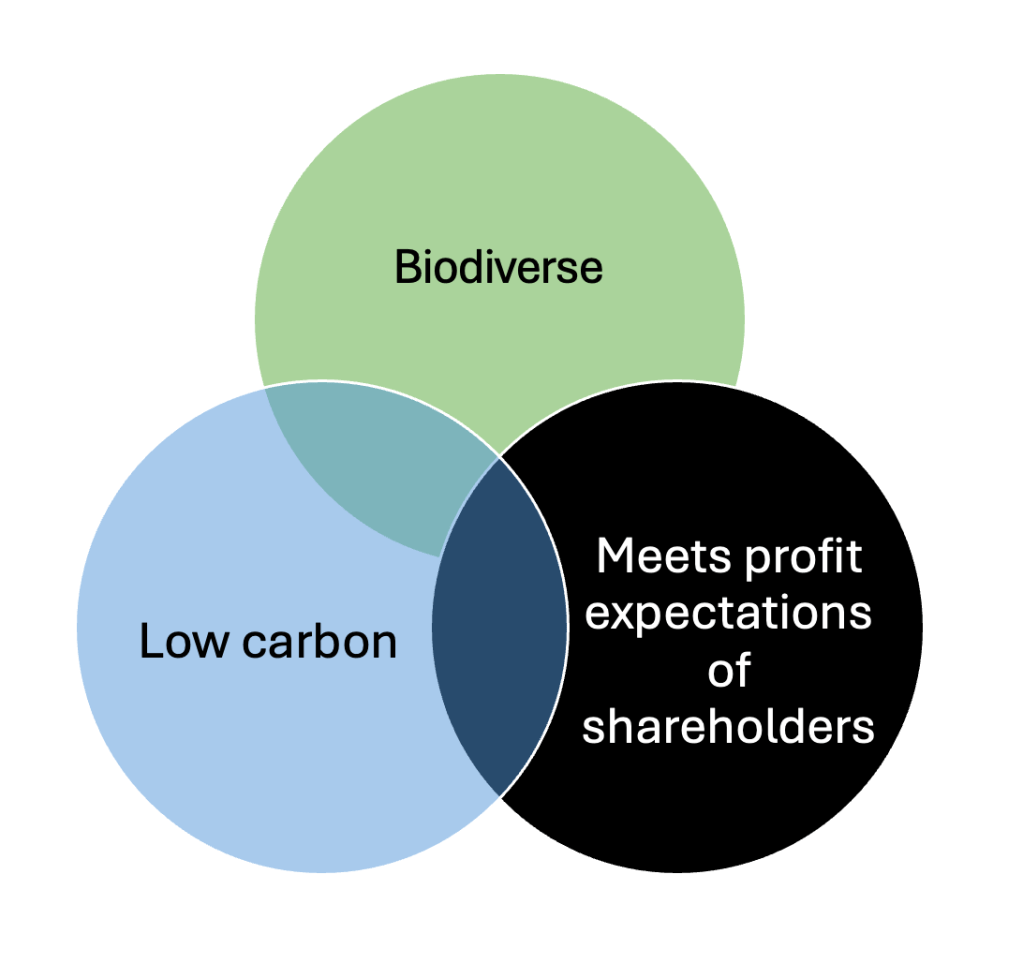
But why can’t we have both things? Because there’s a missing third part of this iron triangle

The great shapers of places in the UK, of our land and homes, are six volume housebuilders (Barratt/Redrow, Vistry, Taylor Wimpey, Bellway, Berkeley Group, Persimmon) and they are driven by profit, excessive profit. A 2023 report from the UK Collaborative Centre for Housing Evidence, Why have the volume housebuilders’ been so profitable? notes that

‘Since 2014, the largest housebuilders, and in particular the three largest housebuilders by
volume (Taylor Wimpey, Barratt and Persimmon – herein, the ‘big three’) have consistently reported supernormal levels of profitability, with gross profit margins reaching 32% and never falling below 17%’

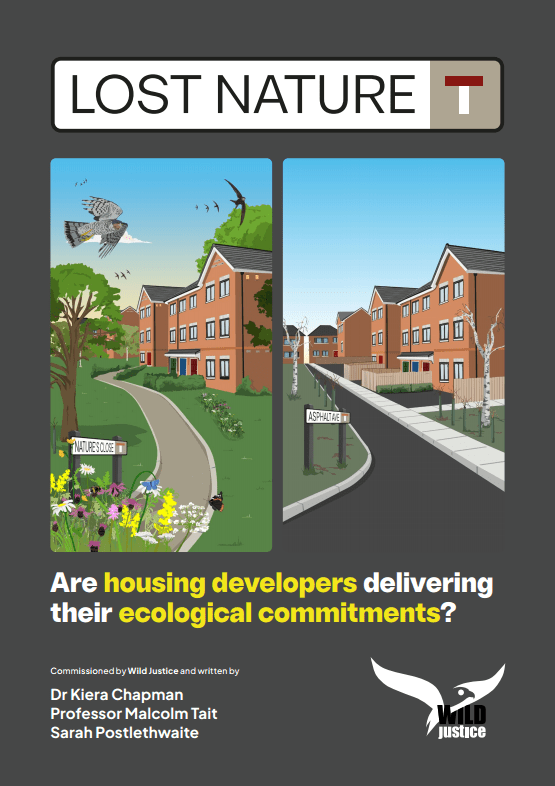
So, obviously, these companies are not interested in the business of stewardship, of long-term commitments to places, or indeed any commitments past the point when contracts are exchanged. A survey by University of Sheffield academics for the wildlife campaigning group Wild Justice discovered that nearly half of the nature-friendly enhancements promised by developers building new homes have failed to materialise.

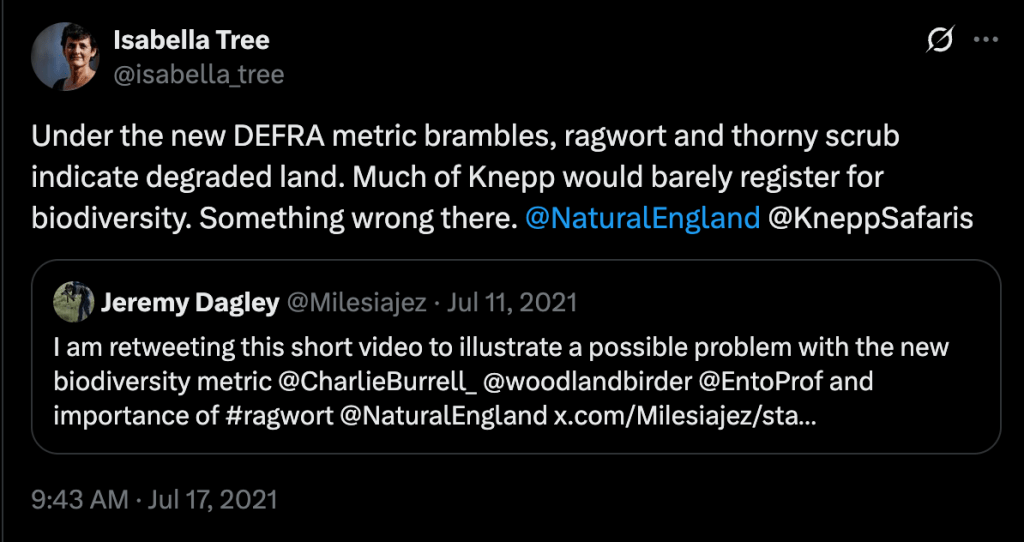
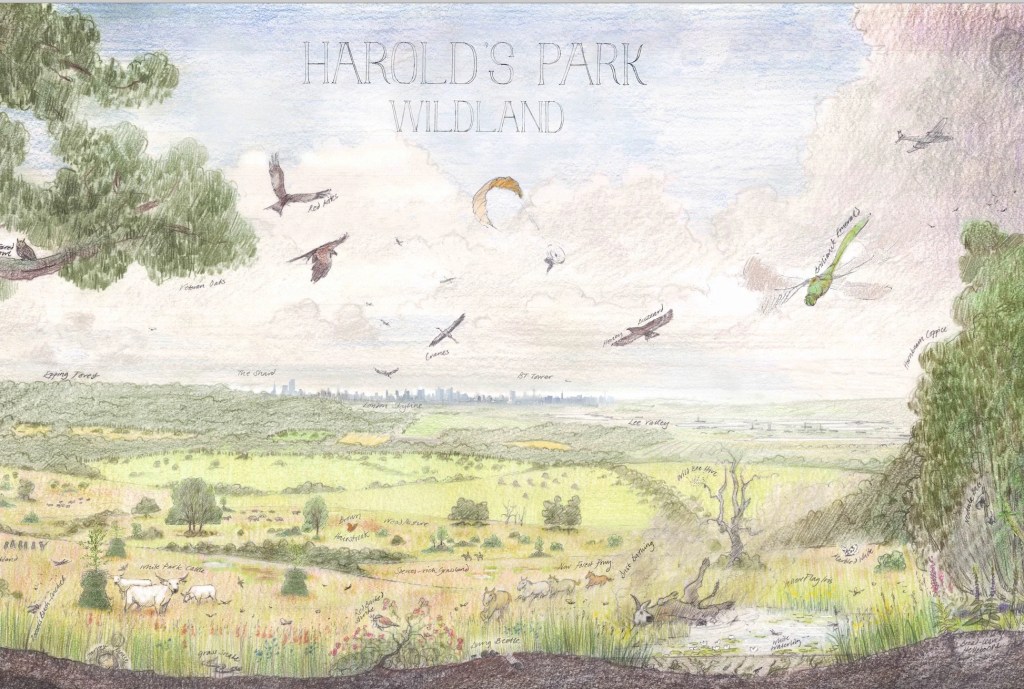
Instead of enforcing these commitments and penalising developers who fail to adhere, the BNG system surrenders and turns this all into a one-off transaction. Developers pay some ecologists to do a baseline survey before development, a wonk does some sums to account for 10% BNG, they pay a one-off fee to a mediator like Bidway and they’re done – on to the next one. The mediator creams some agency fees and passes on the remainder to a land owner adding BNG to their diversifed income streams. It could be a conference and wedding venue like Braxted Park, it could be elsewhere in Essex like the farm turned rewilderness Harold’s Park – 45km as the turtle dove flies from Braxted Park. (Recently purchased by ‘natural capital and rewilding company’ Nattergal.) These Essex projects stand in the shadow of the Knepp estate in Sussex -the poster child for UK rewilding – although Knepp’s owner Isabella Tree says it wouldn’t meet the DEFRA metrics.

All this is an approach to nature recovery that seems to depend on special places that are protected, another form of nature reserve, rather than forging a new symbiosis with nature and accepting that humans are completely embedded within a more-than-human world. Essex county council has a target of transforming 30% of Essex into wild and nature areas. Every place should be special, distinct among others of a kind. Nature recovery here, and there, and everywhere. Let a Thousand Knepps Bloom.

Dengie Marshes Wind Farm

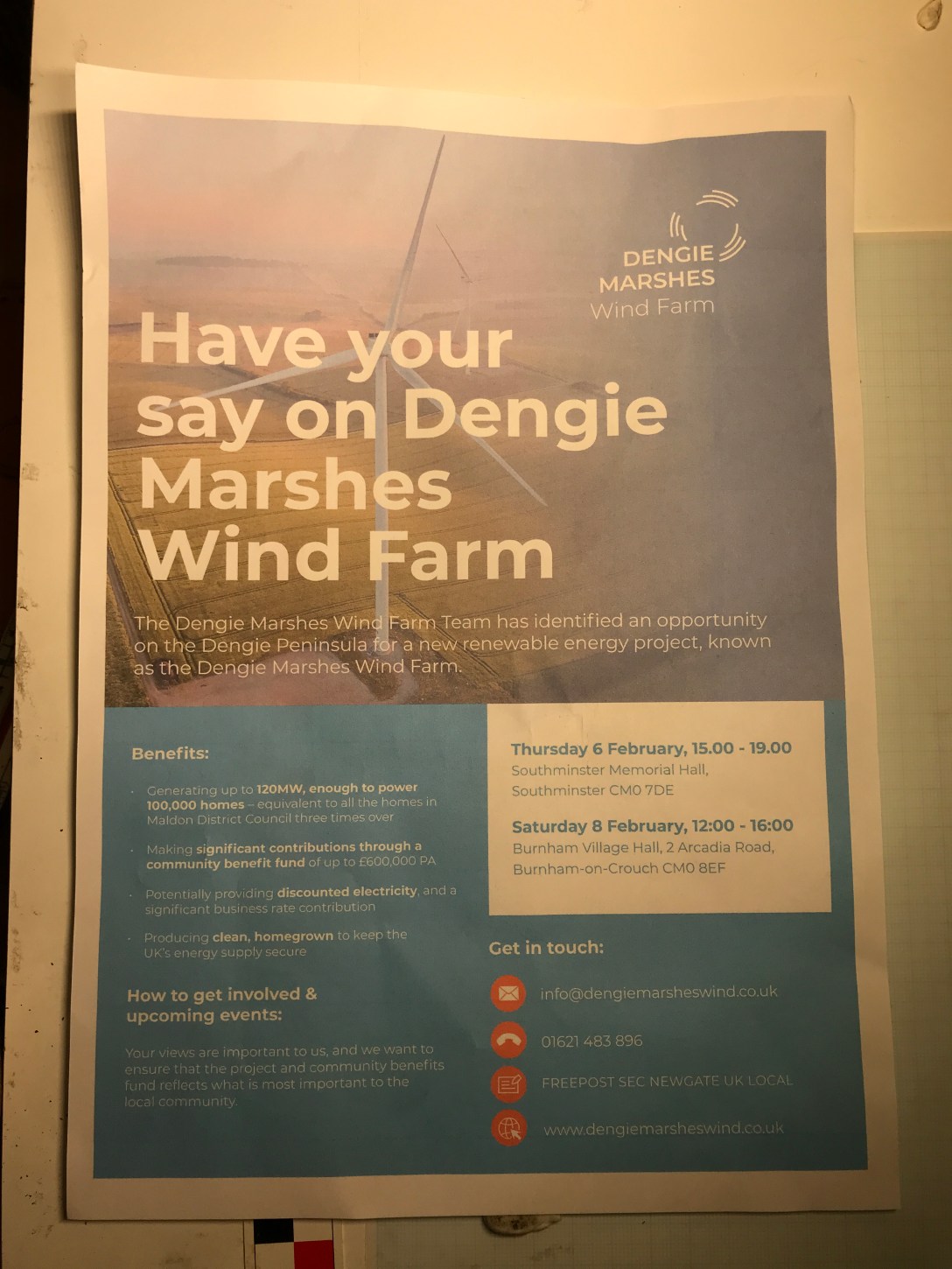
The proposed Dengie Marshes Wind Farm is moving forward into a phase of public survey and persuasion. (A company called Dengie Marshes Wind Farm Limited was incorporated on 18 October 2024 and shares directors with Blenheim Renewables, the company which initiated the project.)

The project has a website and is holding a series of consultation events with two scheduled for this week:


Thursday 6th February 15:00 – 19:00
Southminster Memorial Hall, Southminster, CM0 7DE


Saturday 8th February 12:00 – 16:00
Burnham Village Hall, 2 Arcadia Road, Burnham-on-Crouch CM0 8EF


They aim to submit a planning application this ‘summer’.

Continue reading “Dengie Marshes Wind Farm”

Weeknotes 02025 Q1 W4

DCAP

Next week we’ve got a meeting in Tillingham and we’re supposed to be thermal image surveying 4 houses at the same time – not sure how it’s going to work!

Day Job

Work begins on the April issue of the magazine. Wrote an internal blog on the use of AI in Emilia Pérez.

Everyday Life

Someone came around to give a quote on getting the kitchen sorted and we rang someone else to get a quote on re-plastering. I’ve still got some concerns about damp and the render on the exterior walls of the kitchen preventing the building from breathing. It’s hard to find local contractors that understand the needs of a C19th building.

Auntie Jean and me.

My Aunt’s estate stuff finally completed. Saturday my bro and I met up and started to go through the photos and other bits he had picked up from her house. More of my grandparents’ photos that I’d never seen before and am pleased were not lost. We did triage on the stuff – definitely want to keep, definitely don’t want, and we’re left with the rest which largely consists of my Aunt’s photos. She began a career as an air hostess in the 1960s and worked for airlines her entire life, she was well travelled and there’s a lot of photos. I’d like to keep some record of her life, but there’s a lot of landscapes, people I don’t know: her friends and colleagues, memories that were hers. The early 1960s photos are pretty good as she obviously ran with a mod crowd – smart clothes, mopeds the lot.

Tax Return. £2 to pay somehow ¯_(ツ)_/¯

I submitted a short piece on the ‘planetary’ to the Long Now London newsletter – and posted an illustrated hyperlinked version here.

My friend in Altadena got the all-clear to return to the street and found that his house had made it. Happy Birthday next week Stephen!

Media

Films

Wilding (2024) The doc based on Isabella Tree’s book about the Knepp estate and its rewilding project. It can’t avoid showing their castle home but it doesn’t mention that Tree’s hubby Charlie Burrell is the 10th Baronet and grew up on the family estate in Rhodesia. I’ve mentioned before that rewilding is following the organic ag path of being pioneered in the UK by the landed gentry.

Yes Man (2008) Never seen this before. It’s OK – not Jim Carrey’s best, but very much akin to his other work around that time. I don’t suppose it bears much relation to Brit comic Danny Wallace’s non-fiction book of the same name that it’s ostensibly based on (I’ve not read it). It had Dice Man vibes (but I’ve not read that book either). I’m sure it must have been mentioned that Zooey Deschanel is primo Manic Pixie Dream Girl in this (checks Wikipedia. Wiki cites a Variety article where Deschanel rejects the characterisation but author Zack Scharf writes that the label had followed her throughout her career since her appearance in 500 Days of Summer (2009) )

TV

Monty Don’s British Gardens – too many gardens in an episode to get any depth but there was much to enjoy. There were lots of stately homes, an indication of the historic excessive wealth of the British upper classes. There was some commentary to the effect of ‘no one could afford to do this now’ – which seemed a strange claim to hear the week I watched the three richest people on the planet at the Presidential inauguration – a lot has been made of the lack of philanthropy from Musk et al (where are the hospitals, libraries, art galleries etc. that the golden age oligarchs delivered?) but I also wondered where are the gardens? Bill Gates buying farmland doesn’t count. Knepp appears again, but this time just the walled garden with naturalistic planting by James Hitchmough.

Prime Target – not sure I can be arsed to continue. So far it’s a poorly paced secular Three Body Problem with a cast that have all given better performances elsewhere.

Severance S02E02 – I’m enjoying it – but there was too long between seasons 1 and 2 (which can’t all be the fault of COVID and union strikes)

Online

I don’t know if it’s the WiseUp Zucker move to cease moderation but my FB feed is increasingly full of posts from groups called things like the ‘Queens England’ with “old” photos (many clearly AI, perhaps all) with a brief bit of text along the lines of ‘how it used to be’ or ‘before they took it away from you’ with heavy implicit nods to racism which are made explicit in the comments below. It’s getting as bad as the BlueSky bot problem – this is probably bots too, dezinformatsia aimed at destroying consensus and breeding disquiet.