Zeroing In

I am grateful to Tony Fittock (District Councillor for Althorne ) for letting me know that the process of creating a new Local Development Plan for Maldon District has begun. So my previous post on the matter revealed my own ignorance of the Maldon District Local Development Plan (LDP) Review: Issues and Options Consultation, which ran from 17 January to 14 March 2022.

Mr Fittock also shared a link to the report ‘Growth Options for the Review of the Local Development Plan’ [p.33 onwards] provided to the meeting of Maldon District councillors on 14 September 2023.

From this, I learned that ‘the Plan Period for the review of the LDP Review is going to be 20 years.’ As the current plan runs until 2029, this indicates that its successor will cover the period up to 2050. As noted previously, the UK government is committed by law to reduce greenhouse gas emissions by at least 100% of 1990 levels (net zero) by 2050. The next Local Development Plan will therefore set out a vision and a framework for the future development of Maldon District that must include complete decarbonisation.

Continue reading “Zeroing In”

Back to the Strandline

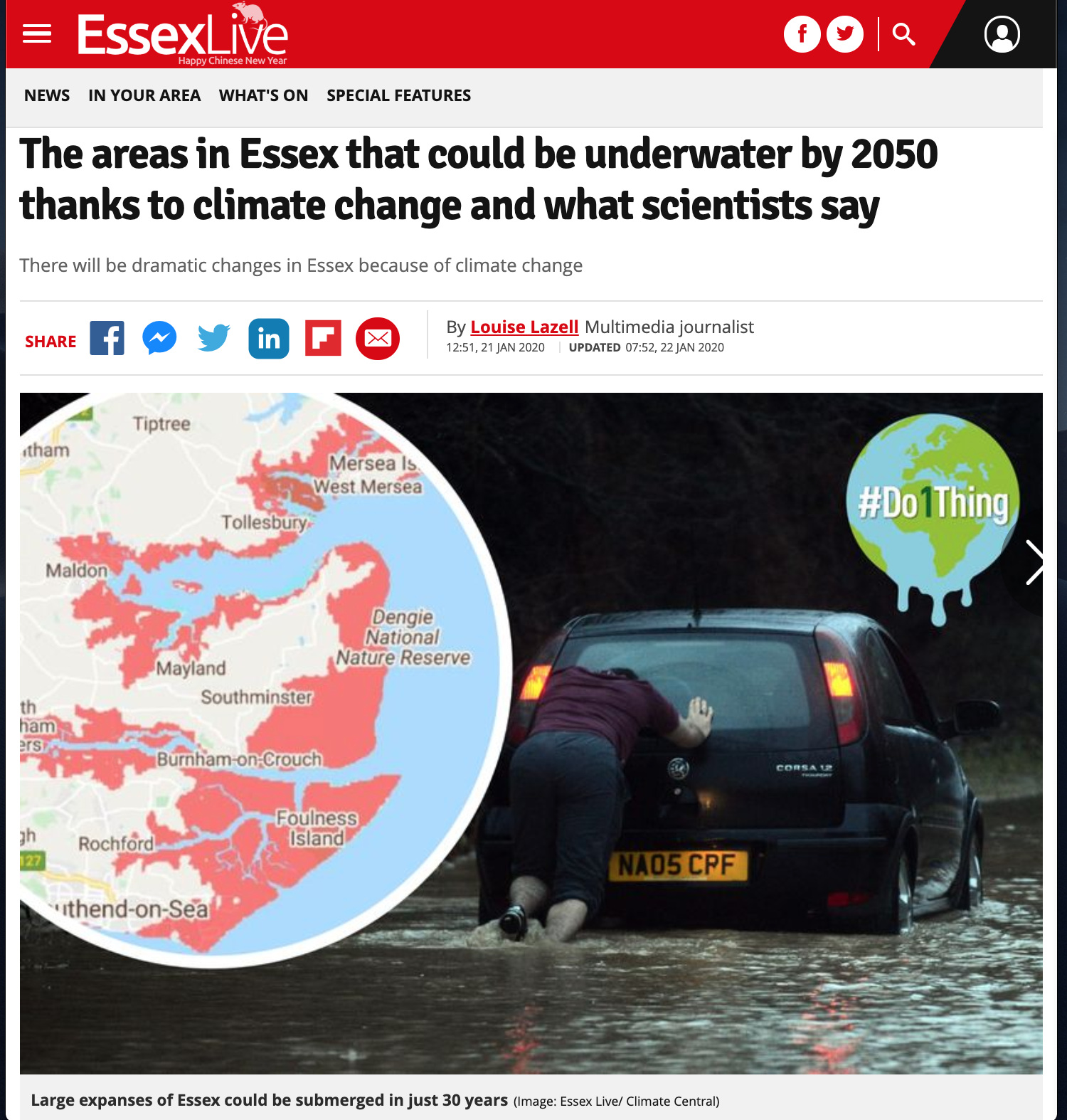
Screenshot 2020-01-26 at 13.42.33This week Essex Live brought back the Climate Central Flood Map story that featured in the last post. This time around the story, and its associated maps, were accompanied by some welcome discussion of the implications and possible mitigation from Drs Natalie Hicks and Tom Cameron of the University of Essex’s School of Life Sciences. There was something of a disjunct between their commentary and the featured statements from the Environment Agency and Essex County Council. If local journalism wasn’t in such an under-resourced state that disjunct might have been creatively opened further in order to plot some better sense of the different visions of the future each presents. Continue reading “Back to the Strandline”

Vulnerable to Flooding

Screenshot 2019-11-10 at 15.17.33
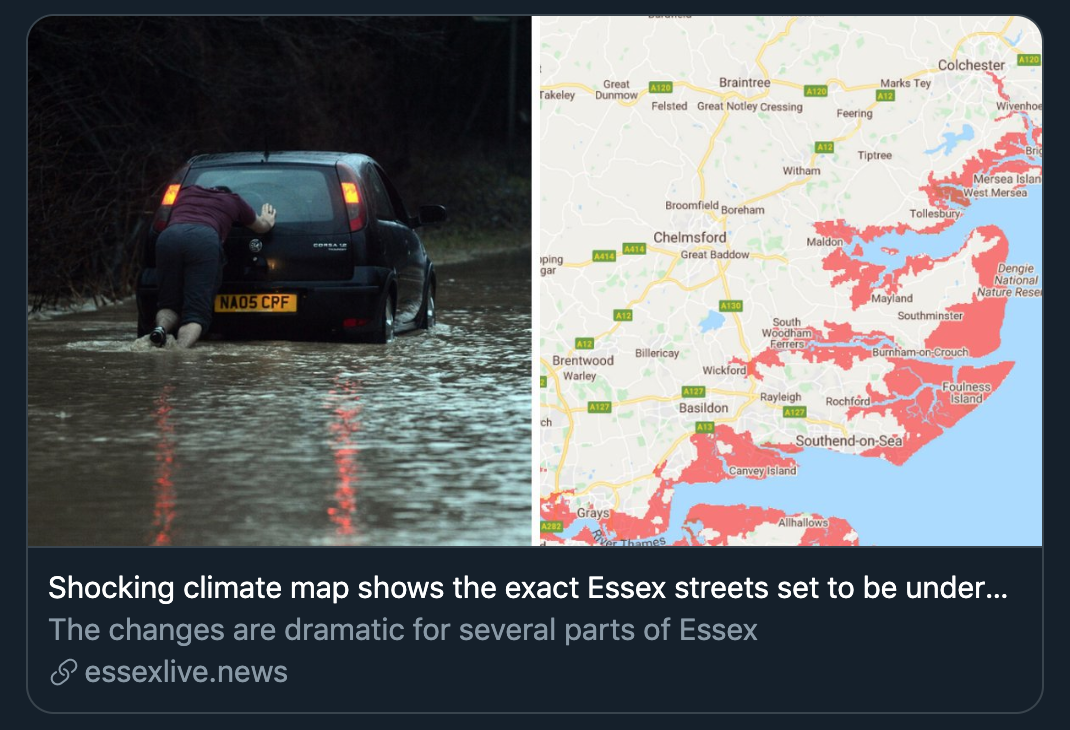
Lots of the local ecologically concerned folk are sharing this news story based on the
Climate Central flood map update using the CoastalDEM® v1.1 digital elevation model. I’m not immune to doing so myself. Combined with the recent devastating floods in the north of England these projections seem to offer a warning from the future that Continue reading “Vulnerable to Flooding”

Defining bioregions in these islands III

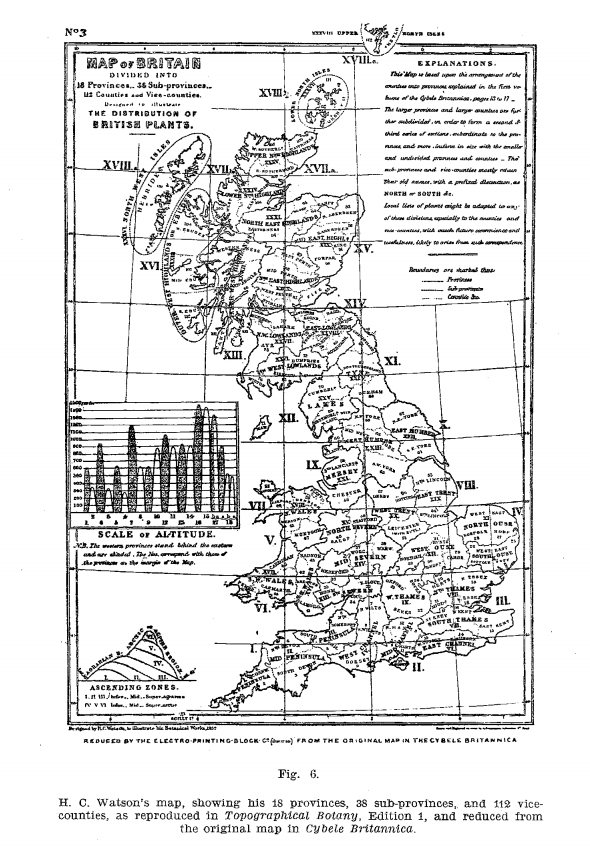
Watsonian vice-county 1

Ed Tyler has written an interesting response to the previous posts in this series (I, II) on his bioregioning site. He makes a number of interesting points that are worth reflecting on, but here I’ll limit myself to his reference to the Watsonian Vice County map.

I first came across the Watsonian Vice County map in the course of researching the Continue reading “Defining bioregions in these islands III”

Defining bioregions in these islands II

Johnny Appleseed

‘The necessity for scores of bioregional Johnny Appleseeds’

– Kirkpatrick Sale, ‘The Birth of Dartia’, Schumacher College journal #3, (Summer 1992)

It was good to see my last post on this topic receive attention on social media, it was shared widely and garnered some useful comments – this follows on from that and is best understood having read it beforehand. Shortly after publishing that post I saw Kirkpatrick Sale’s line about the ‘necessity for scores of bioregional Johnny Appleseeds’ and was heartened that perhaps we were seeing that flowering now, both with the Bioregional Learning Centre‘s Community of Practice and with a wider cohort of wild re-seeders – we still need Continue reading “Defining bioregions in these islands II”

Defining bioregions in these islands

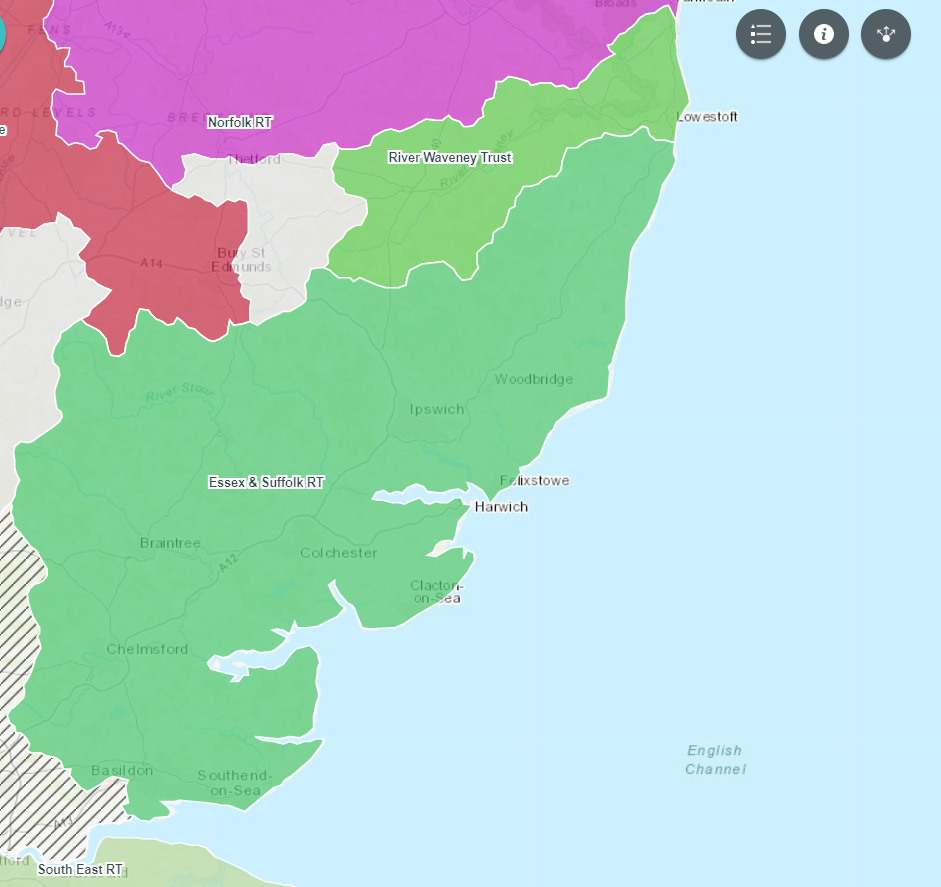
essex rt
Catchment Area of Essex & Suffolk Rivers Trust

In a recent post, I mentioned how ‘I’m still struggling to articulate a suitable spatial scale for bioregional praxis in the Atlantic Archipelago’ and part of this struggle will be identifying particular bioregions within the Archipelago. Today I received a message from Kate Swatridge who had attended Ed Tyler and I’s session on bioregions at the UK Permaculture Convergence asking about this issue. She wrote: Continue reading “Defining bioregions in these islands”