Push Biking

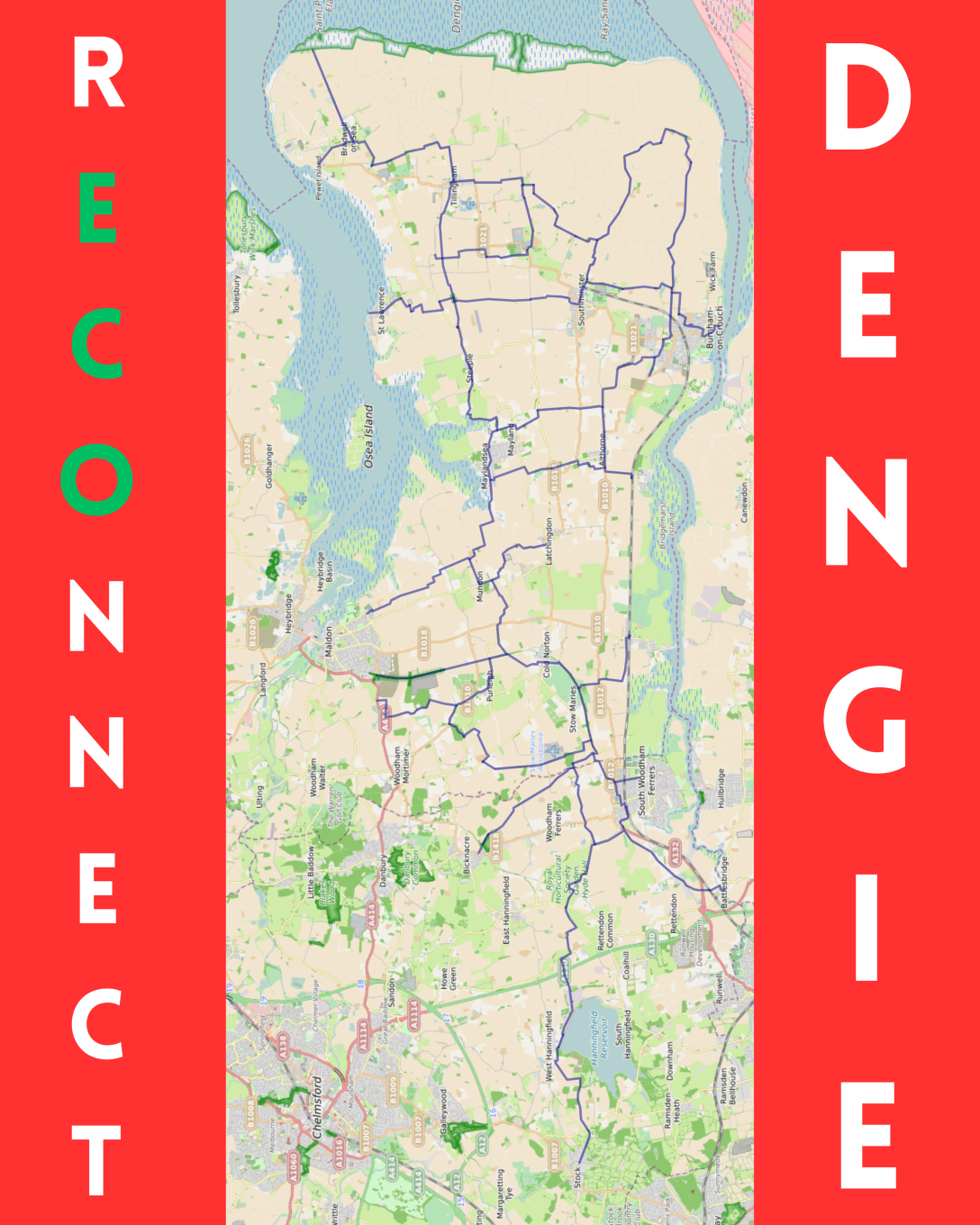
The recent and successive cycle strategy documents from Essex and Maldon have failed to suggest what cycle routes on the Dengie could look like – so, I’ve had a go…

Read more: Push Biking

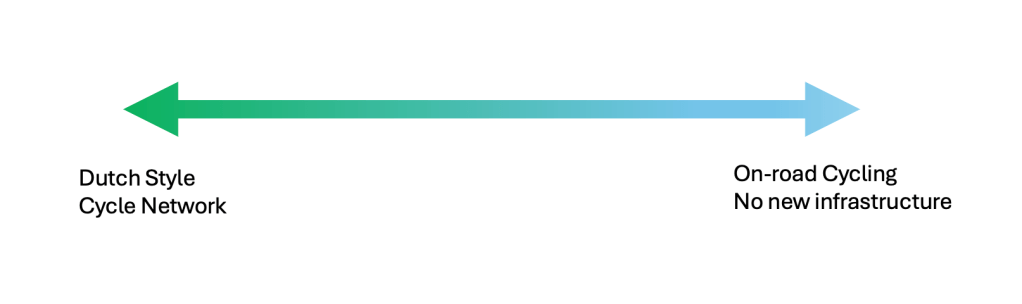
[I should start by stating that the ideal situation would be a Dutch style network, including completely new cycleways taking the most direct line between settlements. This is the only option that would achieve the aim to ‘deliver a world-class cycling and walking network in England by 2040’ expressed in ‘The second cycling and walking investment strategy (CWIS2)’ published under the 2019 to 2022 Johnson Conservative government.

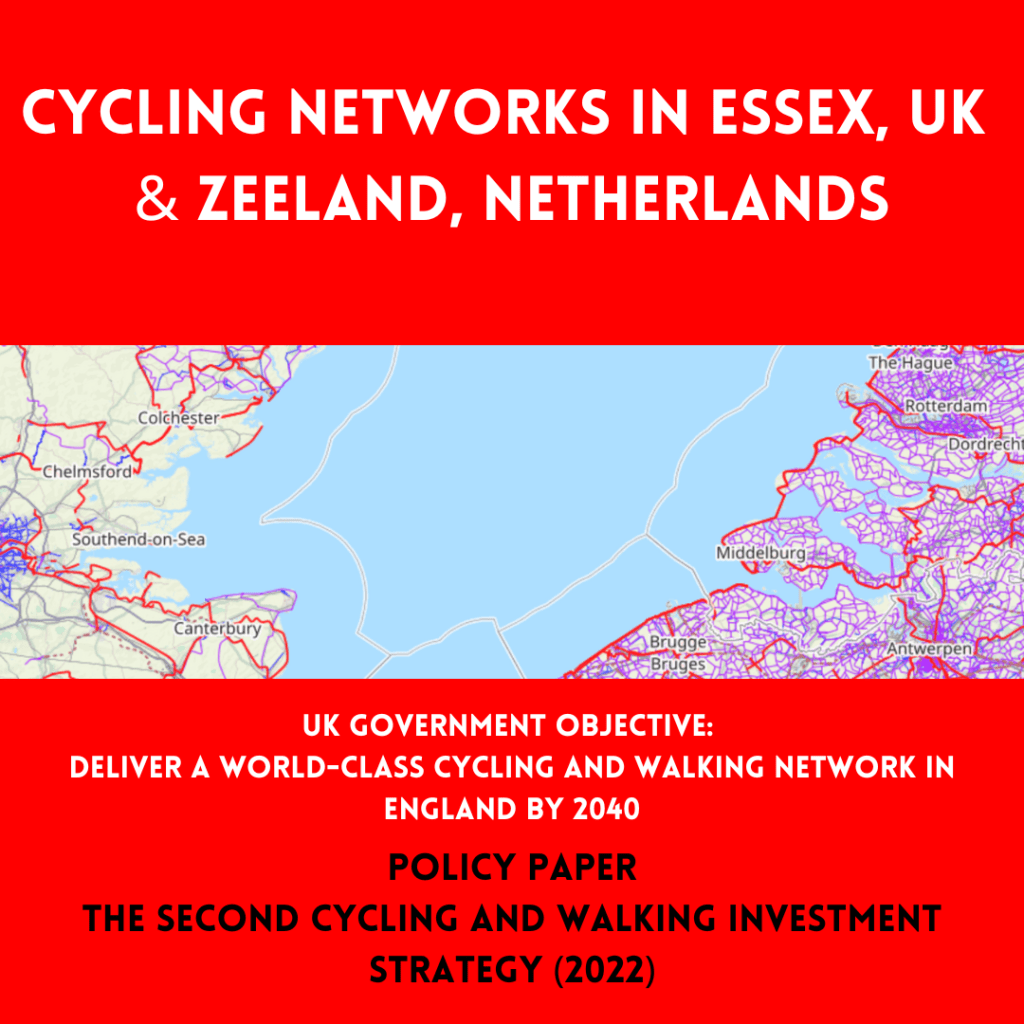
Illustration depicting 'Cohesion' with a map showing an origin and destination marked with a location pin.
The Dutch CROW Design Manual for Bicycle Traffic considers five basic design principles for network design: Cohesion, Directness, Safety, Comfort and Attractiveness

Despite this being the only option that would meet the national objective, if we place it at one end of an excellent-to-useless-spectrum, then the other end is no-change and cyclists left to fend for themselves on the existing road network. (A bit of signage and some lines painted on the road would be barely better.)
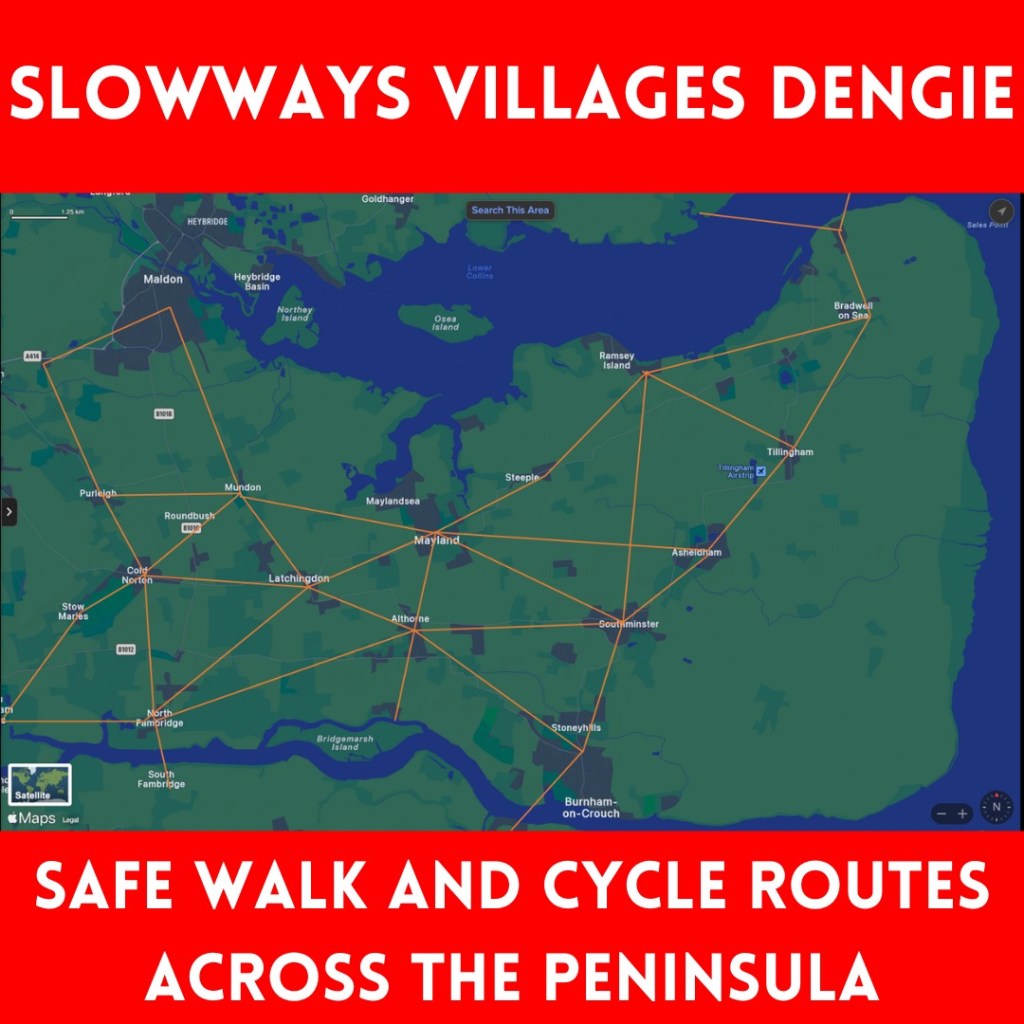
I’ve started with the rECOnnect Dengie aim that every settlement on the peninsula should be connected with a safe active travel route. Railway station and ferry routes should be connected to the network.
I’ve also looked for how Dengie routes could be connected both to the urban cycle networks in Maldon town and South Woodham Ferrers, and to the National Cycle Network (with connections to NCN 1 at Maldon, NCN 13 at Stock, and the proposed NCN 135 [pdf] at Battlesbridge.
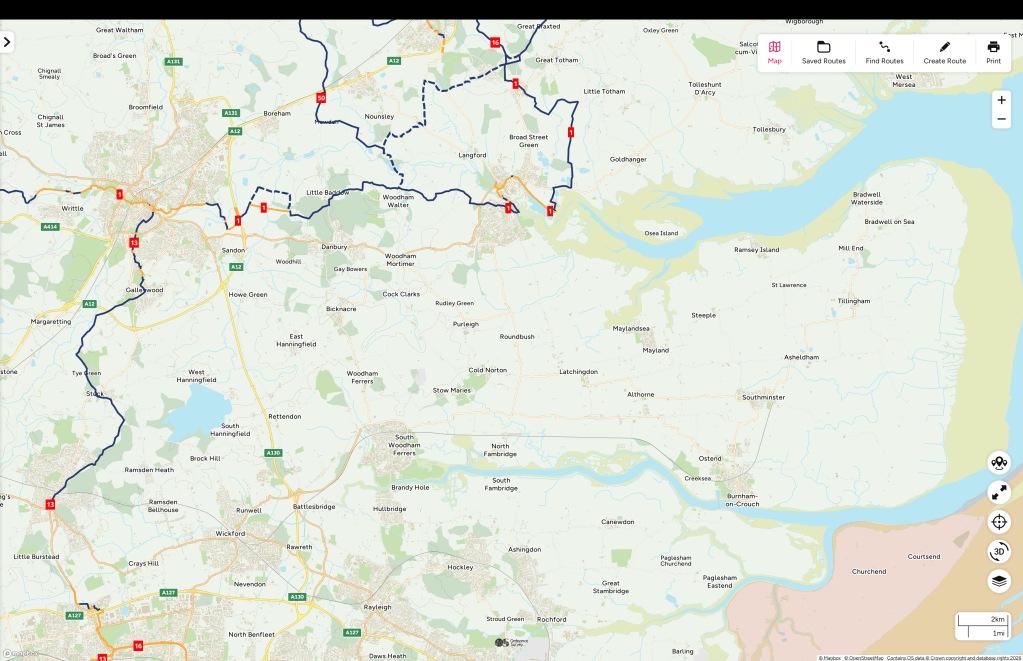
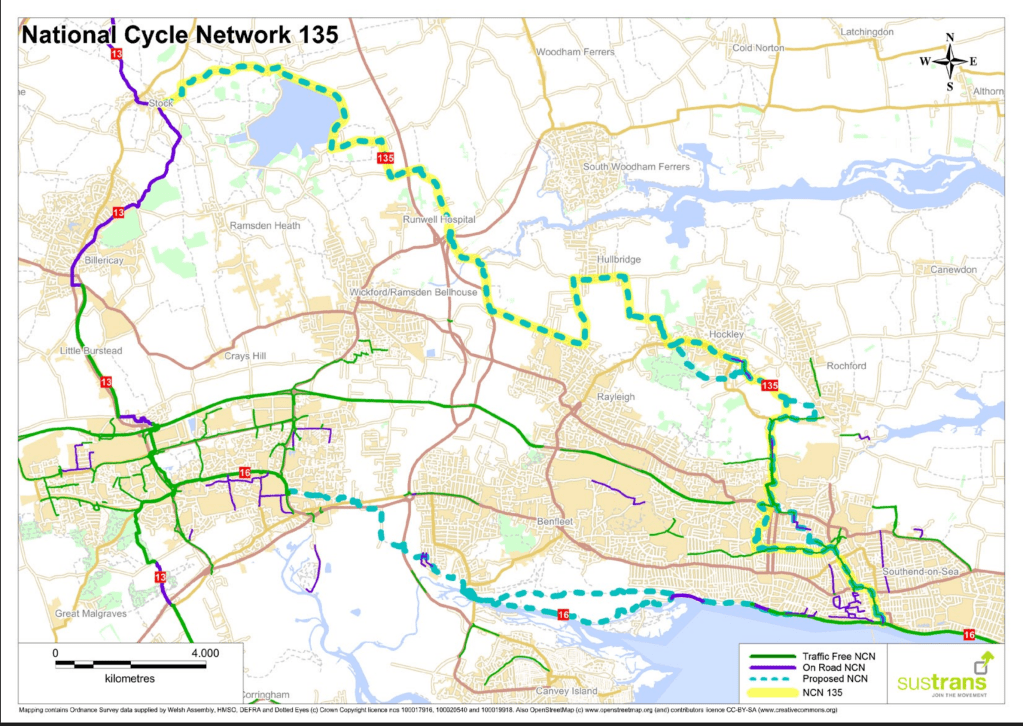
Existing National Cycle Network routes
Proposed National Cycle Network route |(NCN 135]

Following the Essex Local Cycling and Walking Infrastructure Plan statement that rural routes will draw on bridleways, byways and quiet lanes I’ve tried to follow that as best I could to meet our aim.

I began with using the few bridleways and byways we have, but we don’t have many of them.

We have a better footpath network, and footpaths can be awarded ‘higher rights’ (e.g. use by bicycles) so I’ve tried to fill gaps with them but this still leaves a lot missing.
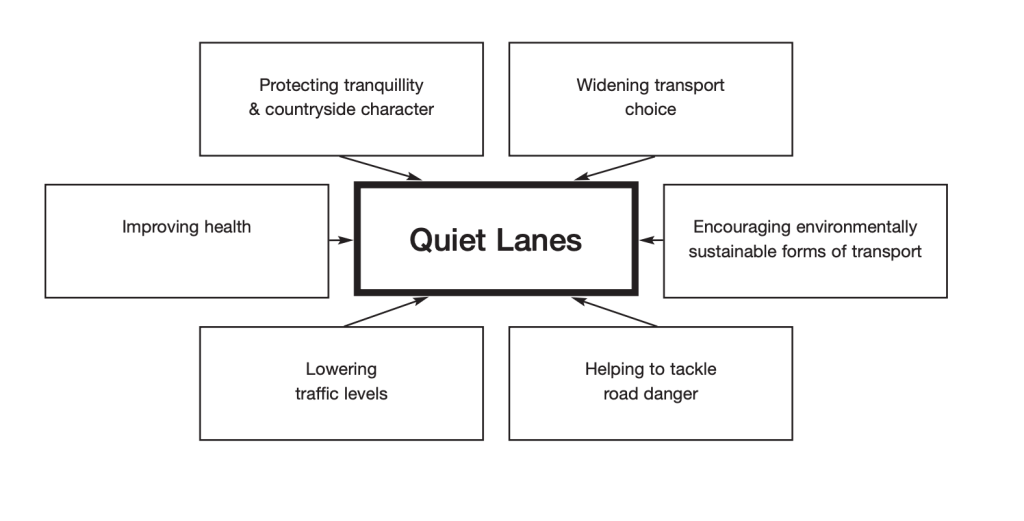
Maldon District currently has no roads designated with Quiet Lane status but I then proceeded to use roads which I think would be appropriate for such a status (avoiding the ‘priority’ PR1 and PR2 roads). Quiet Lane status should being slower speed limits and traffic calming infrastructure.

This still doesn’t provide a network that meets the objective of connecting every settlement, so I’ve then proposed sections over land that currently has no public rights of way (PROW). This will always be controversial and argued over – but cannot be avoided. Here I have prioritised old railway alignments, solar/wind farm access roads and existing farm tracks.

This still leaves some things unaddressed – Latchingdon, for example, is hard to link into a network using existing PROW and avoiding ‘priority roads’; Similarly, connecting North Fambridge and Althorne, other than by the indirect seawall route – bolder plans are necessary here.

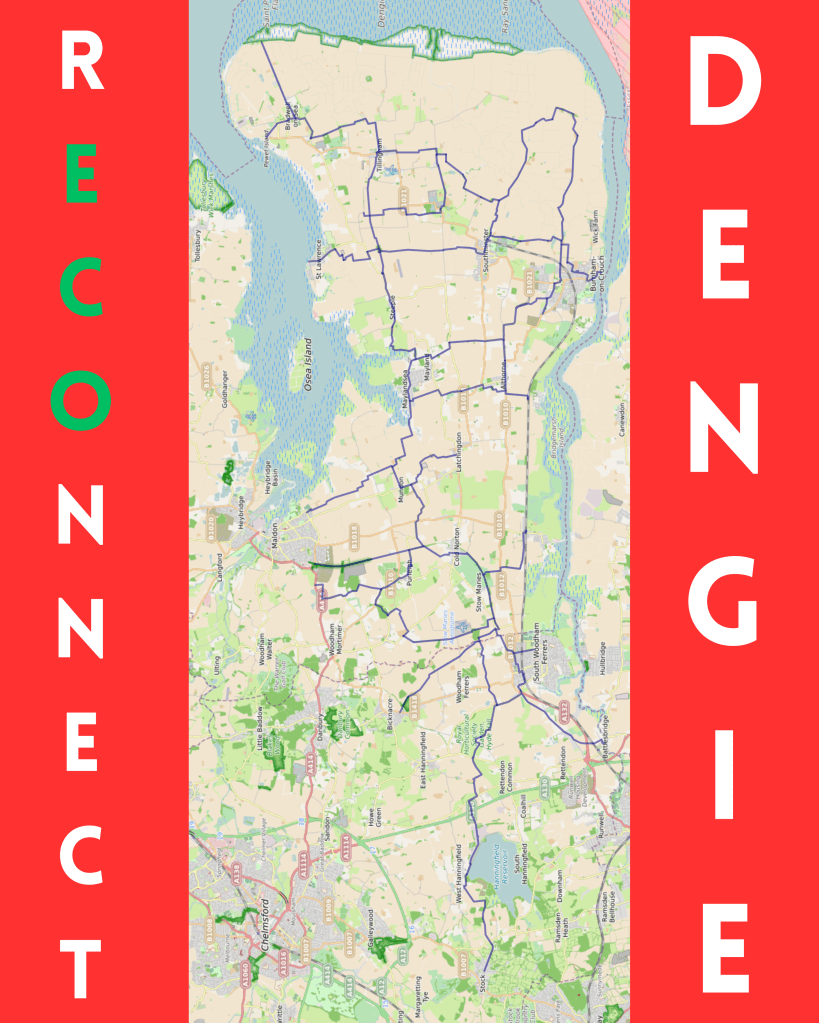
The map in the first image is purposely large-scale to avoid instant arguments over routes but I’m happy to share more detailed mapping with anyone who wants to get involved with planning and proposing a network. More local knowledge would certainly improve the routing.

Who wants to meet up and work it out?
The Essex-wide LCWIP

Like me, many of you may have responded to the Essex County Council consultation on the ‘Essex Wide Walking and Cycling Infrastructure Plan’. The results of that consultation were quietly released last August (2025), so you may not have seen them. I’m still working through the documents and I welcome comment and feedback from anyone else who braves them!

[As a reminder, settlements of 20k+ population each got their own Local Cycling and Walking Infrastructure Plan (LCWIP) while everywhere else in Essex was covered by the ‘Essex Wide’ plan. As no settlement on the Dengie reached the 20k threshold, the entire peninsula is covered by that plan. Maldon & Heybridge’s population combined exceeds 20K so they have a separate LCWIP. One of the maps in that document indicates a ‘secondary cycle route’ from Maldon into the Dengie using the B1010/Fambridge Road and ending abruptly at the Baron’s Lane junction]


The Consultation response consists of three documents :

  1. A Summary Report [pdf]
  2. A Consultation Report [pdf]
  3. A Technical Report [pdf]
Read more: The Essex-wide LCWIP

Al of these can be accessed here

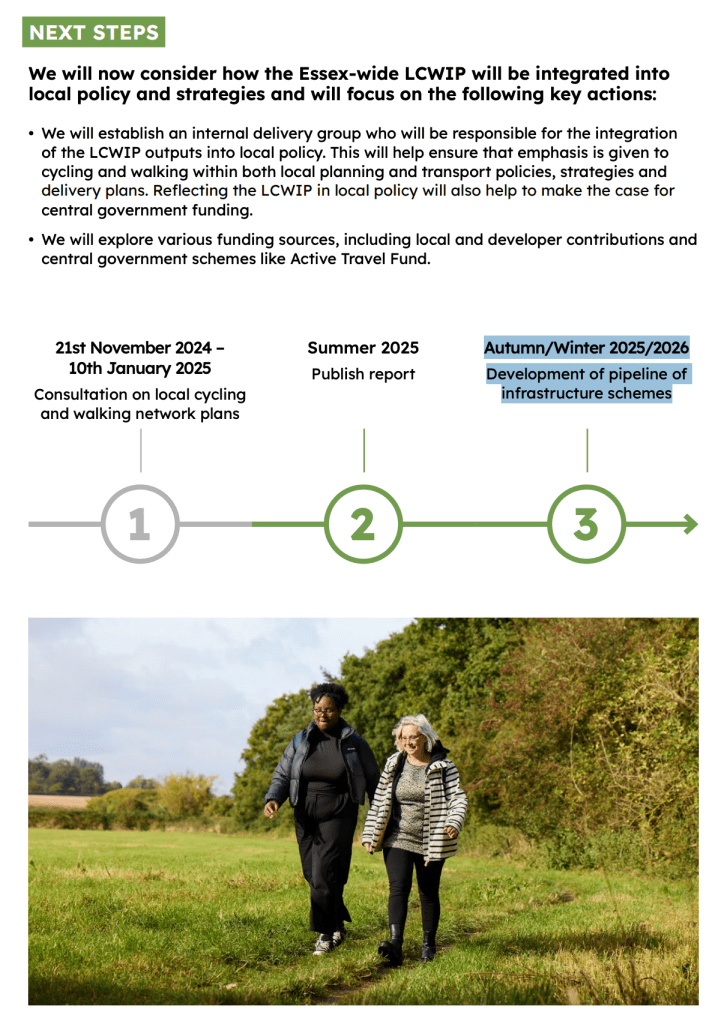
  1. The Summary Report is not particularly informative. It contains a timeline of three steps which ends with ‘Autumn/Winter 2025/2026 Development of pipeline of infrastructure schemes’ – we are in the last weeks of that period now but I can find no further information on these infrastructure schemes.

  2. If you commented on the consultation, you should find your remarks reflected in the Consultation Report (the Dengie is poorly represented in the maps included in this document with just a glimpse of the south of the peninsula to the top of the South Essex Map)

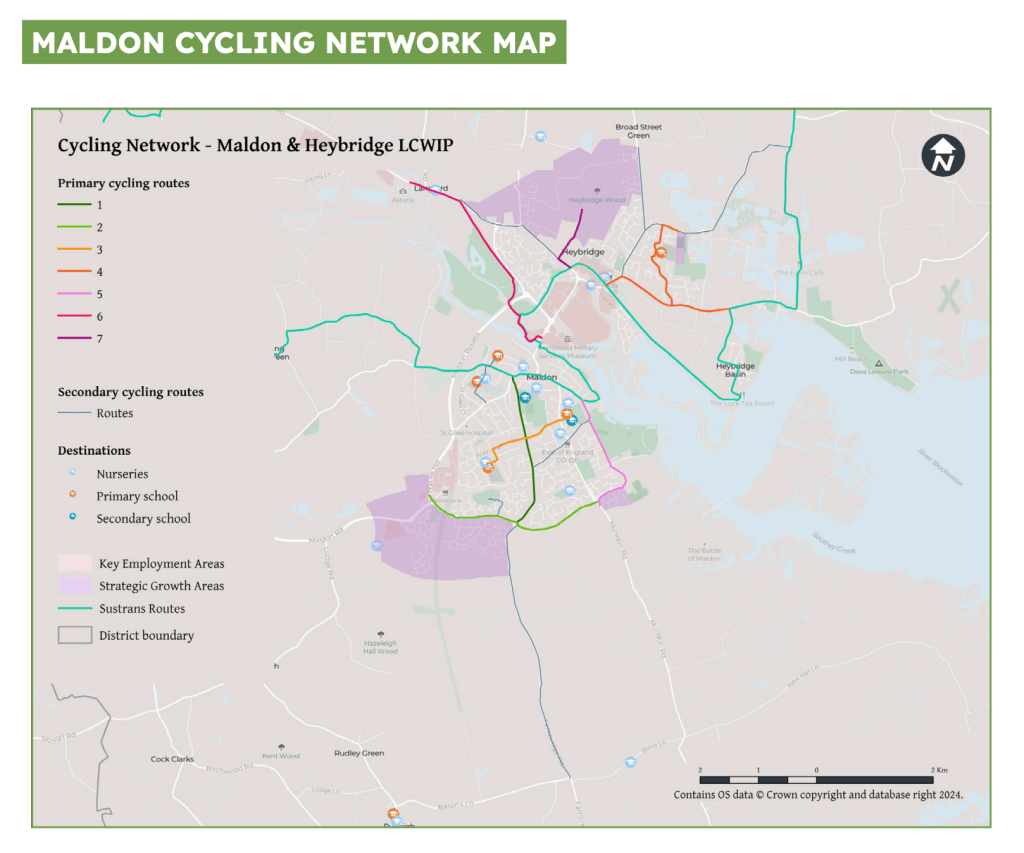
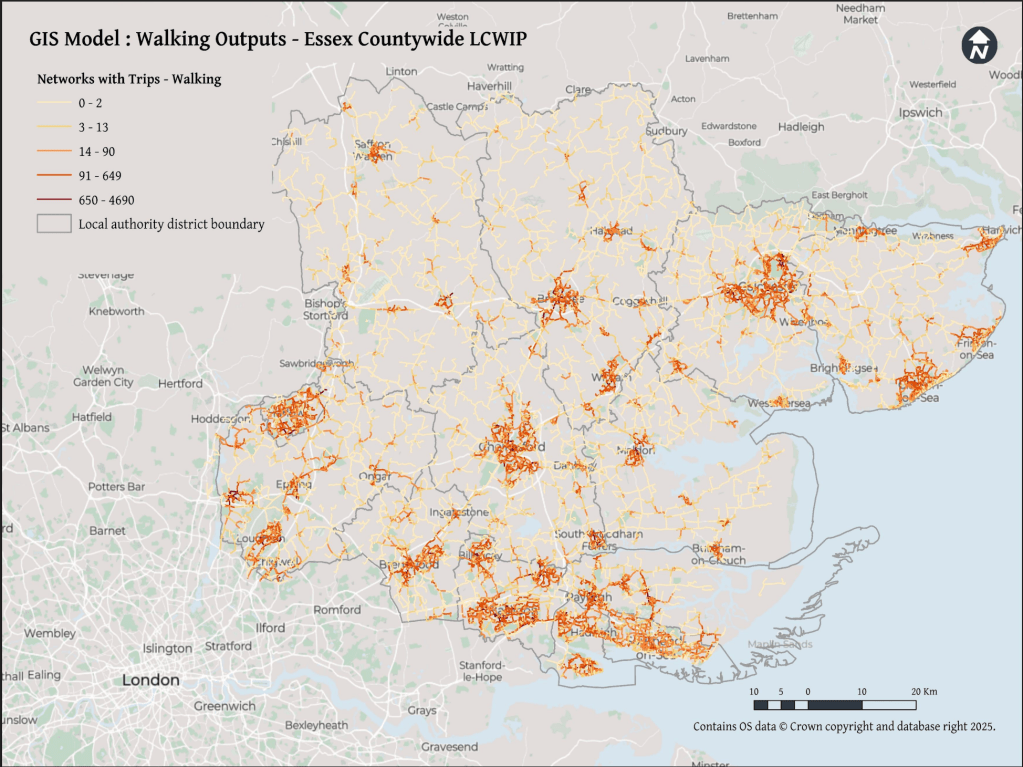
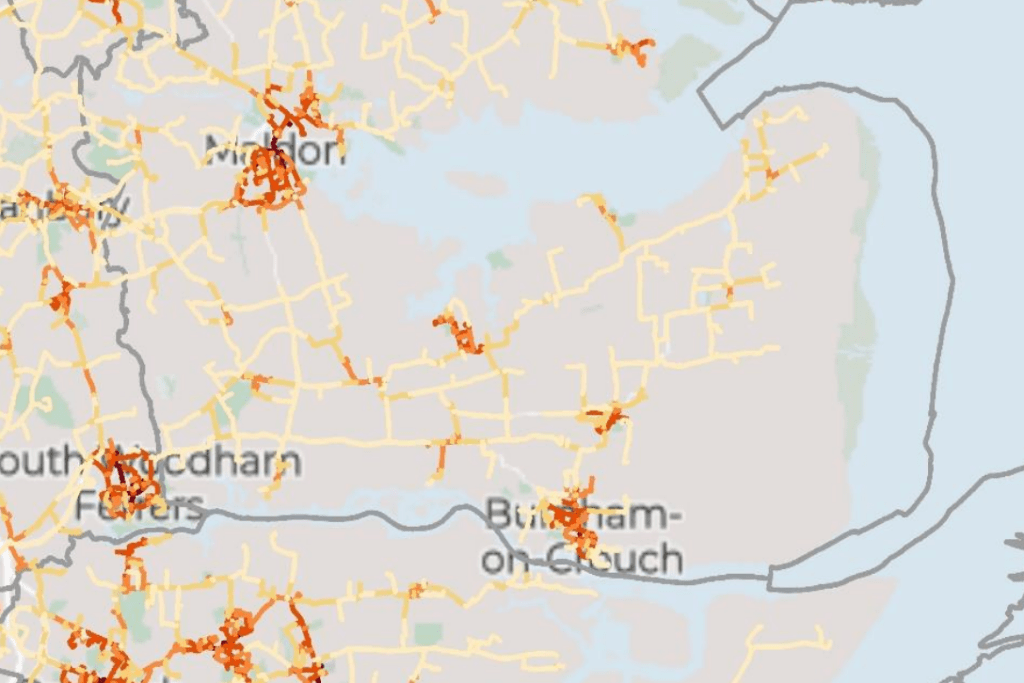
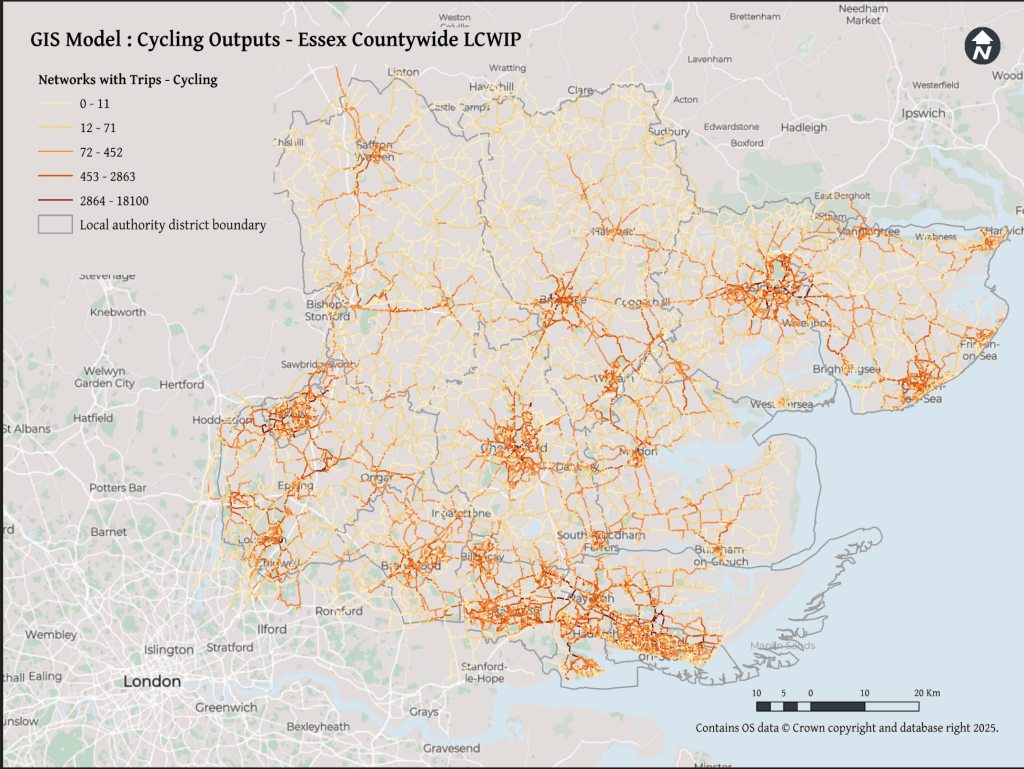
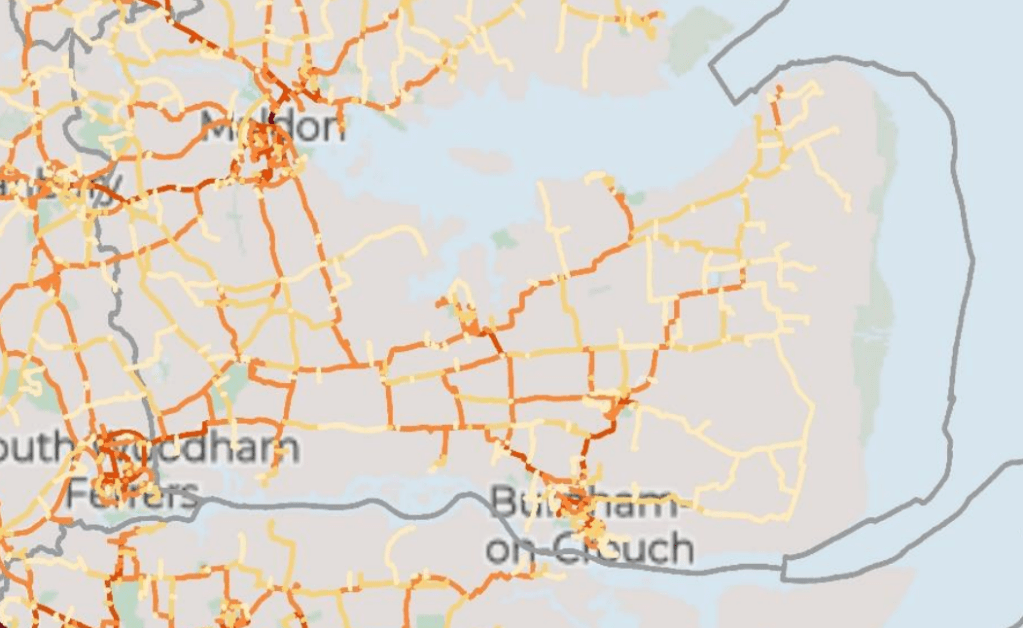
  3. The most interesting of the three documents is the Technical Report which includes new maps identifying potential key walking and cycling networks which I share below, with zoomed in images of the Dengie.

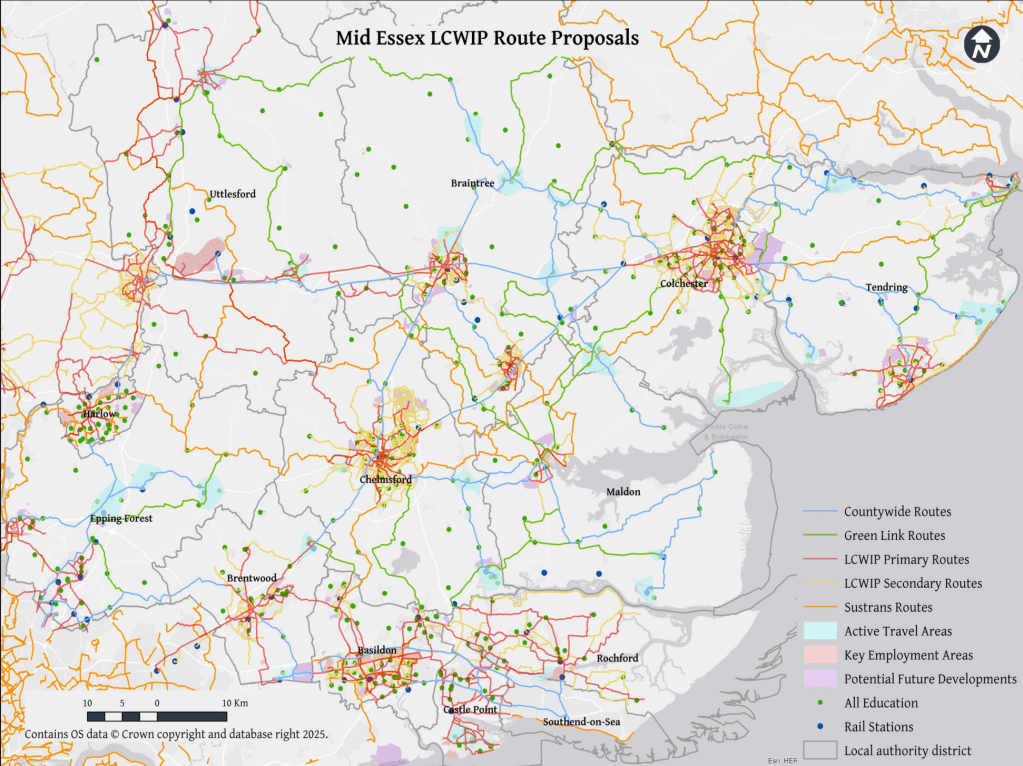
The ‘route proposals’ in the Final Network Plans look identical to those in the Consultation document however, they don’t reflect these key walking and cycling networks, and they follow existing roads without a clear sense of how walking and cycling will be made safe on these highways.

The Technical report notes that:

‘Given the rural nature of the area [Essex], the plan prioritises cross-boundary connections between towns and cities, utilising off-road routes like Public Rights of Way (PROWs) and bridleways, and innovative on-road cycling solutions in constrained networks.‘

The Summary Report expands this slightly in it’s introduction:

‘Given the mainly rural nature of Essex, the Essex-wide plan prioritises links between villages, towns and cities. The proposals aim to make use of off-road routes such as byways and bridleways, alongside innovative on-road cycling solutions on space-limited networks such as quiet lanes to deliver the LCWIPs.’

The nod to rural areas is appreciated but I’m dismayed that the strategy seems to depend on:

  1. existing byways (there are 3 on the Dengie totalling 2714m in length)
  2. existing bridleways (there are 8 on the Dengie totalling 9,178m in length)
  3. existing ‘quiet lanes’ (there are none designated in Maldon District totalling 0m in length)

That’s a total of a bit over 7 miles of ways that already exist and that we know are not fit to provide a continuous cycling route – they are isolated, dispersed, poorly connected and provide no east-west connections. I haven’t yet found any reference to improvement works on these already existing paths, so its unclear what the consultation/strategy/plans have added to the status quo.

It may be that the plan is for new off-road routes, new byways, bridleways and quiet lanes – which would be great! I haven’t found any hint of that in the documents yet though.

You’ll also have noted that the walking and cycling plans often seem to just talk about cycling. New cycling routes would also increase capacity for those walking and wheeling but it would be good to see some more reference to the particular needs of all active transport users in these reports

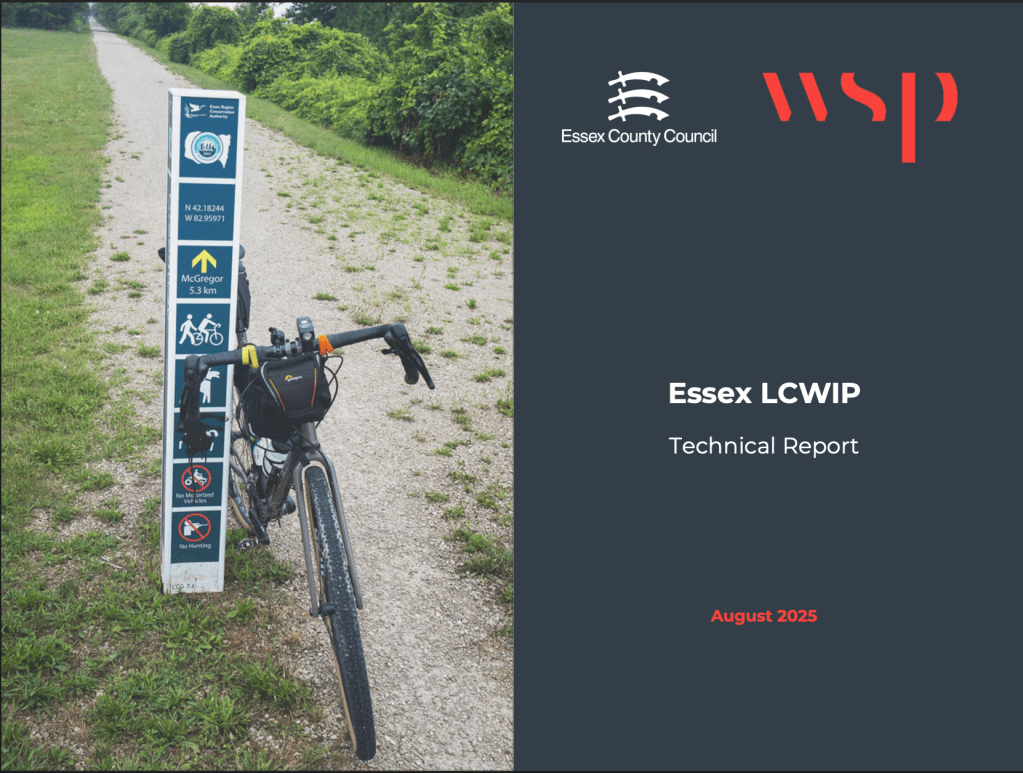
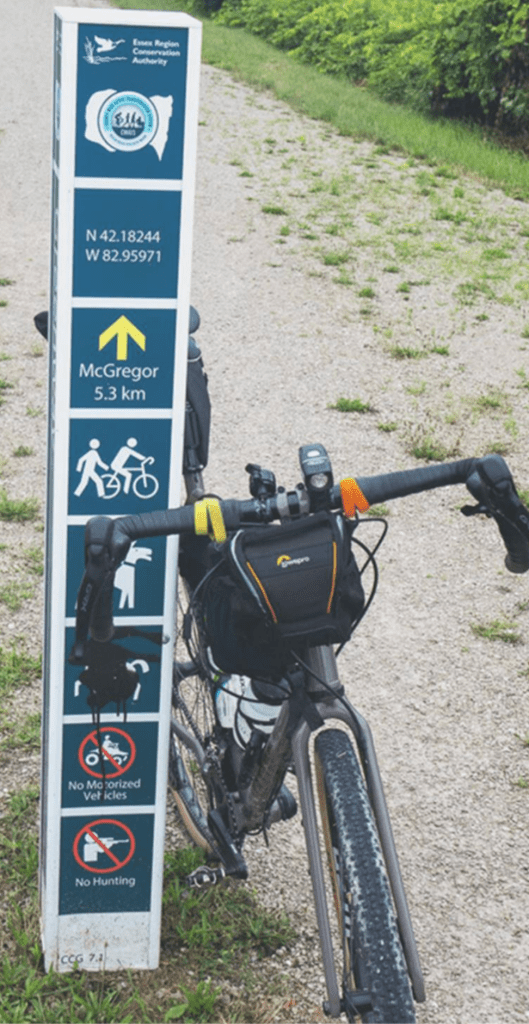
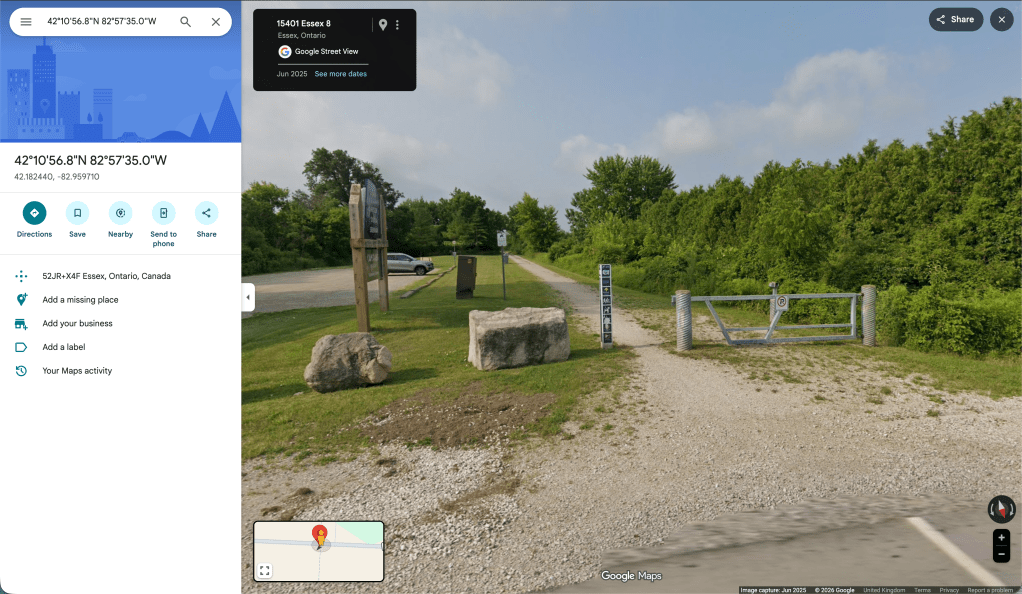
The Technical Report prepared by consultants WSP has a photograph on its first page of a rural cycle path, with a bike propped up against a smart wayfinding post which immediately had me wondering where in Essex this was, as I haven’t seen anything like it in the county before. I zoomed in to see more detail – at the top there’s a logo and text for the ‘Essex Region Conservation Authority’, neither of which I recognise, and the phrase ‘Essex Region’ sounds off. Below this are some co-ordinates that seem off too and a distance marker to somewhere called McGregor. The final square on the post has a person with a rifle on it and the legend ‘No Hunting’.

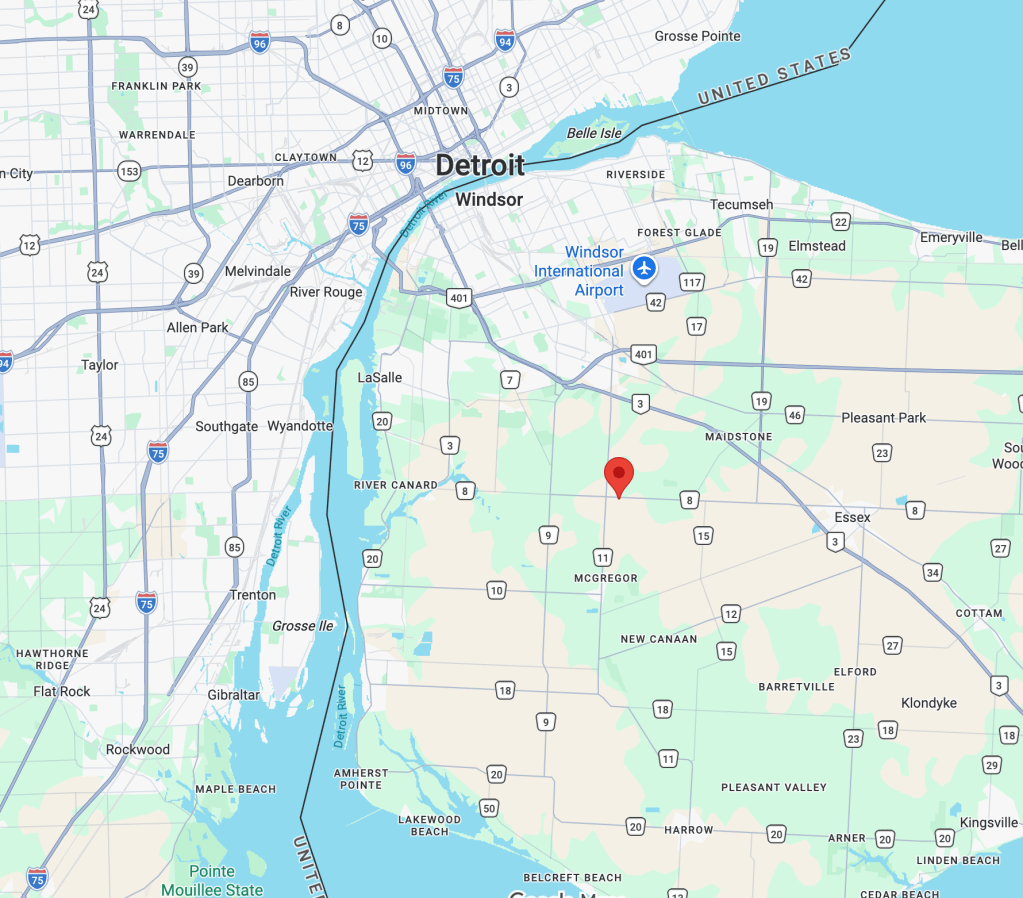
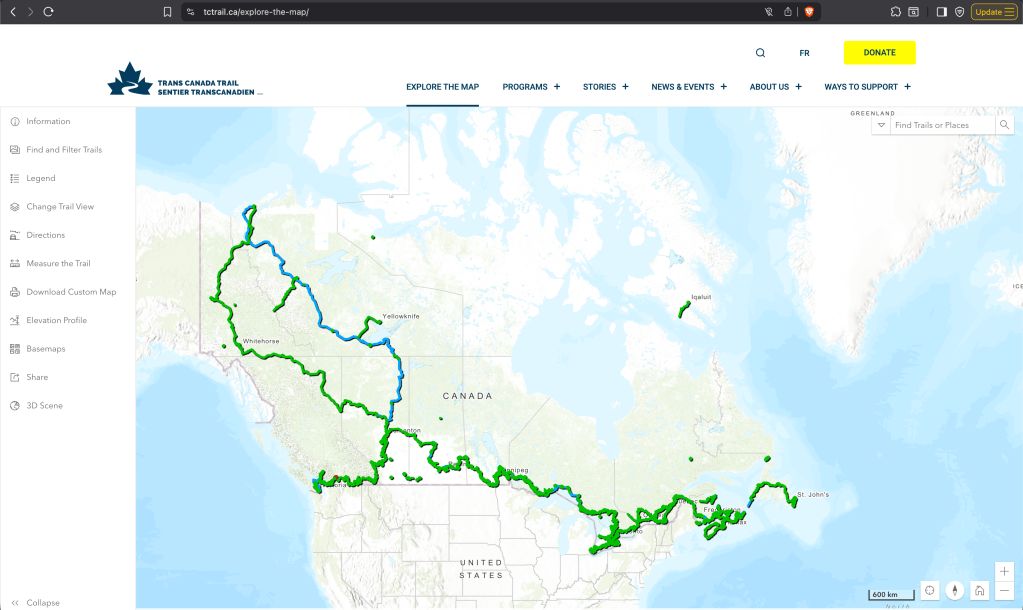
If you hadn’t guessed it yet, this photograph isn’t from the English county of Essex, it’s from 6000km away in Essex County, Ontario, Canada – close to the motor city of Detroit. It’s a photo on the Chrysler Greenway, a 50-kilometre nature trail that comprises the southernmost link of the Trans Canada Trail – at 28,000 km (17,000 mi) the longest recreational, multi-use trail network in the world.

I trust that this indicates the scale and ambition of Essex County Council’s plans rather than a stock photography fail by a WSP intern and I look forward to the Autumn/Winter 2025/2026 announcement of the infrastructure schemes to make it happen!

Why Don’t We Do It in the Road?

A couple of days ago, Essex Highways released a press release about their plans for rolling out electric vehicle charging in the county, and used the opportunity to ask people where they thought the chargers should go. Their survey is pretty minimal, but there was enough in it to raise my concern.

I’ve long been frustrated by the pavement parking of cars and how temporary road signs are placed on the footway rather than on the road they relate to. Cars already dominate urban space. In the rural town where I live, especially in the older parts built before the automobile, the streets are cluttered with private vehicles. The nearest pavement to my house is unusable – cars park on its full width to allow free access to vehicles on the road, so pedestrians have to walk on the road too. One of my neighbours has an EV, and the charging cable stretches from his boundary wall across the street to his car.

There’s a sci-fi saw, often attributed to Frederik Pohl, that ‘a good science fiction story should be able to predict not the automobile but the traffic jam’. You don’t have to be a futurist to see the trip hazard in the electric car rollout. Motornormativity —the assumption that car-centric infrastructure is the default—demands that any new space requirements for the automobile be carved from the realm beyond the car. When Essex Highways asked ‘where should the chargers go?’, the assumption is clearly that the person being asked is a motorist, an EV owner seeking on-street charging for their machine. The ‘where’ is not ‘where in the public realm, if anywhere, should we put this new chunk of motorcar infrastructure’, but ‘which streets shall we impose this pile of gubbins in?

Continue reading “Why Don’t We Do It in the Road?”