New Paths – South Woodham Ferrers

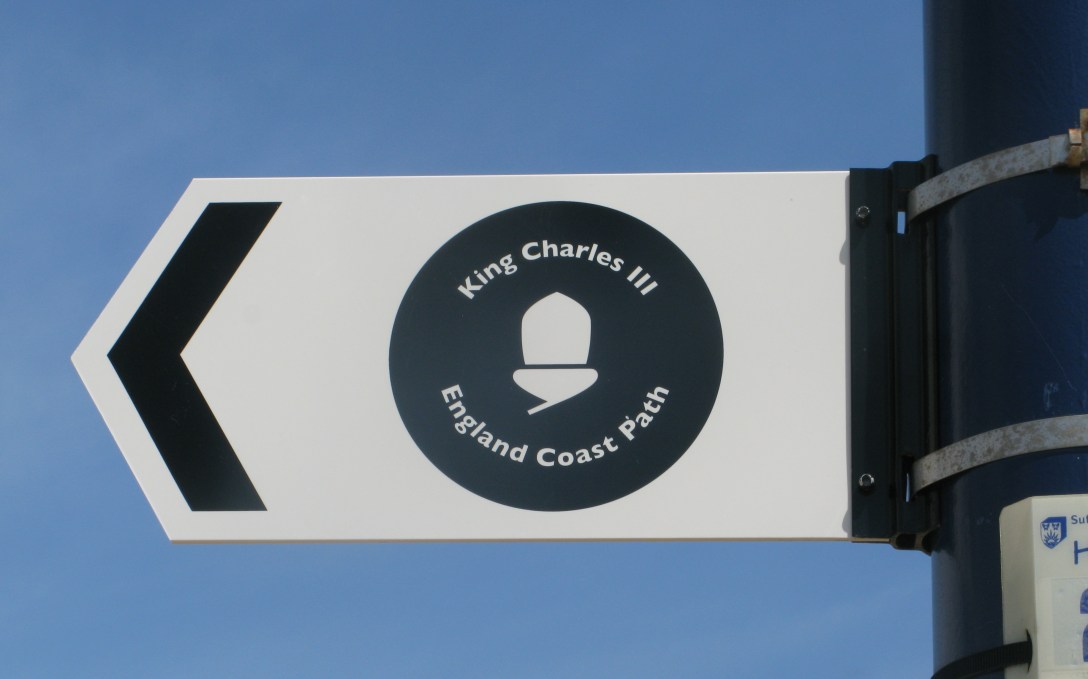
Last weekend I walked the two new local sections of the King Charles III England Coast Path (KC3ECP), this is my second account focusing on the new route between South Woodham Ferrers and Battlesbridge, part of the section WIB 3: Hawk Hill Bridge to Clementsgreen Creek [pdf]
After reaching South Woodham Ferrers, as described in the previous post, I left the sea wall at the western terminus of Clementsgreen Creek on to Creekview Road and walked across town to the railway station on pavemented streets.

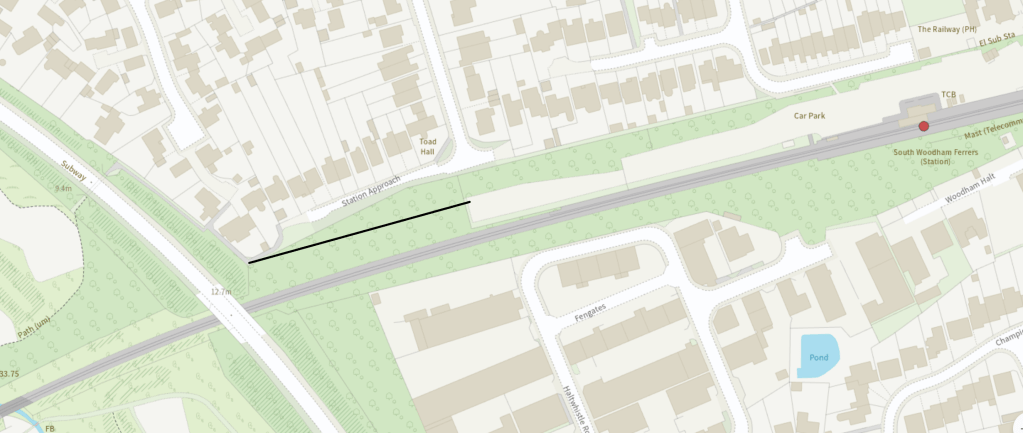
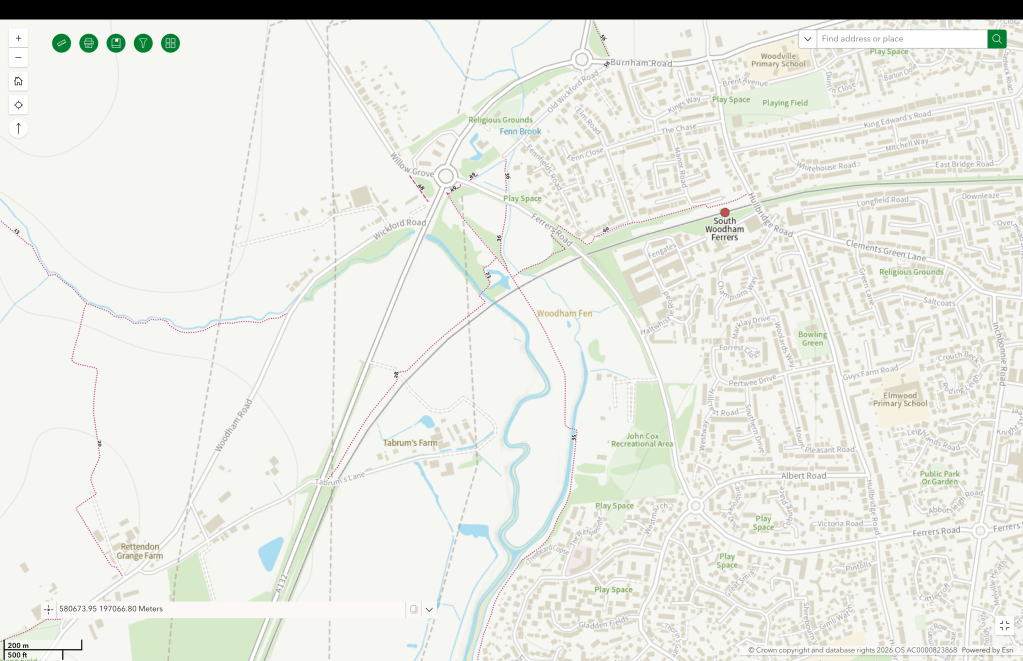
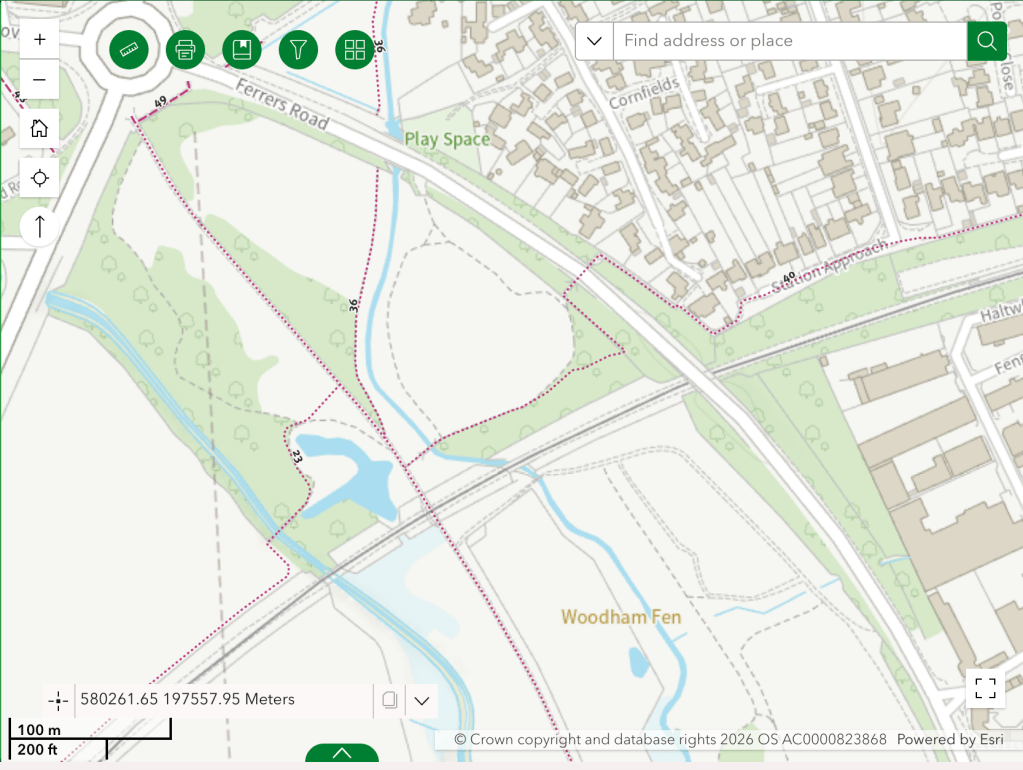
I left the railway station through the station car park on to footpath FP 40 298 which travels west, through an underpass below Ferrers Road, into and part-way across Woodham Fenn nature reserve.
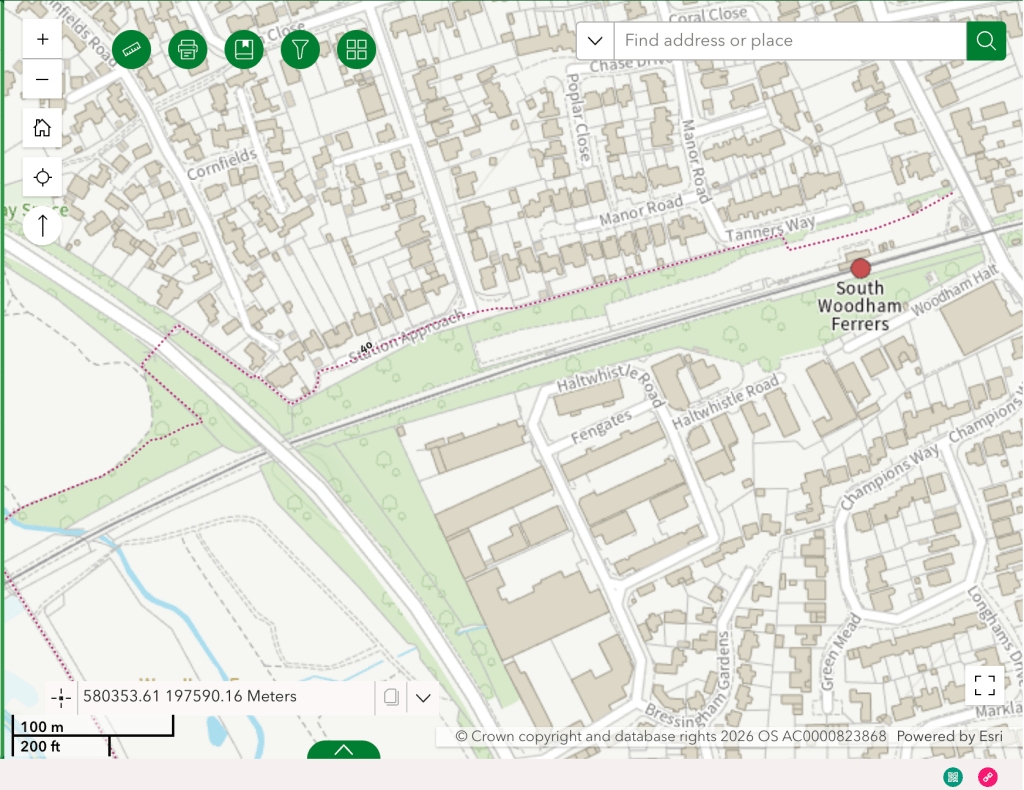
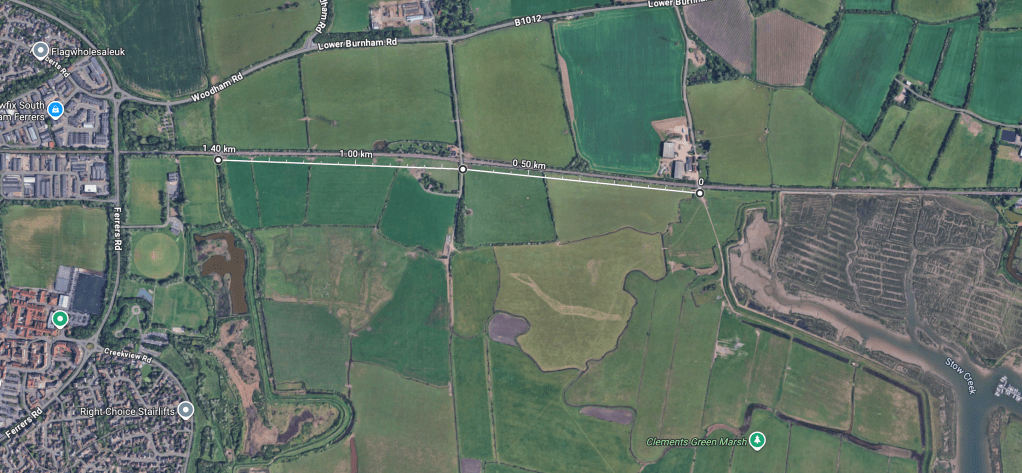
Essex Highways PROW map showing footpath FP 40 298
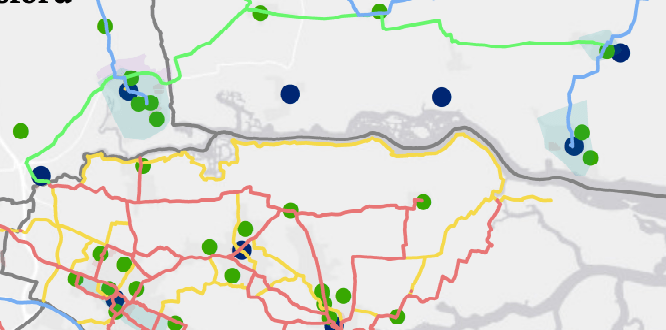
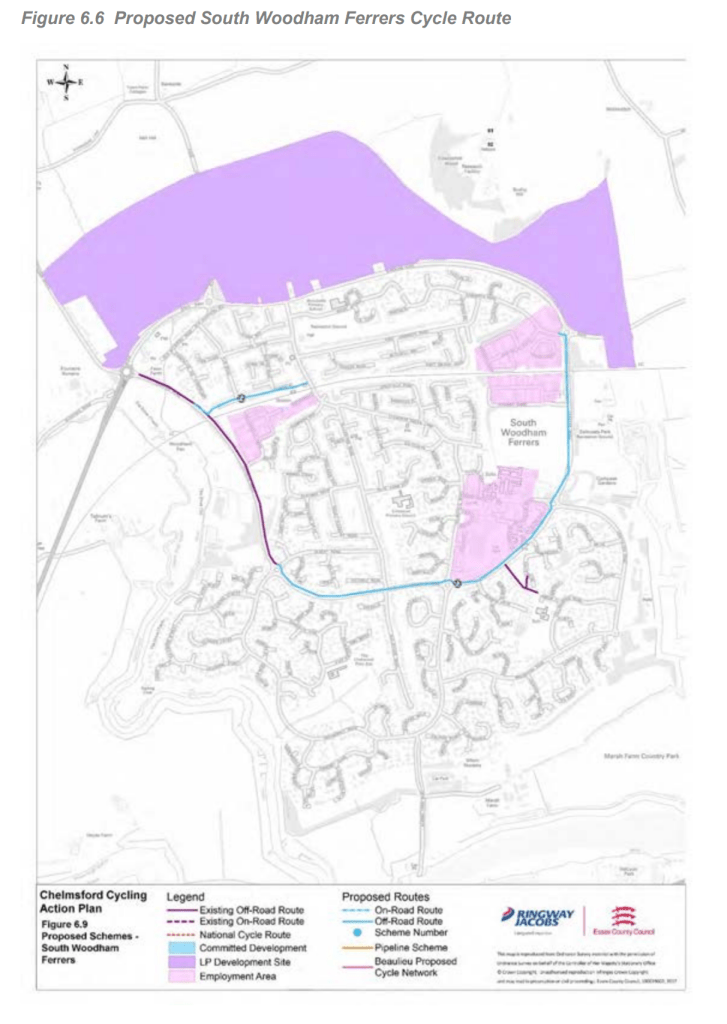
Map of existing /proposed cycle routes in the Chelmsford Cycling Plan, blue line in left middle is footpath FP 40 298 route (poor quality image in uploaded copy)
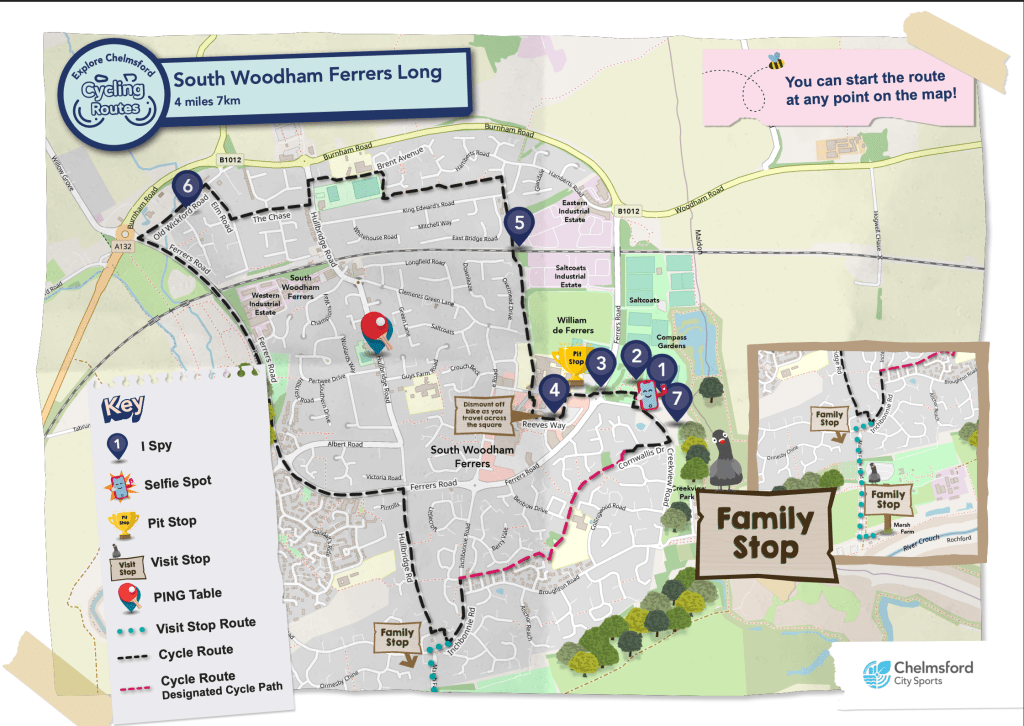
Proposed cycle route using station carpark and railways owned land to avoid narrow sections of FP 40 298

The section between the station and the underpass was proposed to be ungraded to a shared use path available to cyclists in the Chelmsford Cycling Action Plan (March 2017) [pdf]. It notes

‘there is also the possibility to connect to the station from the west by upgrading an existing footpath (Figure 6.6). However it appears the footpath uses an underpass to cross Ferrers Road and so to connect to the existing cycle route the levels difference would need to be addressed.’

(do the people who write these documents actually do site visits?)

(FP 40 298 has sections that are fairly narrow for a shared used path, but this could be easily addressed by using more of the railway station carpark and establishing a section of new route through land owned by the railways, as show in a map above)

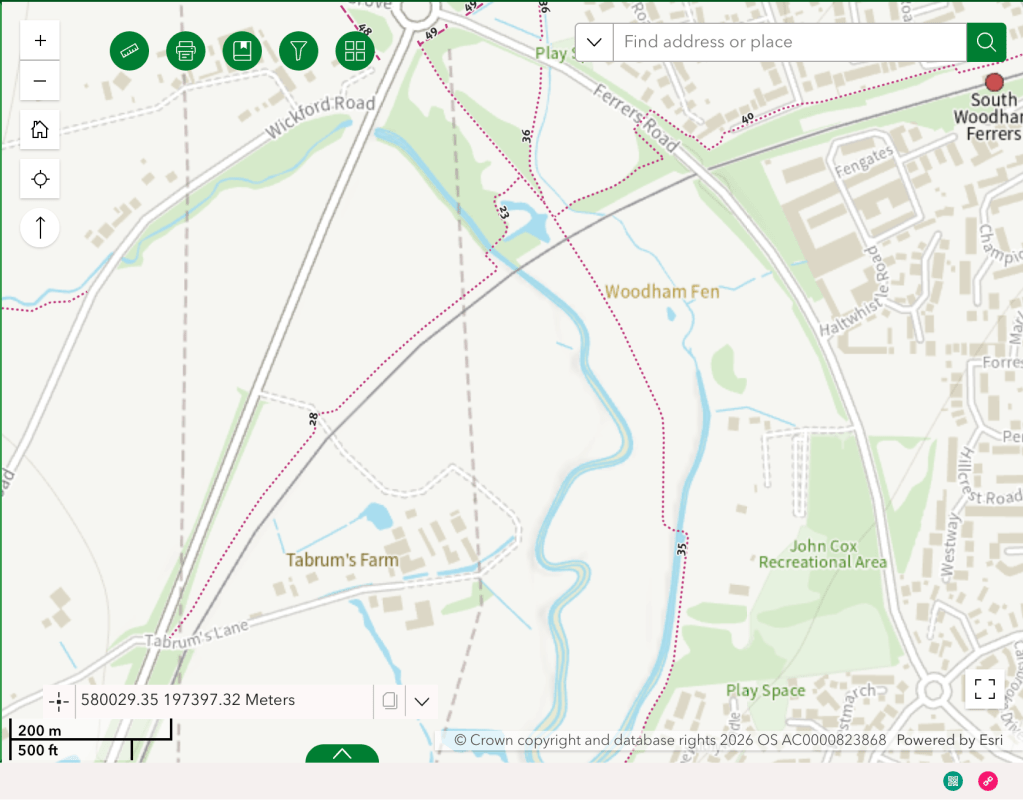
It would be useful to connect this path into the Ferrers Road cycle route, but it would also be valuable to upgrade the full length of this footpath for cycle use, alongside sections of FP 35 298, FP 23 298 and FP 28 229 to provide a walk/wheel/cycle route from South Woodham Ferrers all the way to where Tabrum’s Lane is split by the A132 (this is the route I walked). The westerly section of Tabrum’s Lane, opposite where the route ends is a country lane ideal for being designated with Quiet Lane status. Immediately to the south the new Right of Way established parallel to the A132 commences for the KC3ECP.
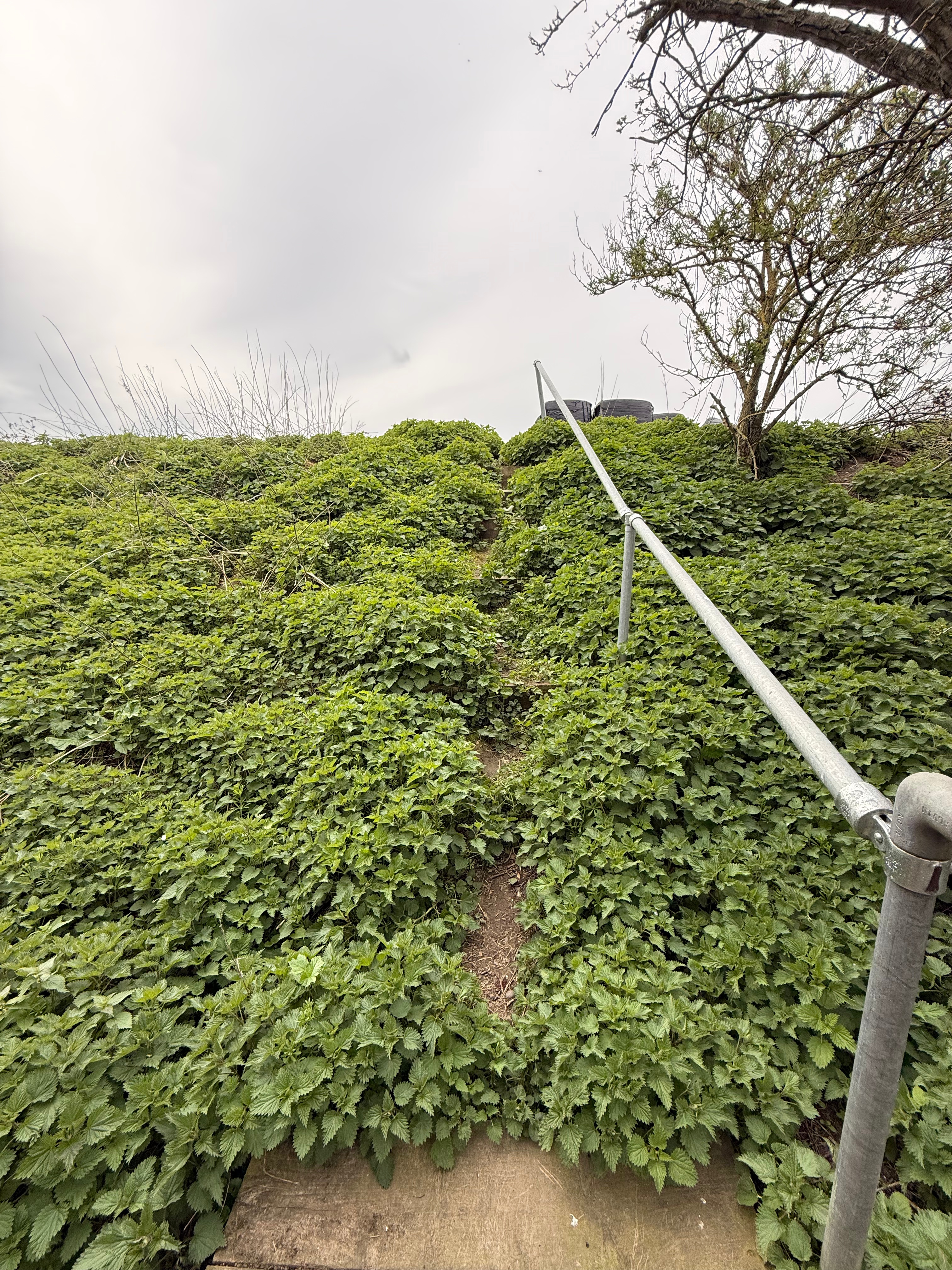
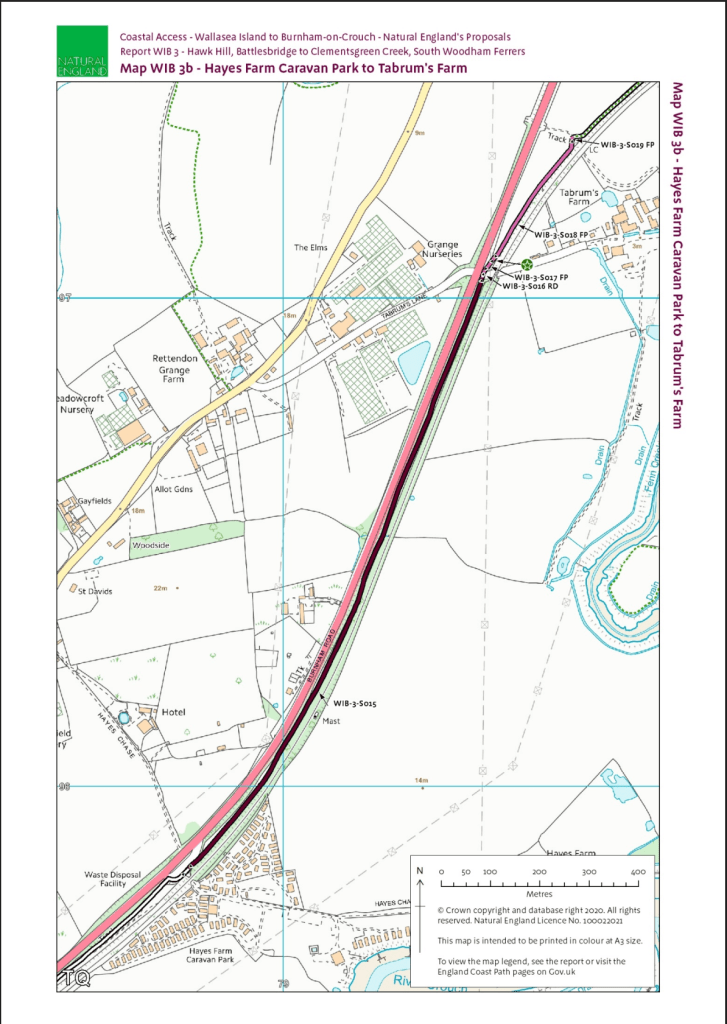
As with the new section discussed in the previous post, it is disheartening to discover the lack of consideration for accessibility paid in the new stretch of Right of Way beginning at this point (WIB-3-S015). Across Tarbrum’s Lane, users are immediately confronted with steps.
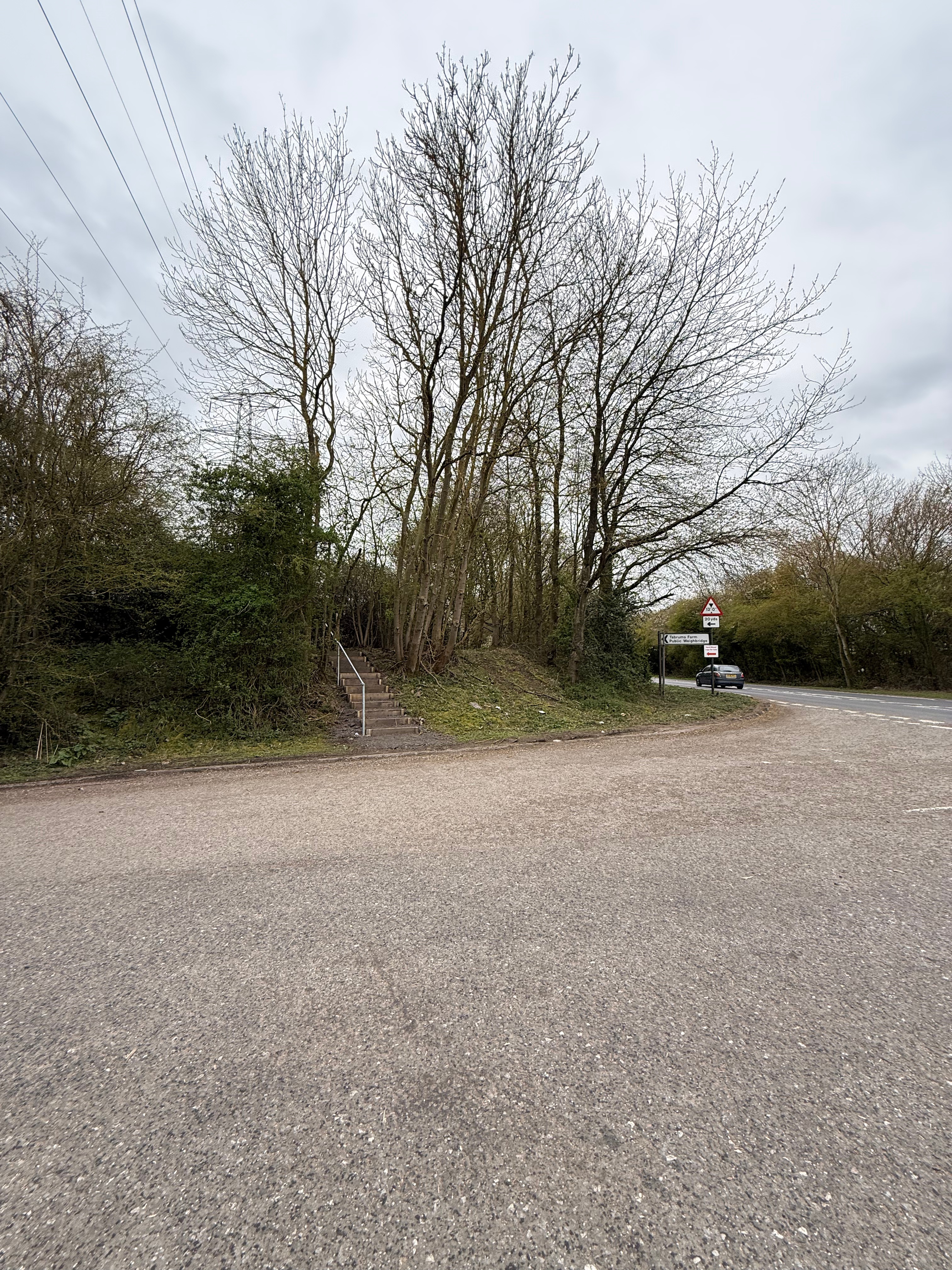
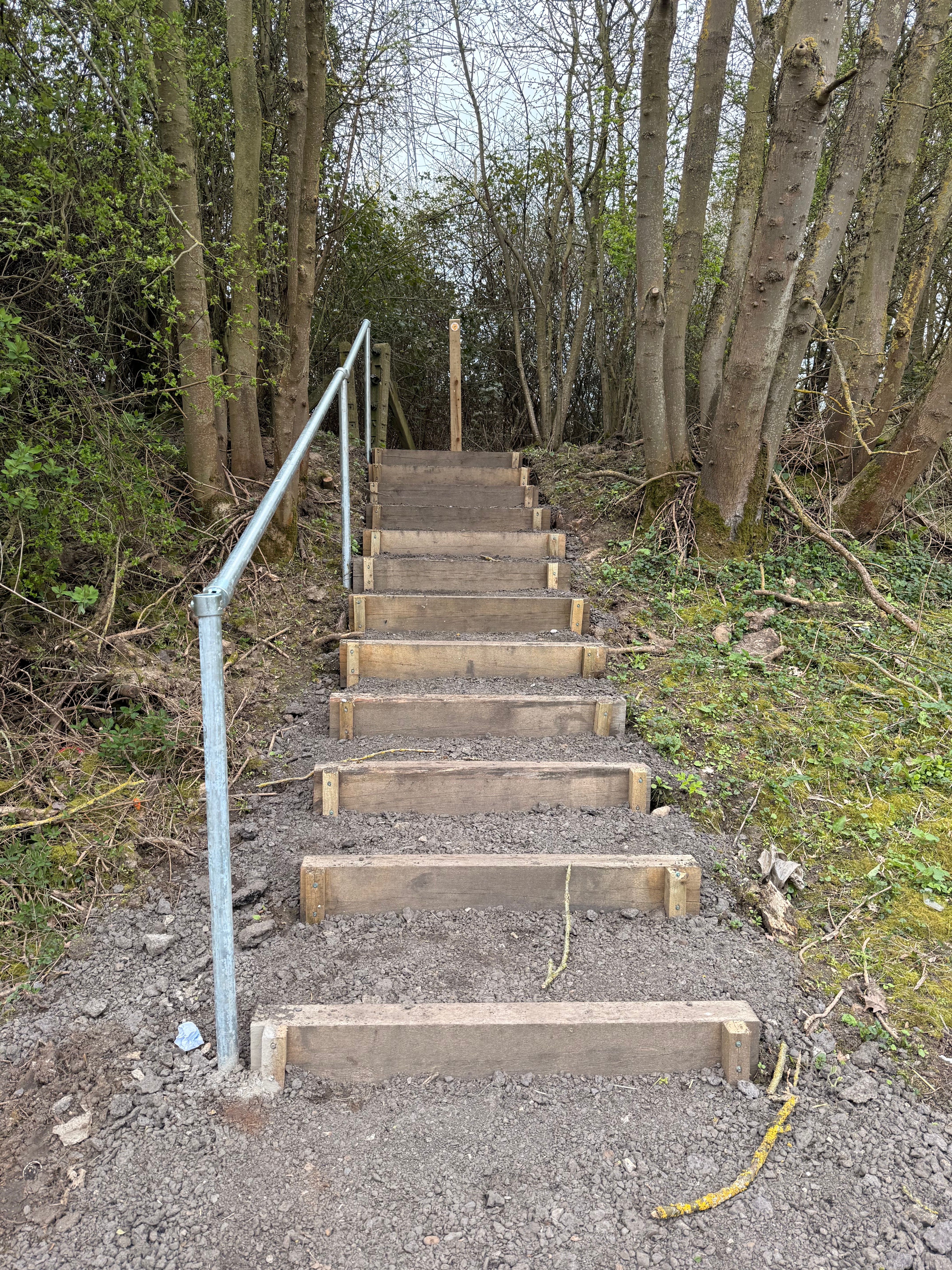
There is a level change here, and the new path takes an elevated route, so some mechanism is necessary – but why not a slope accessible to a wider range of users? There is enough room here.

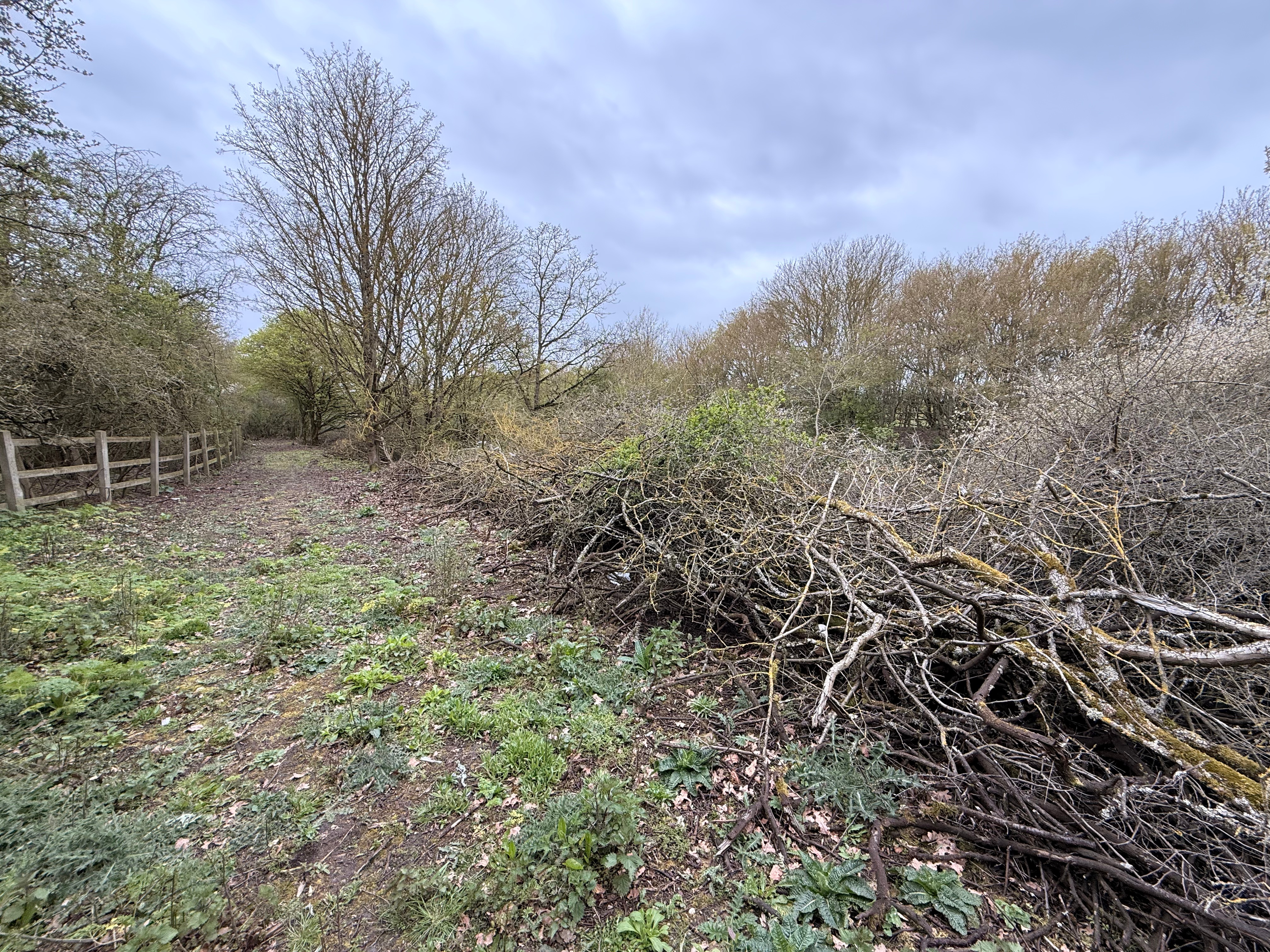
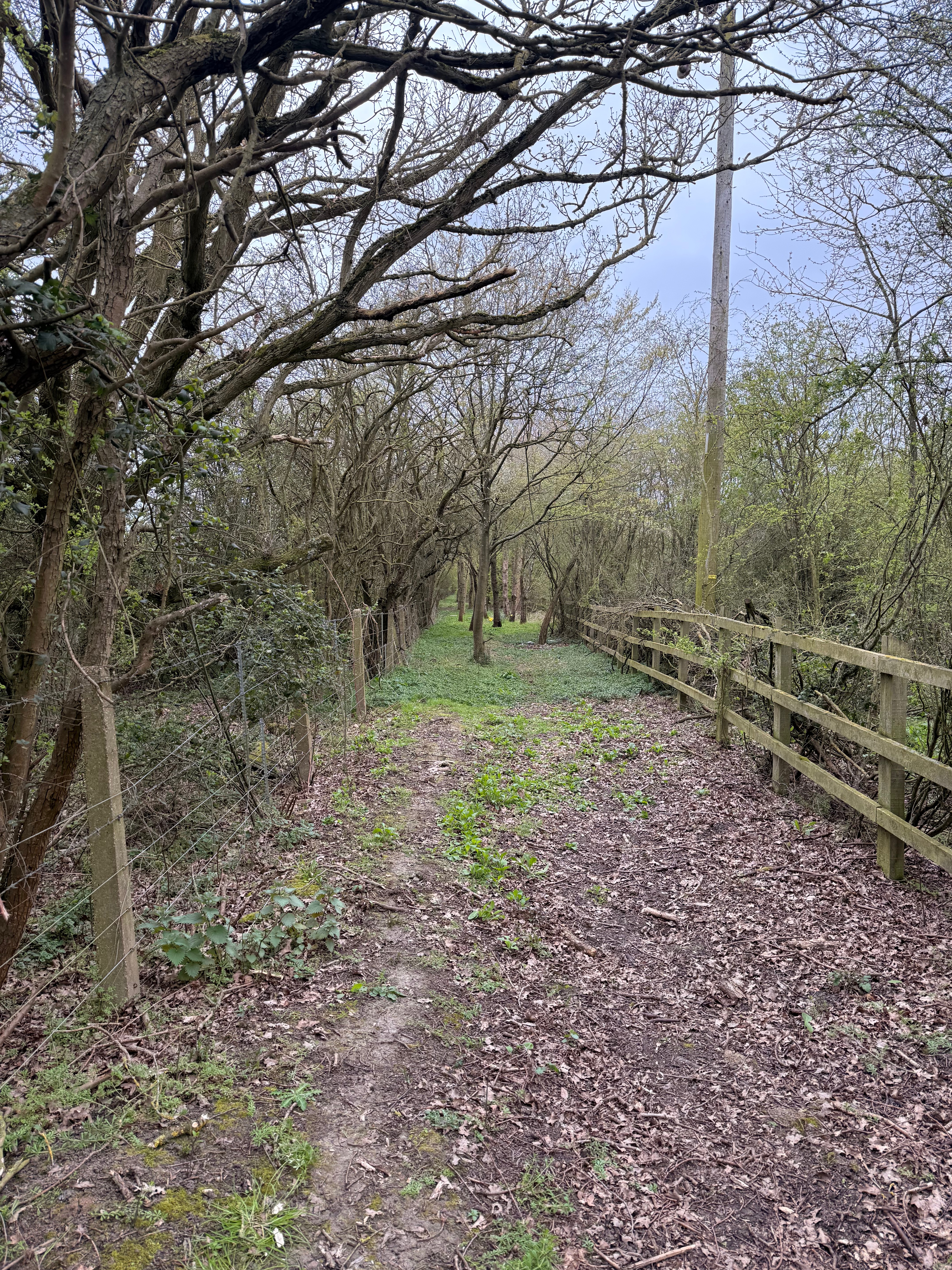
The route from here is recently cleared of trees and undergrowth. There’s no surface work, but its reasonably level. Foliage seems to have been cut at ground level rather than uprooted. Despite taking care, I stumbled on four occasions when I tripped on woody stumps protruding just above soil level. It seems pretty clear that there will be extensive regrowth here. Ground cover plants were already spreading and I suspect that many of the trees have effectively been coppiced and there will be new shoots from the stumps before too long. Side growth is also likely to be an issue, and the light newly reaching the floor will likely encourage blackberry incursion. As the path gains foot traffic, there will be some suppression through use but the maintenance task here should not be underestimated. My contact at Natural England noted:

‘I have previously discussed with colleagues at ECC that just clearing the scrub may not be sufficient and that there may need to be some form of surfacing (not metalled) if as I believe the enclosed nature means the ground lies wet for longer. The newly cleared areas will also encourage more vigorous side growth and spread of the likes of bramble and nettle. I encouraged them to consider seeding the length and then cutting it frequently (at least 4 times a year) to encourage a good grass cover but I don’t think this was undertaken.’
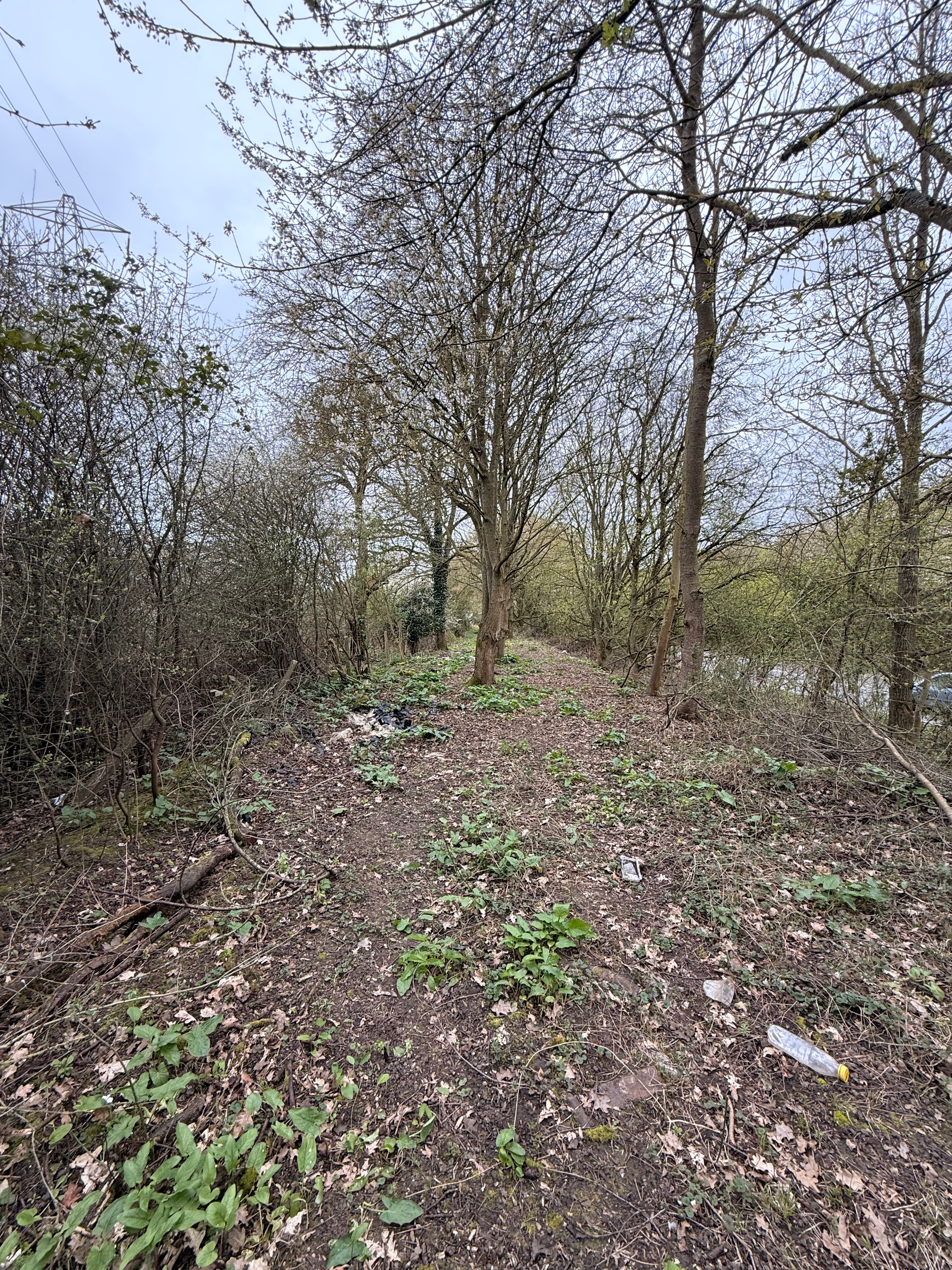
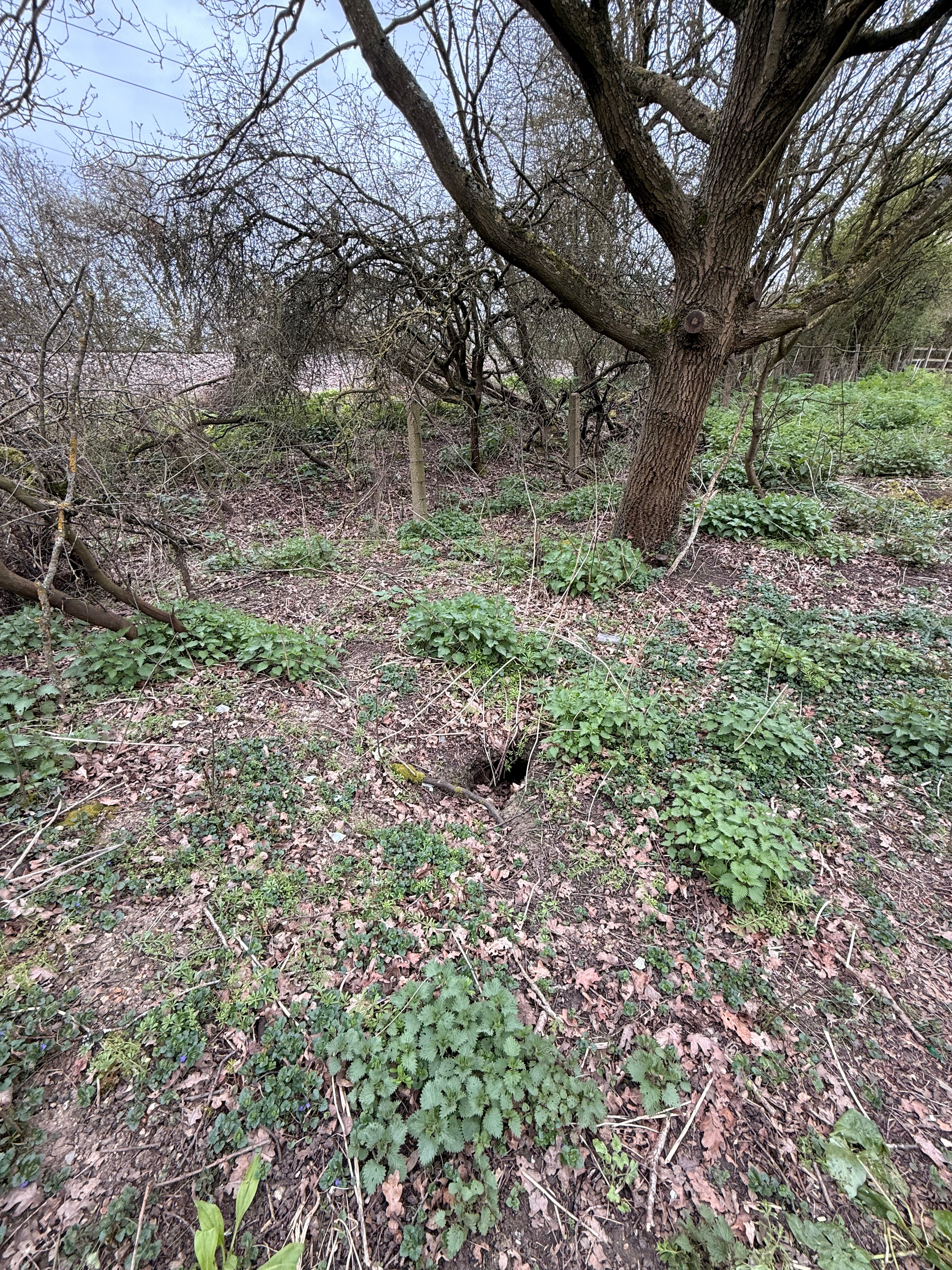
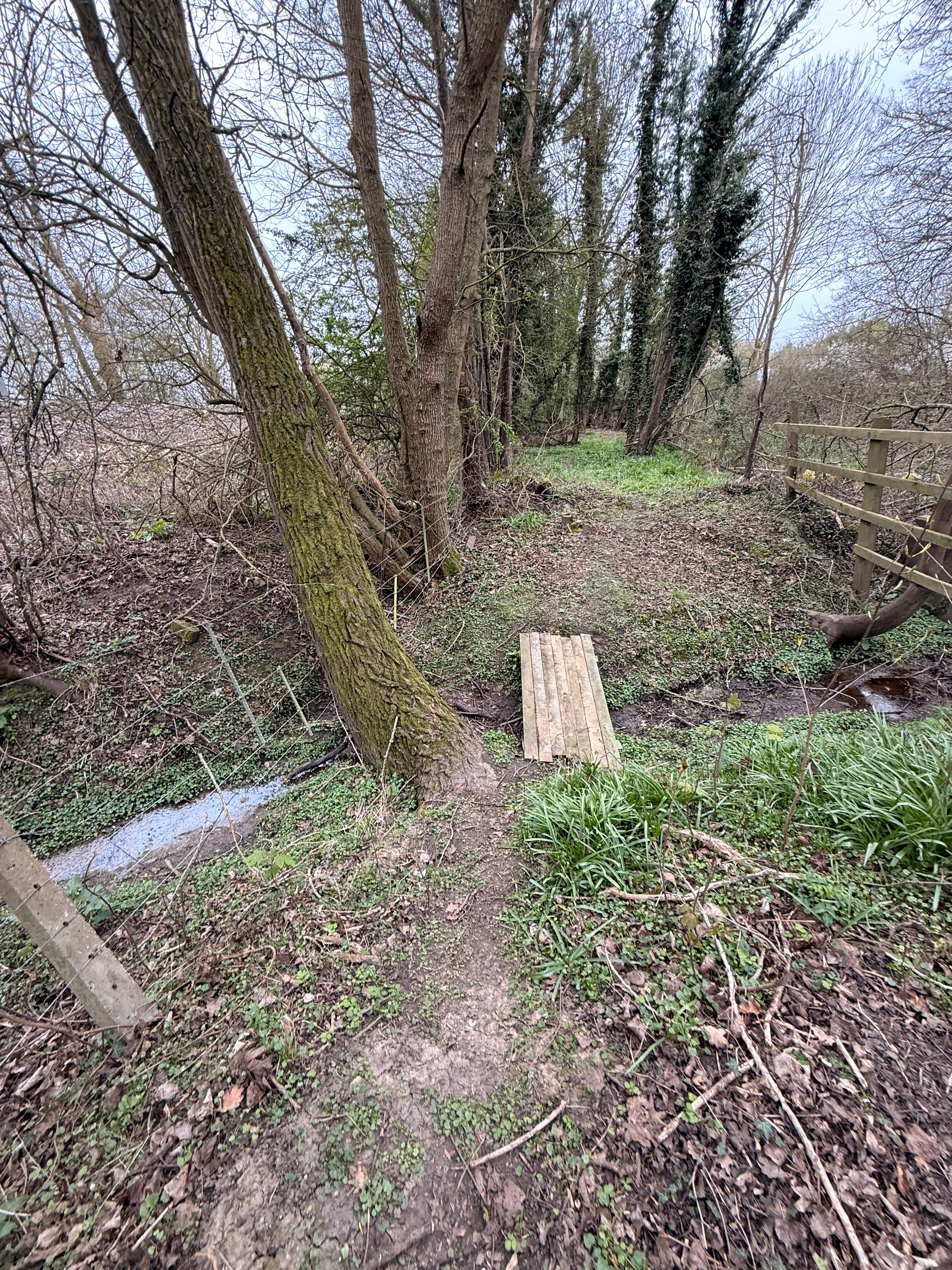
There’s an opportunity here for an infrastructure intervention that would decrease the maintenance task and expense by providing a surface suitable for bicycle use and giving the route the higher rights that would allow it. Making the route accessible to cyclists, with some surface work, slopes rather than steps and attention to a footbridge would also improve wider accessibility for walkers and wheelers.
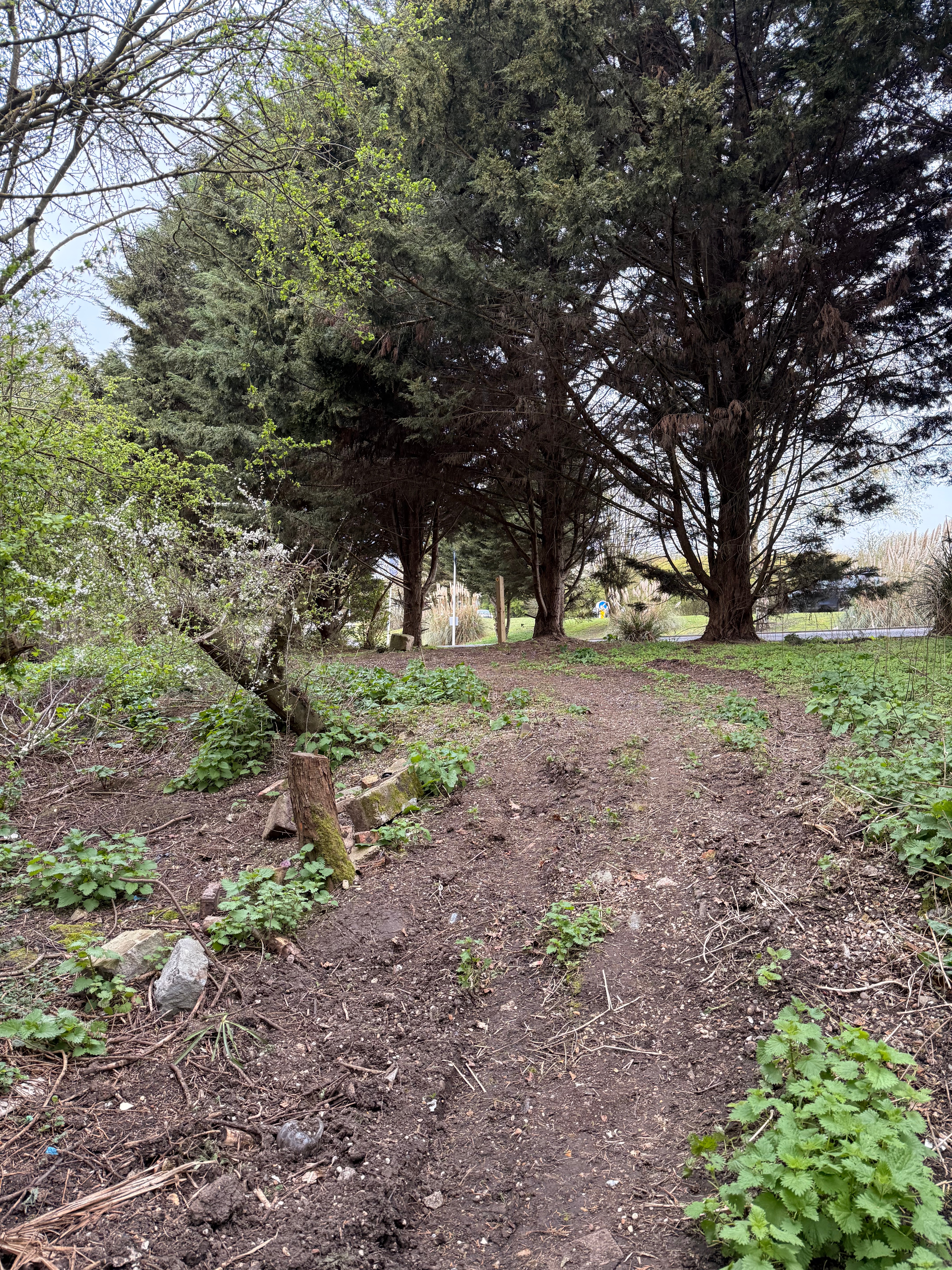
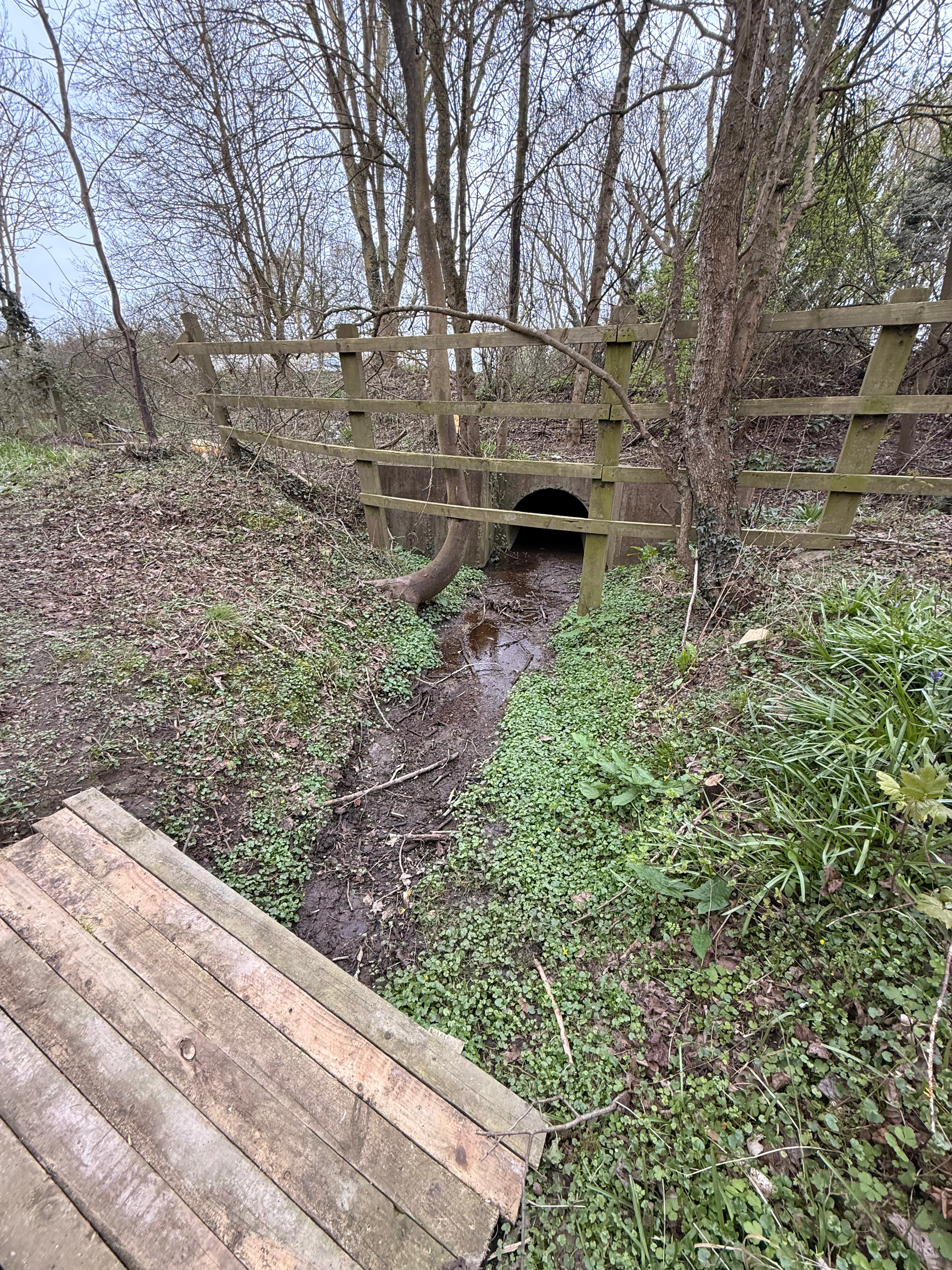
There’s a scramble up where the path meets Hayes Chase. There’s no assistive infrastructure here at all yet, so it’s a clear opportunity for an accessible alternative to more steps.
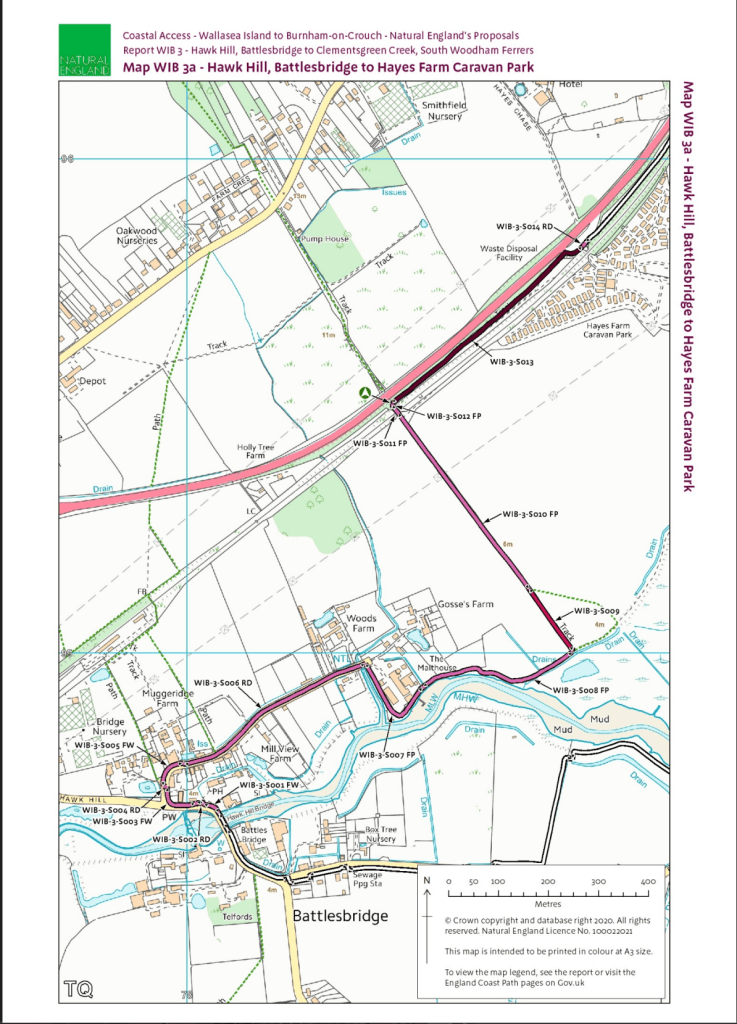
The route continues from Hayes Chase in much the same way it got there, on a path parallel to both the A132 and the railway line, with the dame challenges as before.

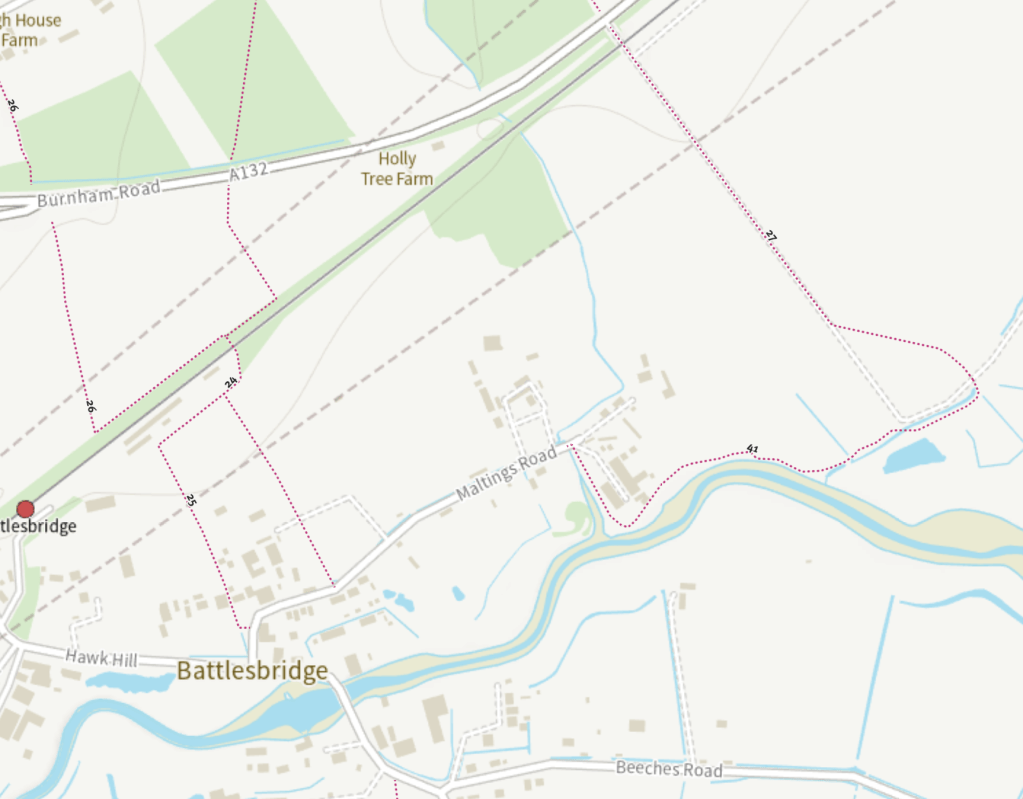
The new section concludes when it reaches footpath FP 27 229 and a bridge (Wis/803 (meesons)) over the railway line. It’s an easy walk from here down a gravel track to the sea wall and west on that to join Maltings Road.

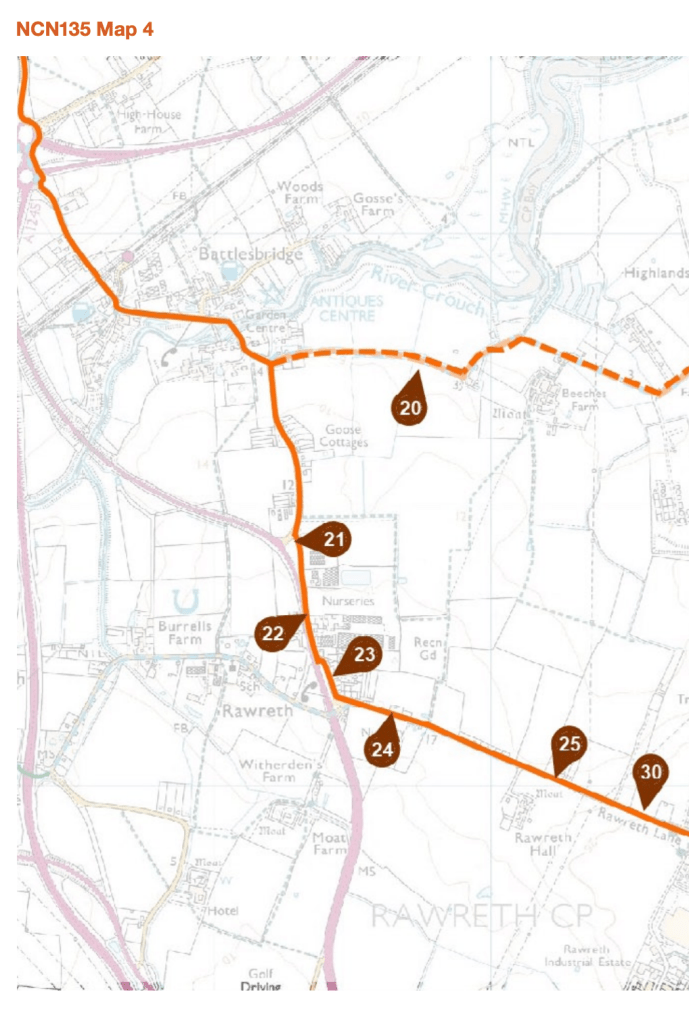
What about cyclists though? At this point we are very close to the proposed route of National Cycle Route 135 (Stock to Southend) [pdf] and potential for connecting South Woodham Ferrers and the Dengie peninsula into the national cycle network (as well as Battlesbridge railway station and local attractions Battlesbridge Antiques Centre, pubs and cafes). It’s not an opportunity we want to miss!
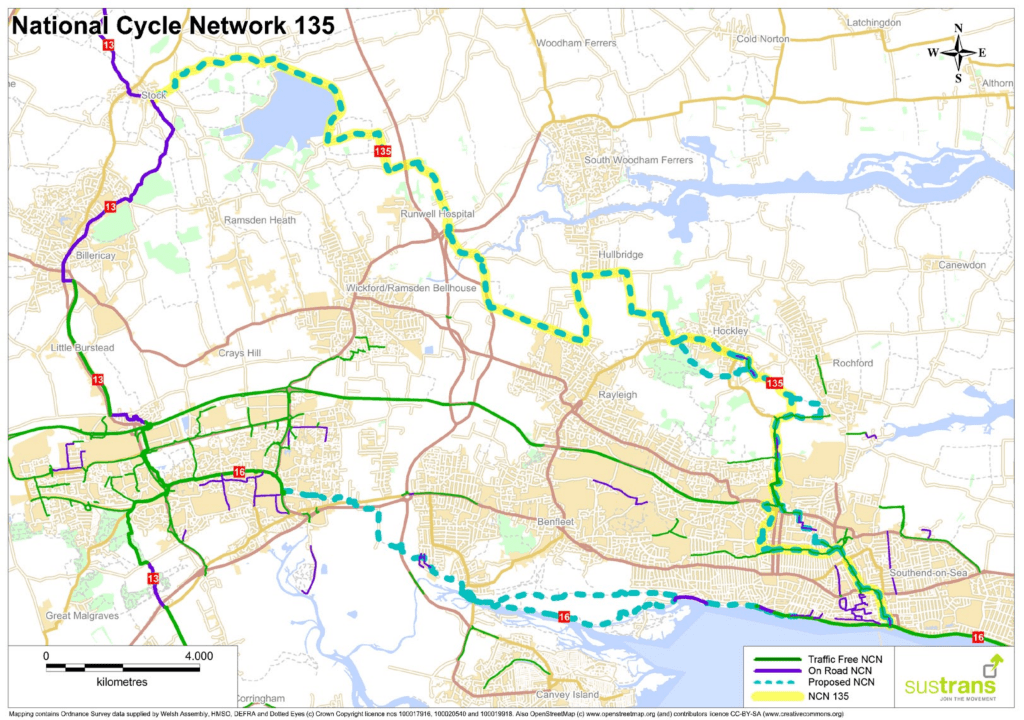
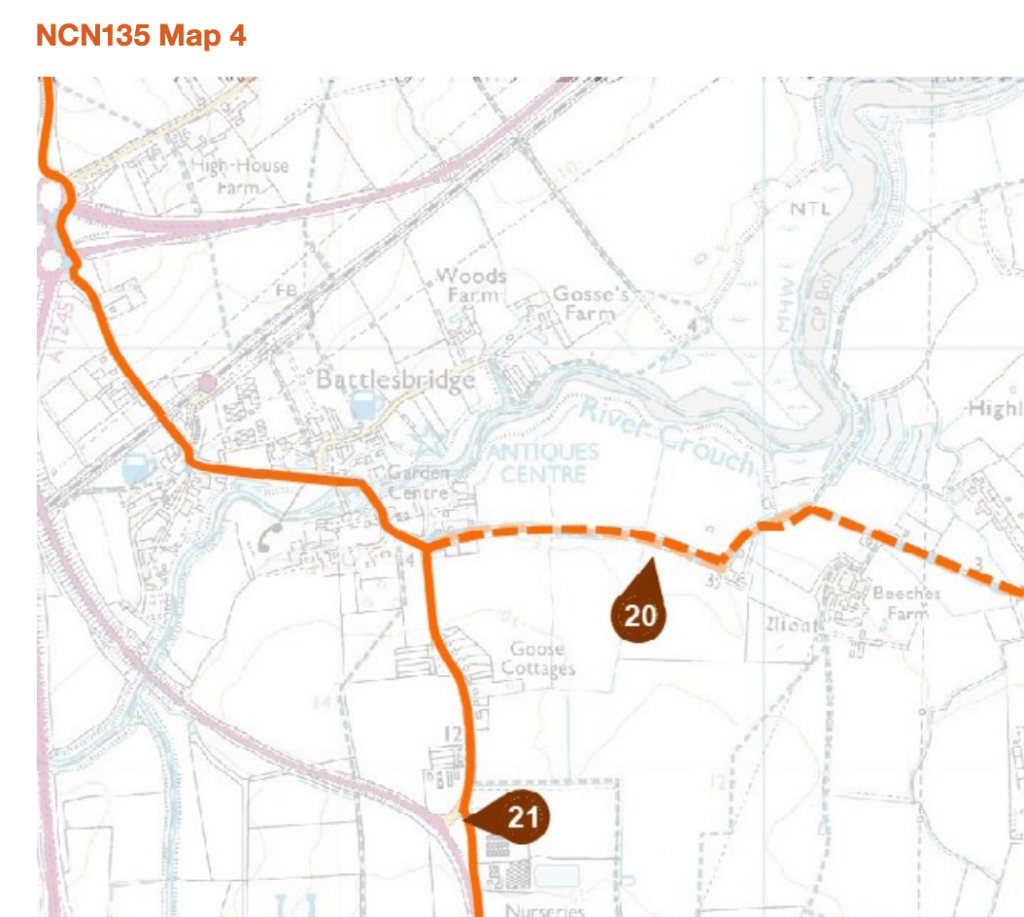
There’s the option again of upgrading existing footpaths and following the walking route, but are there better options?

Why not carry on the logic of the KC3ECP in using Network Rail land between the railway line and the A132?
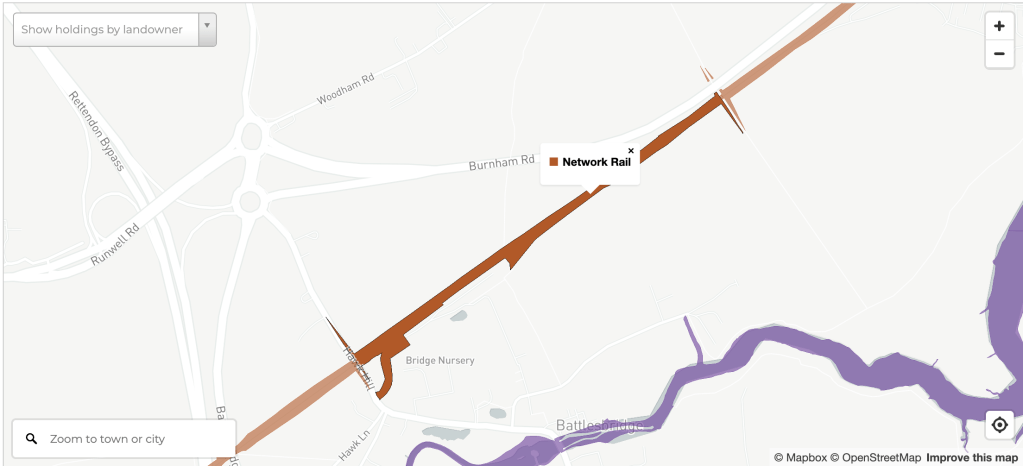
This could potentially offer a route all the way to Battlebridge railway station, although an interesting alternative might be offered where the railway crosses long-distance path the Saffron Trail (footpath FP 24 229 at this point) to then take that path south to Maltings Road instead.
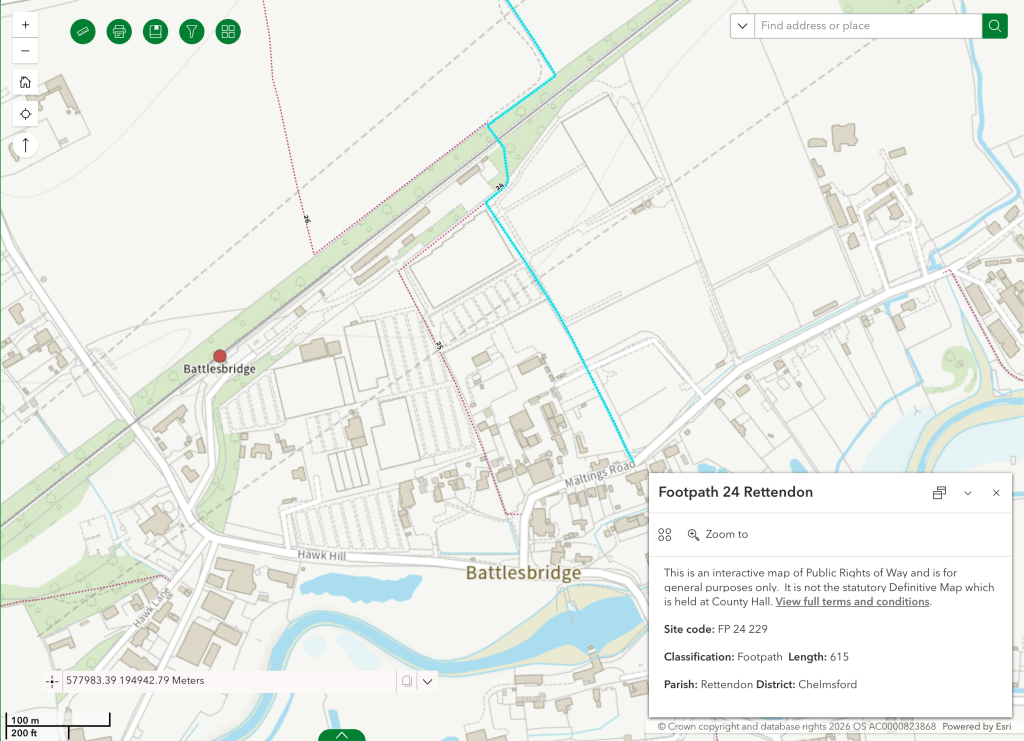
If we want to ‘Connect Essex through Cycling and Walking‘ then we have to think about cycling and walking, and identify opportunities where infrastructure for one can offer opportunities for the other – making wheeling easier in the process too. This is what a true Local Cycling and Walking Infrastructure Plan for rural Essex looks like.

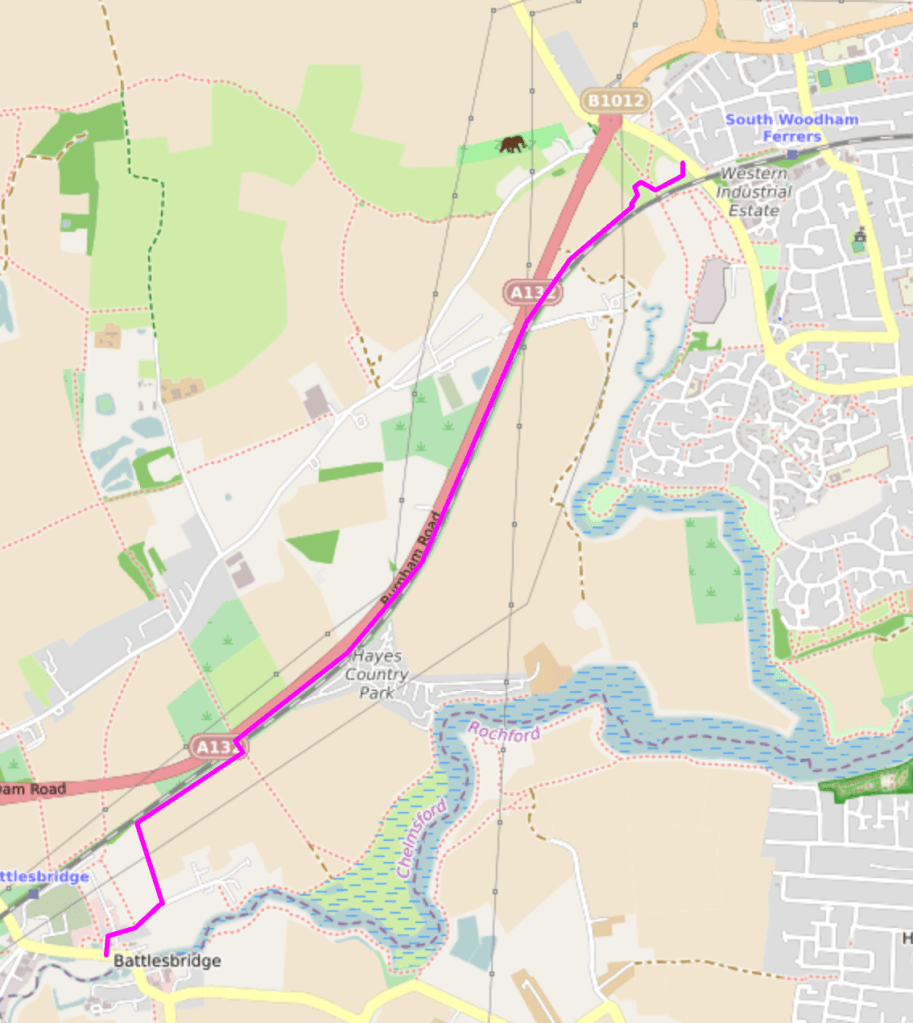
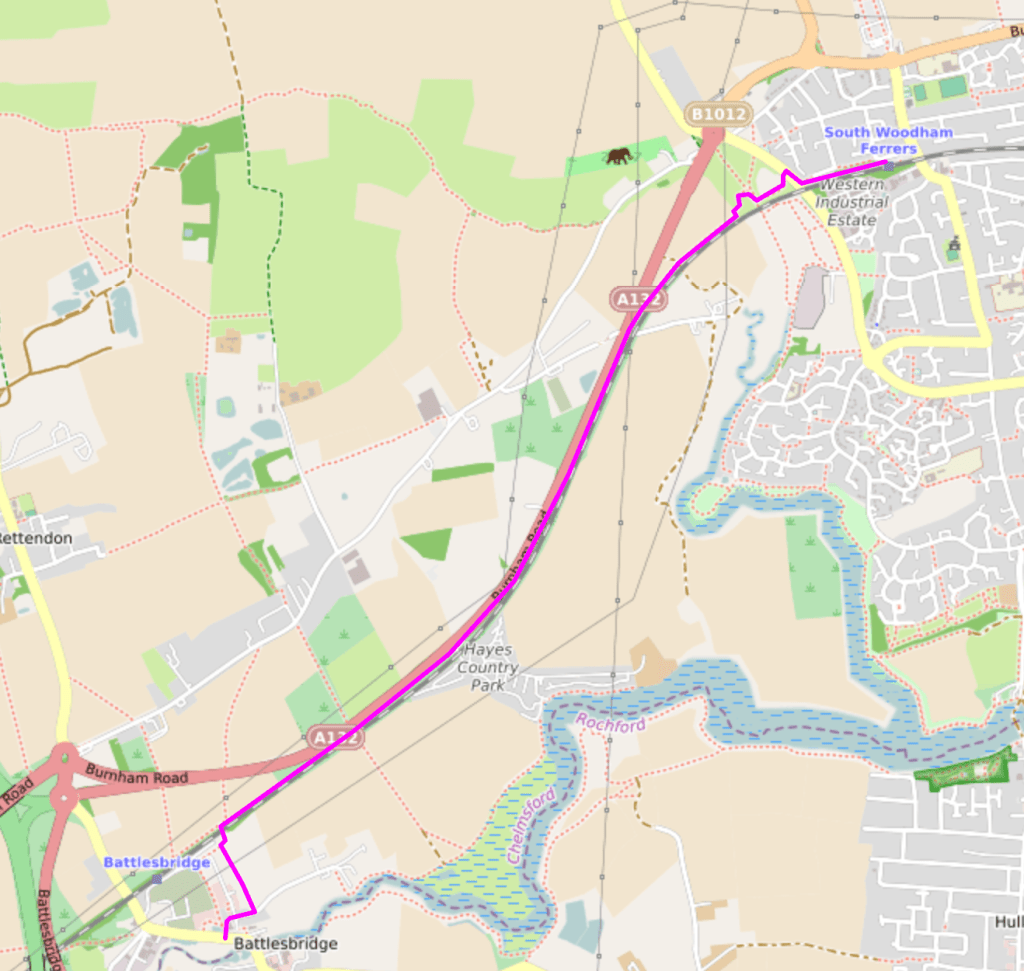
Here’s my vision for what a cycle route between South Woodham Ferrers/The Dengie and Battlesbridge/National Cycle Route 125 looks like in total:
New Paths – North Fambridge

Last weekend I walked the two new local sections of the King Charles III England Coast Path (KC3ECP) that I mentioned in the previous post. As pre-warned, these were open but unfinished. In this post I review the WIB4 section: Clementsgreen Creek, South Woodham Ferrers to The Quay,
North Fambridge
[pdf]

North Fambridge section

This begins on pre-exisisting rights way:

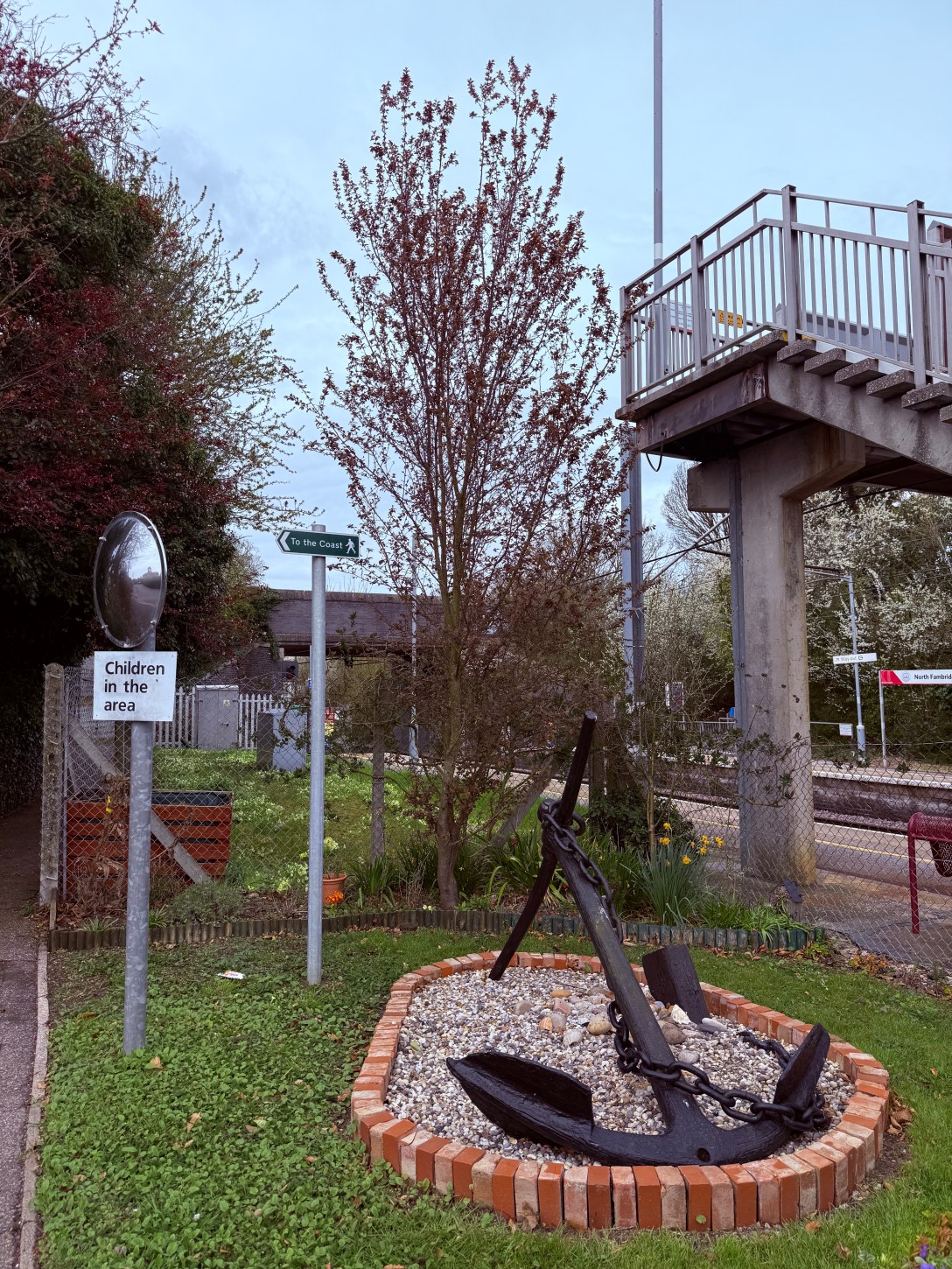
I travelled on the train bus replacement from Burnham-on-Crouch to North Fambridge railway Station, took the stairs to the road bridge from the westbound platform and went north on Fambridge Road.

Read more: New Paths – North Fambridge


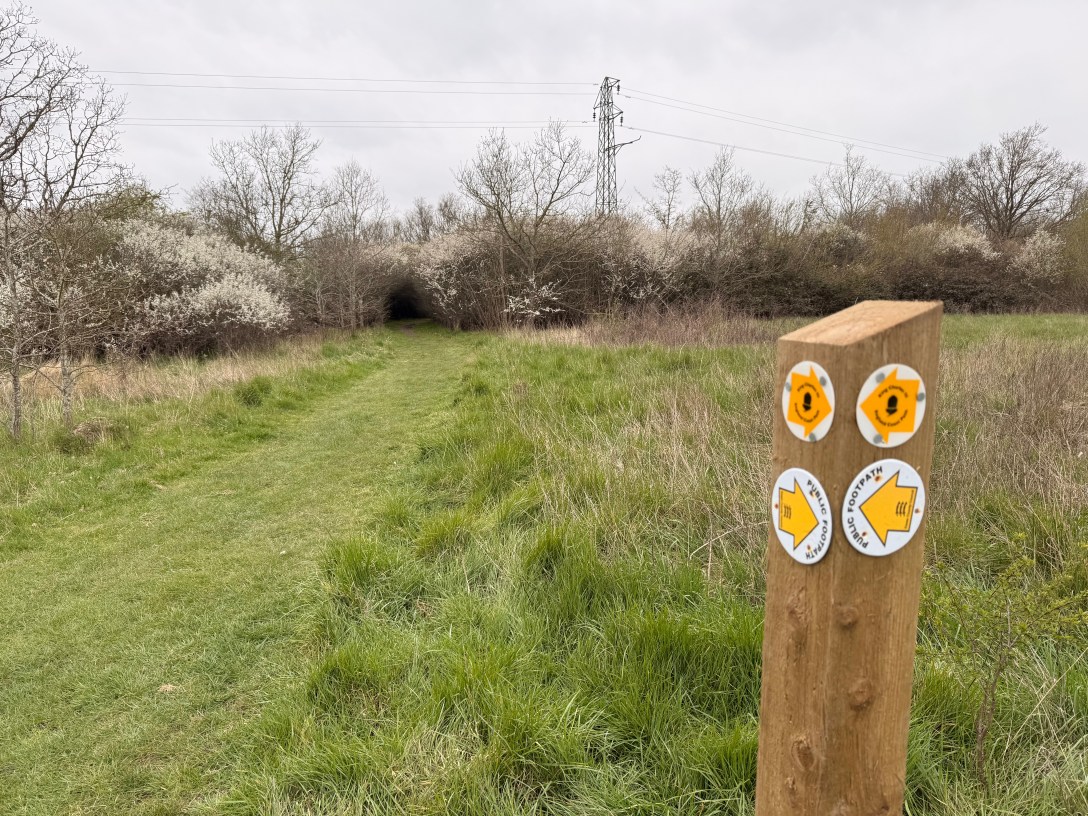
Footpath FP 5 256 goes west off Fambridge Road, opposite Franklin Road, on a short paved path leading on to Rectory Road. Rectory Road’s metalled surface peters out as it becomes the bridleway BR 17 256 which connects it to the metalled surface of Rookery Lane. A KC3ECP waymark disc appears on a post at teh start of Rookery Lane – the first seen on this route, and also the last for some time.

Apart from the 41 metres of Footpath FP 5 256, this already provides a good cycle route west out of North Fambridge.

[It’s also a potential walk/wheel/cycle connection route through to Stow Maries and the dismantled railway line using bridleways, residential streets and country lanes. Some attention would need to be paid to improving the Rookery Lane junction with the Lower Burnham Road (B1012), so as to afford safe access to Honey Pot Lane. Rookery Lane and Honey Pot Lane are only 100 metres apart but there is currently no footway, cycleway or controlled crossing facilitating safe transit.]

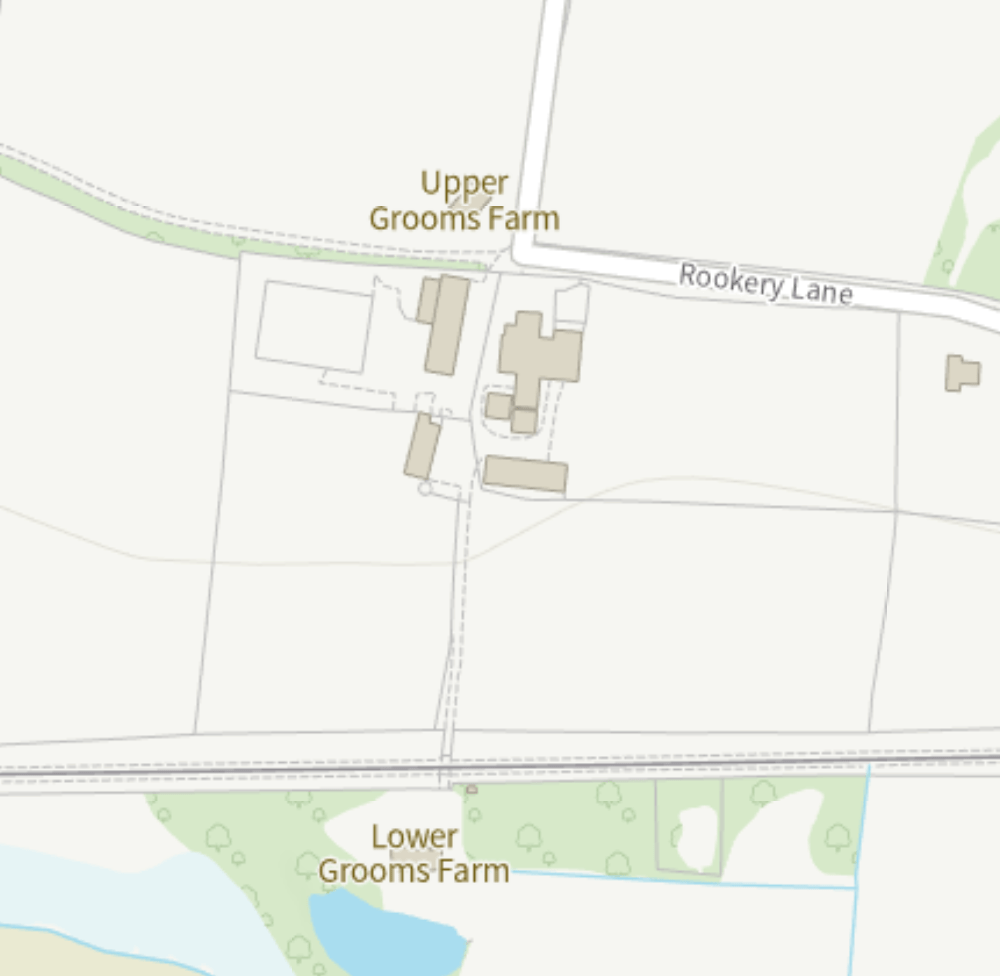
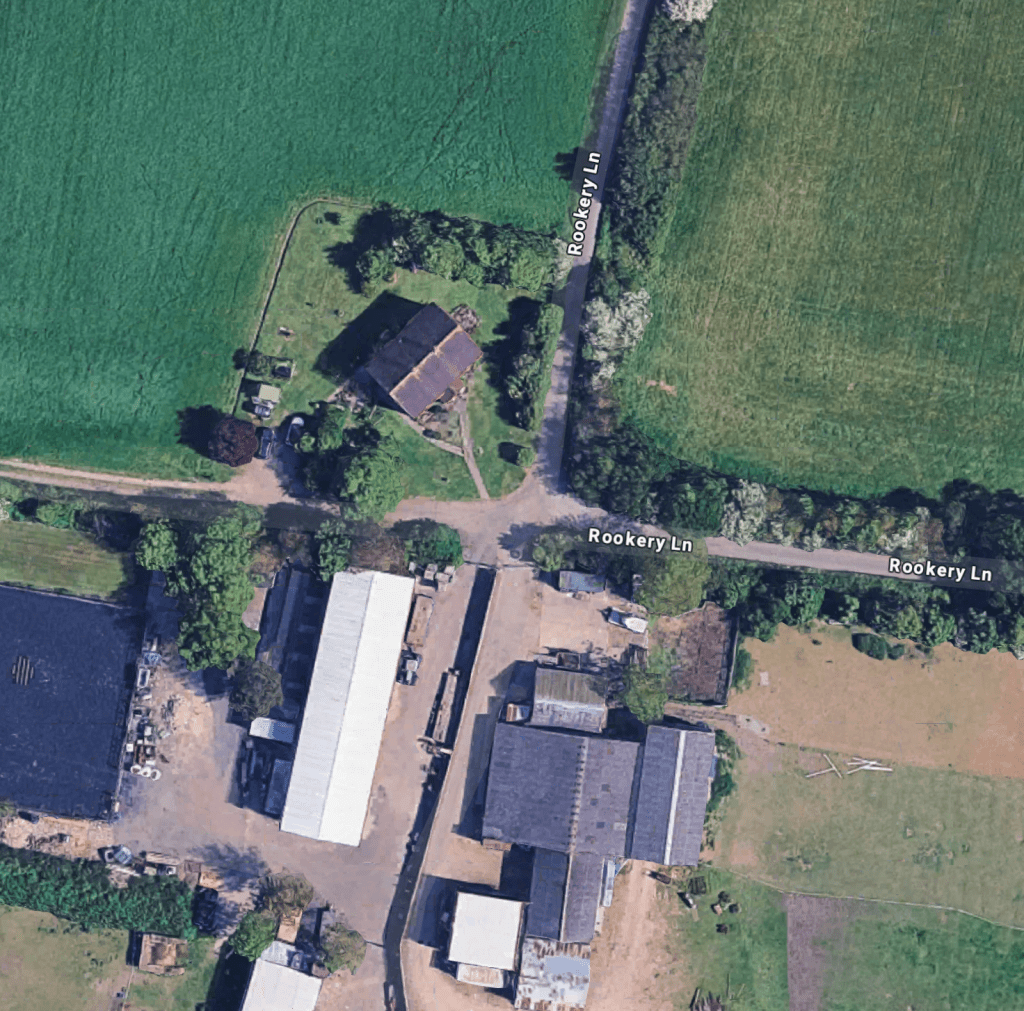
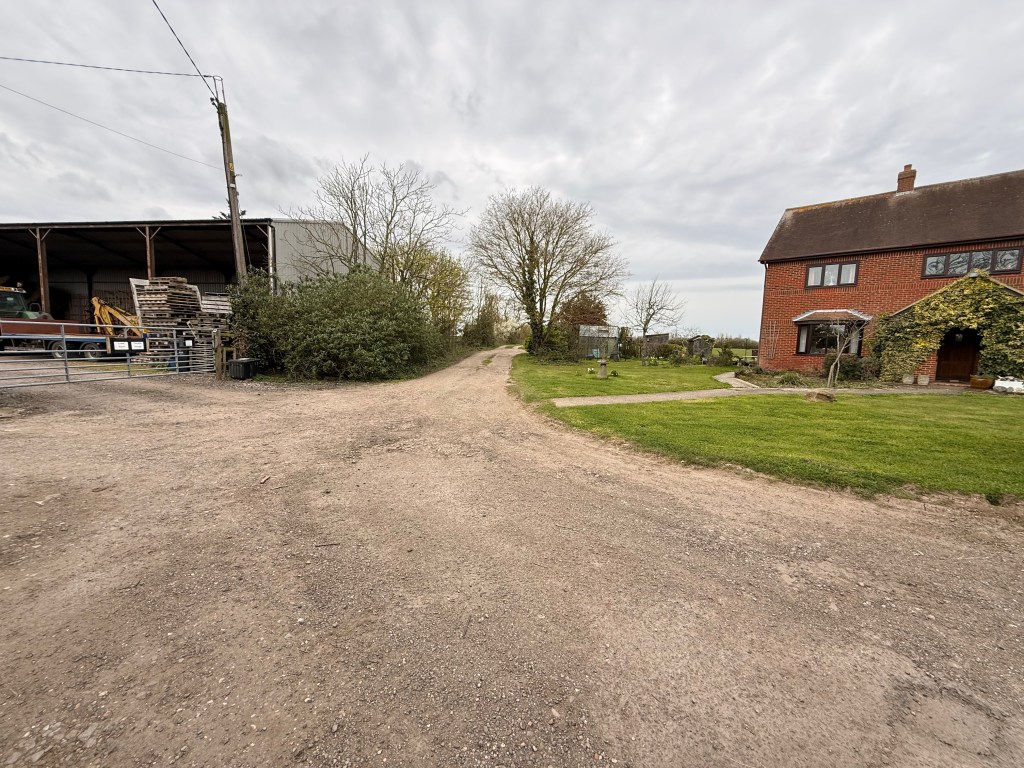
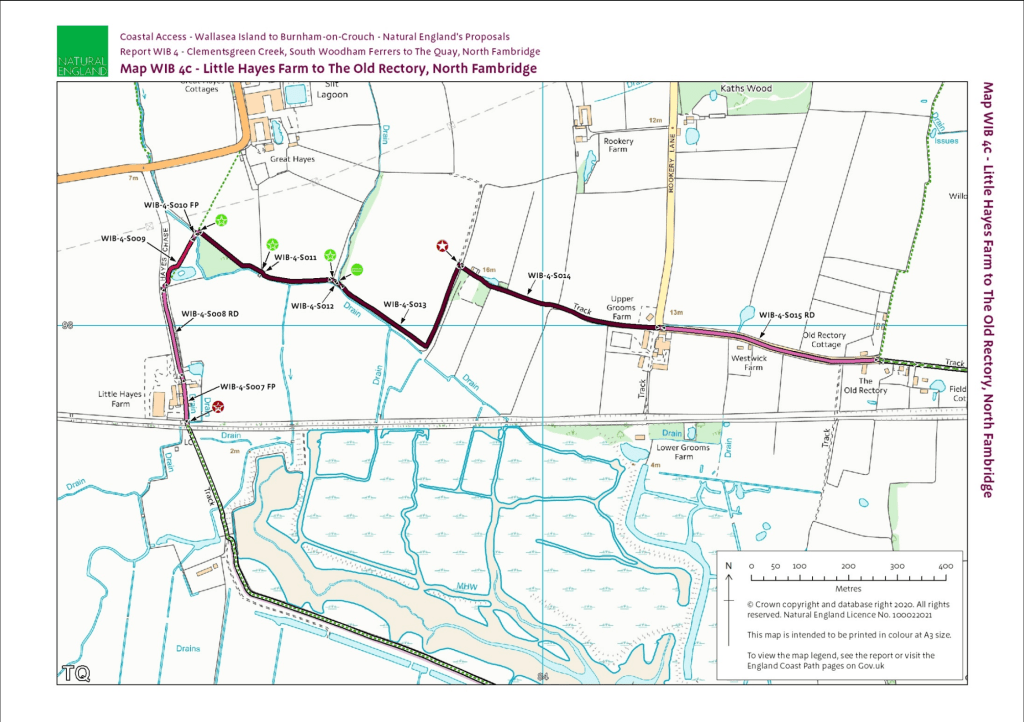
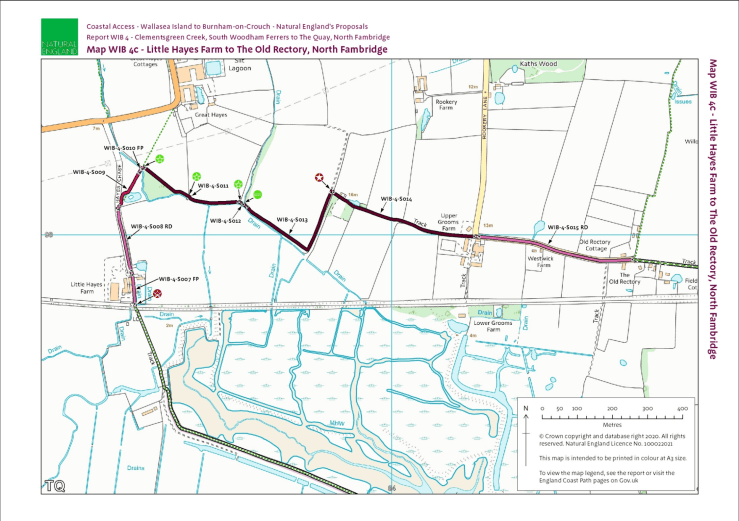
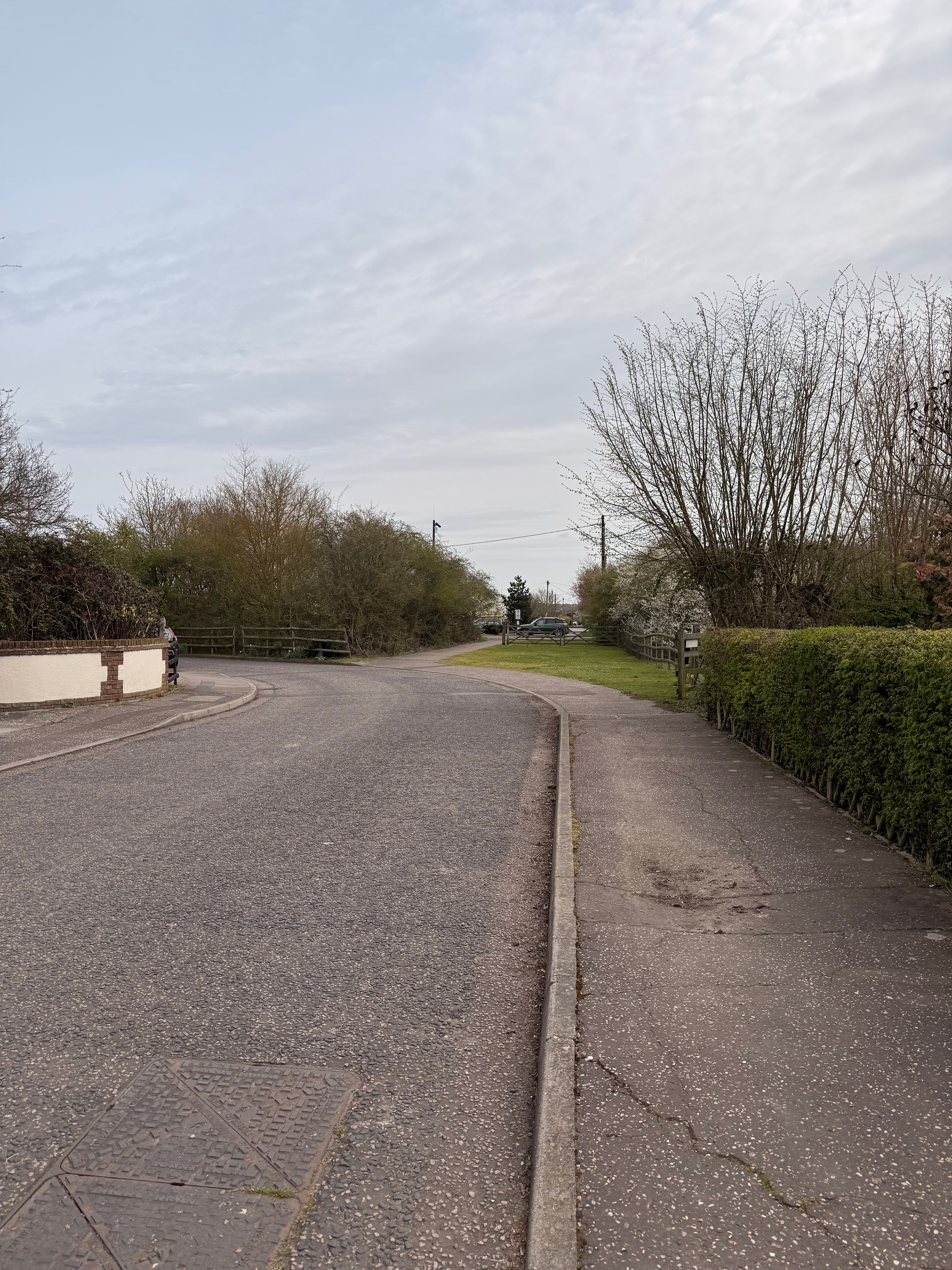
The new section of Right of Way begins where Rookery Lane takes a right angle turn north at Upper Grooms Farm (///fully.blushed.lecturers). The new Right of Way instead proceeds straight on along a farm track. There is no sign to be seen though, no fingerpost or waymark disc anywhere evident. This is exactly where a walker needs confidence, both on the route direction and that they have permission to go forward. The new Right of Way does not appear yet on the Essex Highways PROW interactive maps.

The Upper Grooms Farm junction point on the Essex Highways PROW interactive map
Google Maps image of the same junction
My photo of the junction. No sign assures of the right of way ahead.

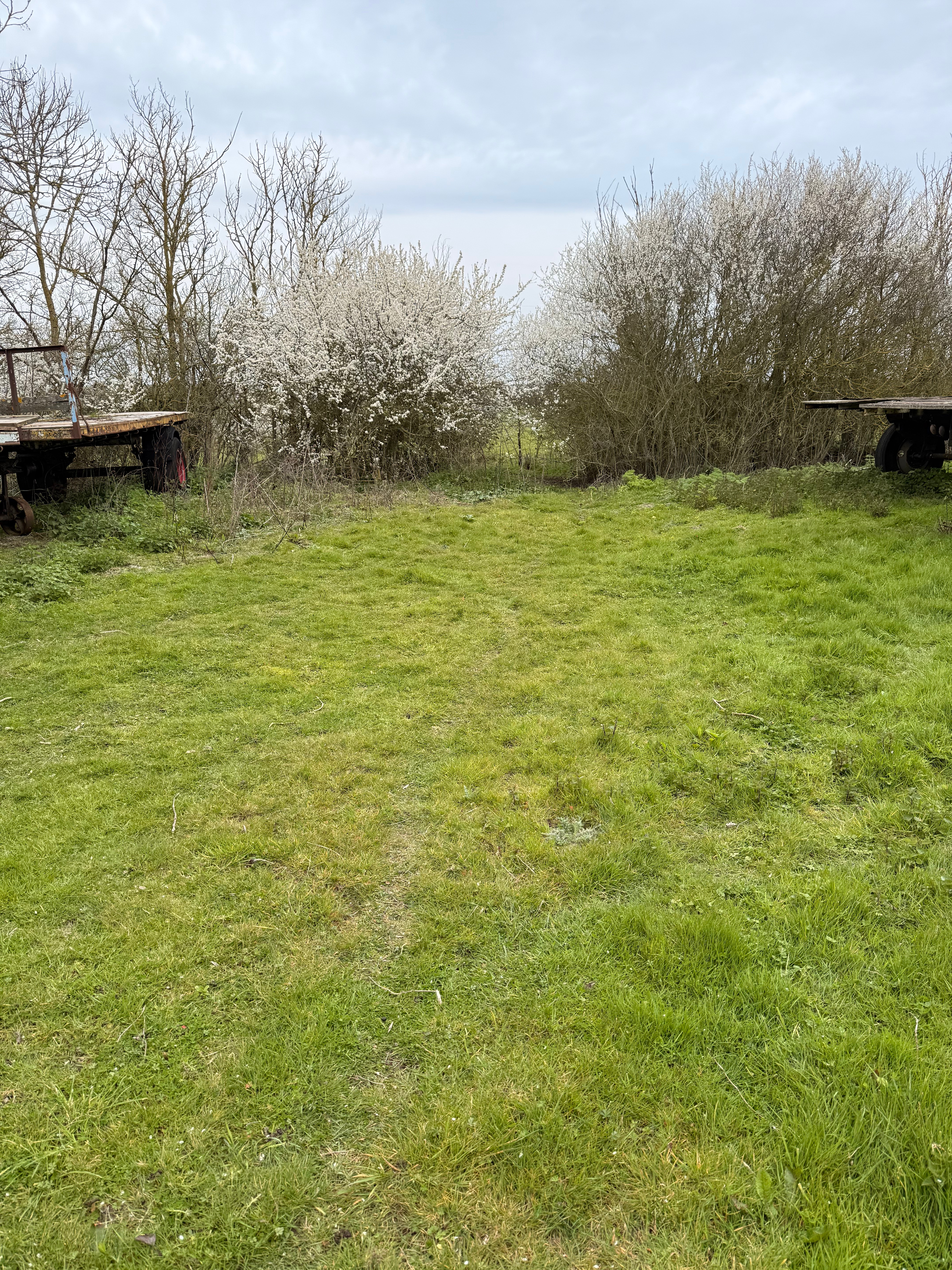
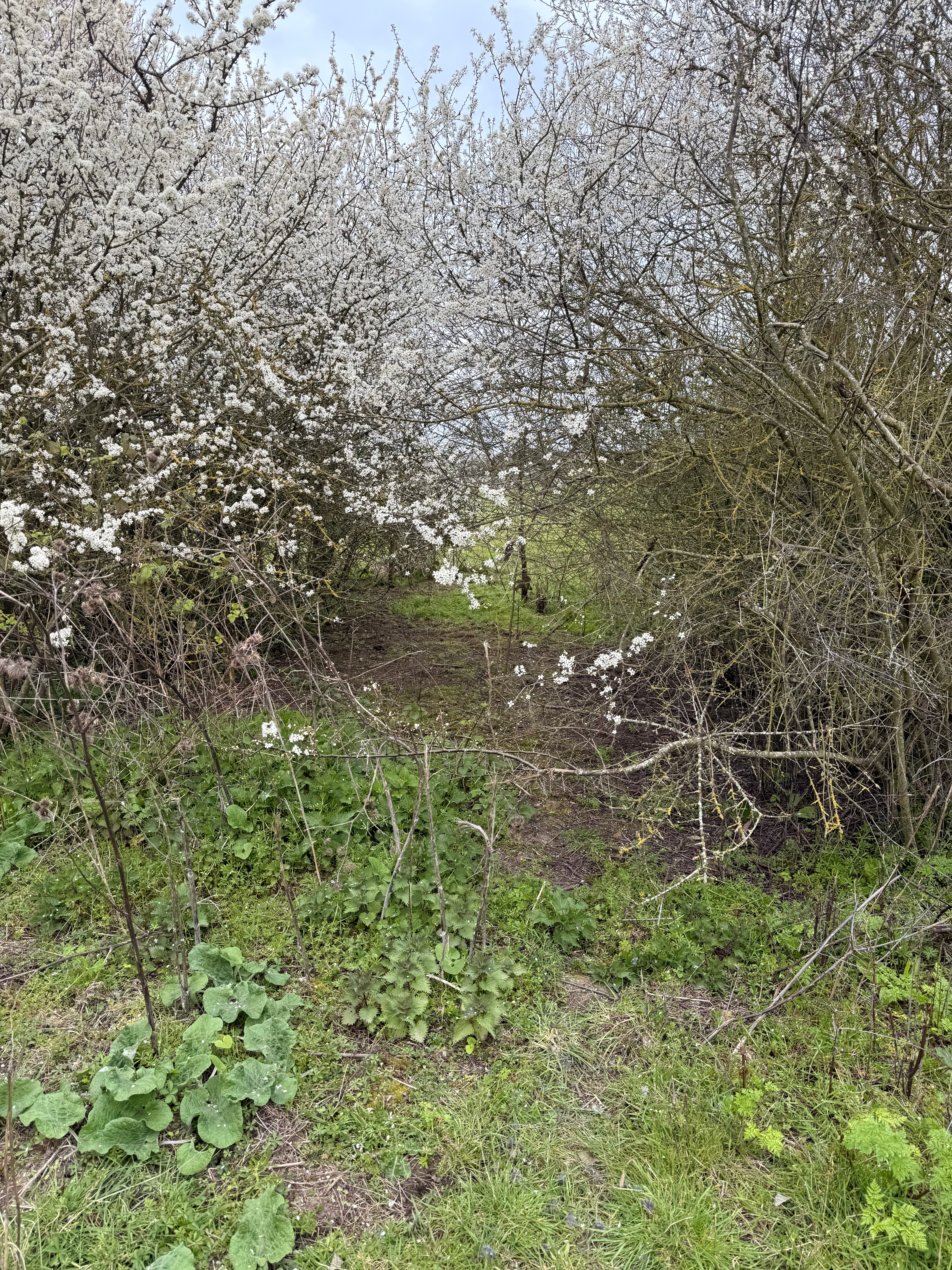
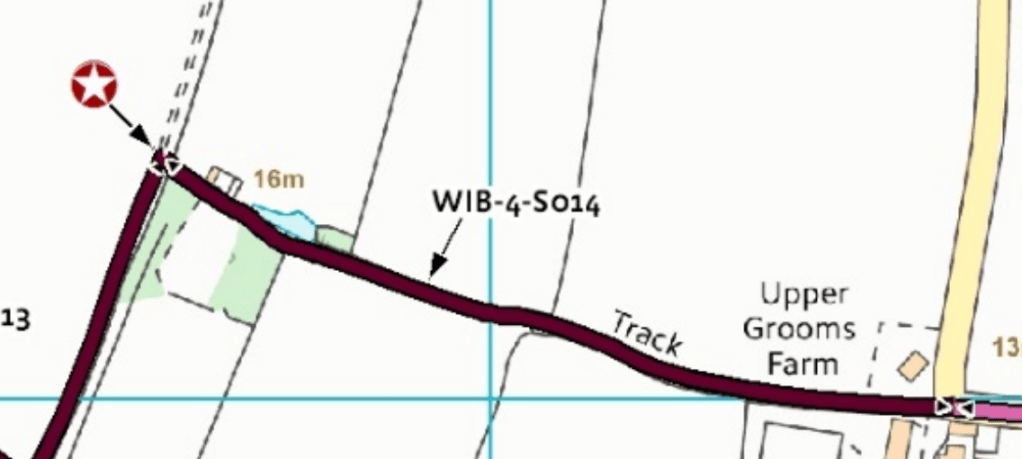
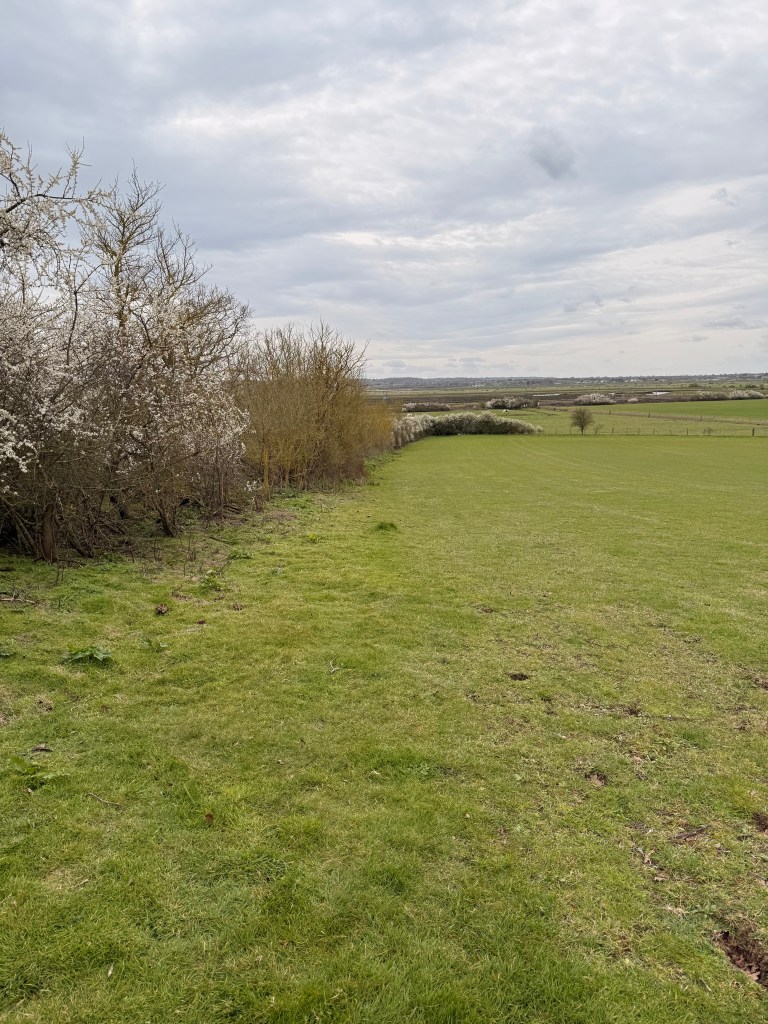
The route immediately ahead is simple enough if you are brazen enough to take it following a gravelly farm track westwards for about 200m until it opens up into a defoliated area with a metal pole barn to the north and a static caravan to the south (this was once the site of Skinner’s Wick farm). Logic would suggest that you proceed directly across this area and through the hedgerow ahead. There’s no signage anywhere however. The hedgerow hints at having once had a path though it, but there is both side and surface growth preventing easy passage. North of the pole barn a farm track goes through the hedgerow and I took this. Reviewing the Natural England map for this section however, it is clear that the intended route is through the hedgerow where it was overgrown and that an existing field gate should be here but is not. (///utensil.monorail.submits)

The overgrown gap in the hedgerow.

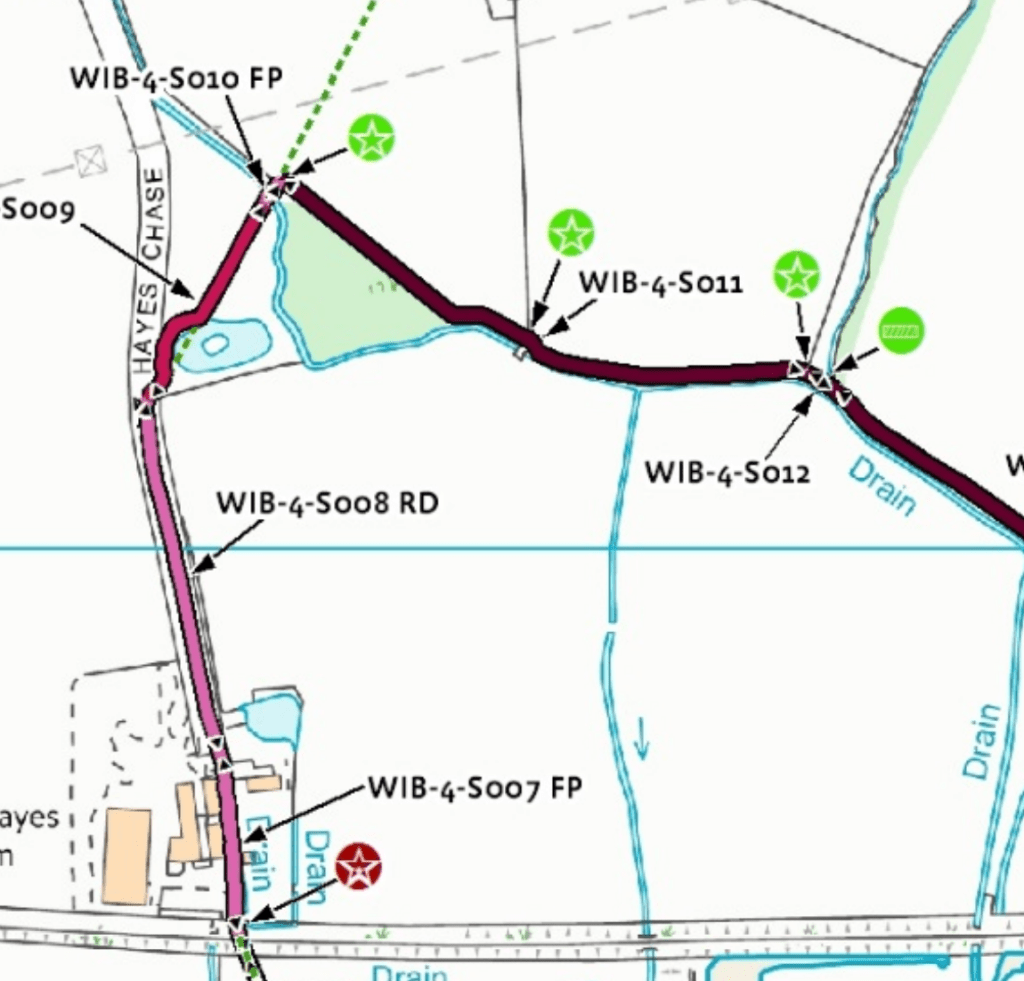
The white star is a red circle indicates where a pedestrian gate should provide passage through the hedgerow.

To this point, the route from North Fambridge seems usable by both walkers and wheelers, and could be used by cyclists were higher rights allocated.

The route south-west along the field edge

On the west side of the hedgerow, the route proceeds south-west along the field edge, turning north-west when it meets a land drain and the south field edge. A 1.5m width of trail is to be established on the field edge, but there’s currently no evidence of that. The field is laid to grass and slopes southwards from the hedgerow entrance, dropping about 12m over 180m to the drain. This section could be improved in a way that would improve access for wheelers and also make it suitable for a cycleway.

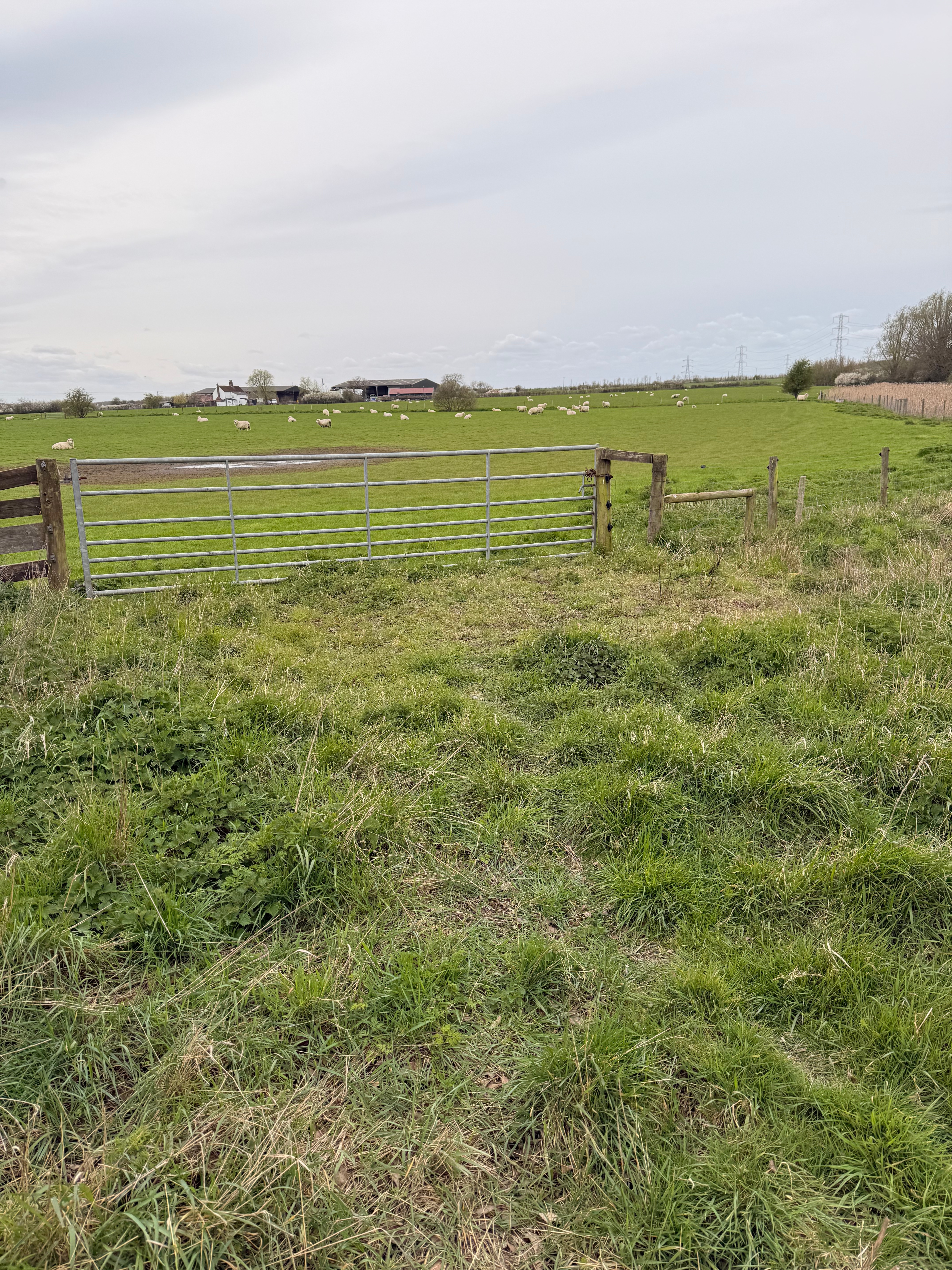
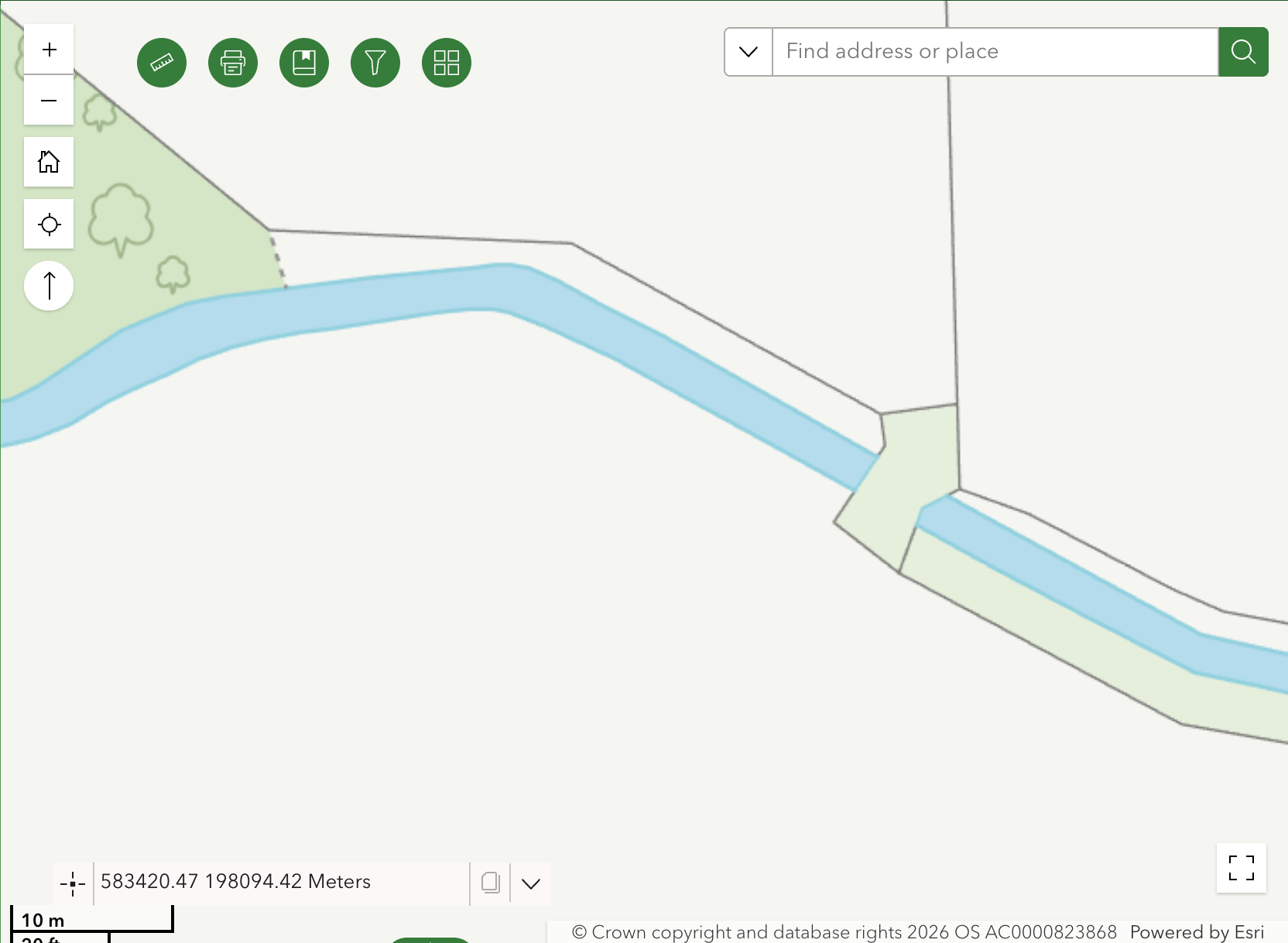
The route leaves this field at an intersection of gates, stiles and a footbridge where the need for construction work is most clearly evident. What isn’t clearly evident is where you are supposed to go. There’s no signage, the Essex Highways interactive PROW map remains useless and the Natural England map is not detailed enough (///powerful.truckload.balconies). A farm gate leads into a field to the south, but the Natural England map suggests that the route goes north of the drain and involves a new footbridge and a new farm gate.

A direct route to Little Hayes Chase

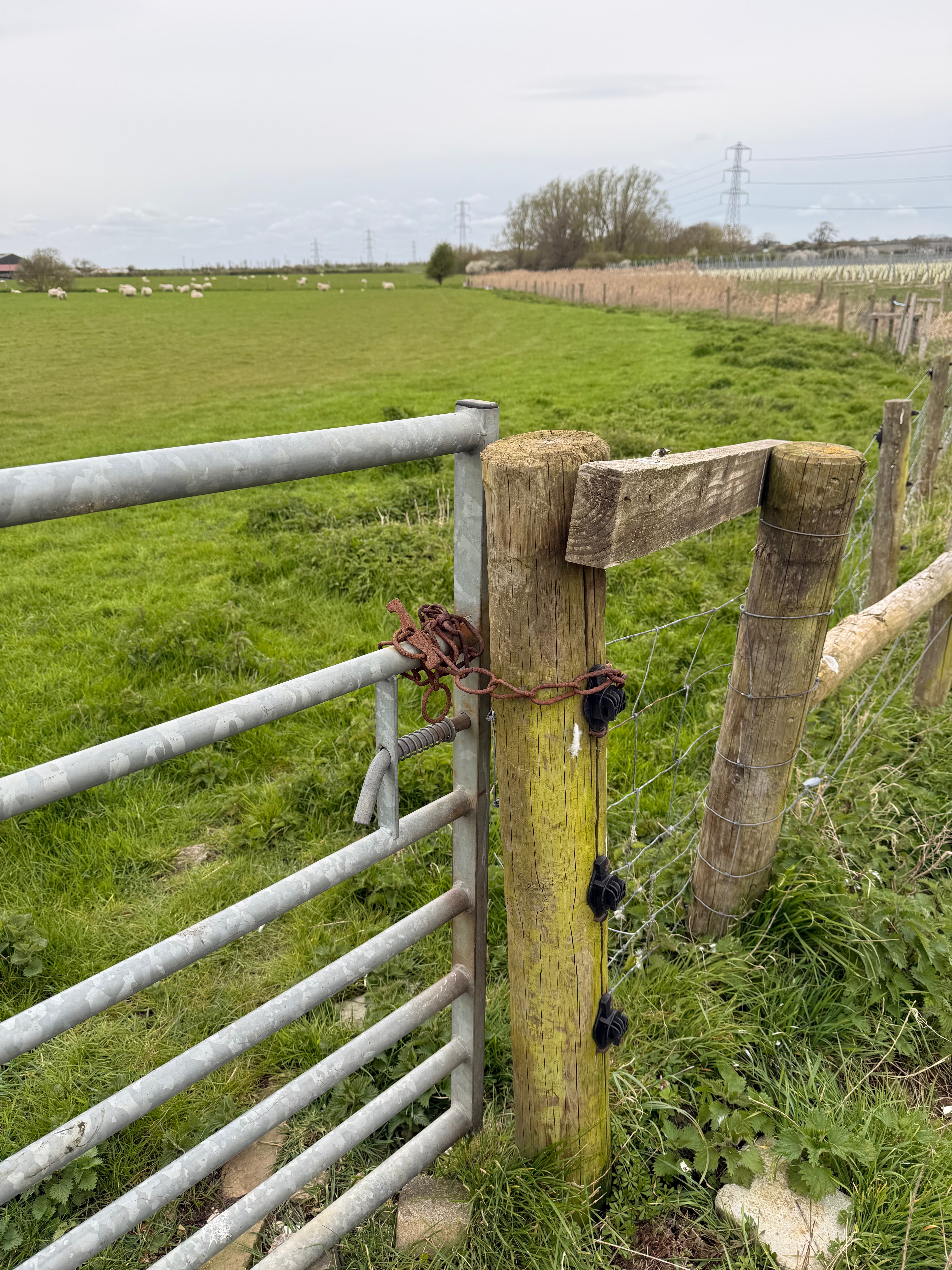
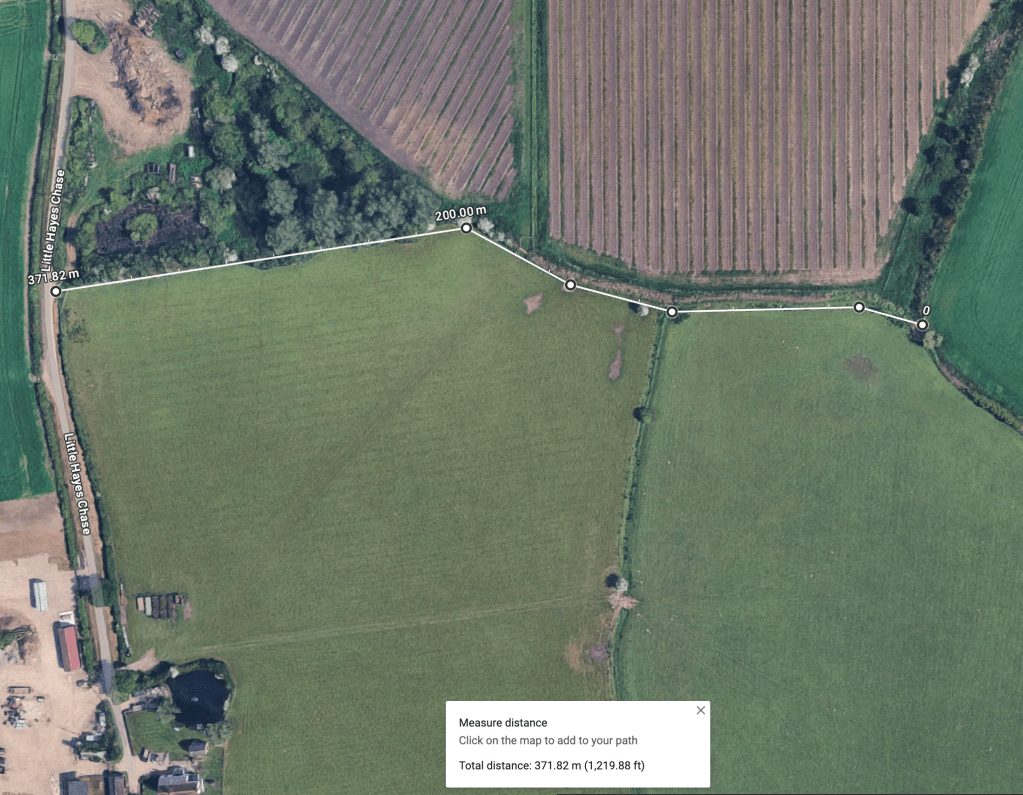
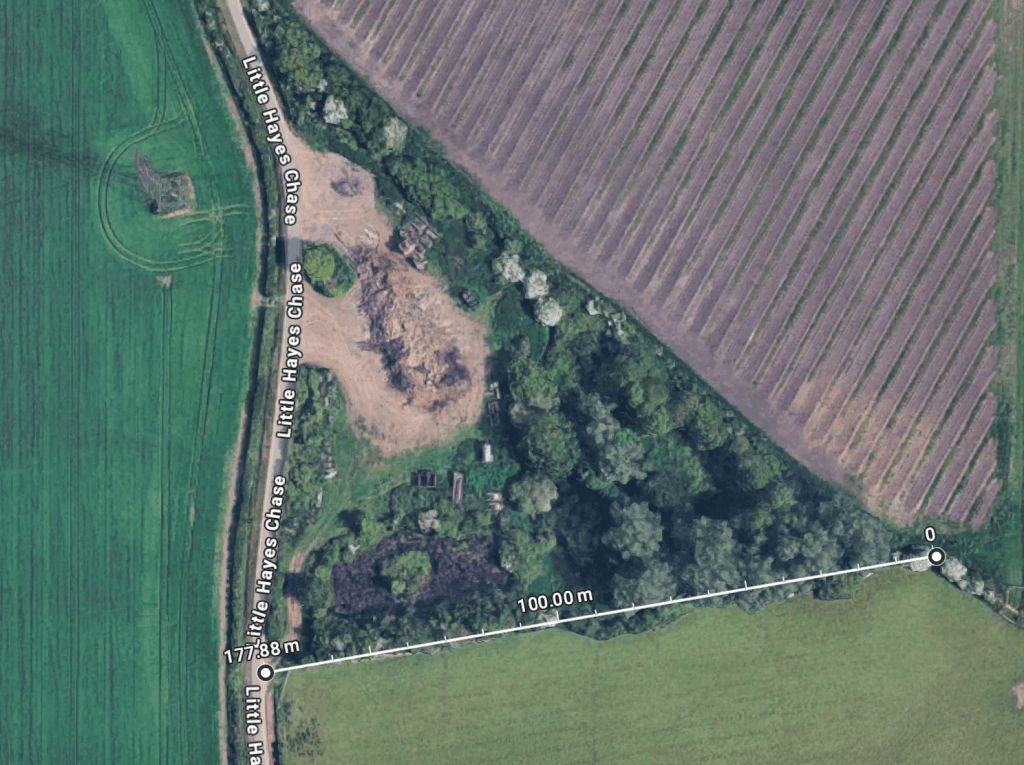
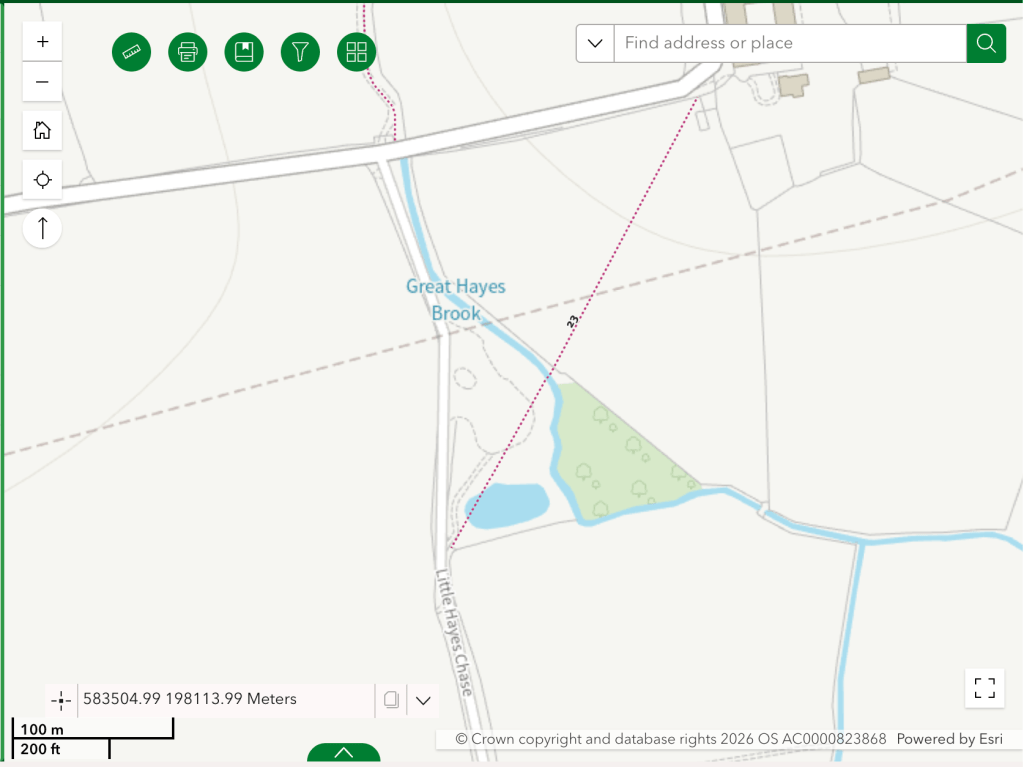
Directly to the west, about 360m as the crow flies, is the road Little Hayes Chase which forms part of the KC3ECP. Following the north field edge, its about 370m away. The only evident way forward from the last field is through the metal farm gate (which was chained shut) and into the field to to the south, where the logical way forward would be to follow that north field edge to Little Hayes Chase. This is a relatively flat route that could provide a good walk/wheel/cycle route.

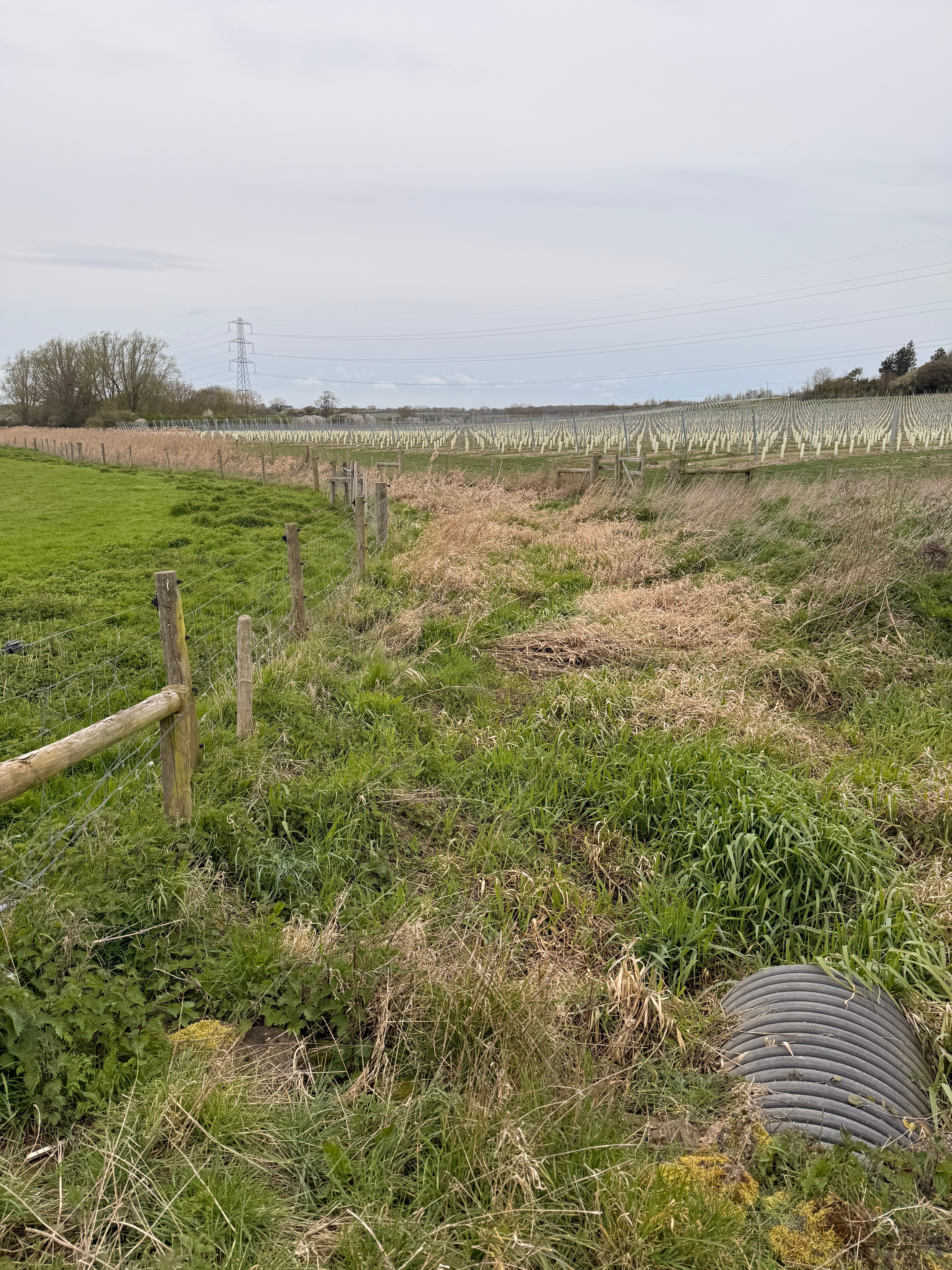
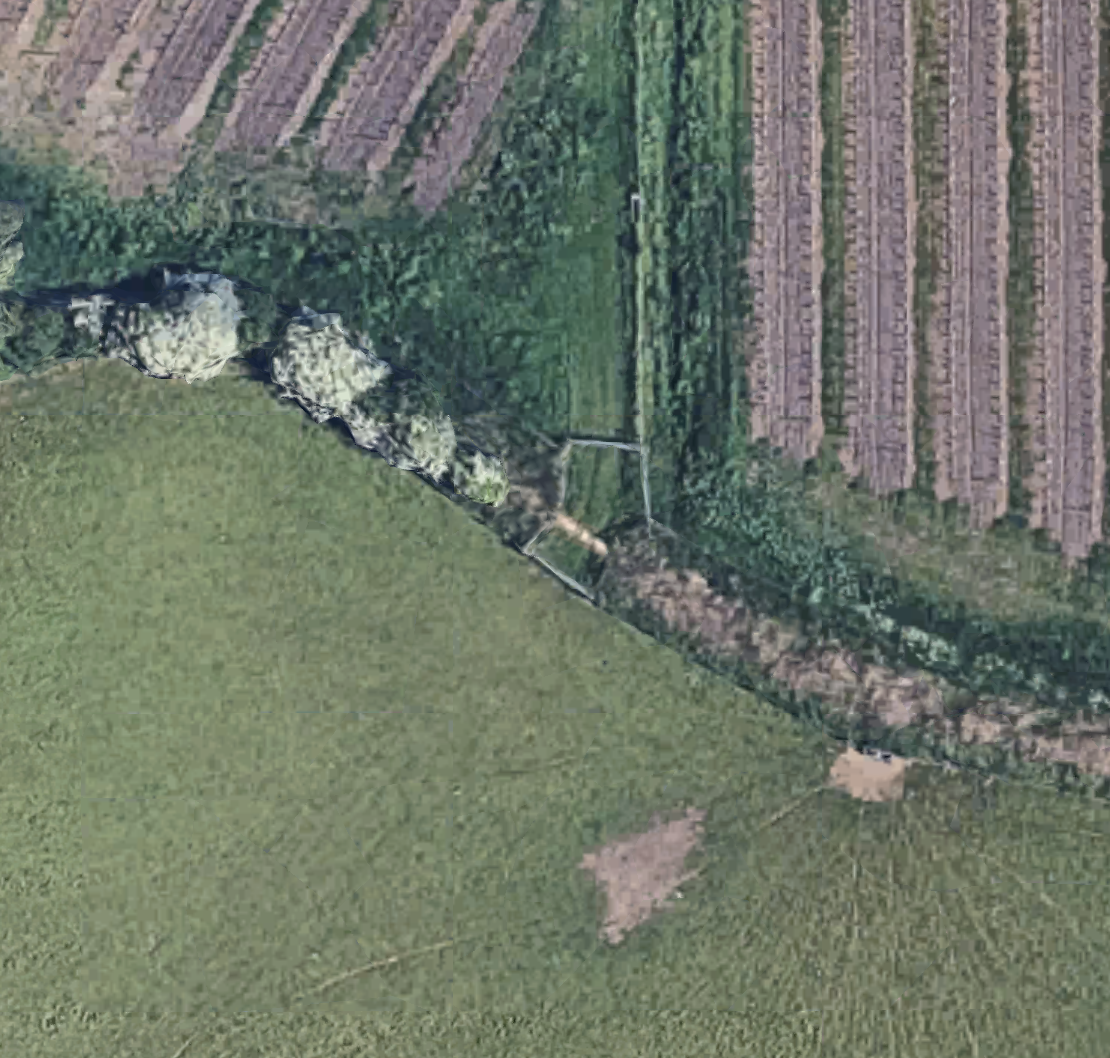
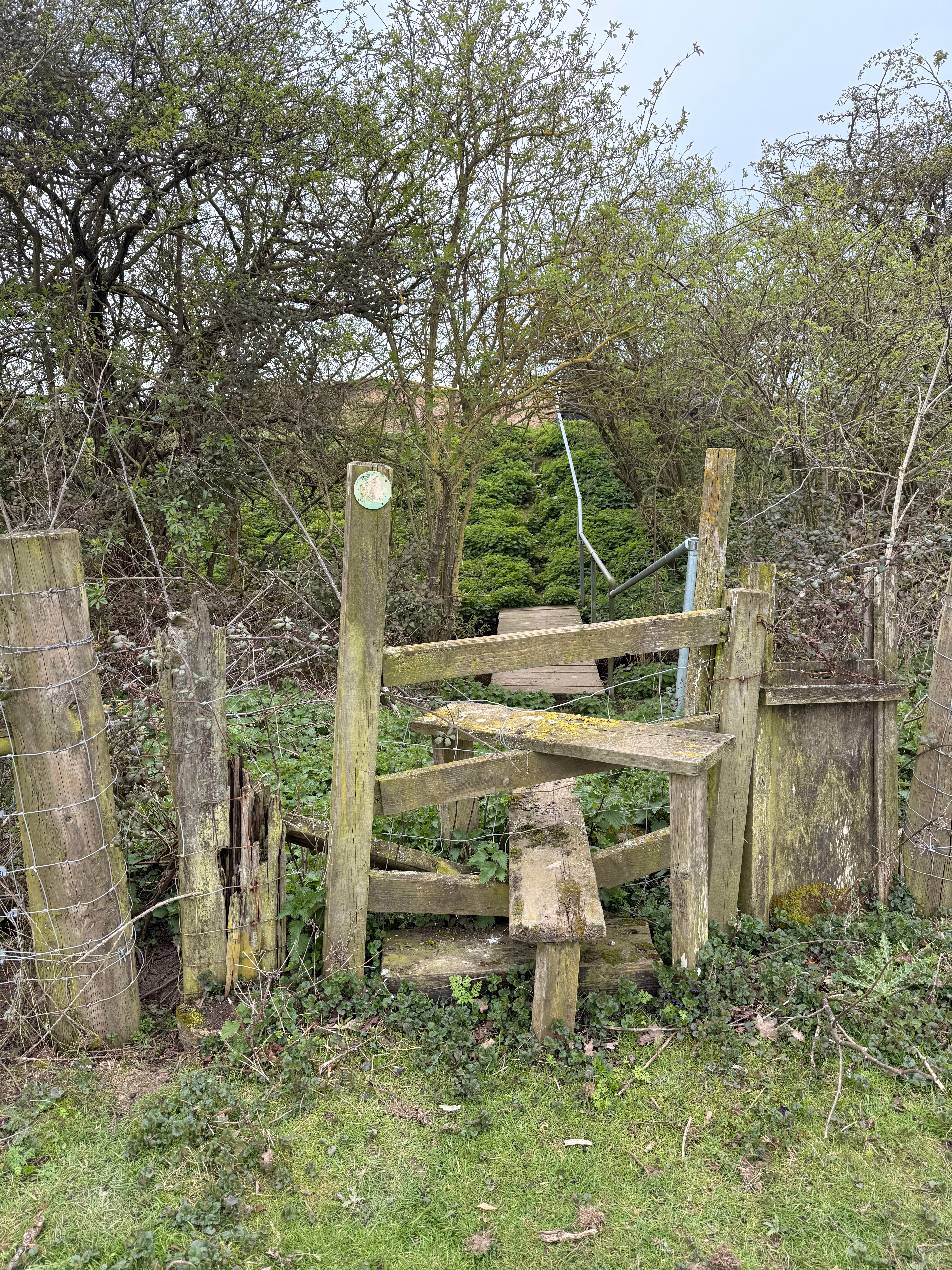
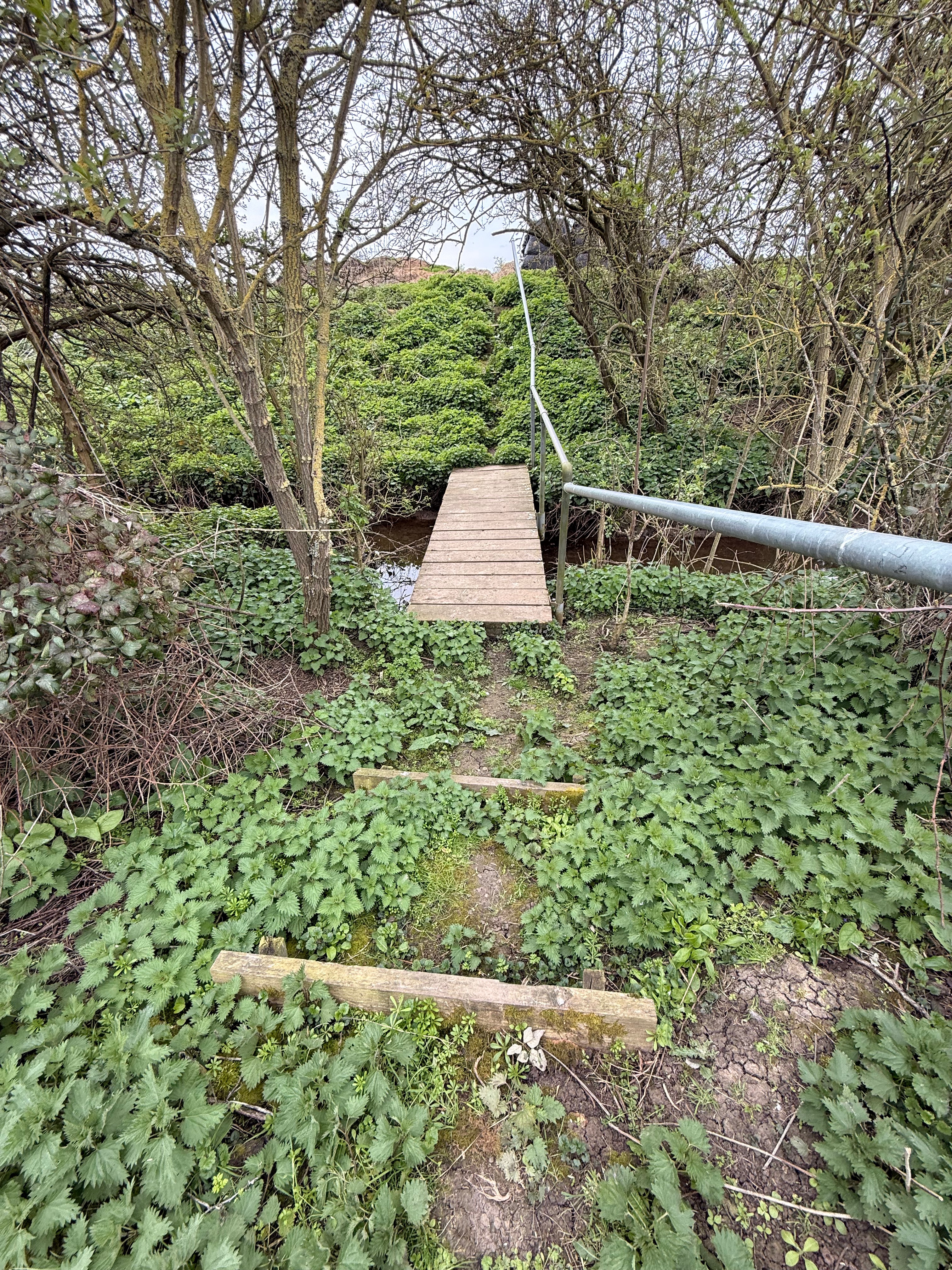
I clambered over the farm gate into the south field from where I could see a nearby step stile on the north field edge leading towards a filed of vineyards. Comparing my GPS position on an electronic version of the OS175 map with the Natural England map, this appeared to be the route to take. It led on to a footbridge over a land drain. Once again, there was no signage to help here and the infrastructure is in a poor state. Both the step stile and the footbridge are in stages of decay and are unsafe, they lead to a pedestrian gate with broken fittings that provides access to the vineyard field. It’s a very fussy nexus, in need of redesign as much as repair or replacement. It’s unclear why it is proposed to have replacement pedestrian gates here rather than wheelchair/mobility device gates or, thinking ahead, bicycle-friendly gates.

From here the new route follows the south edge of the vineyard field. This runs parallel to the route described above on the other side of the drain until it reaches a copse, whereupon it follows the field edge north west until it meets footpath FP 23 261. The descriptive text in the natural England documents states that they opted for the proposed route because ‘it utilises existing rights of way, readily links land uses over several properties and generally follows a permitted route for an
annual long distance running event’. I think this event is the Stow Maries Trail Challenge, but it’s unnamed in the document and the Stow Maries Trail Challenge route is not public. The ‘other options considered’ in the document do not include a more direct route to Little Hayes Chase.

A break from the described route at the copse, to go more directly west to Little Hayes Chase could produce a more accessible option suitable for upgrading to a cycle way.

Around the point that a new pedestrian gate is proposed, there is a bridge over Great Hayes Brook and gate access into the field that leads to Little Hayes Chase (///widely.courts.fixtures).

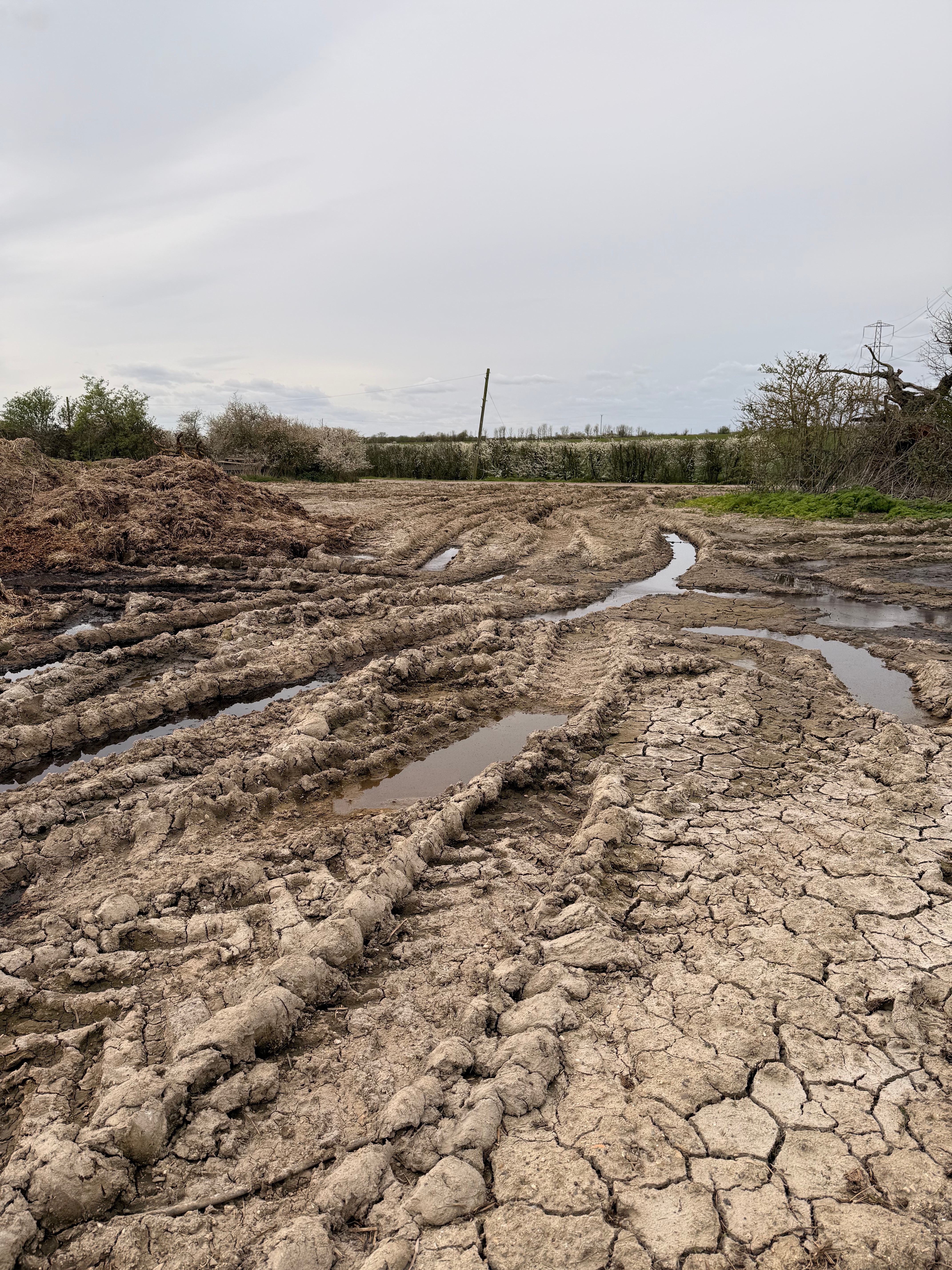
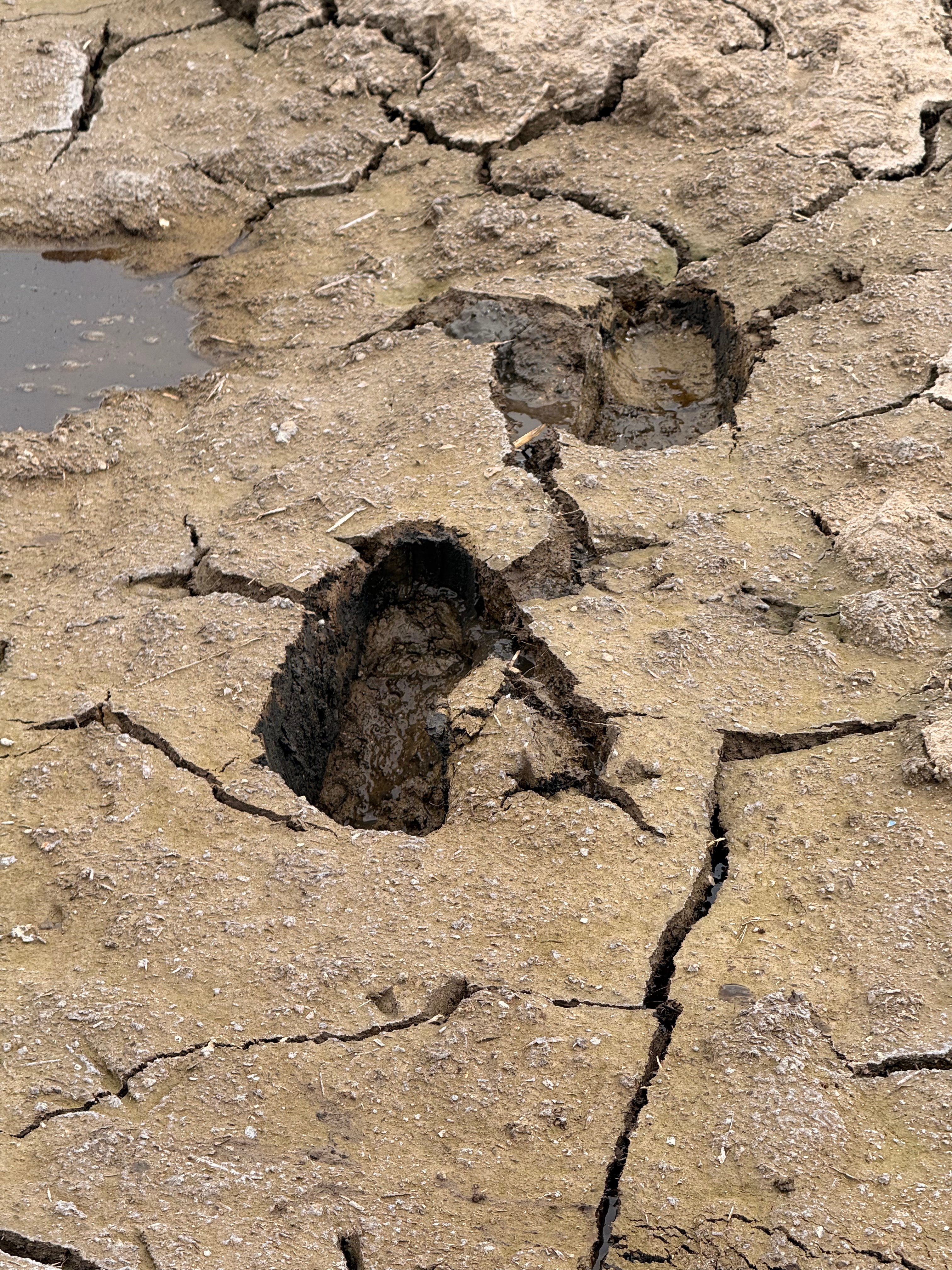
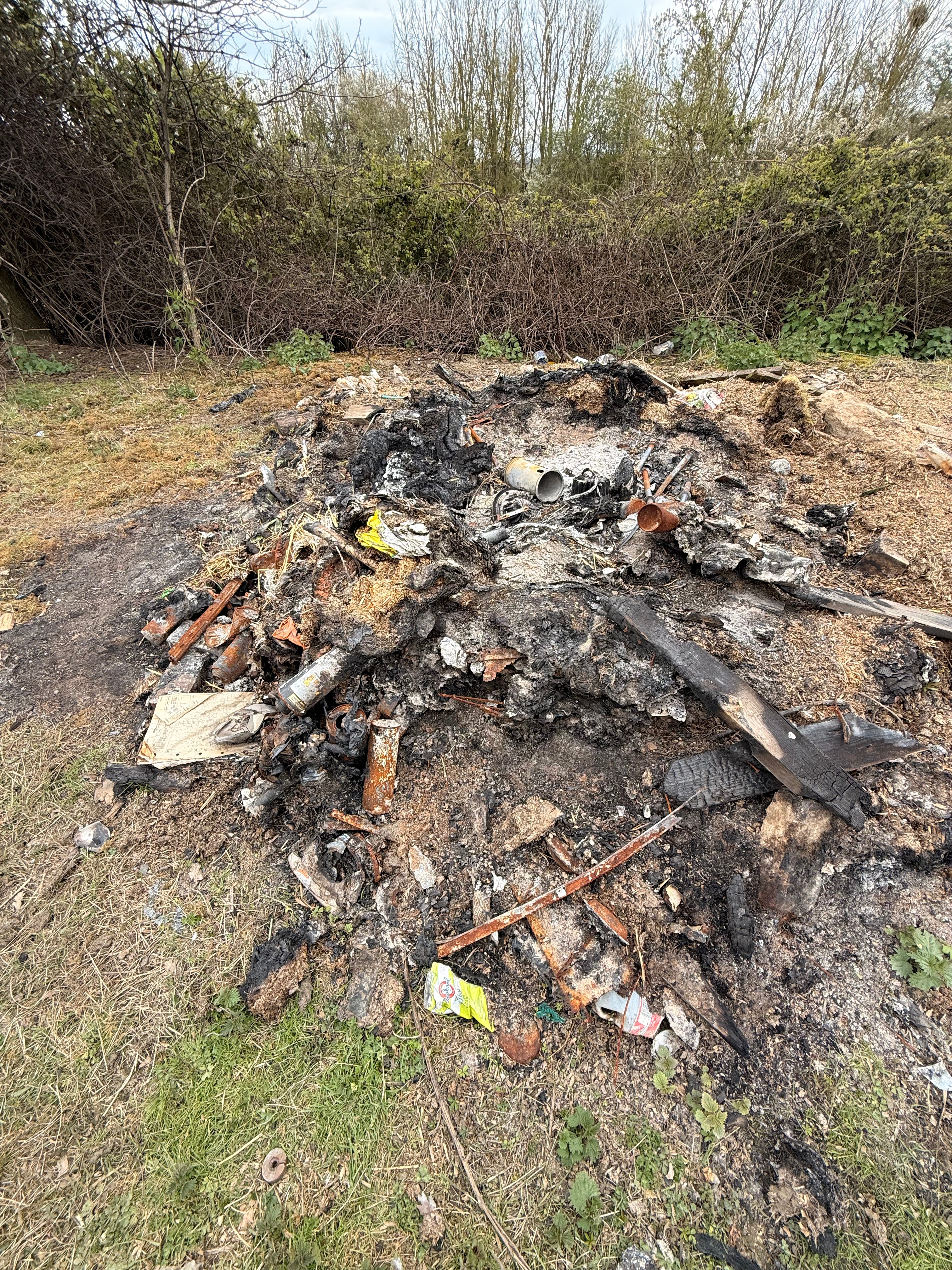
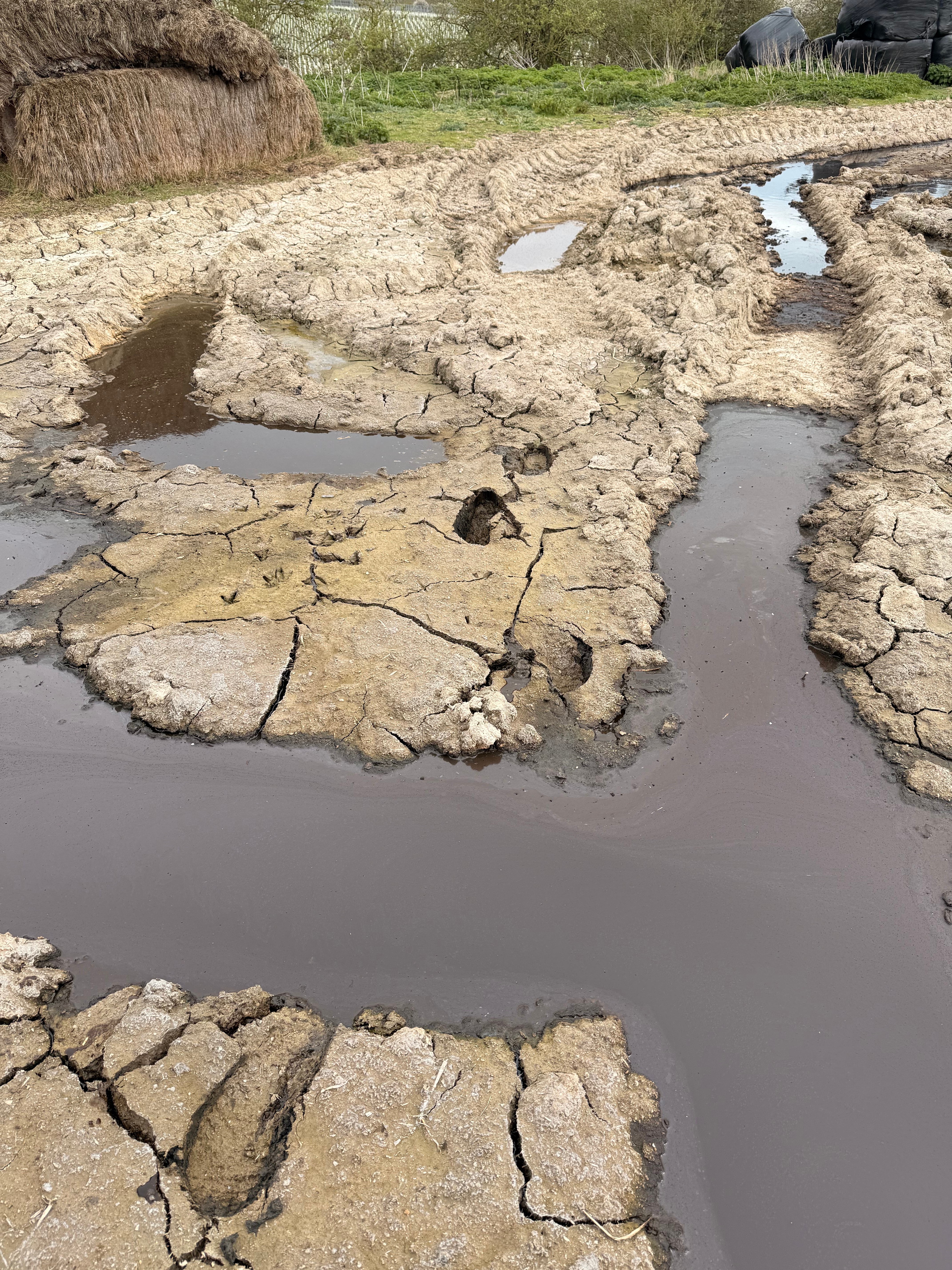
I can see the attraction of connecting with, and utilising, an existing Right of Way (footpath FP 23 261) as the new route does, but this produces its own problems. When FP 23 261 leaves the vineyard field, it crosses Great Hayes Brook at a more difficult spot which involves a step stile, steps down to the brook, a footbridge and more steps up from the brook. This limits the accessibility of the route. The infrastructure here is, again, in poor condition. At the top of the steps the footpath proceeds across an area used by the local farm as a store of manure and a general dump. The route through this is poorly marked. When I walked it, the surface was very uneven and apparently solid earth was actually an unsound crust on fluid runoff from the manure pile into which feet began to sink. The route as shown on the Essex Highway PROW map goes through a body of water.

The step stile, footbridge and steps down to and up from the brook on FP 23 261

The unwelcoming manure swamp and dumping ground at the top of the steps

Cyclists unwelcome ahead

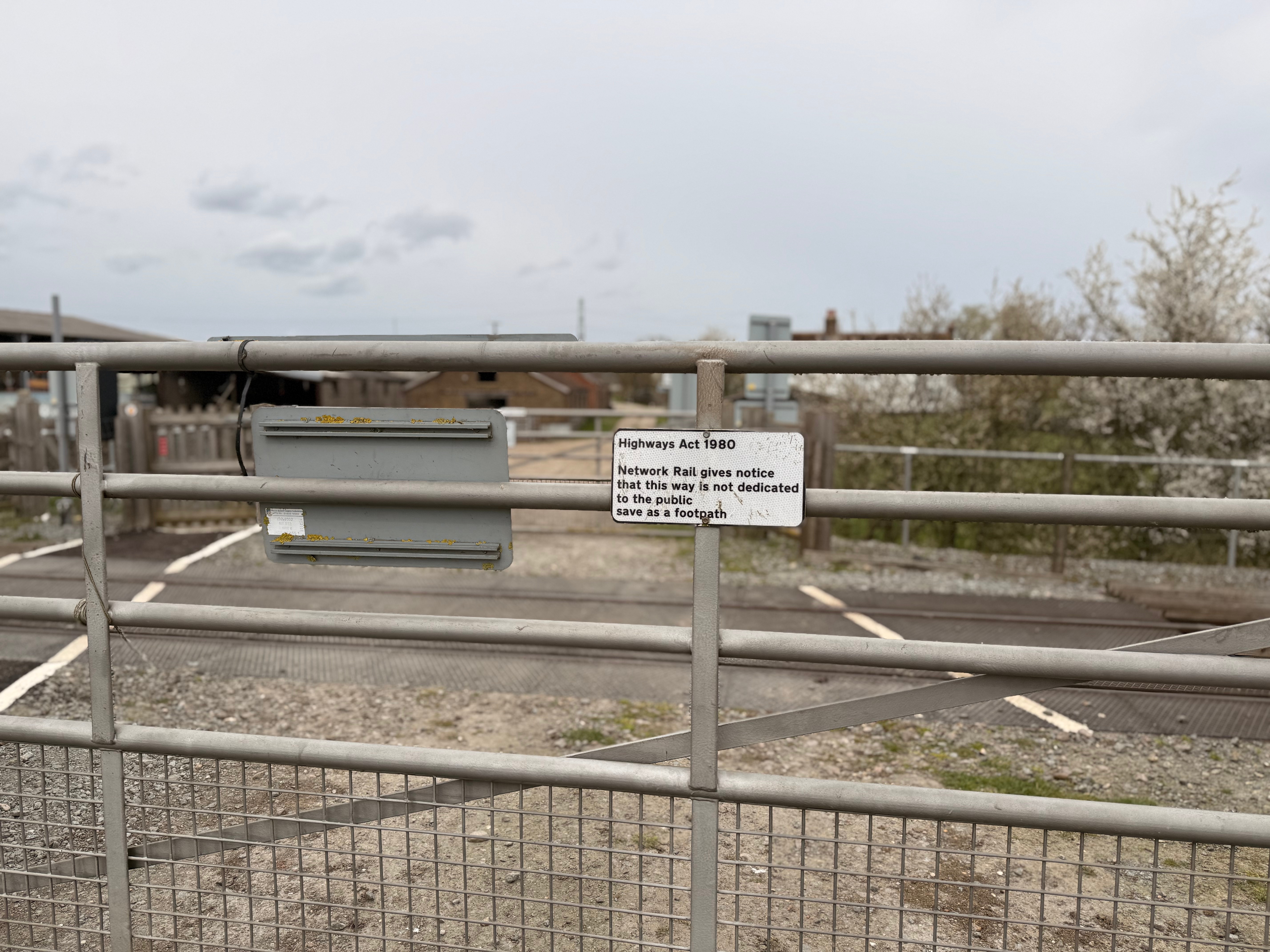
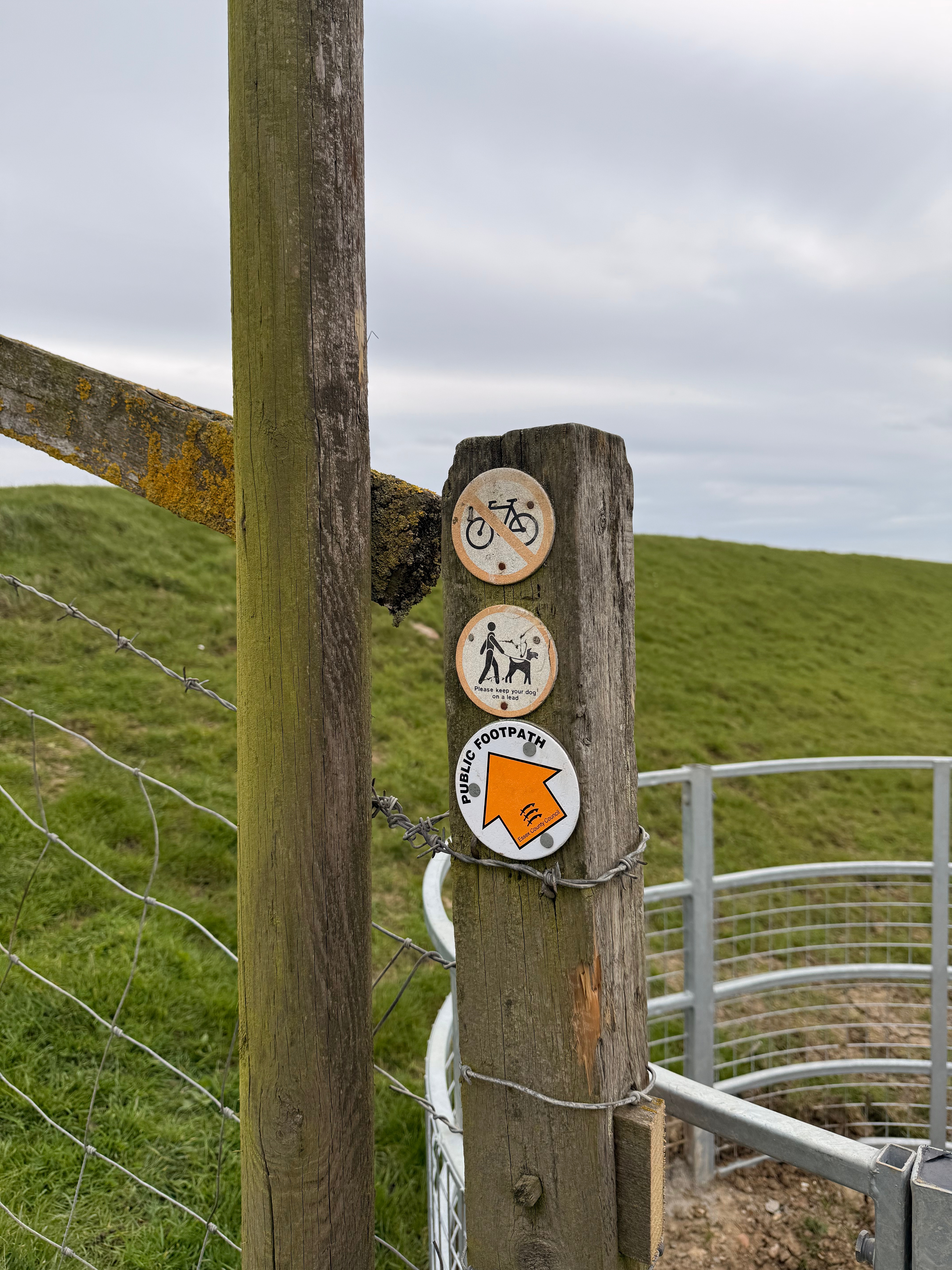
The ongoing route is all on pre-existing rights of way. Little Hayes Chase is a metalled road down to the railway crossing, beyond which a gravel track leads to a kissing gate and a slope up to the sea wall around Stow Creek (neither the gate or the slope are accessible for those using mobility aids). To travel onwards to South Woodham Ferrers, you must walk the sea wall along Stow Creek and Clements Green Creek. This serves the purpose of a coastal path well, keeping you close to the water. The purpose of the KC3ECP diverges here from the needs of the person simply travelling between North Fambridge and South Woodham Ferrers. The KC3ECP route is therefore frustrating if you are walking for utility rather than leisure. An additional westward route aligned seaward of the railway line from the crossing to Saltcoats Park would provide a useful quicker route here.

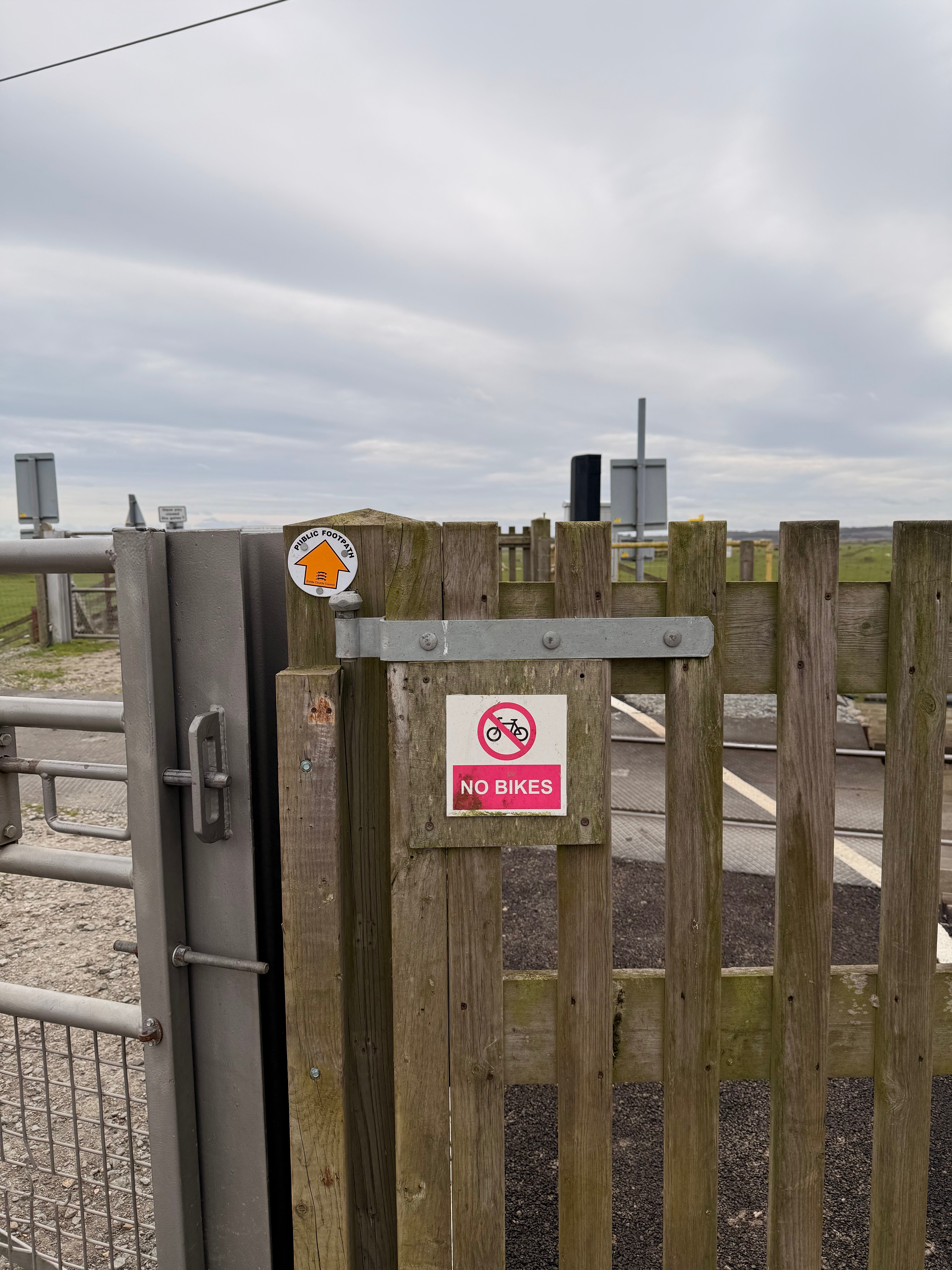
Where Little Hayes Chase reaches the railway crossing there is lots of communication warning off cyclists from going forward. Warnings repeated at the kissing gate by the sea wall. A new westward route from the crossing could take cycle traffic however. A small amount of work improving transfer from the Saltcoats Park entrance to Cutlers Road/Saltcoats Industrial Estate (just 67m away) would afford onward cycle journeys a connection with the Chelmsford City Council promoted cycling route around South Woodham Ferrers, including the fully segregated cycle path into the town centre.

There’s clearly still work for Essex Highways to do on this new section of the Coast Path, including signage, gates, stiles, steps and bridges on the ground, as well as adding the route the Essex PROW map. It’s frustrating that in the week the KC3ECP was announced as fully open, a section approved over two years ago is incomplete because of the recent illness of a contractor. This delay provides an opportunity to think more creatively about the possibilities offered by this route however and to ensure it is accessible to the widest set of users.

Mid-Essex LCWIP proposals (detail from larger map) around the Crouch Valley

The Mid Essex Local Cycling and Walking Infrastructure Plan failed to identify a route connecting the settlements along the north bank of the Crouch Valley. As I’ve noted previously, the Essex Local Cycling and Walking Infrastructure Plan states that rural routes will draw on bridleways, byways and quiet lanes – but we have don’t have much of that locally and a broader approach to identifying routes needs to be made. This will necessarily include upgrading rights and infrastructure on some footpaths to form shared use paths accessible by walkers, wheelers and cyclists. It will also require the establishment of entirely new rights of way, just at the England Coast Path has done here.

There’s more on this to be said in relation to the other new section of the KC3ECP I walked last weekend. The section between South Woodham Ferrers and Battlesbridge, but that will have to wait for the next post.


Way to Go

[This article develops a recent Facebook post with more maps and discussion of cycle route potentials]

I received communication this week that ‘the King Charles III England Coast Path (KC3ECP), and its associated accessible coastal margin is now open around the full Dengie peninsula.’

There were some caveats in the communication, which I copy below

the King Charles III England Coast Path between Wallasea Island and Burnham-on-Crouch opened this morning.

Unfortunately with 2 weeks to go before the commencement date one of the contractors working for Essex County Council, on the north side of the Crouch, fell seriously ill. This has meant that although we continued with the commencement of the access rights, there may be a few pieces of infrastructure to finish off. Essex County Council are managing this as best as they can. It shouldn’t stop the onward journey, but under foot conditions may not be ideal at this point in time.

Now that the stretch is open, and in common with all other open stretched of the National Trail, responsibility for maintenance and related issues lies wholly with Essex County Council. If you ever have any concerns, I’d encourage you to reach out to Essex Council Highways/Rights of Way teams.’

There were 2 useful additions approved locally:

Read more: Way to Go
  • a path alongside the A132 Burnham Road connecting South Woodham Ferrers and Battlesbridge.
  • new permissions over a farm track between North Fambridge and Little Hayes Farm – allowing the route between North Fambridge and South Woodham Ferrers to avoid the long detour up around Stow Maries which involved crossing the B1012.
New KC3ECP route connecting with footpath FP 28 229 to the North, which leads toward South Woodham Ferrers
Continuation of the new KC3ECP path to where it meets footpath FP 27 229 providing access to Battlesbridge
New section of KC3ECP path/PROW on farm tracks connecting Rookery Land North Fambridge at Upper Grooms Farm with Little Hayes Chase and footpath FP 22 261 around Stow Creek.

I hadn’t seen much action on the A132 section last time I passed, so it might not be more than cutting foliage back on the verge. I’ll take a look at both the South Woodham Ferrers and North Fambridge this weekend, but I welcome comment from anyone else too!

UPDATE: I had confirmation from Natural England regarding the A132 section:

‘The major works undertaken along the sections WIB-3-S012 and S016 is the clearance of the vegetation and the creation of a route within the scrub, which I know has happened. There were some bridges and I believe some steps (at the S012 end) and these were being installed by the contractor that has fallen ill.

That said I believe the route is passable. I certainly managed to walk it this time last year in low walking boots and managed to pass without any bridges being in place.

I have previously discussed with colleagues at ECC that just clearing the scrub may not be sufficient and that there may need to be some form of surfacing (not metalled) if as I believe the enclosed nature means the ground lies wet for longer. The newly cleared areas will also encourage more vigorous side growth and spread of the likes of bramble and nettle. I encouraged them to consider seeding the length and then cutting it frequently (at least 4 times a year) to encourage a good grass cover but I don’t think this was undertaken. I hope they keep an eye on the condition of this section. It will not be Natural England’s responsibility to do so.’

Improving the surface of A132 section to make it suitable for cycle traffic could provide part of a useful connector between the SWF/Dengie and the proposed National Cycle Route 135 at Battlesbridge.

If higher rights allowing bicycle use were allocated to footpaths FP 40 298 (772m), FP 23 298 (119 m), FP 28 229 (650m) and a short section of FP 35 298 (connecting FP 40 298 and FP 23 298) then South Woodham Ferrers, and its railway station, would have a safe, segregated, westward route out for cyclists (the footbridge in Woodhasm Fen might also need some adjustment).

Similarly, where the new A132 path meets FP 27 229, some higher rights for bicycles on FP 27 229 (670) and FP 41 229 (654m) would provide access to Maltings Road, Battlesbridge allowing connection to the proposed National Cycle Network route 135 and Battlesbridge railway station at Hawk Hill.

Section of proposed NCN 135 around Battlesbridge

Higher rights on specific footpaths to allow use bicycles, whether by upgrading to bridleways or otherwise, is one thing – but this doesn’t in itself ensure that the route is suitable for cycling. Soem surfacing work may also be necessary to achieve that.

At the Battlesbridge end, I’m not convinced the footpath route described above is ideal. It would be better I think to create a new track, on Dons Farm land, from the bridge – parallel to the railway, before going South on the existing farm track to Maltings Road. Dons Farm belongs, I believe to DJ Fisher Farms.

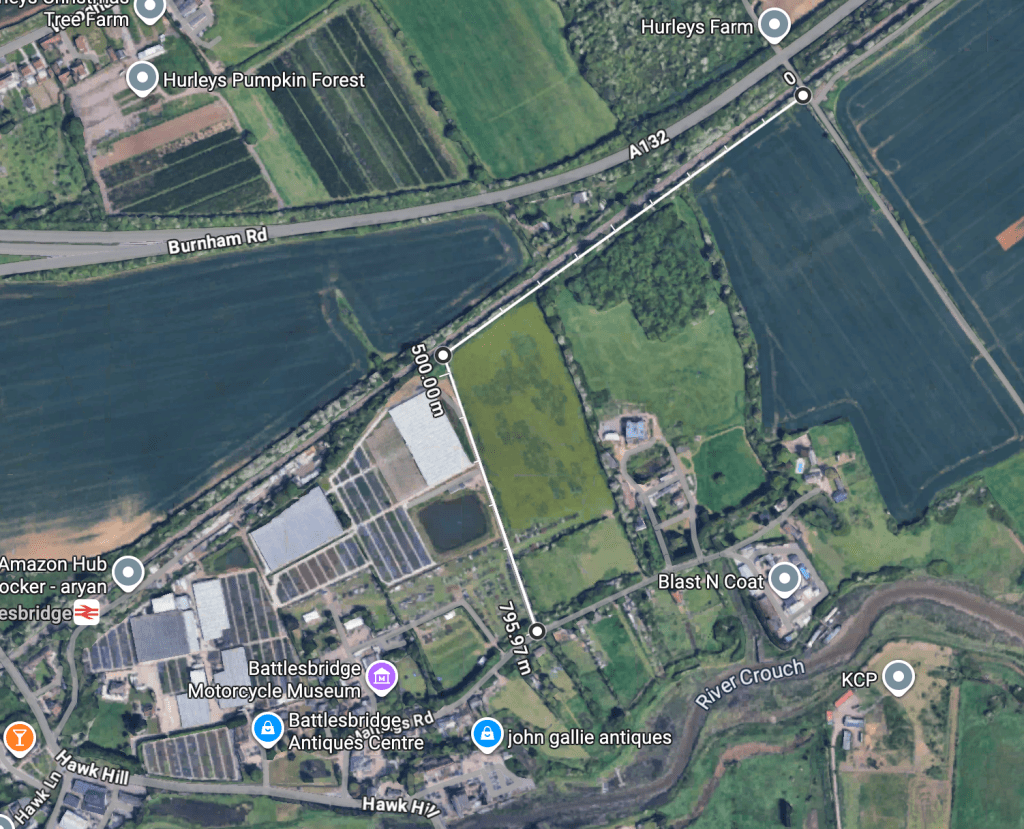
Proposed new route from Bridge (803?) to Maltings Road
Full proposed route South Woodham Ferrers to Battlebridge

Hostile Environment

It’s a Quintuple!

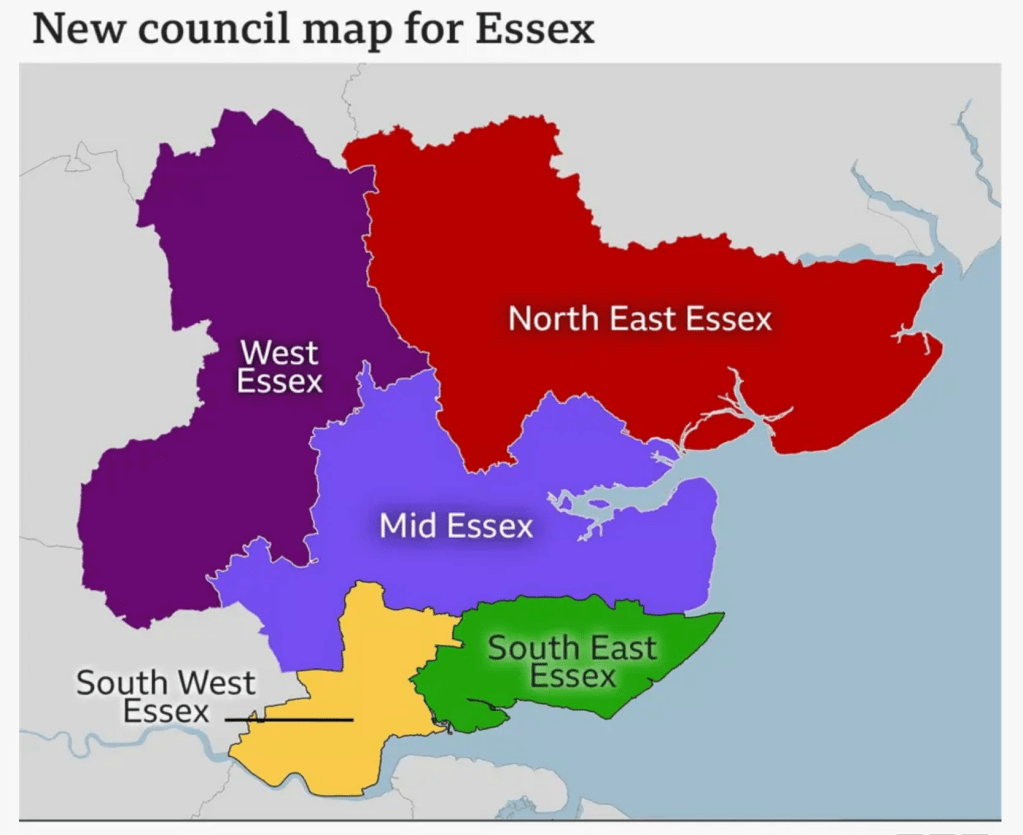
The Gods have spoken. Communities Secretary Steve Reed came down from Mount Westminster this weekend and proclaimed that 15 councils in Essex will be abolished and replaced with five local authorities. I was surprised that UK Gov had not gone with the three unitary authority model proposed by Essex County Council, which seemed to be the only one that fit the government brief.


The five authority model was the one favoured by most existing authorities and does not centralise powers as much as the three model. It is still a centralisation however and decision making will move further away from the people it affects, while the case that the reorganisation will save money is surely weakened by choosing to have five rather than three.

Read more: Hostile Environment


The Dengie will be in the ‘Mid Essex’ unitary – an authority that will stretch from the Greater London boundary to the North Sea coast. It seems likely that the seat of power will be in the City of Chelmsford. It’s the only city in the region, it’s fairly central geographically and it has the buildings and staff of the doomed Essex County Council to draw on, making a transition easier. For similar reasons, I imagine that Chelmsford will also be the seat of the Greater Essex Mayoral Authority when an Essex Mayor is elected in May 2028.


(this all presupposes that a General Election doesn’t happen before local government reorganisation and the Mayoral election and that the next government doesn’t cancel the whole thing as a Starmer folly. Reform UK leader Nigel Farage has said he is “deeply sceptical” about changes to local councils in Essex, “I think that to maintain overall the presence of an identifiable county council is the right way to go” and that Reform UK would try to put a stop to local government reform).

Design and Climate Change section of the Maldon District Local Development Plan


For the Dengie, a move of powers from Maldon to Chelmsford means authority moving from a town it abuts to one that is further away. It’s unclear what value strategies developed at Maldon District level will have when Maldon District is no more – not least the Maldon District Local Development Plan 2014-2029 (reviewed Feb 2025), more recent Neighbourhood Plans across the district that are constrained by the LDP, and the Maldon District Council’s Climate Strategy and Action Plan [pdf].

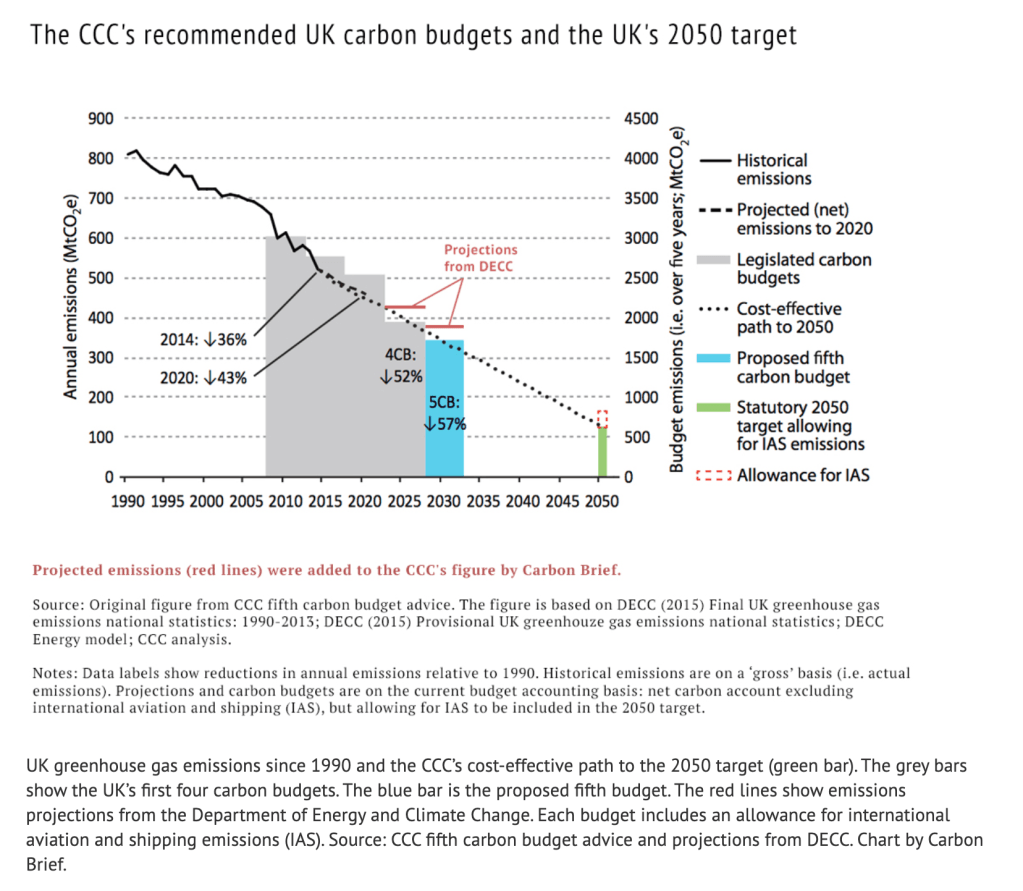
https://www.carbonbrief.org/ccc-cut-uk-emissions-61-by-2030-for-fifth-carbon-budget/


We are entering a crucial period for achieving the UK’s legally binding target of net zero greenhouse gas emissions by 2050 and the interim target of a 58% reduction by the period 2028-2032.

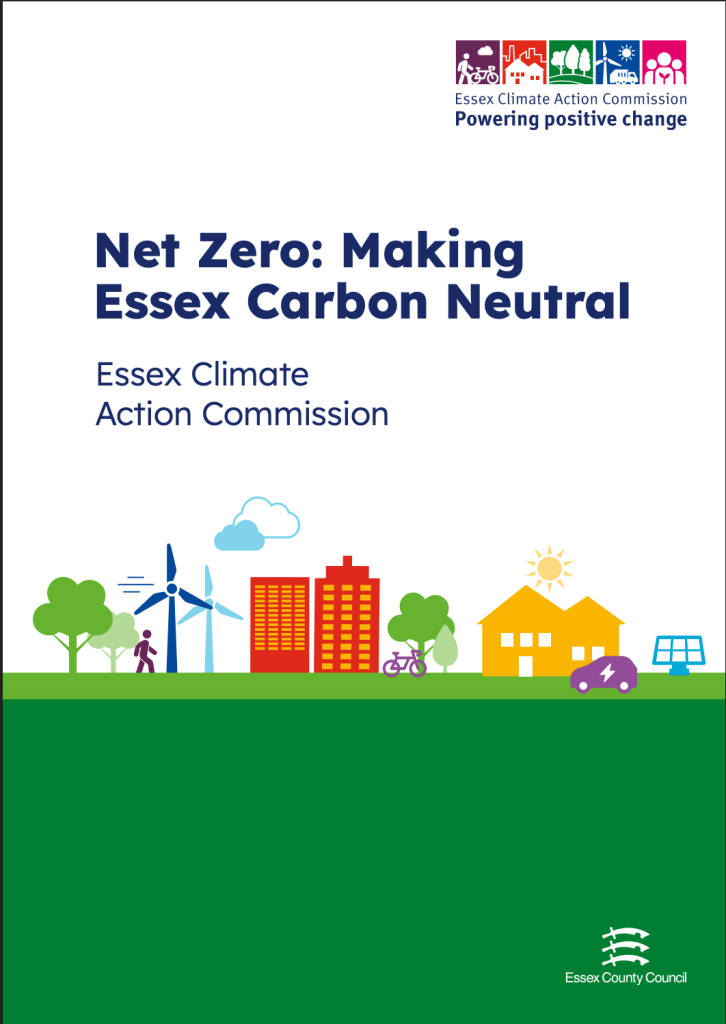
This uncertainty at District level is multiplied at County level. Essex County Council, under a Conservative Party administration, has developed a raft of climate and environment strategies and policies which say a lot of the right things, even though delivery has often been frustratingly slow.

Net Zero: Making Essex Carbon Neutral [pdf]


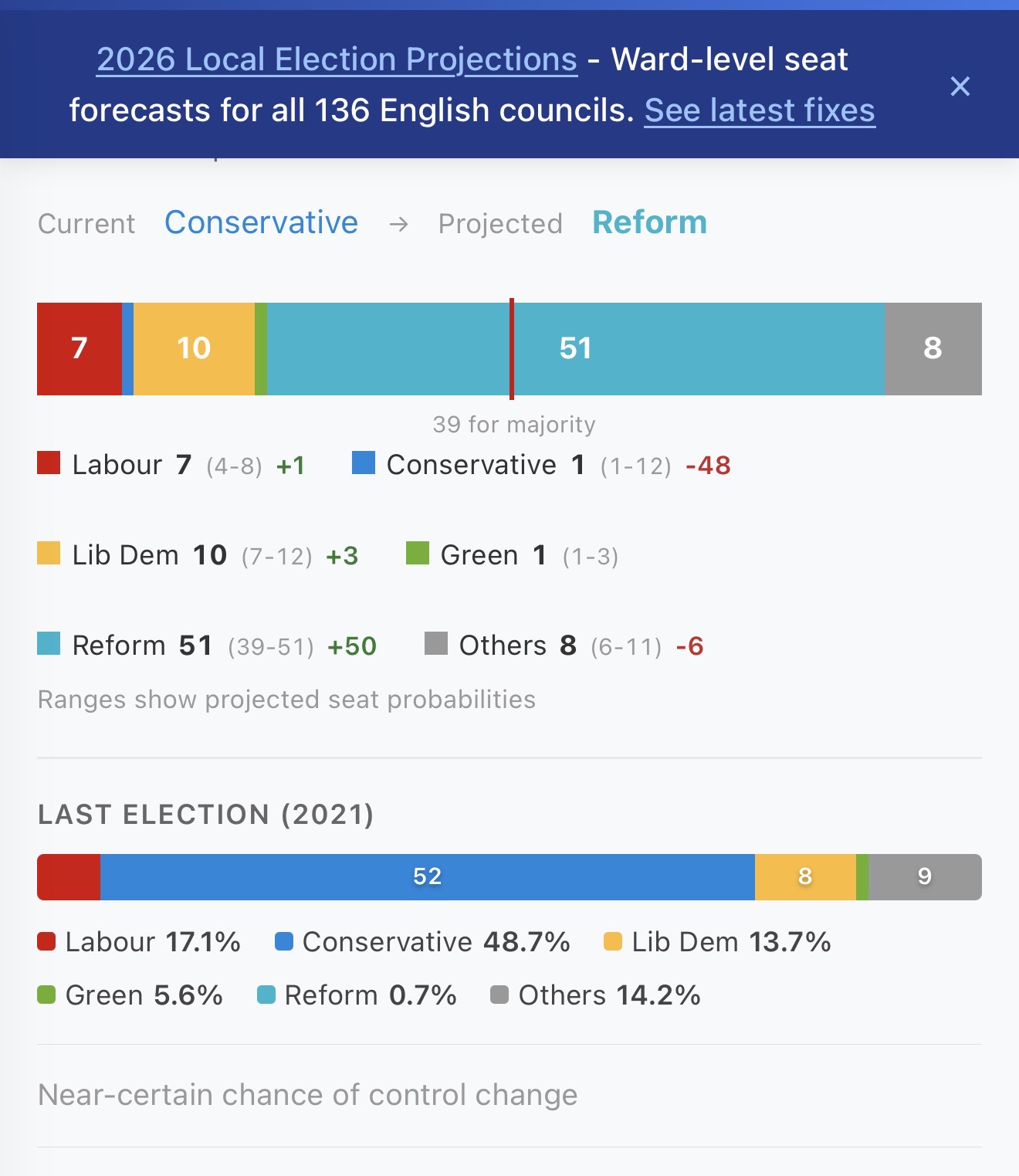
That lack of speed may prove fatal if the political character of the local authorities changes to one less enamoured of net-zero and climate goals. The current polling is therefore sobering.

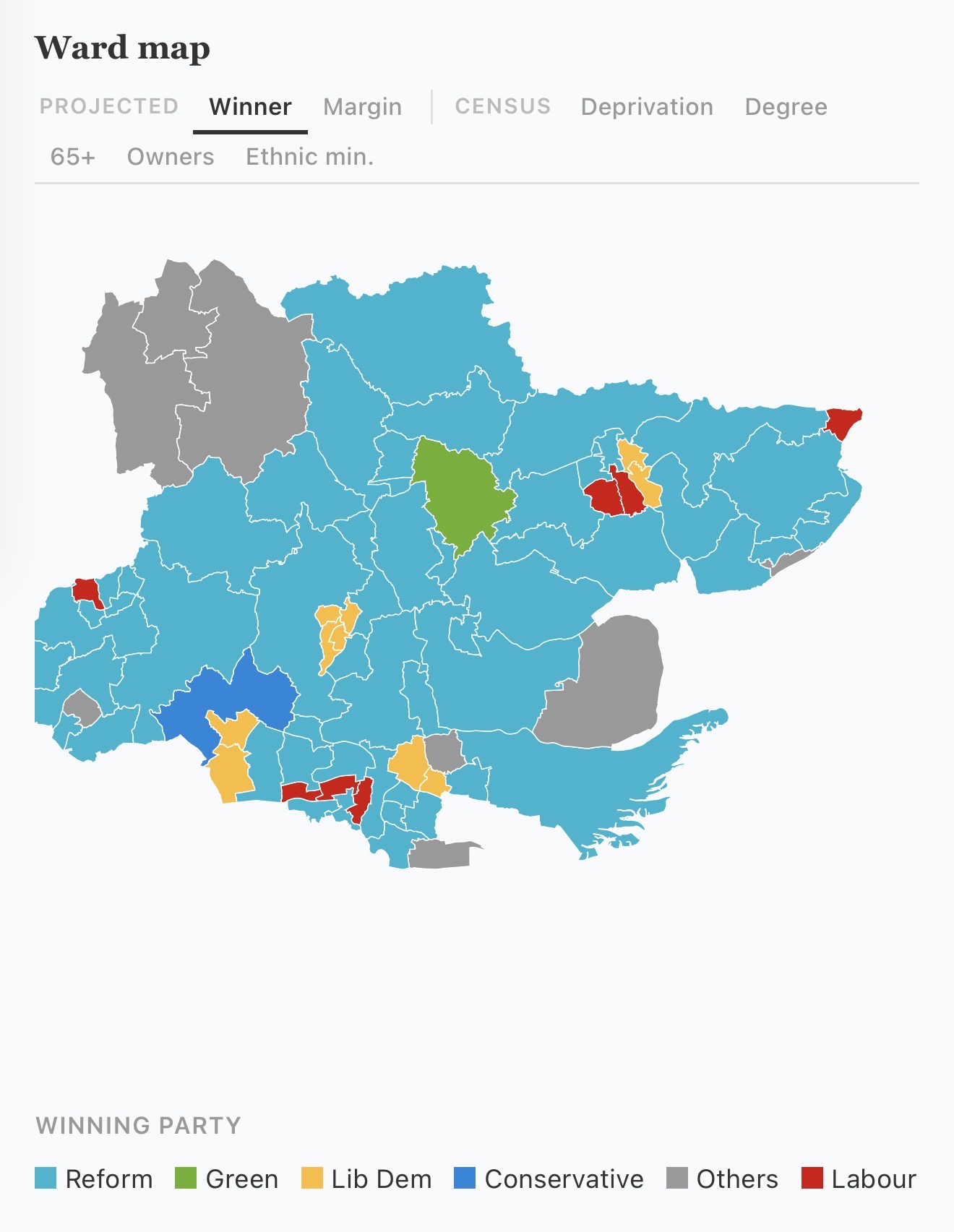
https://www.pollcheck.co.uk/council-projections/essex/#/essex


With a few weeks to go, the Conservatives look set to be wiped out at the May County Council elections. Even the low end of projections for Reform UK would give them majority control in Essex. Conservative Party ‘Climate Czar’ Councillor Peter Schwier is one of those who looks set to lose his seat to Reform UK.

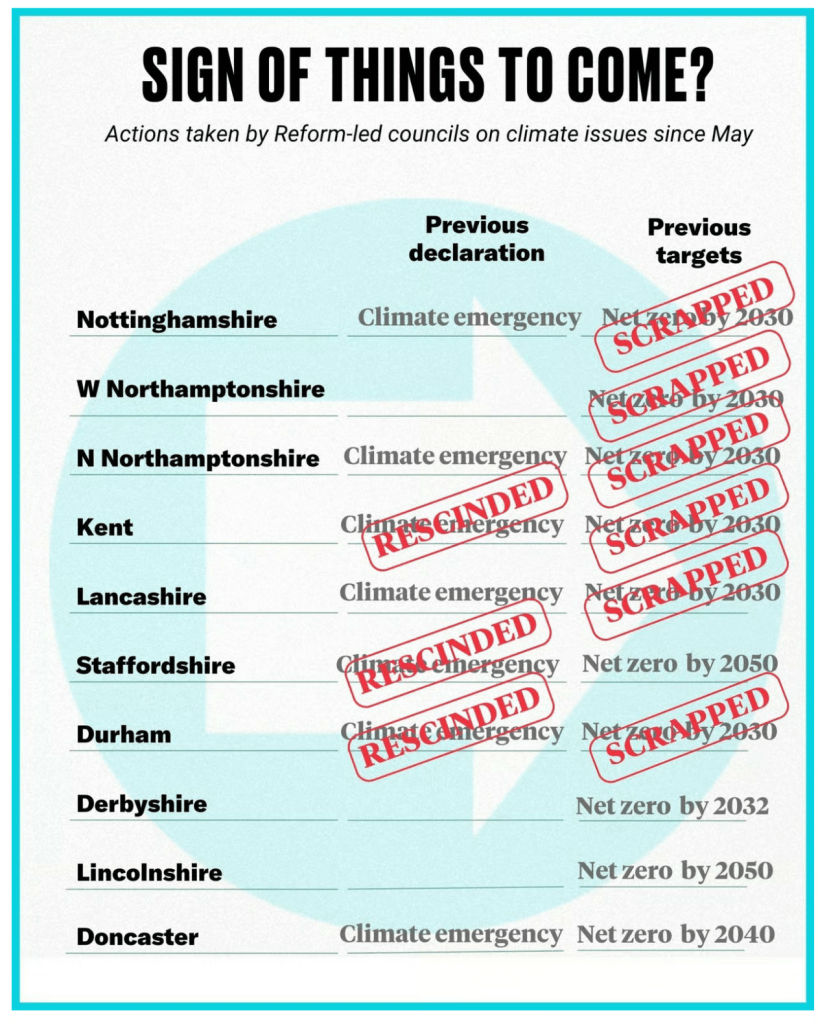
What happened across the Thames at Kent County Council (KCC) when Reform UK took control is a guide as to what to expect: the party initiated sweeping reversals of previous climate commitments.

• Reform UK councillors rescinded KCC’s 2019 Climate Emergency Declaration
• The Reform-led council removed Net Zero/carbon neutrality targets and abandoned efforts to meet those targets previously set by the council.
• Background information provided by the Reform UK group said the council’s 2019 climate emergency declaration had “endorsed the unproven view of anthropogenic (human-induced) climate change” [pdf].
• They cancelled £32 million of renewable energy property modifications.
• They cancelled £7.5 million of electric vehicle transition plans
• They voted down motions aimed at supporting the recovery and growth of wildlife and biodiversity by reducing harmful pesticides – despite environmental and public‑health concerns.
• Reform UK councillor Chris Hespe called anthropogenic global warming a “hoax”.
• Reform UK councillor David Wimble shared a Facebook post highlighting a “Climate Catastrophe Hoax”, where “the climate apocalypse narrative is exaggerated, wrong, and built on fear rather than fact”
• Seven out of ten Reform UK controlled councils have scrapped their climate targets since being elected
• Academic analysis from the Grantham Research Institute (LSE) found that Reform‑run councils “removed content about climate change from strategy documents” after taking control. KCC is explicitly listed among the councils where Reform UK councillors expressed climate‑science denial and participated in these removals [pdf].

Reform’s local councils are bringing climate denial into the mainstream

Strategies and policies are much easier to reverse than already existing actions on the ground. I can’t help but think that much of the last decade was wasted and all the pretty pdfs and consultations produced are now dead in the water. Essex should have taken direct control of buses and integrated public transport ticketing and timetables, planning authorities should have demanded net-zero, low bills, homes with domestic energy generation, rain/grey water recycling and minimum 30% on-site biodiversity net gain, the county should be laced with segregated walk/wheel/cycle paths breaking car dependency and improving health outcomes, money spent on waste incinerators should have been burned creating a circular economy instead, our anchor institutions should have collaborated and built community wealth via local procurement led by the public authorities.

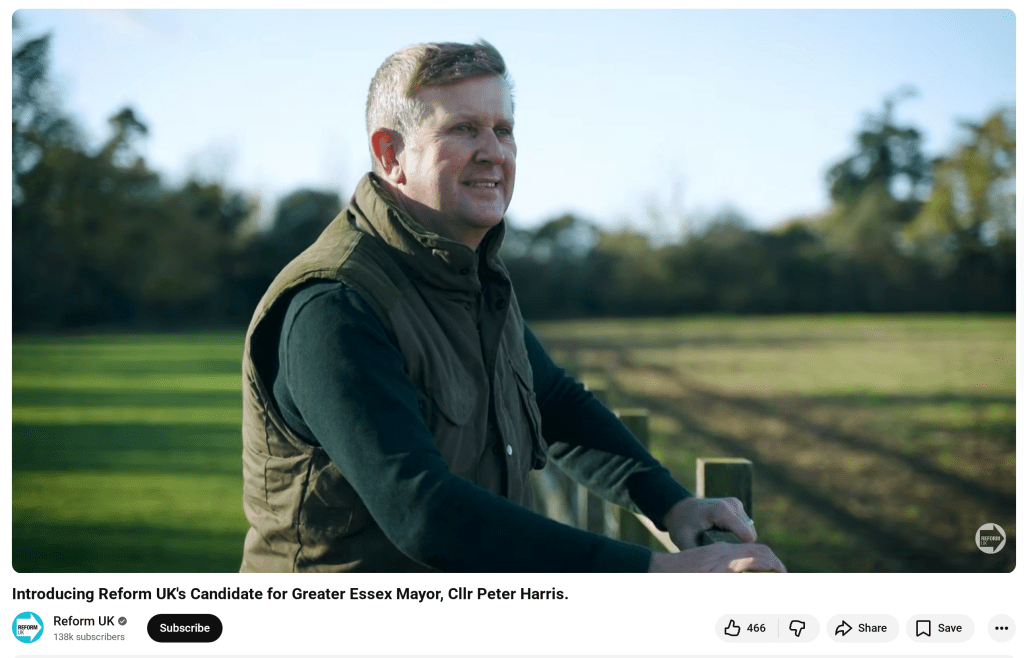
Peter Harris, the Reform UK mayoral candidate for Essex, hasn’t yet made any statements specifically about environmental issues such as climate change, net‑zero, renewable energy, pollution, or biodiversity. He has mentioned ‘protecting our green spaces’ as part of a very general policy agenda, but there’s no detail on what this means in practice.


His promo video has him stood in some fields and his comments there seem to position the ‘green spaces’ protection as being about housing developments rather than nature recovery or habitat protection.

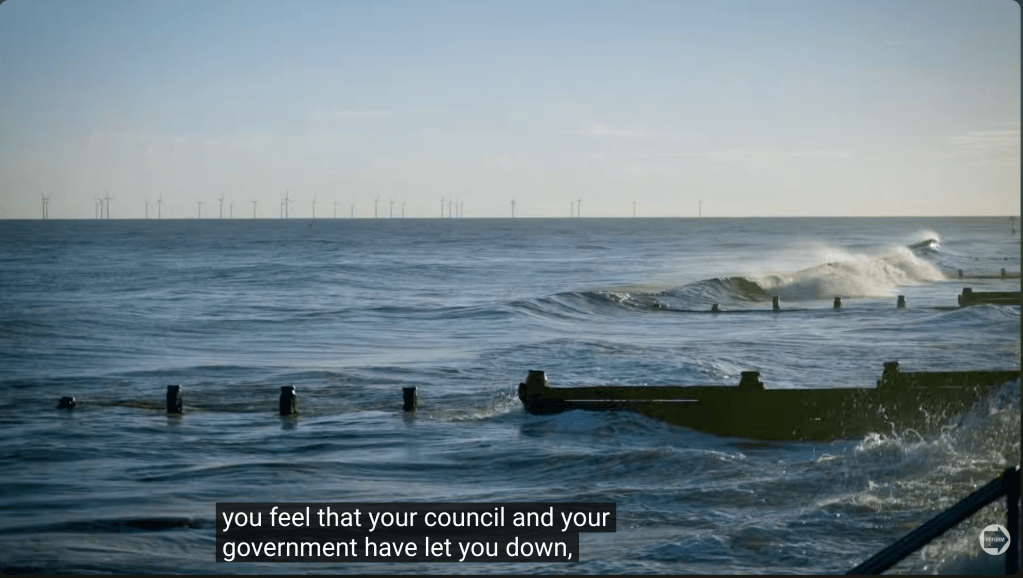
There’s a brief shot of the tide coming in on the Essex coast with the Gunfleet Sands Offshore Wind Farm visible in the distance – but there’s no mention of sea-level rise or renewable energy. Over this image, Harris is talking about the council and the government ‘letting you down’ – is the tide and the wind farm relevant to this, or just B-roll? Hard to tell.


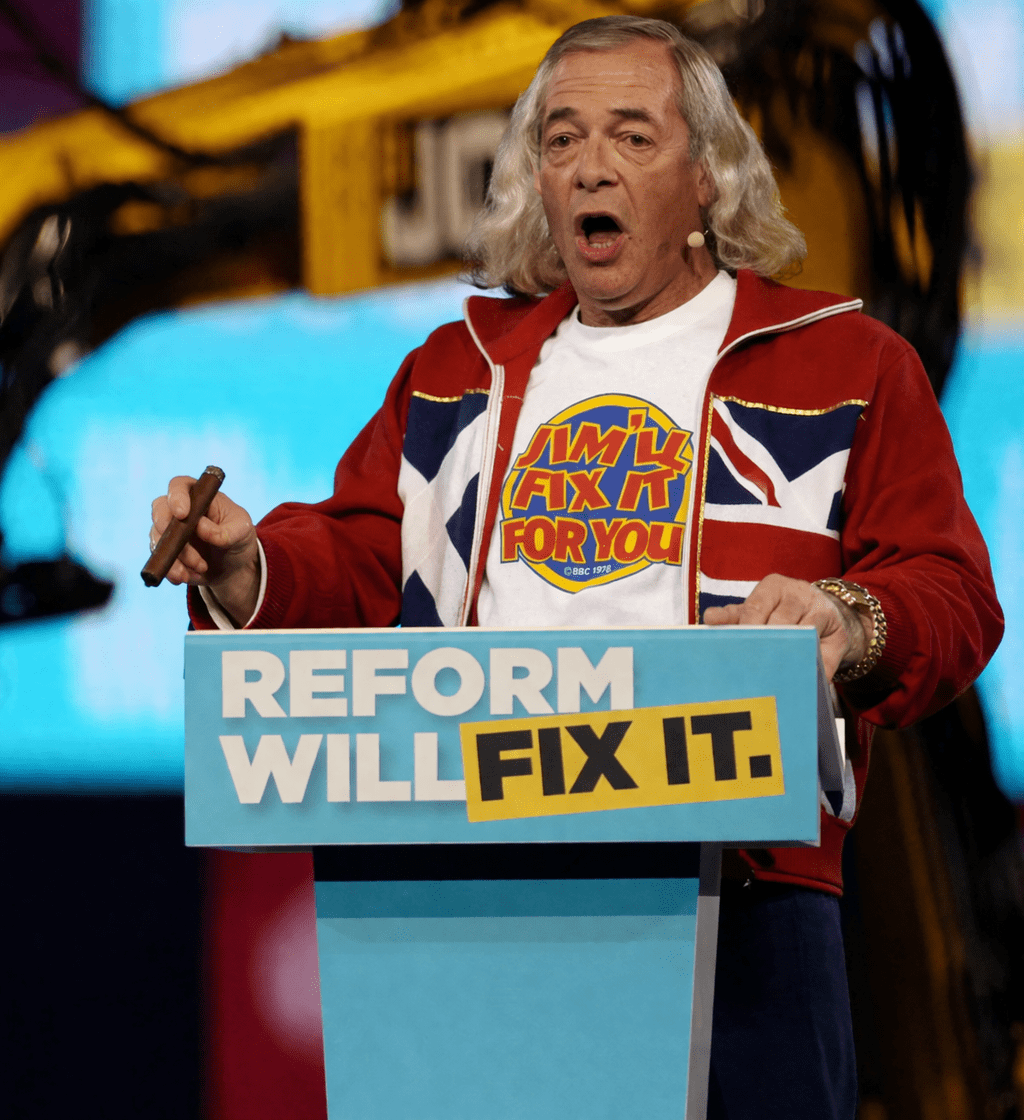
Last week, The Reform UK Local Election Tour, obliviously called ‘Reform will Fix It’, visited the Circus Tavern in Purfleet, Essex. Following some chat with former glamour model Jodie ‘#frippsfarce’ Marsh and Cllr Jaymey ‘bankrupt / ‘unsolicited private parts’ McIvor, and a warm-up from David ‘ONLY Reform UK will scrap the insane Net Zero targets’ Bull, it was on to Zia “If there’s one thing [the UK] is not under threat from, it’s climate change” Yusef, and Nigel “I haven’t got a clue whether climate change is being driven by carbon-dioxide emissions” Farage.

Dr David Bull
Nigel Farage stand-up set at the Circus Tavern

With the Earth’s climate further out of balance than at any time in recorded history, the crash in wildlife populations constituting an extinction event, and human activities increasingly disrupting the natural equilibrium, creating consequences for hundreds and thousands of years, the return of climate change denialism is a bitter pill to swallow.

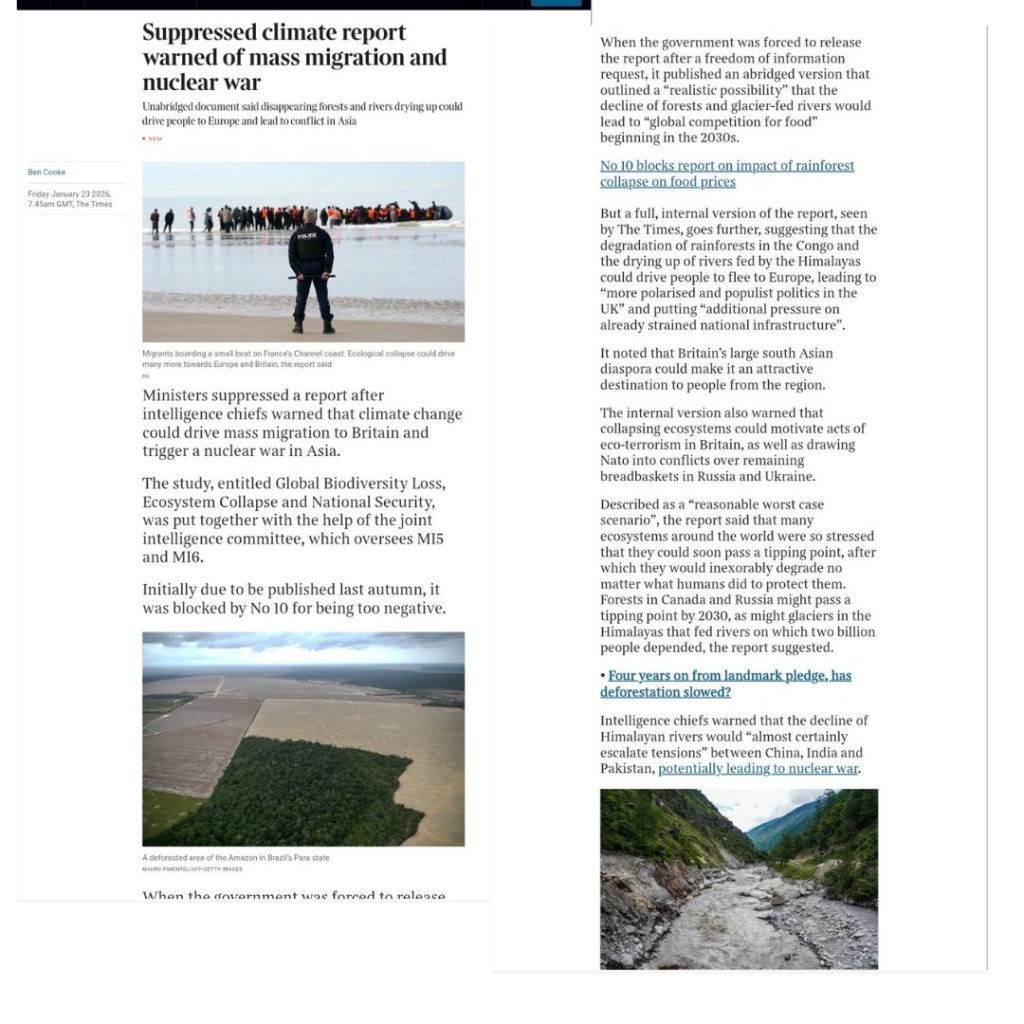
This week The Times reported that it had seen a document called ‘Status of Defra’s critical systems to 2030 and beyond’, commissioned before the 2024 election by civil servants at the Department for Environment, Farming and Rural Affairs (Defra).

Tasked with identifying looming threats to the underpinnings of modern life, its authors in the Defra Futures team, an expert group of civil servants, concluded that not only Britain’s food supply but also its water supply and international trade networks were “almost certain” to be “on a decline and collapse trajectory”, meaning there was “a realistic possibility that by 2030 (increasing to 2050) our food, water and natural ecosystems (etc) are at strategic risk of catastrophic failure”.’

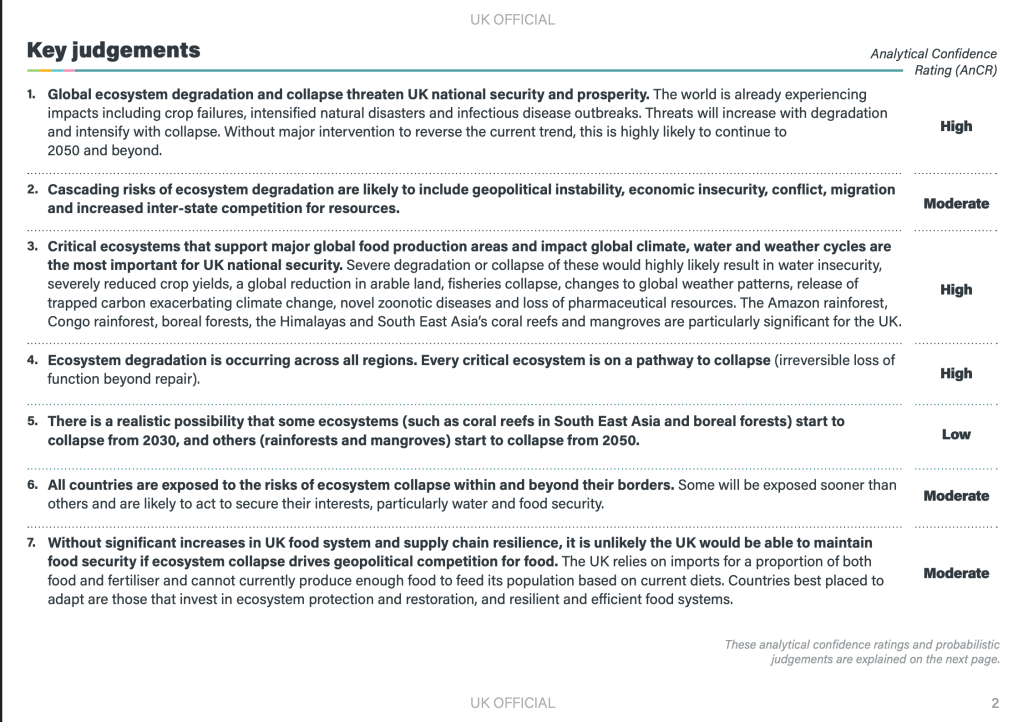
The Government denies a document with this name exists, but a couple of months previously, The Times reported on a different study ‘Global Biodiversity Loss, Ecosystem Collapse and National Security‘ put together by the joint intelligence committee (which oversees MI5 and MI6). Due to be published last Autumn, it was suppressed until an FOI request produced an abridged version.

From the abridged ‘Global Biodiversity Loss, Ecosystem Collapse and National Security’

The Times reports that it has seen the unabridged version which paints an even gloomier picture of how climate change might affect the UK: driving mass migration from parts of the world made uninhabitable, provoking wars and acts of terror, and creating a global competition for food.

It looks like those of us working to address the climate and ecological emergencies are about to encounter a hostile political environment. When I directed my energies into working with a local climate action group (which was encouraged into existence by the local district council), I did so because I saw opportunities for genuine positive change afforded by the commitments and strategies agreed at political levels from the national to the parish. If, and when, those commitments are abandoned, those strategies are shredded, targets are scrapped, and actions to address the climate and ecological emergencies are ditched – the way forward is unclear. These are the conditions that often produce climate despair and depression, a fatalistic surrender to personal consumption and hedonism, or moves towards more confrontational approaches and direct action.


Push Biking

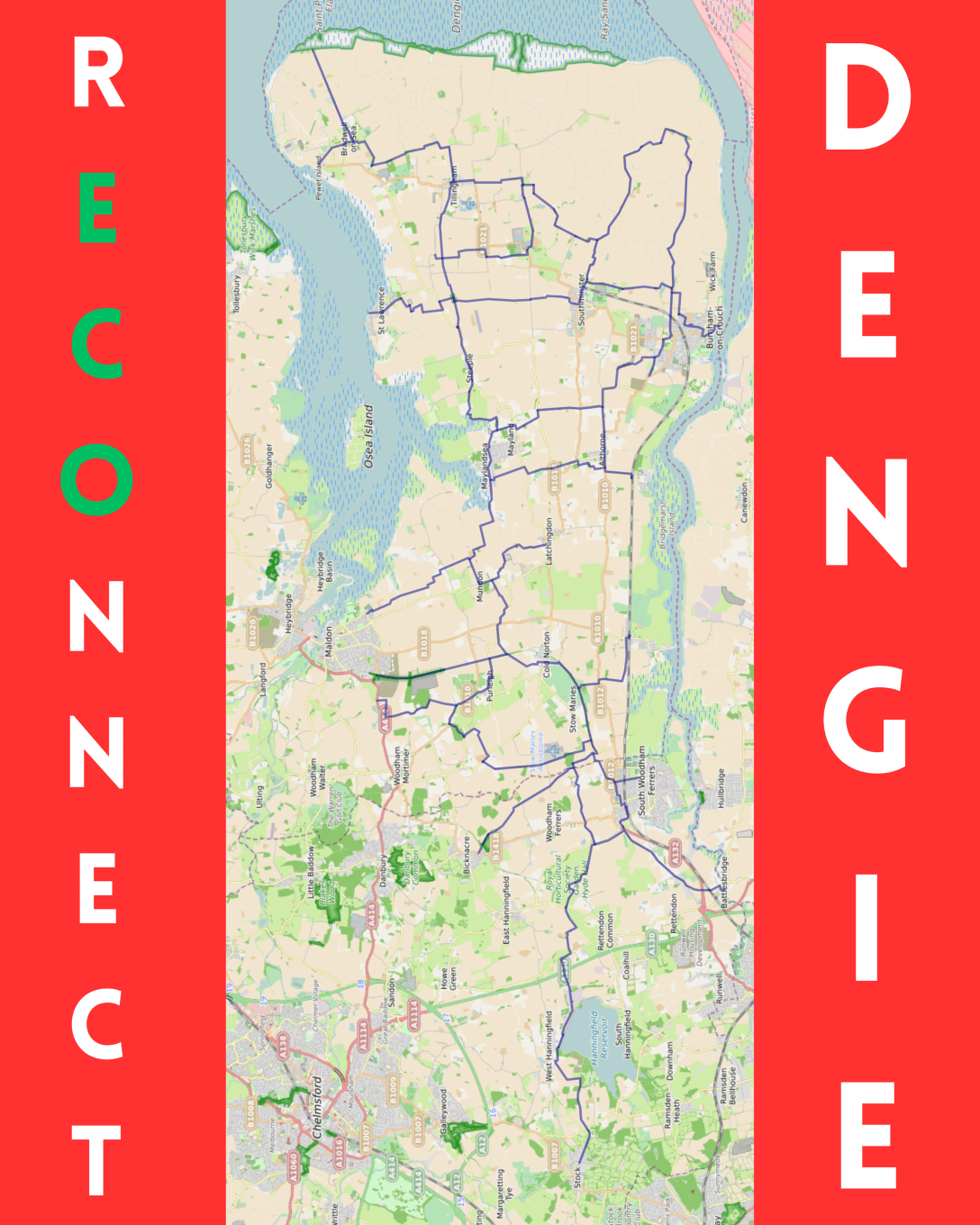
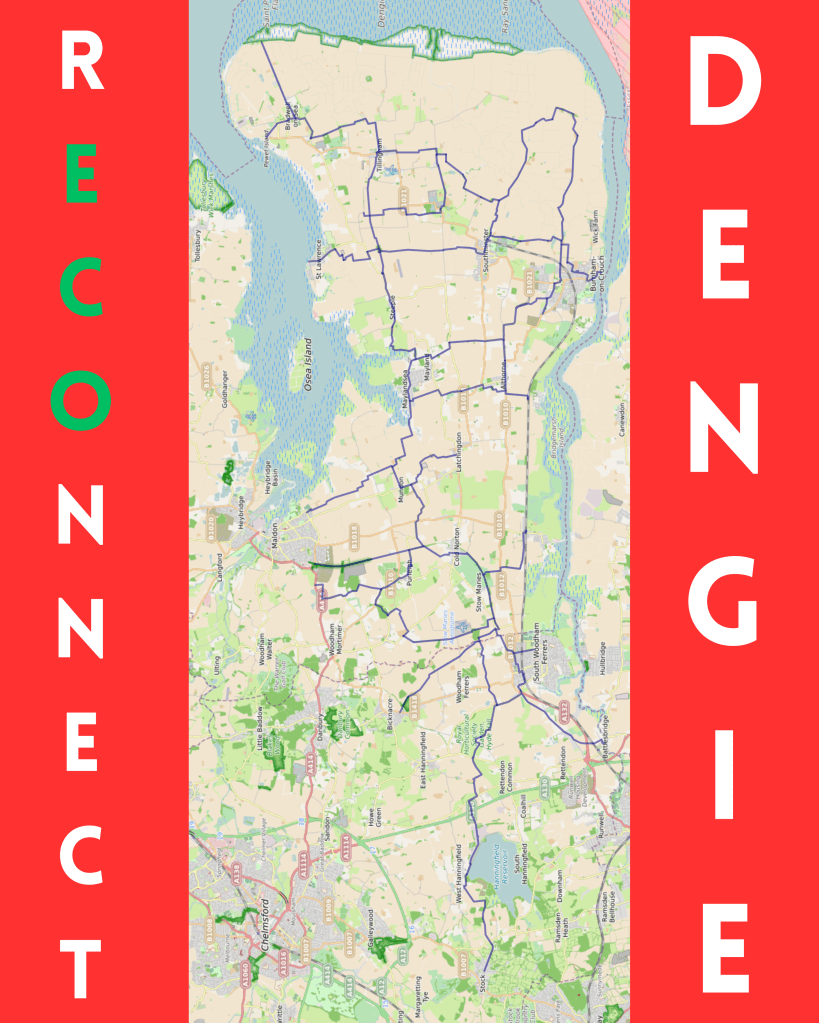
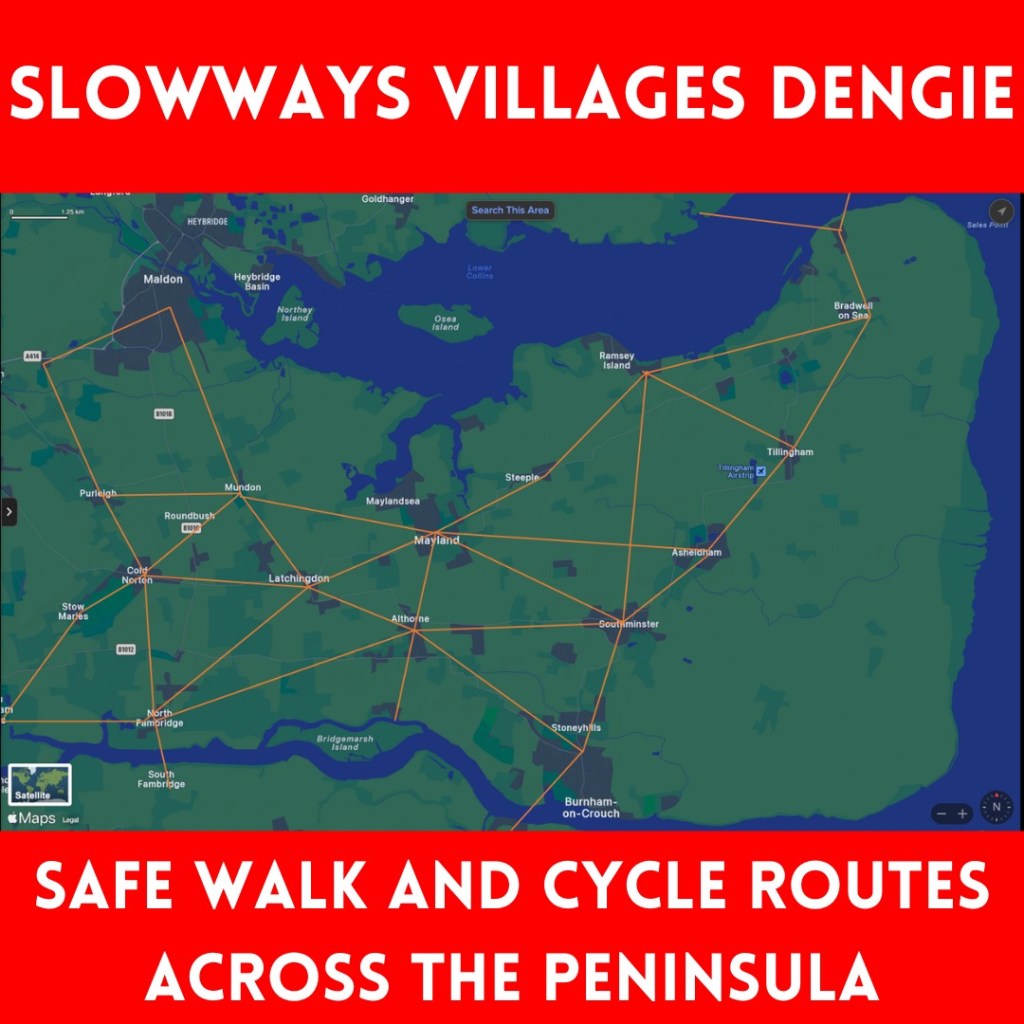
The recent and successive cycle strategy documents from Essex and Maldon have failed to suggest what cycle routes on the Dengie could look like – so, I’ve had a go…

Read more: Push Biking

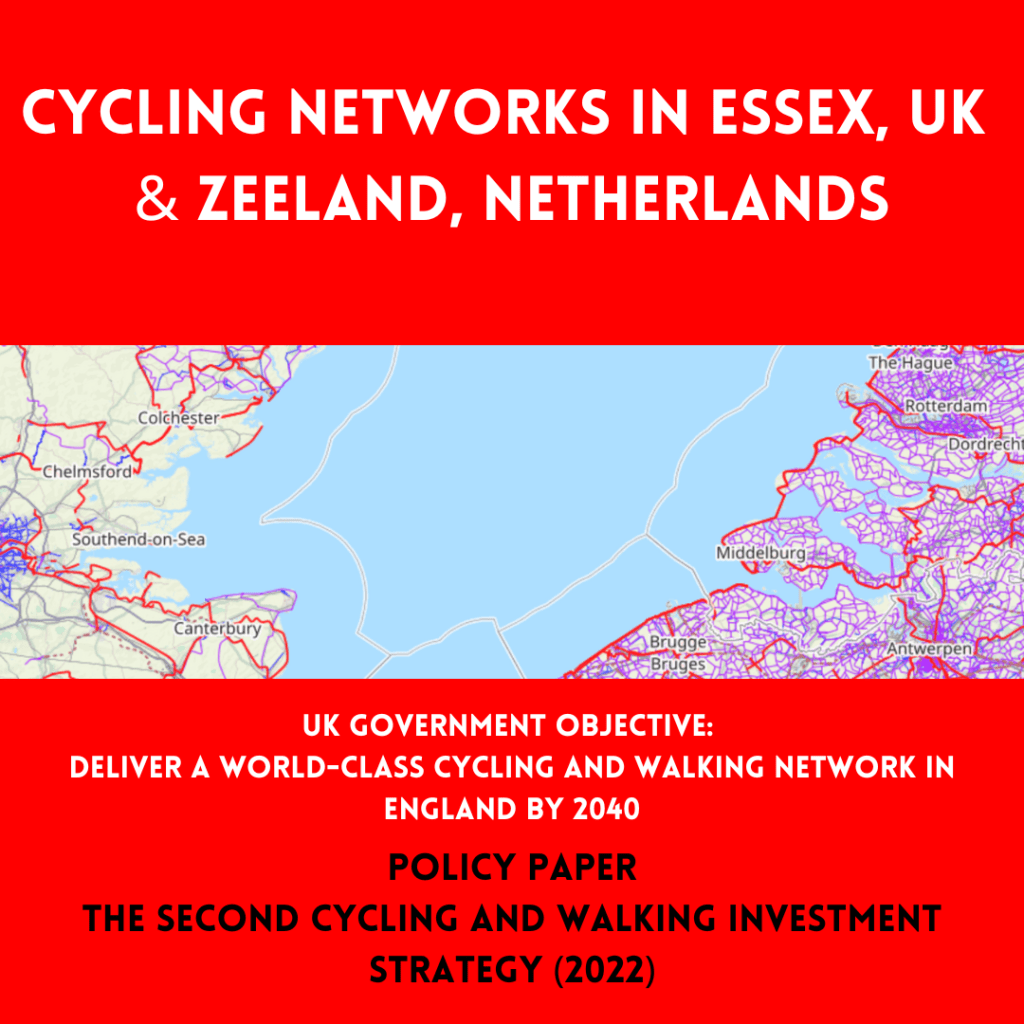
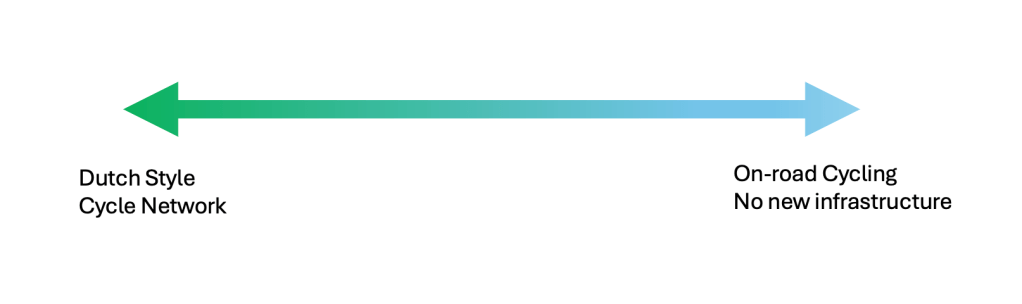
[I should start by stating that the ideal situation would be a Dutch style network, including completely new cycleways taking the most direct line between settlements. This is the only option that would achieve the aim to ‘deliver a world-class cycling and walking network in England by 2040’ expressed in ‘The second cycling and walking investment strategy (CWIS2)’ published under the 2019 to 2022 Johnson Conservative government.

Illustration depicting 'Cohesion' with a map showing an origin and destination marked with a location pin.
The Dutch CROW Design Manual for Bicycle Traffic considers five basic design principles for network design: Cohesion, Directness, Safety, Comfort and Attractiveness

Despite this being the only option that would meet the national objective, if we place it at one end of an excellent-to-useless-spectrum, then the other end is no-change and cyclists left to fend for themselves on the existing road network. (A bit of signage and some lines painted on the road would be barely better.)

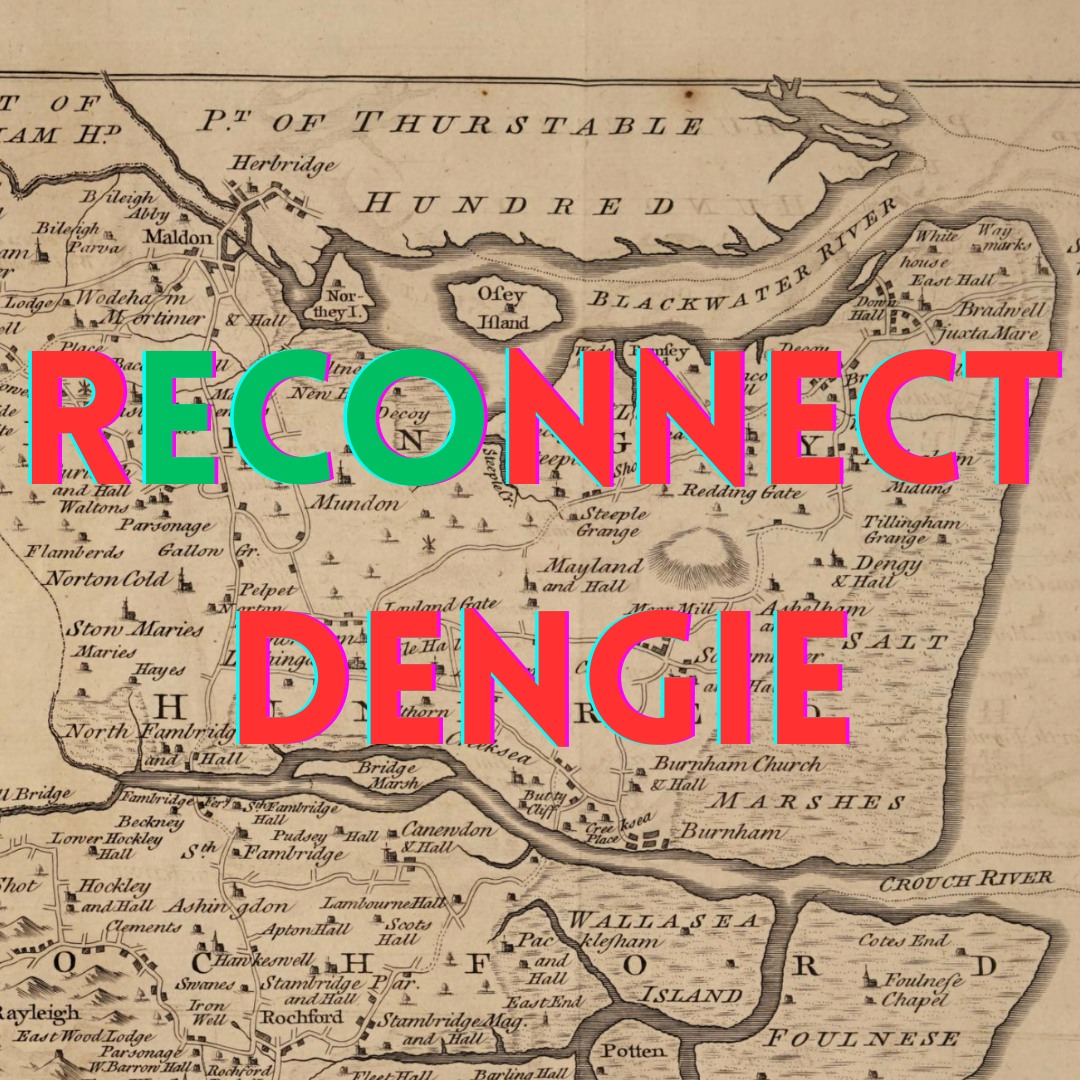
I’ve started with the rECOnnect Dengie aim that every settlement on the peninsula should be connected with a safe active travel route. Railway station and ferry routes should be connected to the network.

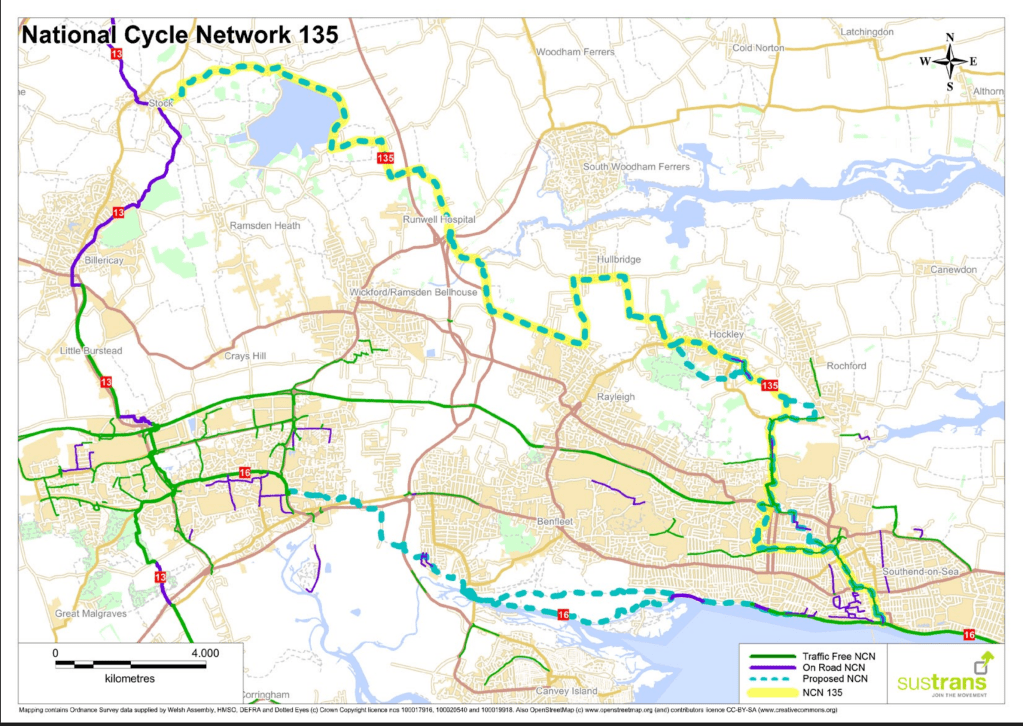
I’ve also looked for how Dengie routes could be connected both to the urban cycle networks in Maldon town and South Woodham Ferrers, and to the National Cycle Network (with connections to NCN 1 at Maldon, NCN 13 at Stock, and the proposed NCN 135 [pdf] at Battlesbridge.

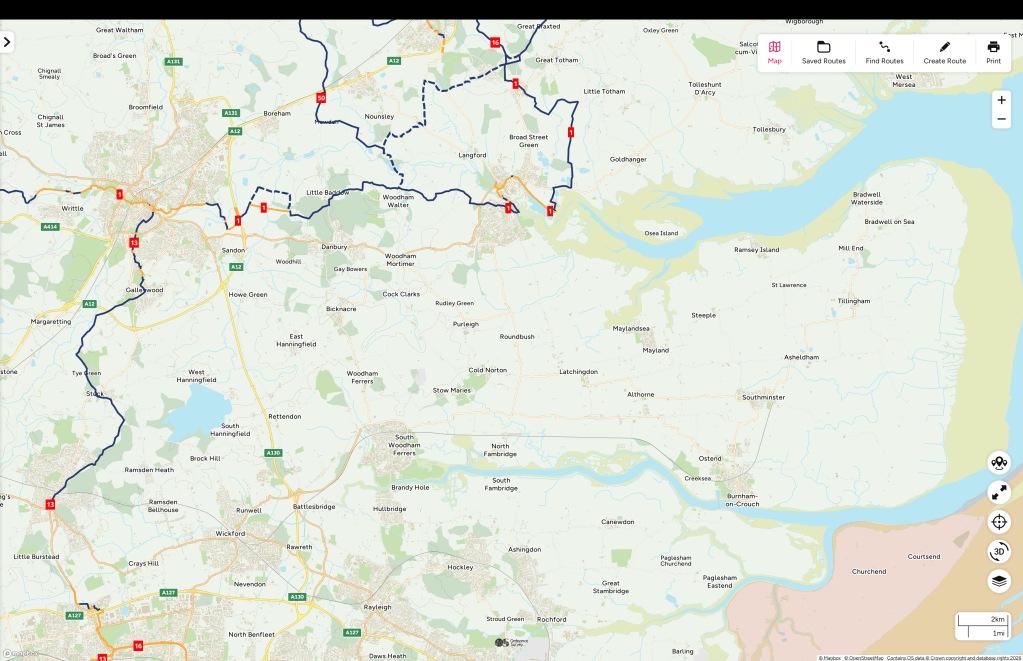
Existing National Cycle Network routes
Proposed National Cycle Network route |(NCN 135]

Following the Essex Local Cycling and Walking Infrastructure Plan statement that rural routes will draw on bridleways, byways and quiet lanes I’ve tried to follow that as best I could to meet our aim.

I began with using the few bridleways and byways we have, but we don’t have many of them.

We have a better footpath network, and footpaths can be awarded ‘higher rights’ (e.g. use by bicycles) so I’ve tried to fill gaps with them but this still leaves a lot missing.

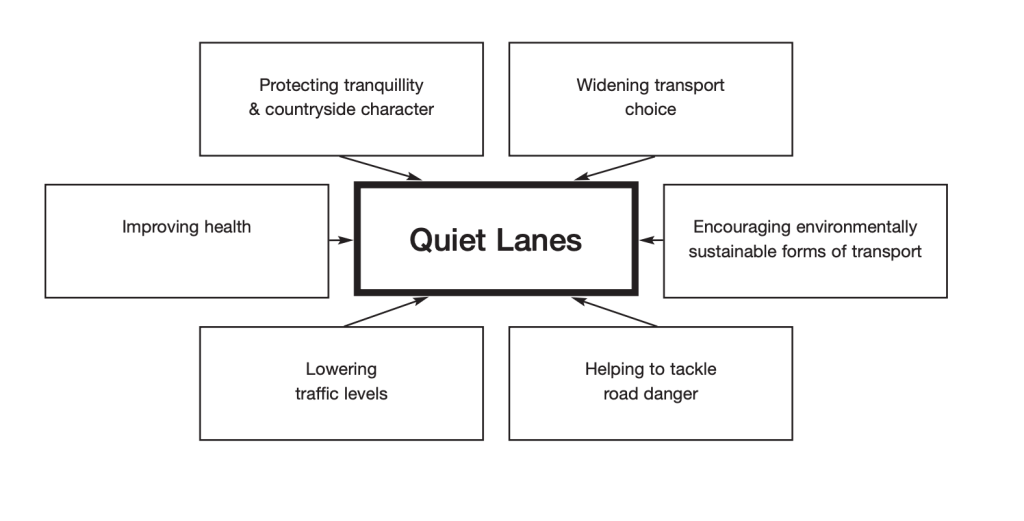
Maldon District currently has no roads designated with Quiet Lane status but I then proceeded to use roads which I think would be appropriate for such a status (avoiding the ‘priority’ PR1 and PR2 roads). Quiet Lane status should being slower speed limits and traffic calming infrastructure.

This still doesn’t provide a network that meets the objective of connecting every settlement, so I’ve then proposed sections over land that currently has no public rights of way (PROW). This will always be controversial and argued over – but cannot be avoided. Here I have prioritised old railway alignments, solar/wind farm access roads and existing farm tracks.

This still leaves some things unaddressed – Latchingdon, for example, is hard to link into a network using existing PROW and avoiding ‘priority roads’; Similarly, connecting North Fambridge and Althorne, other than by the indirect seawall route – bolder plans are necessary here.

The map in the first image is purposely large-scale to avoid instant arguments over routes but I’m happy to share more detailed mapping with anyone who wants to get involved with planning and proposing a network. More local knowledge would certainly improve the routing.

Who wants to meet up and work it out?

Poop-Poop

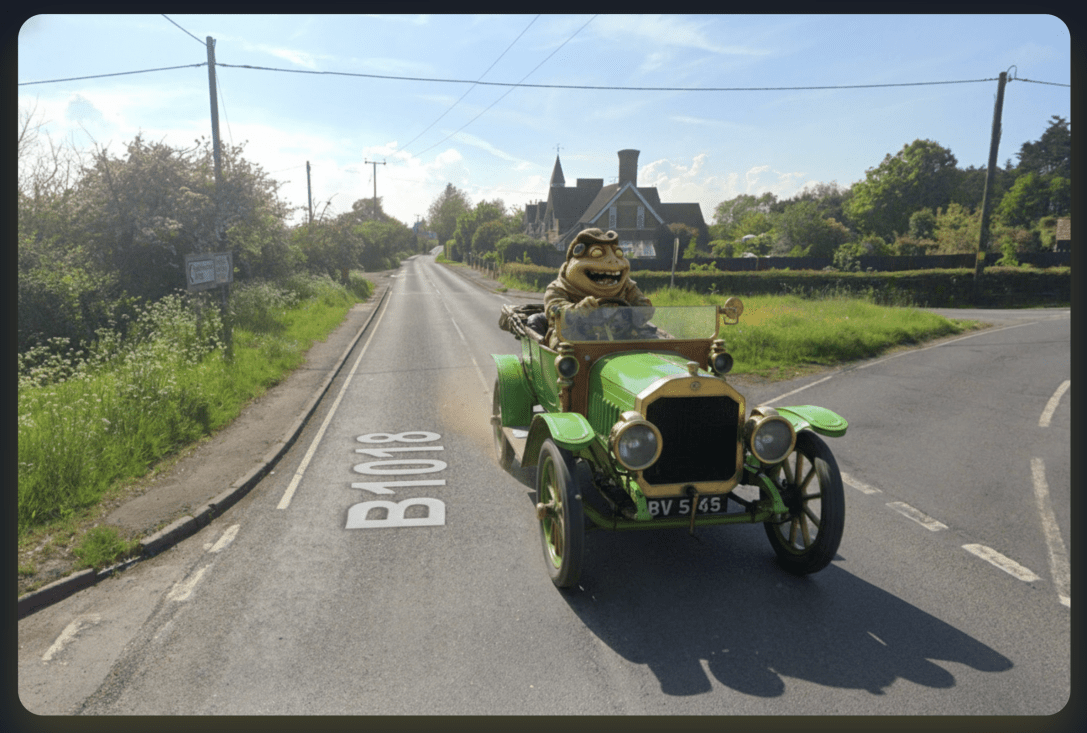
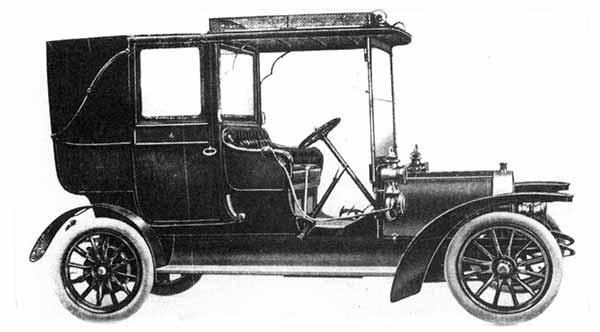
Mr Toad drives his vintage automobile down Southminster Road

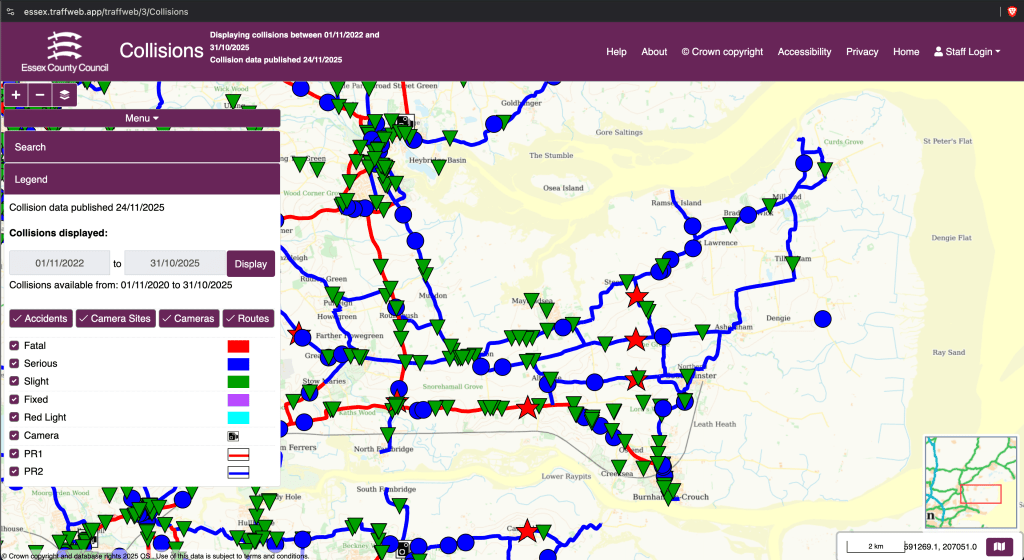
Barely a week goes by now without a collision on the Dengie roads. A couple of months ago this sadly included two fatalities. There’s clearly a problem with drunk and drug driving, but this appears to be a factor in only a minority of cases and doesn’t sufficiently explain the frequency of dangerous driving incidents. While excess speed is likely a factor, that doesn’t necessarily mean speeding —the recent Department of Transport study Road safety factors: initial analysis (30 May 2024) found that only 19% of fatal road collisions are recorded as a driver exceeding the speed limit. A fact which caused Sam Wakeling of campaign group Living Streets to ask: ‘Does that suggest that a whole lot of deadly speed is accepted within the legal limit? And that our speed limits are not set at safe levels?

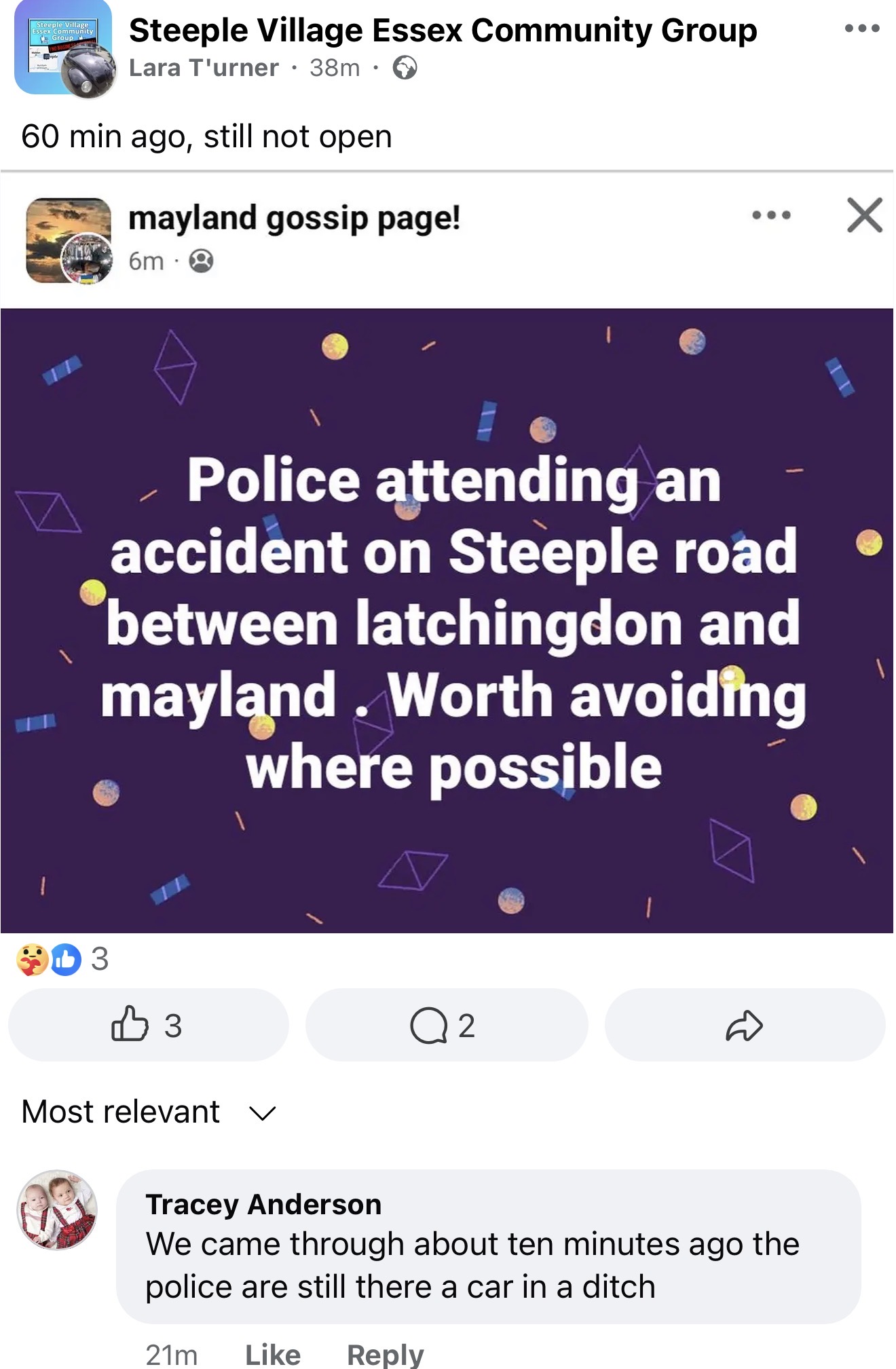
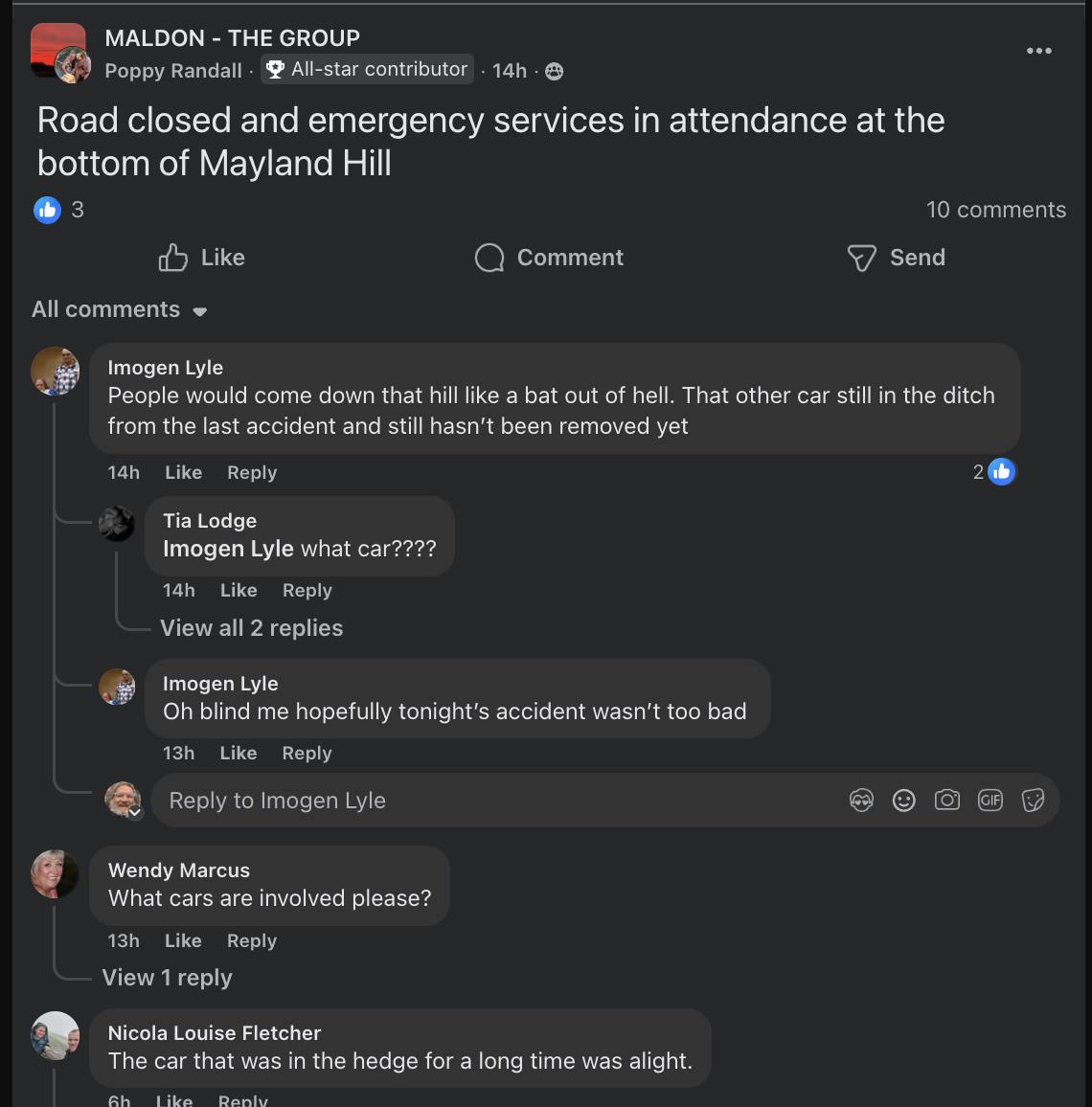
Yesterday saw another collision on Mayland Hill. The B1018 (Southminster Road) around the Mayland Hill/Dairy Farm Road junction is proving to be an accident hotspot. The default ‘national speed limit applies’ is clearly not working for the Dengie’s roads. This is just one location where speed limits need to be reduced with traffic calming infrastructure to enforce slower speeds.

Mayland Hill and Dairy Farm Road are good candidates for ‘Quiet Lane’ status – and to be made priority routes for walkers/wheelers/cyclists. Measures need to be implemented to avoid their use as rat runs. Unless and until, safe segregated direct routes for walkers, wheelers and cyclists are created (connecting every settlement on the Dengie) the carriageway network must be managed to meet the needs and security of all road users. All the tools in the arsenal must be applied.

While it is the drivers of automobiles that hold the responsibility for the increasing jeopardy on our road network, they sadly remain the privileged users of that network.

It makes one bound to ask: when was the first appearance of a motor car on the Dengie?

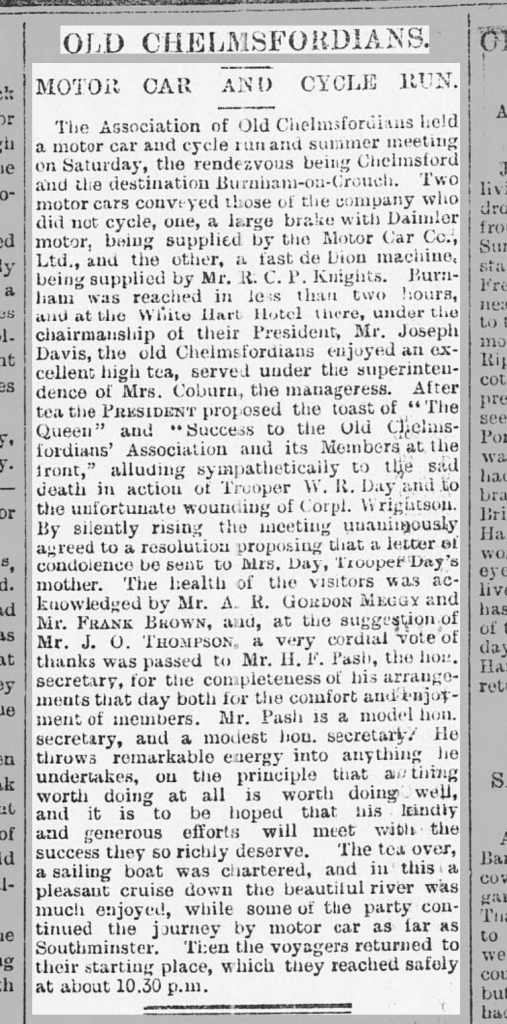
Was it this leisure run in the June of 1900, the first Summer of the Twentieth Century?

The Essex County Chronicle (Friday 29 June 1900), p.3


Apparently, Edmund Ernest Bentall of the Maldon agricultural equipment manufacturing family purchased a twin cylinder Georges Richard car in 1900 and become the first motorist in the district (Bentalls later made automobiles themselves) – but it looks like the Old Chelmsfordians may have beaten him out on to the peninsula, travelling as far as Southminster.


In its course and location, the road network then was much the same then as it is now, indeed as it had been for centuries. These routes were made by walkers, and to a lesser extent horse riders and carters. In the 1890s they were joined by bicyclists.

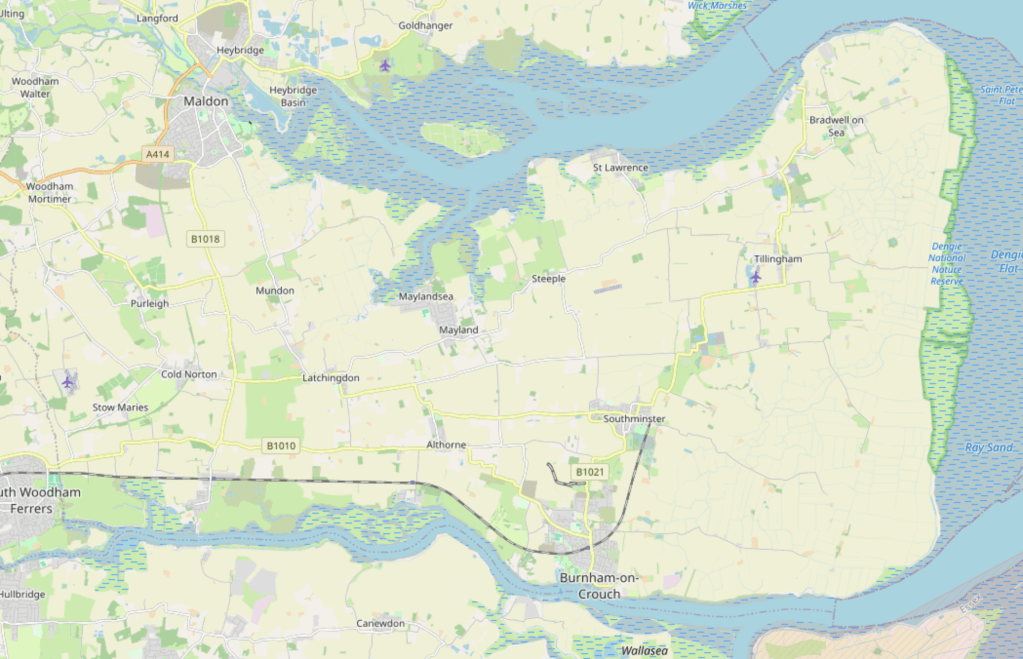
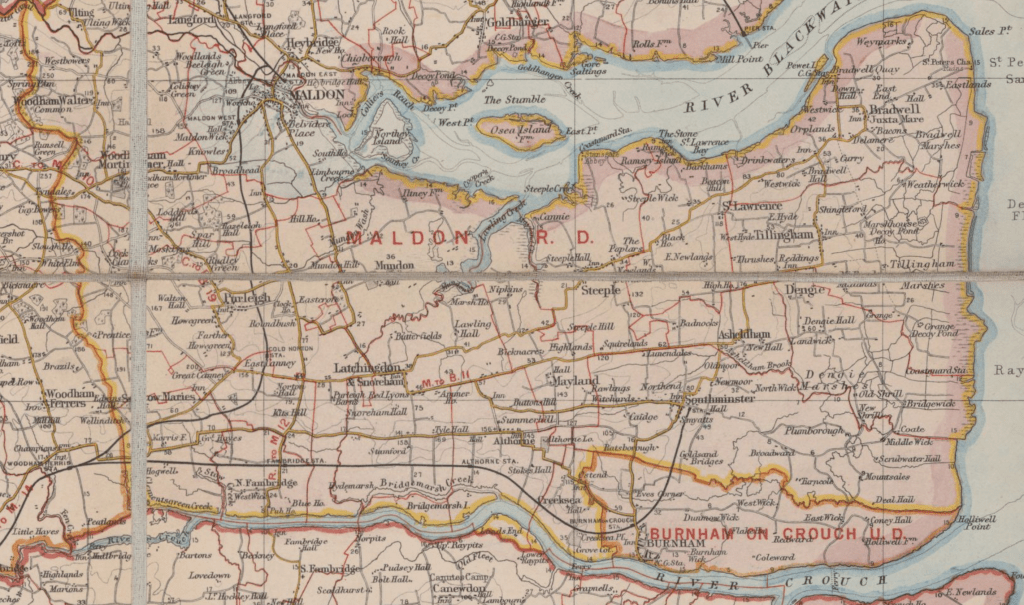
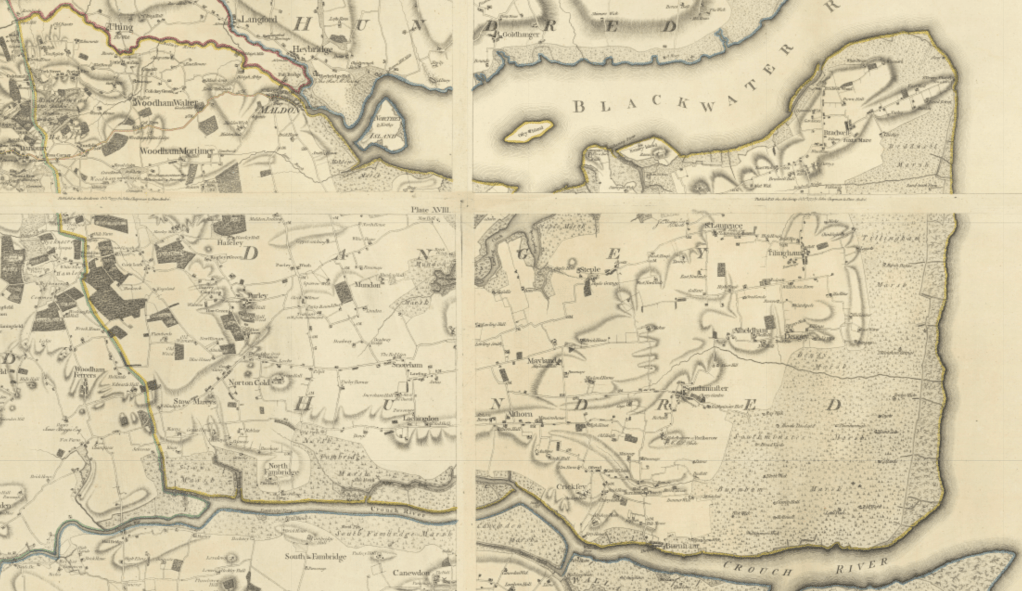
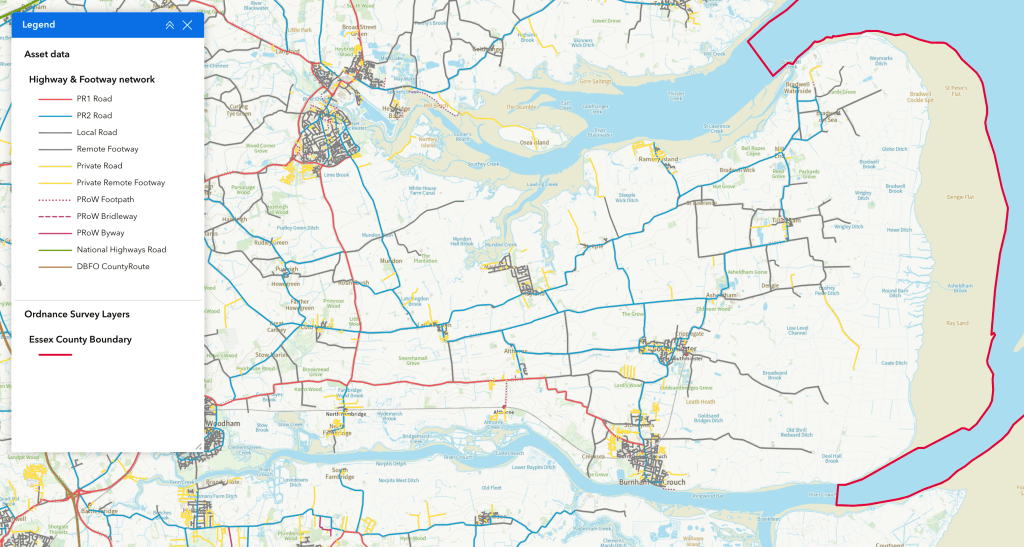
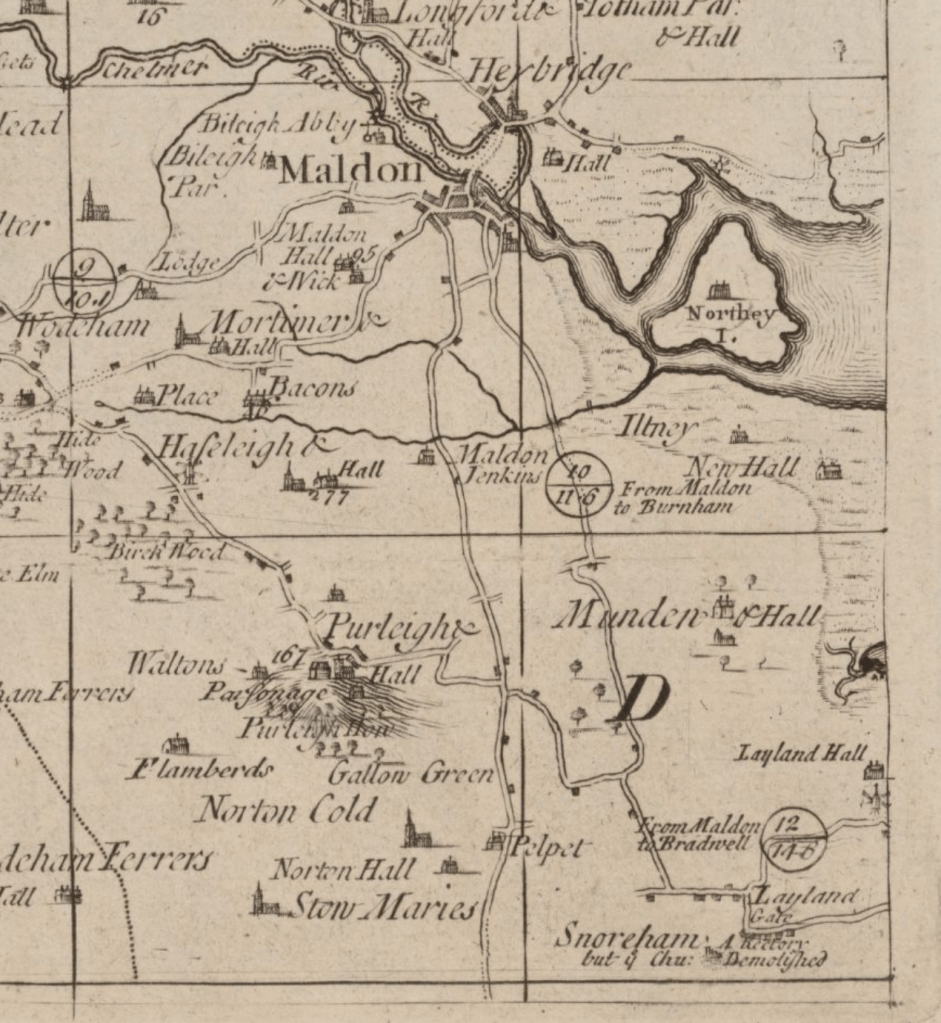
What we now call the B1010, the B1012, the B1018, the B1021, all the ‘priority routes’ recognised by Essex Highways and most of the local roads too, are already visible on the Chapman/Andre Map of Essex of 1777 – the first comprehensive chart of the county. In fact, the major routes on the Dengie could already be seen on a map of 1724: A new and correct mapp of Middlesex, Essex, and Hertford-shire, with the roads rivers sea-coast &c. actually surveyed by John Warburton, Joseph Bland and Payler Smyth.

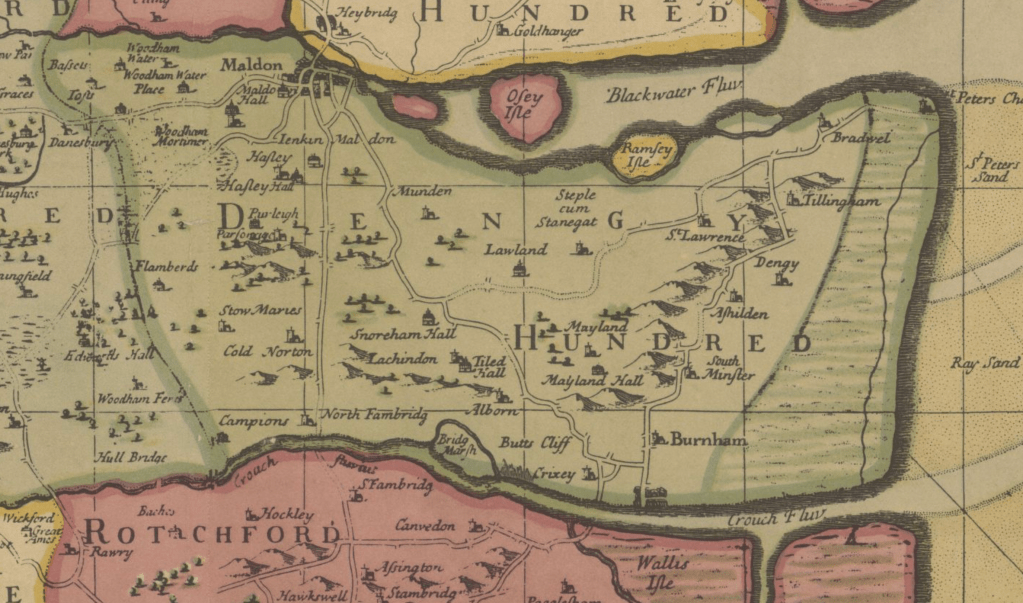
Much of the B1010, B1018 and B1021 to be, as well as the road running from Latchingdon through Steeple and St Lawrence to Bradwell are seen on the even earlier A map of the county of Essex: by a new survey … (1696) ‘performed by John Oliver’. Undoubtedly, these ways predate mapping and follow the lines of prehistoric pathfinding. They remain the ‘main arteries for the flow of commerce, goods and people‘.

The automobile was the Johnny-come-lately joining road users which had enjoyed these paths for hundreds of years. Bridleways, byways and footpaths were additional to these — not substitutes for them, routes to be retired to when the motor-car demanded the road. The rights-of-way for walkers and riders include the roads they have used since time immemorial.

Open Street Map (Accessed 2025)
Bacon’s new survey map of the counties of Essex, Hertford, Middlesex and London (c.1910)
Map of Essex (1777) by John Chapman & Peter André
Essex Highways Information Map (Accessed 2025) showing local highway network
From A new and correct mapp of Middlesex, Essex, and Hertford-shire, with the roads rivers sea-coast &c. actually surveyed (1724) by John Warburton, Joseph Bland and Payler Smyth.
A map of the county of Essex: by a new survey … (1696) performed by John Oliver [1947 facsimile]


At first, these the Johnny-come-latelys were slow, inconvenient and rare but as they became faster, accommodating and common they were also, increasingly, not friendly fellow travellers but road-hogs claiming the highway as their own.

Today, both the walker and the rider on these roads finds themselves unwelcome and endangered on the very ways that their forebears chose and formed. What are they doing on the road!?!?!?! cries the driver.

As Kenneth Grahame described in The Wind in the Willows (1908):

“They were strolling along the high-road easily, the Mole by the horse’s head, talking to him, since the horse had complained that he was being frightfully left out of it, and nobody considered him in the least; the Toad and the Water Rat walking behind the cart talking together–at least Toad was talking, and Rat was saying at intervals, ‘Yes, precisely; and what did YOU say to HIM?’–and thinking all the time of something very different, when far behind them they heard a faint warning hum; like the drone of a distant bee. Glancing back, they saw a small cloud of dust, with a dark centre of energy, advancing on them at incredible speed, while from out the dust a faint ‘Poop-poop!’ wailed like an uneasy animal in pain. Hardly regarding it, they turned to resume their conversation, when in an instant (as it seemed) the peaceful scene was changed, and with a blast of wind and a whirl of sound that made them jump for the nearest ditch, It was on them! The ‘Poop-poop’ rang with a brazen shout in their ears, they had a moment’s glimpse of an interior of glittering plate-glass and rich morocco, and the magnificent motor-car, immense, breath-snatching, passionate, with its pilot tense and hugging his wheel, possessed all earth and air for the fraction of a second, flung an enveloping cloud of dust that blinded and enwrapped them utterly, and then dwindled to a speck in the far distance, changed back into a droning bee once more.

The old grey horse, dreaming, as he plodded along, of his quiet paddock, in a new raw situation such as this simply abandoned himself to his natural emotions. Rearing, plunging, backing steadily, in spite of all the Mole’s efforts at his head, and all the Mole’s lively language directed at his better feelings, he drove the cart backwards towards the deep ditch at the side of the road. It wavered an instant–then there was a heartrending crash–and the canary-coloured cart, their pride and their joy, lay on its side in the ditch, an irredeemable wreck.

The Rat danced up and down in the road, simply transported with passion. ‘You villains!’ he shouted, shaking both fists, ‘You scoundrels, you highwaymen, you–you–roadhogs!–I’ll have the law of you! I’ll report you! I’ll take you through all the Courts!’ “

Drivers on the Dengie are victims of car dependence themselves. Where are their mobility options? Where is their freedom to choose their form of transportation? How can they escape the traffic to which they contribute? Why must they be bound to the expense and upkeep of a private vehicle? How are they to be protected from dangerous drivers, from speed limits that are not set at safe levels?

Providing mobility freedom, making our roads safer and calmer, and making a fairer use of our route network all require investment in, and attention to, active and public transport. We need to rECOnnect Dengie

“You knew it must come to this, sooner or later, Toad,” the Badger explained severely. “You’ve disregarded all the warnings we’ve given you, you’ve gone on squandering the money your father left you, and you’re getting us animals a bad name in the district by your furious driving and your smashes and your rows with the police. Independence is all very well, but we animals never allow our friends to make fools of themselves beyond a certain limit; and that limit you’ve reached. Now, you’re a good fellow in many respects, and I don’t want to be too hard on you. I’ll make one more effort to bring you to reason.”

‘Swaggering Down the Steps’ by EH Shepard
Local emotional support vehicle

Let a Thousand Knepps Bloom

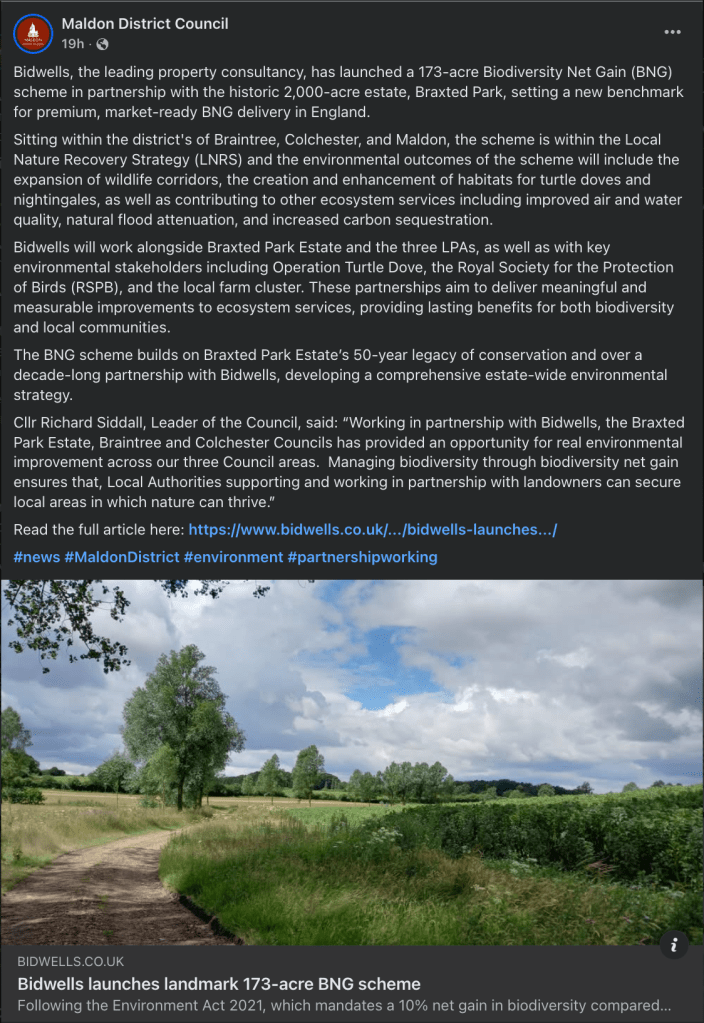
Yesterday, Maldon District Council (MDC) shared on social media that they would be working in partnership with a property consultancy company that has launched a Biodiversity Net Gain (BNG) scheme with the Braxted Park estate.


The post and linked article are light on detail, and there’s nothing about it on the MDC website, but this looks like MDC shaping up to allow developers to meet their ‘increase biodiversity’ requirements by paying someone else to do the nature recovery off-site.

Read more: Let a Thousand Knepps Bloom

Local District Councillor Wendy Stamp informs me that this scheme has not been discussed by Councillors and is seeking further detail.

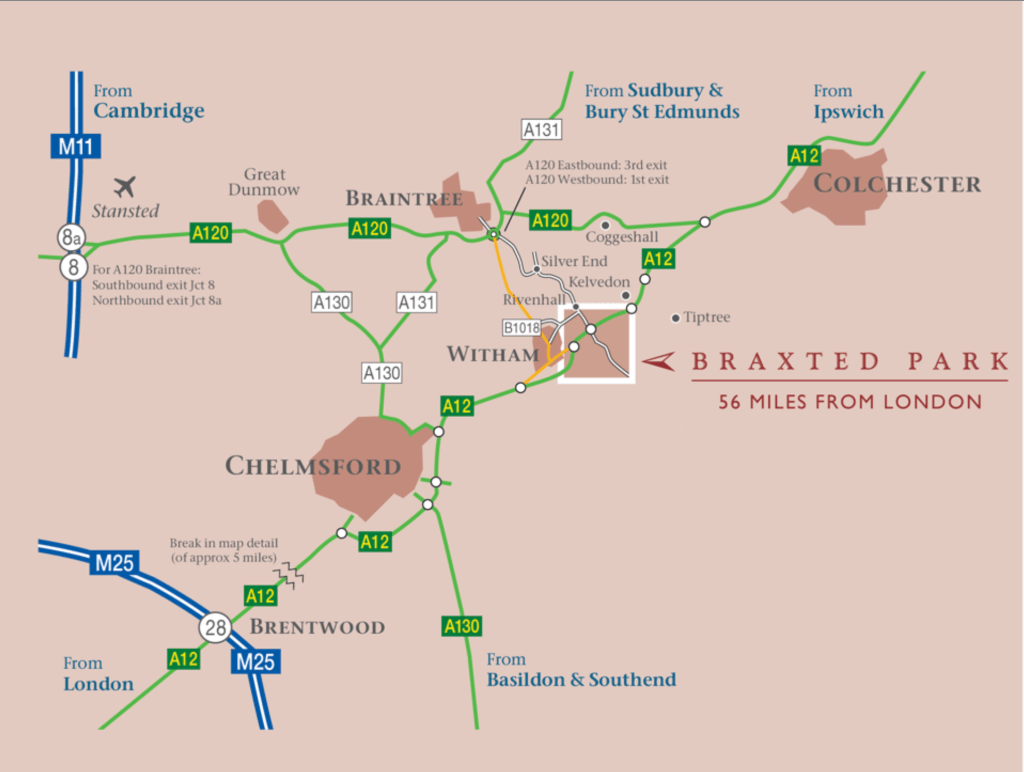
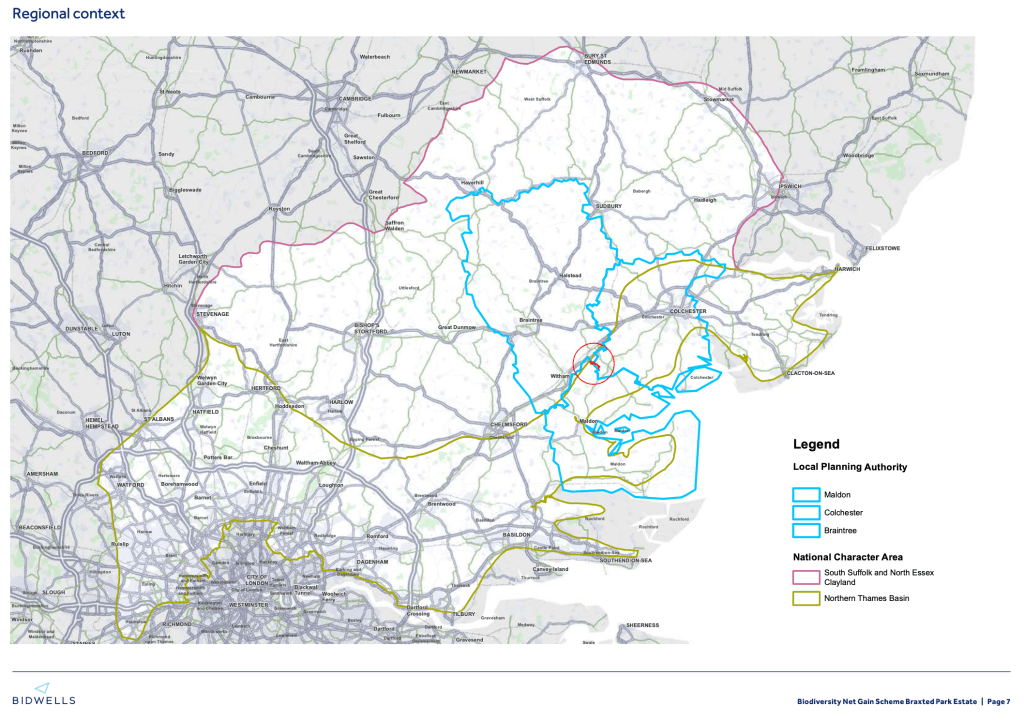
Map on the Braxted Park website illustrating that it is ‘well connected’ shows no connection to locations in Maldon District


I can see some advantages in consolidating nature recovery activities in the best sited locations and that working at a landscape scale can have environmental outcomes not available to smaller sites

but…


Braxted Park is barely in Maldon district (it’s on the North-west border with Braintree District, near to Witham) and it’s a long way from the Dengie peninsula. (It’s over 20km as the turtle dove flies from Braxted Park to the proposed Romans Farm development in Burnham on Crouch for example)
It’s hard to see how the environmental outcomes of the scheme will improve nature recovery out here.

Location map in the Bidwells document Biodiversity Net Gain Scheme Braxted Park Estate [pdf]

We must demand that nature recovery schemes happen locally to us, no biodiversity offsetting in distant locations!


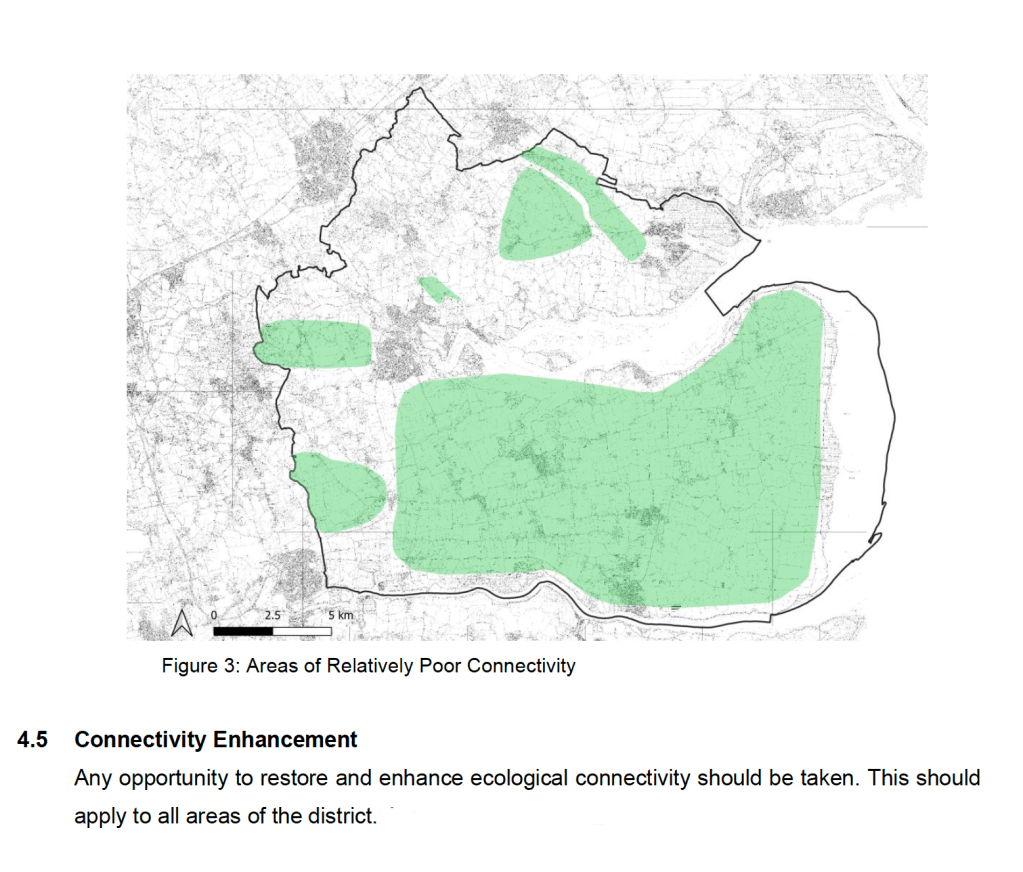
The Maldon Nature Conservation Study (February 2023) produced by Essex Ecology Services (EECOS) for MDC spoke of the importance of wildlife corridors in the district and stated that ‘[t]he taking of measures to enhance connectivity would be worthwhile anywhere in the district… Certain areas suggest themselves as potential priority targets… Any part of the Dengie peninsula

Map from the ‘Maldon Nature Conservation Study 2022′ (February 2023) [pdf]


The whole peninsula was mentioned because the Study notes that ‘[t]he Dengie peninsula has few [local wildlife] sites and many of these are isolated in a landscape dominated by intensively managed farmland, with few areas of natural or semi-natural habitats aside from the coast’


It notes that ‘[t]he woodlands of Maldon are heavily concentrated in the north west of the district [where Braxted Park is located] and are virtually absent to the east of Northey Island, both north and south of the Blackwater estuary. The Dengie peninsula, in particular, is virtually devoid of woodland.’


Elsewhere in the document the Dengie is described as an ‘impoverished landscape dominated by large arable fields with few hedgerows’ and that ‘[t]he planting of new hedges and appropriate management of these features would be of great benefit to wildlife, including breeding birds, and any measures that can be taken to encourage this should be considered. The establishment of a well-connected network of hedgerows would represent a major landscape-scale enhancement.’


MDC knows where, and what, nature recovery interventions on the Dengie would be effective because the Study they commissioned informs them.

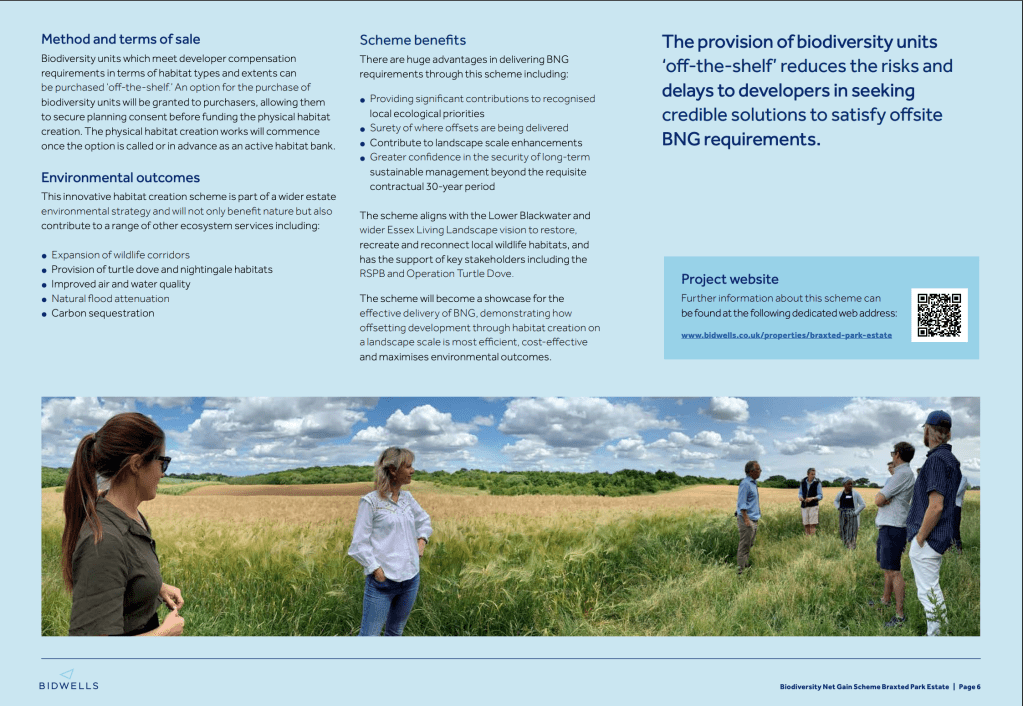
The pitch to developers in the Bidwells document Biodiversity Net Gain Scheme Braxted Park Estate [pdf]


This new scheme looks like a way for developers to avoid caring for and improving the natural world where they build by just paying a fee for someone else, to do something, somewhere else.

It should not be ignored that replacing an intensively managed, chemically dosed, arable monoculture field in our ‘impoverished landscape’ with houses and gardens will in itself create new niches for wildlife. Housing developments don’t in themselves, however, create a well-connected network of hedgerows, they don’t establish new woodlands, areas of natural or semi-natural habitats, or wildlife corridors between existing sites of biodiversity. Construction of these developments too often begins with violently making their site a tabula rasa, removing mature trees, bushes and hedgerows, blocking access to fauna, filling in scrapes, stripping topsoil, compressing the earth. It concludes with establishing neat show homes, where the ‘messiness’ of the wild is manicured away – no care to share the territory with what came before – no hedgehog holes or bee bricks, no bird and bat boxes, no quarter given to burrowing badgers and foxes, insects starved of fodder. In the amenity spaces, sapling trees are planted and then neglected to dry out and die. A councillor once told me that developers are generally contracted to support these trees for 5 years, but that it’s cheaper for them to replace those that die at the end of their period of responsibility than to maintain them for the intervening period. Any survey of the new estates in Burnham swiftly finds the desiccated evidence

BNG seemed to me from the get-go to be ‘biodiversity off-setting’ in the disgraced mode of carbon off-setting before it. So, it comes as no surprise that we are immediately seeing nature commodified and traded by third-party intermediaries.

When a developer grubs out a 300 year old oak tree near me, and the squirrels who ate the flowers disappear, the moths that relied on it don’t return, the oak-mining bee loses its pollen, the badger and wood mouse find no acorns, the jay has nothing to bury, and the caterpillar doesn’t come that the blue tit might consume, when the bat doesn’t roost, the fungus doesn’t feed, the lichen don’t spot the bark, the mushroom doesn’t fruit from its subterranean romance with roots – then I guess I can take solace in the knowledge that a seven hour walk from where I live, on the country estate of a retired banker, that an ‘off-the-shelf’ purchase by the developer will have financially contributed to the ‘creation of high-quality biodiverse habitats targeting ‘good’ condition as defined by the DEFRA Statutory Metric’. Call me a romantic if you will, but I prefer stewardship to the spreadsheet.

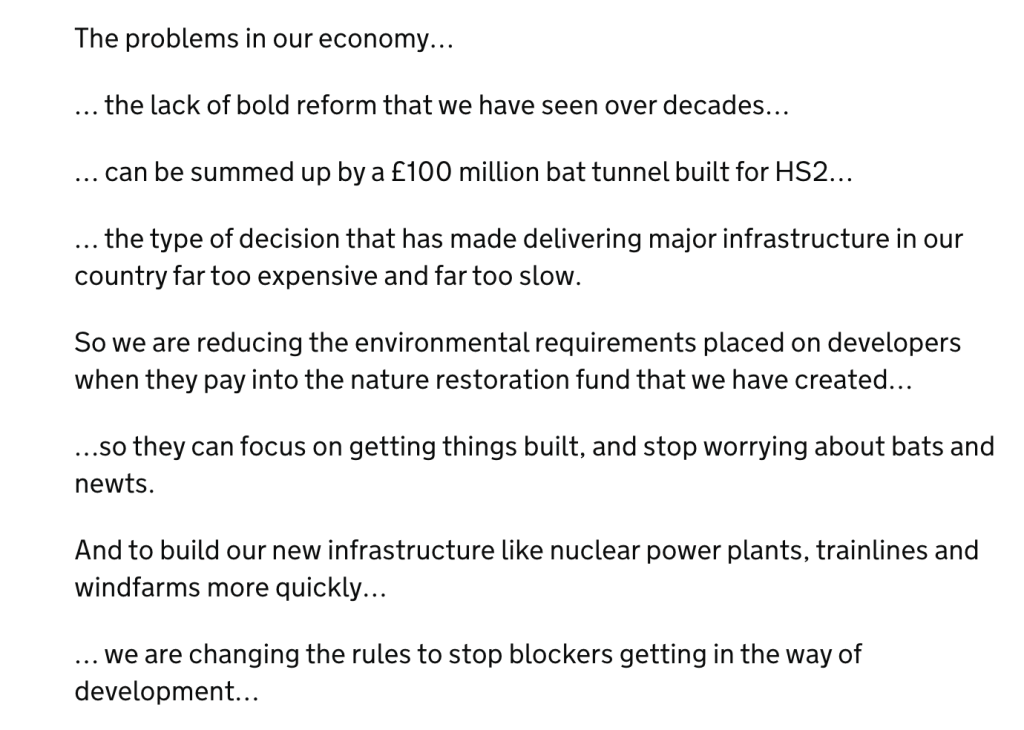
Chancellor vows to go further and faster to kickstart economic growth’ Rachel Reeves at Siemens Healthineers in Oxfordshire on 29 January 2025.

An ‘abundance’ YIMBYism is on the rise, an attitude on both the left and right of politics, and on both side of the Atlantic, that the future has been cancelled out of a gratuitous consideration for ‘bats and newts’, that we must just BUILD. Increasingly often this comes with a sanctimonious sneer that pits mitigating climate change against nature conservation “we could accelerate the construction of renewable energy infrastructure and energy efficient homes if you would just leave it out with bat tunnels and newt-counting delays”.

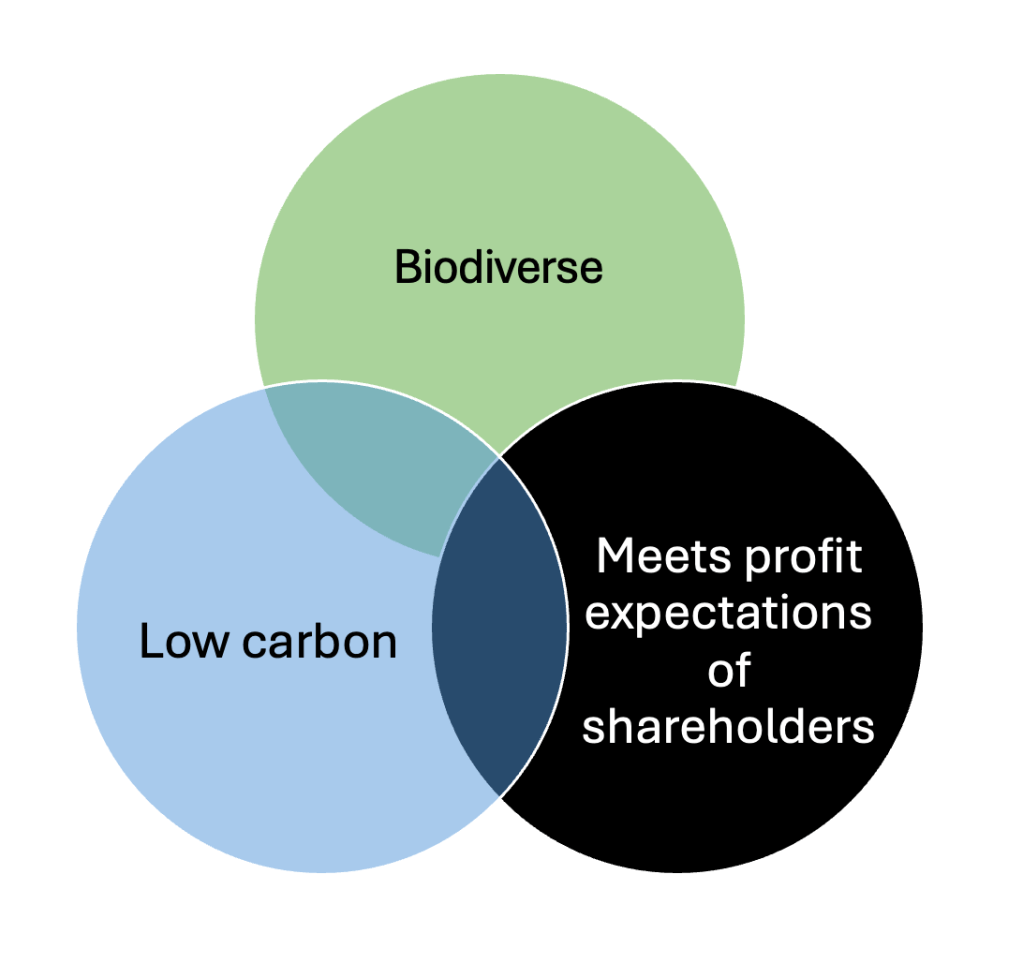
But why can’t we have both things? Because there’s a missing third part of this iron triangle

The great shapers of places in the UK, of our land and homes, are six volume housebuilders (Barratt/Redrow, Vistry, Taylor Wimpey, Bellway, Berkeley Group, Persimmon) and they are driven by profit, excessive profit. A 2023 report from the UK Collaborative Centre for Housing Evidence, Why have the volume housebuilders’ been so profitable? notes that

‘Since 2014, the largest housebuilders, and in particular the three largest housebuilders by
volume (Taylor Wimpey, Barratt and Persimmon – herein, the ‘big three’) have consistently reported supernormal levels of profitability, with gross profit margins reaching 32% and never falling below 17%’

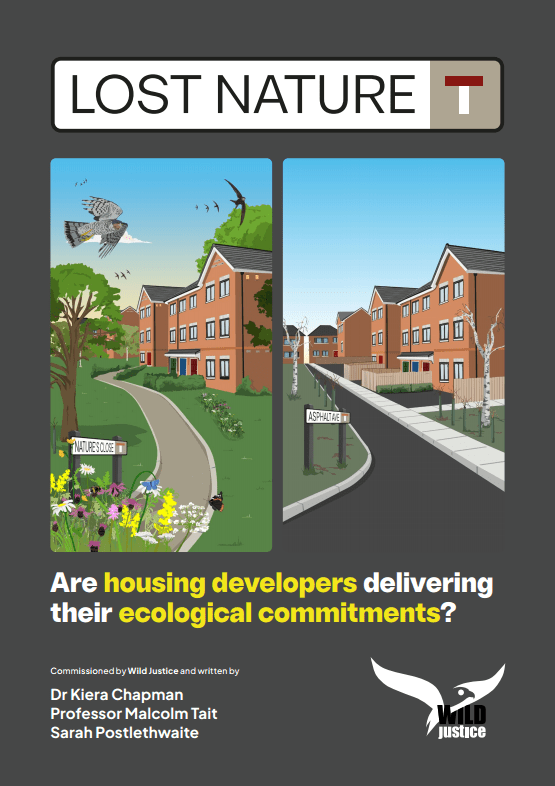
So, obviously, these companies are not interested in the business of stewardship, of long-term commitments to places, or indeed any commitments past the point when contracts are exchanged. A survey by University of Sheffield academics for the wildlife campaigning group Wild Justice discovered that nearly half of the nature-friendly enhancements promised by developers building new homes have failed to materialise.

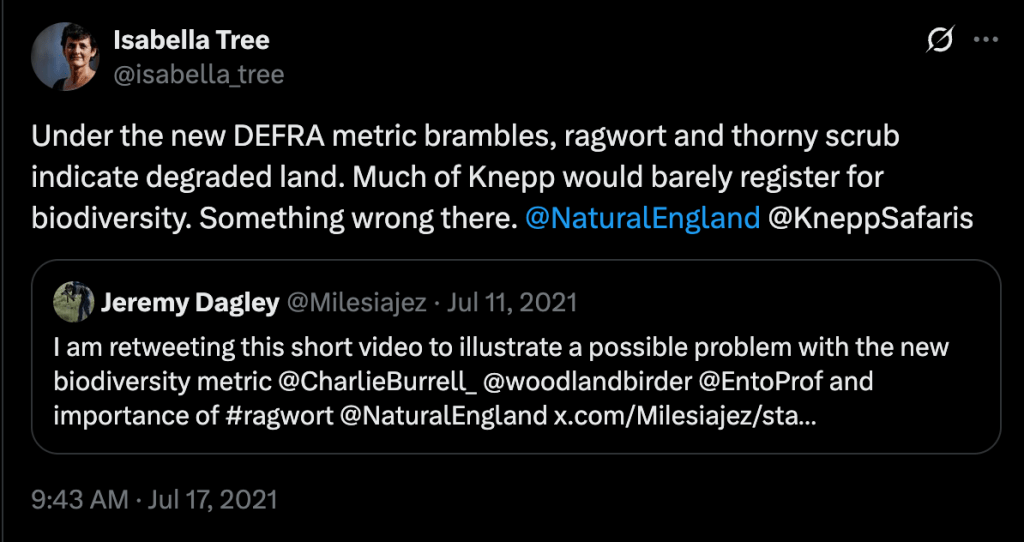
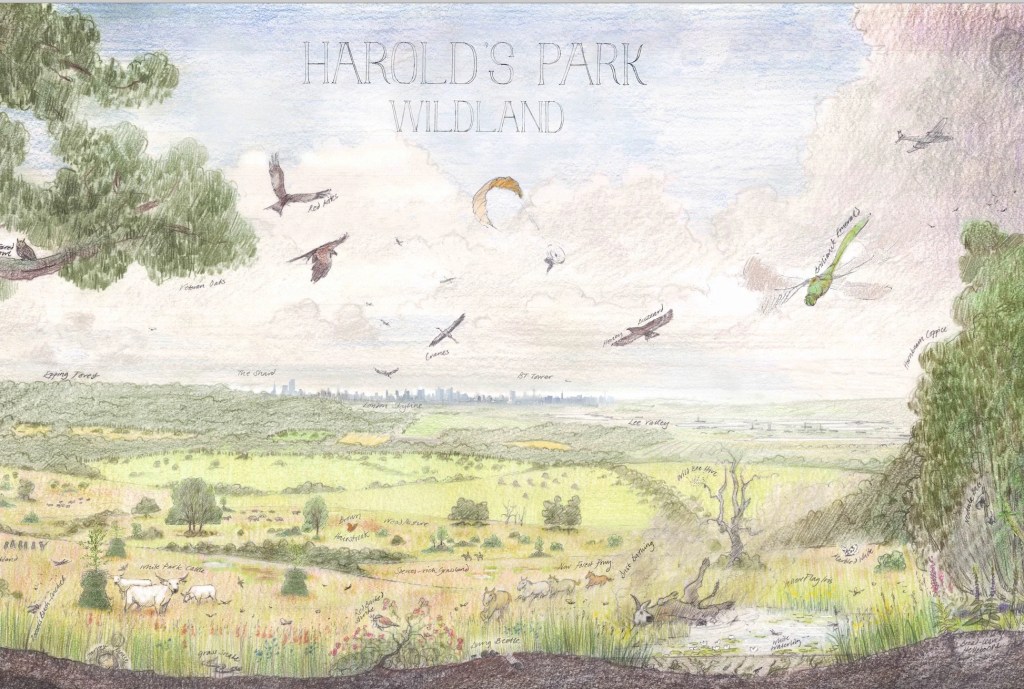
Instead of enforcing these commitments and penalising developers who fail to adhere, the BNG system surrenders and turns this all into a one-off transaction. Developers pay some ecologists to do a baseline survey before development, a wonk does some sums to account for 10% BNG, they pay a one-off fee to a mediator like Bidway and they’re done – on to the next one. The mediator creams some agency fees and passes on the remainder to a land owner adding BNG to their diversifed income streams. It could be a conference and wedding venue like Braxted Park, it could be elsewhere in Essex like the farm turned rewilderness Harold’s Park – 45km as the turtle dove flies from Braxted Park. (Recently purchased by ‘natural capital and rewilding company’ Nattergal.) These Essex projects stand in the shadow of the Knepp estate in Sussex -the poster child for UK rewilding – although Knepp’s owner Isabella Tree says it wouldn’t meet the DEFRA metrics.

All this is an approach to nature recovery that seems to depend on special places that are protected, another form of nature reserve, rather than forging a new symbiosis with nature and accepting that humans are completely embedded within a more-than-human world. Essex county council has a target of transforming 30% of Essex into wild and nature areas. Every place should be special, distinct among others of a kind. Nature recovery here, and there, and everywhere. Let a Thousand Knepps Bloom.

Better Walk/Wheel/Cycle Routes

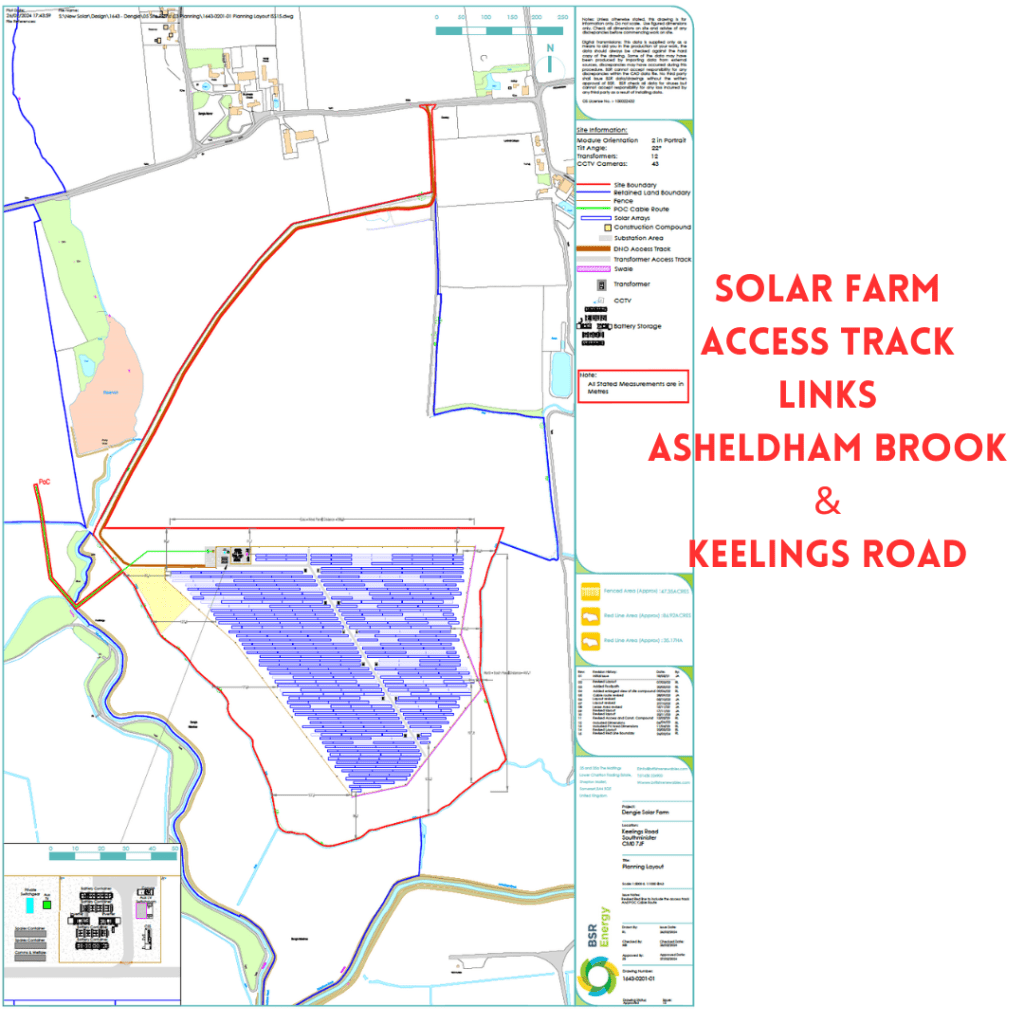
Next week, work commences on a solar farm south of Keelings Road, Dengie.

This will involve constructing an access road from Keelings Road to Asheldham Brook, which could be made suitable for cycle access.

From Asheldham Brook it’s only 2km to The Marshes, Southminster through land (Northwycke Farm) with a single owner: Lincoln College, Oxford.

Continue reading “Better Walk/Wheel/Cycle Routes”

Weeknotes 02025 Q1 W7

DCAP

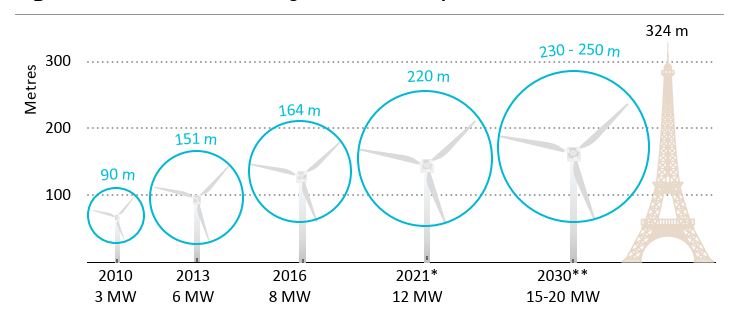
Monday. Community Led Energy Planning Teams call with ECC and Joolz. Also discussed the Dengie Marshes Wind Farm and the possibility of a community asset stake. The more I think about it the more concerned I am about the work necessary if eMpower got involved – especially as I was the only eMpower person on the call – maybe planning around the £600k pa community benefit fund would be a better approach. I saw some anti-wind posting in a local FB group where the poster was saying they would be as tall as the Eiffel Tower – a bit of an exaggeration I thought but I looked up a comparison graphic and (at up to 225m) they would be a significant fraction of the height – plus there could be 17 of them. I find them aesthetically pleasing but 17 two-thirds Eiffel Tower scale turbines would be a dramatic change to the skyline. *Having gone up the Eiffel Tower last month, this was actually a useful comparator).

Monday. C is distributing tree whips to people across the Dengie, she hasn’t had any photos/locations back yet though to map this little forest initiative.

Tuesday. Sorting out details for Riverwatch attendance at the February DCAP meet. Arranging time to talk with Gilly St Lawrence about the March meeting there.

Tuesday. Chasing ECC about dates of LTP4 consultation part 2. Some emails with Mary-Ann Munford and John McCarthy about putting in a bid to Essex Cycle Grant for a feasibility study on the Burnham-on-Crouch – Southminster cycle route. I sent a speculative email to Sustrans to see if they could do one and what the costs would be.

Tuesday. I read the updates from Sarah Green’s Organics that come in the vegbox – the recent rain has allowed them to draw on Bradwell Brook and fill their reservoir. The asynchronous water capture of winter rain is essential with the increasingly dry summers out here

Thursday. Teams call with Gilly re : St Lawrence DCAP meet in March. There’s a possibility that Andy Wright from Essex Wildlife Trust will come to speak about the seagrass restoration project and what else is happening in this part of Essex

Friday- Climate Action Partnerships catch-up call. Heybridge & Maldon Climate Action Partnership are thinking about changing its name to reach a wider audience that isn’t attracted by the current framing. The name HUMAN4NATURE was posited. It made me think about the Burnham Town Council meeting earlier in the week where I had heard some audience guffawing when ‘Net-zero’ was mentioned (they guffawed at the mention of a Covid-19 victim’s remembrance day as well). It also made me think about some recent interactions in a local Facebook group where the idea of the UK taking any climate mitigation action was roundly dismissed and wrapped up with culture war issues and the evils of foreign aid. Climate action is clearly now understood to be in the Woke area of the political spectrum and another nonsense to be dismissed by RUK fans. Later in the day, I watched a Nate Hagens video where he posited that ‘facts and values will not overcome traits and human behaviour and structures’ and spoke about the differences between ‘how the world ought to be and how it is’ – ‘facts and values are important but not sufficient for the times we are living in’ ‘facts and values are no longer sufficient to steer humanity away from the more dystopian outcomes’. He also mentioned, concerning communicating about some topics, that there are things he won’t say publicly because he doesn’t ‘want the Eye of Sauron focussing on Red Wing, Minnesota’ [where he lives]. I’m feeling the Eye of Sauron on me a bit lately.

Friday. I reflected on Heybridge Cllr Paul Spencely’s comments about Heybridge population size after new developments are completed – while she says ‘Heybridge is not a town’ – the imminent population increases will take it over 10k and therefore make it an ‘urban’ place in the UK government terminology.

Friday- I represented the Dengie Hundred Bus Users Group again on a Teams call about the Love Your Bus grant application. There was low attendance though – just the convenor from BTC, Mayowa from Mayland and me – so the meeting was cut short, which suited me – on too many calls lately.

Sunday – Zoom call with Mary-Ann and John about my contact with Sustrans, the questions Sustrans threw back at us, what do we mean by feasibility study? etc.

Day Job

Someone from Digital did the weekly internal editorial blog and wrote about Conway’s Law

Everyday Life

Tuesday. dentists – all good, but booked hygienist for next week.
Tuesday eve. BTC meeting – the first with all the new councillors. There was an agenda item question regarding community groups making free use of the council chamber – it felt rather pointed, as DCAP was singled out as being a group with no BTC representative on it and Cllr Stamp challenged its right to free use of the space. In other news, the EV chargers are finally going to be completed in Providence car park.; there will be no renewal of the Station House lease; there was no clear answer on whether tey are going to do No Mow May or not. New councillors Les Macdonald and Tory guy were jointly appointed to the Environment role on the council. One of the new RUK guys didn’t turn up and didn’t send an apology (turns out he’s quite active on TikTok though) – one of the shy Tories sent an apology – it was the first meeting in which they could participate and they were no-shows. In the public forum section, I didn’t make friends when I raised concerns about some loose communications regarding the recent elections. The secret squirrel section closed to the public was about devolution – the implication from earlier chatter is that the end of District Councils in Essex means local assets (eg. Riverside Park, car parks etc.) and possibly extra responsibilities will devolve to town/parish councils – assume some budget comes with – wait to see on this one.

Wednesday troubled sleep. I had a vivid dream in which I went lucid and had cause to pull myself out. On FB I posted something about reinsurance companies saying that the UK needs to spend £31 billion a year on flood defences – a pertinent subject for a flood risk area that got inundated in 1953 – and presented it as an example of what RUK’s ‘we just have to adapt’ agenda means in practice – it stirred up the standard responses from the standard men – mainly Nige can do no wrong types trying to talk about foreign aid or some other confection. Where factual errors were being presented I countered, and I tried to take a couple of commentators down the logical path of their statements. It gives me no pleasure to relay that straight-up climate denial is alive and well in Burnham-on-Crouch.

Last night’s council nonsense and this FB melee – both set against the latest Trump and Musk drivel, the situation in Gaza, the general rise of the Fash, and Rafael Behr’s Guardian article – boiled my brain. I went out for a walk, musing on whether there was value in saying anything about anything these days and whether protecting my own mental health needed to be prioritised. C and I talk about a lot of this but there’s only so much stuff your partner can take and I miss some larger group of affinity I could talk this shit out with.

Saturday: C and I took the bus to Danbury and then walked to Maldon through ‘The Wilderness’ (got some Shinrin-yoku) and via The Cats public house. The Cats isn’t open much, only takes cash and this was the first time the stars aligned for us – it was open and we had cash. It’s a wonderfully eccentric country pub that you don’t see the like of much anymore. Afterwards, cold rain that wanted to be sleet accompanied us for the last stretch past Beeleigh Abbey and we stopped for another at The Carpenter’s Arms in Maldon before catching the bus home.

Sunday: Blood donation in the morning in South Woodham, #59. They were running late which meant that I had to launch and chair the Zoom call I was hosting on my phone while I was still laid up pumping claret.

Media

Films

Elevation – Amazon post-apocalypse fare. More of the same that we’ve seen before. This one is only 18 months after the event, so I gave them a break on the cars – but it’s amazing/appropriate that in American post-apocalypses the essentials of society remain automobiles, firearms and packaged foods. You generally get a few nods to foraging and periculture but the dish of the day tends to be pulled from an abandoned kitchen cupboard, a defunct vending machine or a supermarket shelf – ‘Mac n’ cheese’ (Elevation), a can of coke (The Road), canned food (Walking Dead) etc. Americans were always already eating like the world had fallen.

TV

Severance S02E05 Trojans Horse – lots of elements point away from my ‘their consciousnesses are inside the computer’ hypothesis but I’m holding on to it. Folk who think that Lumon is doing cloning will find more to support that idea.

Yellowjackets S03E01 and S03E02 Cristina Ricci is still great but I’m not feeling this series yet.

Books

Finding it hard to sit down and read.

Music

On the Yellowjackets trip

Online

I loved the mega library in the latest Srsly Wrong podcast: Morning in Utopia

Les bibliothèques ou la barbarie!

Future Thinking and Dreaming

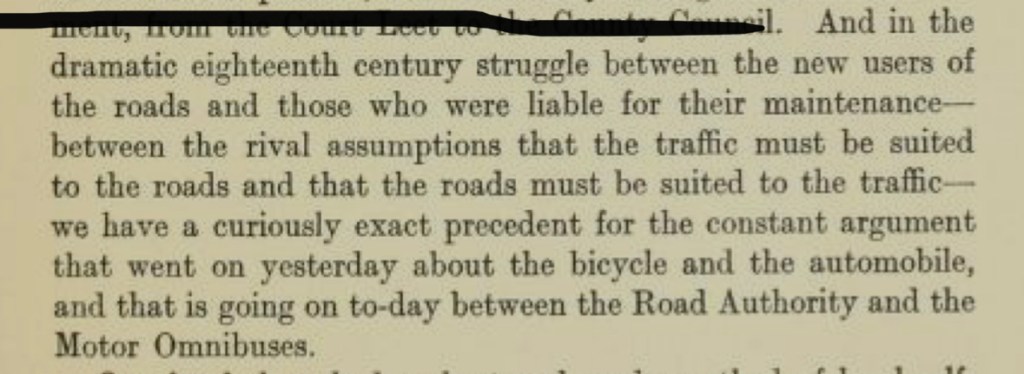
  • Found this paragraph early on in the Webb’s book The King’s Highway (1913)
  • I posed a question on the microblog sites: ‘Creative trespass and wild camping are the most well-known techniques of Tactical ruralism, what else is the toolbox?’

    I don’t think it’s helpful to just list a bunch of things with the prefix wild appended though – wild camping, wild swimming, wild foods etc. I’m trying to imagine something other than that – but what? Some tactical urbanism techniques apply equally, but what are the rural opportunities. Guerilla grafting? guerilla rewilding?
  • I thought that the rich countries going for ‘net zero’ by 2050 was analogous to elite athletic teams having the goal of an as yet unborn competitor winning a bronze medal in six Olympics time while secretly just hoping that they qualify for the Games.
  • I pondered what the Faragist Project 2029 looks like
  • the existence of the Veluwemeer Aqueduct gives me hope for the world – but make that road a railway!
Aquaduct Veluwemeer in the Veluwe lake near Harderwijk

Weeknotes 02025 Q1 W6

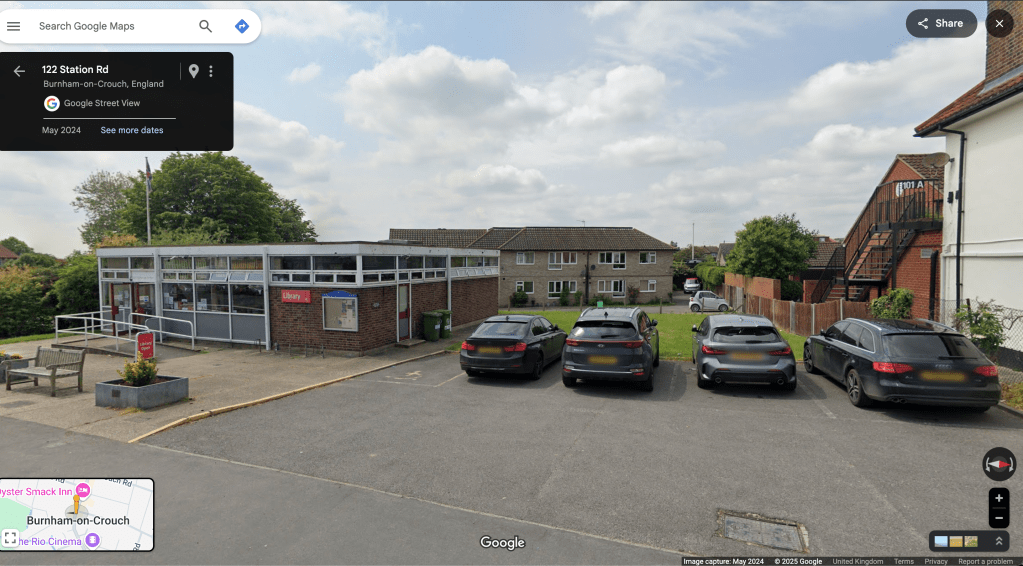
Over the weekend we received the disappointing news from Essex County Council that they were unwilling to let the Burnham Library Orchard project go ahead, with some not very detailed reasons about ‘infrastructure’ which seem to pertain to the library building itself which would have been unaffected by the proposal.

Burnham-on-Crouch Library

Tuesday. The Dengie Hundred Bus Users Group (DHBUG) monthly meeting. Hints that the D1 bus might be under threat of being withdrawn now, another hit to Dengie services.

Wednesday – I signed some documents as part of the process of formally registering eMpower Maldon as a Community Benefit Society. John Philpot’s done most of the admin work getting us to this point. We should be registered before the Community Led Energy Planning meeting in Maldon town in March.

Continue reading “Weeknotes 02025 Q1 W6”