[This article develops a recent Facebook post with more maps and discussion of cycle route potentials]
I received communication this week that ‘the King Charles III England Coast Path (KC3ECP), and its associated accessible coastal margin is now open around the full Dengie peninsula.’
There were some caveats in the communication, which I copy below
‘the King Charles III England Coast Path between Wallasea Island and Burnham-on-Crouch opened this morning.
Unfortunately with 2 weeks to go before the commencement date one of the contractors working for Essex County Council, on the north side of the Crouch, fell seriously ill. This has meant that although we continued with the commencement of the access rights, there may be a few pieces of infrastructure to finish off. Essex County Council are managing this as best as they can. It shouldn’t stop the onward journey, but under foot conditions may not be ideal at this point in time.
Now that the stretch is open, and in common with all other open stretched of the National Trail, responsibility for maintenance and related issues lies wholly with Essex County Council. If you ever have any concerns, I’d encourage you to reach out to Essex Council Highways/Rights of Way teams.’
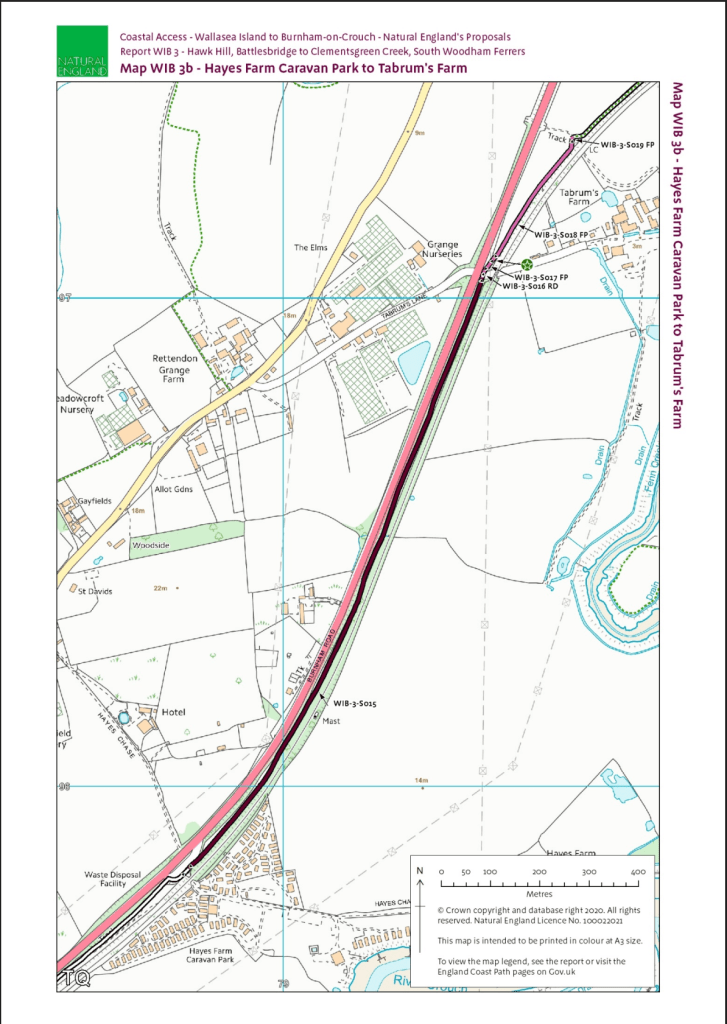
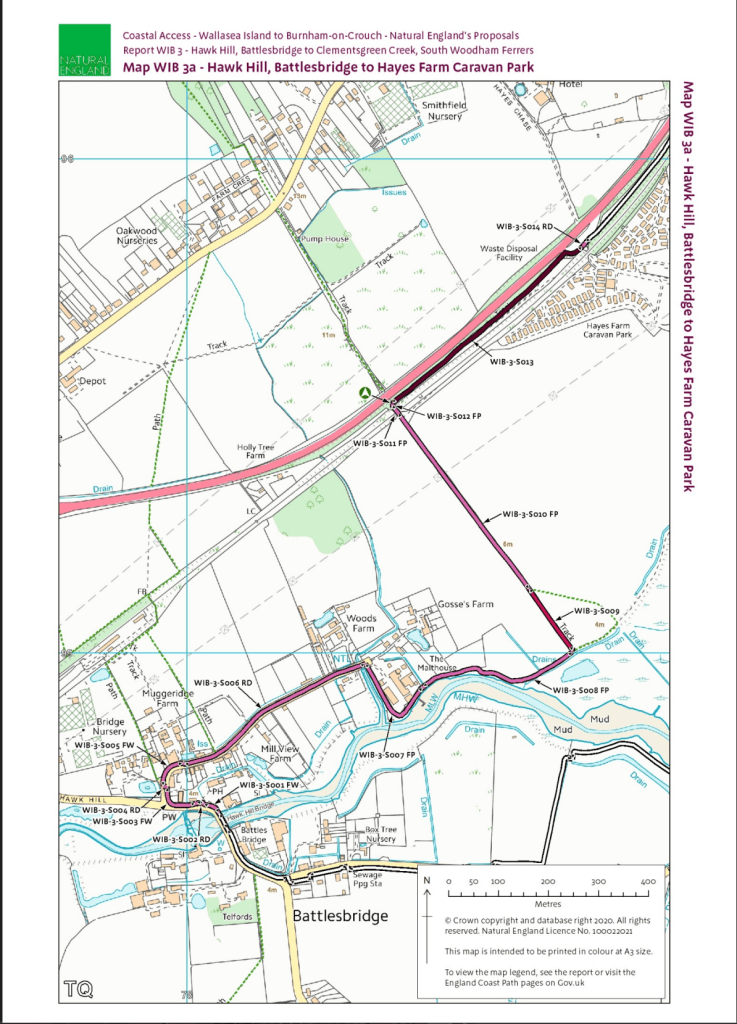
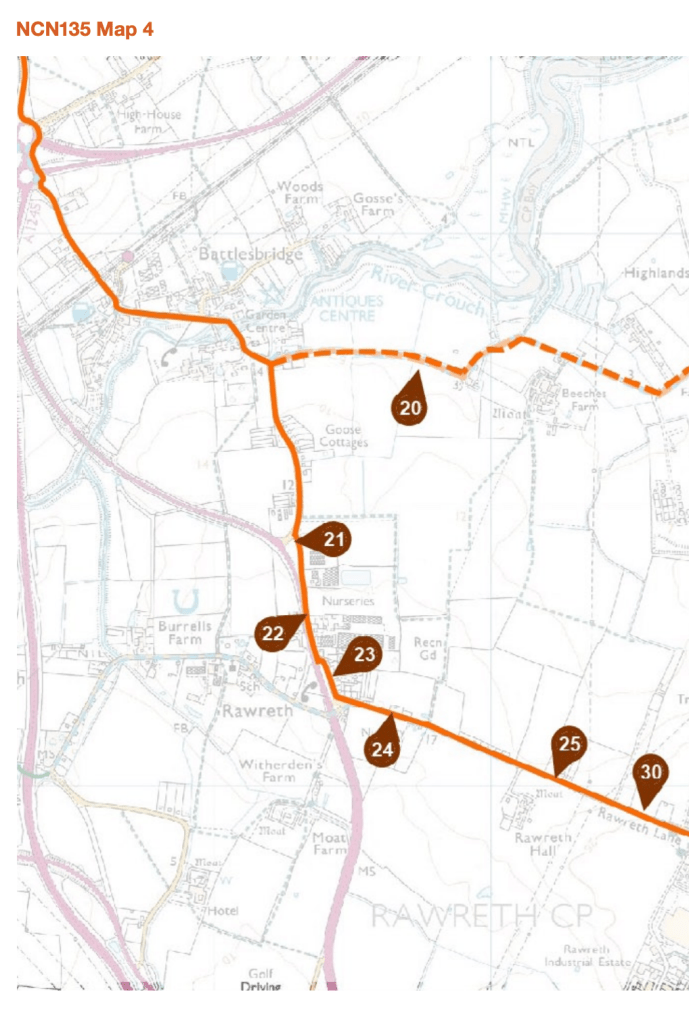
a path alongside the A132 Burnham Road connecting South Woodham Ferrers and Battlesbridge.
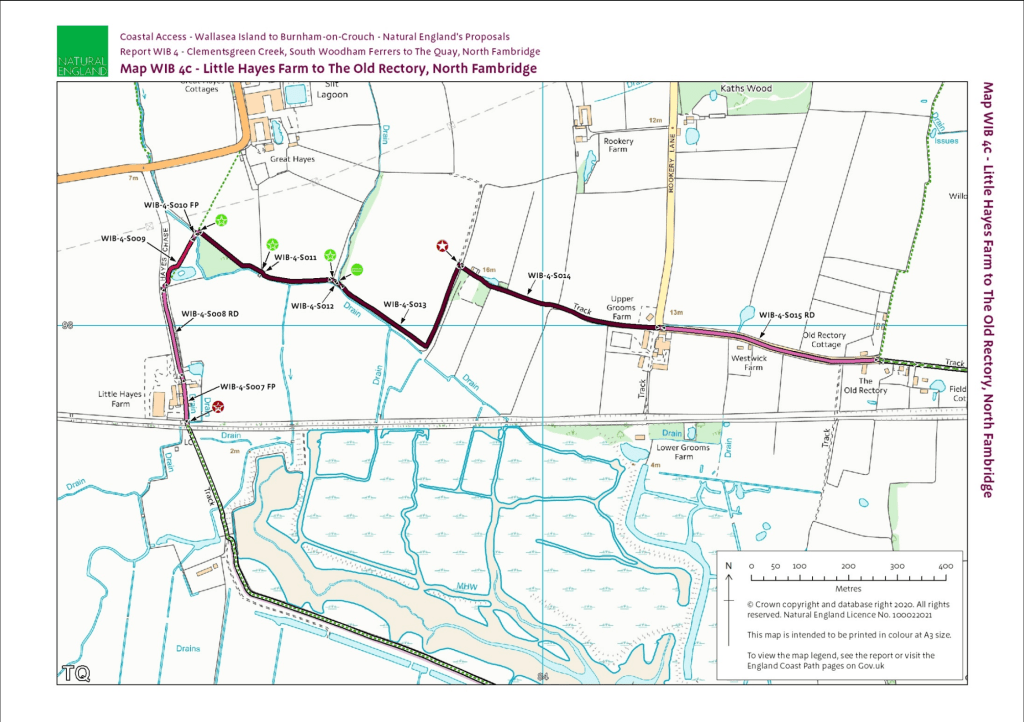
new permissions over a farm track between North Fambridge and Little Hayes Farm – allowing the route between North Fambridge and South Woodham Ferrers to avoid the long detour up around Stow Maries which involved crossing the B1012.
New KC3ECP route connecting with footpath FP 28 229 to the North, which leads toward South Woodham FerrersContinuation of the new KC3ECP path to where it meets footpath FP 27 229 providing access to BattlesbridgeNew section of KC3ECPpath/PROW on farm tracks connecting Rookery Land North Fambridge at Upper Grooms Farm with Little Hayes Chase and footpath FP 22 261 around Stow Creek.
I hadn’t seen much action on the A132 section last time I passed, so it might not be more than cutting foliage back on the verge. I’ll take a look at both the South Woodham Ferrers and North Fambridge this weekend, but I welcome comment from anyone else too!
UPDATE: I had confirmation from Natural England regarding the A132 section:
‘The major works undertaken along the sections WIB-3-S012 and S016 is the clearance of the vegetation and the creation of a route within the scrub, which I know has happened. There were some bridges and I believe some steps (at the S012 end) and these were being installed by the contractor that has fallen ill.
That said I believe the route is passable. I certainly managed to walk it this time last year in low walking boots and managed to pass without any bridges being in place.
I have previously discussed with colleagues at ECC that just clearing the scrub may not be sufficient and that there may need to be some form of surfacing (not metalled) if as I believe the enclosed nature means the ground lies wet for longer. The newly cleared areas will also encourage more vigorous side growth and spread of the likes of bramble and nettle. I encouraged them to consider seeding the length and then cutting it frequently (at least 4 times a year) to encourage a good grass cover but I don’t think this was undertaken. I hope they keep an eye on the condition of this section. It will not be Natural England’s responsibility to do so.’
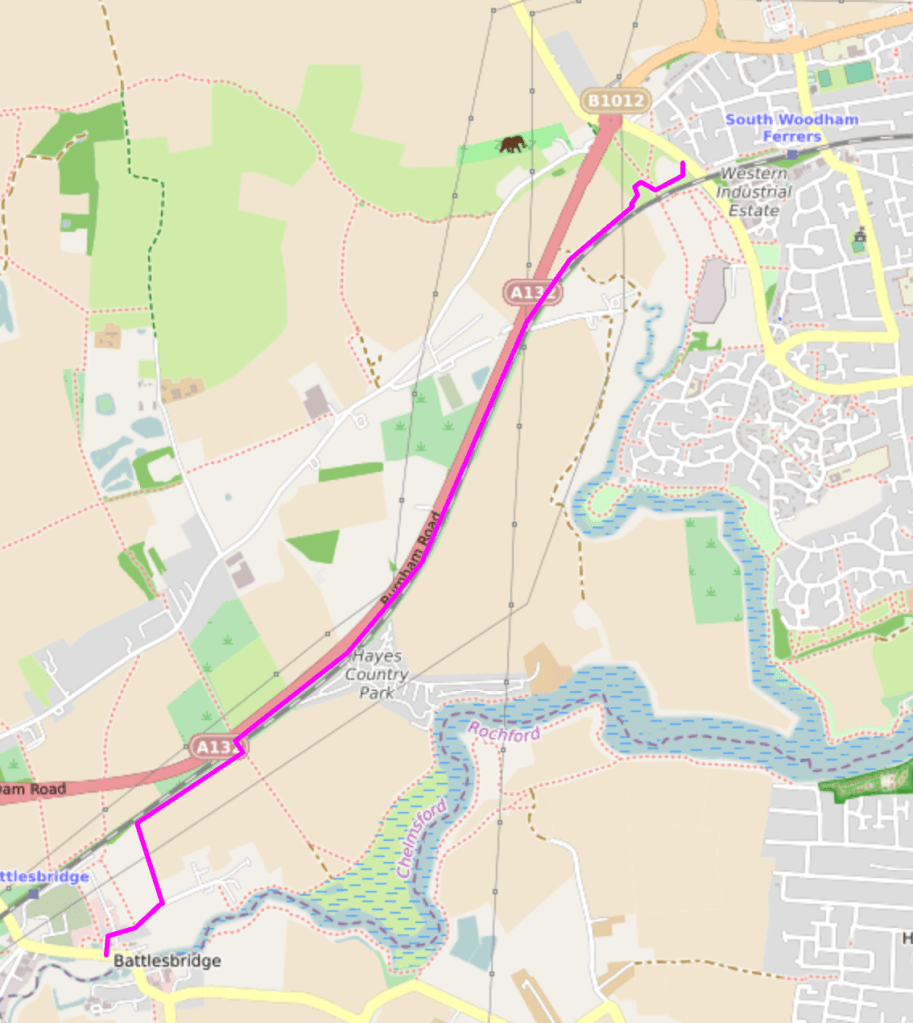
Improving the surface of A132 section to make it suitable for cycle traffic could provide part of a useful connector between the SWF/Dengie and the proposed National Cycle Route 135 at Battlesbridge.
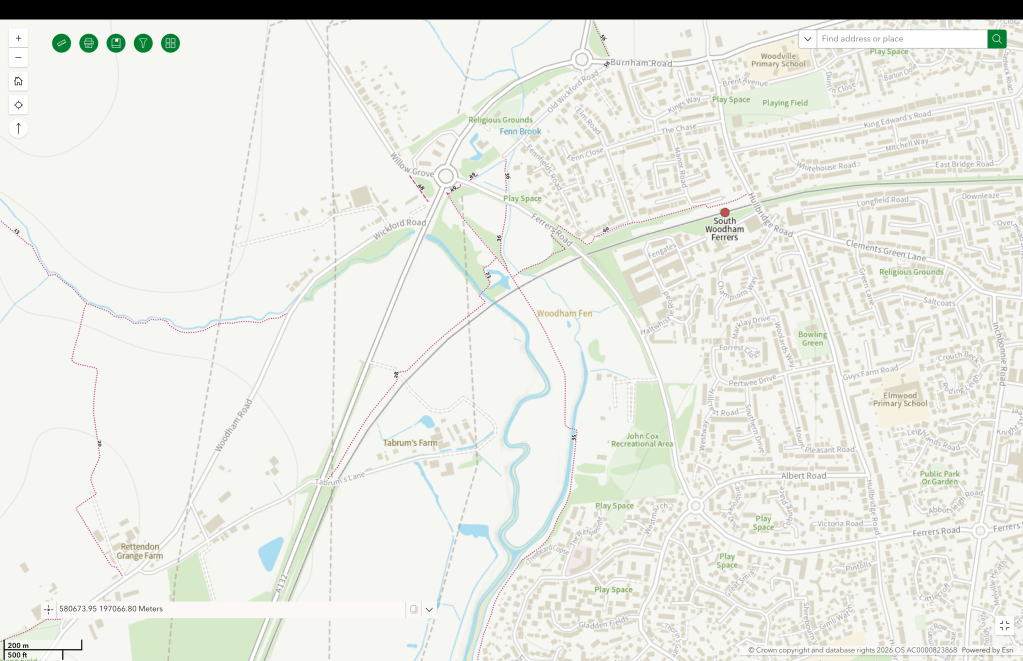
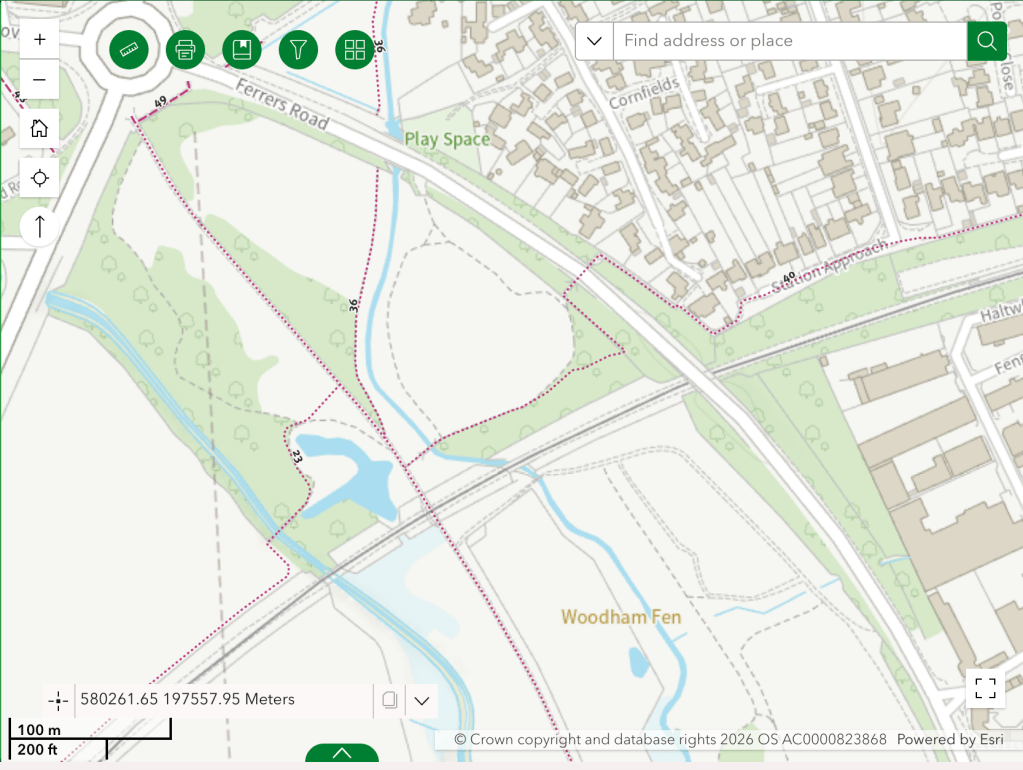
If higher rights allowing bicycle use were allocated to footpaths FP 40 298 (772m), FP 23 298 (119 m), FP 28 229 (650m) and a short section of FP 35 298 (connecting FP 40 298 and FP 23 298) then South Woodham Ferrers, and its railway station, would have a safe, segregated, westward route out for cyclists (the footbridge in Woodhasm Fen might also need some adjustment).
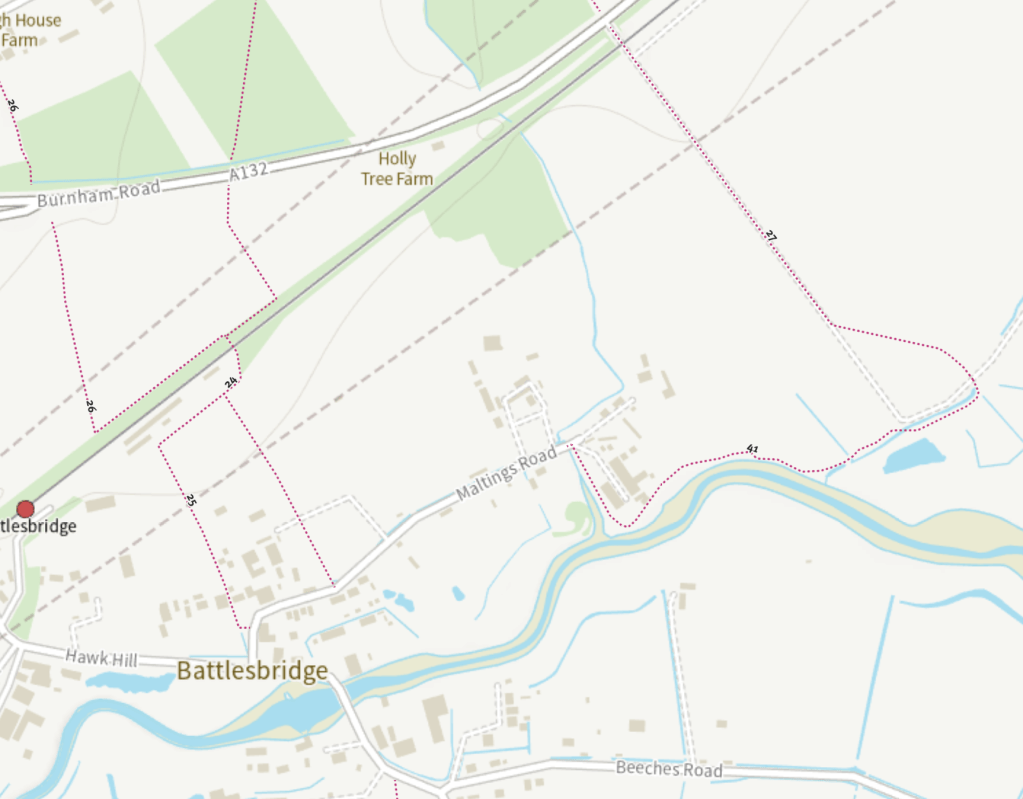
Similarly, where the new A132 path meets FP 27 229, some higher rights for bicycles on FP 27 229 (670) and FP 41 229 (654m) would provide access to Maltings Road, Battlesbridge allowing connection to the proposed National Cycle Network route 135 and Battlesbridge railway station at Hawk Hill.
Higher rights on specific footpaths to allow use bicycles, whether by upgrading to bridleways or otherwise, is one thing – but this doesn’t in itself ensure that the route is suitable for cycling. Soem surfacing work may also be necessary to achieve that.
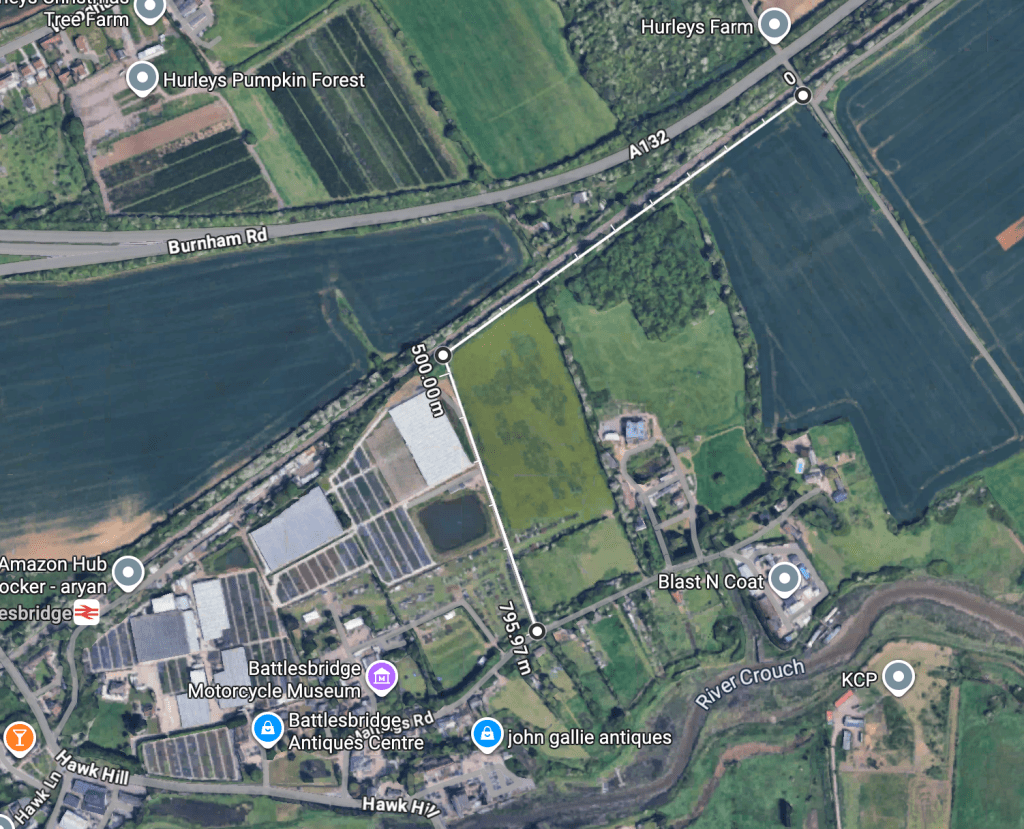
At the Battlesbridge end, I’m not convinced the footpath route described above is ideal. It would be better I think to create a new track, on Dons Farm land, from the bridge – parallel to the railway, before going South on the existing farm track to Maltings Road. Dons Farm belongs, I believe to DJ Fisher Farms.
Proposed new routefrom Bridge (803?) to Maltings RoadFull proposed route South Woodham Ferrers to Battlebridge
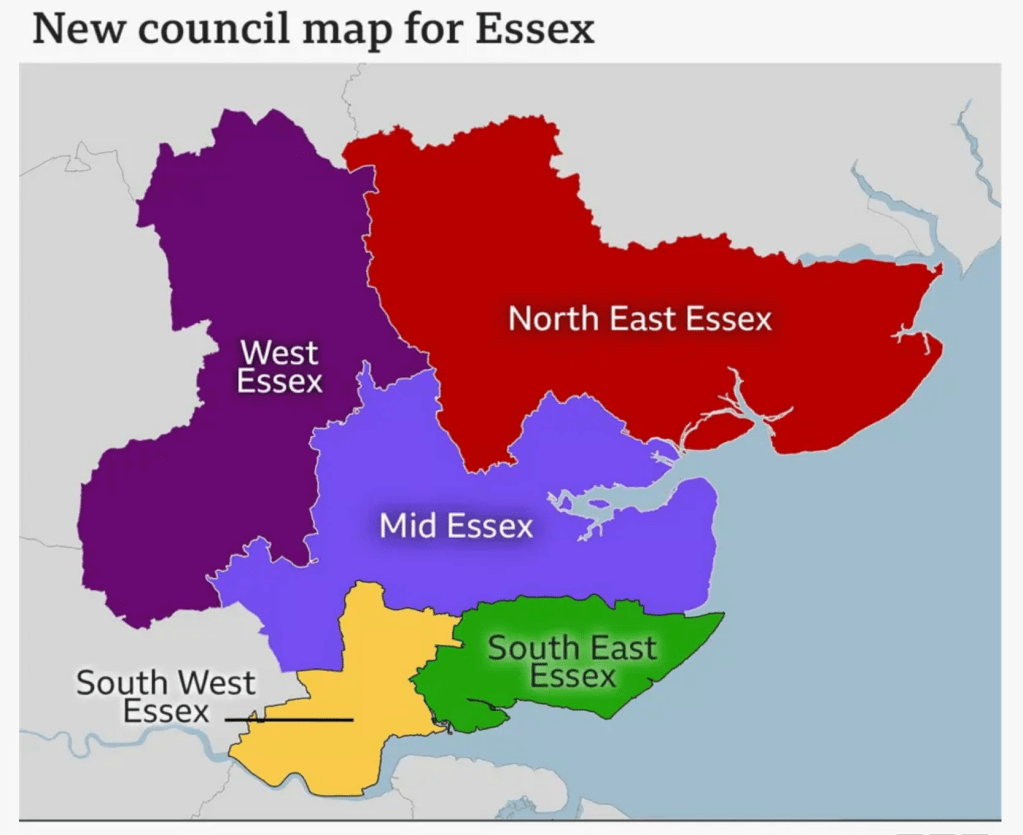
The Gods have spoken. Communities Secretary Steve Reed came down from Mount Westminster this weekend and proclaimed that 15 councils in Essex will be abolished and replaced with five local authorities. I was surprised that UK Gov had not gone with the three unitary authority model proposed by Essex County Council, which seemed to be the only one that fit the government brief.
The five authority model was the one favoured by most existing authorities and does not centralise powers as much as the three model. It is still a centralisation however and decision making will move further away from the people it affects, while the case that the reorganisation will save money is surely weakened by choosing to have five rather than three.
The Dengie will be in the ‘Mid Essex’ unitary – an authority that will stretch from the Greater London boundary to the North Sea coast. It seems likely that the seat of power will be in the City of Chelmsford. It’s the only city in the region, it’s fairly central geographically and it has the buildings and staff of the doomed Essex County Council to draw on, making a transition easier. For similar reasons, I imagine that Chelmsford will also be the seat of the Greater Essex Mayoral Authority when an Essex Mayor is elected in May 2028.
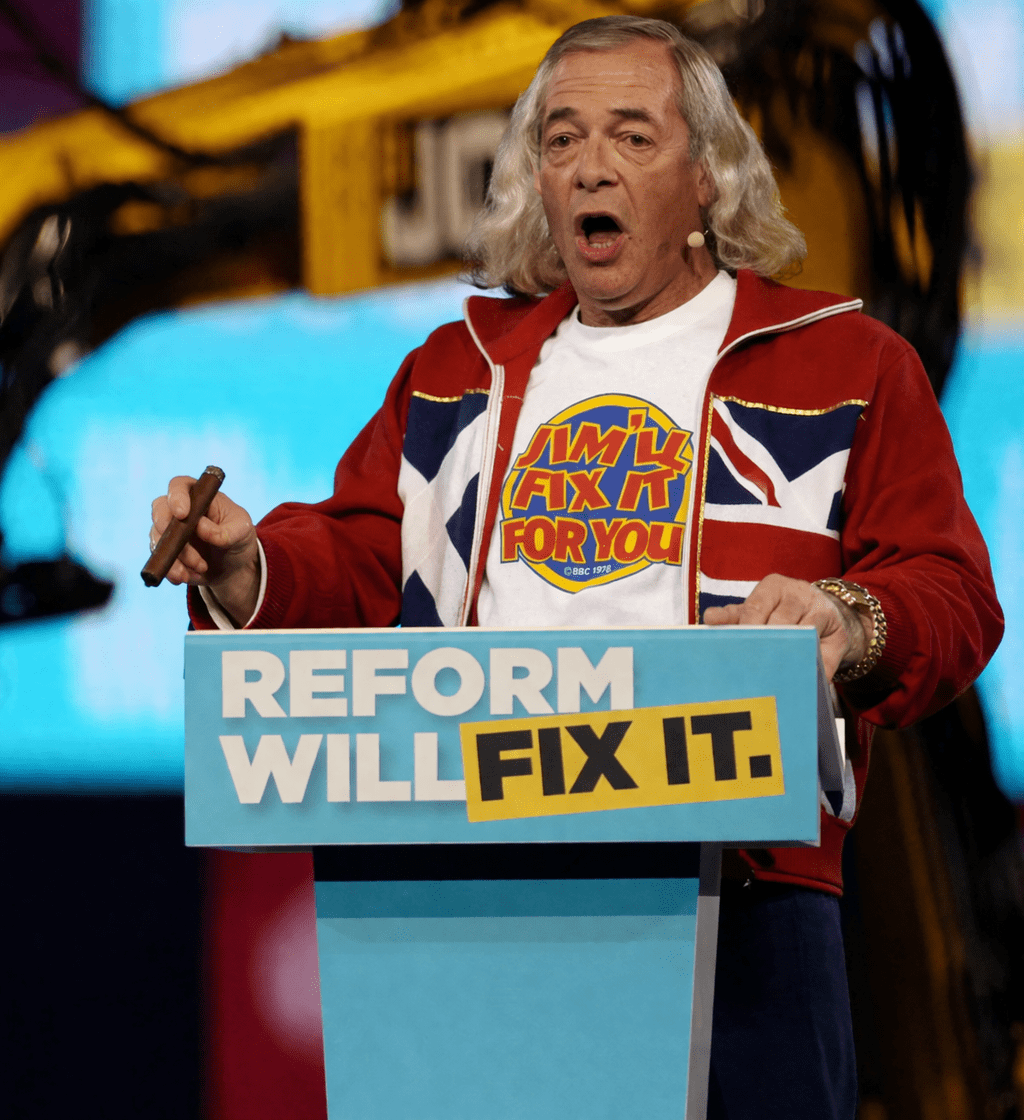
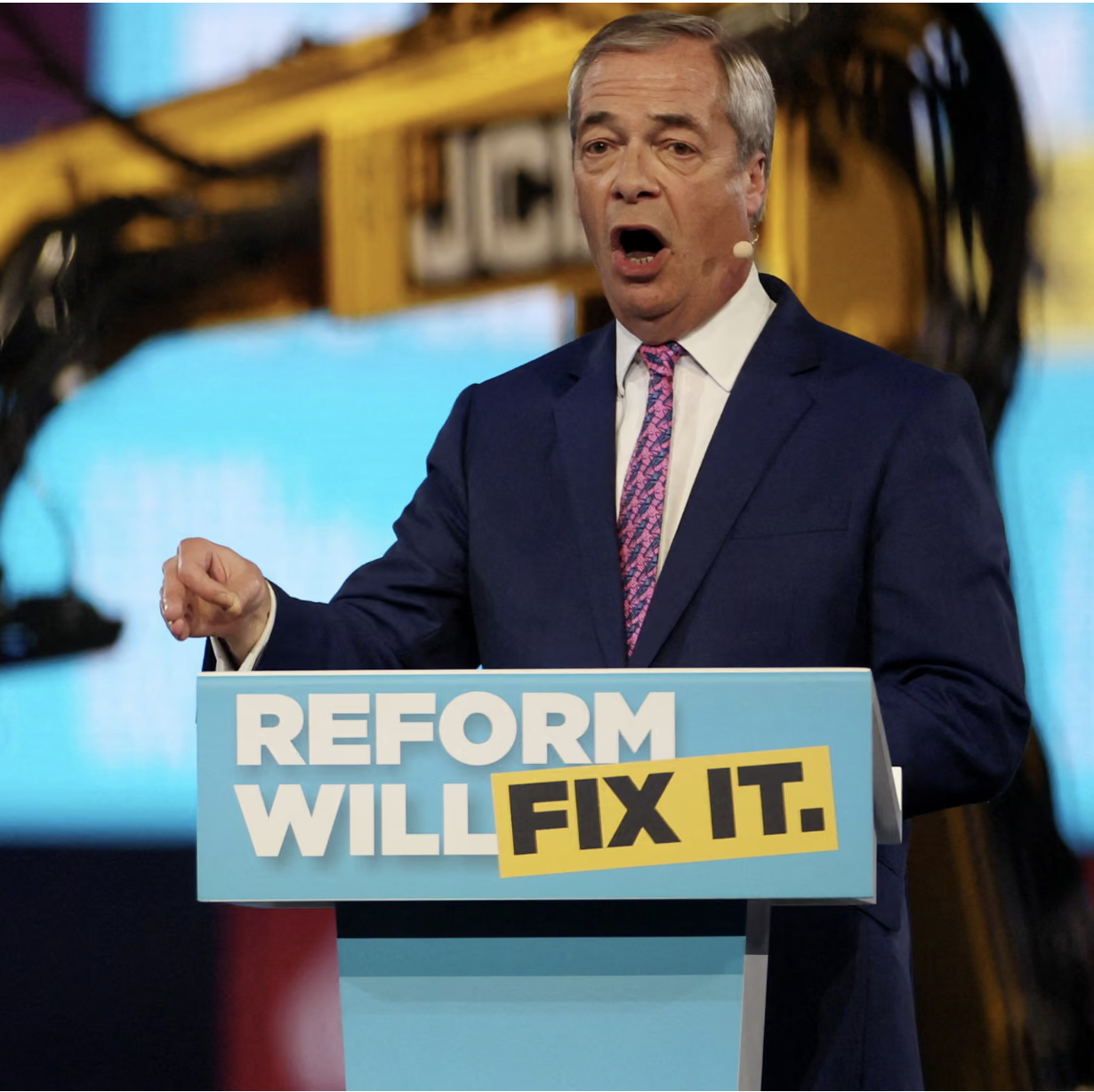
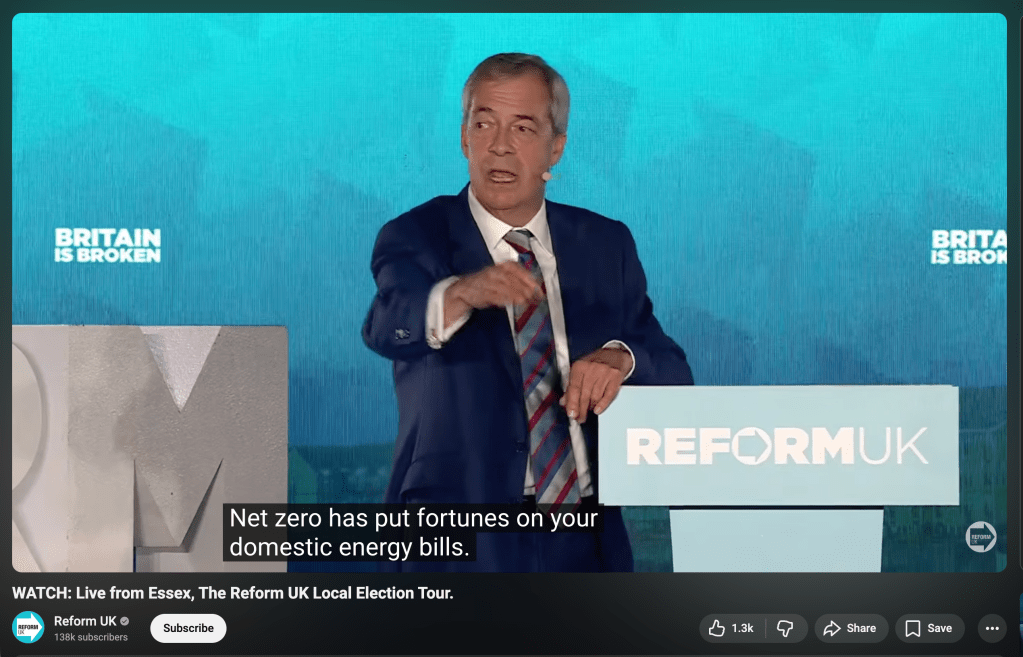
(this all presupposes that a General Election doesn’t happen before local government reorganisation and the Mayoral election and that the next government doesn’t cancel the whole thing as a Starmer folly. Reform UK leader Nigel Farage has said he is “deeply sceptical” about changes to local councils in Essex, “I think that to maintain overall the presence of an identifiable county council is the right way to go” and that Reform UK would try to put a stop to local government reform).
Design and Climate Change section of the Maldon District Local Development Plan
For the Dengie, a move of powers from Maldon to Chelmsford means authority moving from a town it abuts to one that is further away. It’s unclear what value strategies developed at Maldon District level will have when Maldon District is no more – not least the Maldon District Local Development Plan 2014-2029 (reviewed Feb 2025), more recent Neighbourhood Plans across the district that are constrained by the LDP, and the Maldon District Council’s Climate Strategy and Action Plan [pdf].
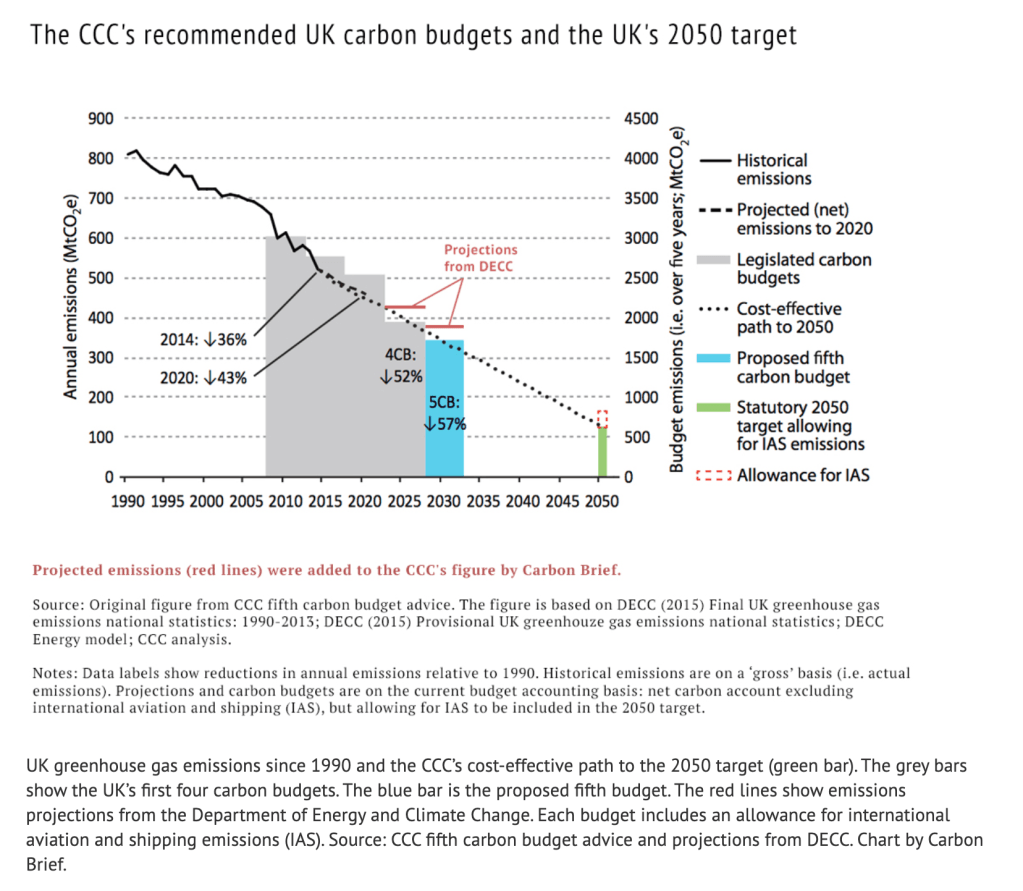
We are entering a crucial period for achieving the UK’s legally binding target of net zero greenhouse gas emissions by 2050 and the interim target of a 58% reduction by the period 2028-2032.
This uncertainty at District level is multiplied at County level. Essex County Council, under a Conservative Party administration, has developed a raft of climate and environment strategies and policies which say a lot of the right things, even though delivery has often been frustratingly slow.
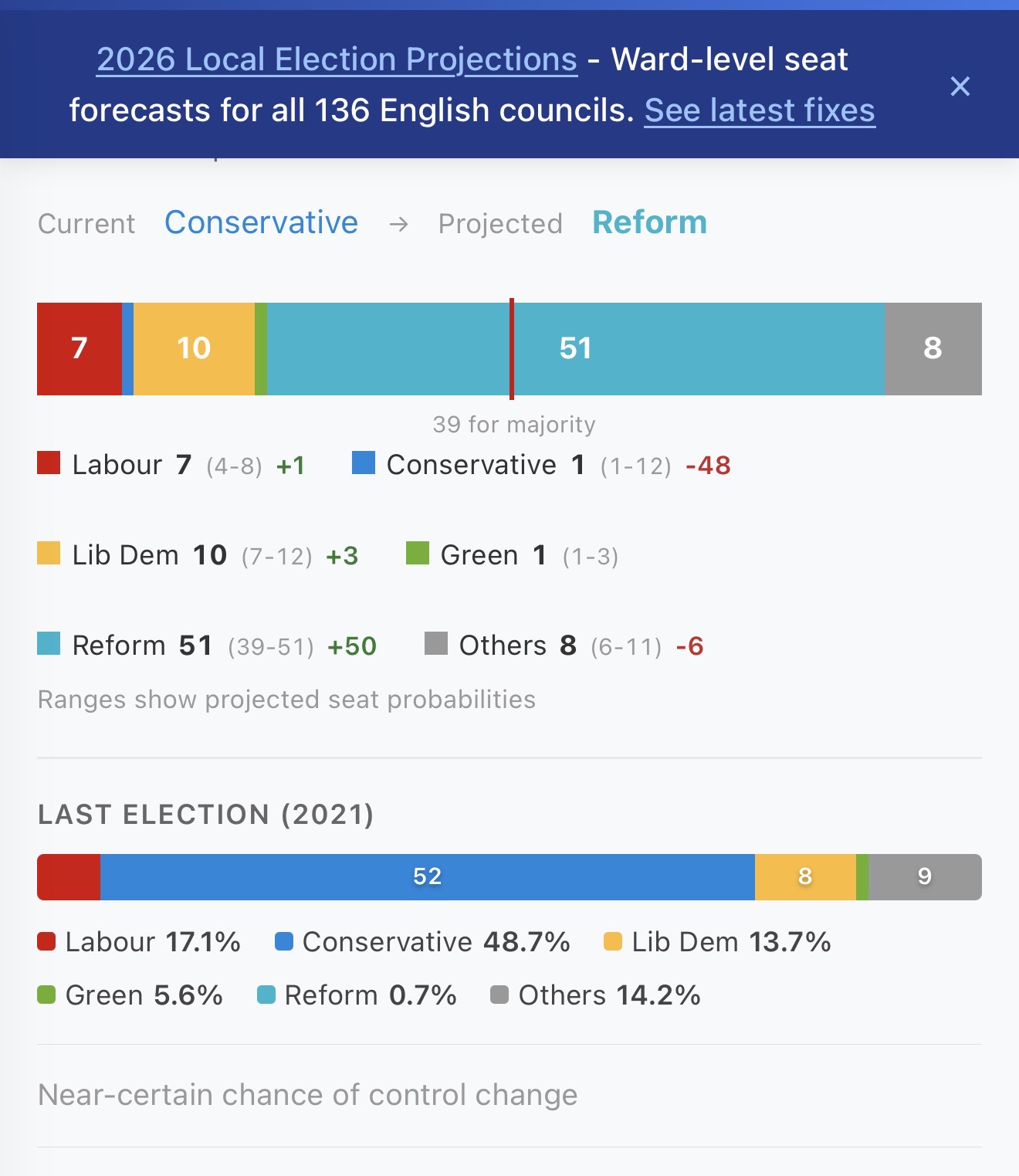
That lack of speed may prove fatal if the political character of the local authorities changes to one less enamoured of net-zero and climate goals. The current polling is therefore sobering.
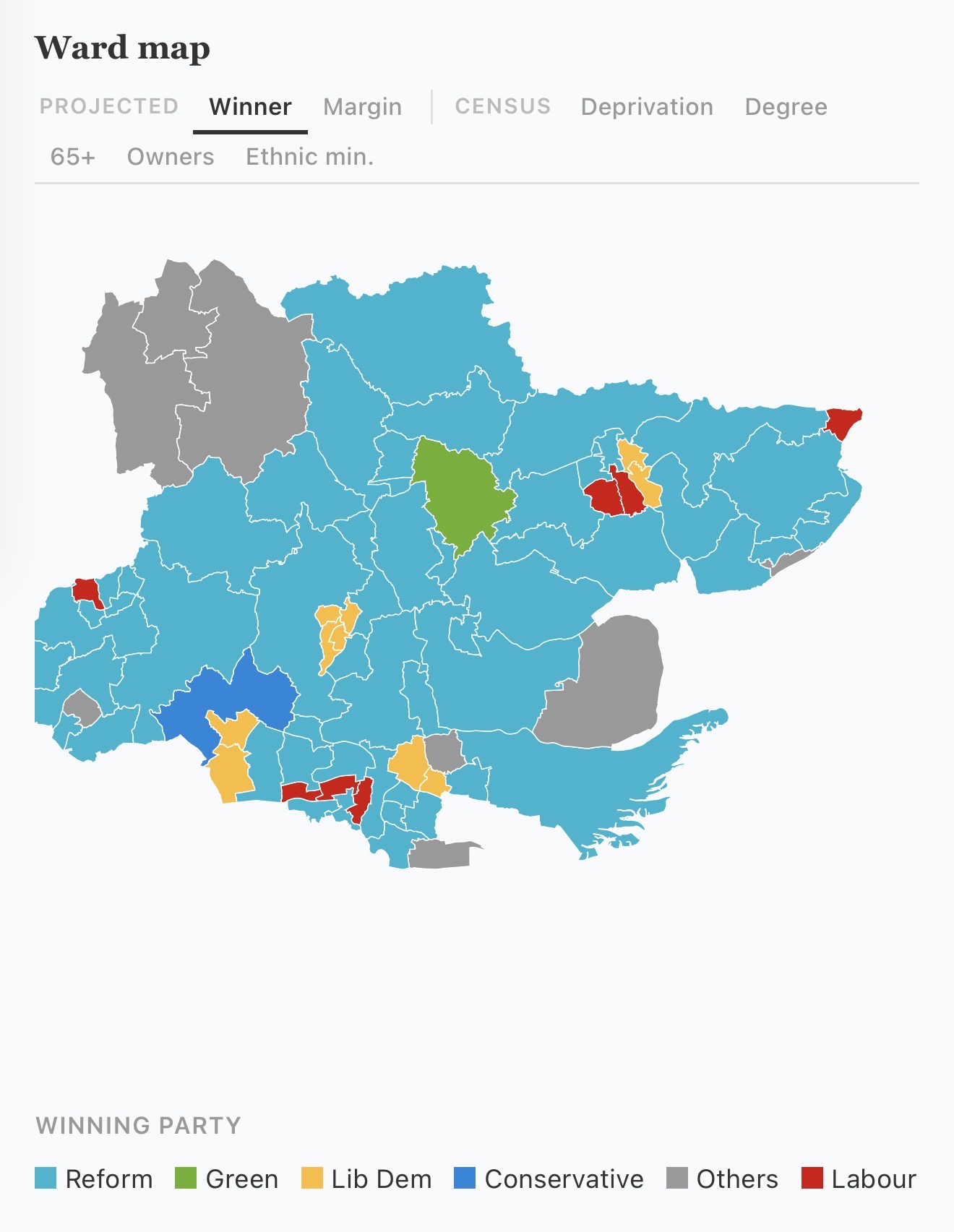
With a few weeks to go, the Conservatives look set to be wiped out at the May County Council elections. Even the low end of projections for Reform UK would give them majority control in Essex. Conservative Party ‘Climate Czar’ Councillor Peter Schwier is one of those who looks set to lose his seat to Reform UK.
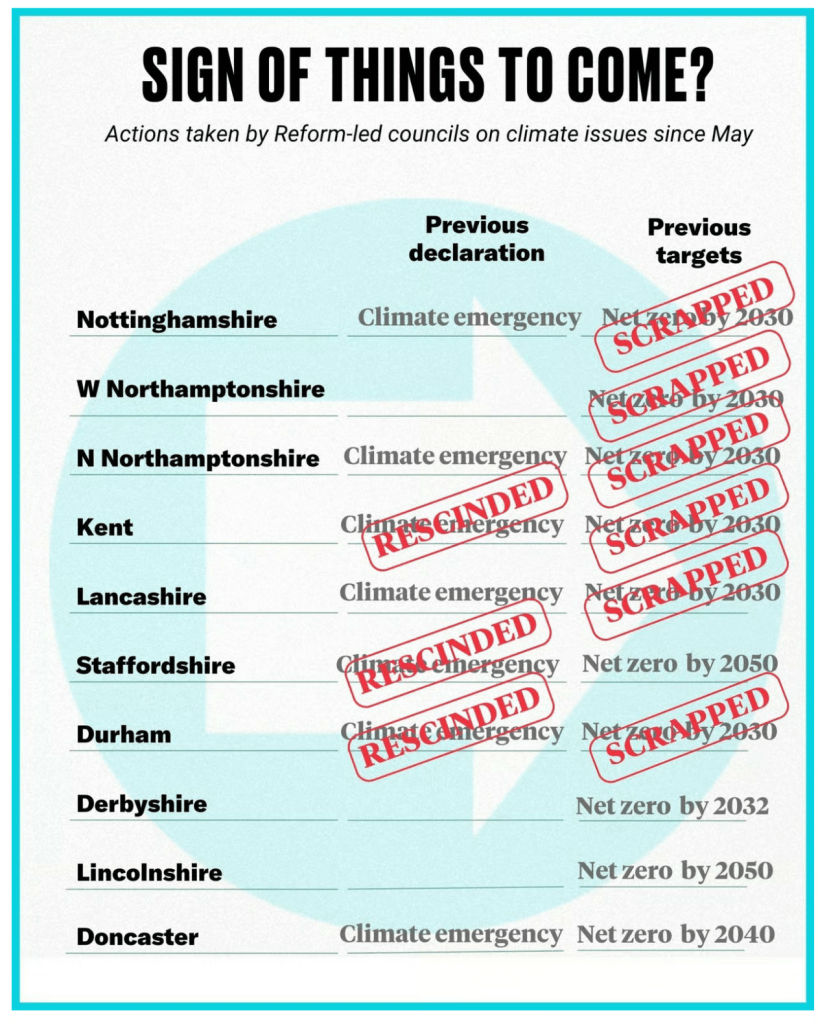
What happened across the Thames at Kent County Council (KCC) when Reform UK took control is a guide as to what to expect: the party initiated sweeping reversals of previous climate commitments.
• Reform UK councillors rescinded KCC’s 2019 Climate Emergency Declaration • The Reform-led council removed Net Zero/carbon neutrality targets and abandoned efforts to meet those targets previously set by the council. • Background information provided by the Reform UK group said the council’s 2019 climate emergency declaration had “endorsed the unproven view of anthropogenic (human-induced) climate change” [pdf]. • They cancelled £32 million of renewable energy property modifications. • They cancelled £7.5 million of electric vehicle transition plans • They voted down motions aimed at supporting the recovery and growth of wildlife and biodiversity by reducing harmful pesticides – despite environmental and public‑health concerns. • Reform UK councillor Chris Hespe called anthropogenic global warming a “hoax”. • Reform UK councillor David Wimble shared a Facebook post highlighting a “Climate Catastrophe Hoax”, where “the climate apocalypse narrative is exaggerated, wrong, and built on fear rather than fact” • Seven out of ten Reform UK controlled councils have scrapped their climate targets since being elected • Academic analysis from the Grantham Research Institute (LSE) found that Reform‑run councils “removed content about climate change from strategy documents” after taking control. KCC is explicitly listed among the councils where Reform UK councillors expressed climate‑science denial and participated in these removals [pdf].
Strategies and policies are much easier to reverse than already existing actions on the ground. I can’t help but think that much of the last decade was wasted and all the pretty pdfs and consultations produced are now dead in the water. Essex should have taken direct control of buses and integrated public transport ticketing and timetables, planning authorities should have demanded net-zero, low bills, homes with domestic energy generation, rain/grey water recycling and minimum 30% on-site biodiversity net gain, the county should be laced with segregated walk/wheel/cycle paths breaking car dependency and improving health outcomes, money spent on waste incinerators should have been burned creating a circular economy instead, our anchor institutions should have collaborated and built community wealth via local procurement led by the public authorities.
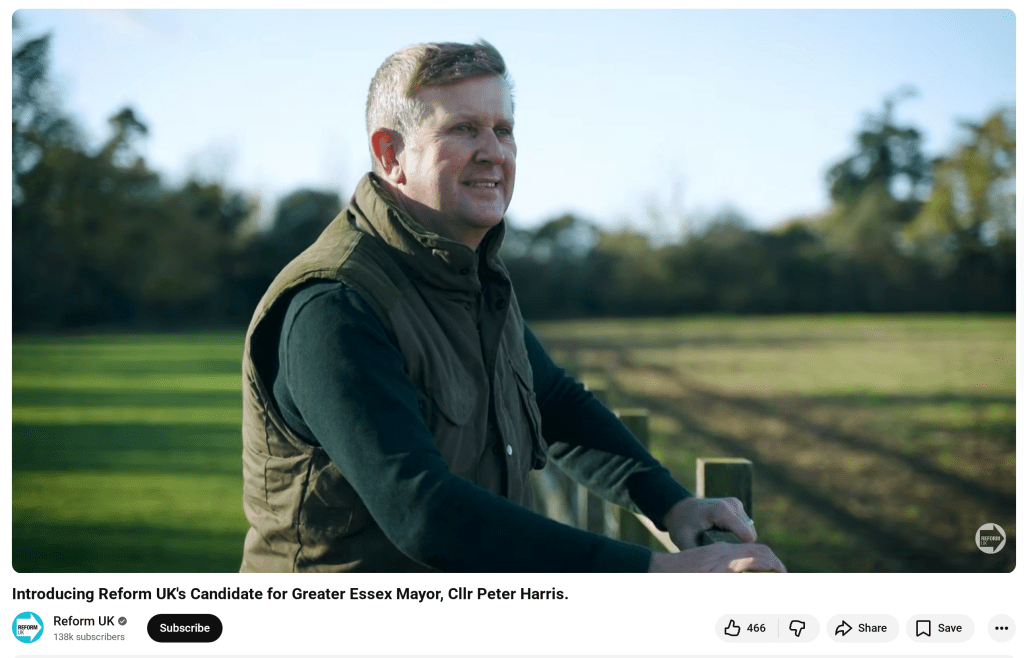
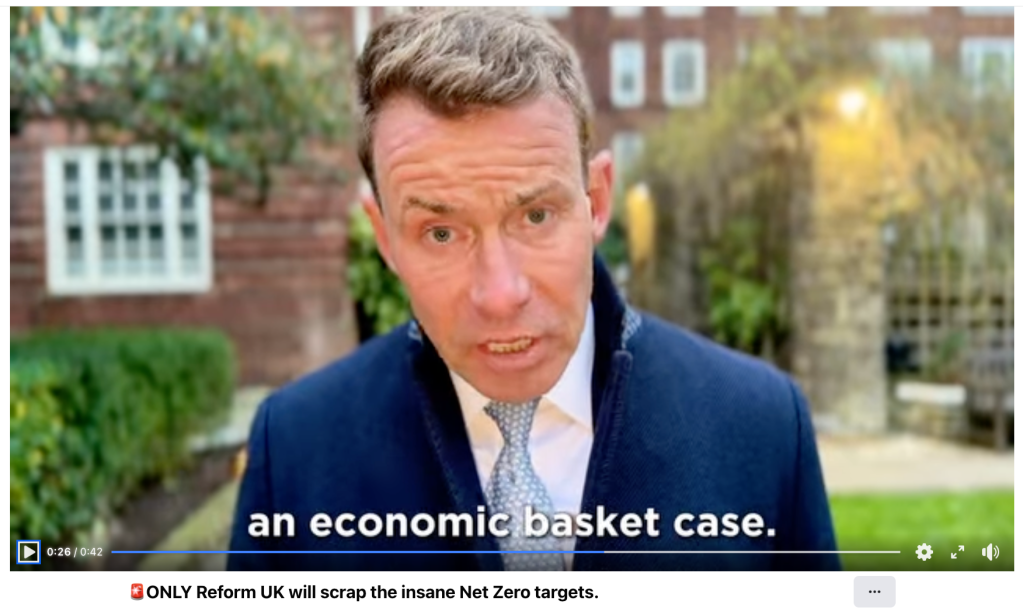
Peter Harris, the Reform UK mayoral candidate for Essex, hasn’t yet made any statements specifically about environmental issues such as climate change, net‑zero, renewable energy, pollution, or biodiversity. He has mentioned ‘protecting our green spaces’ as part of a very general policy agenda, but there’s no detail on what this means in practice.
His promo video has him stood in some fields and his comments there seem to position the ‘green spaces’ protection as being about housing developments rather than nature recovery or habitat protection.
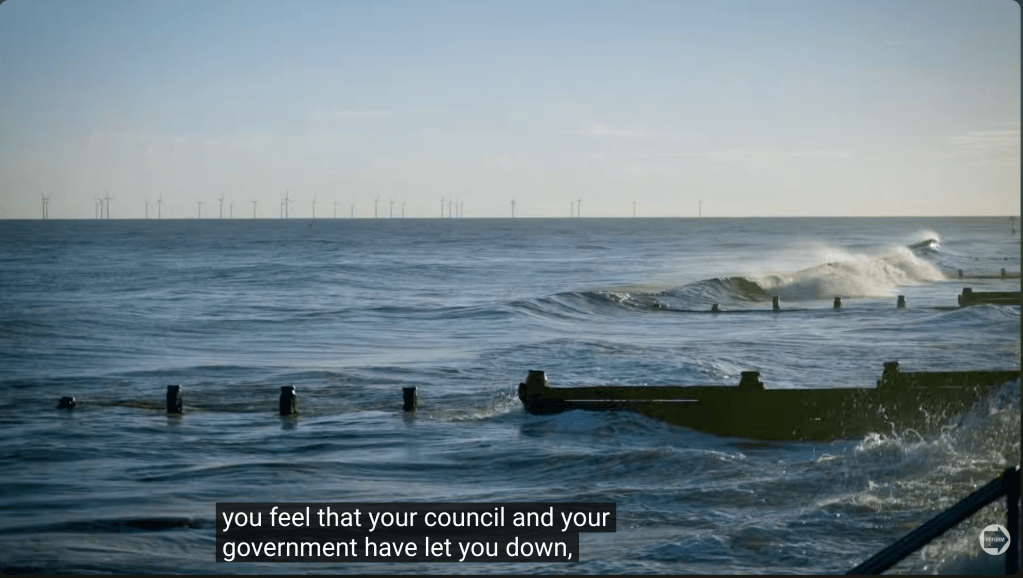
There’s a brief shot of the tide coming in on the Essex coast with the Gunfleet Sands Offshore Wind Farm visible in the distance – but there’s no mention of sea-level rise or renewable energy. Over this image, Harris is talking about the council and the government ‘letting you down’ – is the tide and the wind farm relevant to this, or just B-roll? Hard to tell.
Dr David BullNigel Farage stand-up set at the Circus Tavern
With the Earth’s climate further out of balance than at any time in recorded history, the crash in wildlife populations constituting an extinction event, and human activities increasingly disrupting the natural equilibrium, creating consequences for hundreds and thousands of years, the return of climate change denialism is a bitter pill to swallow.
This week The Timesreported that it had seen a document called ‘Status of Defra’s critical systems to 2030 and beyond’, commissioned before the 2024 election by civil servants at the Department for Environment, Farming and Rural Affairs (Defra).
Tasked with identifying looming threats to the underpinnings of modern life, its authors in the Defra Futures team, an expert group of civil servants, concluded that not only Britain’s food supply but also its water supply and international trade networks were “almost certain” to be “on a decline and collapse trajectory”, meaning there was “a realistic possibility that by 2030 (increasing to 2050) our food, water and natural ecosystems (etc) are at strategic risk of catastrophic failure”.’
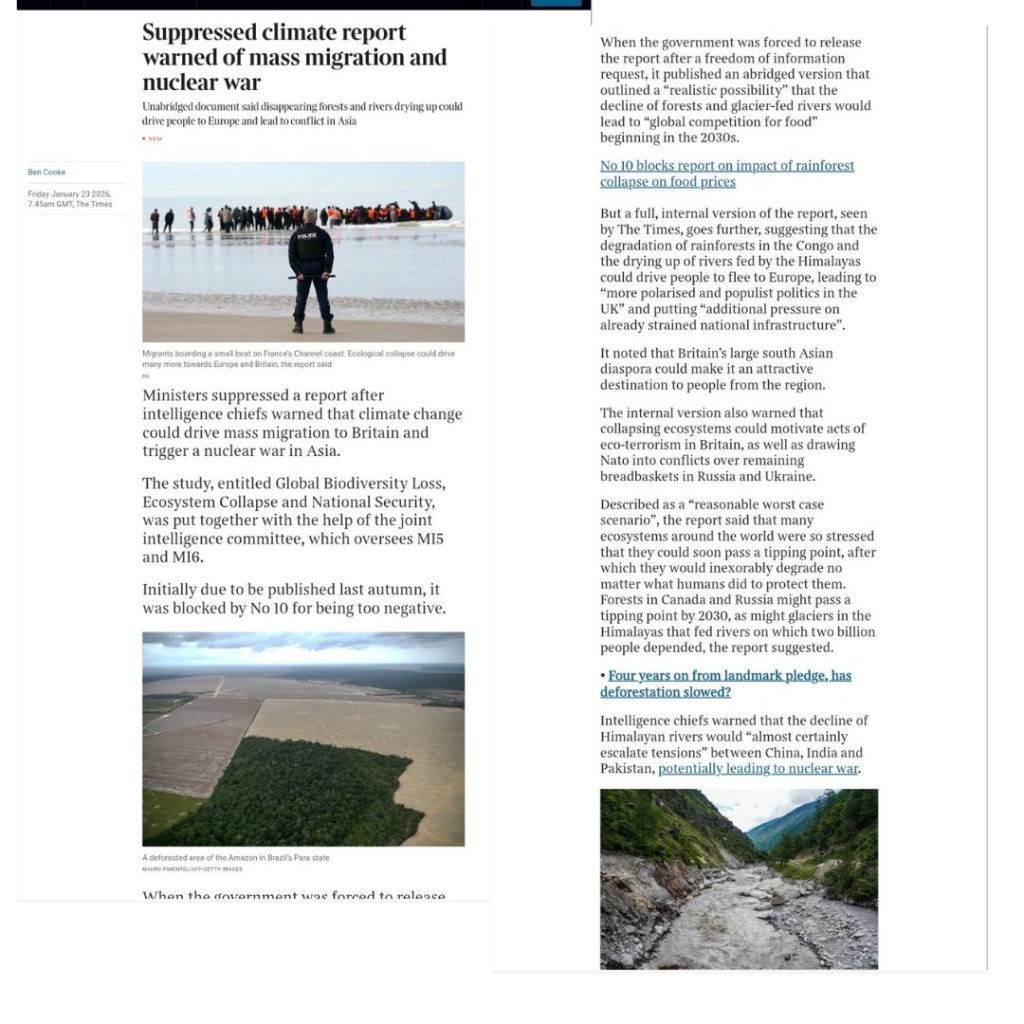
The Government denies a document with this name exists, but a couple of months previously, The Timesreported on a different study ‘Global Biodiversity Loss, Ecosystem Collapse and National Security‘ put together by the joint intelligence committee (which oversees MI5 and MI6). Due to be published last Autumn, it was suppressed until an FOI request produced an abridged version.
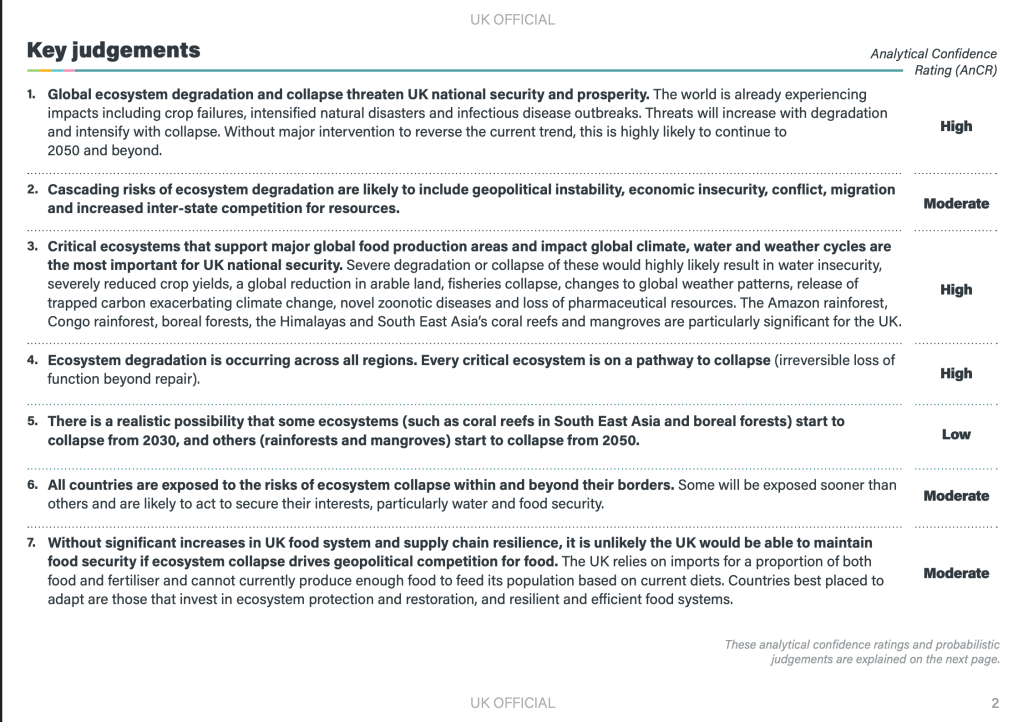
From the abridged ‘Global Biodiversity Loss, Ecosystem Collapse and National Security’
The Times reports that it has seen the unabridged version which paints an even gloomier picture of how climate change might affect the UK: driving mass migration from parts of the world made uninhabitable, provoking wars and acts of terror, and creating a global competition for food.
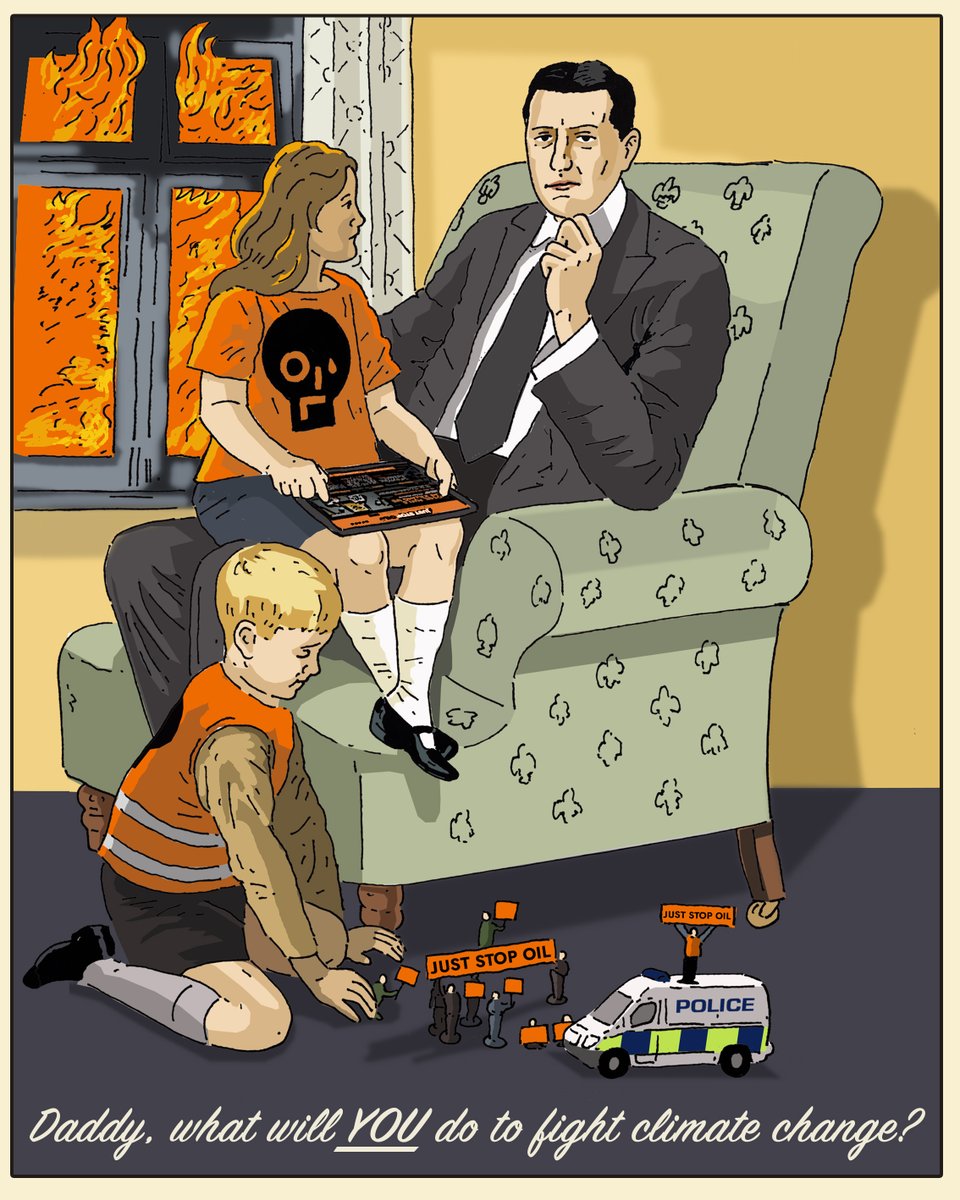
It looks like those of us working to address the climate and ecological emergencies are about to encounter a hostile political environment. When I directed my energies into working with a local climate action group (which was encouraged into existence by the local district council), I did so because I saw opportunities for genuine positive change afforded by the commitments and strategies agreed at political levels from the national to the parish. If, and when, those commitments are abandoned, those strategies are shredded, targets are scrapped, and actions to address the climate and ecological emergencies are ditched – the way forward is unclear. These are the conditions that often produce climate despair and depression, a fatalistic surrender to personal consumption and hedonism, or moves towards more confrontational approaches and direct action.
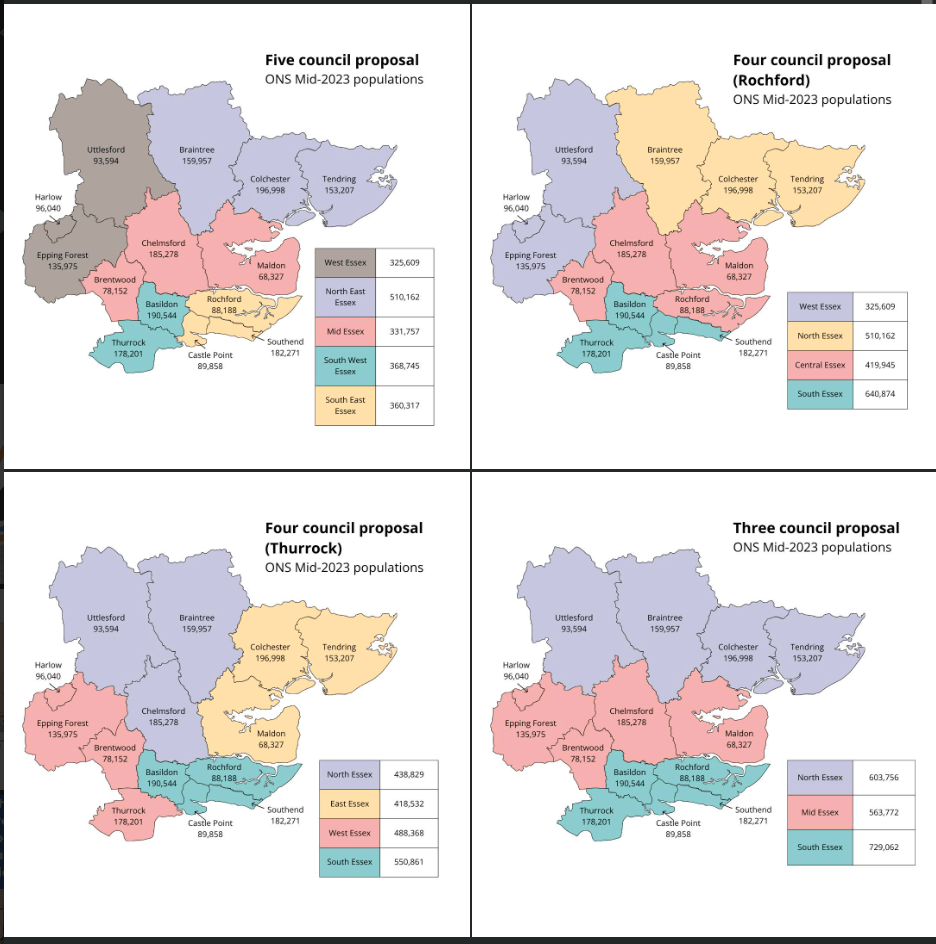
By national government edict the 15 councils in ‘Greater Essex’ must reorganise to form new unitary authorities through a process of Local Government Reorganisation. This will change the current two-level council system into one in which there are new, bigger councils called unitary councils.
I’ve been reviewing the four competing proposals submitted by existing councils as to how that reorganisation should take shape. (They’re all published here). They divide Essex into 3,4 or 5 new unitary authorities:
*Three unitary council proposal [3] *Four unitary council proposal (led by Thurrock) [4T] *Four unitary council proposal (led by Rochford) [4R] *Five unitary council proposal [5]
(in square brackets I’ve added a number used in the figures below)
There are several hundred pages to go through here (874 pages to be precise), so I’ve done a bit of barefoot textual analysis as a first attempt to see what they have to say about the climate and nature emergencies.
My quick and dirty approach was to quantify how many times some key words and phrases related to these issues appear in the respective documents. I chose words to search for that are either words ordinary people might use or they are part of the common lexicon used by governments, NGOs and the climate movement. I began with general terms.
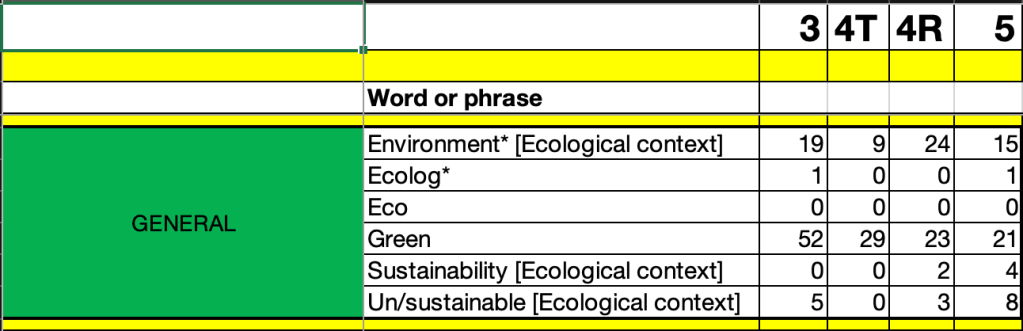
It’s pretty clear that the old favourite ‘sustainability’ is out of favour. That word and sustainable or unsustainable feature often across the documents – 502 times in fact – but very rarely in an ecological context. Only 22 instances of the words relate to ecological sustainability or bear any relationship to the famous definition of “sustainable development” in Our Common Future: ‘Development that meets the needs of the present without compromising the ability of future generations to meet their own needs.’ The words are used primarily as part of the phrase ‘financial sustainability’.
Words derived from the root ecology – ecology itself, ecological, ecologist etc, are almost entirely absent, appearing once each in two of the documents. The contraction ‘eco’ does not appear at all,
The favoured words are clearly ‘environment/al’ and ‘green’ which feature much more often – and to be fair are terms that ordinary people will commonly use. It’s probably worth noting that 45.6% of the times that the word ‘green’ appears in an ecological context it is within the phrase ‘green belt’ (68.6% in the Three unitary council proposal and 65.2% in the Four unitary council proposal (led by Rochford))
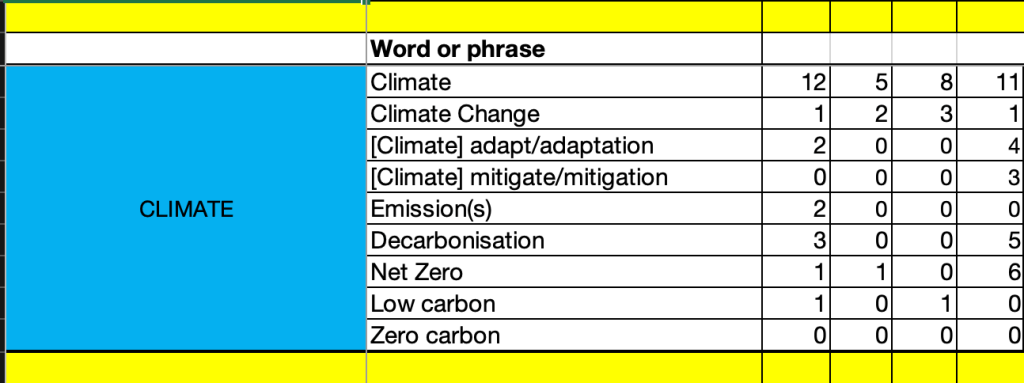
Turning to the climate emergency declared by the UK parliament in May 2019, I looked for where these documents referred to the climate and the national legal commitment to decarbonising all sectors of the UK economy to meet our net zero target by 2050. The phrase ‘climate change’ appears only 7 times across all four documents, ‘net zero’ appears 8 times (and is completely absent from the Four unitary council proposal (led by Rochford)). Decarbonisation also appears 8 times but is completely absent from both the Four unitary council proposal (led by Thurrock) and the Four unitary council proposal (led by Rochford). The word ’emission/s’ appears twice in the Three unitary council proposal but nowhere else. ‘Low carbon’ appears once a piece in the Three unitary council proposal and the Four unitary council proposal (led by Rochford) but not at all in the other two. ‘Zero carbon’ appears in none of them.
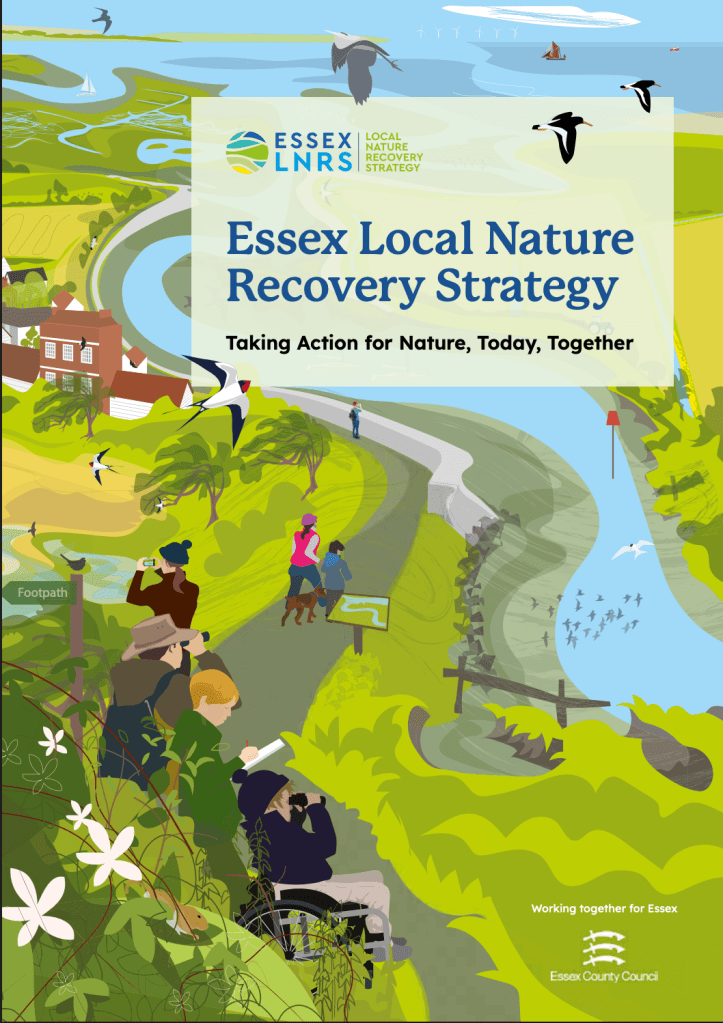
What then of the ecological emergency? England is ‘widely considered to be one of the most nature-depleted countries in the world following historic and ongoing declines. Government has made legally-binding commitments to end these declines and for nature to recover‘. Essex County Council is one of the responsible authorities delegated to prepare a Local Nature Recovery Strategy [LNRS] designed to: deliver the necessary action to reverse the current path of decline in our biodiversity; and, bring about a recovery for nature. Essex published its LNRS in July this year.
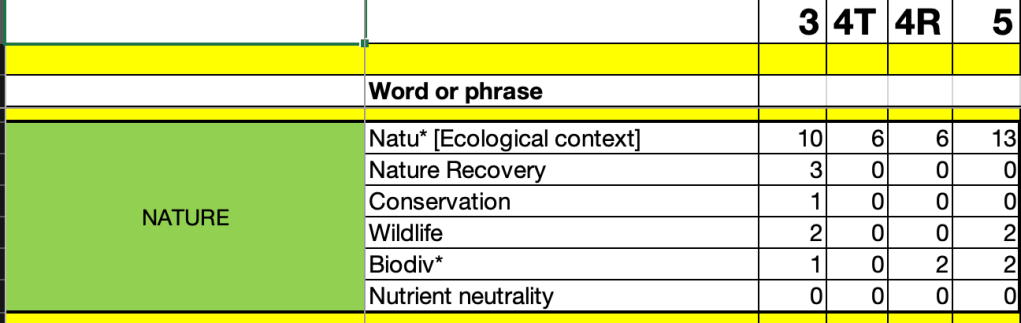
The phrase ‘nature recovery’ only appears in the Three unitary council proposal. This proposal was made by Essex County Council and the absence of ‘nature recovery’ in all the others perhaps indicates a failure to fully engage the other authorities in the county with this task.
Despite the new planning mandates for ‘biodiversity net gain’, the words biodiversity or biodiverse barely appear. The commonly recognisable terms ‘conservation’ and ‘wildlife’ are fewer and far between.
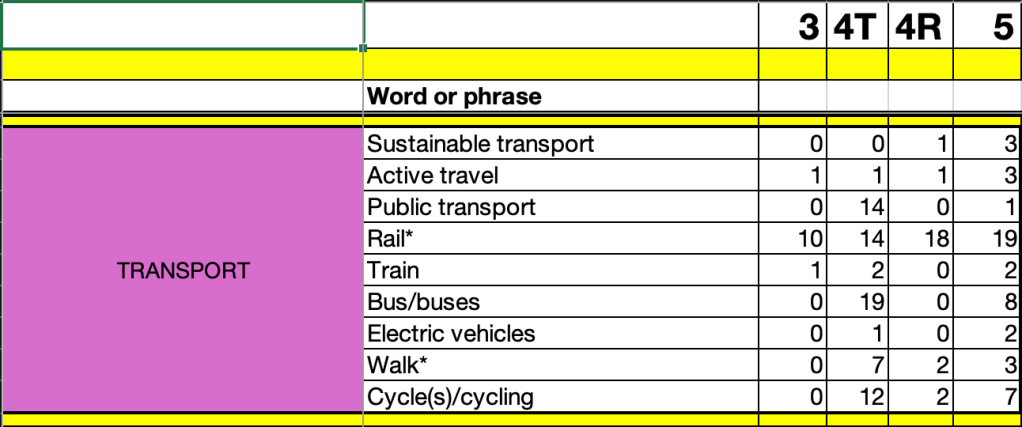
Domestic transport is the largest source of emissions in the UK, accounting for 29.1% of greenhouse gas emissions in 2023. The largest source of emissions from UK transport is road vehicles, which includes passenger cars and freight vehicles using petrol and diesel. Addressing this is key to a lower carbon future and one of the reasons I’m trying to rECOnnect Dengie. What do these proposals have to say about sustainable transport? Two of them don’t use the phrase.
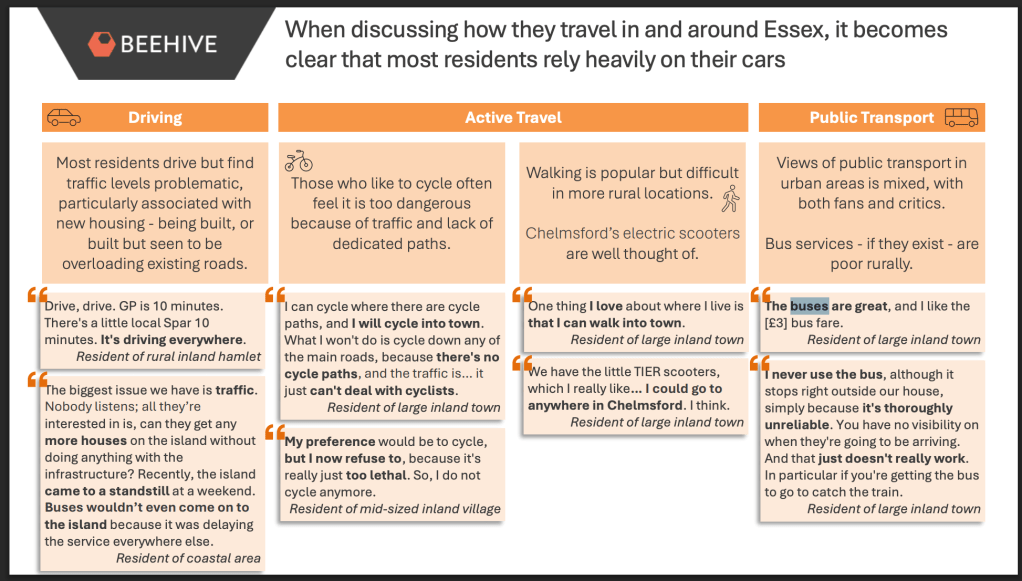
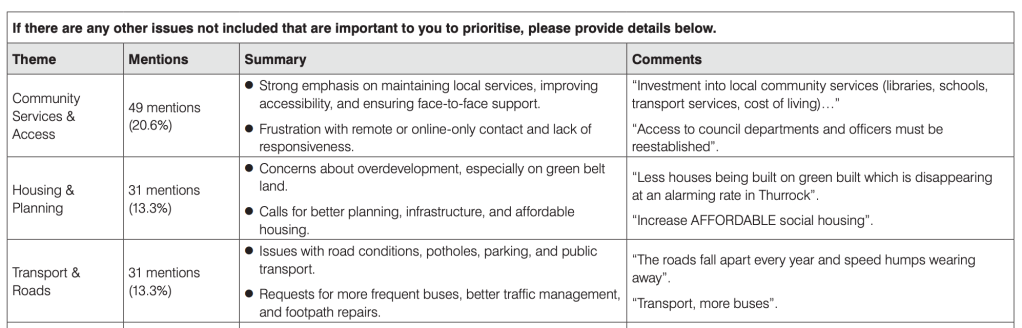
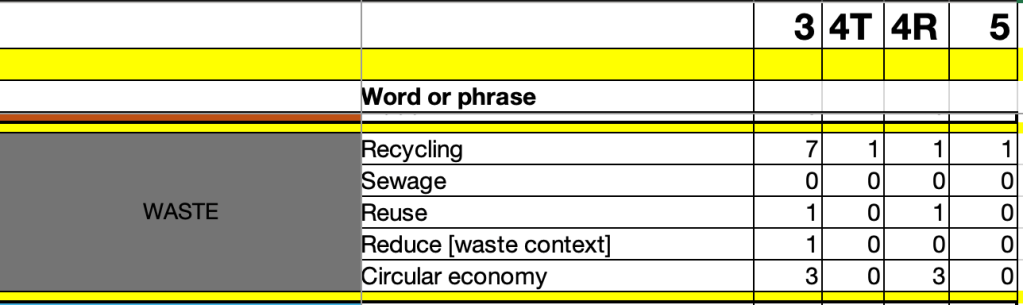
‘Public transport’, ‘bus/buses’, and ‘electric’ [vehicles], are all missing from the Three unitary council proposal and the Four unitary council proposal (led by Rochford). The Three unitary council proposal is particularly lacking in this area with no mentions of ‘sustainable transport’, ‘public transport’, ‘bus/buses’, ‘electric vehicles’, ‘walk/walking/walker(s)’ or of ‘cycle(s)/cycling’. The amount of attention apparently given to this area by the the Four unitary council proposal (led by Rochford) is also deceptive as many of these words appear primarily in summaries of public responses to surveys saying what they would like rather than any clear strategy to deliver them (see slides below).
A couple of slides from the Four unitary council proposal (led by Rochford) with the public’s transport issues
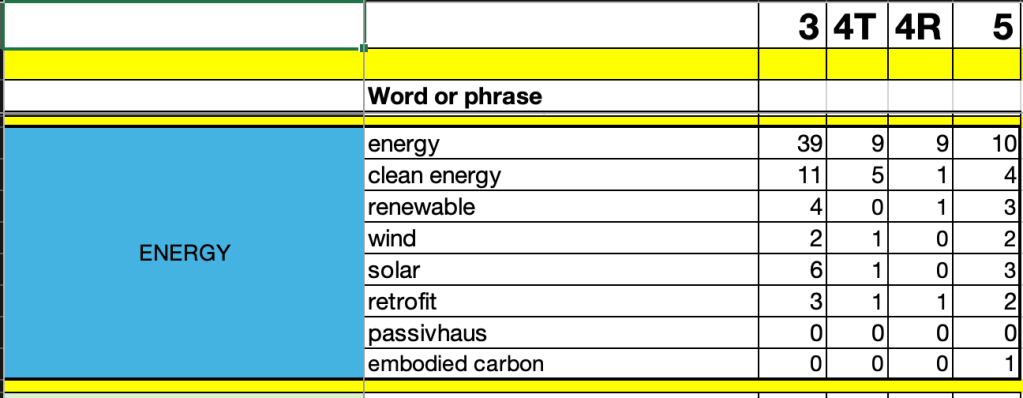
On the topic of clean/renewable energy there’s a bit more attention, but still surprisingly little on some of the keys areas in which we need to act to reduce carbon emissions.
Concerning waste there’s very little, especially in the key areas of reduction and reuse. It’s good to see some nods to the ‘circular economy’ but the county still seems to be celebrating ending landfill by burning rubbish rather than anything more transformative. Despite the massive public outcry against shit in the river and the pollution of our watercourses, none of the proposals dare say ‘sewage’.
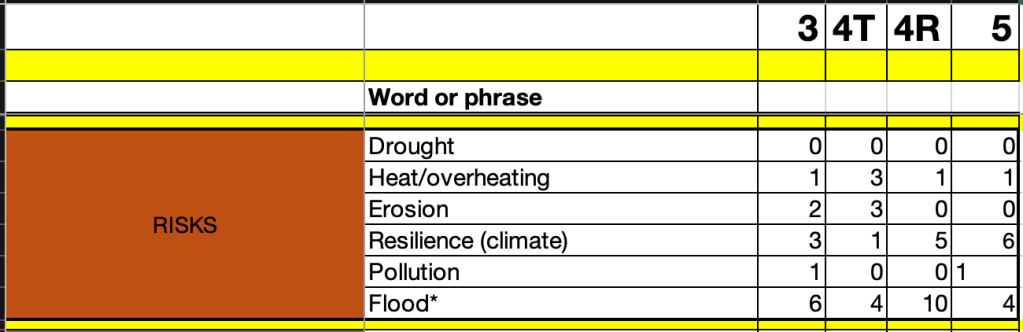
The less we mitigate climate change, the more risks we will face and the greater adaptation we will need to make. There’s not much about this in these forward looking documents and some risks get more attention than others.
As I said at the start this is a quick and dirty analysis – adding up the numbers here won’t tell you which proposal is best – you still need to read the documents and work that out for yourself. More of these words appear in the Three unitary council proposal (279) than any other, the fewest appear in the Four unitary council proposal (led by Thurrock) (189) – but more isn’t necessarily better. A lot of good words have been written in various documents over the years – but what matters is what actually happens not the words.
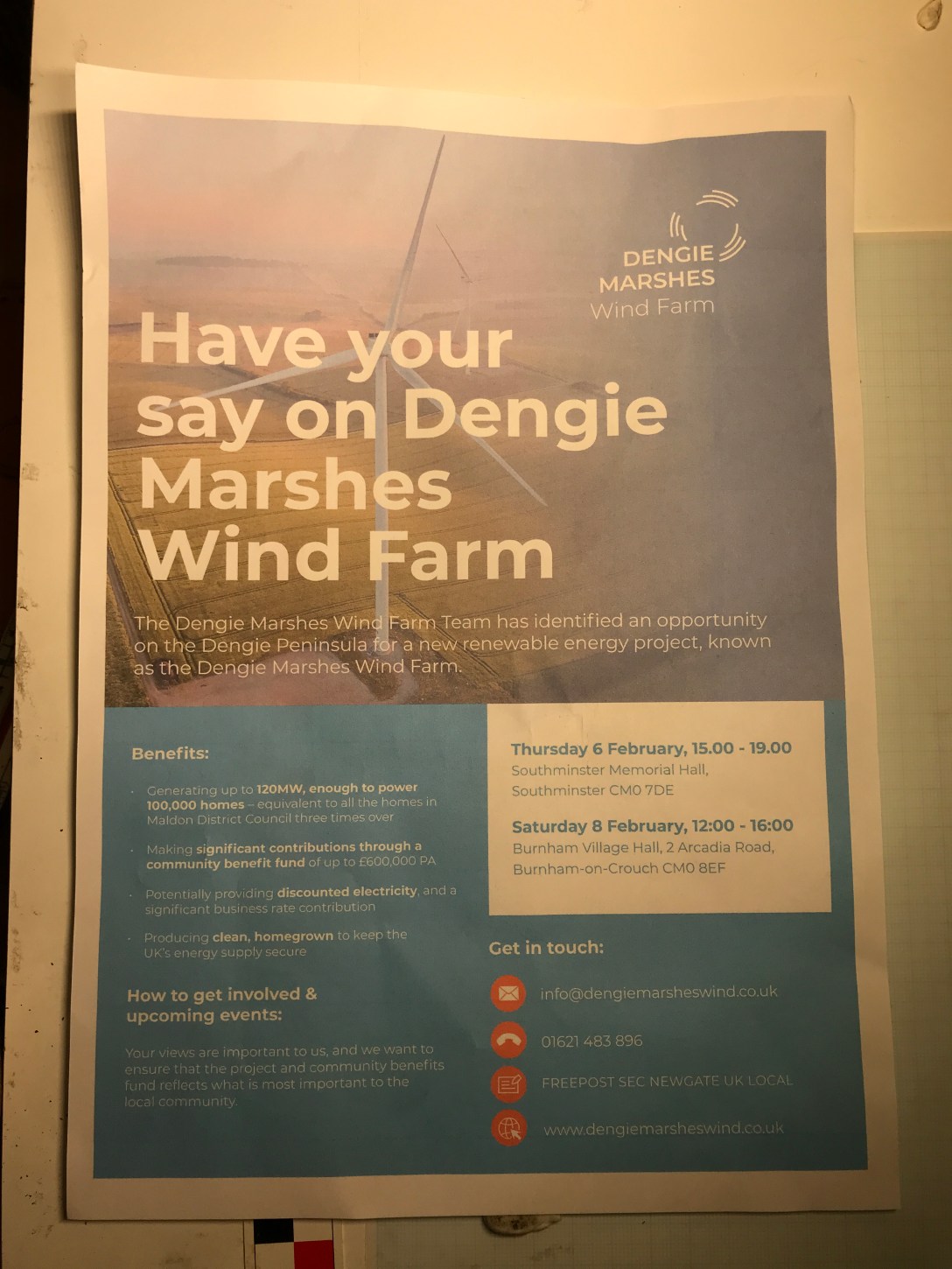
The proposed Dengie Marshes Wind Farm is moving forward into a phase of public survey and persuasion. (A company called Dengie Marshes Wind Farm Limited was incorporated on 18 October 2024 and shares directors with Blenheim Renewables, the company which initiated the project.)
The project has a website and is holding a series of consultation events with two scheduled for this week:
Thursday 6th February 15:00 – 19:00 Southminster Memorial Hall, Southminster, CM0 7DE
Saturday 8th February 12:00 – 16:00 Burnham Village Hall, 2 Arcadia Road, Burnham-on-Crouch CM0 8EF
They aim to submit a planning application this ‘summer’.
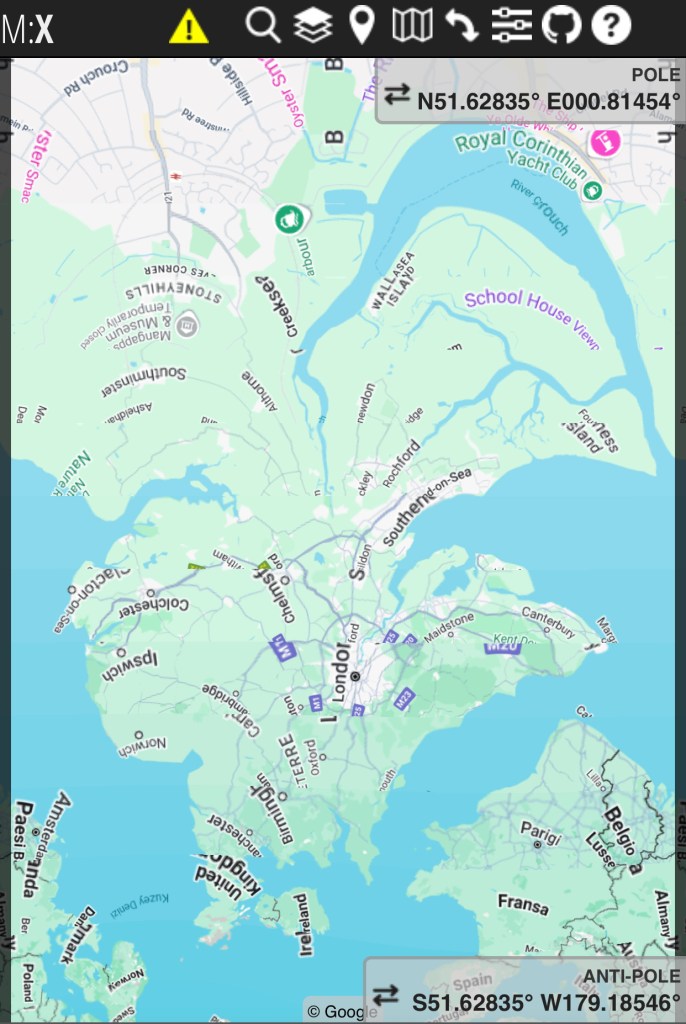
Mercator projection of the Earth centred on Burnham-on-Crouch(or is it London?)
‘Think Globally: Act Locally ‘has been a familiar refrain of the Green movement for decades now. It poses the problematique at the planetary level but advocates for action at a smaller ‘here’. The scale of this here is never entirely clear but the bioregionalist Raymond Dassman confronting the ecological crisis in the 1970s made a distinction between “biosphere people,” who exploit resources from the entire planet and “ecosystem people,” who can achieve a high-quality of life within their local bioregions. The bioregionalists encouraged us to provision ourselves primarily from our local watershed and to reinhabit this more discrete bio-geo-ecological unit as other species do. “The world”, poet Gary Snyder wrote is “places.”
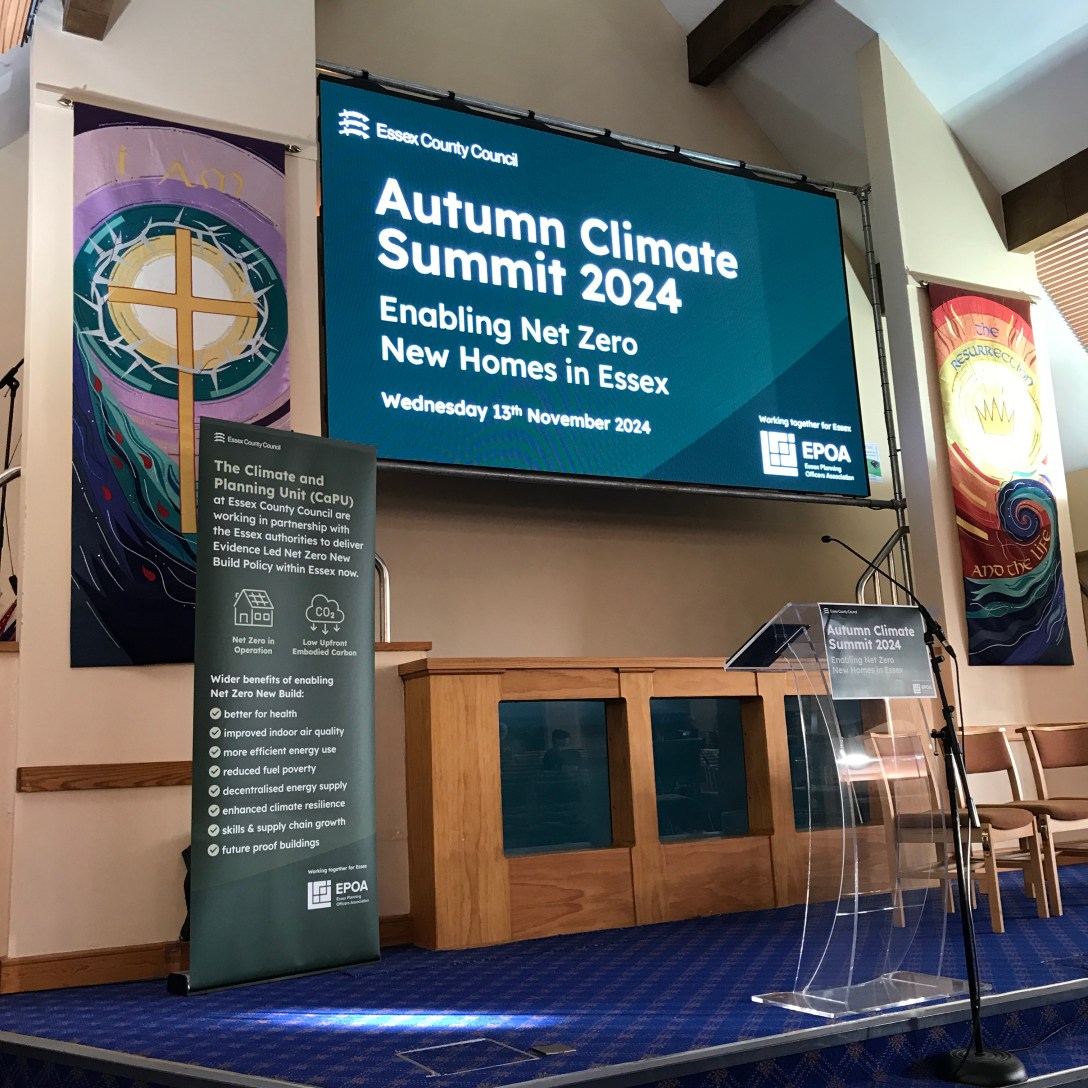
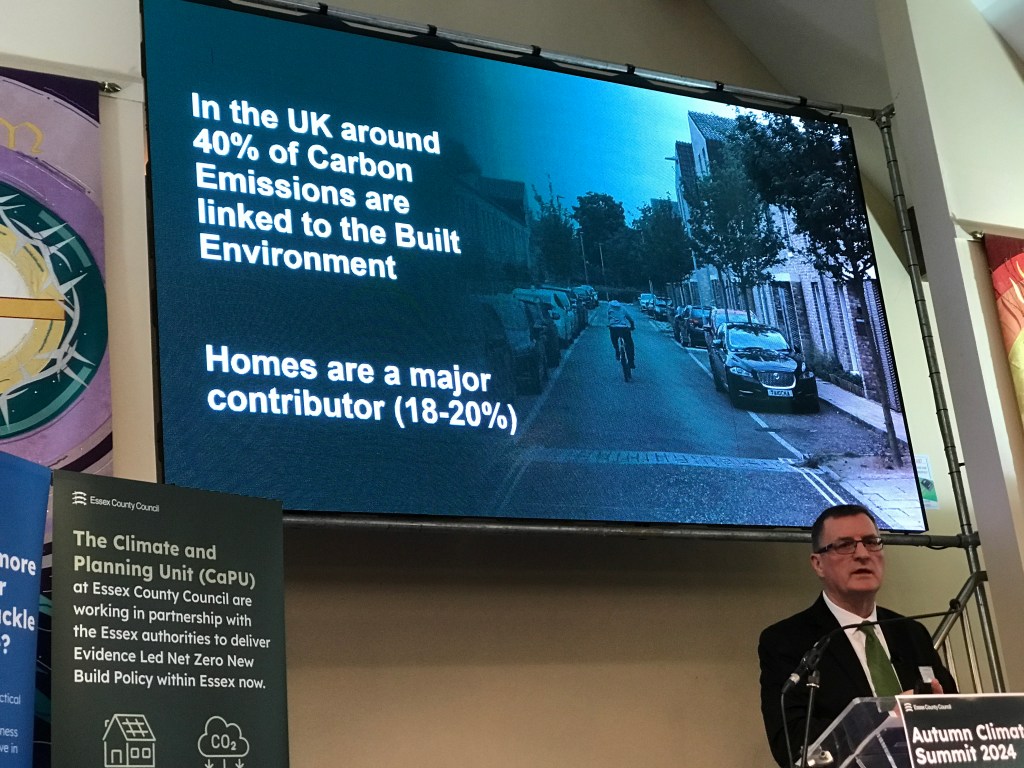
On the 12th of November, I attended the Essex County Council Autumn Climate Summit ‘Enabling Net Zero New Homes in Essex’. I was excited that the Summit showed a level of ambition aligned with the gravity of the national net zero task and our international commitments. (You can watch a recording of the Summit here).
I was also impressed by the statements that Essex was taking a leading role, especially with the Essex Climate Action Commission Set Targets for all new homes to be net zero by 2025 and for all new buildings to produce more energy than they use by 2030.
Last week, we celebrated the first year of the Dengie Climate Action Partnership (DCAP) with a social at the Victoria Inn.
More folk turned up for the social in the pub than regularly do for the monthly meet-ups in Burnham Council Chamber. An unsurprising but salutary reminder that an open formal meeting is not for everyone.
I am grateful to Tony Fittock (District Councillor for Althorne ) for letting me know that the process of creating a new Local Development Plan for Maldon District has begun. So my previous post on the matter revealed my own ignorance of the Maldon District Local Development Plan (LDP) Review: Issues and Options Consultation, which ran from 17 January to 14 March 2022.
From this, I learned that ‘the Plan Period for the review of the LDP Review is going to be 20 years.’ As the current plan runs until 2029, this indicates that its successor will cover the period up to 2050. As noted previously, the UK government is committed by law to reduce greenhouse gas emissions by at least 100% of 1990 levels (net zero) by 2050. The next Local Development Plan will therefore set out a vision and a framework for the future development of Maldon District that must include complete decarbonisation.
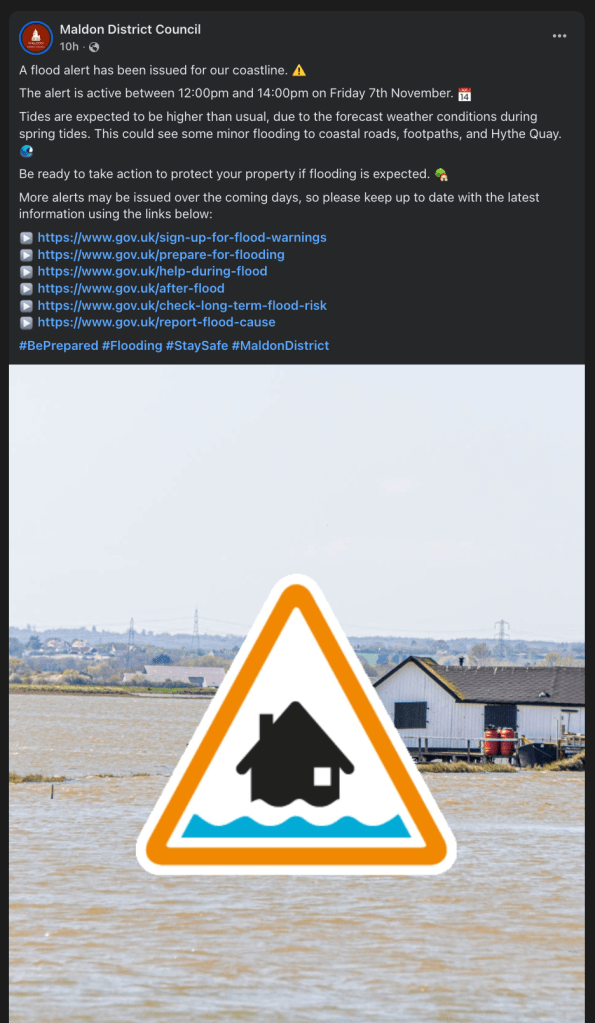
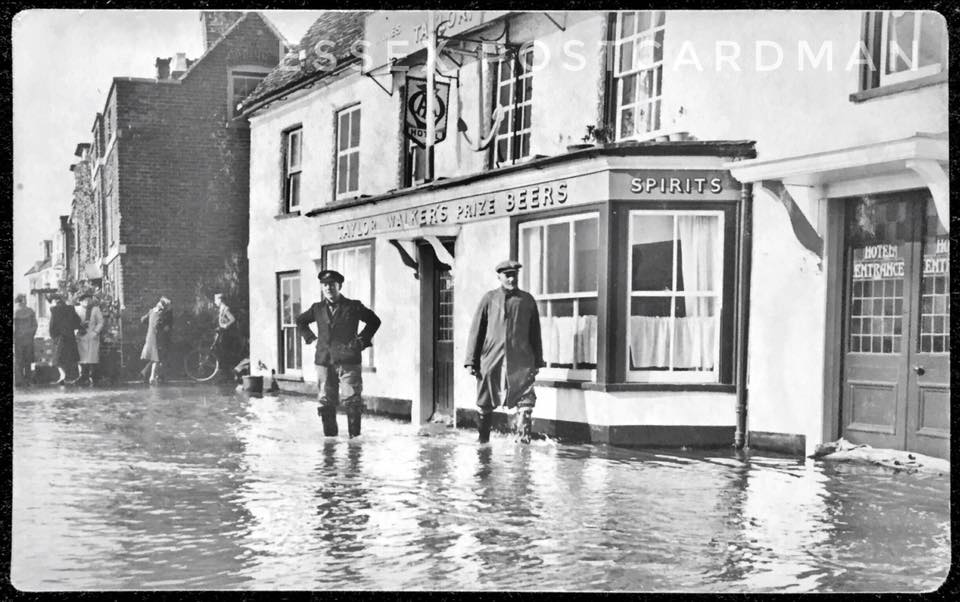
Outside the Anchor pub, Burnham-on-Crouch after the 1953 floods
It’s now 6 years & 7 months since the Maldon Local Development Plan 2014-2029 [pdf] was approved (21 July 2017) and 6 years & 5 months since the Burnham Neighbourhood Plan 2014-2020 [pdf] was made part of the Maldon LDP by Maldon District Council (8 September 2017). The period both these plans cover ends in 2029 – now just 5 years away.
It’s seven years since we moved to Burnham-on-Crouch now, enough that we’re both more settled than either of us had been for many years before. We know the place and we know people, we’re wiser to the stories and characters of a five-mile radius. One or both of us have become involved in groups here, most often Claire leading the way: archaeological digs, the Burnham Art Trail, Covid mutual aid, the Dengie Hundred Bus Users Group, Maldon Greens, the Maldon & Heybridge Transport User Group.


 Dengie Bioregion