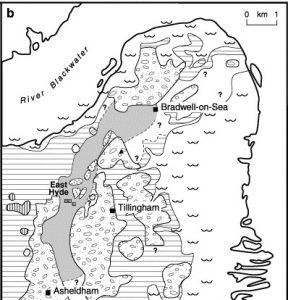

DCAP
Monday. I feared devolution in Essex would derail strategic planning on climate issues
That seems to be proving true with the new Transport Strategy for Essex (LTP4) which was set to reflect county and national policy commitments to transport decarbonisation and better provision of sustainable transport and active travel infrastructure.
Public consultation on the draft Transport Strategy for Essex (LTP4) & the programme of planned investment in different parts of Essex was scheduled for Winter 24/25 – with adoption of the new strategy in Spring 2025.
I recently sought confirmation of calendar dates for the Essex Transport Strategy and received the dispiriting reply that devolution was causing the timetable to be revised….
Today I have written to ECC Cllrs Fleming and Stamp who represent the Dengie, and to cabinet member and ‘climate czar’ Peter Schweir seeking answers to these questions:
- When will the decision regarding further public consultation and timelines be made?
- Can they confirm that Essex County Council remains committed to formally adopting LTP4 in 2025?
Tuesday – Cllr Schweir replied first but just said he would ask the officers – not very satisfactory as I had already forwarded him my reply from officers which noted that it was a member’s decision… . Cllr Fleming sent a reply saying she would try to find out. No reply fro Cllr Stamp
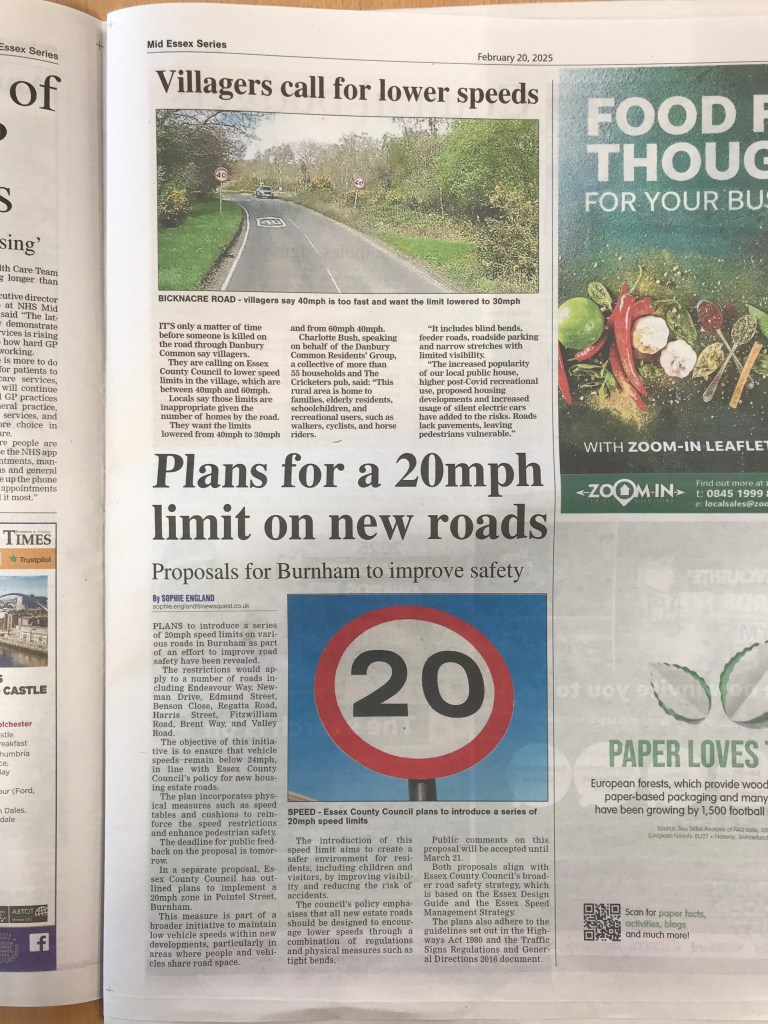
The Maldon & Burnham Standard featured a news story about 20mph speed limits for the new estates in Burnham-on-Crouch. I’d already heard it mentioned at the last council meeting, but there and on FB there were many comments on how it would be policed – the same way all speed limits are policed, I presume?
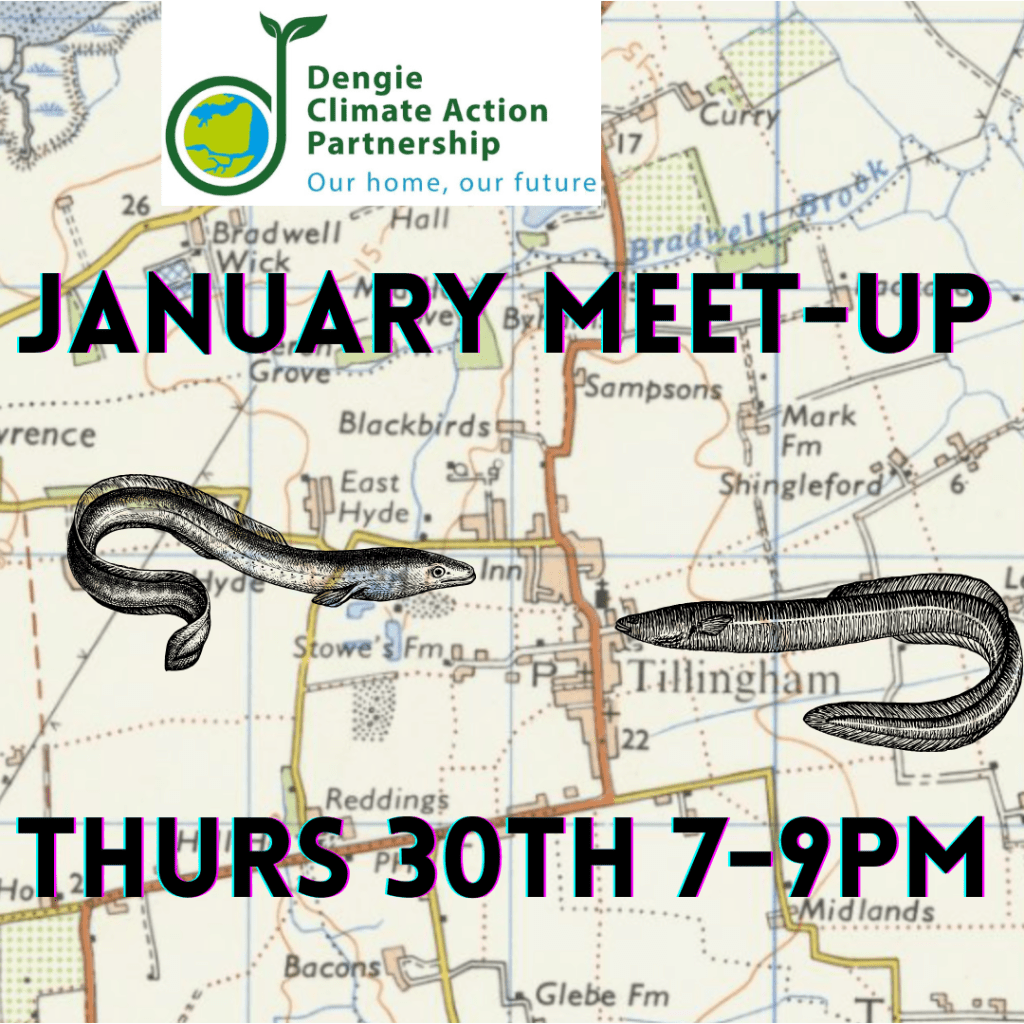
Thursday. I published the first promo for next week’s monthly meet and the associated River Watch talk.
Tree distribution, some of the saplings went to St Andrews’ Althorne. They are planning a wildlife-friendly church ground with Essex Wildlife Trust
Thursday. There was too much interest in DCAP, again, from Burnham Town Council – and it is difficult not to sense malicious intent. Parish/town councils are a strange level of government. They have very little power or influence and they are the easiest positions to get (many join them through co-option or uncontested elections). Yet, post-holders can sometimes seem possessed by a sense of status and authority far removed from their actual position as unpaid servants of the people with very little clout. It should be a noble role, but easily descend into busy-bodydom.
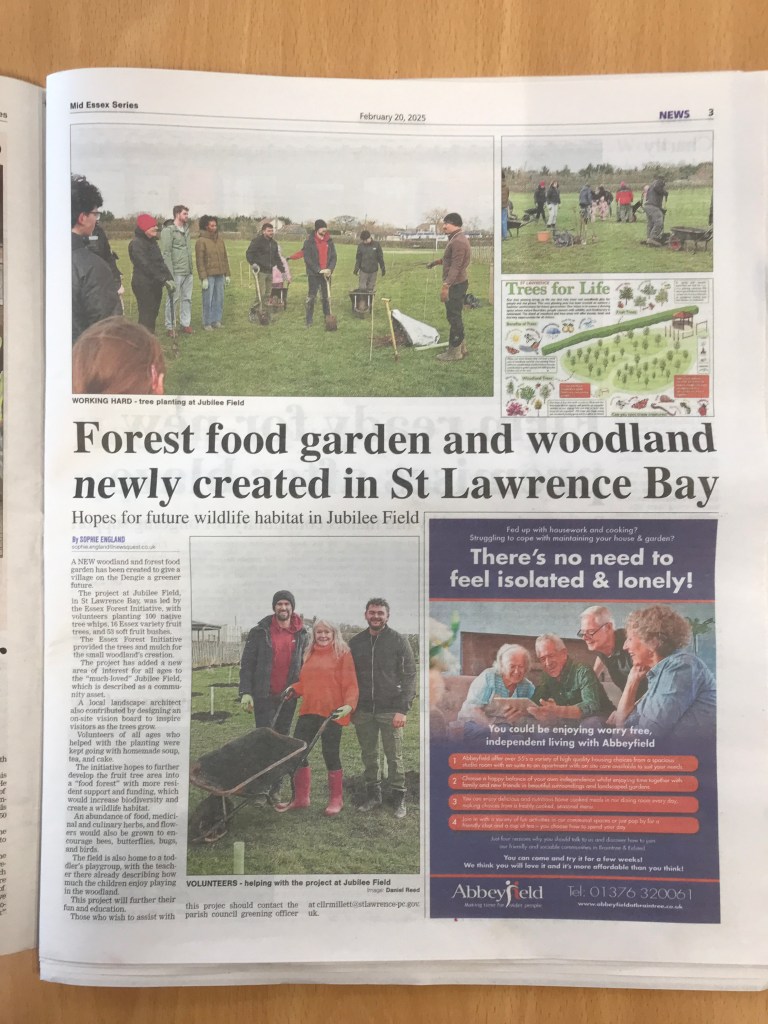
Friday. The new woodland and food forest in St Lawrence made the local paper.
Day Job
1to1 with my line manager – all is good there for now.
Friday – the weekly corporate missive informs staff that we now have a balanced budget for 2025/26 but that the UK Government’s Spending Review Phase 2 for 2026+ is ongoing and “until concluded we still have uncertainty for beyond 2025/26”. It doesn’t look like we got a good slice of the Arts Everywhere Fund. So, along with the uncertainty comes some fear and doubt. The UK finances and Rachel Reeves’s fiscal rules already look set for a collision course before Starmer started pledging billions for Ukraine. We’re still dependent on a government grant coming through an unprotected department, so when April 2026 comes around I imagine some cutbacks will swiftly follow. HR are already asking if folk want to buy some more leave days.
Everyday Life
At some point this week I went under the 600 days threshold on the plan that cannot be named.
Tuesday. The sound of a chainsaw outside this morning, another local tree taken. Our borrowed landscape has declined a lot over the last few years – soft organic form replaced by the hard lines of fencing, brickwork and concrete. In the evening though, just after sunset, I saw a large dog fox leap over a nearby fence and wander around the gardens – all while one of my neighbours practiced playing ‘Wild Thing’ on electric guitar.
Wednesday. Dental hygienist – this is my only interface with private healthcare, and the bill is sufficient to warrant full communism.
Wednesday. I went to a talk by Michael Head at the Royal Corinthian Yacht Club on the last 125 years of Dengie Hundred Farming. These local history talks are frequently very different from the type of academic presentation I’m more used to – and this was one of those – a slideshow of re-photographed old postcards and personal snaps presented alongside anecdotes, jokes and lists of things you might not know about cows. The room was full to the gunwales. Many in the audience were clearly from the farming community and some were referenced or specifically called out to; others were quick to shout out corrections and clarifications: “That’s a pea-spreader!!”
The room was hot from the crowd and the chairs were placed tight against one another which added to the discomfort when laughter accompanied mentions of immigrants or gypsies and cheers were raised at the sight of huntsmen in their finery with accompanying calls to ‘bring it back’.
Many of the photos were great, but I didn’t learn much about the last 125 years of Dengie Hundred Farming – the audience was assumed to know the details, and to recognise the names of people and farms mentioned in passing. I wanted to hear about things like: how the world wars had changed agricultural practice on the Dengie, about local mechanisation and the introduction of chemical Ag, about how the land was altered about the ’53 floods and how the old creeks were filled in and replaced with new straight ditches, about the amalgamation of small farms into fewer larger holdings, about the formation of the Dengie Crops co-operative. I didn’t get any of that, but there were little stories and references you wouldn’t get elsewhere which made it worthwhile nonetheless. I was acutely aware that the talk wasn’t being recorded and that a lot of what was heard but not retained will probably die with the tale teller.
Friday
Saturday. We had our Home Energy Assessment and we now await the report (mid-March was mentioned for delivery). From things the pair of assesors said while they were here I’m not optimistic I’m going to learn much, if anything, I don’t know already – despite the pre-visit written survey I filled in it was apparently news to them that the house was Grade II listed – and there didn’t seem to be in expertise in crafting solutions particular to that need. We won this assessment in a competition, apparently it would normally cost £500 – frankly I’d expect more for that money, but let’s see the report I suppose.
I have larger concerns about the national programme of transitioning the UK housing stock to sustainability. At every level: data collection, analysis, proposed changes – information seems to be drawn from off-the-shelf lists rather than from any understanding of the particularities of the nation’s varied housing stock. If your house was built in the last 40 years and has an EPC certificate, they can easily tickbox through – increase loft insulation to 300mm, solar PV and battery, air-source heat pump, smart thermostat, TRV’s on the rads etc. But the UK’s housing stock is among the oldest in Europe. Our home is among the 15% of houses in England built before 1900 and 78% of homes in the UK were built before 1980. As ONS analysis shows that the age of a property is the most significant factor associated with energy efficiency (ahead of both fuel type and property type), finding bespoke solutions for the housing stock we actually have is more important than blanket applying some set of heuristics.
Saturday. C and I went to the Beecroft Gallery in Southend for the opening of 2 exhibitions – the interim TOMA show and ‘Into the Zone’. Apparently the Southend mayor, Ron Woodley, was in the building but he remained unseen, which was disappointing for those hoping for a face-to-face encounter between him and artist/TOMA leader Emma Edmondson. Woodley has been an eager voice in local philistinism and apparently once threatened to drive into one of Edmondson’s public sculptures
Into the Zone with its Estuary focus resonated with many of my interests and concerns. I was frustrated with the explicit referencing of the Zone from Tarkovsky’s Stalker, though which felt like borrowed glory. Stalker is now one of those overdone culture reference points like the ‘the liminal’, folk horror, standing stones, Sebald’s Rings of Saturn, psychogeography, fungal networks – that have become bland touchstones fully drained of their magick by the Arts and Humanities departments.
Media
TV

White Lotus S03E01
Severance S02E06
Music
Online
‘You can rattle the bars of the cage as fiercely as you like but you will never actually escape the comfort of the zoo’ – James Marriott in The Times, ‘Conspiracists are about to get a dose of reality‘
‘from here on out, for any player smaller than a state or a multinational, adaptation is pretty much the only game in town worth playing, because it’s the only one that people on the ground are actually gonna notice.’ Paul Graham Raven Drill, Baby, Drill

Future Thinking and Dreaming











 Dengie Bioregion