Yesterday, Maldon District Council (MDC) shared on social media that they would be working in partnership with a property consultancy company that has launched a Biodiversity Net Gain (BNG) scheme with the Braxted Park estate.
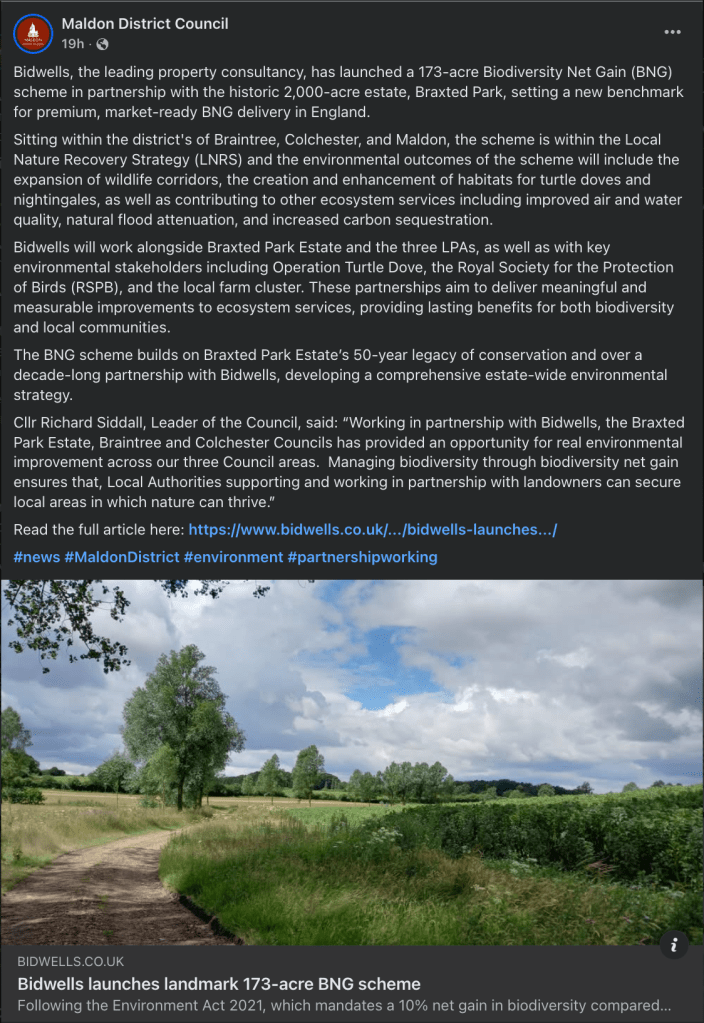
The post and linked article are light on detail, and there’s nothing about it on the MDC website, but this looks like MDC shaping up to allow developers to meet their ‘increase biodiversity’ requirements by paying someone else to do the nature recovery off-site.
Local District Councillor Wendy Stamp informs me that this scheme has not been discussed by Councillors and is seeking further detail.
I can see some advantages in consolidating nature recovery activities in the best sited locations and that working at a landscape scale can have environmental outcomes not available to smaller sites
but…
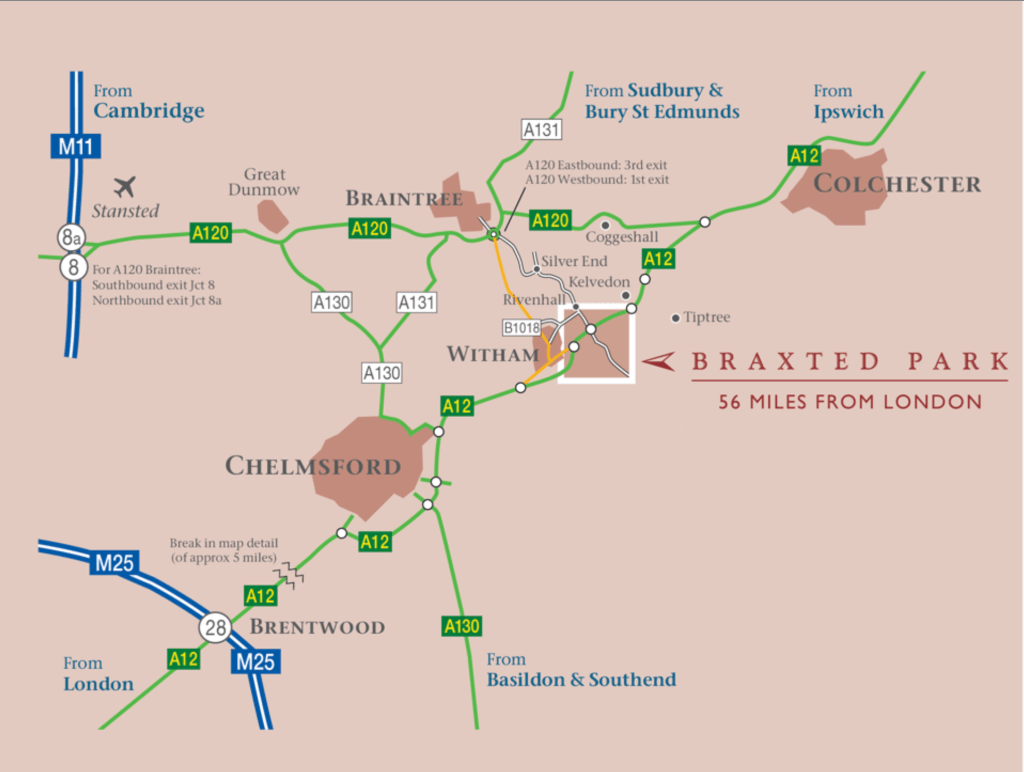
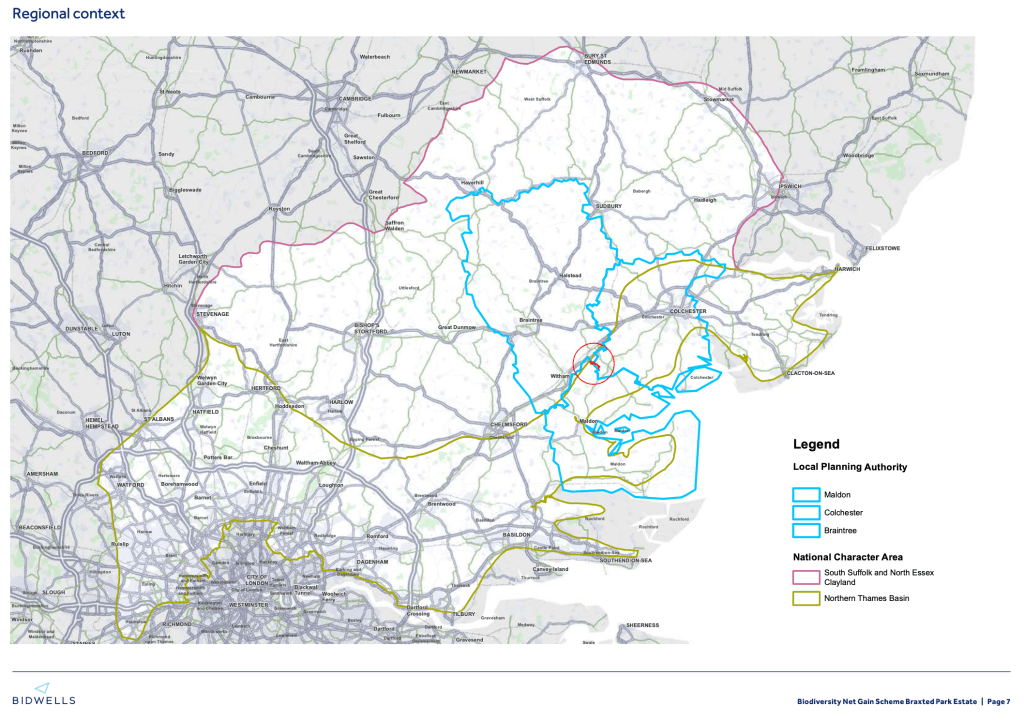
Braxted Park is barely in Maldon district (it’s on the North-west border with Braintree District, near to Witham) and it’s a long way from the Dengie peninsula. (It’s over 20km as the turtle dove flies from Braxted Park to the proposed Romans Farm development in Burnham on Crouch for example)
It’s hard to see how the environmental outcomes of the scheme will improve nature recovery out here.
We must demand that nature recovery schemes happen locally to us, no biodiversity offsetting in distant locations!
The Maldon Nature Conservation Study (February 2023) produced by Essex Ecology Services (EECOS) for MDC spoke of the importance of wildlife corridors in the district and stated that ‘[t]he taking of measures to enhance connectivity would be worthwhile anywhere in the district… Certain areas suggest themselves as potential priority targets… Any part of the Dengie peninsula‘
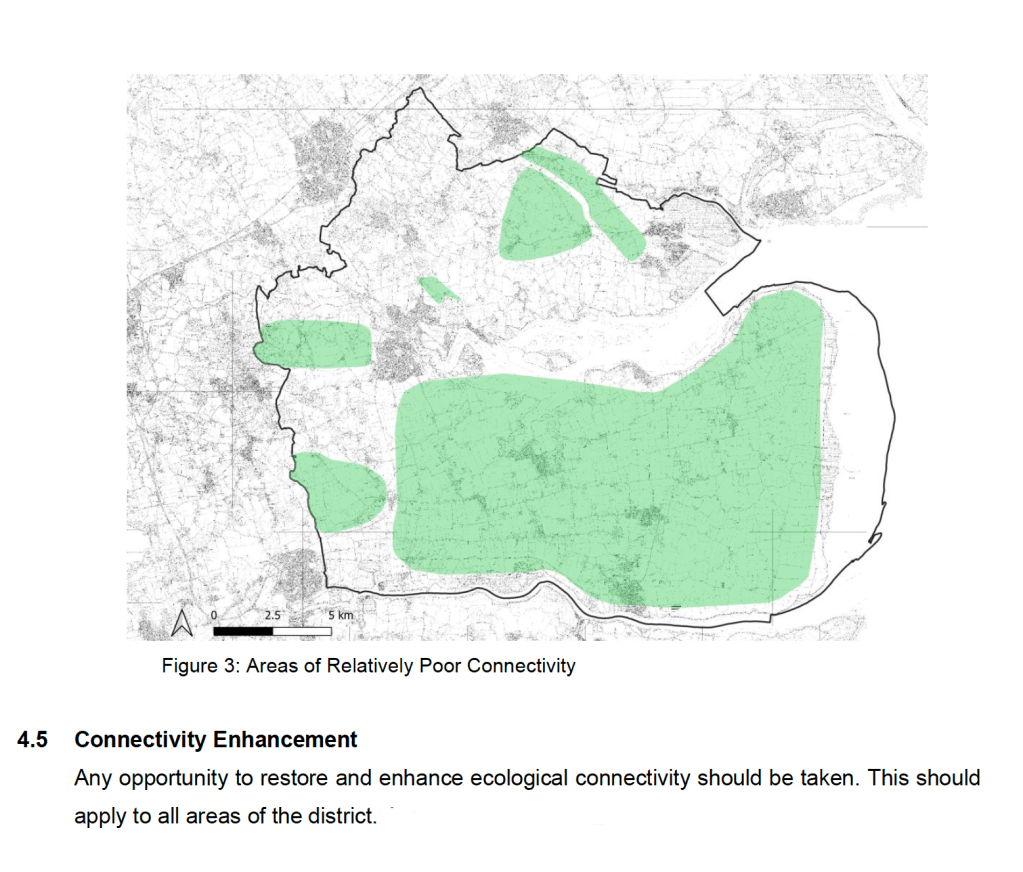
The whole peninsula was mentioned because the Study notes that ‘[t]he Dengie peninsula has few [local wildlife] sites and many of these are isolated in a landscape dominated by intensively managed farmland, with few areas of natural or semi-natural habitats aside from the coast’
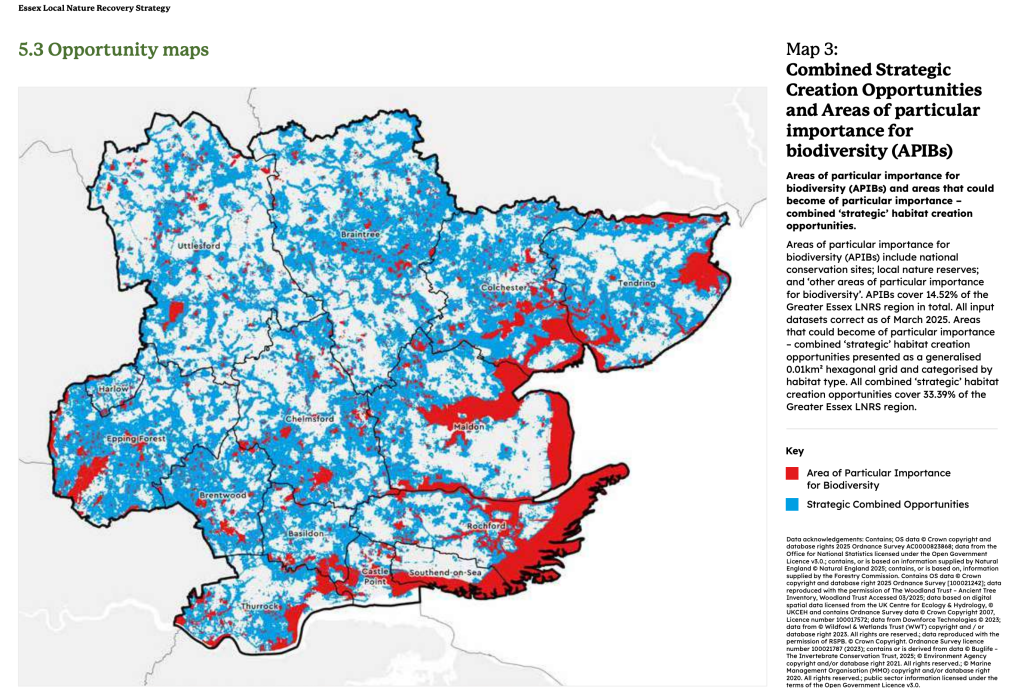
It notes that ‘[t]he woodlands of Maldon are heavily concentrated in the north west of the district [where Braxted Park is located] and are virtually absent to the east of Northey Island, both north and south of the Blackwater estuary. The Dengie peninsula, in particular, is virtually devoid of woodland.’
Elsewhere in the document the Dengie is described as an ‘impoverished landscape dominated by large arable fields with few hedgerows’ and that ‘[t]he planting of new hedges and appropriate management of these features would be of great benefit to wildlife, including breeding birds, and any measures that can be taken to encourage this should be considered. The establishment of a well-connected network of hedgerows would represent a major landscape-scale enhancement.’
MDC knows where, and what, nature recovery interventions on the Dengie would be effective because the Study they commissioned informs them.
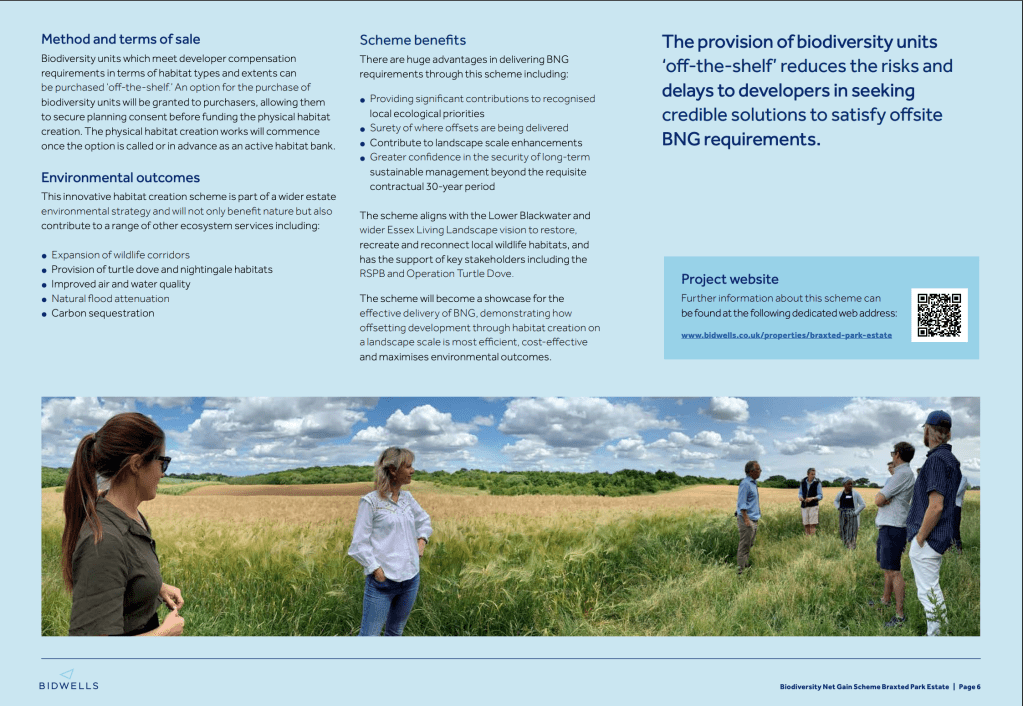
This new scheme looks like a way for developers to avoid caring for and improving the natural world where they build by just paying a fee for someone else, to do something, somewhere else.
It should not be ignored that replacing an intensively managed, chemically dosed, arable monoculture field in our ‘impoverished landscape’ with houses and gardens will in itself create new niches for wildlife. Housing developments don’t in themselves, however, create a well-connected network of hedgerows, they don’t establish new woodlands, areas of natural or semi-natural habitats, or wildlife corridors between existing sites of biodiversity. Construction of these developments too often begins with violently making their site a tabula rasa, removing mature trees, bushes and hedgerows, blocking access to fauna, filling in scrapes, stripping topsoil, compressing the earth. It concludes with establishing neat show homes, where the ‘messiness’ of the wild is manicured away – no care to share the territory with what came before – no hedgehog holes or bee bricks, no bird and bat boxes, no quarter given to burrowing badgers and foxes, insects starved of fodder. In the amenity spaces, sapling trees are planted and then neglected to dry out and die. A councillor once told me that developers are generally contracted to support these trees for 5 years, but that it’s cheaper for them to replace those that die at the end of their period of responsibility than to maintain them for the intervening period. Any survey of the new estates in Burnham swiftly finds the desiccated evidence
BNG seemed to me from the get-go to be ‘biodiversity off-setting’ in the disgraced mode of carbon off-setting before it. So, it comes as no surprise that we are immediately seeing nature commodified and traded by third-party intermediaries.
When a developer grubs out a 300 year old oak tree near me, and the squirrels who ate the flowers disappear, the moths that relied on it don’t return, the oak-mining bee loses its pollen, the badger and wood mouse find no acorns, the jay has nothing to bury, and the caterpillar doesn’t come that the blue tit might consume, when the bat doesn’t roost, the fungus doesn’t feed, the lichen don’t spot the bark, the mushroom doesn’t fruit from its subterranean romance with roots – then I guess I can take solace in the knowledge that a seven hour walk from where I live, on the country estate of a retired banker, that an ‘off-the-shelf’ purchase by the developer will have financially contributed to the ‘creation of high-quality biodiverse habitats targeting ‘good’ condition as defined by the DEFRA Statutory Metric’. Call me a romantic if you will, but I prefer stewardship to the spreadsheet.
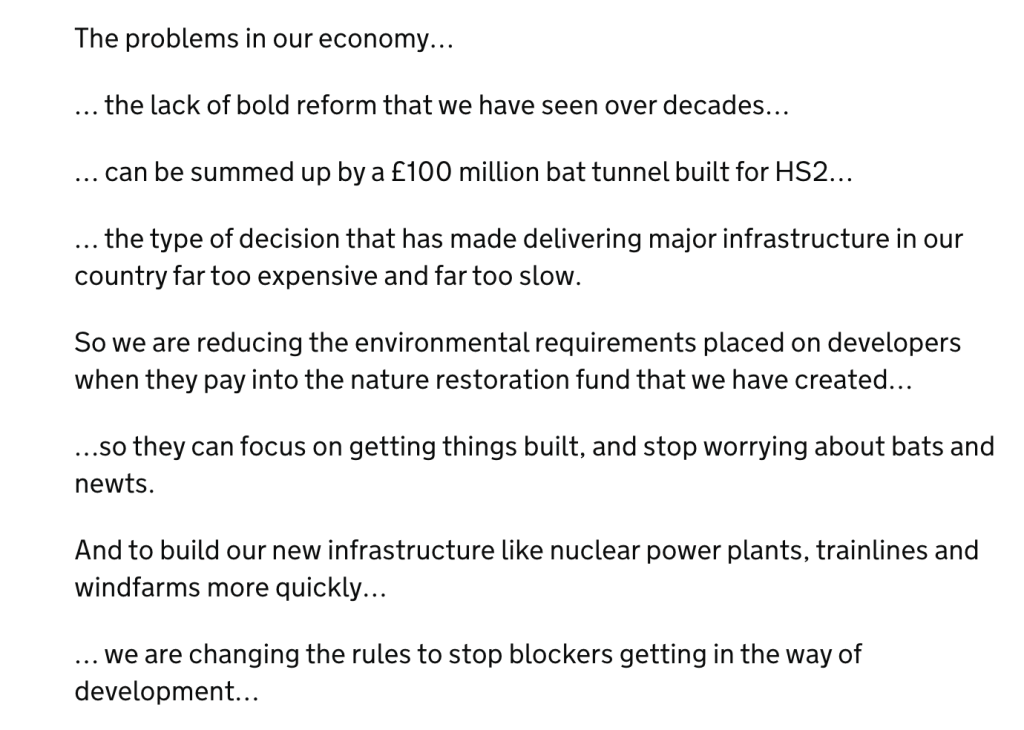
An ‘abundance’ YIMBYism is on the rise, an attitude on both the left and right of politics, and on both side of the Atlantic, that the future has been cancelled out of a gratuitous consideration for ‘bats and newts’, that we must just BUILD. Increasingly often this comes with a sanctimonious sneer that pits mitigating climate change against nature conservation “we could accelerate the construction of renewable energy infrastructure and energy efficient homes if you would just leave it out with bat tunnels and newt-counting delays”.

But why can’t we have both things? Because there’s a missing third part of this iron triangle
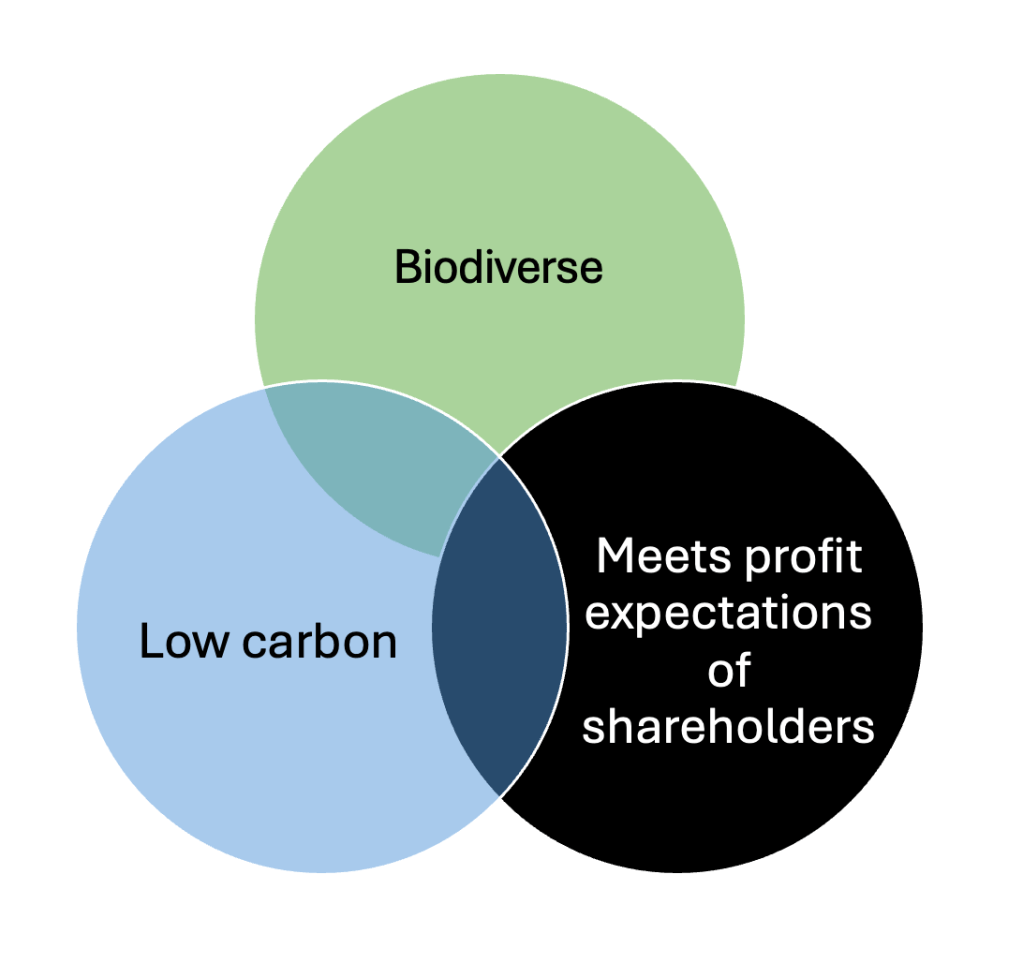
The great shapers of places in the UK, of our land and homes, are six volume housebuilders (Barratt/Redrow, Vistry, Taylor Wimpey, Bellway, Berkeley Group, Persimmon) and they are driven by profit, excessive profit. A 2023 report from the UK Collaborative Centre for Housing Evidence, Why have the volume housebuilders’ been so profitable? notes that
‘Since 2014, the largest housebuilders, and in particular the three largest housebuilders by
volume (Taylor Wimpey, Barratt and Persimmon – herein, the ‘big three’) have consistently reported supernormal levels of profitability, with gross profit margins reaching 32% and never falling below 17%’
So, obviously, these companies are not interested in the business of stewardship, of long-term commitments to places, or indeed any commitments past the point when contracts are exchanged. A survey by University of Sheffield academics for the wildlife campaigning group Wild Justice discovered that nearly half of the nature-friendly enhancements promised by developers building new homes have failed to materialise.
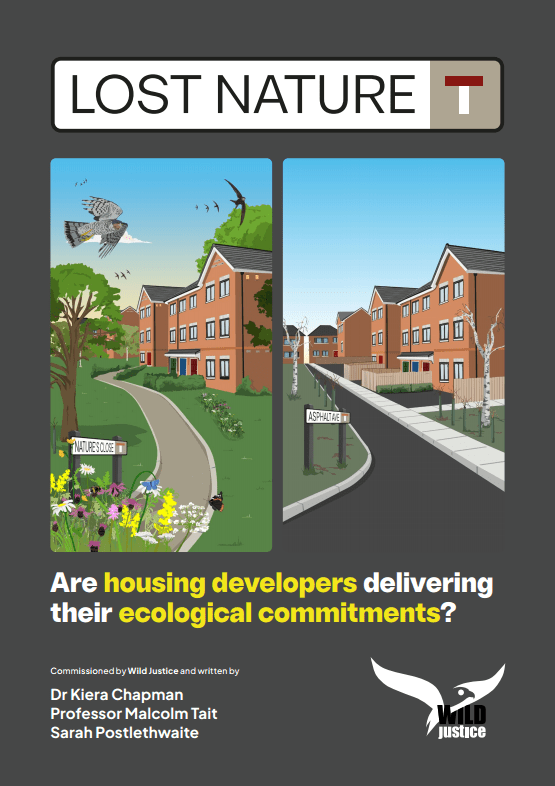
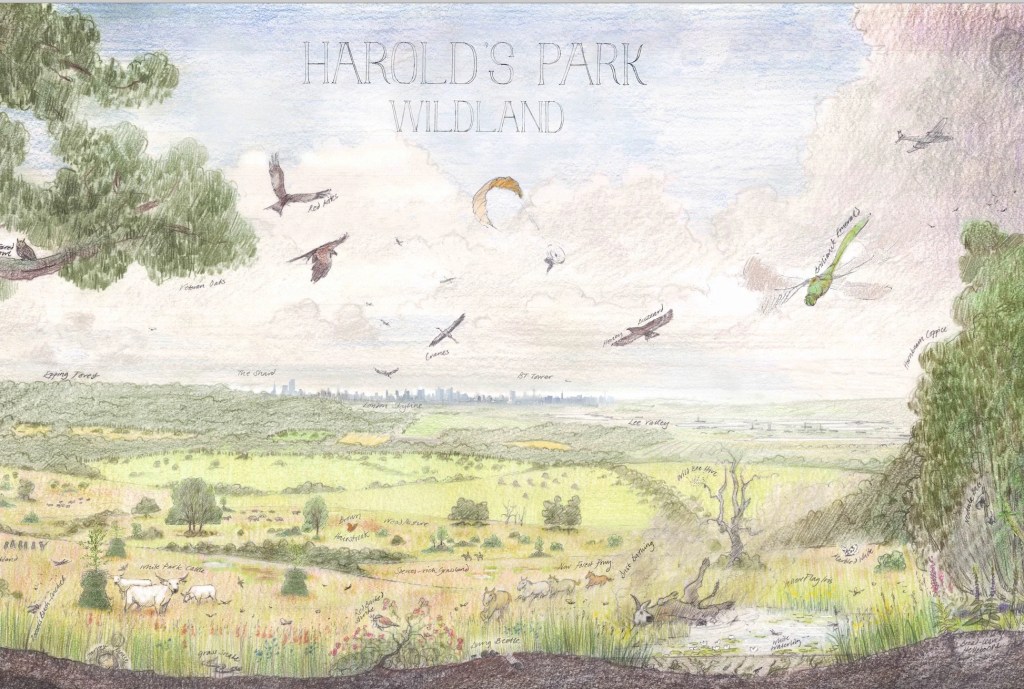
Instead of enforcing these commitments and penalising developers who fail to adhere, the BNG system surrenders and turns this all into a one-off transaction. Developers pay some ecologists to do a baseline survey before development, a wonk does some sums to account for 10% BNG, they pay a one-off fee to a mediator like Bidway and they’re done – on to the next one. The mediator creams some agency fees and passes on the remainder to a land owner adding BNG to their diversifed income streams. It could be a conference and wedding venue like Braxted Park, it could be elsewhere in Essex like the farm turned rewilderness Harold’s Park – 45km as the turtle dove flies from Braxted Park. (Recently purchased by ‘natural capital and rewilding company’ Nattergal.) These Essex projects stand in the shadow of the Knepp estate in Sussex -the poster child for UK rewilding – although Knepp’s owner Isabella Tree says it wouldn’t meet the DEFRA metrics.
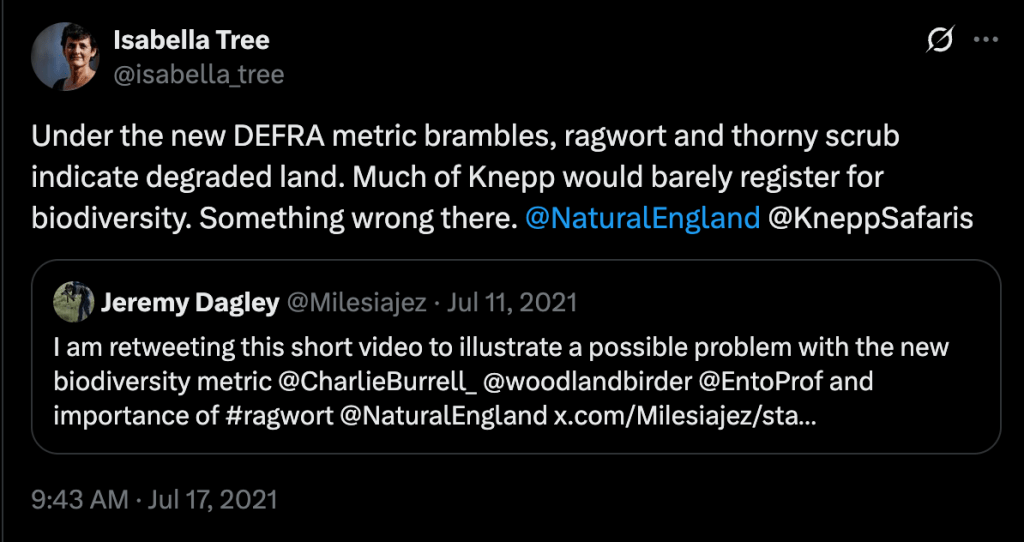
All this is an approach to nature recovery that seems to depend on special places that are protected, another form of nature reserve, rather than forging a new symbiosis with nature and accepting that humans are completely embedded within a more-than-human world. Essex county council has a target of transforming 30% of Essex into wild and nature areas. Every place should be special, distinct among others of a kind. Nature recovery here, and there, and everywhere. Let a Thousand Knepps Bloom.

 Dengie Bioregion
Leave a comment