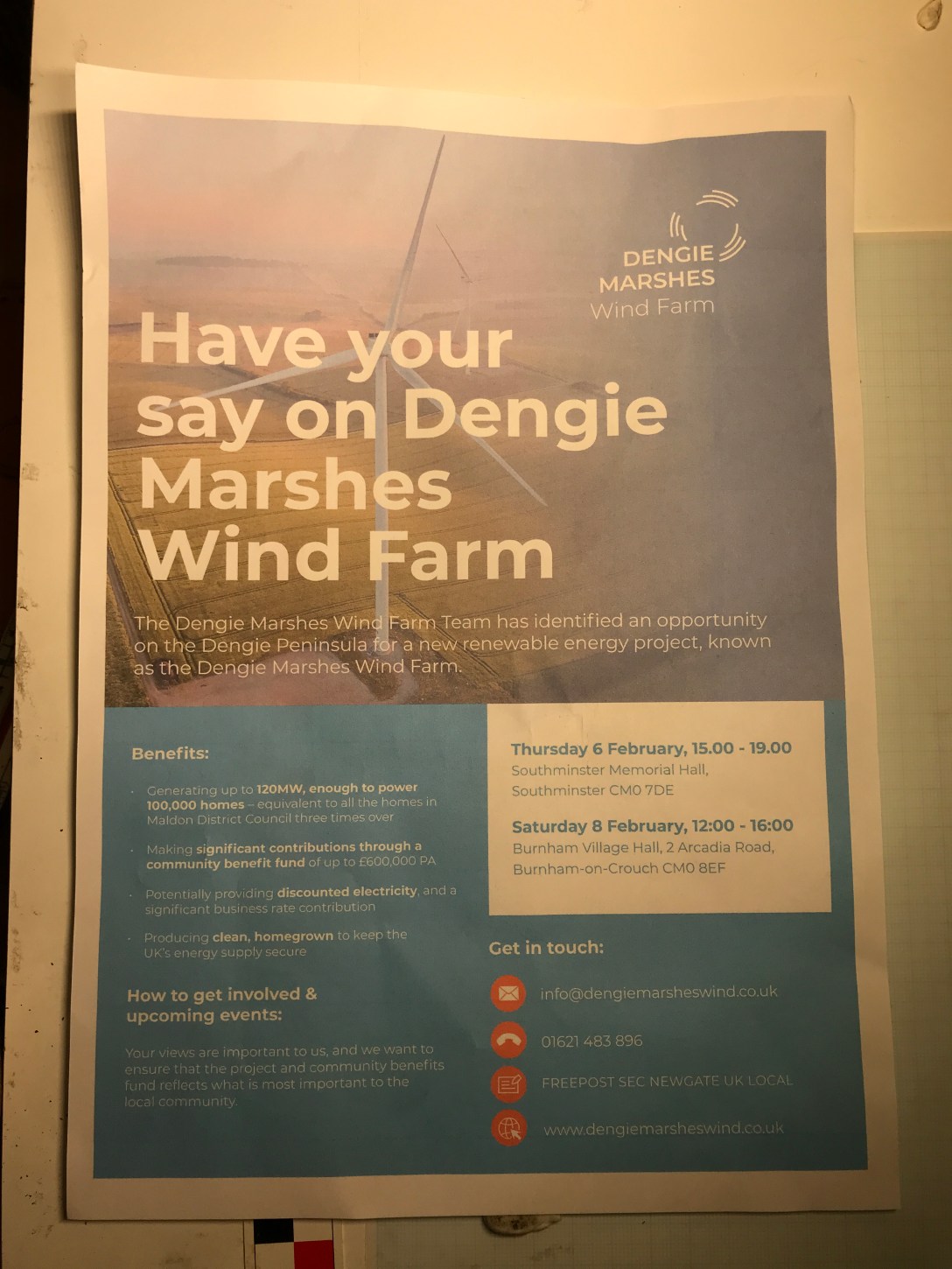
The proposed Dengie Marshes Wind Farm is moving forward into a phase of public survey and persuasion. (A company called Dengie Marshes Wind Farm Limited was incorporated on 18 October 2024 and shares directors with Blenheim Renewables, the company which initiated the project.)
The project has a website and is holding a series of consultation events with two scheduled for this week:
Thursday 6th February 15:00 – 19:00
Southminster Memorial Hall, Southminster, CM0 7DE
Saturday 8th February 12:00 – 16:00
Burnham Village Hall, 2 Arcadia Road, Burnham-on-Crouch CM0 8EF
They aim to submit a planning application this ‘summer’.
The proposal would significantly increase the amount of renewable energy produced on the Dengie and contribute to the national decarbonisation goal but there is currently little information about the potential impact on wildlife nor guarantees about the benefits to the local community.
Here are some points of interest that may be useful for generating questions to ask at the consultation events:
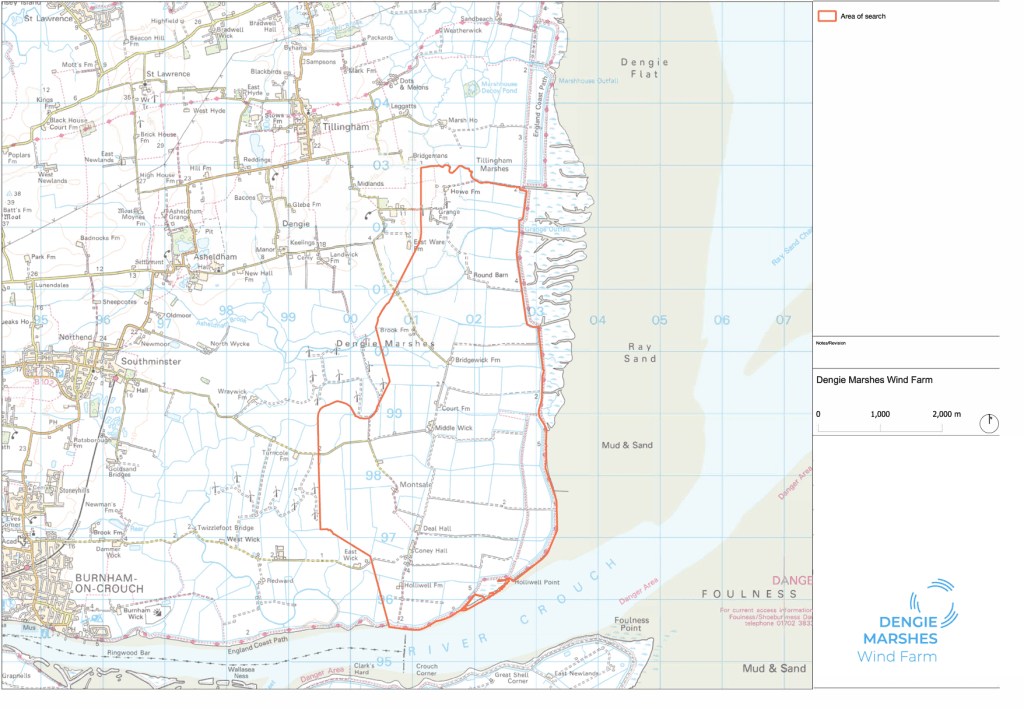
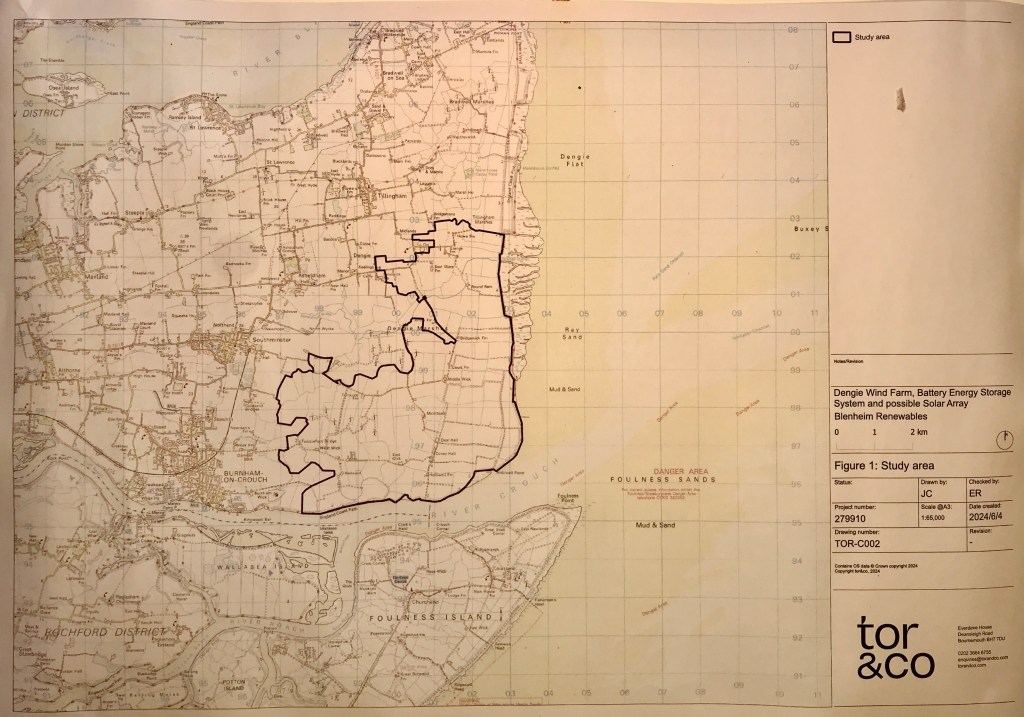
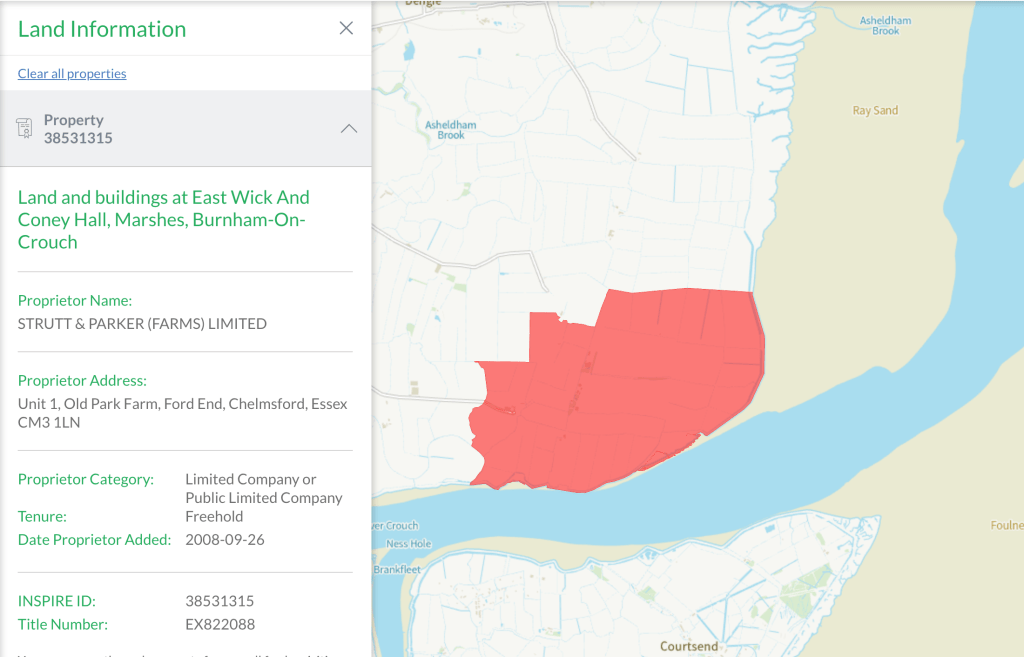
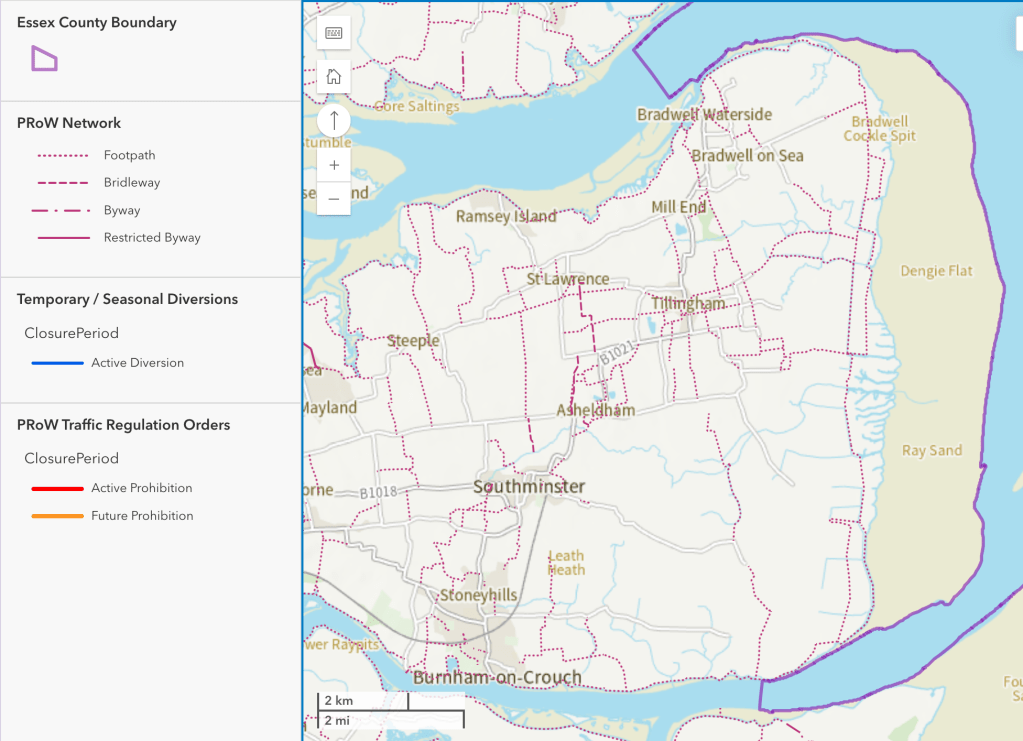
The ‘search area’ in which the farm might be installed is smaller than the ‘study area’ presented earlier by Blenheim Renewables and seems to be entirely on land owned by the European investment fund Robigus, which bought Strutt and Parker Farms. There’s currently minimal public access to this land, and it would be nice to see some new public rights of way established here.
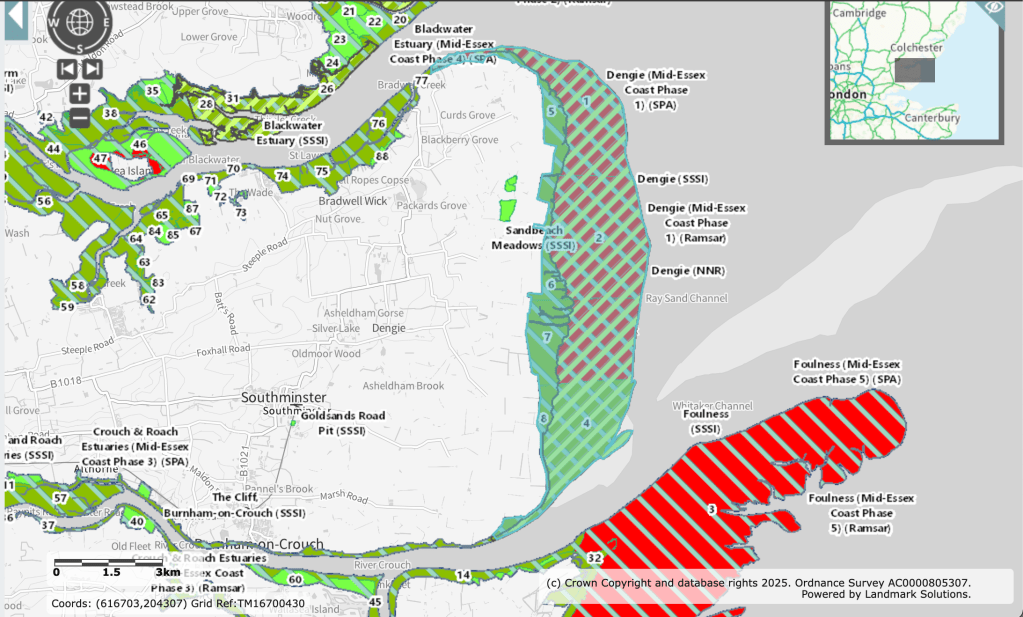
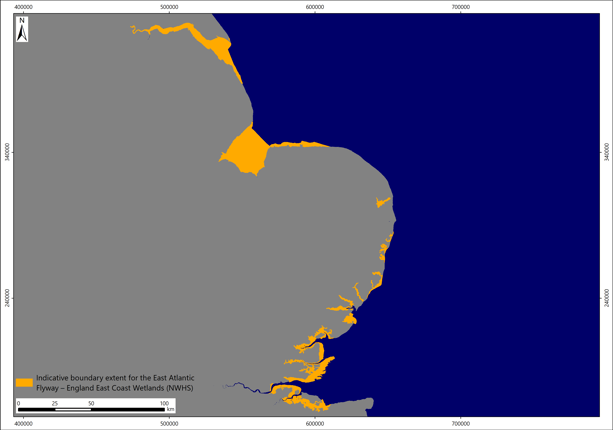
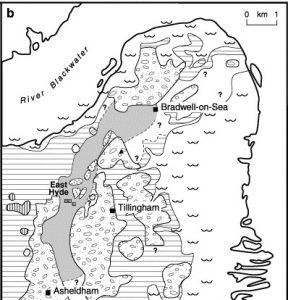
This area is adjacent to the Dengie National Nature Reserve, part of the bird migration route known as the East Atlantic Flyway – currently in the running to be recognised as a World Heritage Site. John Buchanan has added: ‘I would say the key wildlife concern is the impact on wintering wildfowl and waders, eg the large flocks of Brent Geese in that area. Will be useful to see their detailed plans.’ Over a quarter of the world’s population of Brent Geese spend the winter months around the Essex coast, so the flocks on the Dengie are globally significant. John has let me know that local birders are collating information to produce a response to the proposals and I’ll share them when I’m in receipt.
In 2011, the planning application for the nearby Turncole Wild Farm received detailed comments from Natural England, which can be read here [pdf] (p.19-23 ), it should be noted that Turncole Wild Farm is located further from the protected sites than the proposed Dengie Marshes Wind Farm, so these concerns would be accentuated with its search area.
Across Europe, local ownership of renewable power is the norm, providing real and immediate benefits to the communities that host it. Blenheim Renewables previously suggested that the community could own one of the turbines (probably through a community share offer) and earn income from the energy it produced. This would provide immediate tangible benefits superior to promises of ‘potentially’ discounted electricity. This suggestion is not featured on the Dengie Marshes Wind Farm website, however, and is worth asking about at the consultation events. eMpower – Maldon Community Energy might be able to play a role in managing community ownership should the wind farm go ahead.

 Dengie Bioregion
[…] Dengie Marshes Wind Farm proposal has been aired to the public. I wrote some about that already here. On Saturday members of their team were in Burnham for the second of their public events and were […]
LikeLike