The fourth question in the Where You At? bioregional quiz is:
What was the total rainfall in your area last year?
I think that annual average rainfall in Essex is about 600mm, but I don’t know how recent years have compared to that. The nearest Met Office ‘climate stations’ to me are at Writtle (c.29km away) and Shoeburyness (c.10.5 km away) – checking the Met Office site I see that for the period 1980-2010: Continue reading “Where You At Q4: What was the total rainfall in your area last year?”→
The second question in the Where You At? bioregional quiz is:
How many days til the moon is full?
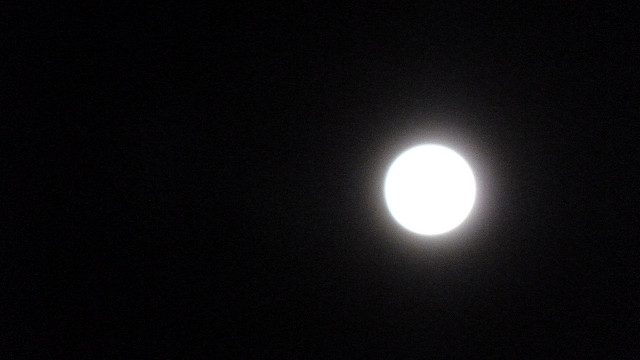
I’m not sure how good I would be at this calculation generally. I can’t remember seeing the moon lately but then I can’t remember looking at the night sky recently either. Today, Wednesday 11th April 2018, I’m pretty sure the last full moon was Easter Saturday – which was 31st March – which I think means that we are a few days off new moon – so perhaps it’s not surprising I haven’t seen the moon lately. The moon has a 28-day cycle, so the next full moon should be in about 17 days time – 28th April.
A witch conjures a storm and brings terror to the seas, woodcut from ‘Historia de Gentibus Septentrionalibus’, (1555)
The next report from the Intergovernmental Panel on Climate Change is due late in 2019. The lag time between data gathering and data publication, plus the need for an agreed consensus amidst the contributors have conspired in previous editions to present overly optimistic scenarios, it’s now widely recognised that they’ve routinely underestimated the rate of global warming. A recent study suggests that we might see 1.5 metres of sea-level rise before 2100: ‘Revised median RSL [relative sea-level] projections for a high-emissions future would, without protective measures, by 2100 submerge land currently home to more than 153 million people’. If we don’t avoid those high-emissions scenarios we’re also locking in greater future sea-level rises as Antarctica and Greenland give up their land-based ice to the sea.
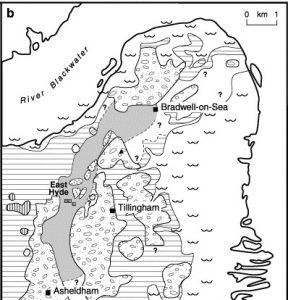
A look over the Dengie’s sea walls at high tide and imagining another 150cm of water is a sobering matter – factor in the conditions that caused the spate of inundations referred to in a previous post and you can see we have a problem. Continue reading “Greenhouse Britain”→

 Dengie Bioregion