
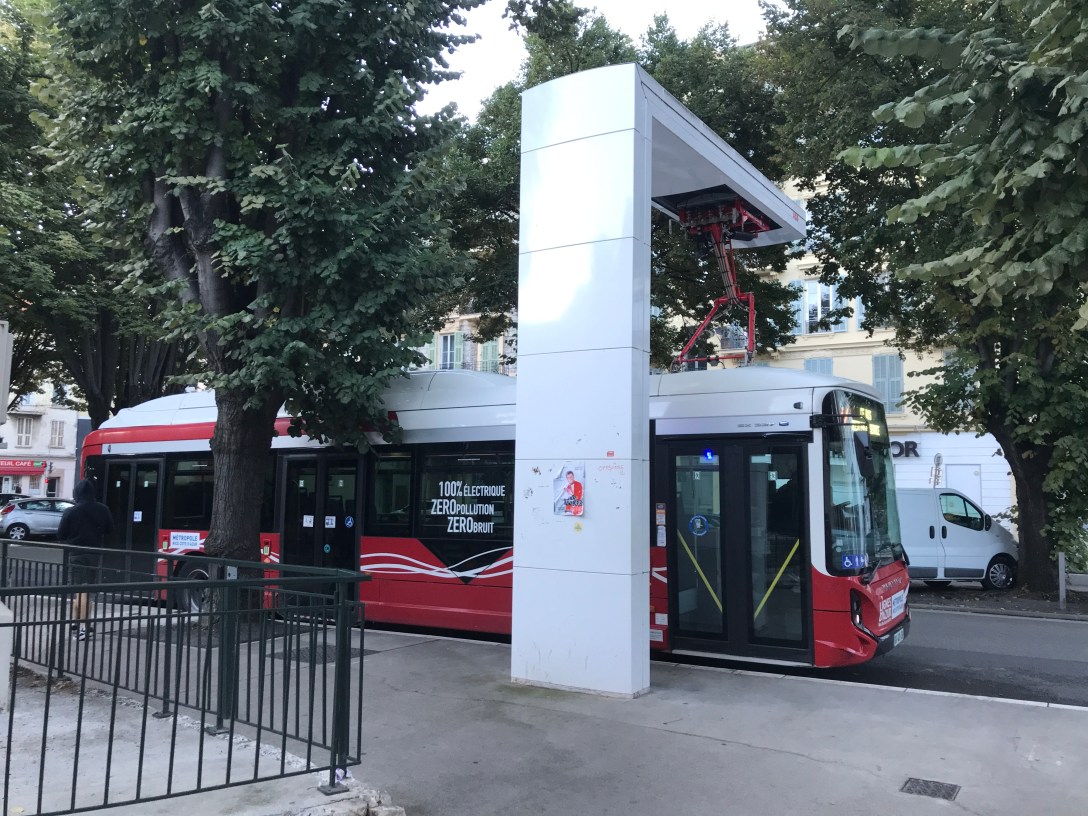
A couple of days ago, Essex Highways released a press release about their plans for rolling out electric vehicle charging in the county, and used the opportunity to ask people where they thought the chargers should go. Their survey is pretty minimal, but there was enough in it to raise my concern.
I’ve long been frustrated by the pavement parking of cars and how temporary road signs are placed on the footway rather than on the road they relate to. Cars already dominate urban space. In the rural town where I live, especially in the older parts built before the automobile, the streets are cluttered with private vehicles. The nearest pavement to my house is unusable – cars park on its full width to allow free access to vehicles on the road, so pedestrians have to walk on the road too. One of my neighbours has an EV, and the charging cable stretches from his boundary wall across the street to his car.
There’s a sci-fi saw, often attributed to Frederik Pohl, that ‘a good science fiction story should be able to predict not the automobile but the traffic jam’. You don’t have to be a futurist to see the trip hazard in the electric car rollout. Motornormativity —the assumption that car-centric infrastructure is the default—demands that any new space requirements for the automobile be carved from the realm beyond the car. When Essex Highways asked ‘where should the chargers go?’, the assumption is clearly that the person being asked is a motorist, an EV owner seeking on-street charging for their machine. The ‘where’ is not ‘where in the public realm, if anywhere, should we put this new chunk of motorcar infrastructure’, but ‘which streets shall we impose this pile of gubbins in?
I’m not against the electrification of motorised transport – I’m pro it. But I also don’t think a sustainable transport future includes a 1-for-1 substitution of electric cars for fossil-fuelled ones, let alone the expansion of car numbers predicted in traffic modelling. We need to expand walking, wheeling, cycling and public transit infrastructure – not rob it for cars.
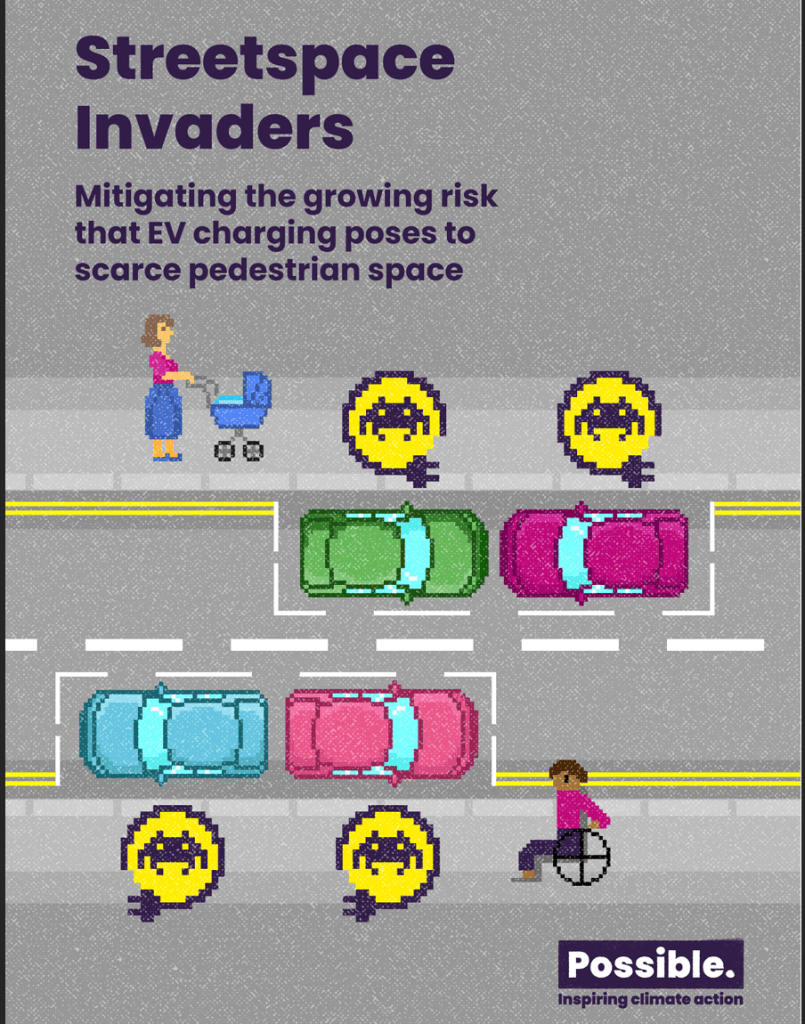
My fears about how EV infrastructure might do just that were enhanced after watching this interview with Leo Murray and reading the report Streetspace Invaders that Possible did with Wheels for Wellbeing. Those two things very much influenced the response I emailed Essex Highways today, which I share below with some added links and images not in my message:
RE: Suggest a Location for a Charging Point
I am writing in response to your recent request for suggestions to help identify demand for electric vehicle (EV) charge points and to inform future delivery [Essex County Council Facebook post, 30 April 2025].
Summary: The ‘right place’ for EV charging infrastructure is in the carriageway, not on the footway.
I fully support the electrification of motorised transport and endorse the Essex Highways vision outlined by Councillor Tom Cunningham, Cabinet Member for Highways, Infrastructure and Sustainable Transport:
“We are committed to giving residents a choice in how they travel. The electric vehicle strategy focuses on delivering the right charger in the right place to encourage Active Travel, which means walking and cycling for shorter trips or as part of longer ones.”
However, I am concerned by the implications of the Request a Charge Point survey, specifically the statement:
‘We are particularly looking for locations which lack off-street parking and ideally have wide pavements (at least 2m).’
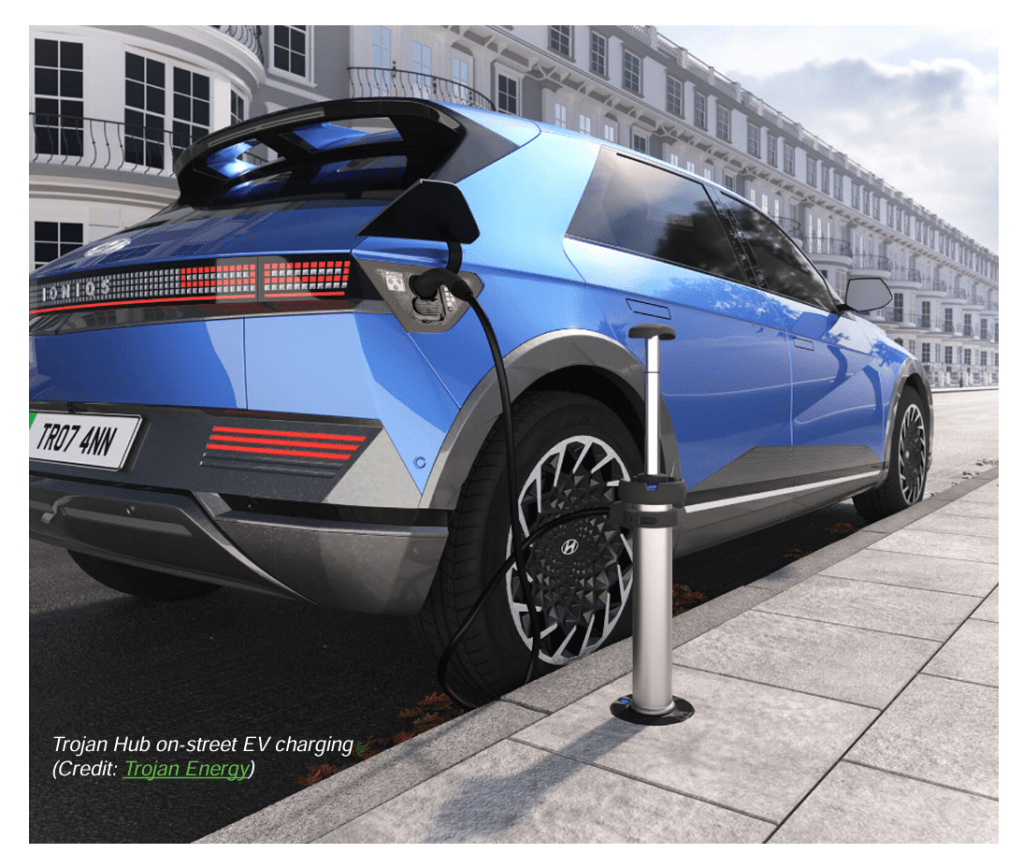
This wording suggests that footways—rather than carriageways and associated parking bays—are the preferred location for EV charging infrastructure. This approach risks expanding the spatial footprint of motorised transport, encroaching on pedestrian space, and undermining active travel objectives by diminishing the quality and safety of the walking environment.
Your own document, The Right Charger in the Right Place: Essex Electric Vehicle Charge Point Strategy [pdf], emphasises that:
‘EV use and infrastructure will need to integrate with, and promote, the wider transport mix in Essex by applying our preferred approach and preferred outcome’, remarking in particular a preference for ‘Improving and promoting Active Travel for all’
Installing charging infrastructure on the footway directly contradicts this goal. It reallocates space from pedestrians to private vehicles, instead of prioritising walking and wheeling as modes of transport. Reducing pavement clutter and rebalancing street space away from cars is essential for achieving Essex’s active travel ambitions.
Your Essex Walking Strategy [pdf] reinforces this principle:
‘Walking along a tree-lined street with strong visual interest and other people present is
a completely different experience from walking the same distance along a street with
blank frontage, or with frequent interruptions from side turns or vehicles parked on the
footway. As with stops and stations themselves, walking routes should be designed
for use by people of all abilities.’
The strategy further stresses the importance of making the walking environment:
‘safer and more accessible for disabled pedestrians by… Avoiding unnecessary street ‘clutter’’.
This aligns with national guidance, including the Chartered Institution of Highways and Transportation’s Manual for Streets 2 [pdf], which states:
‘the propensity to walk is influenced not only by distance, but also by the quality of the walking experience’ and that ‘obstructions on the footway should be minimised. Street furniture on footways can be a hazard for vulnerable people’
The Department for Transport’s Inclusive Mobility [pdf] guidance likewise recommends:
‘Street furniture should be positioned to leave at least the minimum width recommended for a pedestrian footway’, ‘Footways and footpaths should be made as wide as is practicable, but under normal circumstances, a width of 2000mm is the minimum that should be provided’
By requesting locations with “wide pavements (at least 2m),” your survey appears to acknowledge this minimum but ignores the broader imperative to avoid unnecessary obstruction. Furthermore, there is no corresponding mention of ideal carriageway width—implying an assumption that EV chargers belong on pavements.
This assumption is echoed throughout The Right Charger in the Right Place Strategy, which frequently implies footway installations:
‘Careful installation of charge points to avoid inconvenience to pedestrians/cyclists in areas that don’t have off-street parking.’ (p.31)
‘We want the safe movement of pedestrians and cyclists in our residential areas and we will prioritise… Private and public on-street charge points where footways allow, there are no negative impacts on the local environment and trailing cables are prohibited.’ (p.32)
‘Active Travel It is important to ensure that all EV charging infrastructure, particularly on-street, is sympathetic to the public realm and does not impact on active travel and disabled access. We will use the Essex Design Guide to deliver these principles.’ (p.36)
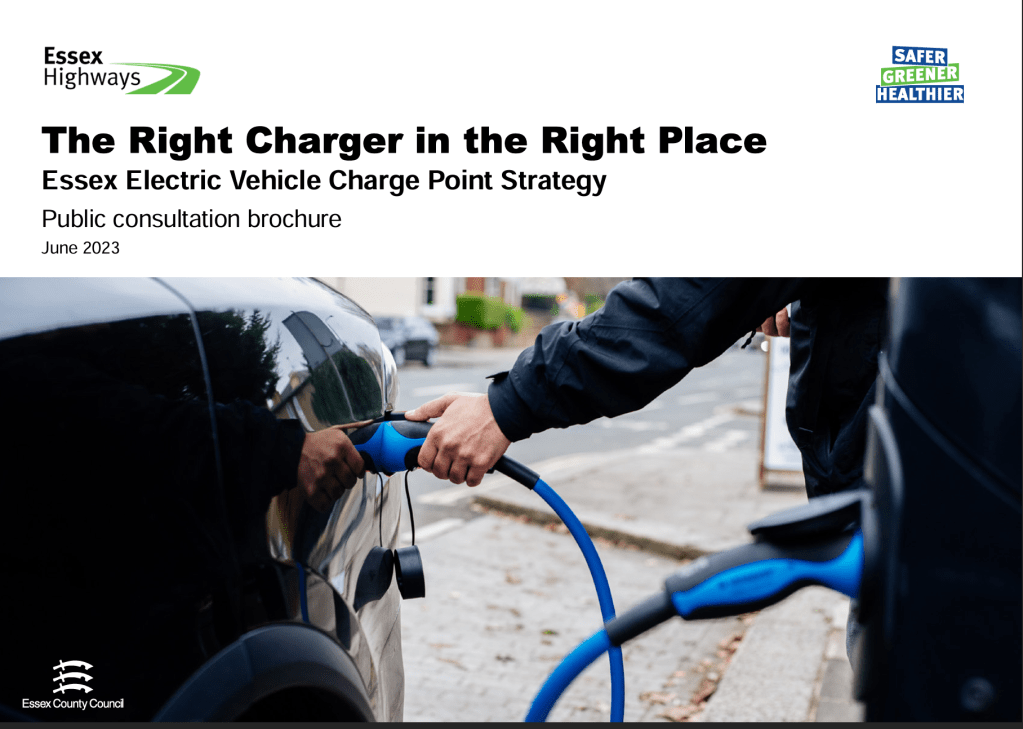
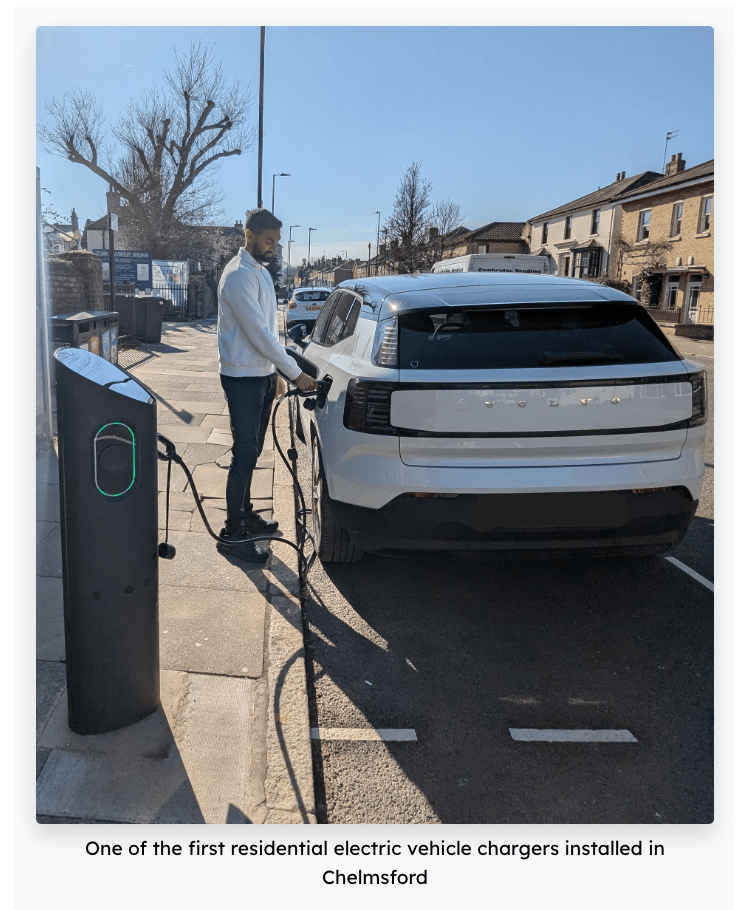
Imagery throughout the strategy document—from the cover to pages 9, 14, 22, 32, and 38—depicts charging units placed on footways. The photograph supplied with your press release 5,000 electric vehicle chargers to roll out across Essex (29th April 2025) also shows a charger on the footway.
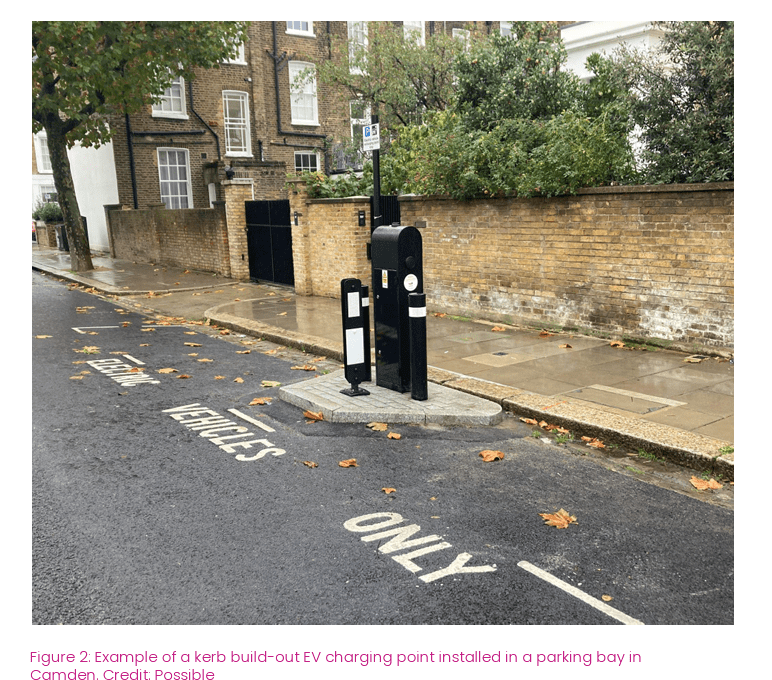
This contradicts best practice, which supports locating on-street charging infrastructure on kerb build-outs within the carriageway—preserving footway space and instead reallocating parking space. These installations, protected by barriers and positioned between vehicles in the road, are already common in other local authorities. It is notable and concerning that this option is not referenced in your survey, strategy document, or website.
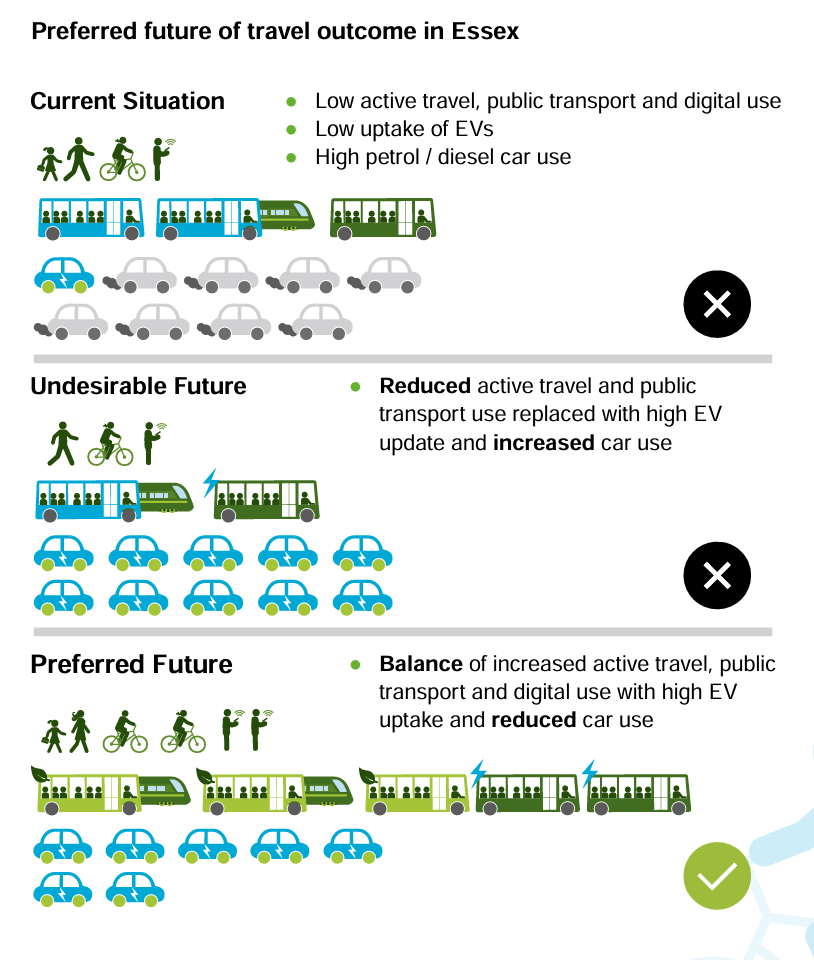
Indeed, the preferred future travel outcome diagram on page 28 of your strategy projects a 22% reduction in private car use, further supporting the practicality of reclaiming carriageway space for EV infrastructure rather than footways.
In conclusion, for EV charging to genuinely support Essex’s sustainable transport goals, it must be implemented in a way that respects and protects pedestrian space. The right place for EV infrastructure is on the carriageway—not the footway.

 Dengie Bioregion