This week, the Greater Essex devolution consultation opened – part of the fast-track reorganisation of local governance. The consultation concerns the proposal to form a Mayoral Combined County Authority for the local government areas of Essex County Council, Thurrock Council and Southend-on-Sea City Council. An area it calls ‘Greater Essex’ but once was just called Essex. The first election for a Mayor is scheduled to take place in May 2026 – in 15 months.

The consultation does not concern the proposals for new unitary local government replacing the existing two-tier system, where services are split between a county and district council. This seems like replacing one two-tier system with another one: county & districts replaced with mayoralty & unitary authorities. Suffice it to say, they are not taking a bioregional approach.
The examples of London and Manchester demonstrate the efficacy of a mayoralty model. Without the precedent of a mayor locally I imagine that the 2026 election will be used by many as a protest vote against the national government and the Conservative Party that have had majority control of the council for a quarter of a century. This sort of role attracts charismatic outsiders with deep pockets and narcissistic ‘populists’. It seems likely that these personality traits will be evident in the candidate that Reform UK puts forward and that many in the electorate will select them as a “vote for something different”. That would be a disaster for local climate action given that the party’s members span a spectrum from net-zero skeptics to outright climate change deniers. Recent strategies put out by Essex County Council, for all my frustration at their scope and the speed of their implementation, have displayed a clear commitment to the national decarbonisation project. A Mayor who doesn’t share those commitments will derail the already unsteady engine of transition and ensure it doesn’t reach its destination by 2050 [which in itself, I must repeat, was always too little, too late].
I am particularly interested therefore in the other part of local government reorganisation, the disestablishment of the County Council and the existing lower-level authorities (Maldon District Council (MDC) in these parts) and the founding of new unitary authorities. I have built up some understanding of governance at the existing levels, of their vision and strategy documents, of the local development plan, of parish and neighbourhood plans, and of the personalities at officer and elected official level. Now all of that is in flux. Who will still have a job in a couple of years? What status will the strategies have when the bodies that adopted them have disappeared? MDC is currently working on its next Local Development Plan – is it already dead in the water? Chelmsford City Council is consulting on its next plan – does it matter? These plans would cover the period in which the UK has to do most of the heavy lifting for decarbonisation by 2050, the years in which difficult decisions will need to be made. How the new authorities are constituted will determine whether there is consistency with what has gone before, or whether it’s back to the start again. Where will Maldon District and the Dengie end up?
Much discussion is going on behind closed doors about what these new unitary authorities will be, and what areas they will cover. We the public have to wait for their proposals. Some ideas have come to light though, courtesy of politicians hopeful of shaping what is to come with public advocacy for particular solutions.
An early entry came from the leader of Basildon Council who proposed 5 unitary councils in December 2024.
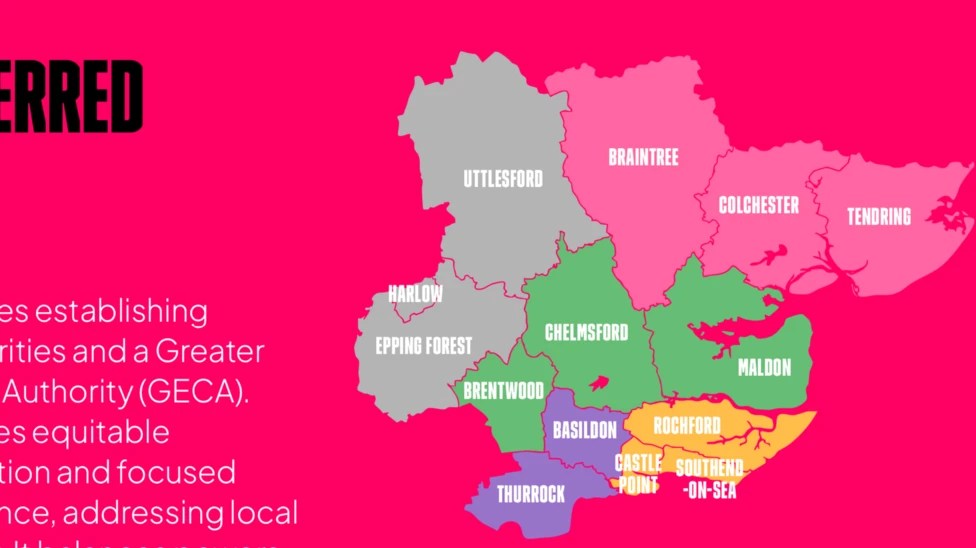
This sort of division was compatible with comments in a joint media statement issued by Leaders of Braintree District Council, Colchester City Council and Tendring District Council. in January 2025:
‘If Local Government Reorganisation is to go ahead, then we believe that the sensible geography for a unitary authority would be Braintree, Colchester and Tendring, which would meet the government criteria set out in its Devolution White Paper on population size. North East Essex is a functional economic area and, crucially, we have a strong track record of successful delivery between the three councils and Essex County Council.’
These attempts to take control of the narrative don’t seem totally in synch with the Devolution White Paeper though despite the claims of ‘North East Essex’. It says:
‘New unitary councils must be the right size to achieve efficiencies, improve capacity and withstand financial shocks. For most areas this will mean creating councils with a population of 500,000 or more, but there may be exceptions to ensure new structures make sense for an area, including for devolution, and decisions will be on a case-by-case basis.’
Taking a look at the population figures for Essex, Southend and Thurrock from the 2021 census indicates that the division proposed in Basildon fails to achieve ‘councils with a population of 500,000 or more’. While ‘North East’ is close to the 500k population threshold, all the others are far below with every other unitary needing to see a population increase of greater than 37% to reach it.
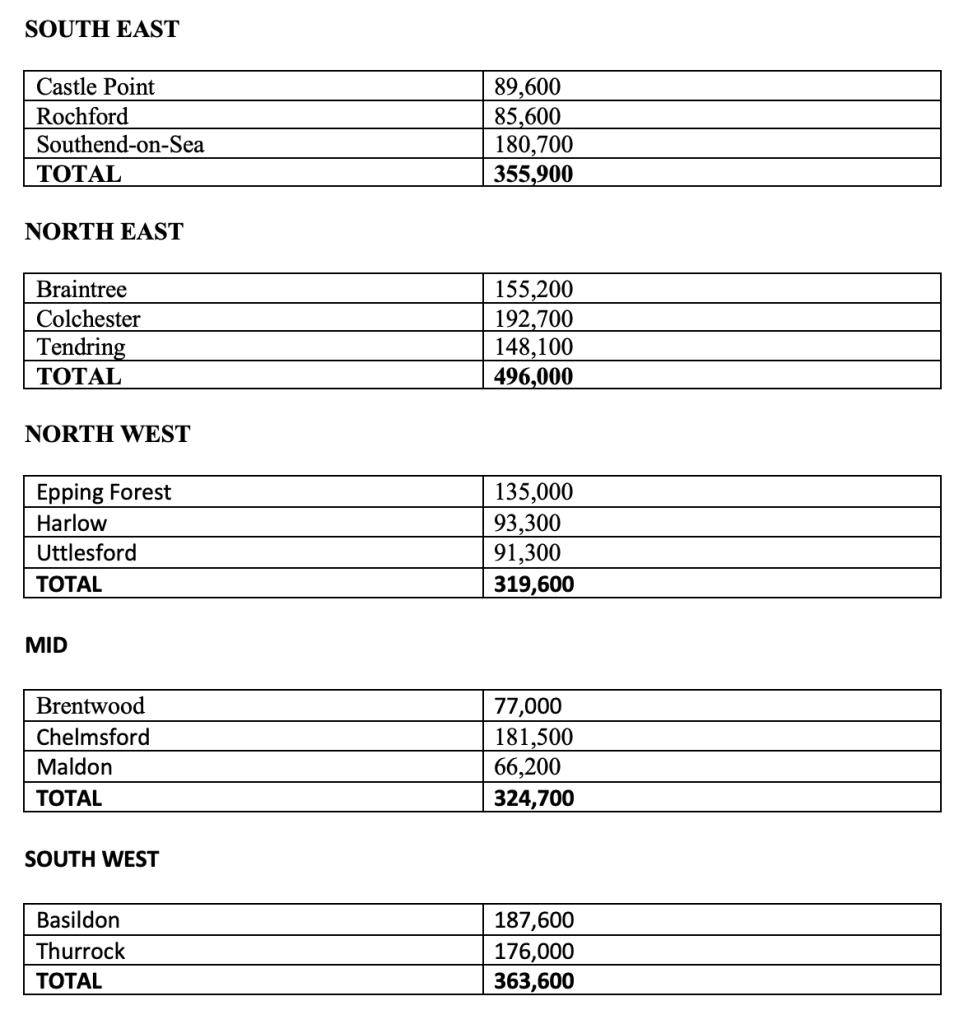
Some commentary online says that with a population of about 2 million, Essex should be divided into either 3 or 4 unitary authorities. What could that look like? I decided to model some different divisions.
I began with a small set of criteria:
*500k+ In line with the Devo White Paper the new authorities should have ‘a population of 500,000 or more’
*Existing territories will shift in entirety Ignoring the current boundaries would allow a more exact demographic split but I have assumed that ease of reorganisation will demand that existing political territories transition as wholes.
*Contiguous by land
I also prefer
*Single city in each Having more than one of Essex’s cities in a single region would overweight it
On that basis, a Three Authority Model might look like this:
THREE AUTHORITY MODEL
Three unitary authorities, each as a city region.
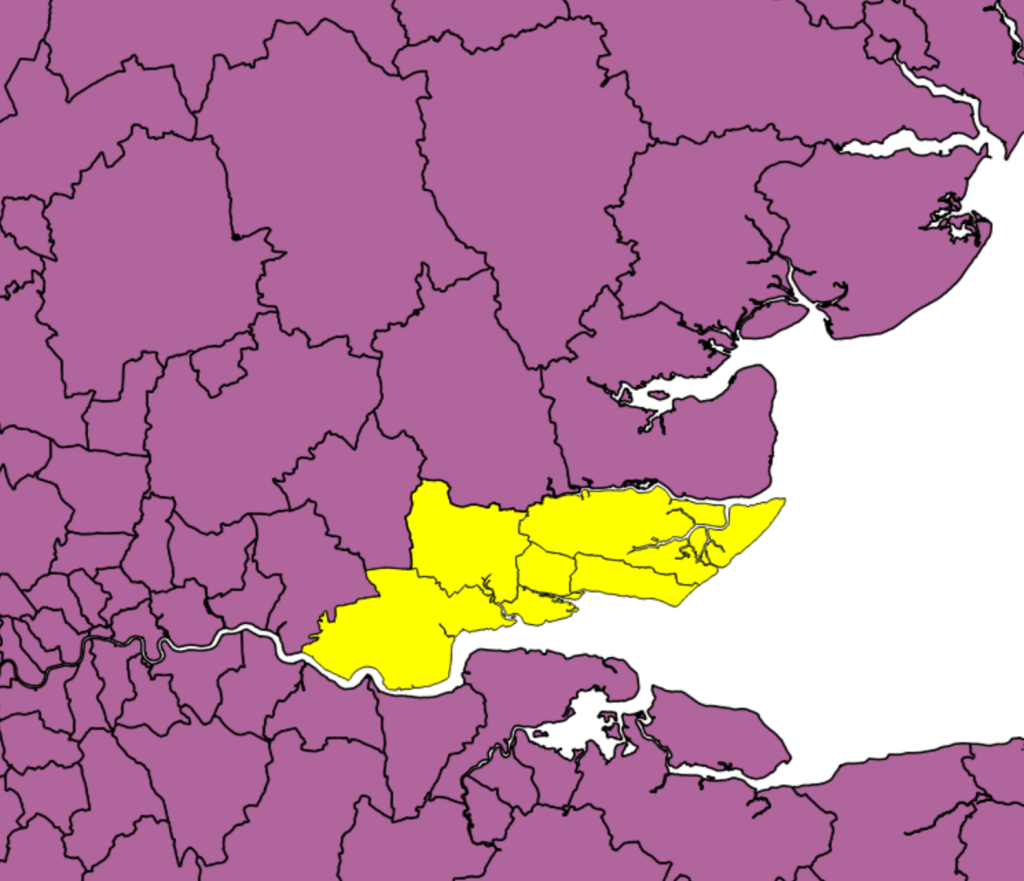
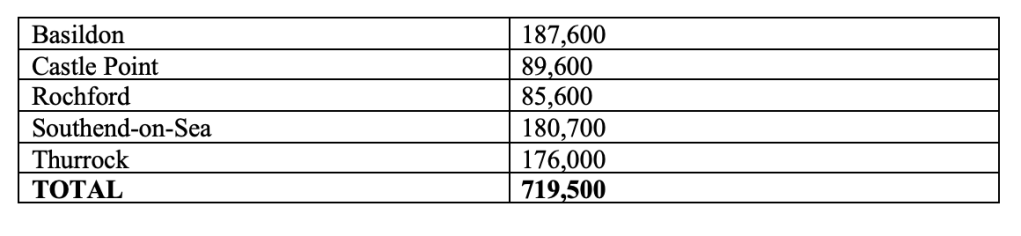
SOUTH ESSEX [Southend City Region]
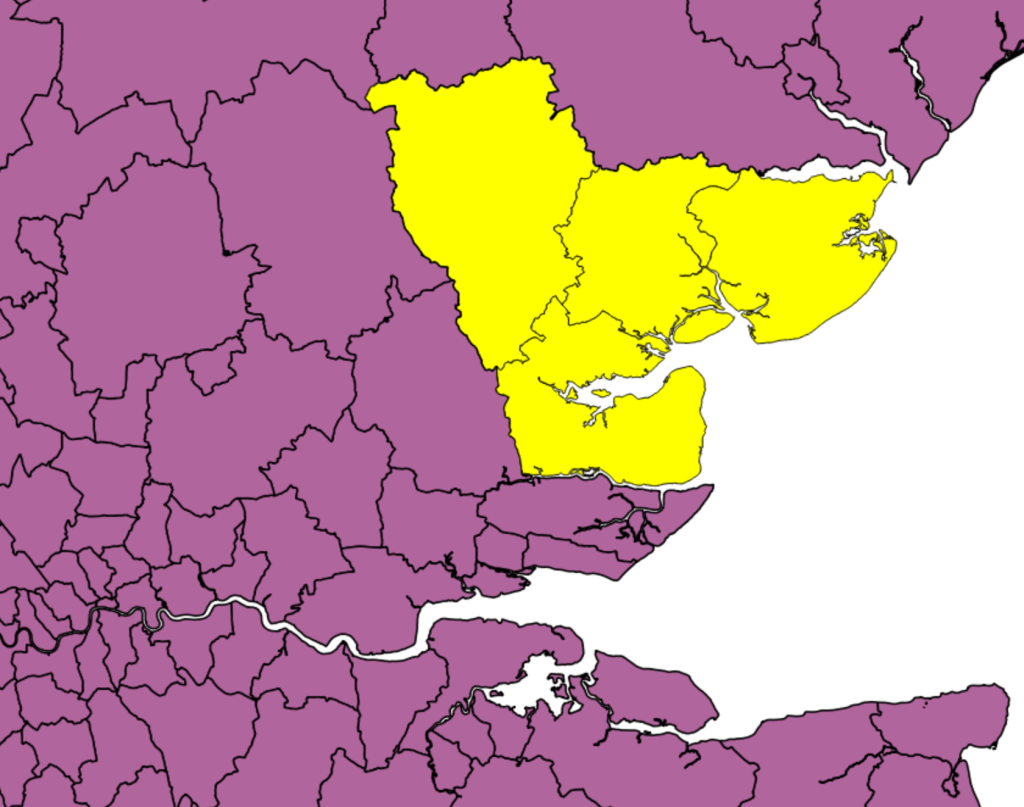
NORTH ESSEX [Colchester City Region]

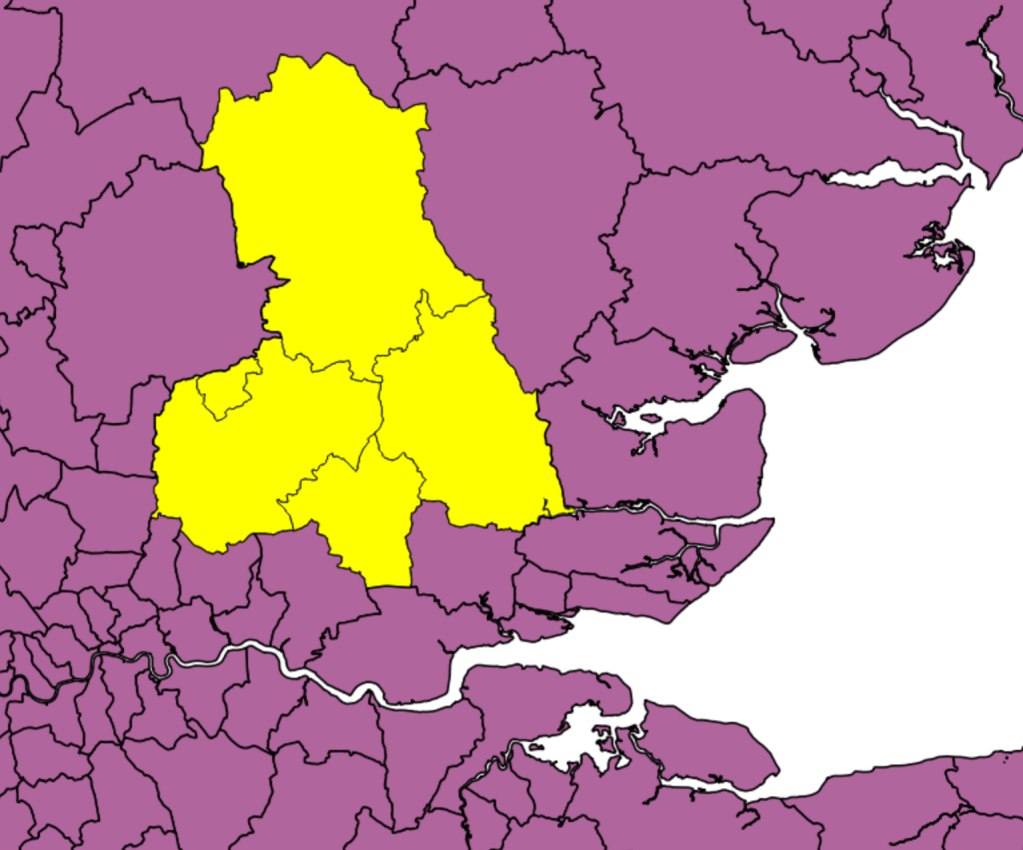
MID-ESSEX [Chelmsford City Region]
Alternatively, a Four Authority Model might look like this:
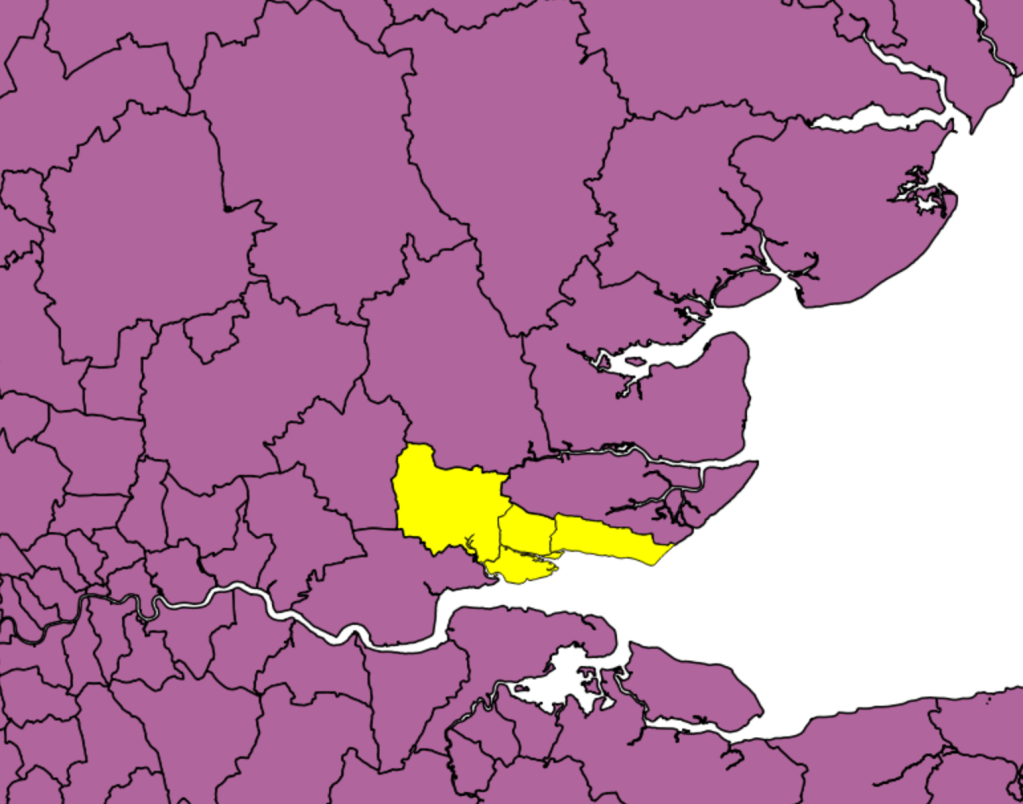
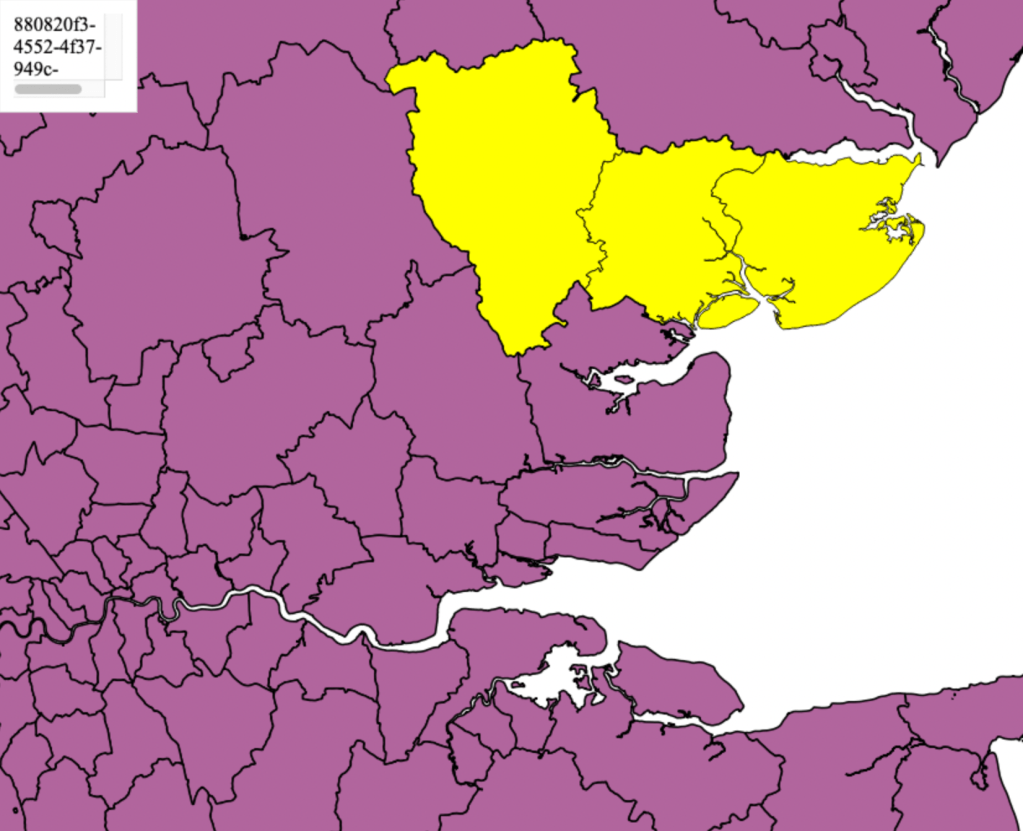
FOUR AUTHORITY MODEL
Four unitary authorities, each as a city region with London in an extramural role for ‘London Edge’.
SOUTH ESSEX [Thames Estuary]

NORTH ESSEX [SUFFOLK BORDERS]

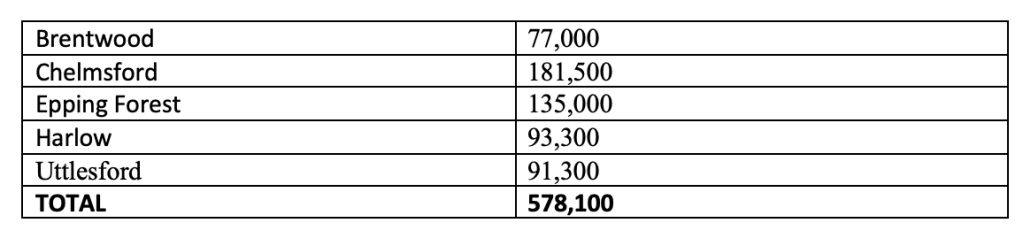
LONDON EDGE
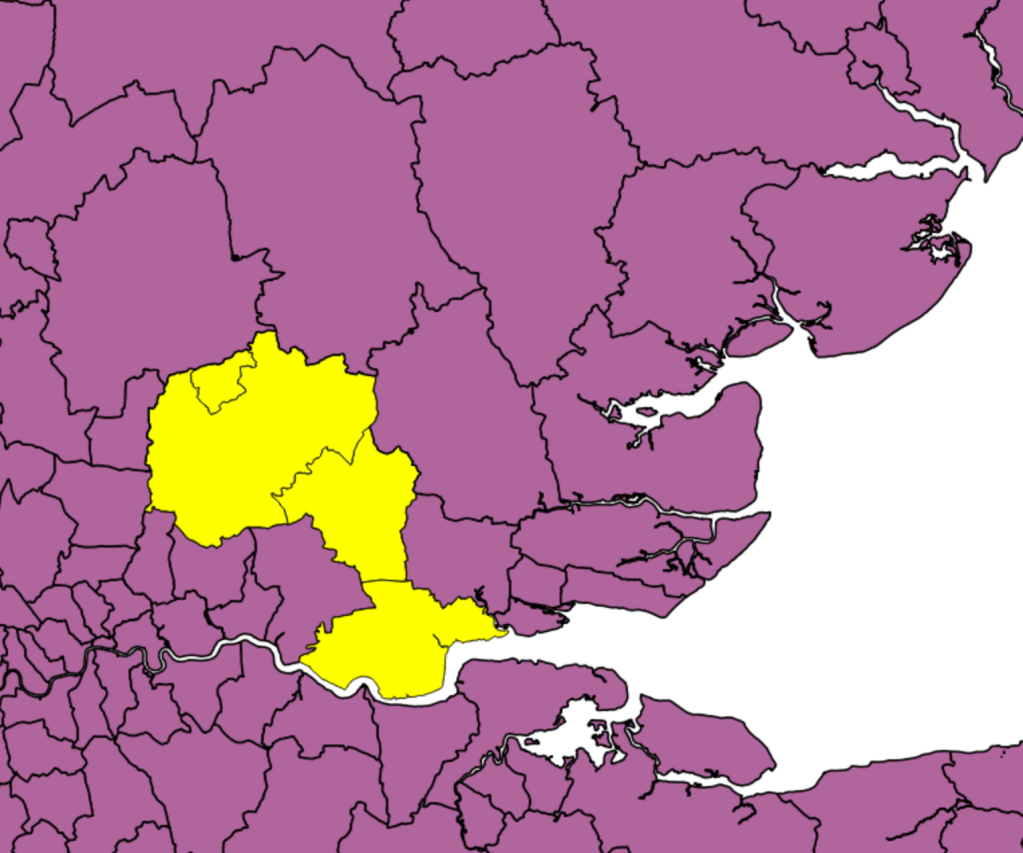

MID ESSEX
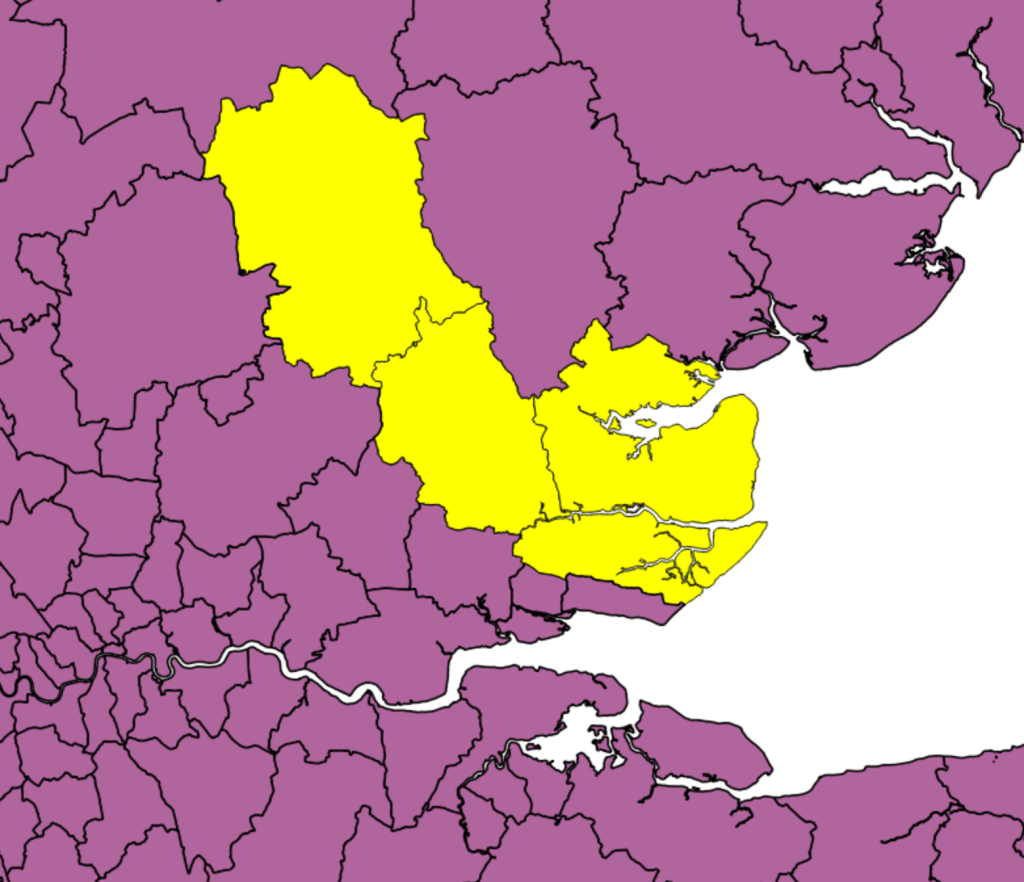
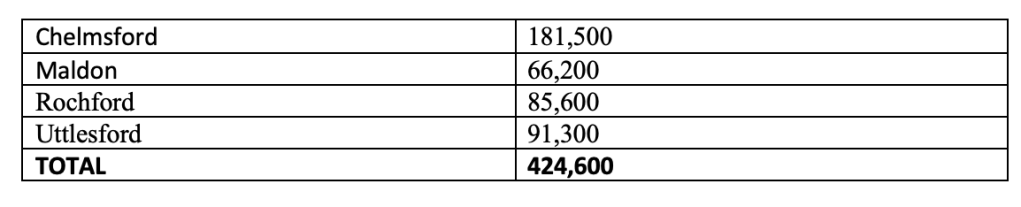
From the perspective of the county, the Three Authority Model is clearly superior. The regions make visual sense and are easily comprehensible. SOUTH ESSEX [Southend City Region] is significantly larger in population than the other two but that seems coherent with Southend being Essex’s largest city and the density of people living along the Estuary
The Four Authority Model does better at distributing the population evenly but as the total Essex population is actually below 2 million, there’s no way it can deliver 500k+ people in each one. Braintree, Colchester and Tending get their preferred formation in NORTH ESSEX [SUFFOLK BORDERS] but MID ESSEX is a curate’s egg. Chelmsford, Maldon and Rochford sit relatively comfortably but the addition of Uttlesford leaves it stretching from the Cambridgeshire border to the Thames Estuary in an ungainly swoop. Also, Rochford is culturally more connected to Southend than Chelmsford (it hosts the misnamed London Southend Airport!).
Going back to what’s best for the Dengie or the Maldon area more widely it’s hard to say. MID ESSEX in the Four Authority Model would tie the county town of Chelmsford to two primarily rural districts (Maldon and Uttlesford) and the rural edges of Rochford – perhaps this would provide a combination of connection to the core with a necessary appreciation for the demands of rural areas? NORTH ESSEX [Colchester City Region] is the Three Authority Model that combines some similar coastal areas with the metropole of Colchester, home of the University of Essex. It places the Maldon area in the East Anglian milieu of north Essex, and it feels a bit more biogeographically consistent. But Colchester feels a long way from the Dengie, even though Bradwell is only 19km (12 miles) away as the crow flies. It’s two buses or three trains to get from Burnham-on-Crouch to Colchester. The Travel to Work Areas recorded in 2011 didn’t indicate much movement from Maldon district to Colchester by any method. The Faragists of the Clacton Riviera would no doubt find common cause with the RUKers of the Dengie (Pamela Walford, the Reform UK candidate who made second place in the 2024 election in Maldon constituency lived in Frinton-on-Sea).
No matter how the cookie crumbles there are going to be good and bad things to deal with and the national pressure for growth at all costs. I’ll keep focussing on the route to a safe and thriving planet for us, future generations and the natural world – this seems like an awful diversion right now and I hope that things that were going in the right direction stay on course.

 Dengie Bioregion