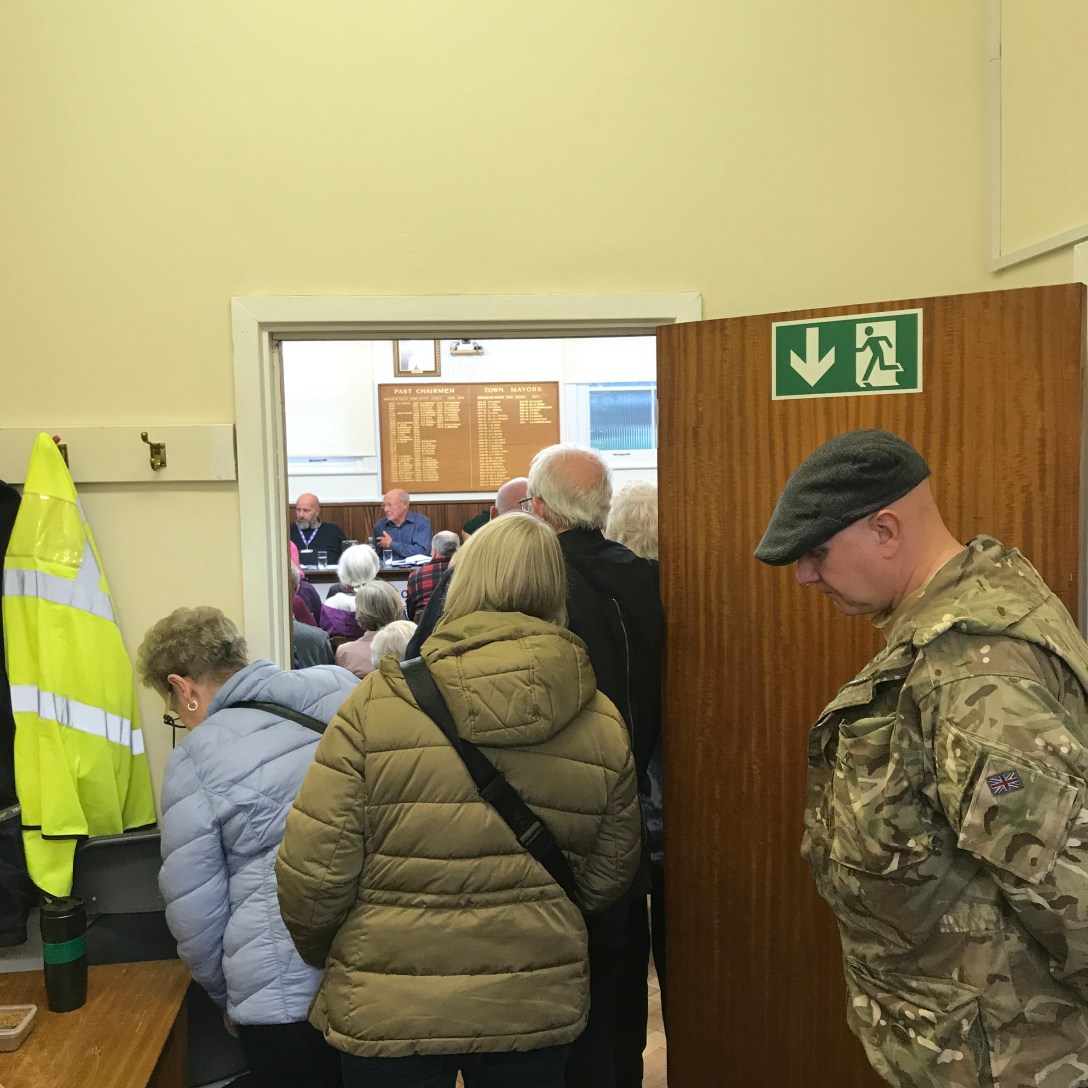
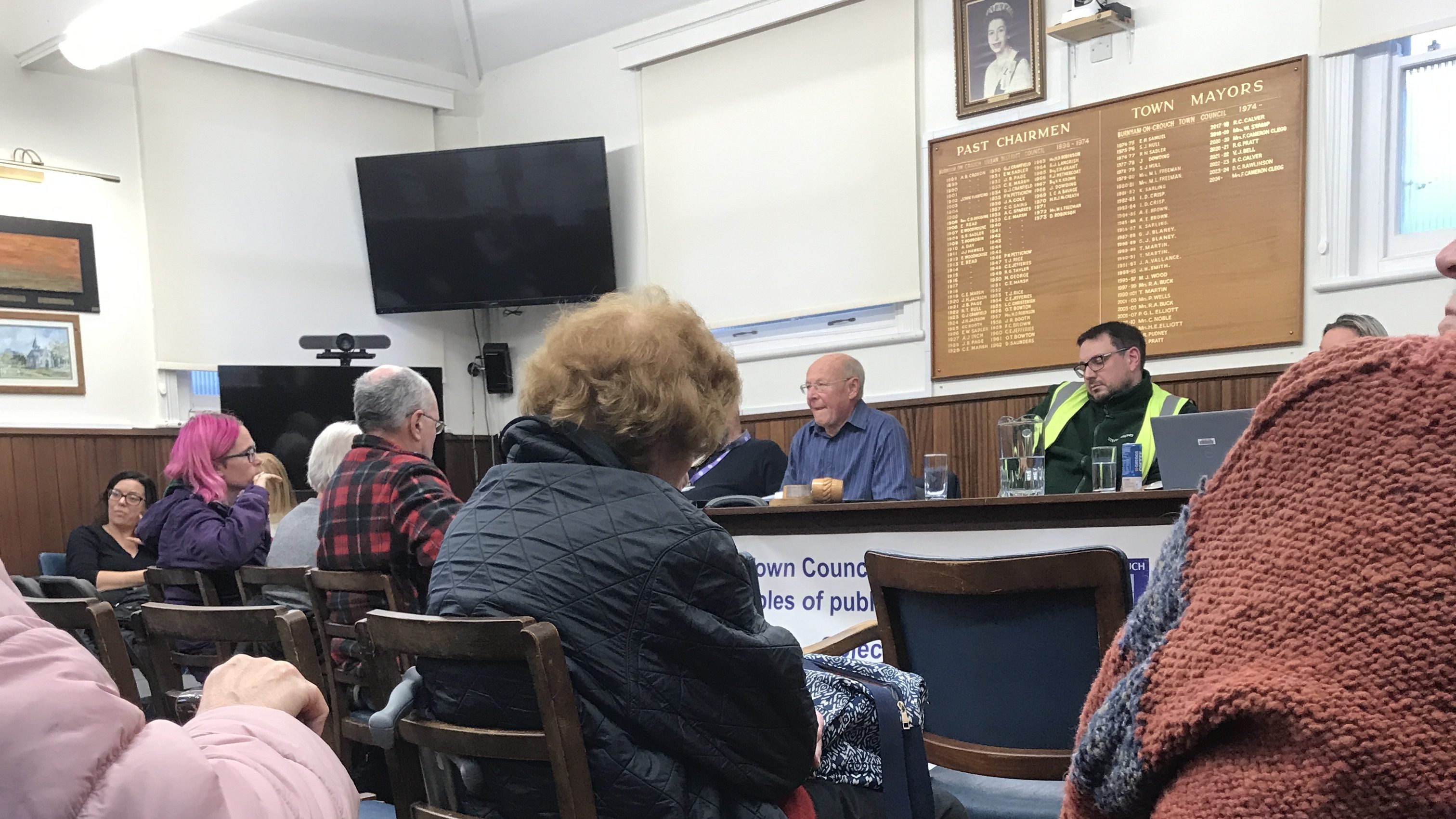
The Dengie Hundred Bus Users Group public meeting on November 6th was oversubscribed and spilt out of the Burnham Town Council chamber into the lobby behind.
In that lobby, a printer was churning out copies of the order of service for Remembrance Sunday, making it impossible to hear what was said in the chamber. Eventually, I wriggled myself in.
You didn’t need to discern the words to recognise the anger in the room. The loss of the D4 service, the collapse of provider Arrow Taxis and the fiasco associated with the timetabling and provision of the D4’s diminished successor, the 45, was at the heart of the anger (see earlier post). The representative from Essex County Council (ECC) bravely persisted in presenting the mathematics and economic rationale for why services had to be reduced; the audience was more interested in accountability than accountancy.
It’s fair to say that the assembled angry were almost entirely from an older demographic. (A weekday afternoon is unlikely to attract attendance from working people or those in full-time education ). Thus the increasing ailments of age repeatedly coloured the concerns of the attendees.
Our general hospital, Broomfield in Chelmsford, is some distance away. From Burnham, it’s a 2 bus, 2-hour journey each way. The health facility provided by the closer hospital, St Peter’s in Maldon, is being run down, is deemed ‘not fit for purpose’ and is currently threatened with closure. The services currently provided by St Peter’s are marked for relocation elsewhere in Essex. Maternity services are proposed to move to a birthing unit in Braintree. Leave Burnham just before 9am and you can expect to get there by 11.22 including 2 bus journeys and a 12-minute walk at the end (but I wouldn’t trust the 7-minute connection at Chelmsford Bus Station given the traffic jams en route through Danbury). There are no buses from the Dengie villages that will get you to Burnham by 9 though. I’m not convinced this is the kind of service local mothers were expecting.
Arrow Taxis used to connect their services, with their DaRT 99 bus providing a service from the Dengie via Maldon to Broomfield Hospital. Their drivers were also trained to transport the infirm. Now Arrow Taxis are no more, a 99 bus connects Maldon to Broomfield but first, you have to get to Maldon.
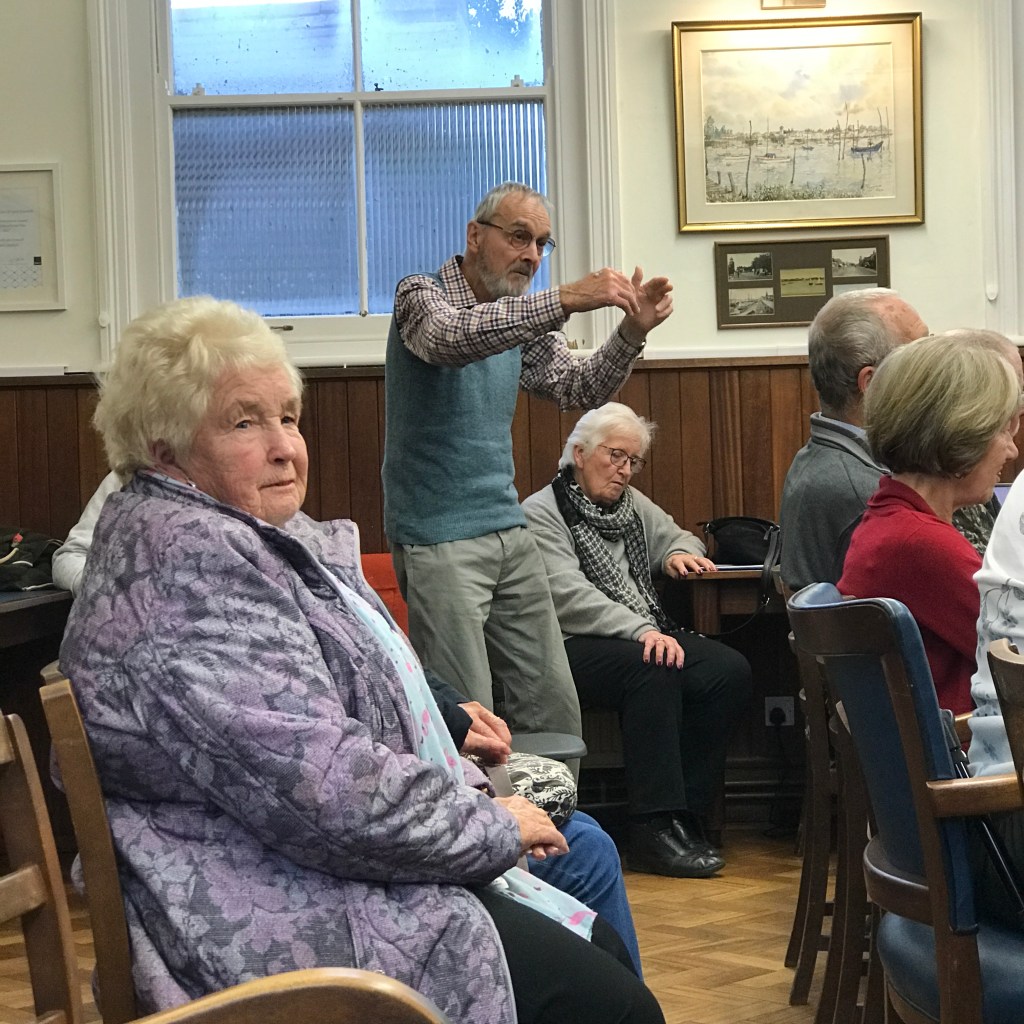
Many of those present relayed that they were now dependent on private taxis with costs of £60-70 each way. They also reported that Broomfield schedules clinical and post-op appointments from 9-12 am necessitating early departures that the bus services just do not provide.
Alongside ECC and bus operators on the panel, there was a representative from Community 360, an independent, charitable infrastructure organisation that provides community transport in Essex. Their aim is to improve the transport provision for people in the local community who have limited mobility or who would otherwise be socially excluded or geographically isolated. There was some initial excitement in the room that this could satisfy attendees’ transport needs but this soured when they learned that travel using Community360 services would not be covered by free bus passes. The Rep also admitted that they were currently short on drivers and that they were currently unable to accept new members.

Nevertheless, with timetabled services on the wain, it was the sort of on-demand or pre-bookable shared transport services provided by Community360 (or the DigiGo buses provided elsewhere in Essex) that ECC envisioned meeting the mobility needs of the Dengie’s rural population.
It was a vision of precision mobility: provide just enough transport, just in time. Identify the exact travel demand of the carless and provide a precise dosage of mobility to meet it.
As I’ve noted before, this cannot achieve a stated aim of modal shift. Modal shift requires the cultivation of new demand for bus services, the provision of services that supply a meaningful alternative to the use of the private automobile.
Mayowa Ayodele, a Mayland Parish Councillor, asked the same question he posed at the meeting last year: where are the bus services that meet the needs of working people? He simplified this to the provision of buses from the north Dengie villages that would connect with London-bound rail services on the Great Eastern Main Line at Chelmsford. Currently, no timetabled service offers the opportunity to arrive in London by 9, nor for a worker leaving London at 5 to get home at all. The commercial bus providers gave a vague answer about how, of course, they would be more than happy to provide a service where there was enough demand to warrant it. Canadian urbanist Brent Toderian’s line that ‘it is hard to justify a bridge by the number of people swimming across a river’ comes to mind.
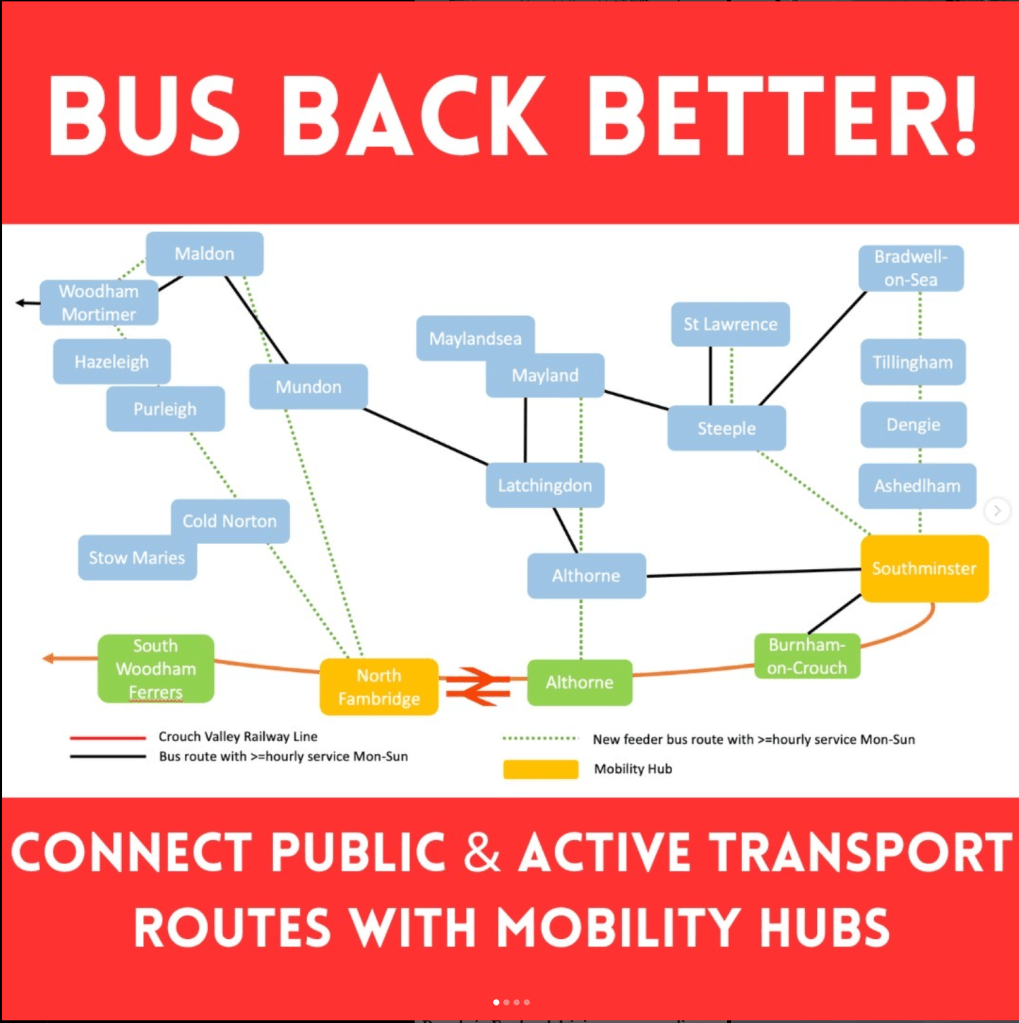
I don’t think better bus connections to the Great Eastern Main Line are the answer though. My conviction is that feeder buses from Dengie villages to the Southminster Branch line would offer an easier way to integrate transport services for commuters while also increasing general mobility provision. This forms part of my rECOnnect Dengie proposals to connect public and active transport routes on the peninsula (more on this is in a future post!)

 Dengie Bioregion