Thoughts on the General Election and Reform UK in Maldon constituency.
Last Thursday, I stayed up all night for the first time in years. It was the UK General election of course and despite the perils of displaced slumber I was minded to burn the midnight oil and watch the disgraced fall. I didn’t have the comforts of home and TV to assuage the sleep deprivation, however, because I had a formal role to play as a ‘counting agent’ invigilating the manual tallying in my constituency. We got the last bus to Maldon, had a drink in the Queen’s Head and walked down to the Blackwater Leisure Centre as the sunlight disappeared.
Claire was the election agent for our Green Party of England & Wales (hereafter Green Party) candidate Isobel Doubleday and I joined them and Isobel’s husband, John, for the count. None of us had attended one before so we were newbies uncertain of practice and procedure. We weren’t the only ones, it was also new to the Reform UK (hereafter Reform) candidate Pamela Walford and her agents. When the Elections Officer called in the counters to the hall the Reform Counting Agents went in too, and I followed their lead before we were all sent out again to wait.
I saw the Reform folk as the enemy. I find the party’s policies objectionable, their leader a dangerous charlatan and their candidates have done little to disabuse the idea that they are a proto-fascist formation. The last few days have revealed former BNP members and supporters, racist asides, violent homicidal rhetoric, and statements about the Second World War that echoed the National Front’s story of an unnecessary ‘Brothers War’.
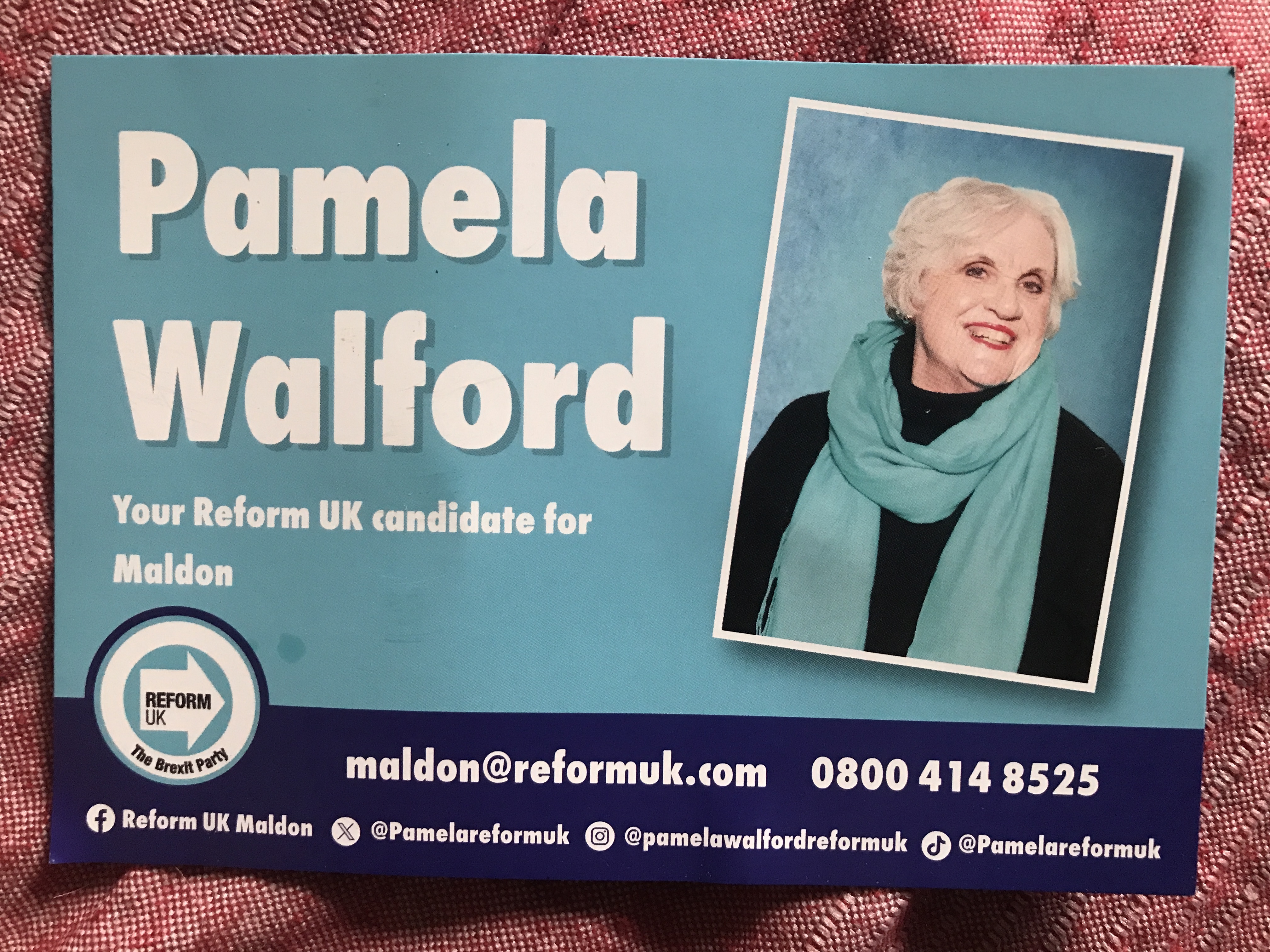
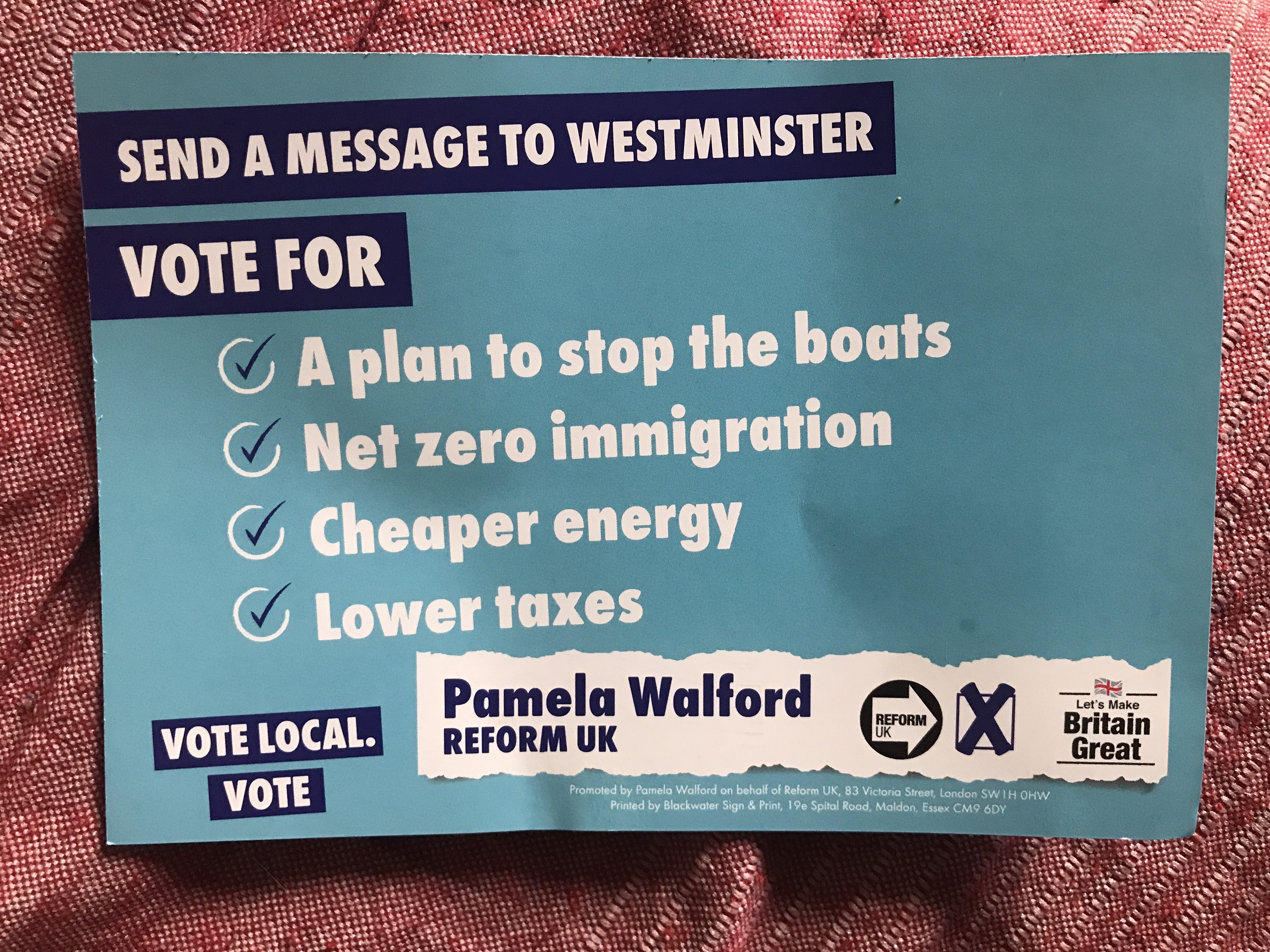
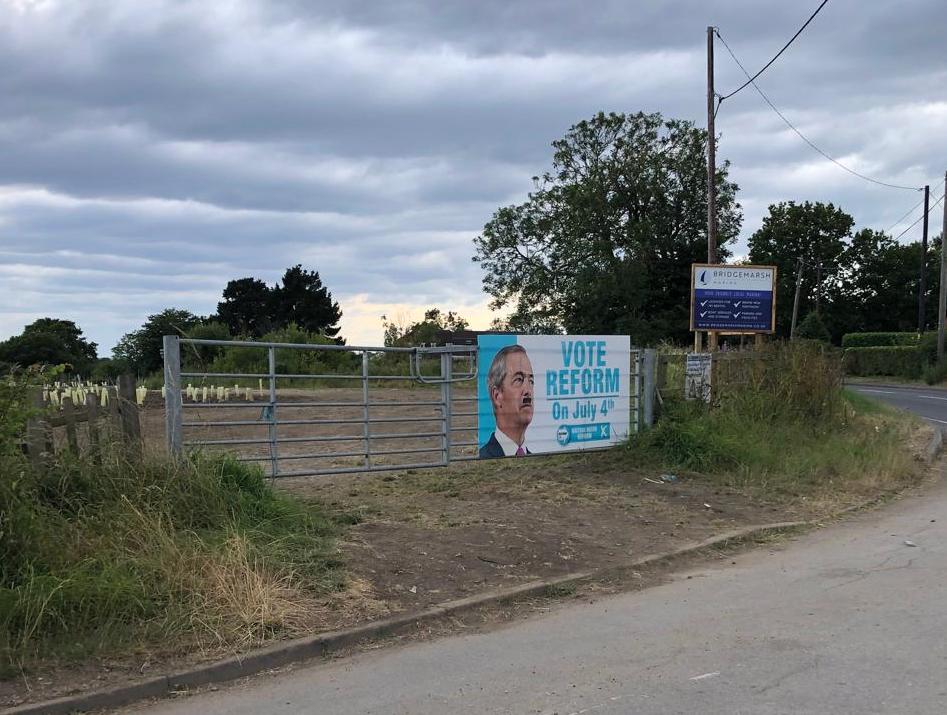
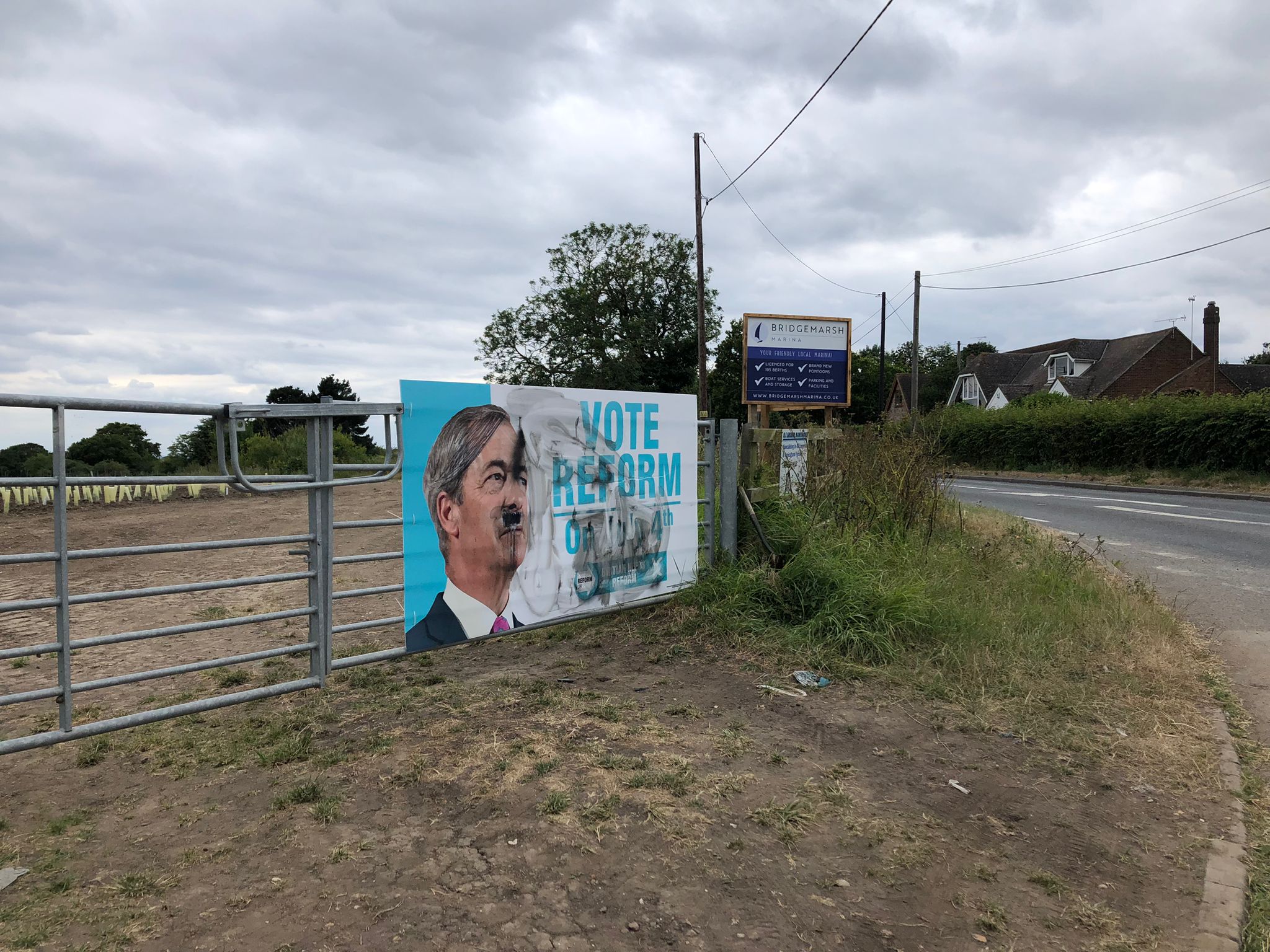
A couple of weeks ago Walford’s leaflet had dropped through our door, over the last month her picture had begun appearing in placards on lampposts across the Dengie, and generic ‘Vote Reform’ stickers had been posted on the rear of street signs on miles of rural road. Who paid for it all? Who posted them and when? I felt sick about the level of support necessary to achieve it all. There had been some kickback: in Latchingdon, the word Reform was struck out on the stickers; in Althorne, a large placard featuring Nigel Farage had become the site of a repeated cycle of defacement and scrubbing clean.
In the counting hall, I kept my distance from the Reformistas. I felt physical revulsion and yet I was compelled to scan their movements and attire for clues about them and the reasoning that had led them here. As the evening wore on, I softened slightly. It was partly the insomniac foxhole, the common situation producing a subtle camaraderie. I think it was mainly the friendliness of the Liberal Democrat team though. They distributed goodwill to all from the get-go, regardless of affiliation, which interrupted my partisan positioning. At some point in the early hours I offered around some chocolate-covered peanuts and the Reform team were the only takers.
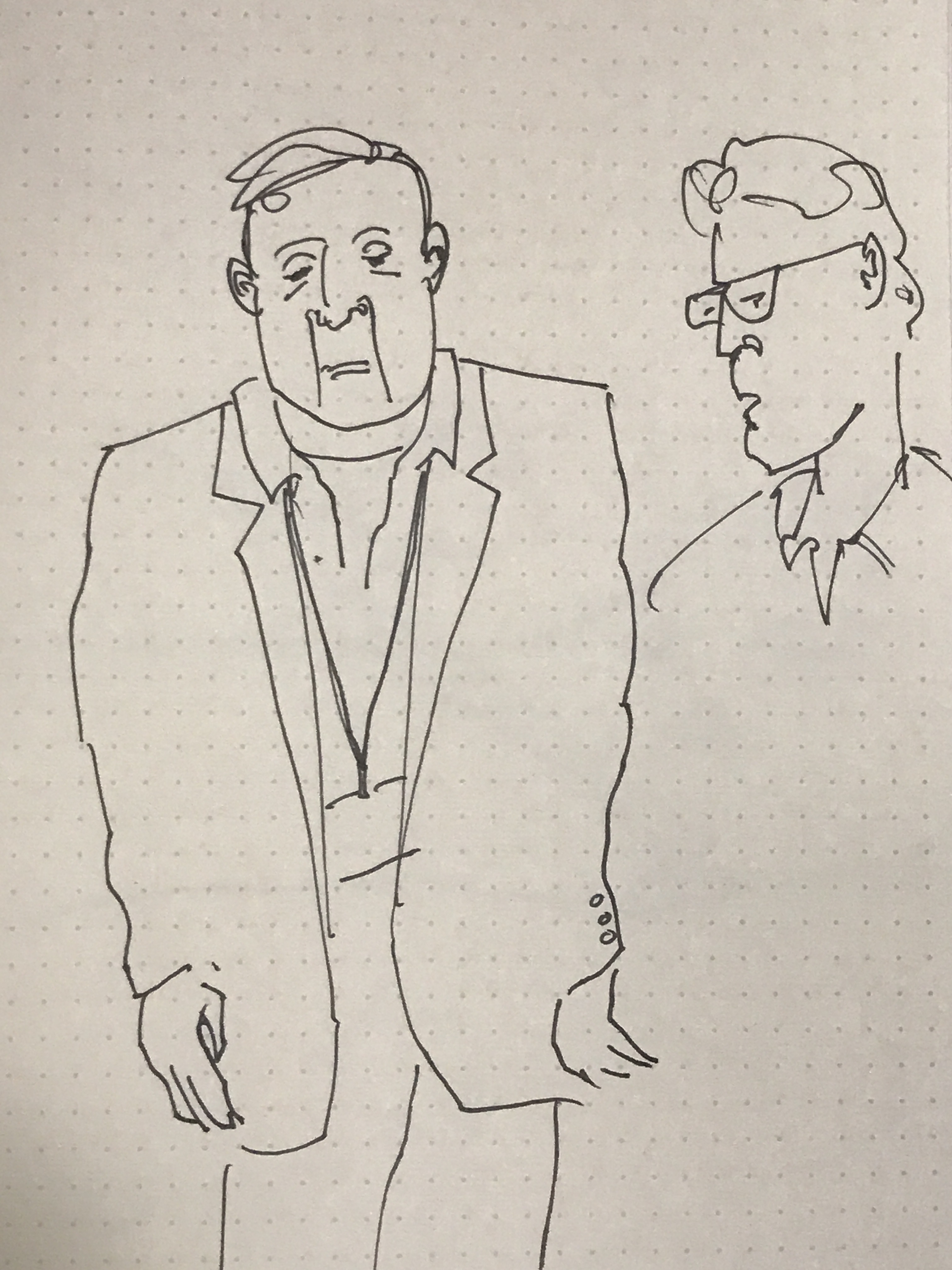
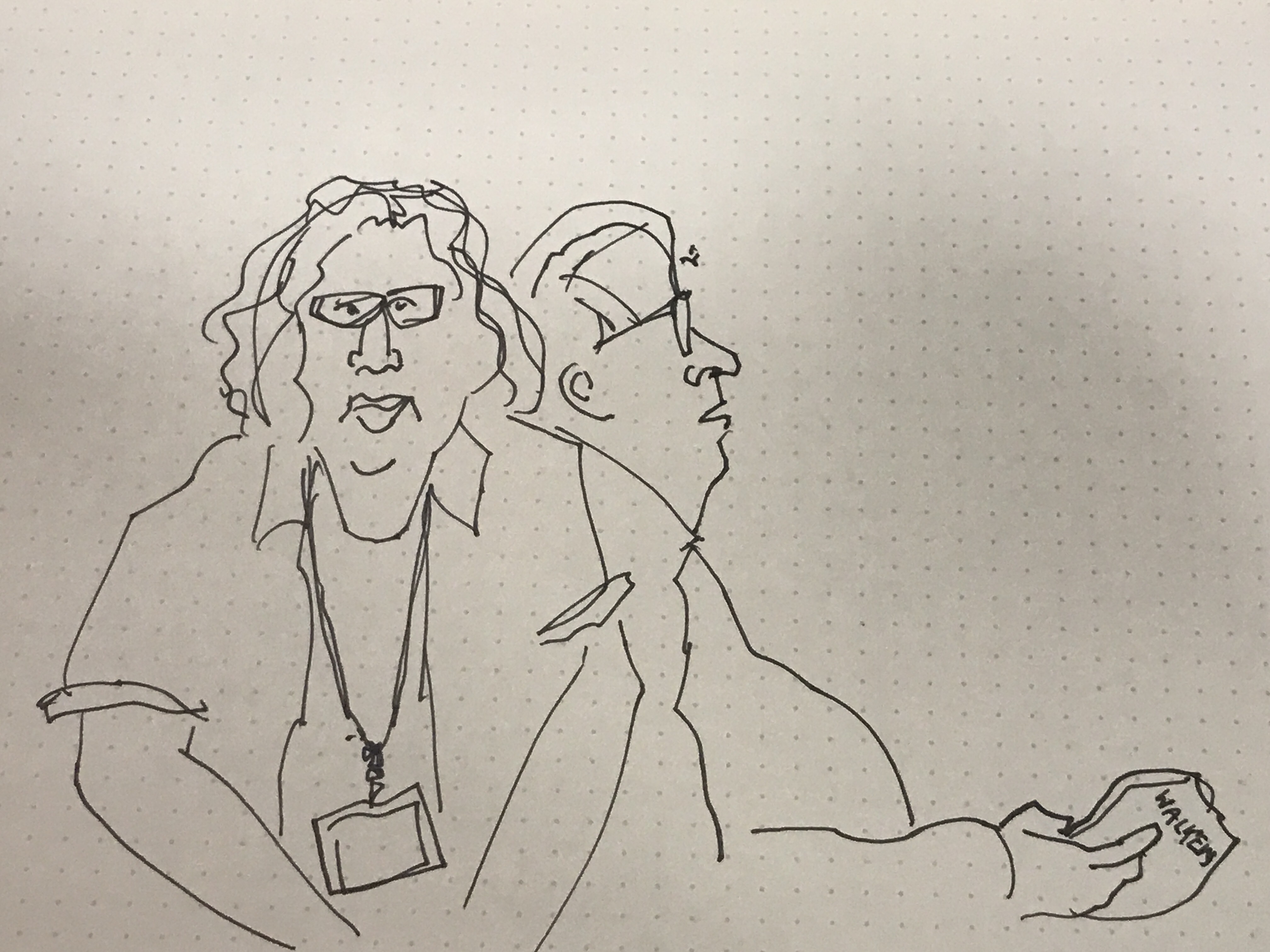
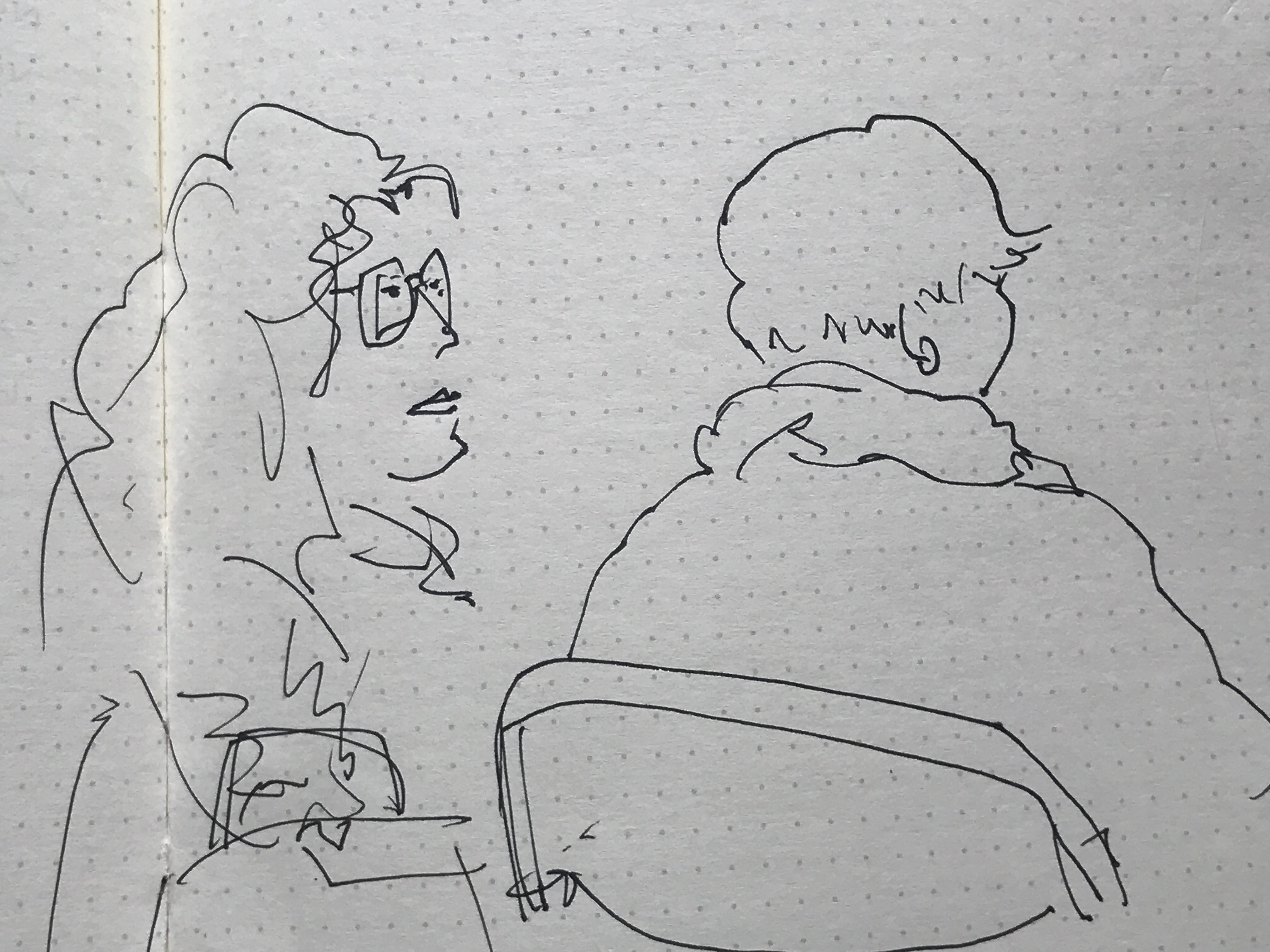
Reform, the Lib Dems and the Greens were there from the doors of the counting hall opening around 10pm. An hour or so later, the sitting Conservative MP, John Whittingdale, swept in with his entourage and post-prandial verve. Labour didn’t show until about 3am and then they mostly hid in the gym where muted TVs were showing the national news.
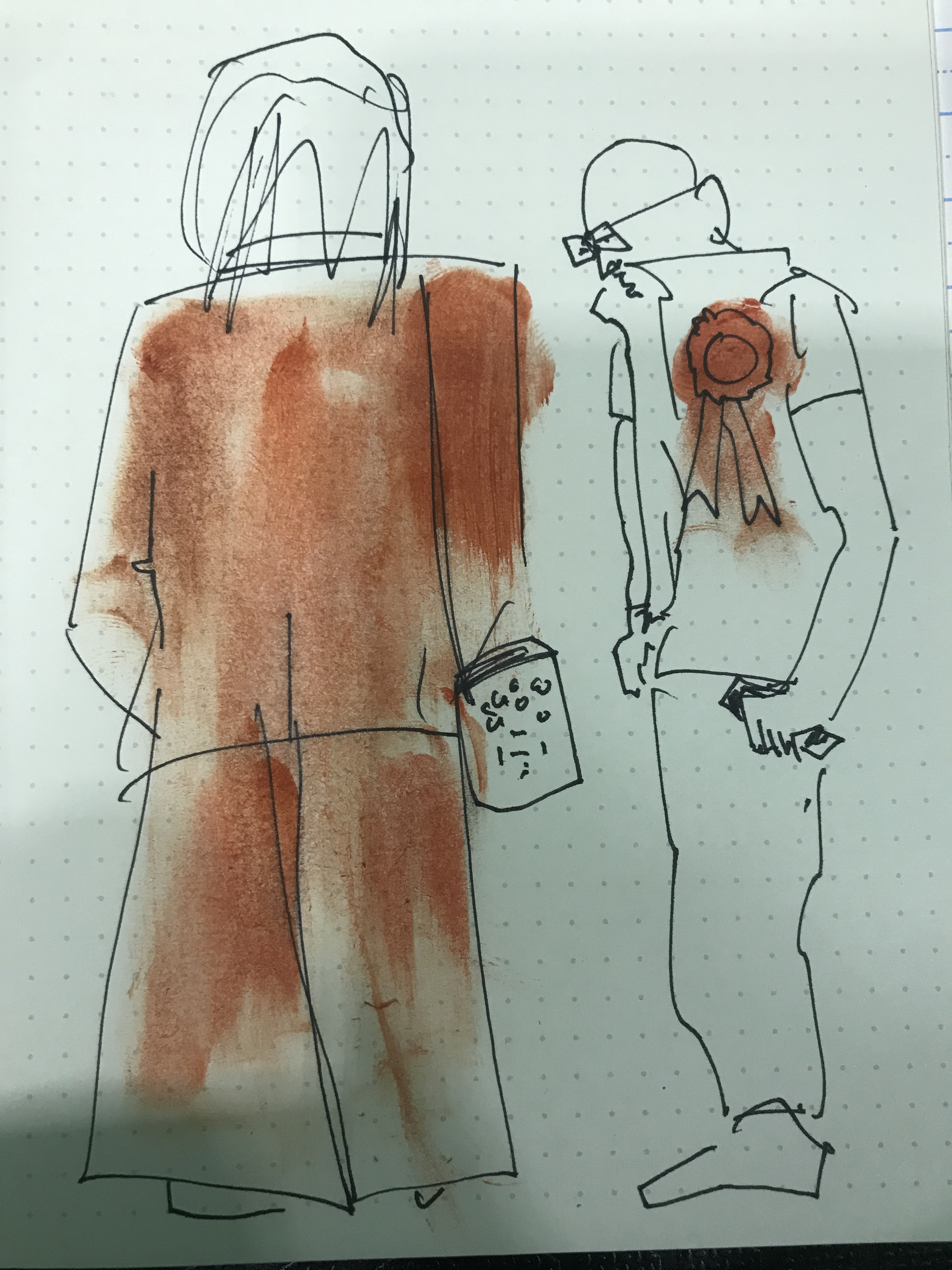
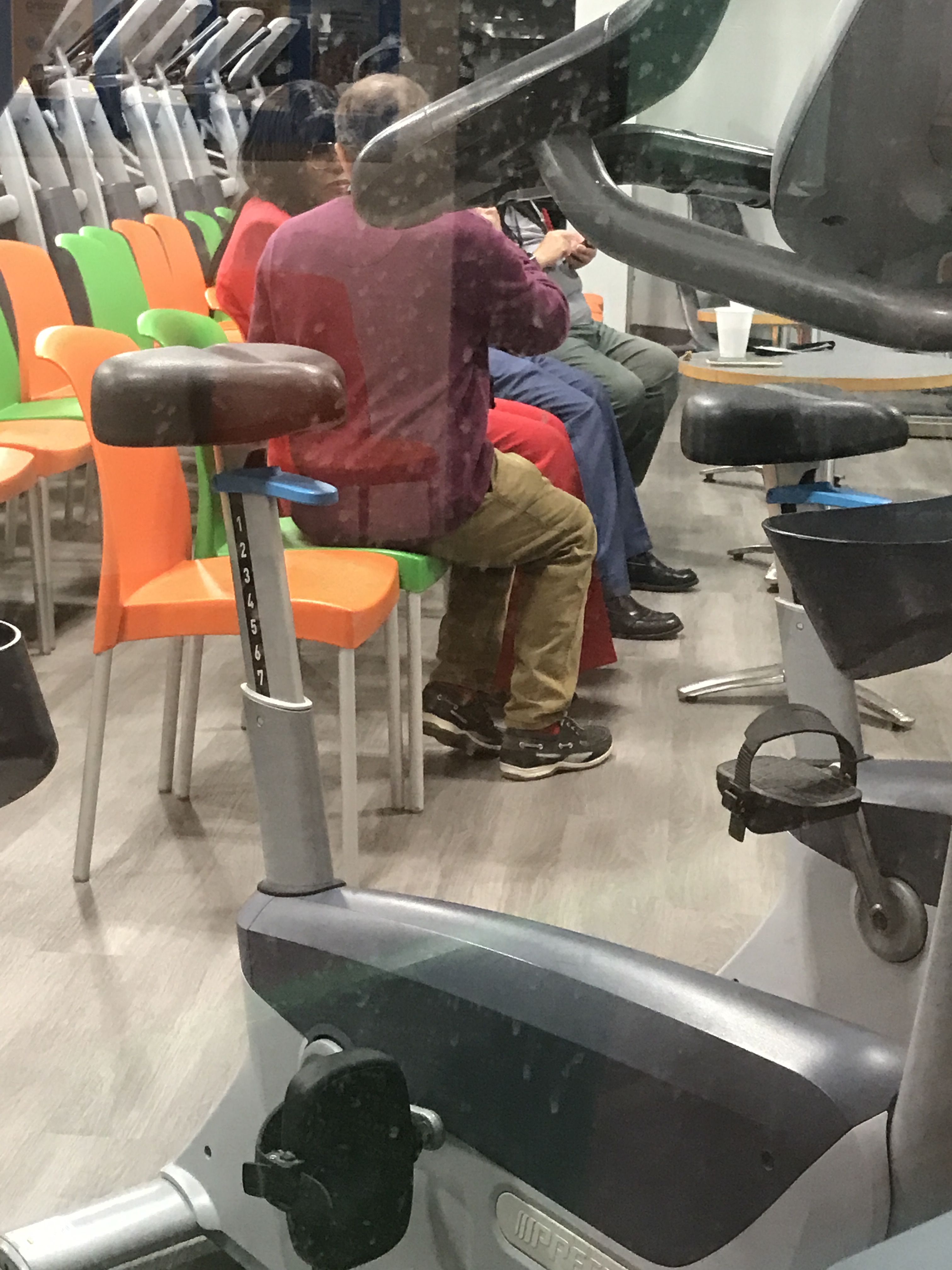
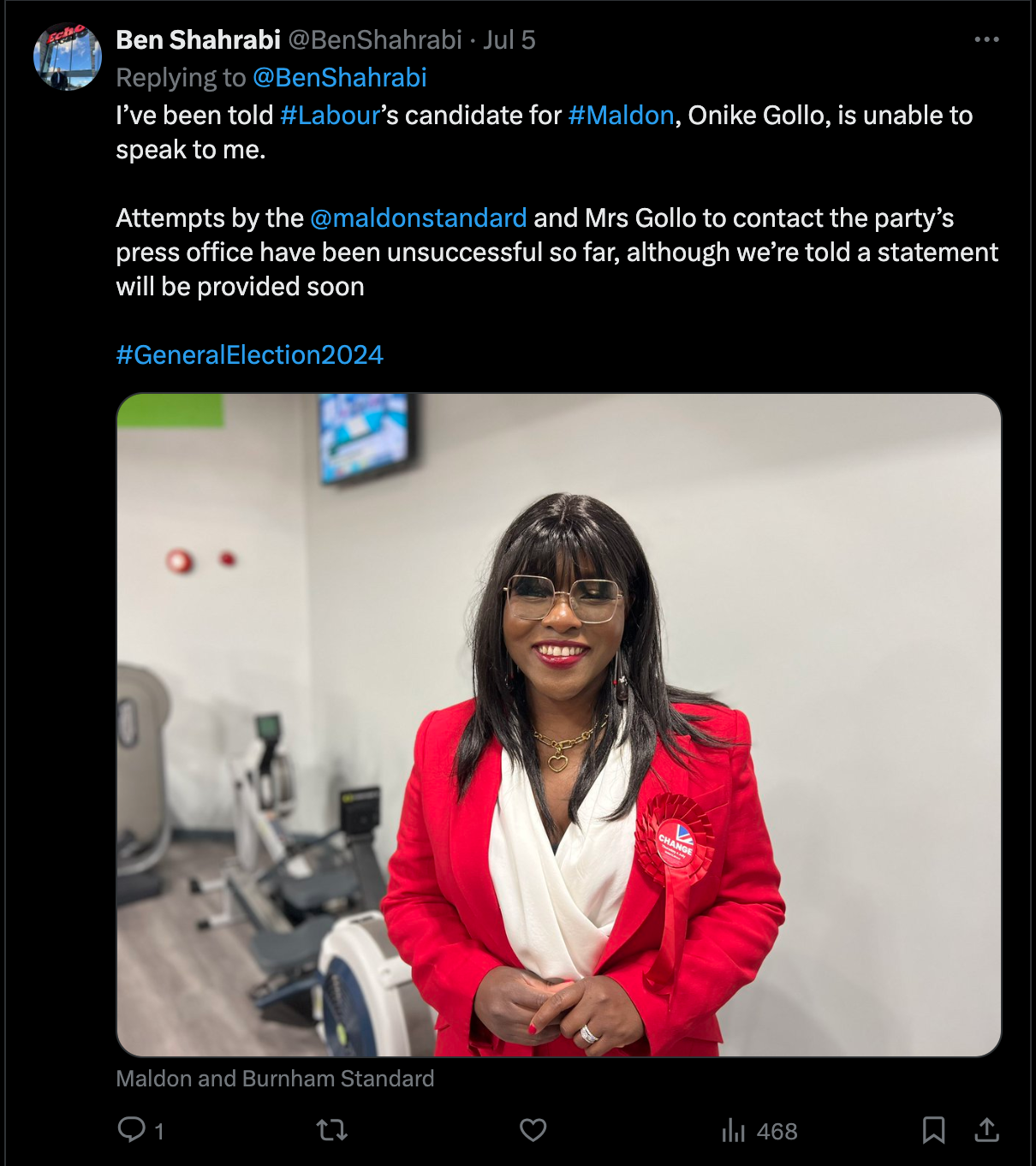
I’d heard mutterings in the Reform camp earlier about what a poor show it was that Labour hadn’t turned up – and I have to agree. The selection of Onike Gollo as their contender felt like a classic case of political career building: parachuting a candidate into a contest they won’t win as part of the inuring process for future ballots elsewhere. Ben Shahrabi, the reporter working for the Maldon and Burnham Standard struggled to get a photo and statement from Gollo (the other candidates obliged). In their gymnasium sanctum, I watched as the Labour team finally acquiesced to a mobile phone snap before dispatching Shahrabi with promises of a statement and a supercilious ‘we’ve got your email right?’. Word travels around about how a campaign is run and a little more care on stuff like this might have made the difference in nearby South Basildon and East Thurrock, where Labour lost to Reform by 98 votes.

Earlier, Shahrabi had surveyed the piles of votes rising in each candidate’s trays and made the intermediate observation that local contenders were winning out against those from outside – the Green candidate from Witham, Labour’s from Epping Forest. I had to point out that Isobel had lived and worked in the Maldon District for 50 years, and that it was merely the non-coterminous political geographies of the district and constituency that posed her as an interloper. The electorate would have been blind to this though, and if a ‘Witham address’ was a deal breaker to them then the damage was already done. In any case, it didn’t seem to be doing Pamela Walford of Frinton-on-Sea any harm. In Walford’s MBS interview, she stated that she was moving to Maldon. When asked what she loved about the place, the best she could muster was ‘all the shops’ – I guess we should look out for her down Tescos once she’s exchanged contracts.
My other main takeaway from the night about Reform UK supporters was that they were the only ones who might obviously be coded as working-class people. The vibe read would position our quartet of greens as arty graduates, the Lib Dems and Labour as professional-managerial class, and the Conservatives as country club with a hint of the petite bourgeoisie. Wiser heads than mine have noted how a large section of working people have been left behind both economically and politically by a Brahmin left. A nominal left that is both failing to challenge the massive wealth transfer to the rich and ceding narrative ground to the storytellers of the far-right. No different tale was told that night.
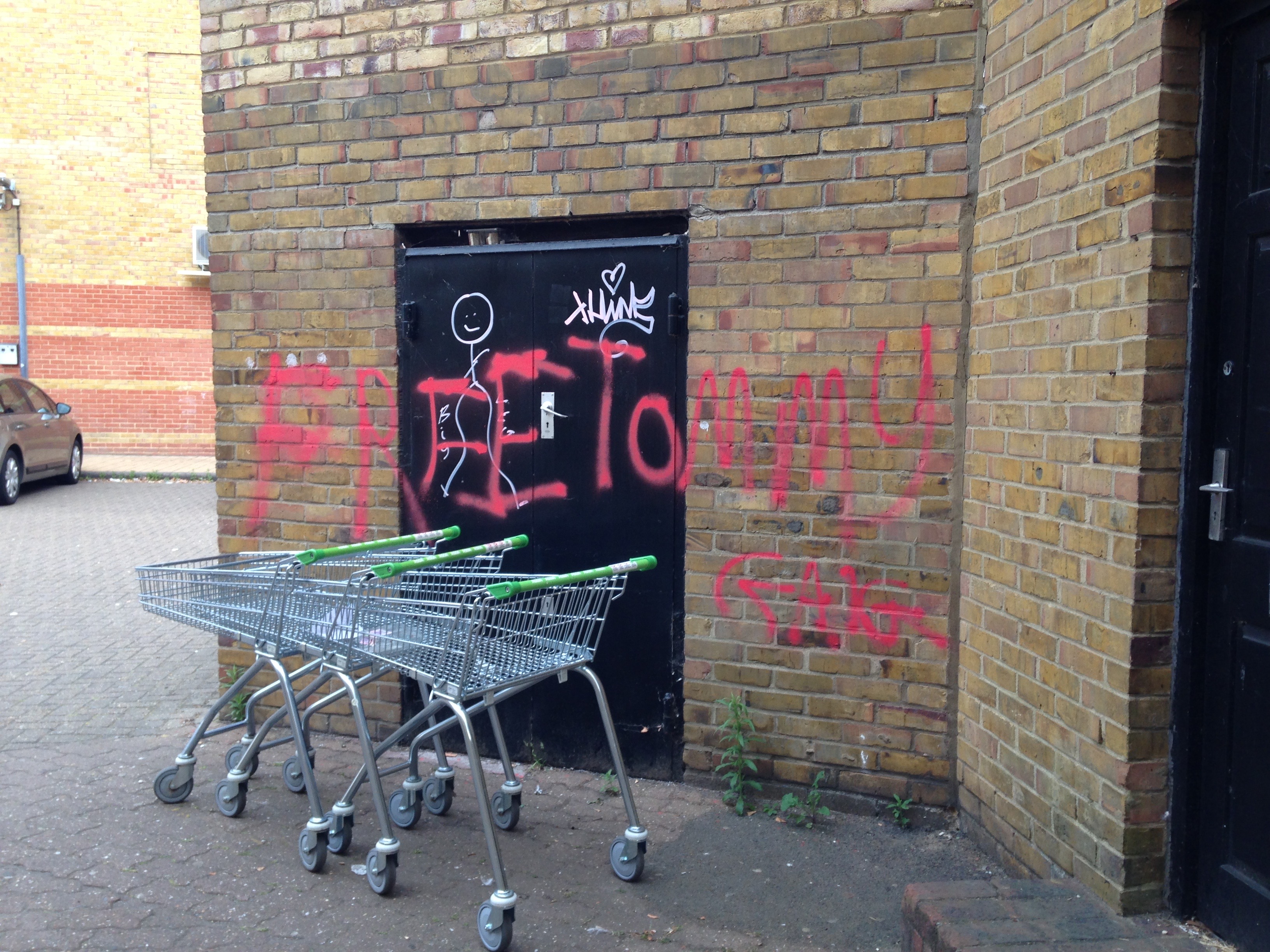
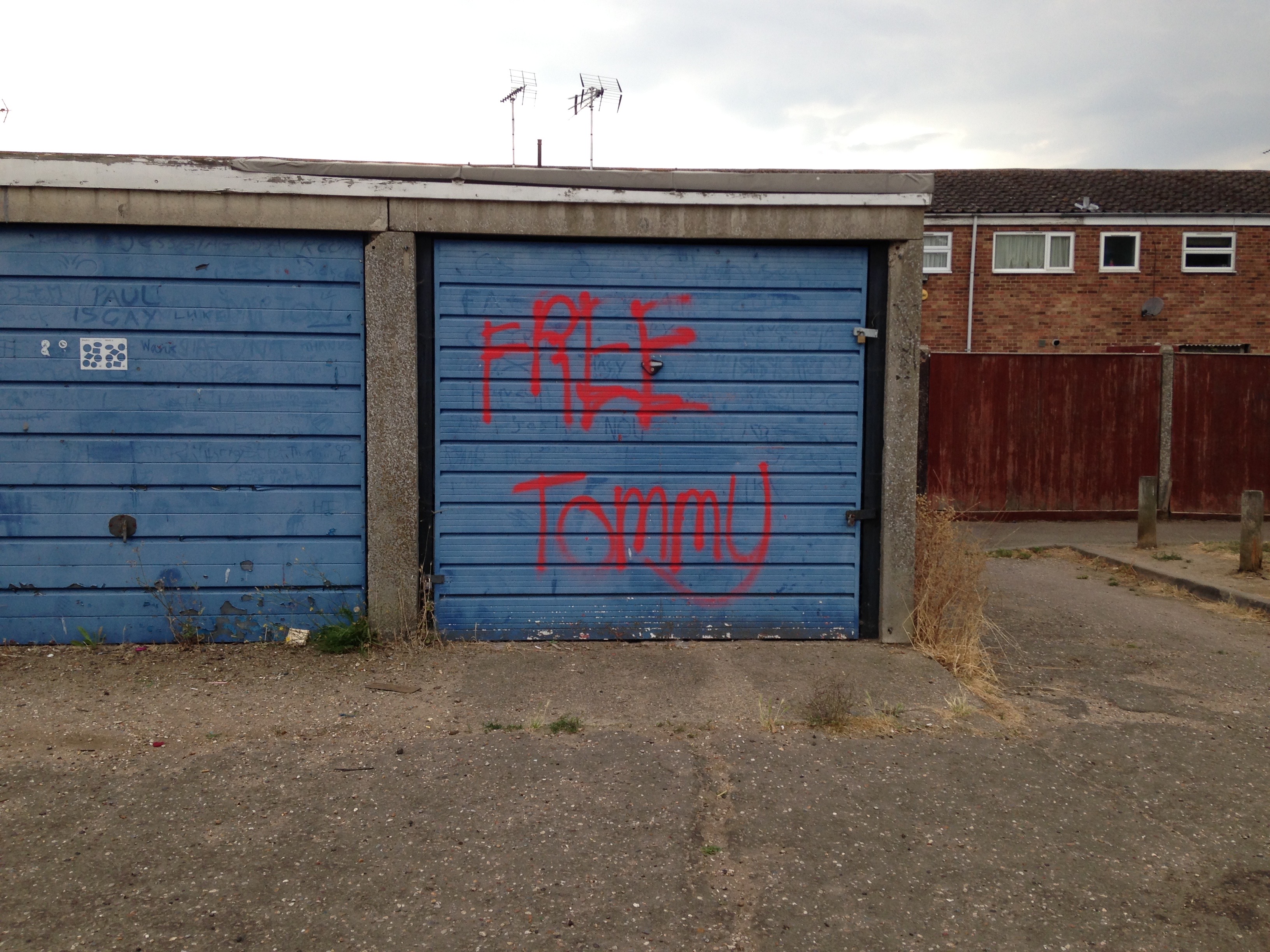
I heard the Reform supporters speak about ‘Nigel’ and ‘Boris’. I don’t think it was the matey-ness of first name terms though, these were the mononyms of superhuman figures that transcended earthly rules. I felt the absence of another one, the Reform fan: ‘Tommy’. ‘Tommy’ of “Oh Tommy, Tommy, Tommy/Tommy, Tommy, Tommy, Tommy Robin-son” – Tommy son of Robin. An alias so dripping with psychic baggage that the egregore nature of the figure is impossible to ignore.
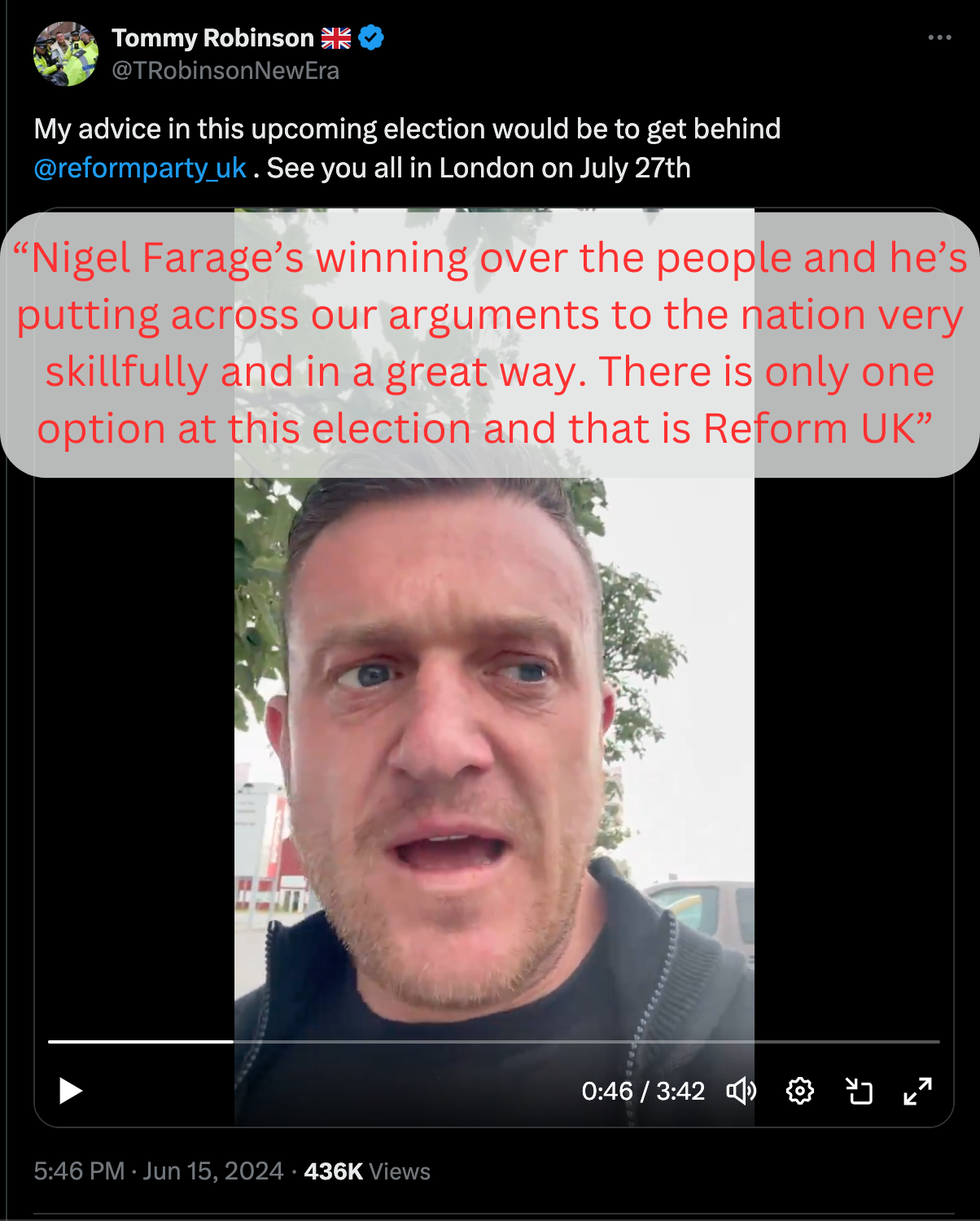
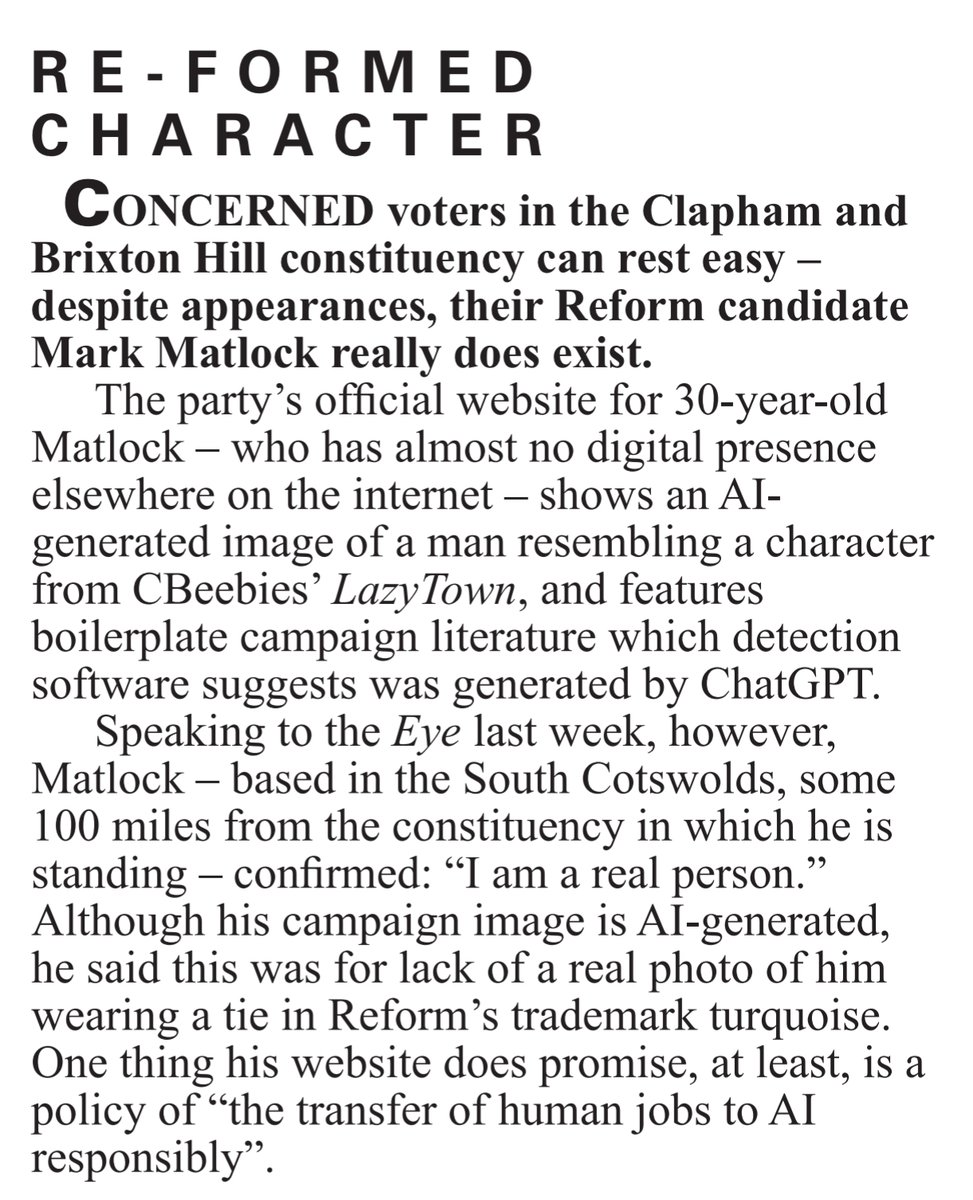
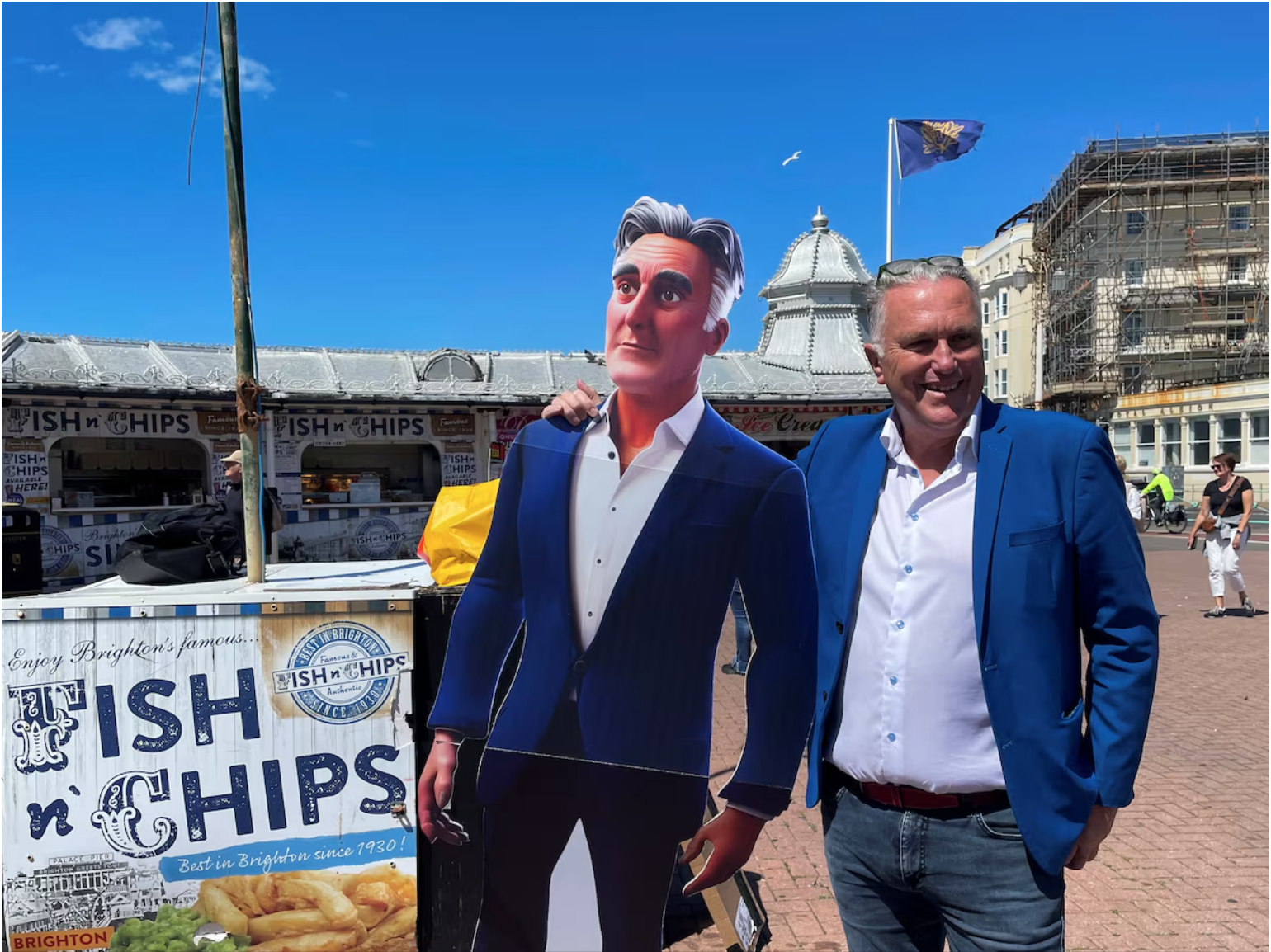
In the post-election period, there was a suggestion that many of Reform’s ‘invisible candidates‘ were not humans at all but disincarnate avatars – AI-generated placeholders for the prayers of the disenfranchised. Reform had already had to deny that their candidates were zombies. It later turned out that Reform’s Mark Matlock was Photoshop-enhanced and Chat-GPT described but not a bot. Confabulation be damned. That made him slightly realer than ‘AI Steve’ the LLM independent candidate for Brighton Pavilion which, like many a politician before it, was able to fool users into believing that they were conversing with a real human.

How different were the schemes of other parties though? Onike Gollo was a placeholder for Labour prayers, Isobel Doubleday for Green ones. The Green Party wanted to field a candidate in every seat, an object for ecological orisons, but then it focussed all its campaigning energies on just four (we were regularly entreated to get out to Waveney Valley and campaign for Adrian Ramsay – the candidate in the east).
This was a tactical success for the Greens. It was also an effective one for Reform and the Lib Dems managed a more rewarding version of the same thing. Perhaps this is all a new maturity in how ‘minor’ parties choose to navigate the difficult waters of a ‘first past the post’ system. Of course, some proportional form of representation would provide a better embodiment of national sentiment – but while its implementation remains solely in the gift of politicians elected without it, it remains a dream. If wishes were horses then peasants would ride.
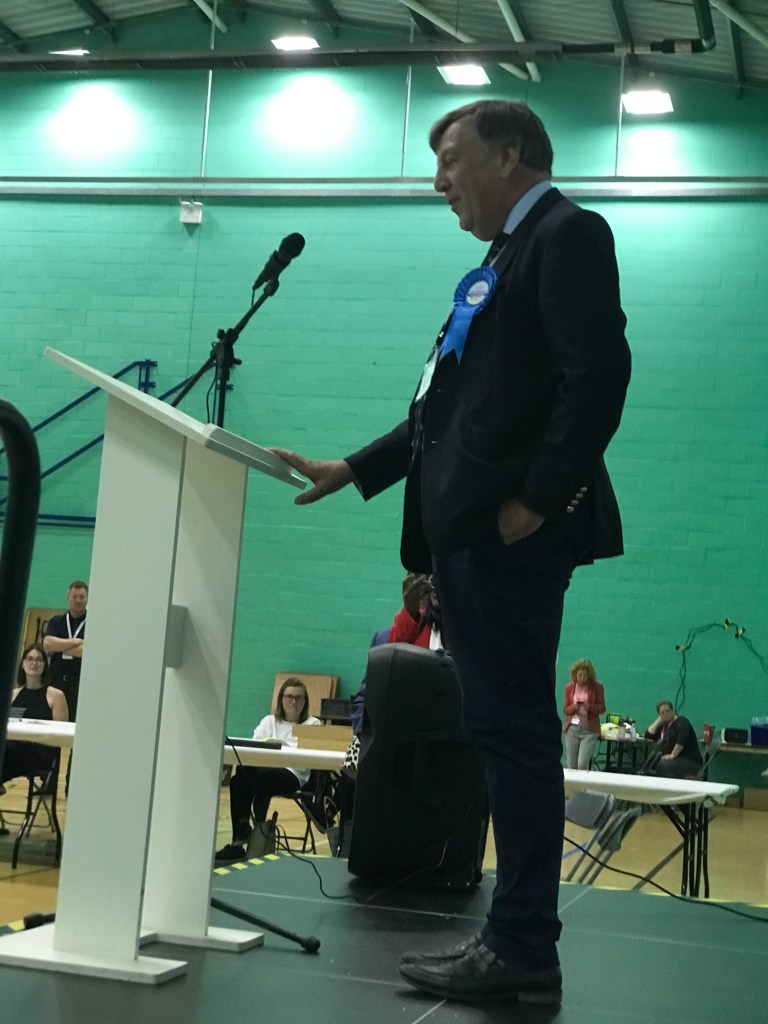
Around 5 in the morning, we were bleary-eyed, the count was done and every candidate had their number of votes cast. No matter if you are a paper candidate, just a placeholder, just the name beside a party logo – this moment will inevitably feel like a popularity contest and prick at the ego. There’s winning, there’s coming a close second, there’s not being last – and if you can’t manage any of those there’s not losing your deposit and doing better than the last person in your position did.
This is a good time to remember the words of Theodore Roosevelt ‘The credit belongs to the [person] who is actually in the arena’ – 2300 people could not have voted Green if there wasn’t a Green Party candidate to vote for. The Green Party was 449 votes up on 2019 (which had a higher turnout) and got 4.6% of the votes cast, up from 3.7% in 2019.
The Green Party first fielded a General Election candidate in the Maldon area in 1992, in terms of both total votes and % vote share 2024 was the Party’s most successful election in the 32 years since. At 4.6% we were tantalisingly close to the 5% that secures a refund of the election deposit Local candidates often self or crowd-fund their election deposits, here it was raised amongst local members, but the ‘short money’ allocated to the opposition parties for every 200 votes they gained across the country goes to Head office – which is a centralisation effect that keeps politics as usual.
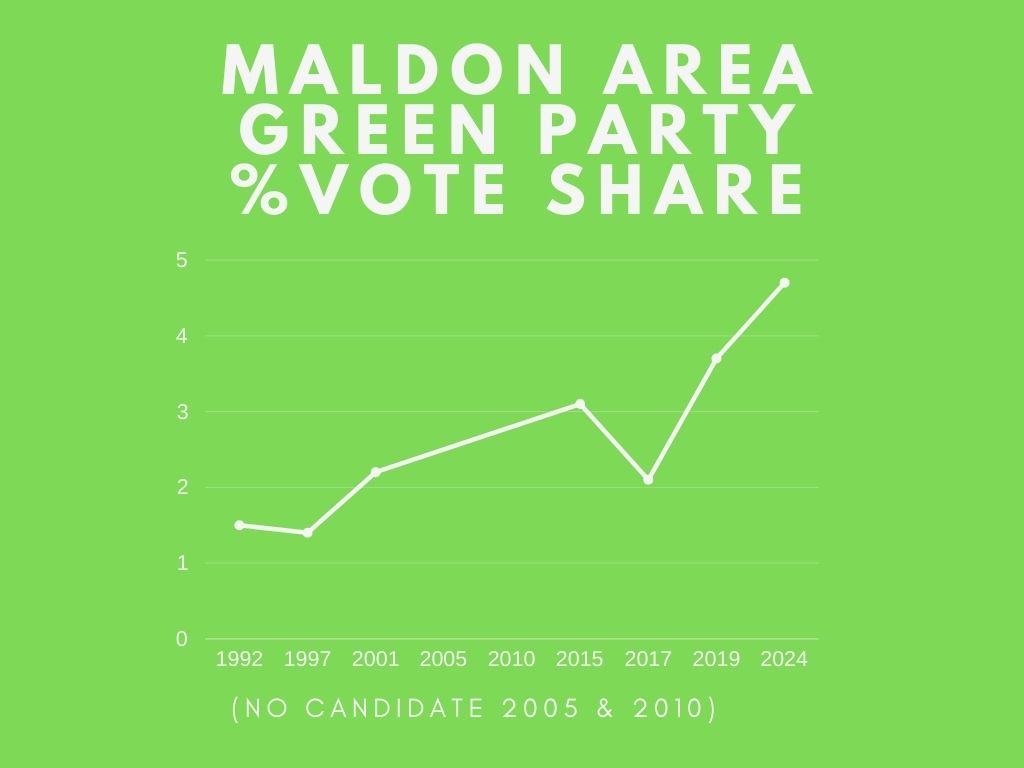
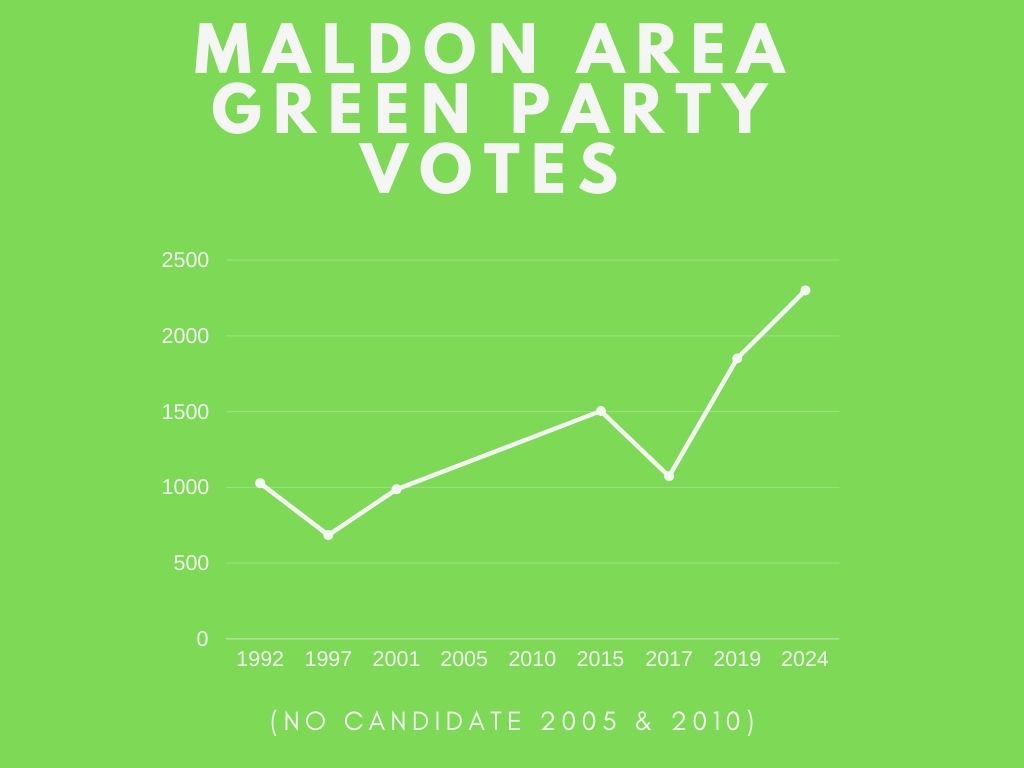
4.6% of the votes cast is higher than the Green’s national vote share in every national election before 2024 – this year the national vote share was less than 2 points higher at 6.4% (supplying 0.6% of the seats). Despite the national Green Party’s success in 2024 it is sobering to compare the 6.4% vote share and 1,841,888 votes with the 14.5% vote share and 2,299,287 votes it received in the 1989 European Parliament election – 35 years ago.
I remain divided on the efficacy of electoral politics in achieving a liveable future – especially when it’s all about trying to win the war of manoeuvre before the war of position. People have to want the offer before they will vote for it. I believe in voting Green – it helps shift the Overton window/fight that war of position – but it’s only one lever in doing so. I think that we need eco-socialist governance to produce a fair and liveable future for people and planet but, questions aside regarding the degree to which the Green Party is an eco-socialist party, it’s not clear to me at this moment that political campaigning to win elections is a resource-efficient method of moving towards eco-socialist governance – whether that be centred on a Green New Deal, cybernetic socialism, degrowth or something else. What’s left after that? The folk politics disparaged by Srnicek and Williams, the campfire storytelling of Dark Mountain, the amorphous Climate X of Mann and Wainwright, Zapatismo, Holmgrenian ‘collapse on demand’, the Chenowethian hopes of the XR family, One No and Many Yeses? The answer is not clear.
Labour is in power now, talking about devolution again, and speaking with the regional mayors. I’ll be watching where that goes and what it brings – powers and resources? Real subsidiarity? Last year, Essex settled on a ‘Level 2’ devolution deal rather than the ‘Level 3’ model that comes with a mayor and greater powers like control of local rail services. It remains to be seen what national regime change means at the county level and below, and whether Essex will be bolder in seeking more autonomy. Perhaps there will be more opportunities to work from the bottom-up. I’m not wildly excited by Labour’s current plans on addressing the climate and ecological emergencies but I’m quietly hopeful that they’ll offer more fertile ground for sowing change. Will decentralisation allow some of that to reflect local conditions and be led here?
Essex had two Reform MPs by the end of the week, including the grand goblin himself. Without real hope and real change, the fears and disappointments that put them in power will fester and reproduce. There’s a narrow path ahead that takes us to a better future and it has monsters waiting in the darkness on either side if we go off course.

 Dengie Bioregion
[…] his seat but Reform came from nowhere to second place; his share of the vote was nearly halved [election report] The ‘Vote Reform’ sticker bombing campaign on the Dengie was extensive and despite my own and […]
LikeLike