I was pleased to see the ‘East Atlantic Flyway‘ among the seven sites recently backed by the UK government for Unesco world heritage status and the recognition of the ecological importance of the east coast wetlands that stretch from the Humber to the Thames.
This oriental margin is the terraqueous zone I wrote about in Managed Retreat #1, a fudge of ‘warpings, flats, carrs, fenlands, broads, salt marshes, intertidals, littoral zones and the drowned lands of the London-Brabant Massif’. In the tamed realm of these islands, it’s one of those places where the self-willed still pierces the fabric of the human superstructure, where civilization is thinner.
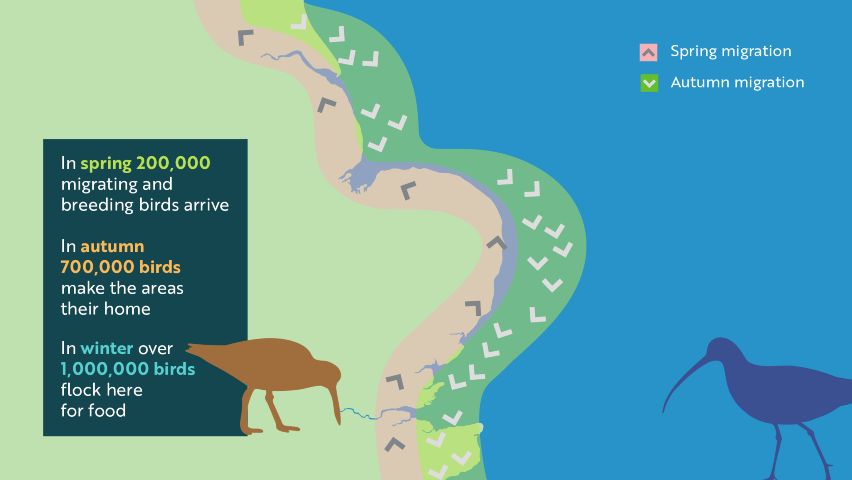
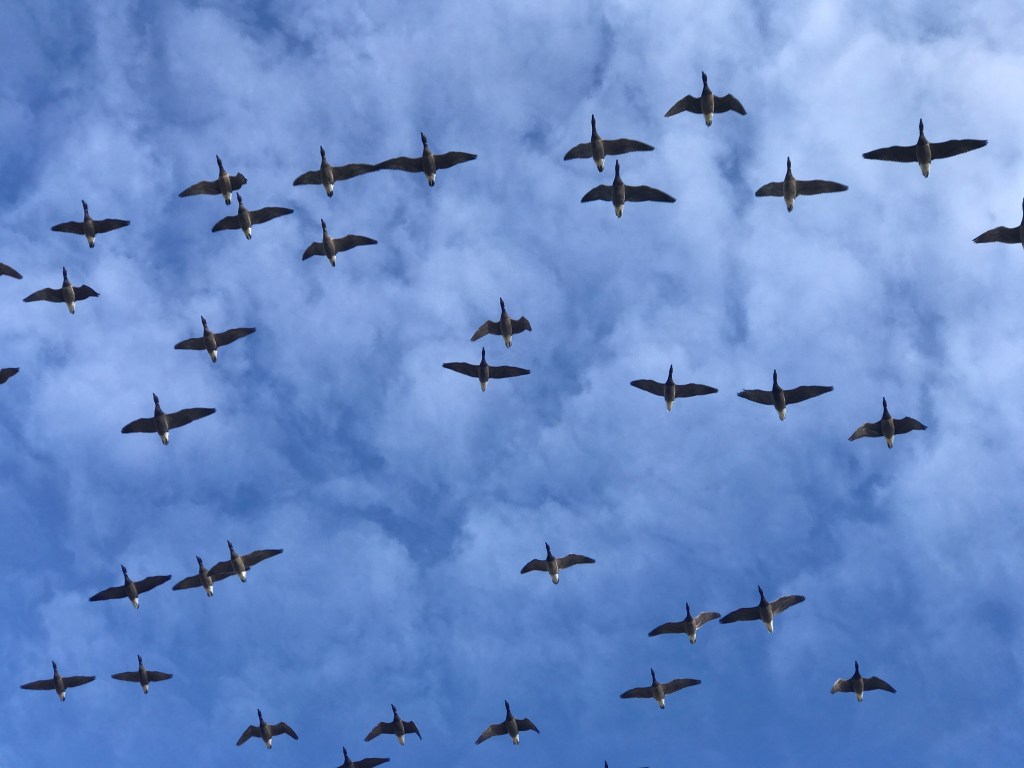
This migratory bird route strikes unconcerned across the county boundaries of Yorkshire, Lincolnshire, Norfolk, Suffolk, Essex and Kent. It disdains national borders too, unbound by passport checks, visa requirements and biometric data harvesting – the seasonal avian drift passes over the queues of Dover’s ferry port without impediment. Western Europe itself is often just a staging post on a route between the Arctic Circle and southern Africa.
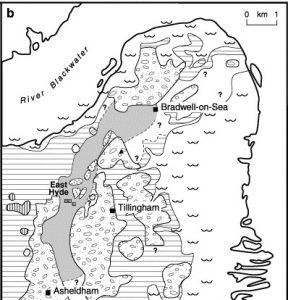
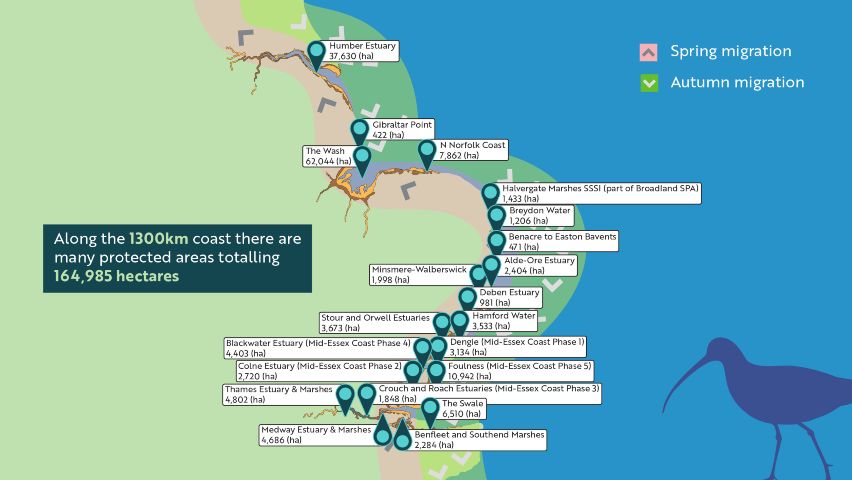
Today’s Guardian speaks to flyway promoters the RSPB – with a focus on my local stretch in Essex: Old Hall Marshes to the north of here, Wallasea Island just to the south. The piece doesn’t mention the Dengie lying in between, but it’s there in the RSPB’s map of ‘safe havens’ represented by the protected sites of the National Nature Reserve.
If I was wearing my cynic’s hat I would be dubious about the value or efficacy of another protected status, another legal surety. Current safeguards haven’t put off proposals for a new nuclear power station right on the Blackwater Estuary, stopped fields where birds might rest being buried beneath Barret homes, nor have they decompressed – or even ceased – the coastal squeeze of saltmarsh imprisoned by seawalls. Liverpool was stripped of its World Heritage status just last year due to overdevelopment and the nation just shrugged.
If I was wearing my (w)holist hat I might suggest that providing protections only to certain areas was a machinist mode, ignoring the interconnectedness of everything and making the erroneous assumption that you could strip nature down to a few important parts without consequence. Perhaps better that we reversed this logic and that everywhere was protected apart from a few ‘unnatural’ zones, a shrinking industrial estate, lasting only until we transitioned to a fully biotechnic society.
I think it’s churlish to wave off these moves though, that paradigm shift requires viable conditions and, that these might be essential victories in the war of position for a biotechnic society. The RSPB certainly sees it as a catalyst for greater public engagement with our ecological prospects, in the Guardian piece it reports that:
“The RSPB says it hopes the bid will start a conversation about the future of the east England coastline, which is vulnerable to rising sea levels. Many of the wetland ecosystems in the network will be affected by rising waters. The Unesco bid offers a chance, it says, to discuss climate-adaptation projects that are potential win-wins for nature and people, protecting property and farmland from flooding while also creating habitat for birds, nursery grounds for fish, and sequestering carbon.”
I like the integrated thinking here, the echo of the permaculture principle that ‘every element should support multiple functions, and that every important function should be supported by multiple elements’. As I’ve indicated in previous posts, however, I’m not convinced that we can have it all, that statically ‘protecting property and farmland’ in its current conditions from the dynamic ecological realities of its location is necessarily either viable or preferable.

It was recently the anniversary of the Great North Sea Flood of 1953 which, during its swathe of destruction, deluged much of the Dengie with brackish water. The ’53 flood has received increased attention in recent years as ‘one in a century’ natural disasters of the past are recast as prefigurations of a climate-changed world. One-in-a-century probabilities of ‘1% chance in any given year’ becoming one-in-a-decade: 10%, then one-in-a-year: ~100%. The Anthropocene is also the ‘time of the Force Majeure.’
The RSPB’s own page on the ‘avian superhighway’ goes further into the benefits of working with nature:
“if wetlands had a catchphrase, it would be ‘we flood so you don’t have to’. Wetlands act as a sponge, by soaking up water from rainfall and controlling its flow into streams and rivers, they protect the surrounding area from devastating floods.”
Are our remaining depleted wetlands enough though? It’s telling that the following paragraph uses as its example of wetlands ‘superpowers’ not some relict wetland part of the eastern seaboard but the recently rewilded Wallasea Island where sea walls were breached and the tide allowed its old access to the interior.
A few months ago I sat in on a Zoom call between local residents and a representative of the Environment Agency. During the call, the subject of Shoreline Management Plans came up and their designations for the future of the coast. Around here, in all the timeframes presented, the designation is, almost everywhere and always, ‘hold the line’: retain the current position. I learned that day though that, despite the confident tone of that designation, the Environment Agency does not consider holding that line to be its responsibility and that no budget is associated with doing so.
Chosen by us or not, a retreat is coming. Better that we work with nature now. It’s time for the great rewetting.

 Dengie Bioregion