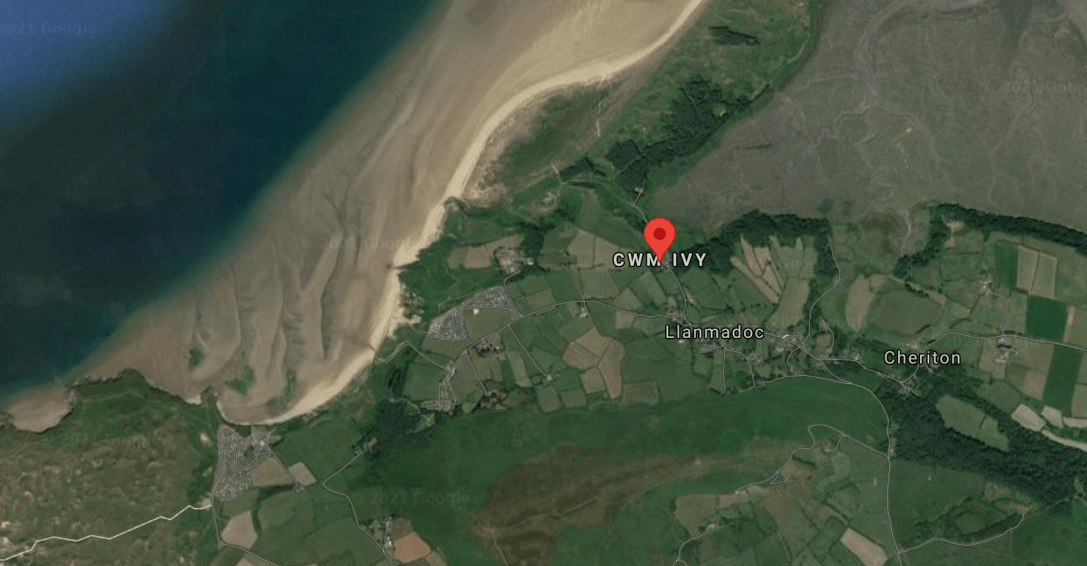
Today’s Guardian has an article on how the National Trust’s decision not to fix sea defences at Cwm Ivy on the North Gower in south Wales has created a salt marsh rich in flora and fauna.
It was an un-managed retreat initially, a hole in the sea defences was created by Atlantic storms in 2013, but the Trust has not tried to hold-the-line, but instead to let natural processes take their course. The article mentions the Trust’s ‘Shifting Shores‘ policy – an admirable approach which seeks to adapt and work with nature rather than against it.
“The National Trust climate change adviser Keith Jones said: “We have allowed nature to map its own future and are now reaping benefits for wildlife. The salt marsh also proves an invaluable tool in tackling climate change by sequestering carbon.
“Obviously this type of project cannot be replicated across the UK, and we will have some difficult decisions in the decades to come, but Cwm Ivy is an excellent example of how we need to start thinking about the effects of climate change and working with it.”
Increasingly the coastal story has this kind of abstract refrain: ‘difficult decisions’, ‘adaptation’, ‘realignment’ – and too often the decision making is pushed away into the future, the difficulty handed to another generation.
It’s telling that the Trust’s local general manager reflects that in a more populous area they would have had to rebuild defences. Less populous areas across the UK will be the first where decisions on whether to keep expensively maintaining sea defences against rising tides or to retreat will tend to fall towards retreat.
The Dengie is one of those less populous areas. In the list of the 314 districts of England ordered by population, according to estimated figures for 2019 from the Office for National Statistics, Maldon District is ranked 302. Given that about 25% of that population is Maldon Town, it’s clear why writer David Southwell dubbed the peninsula the ‘empty quarter‘.
Much of the land was seized from the sea and enclosed. That land is now in the hands of a few owners. Strutt & Parker farm estates were recently sold to a European investment firm; the 4000 acres of Marshes and East Hall farms plus other holdings now delivering dividends to overseas, absentee owners. All those acres employ only 6 people full-time. The enclosure of all that marsh also fences us out – follow most roads east and you reach a Private, no access sign long before you reach the sea.
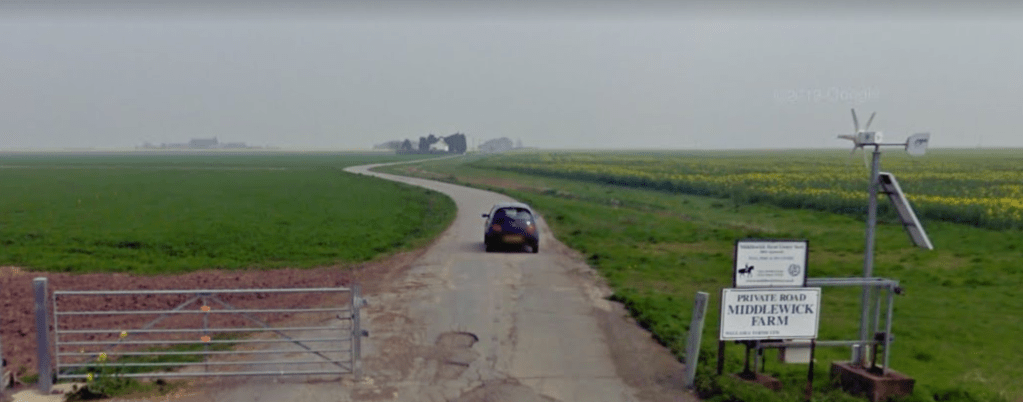

So there’s a block of land protected by sea wall, that’s below sea-level, barely populated, barely employing anyone, much of it growing pet food for the horsiculture crowd, sending profits abroad, mining the soil with monoculture and telling people to stay away. One wonders how long, despite the claims in shoreline management plans, that it might remain a priority for taxpayer funds to protect.
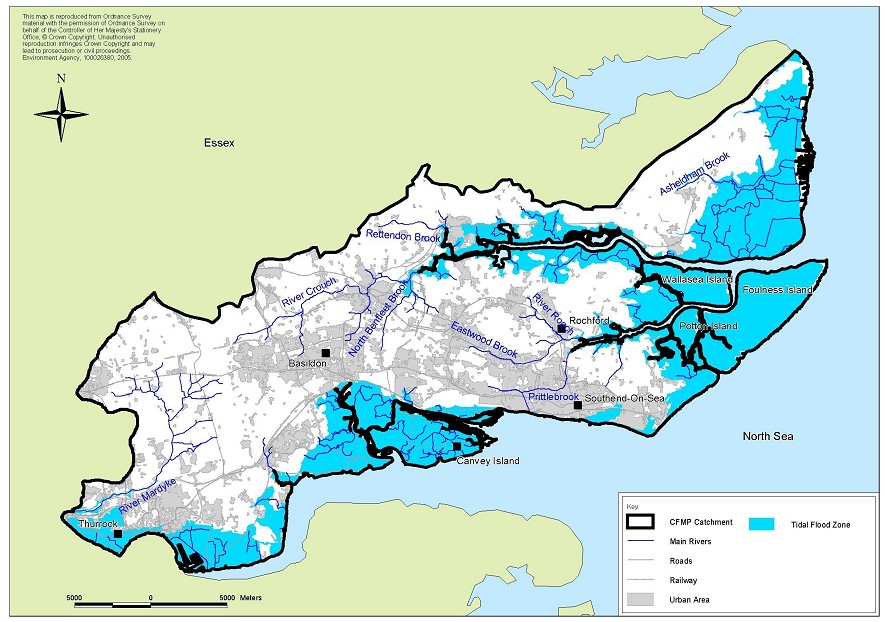
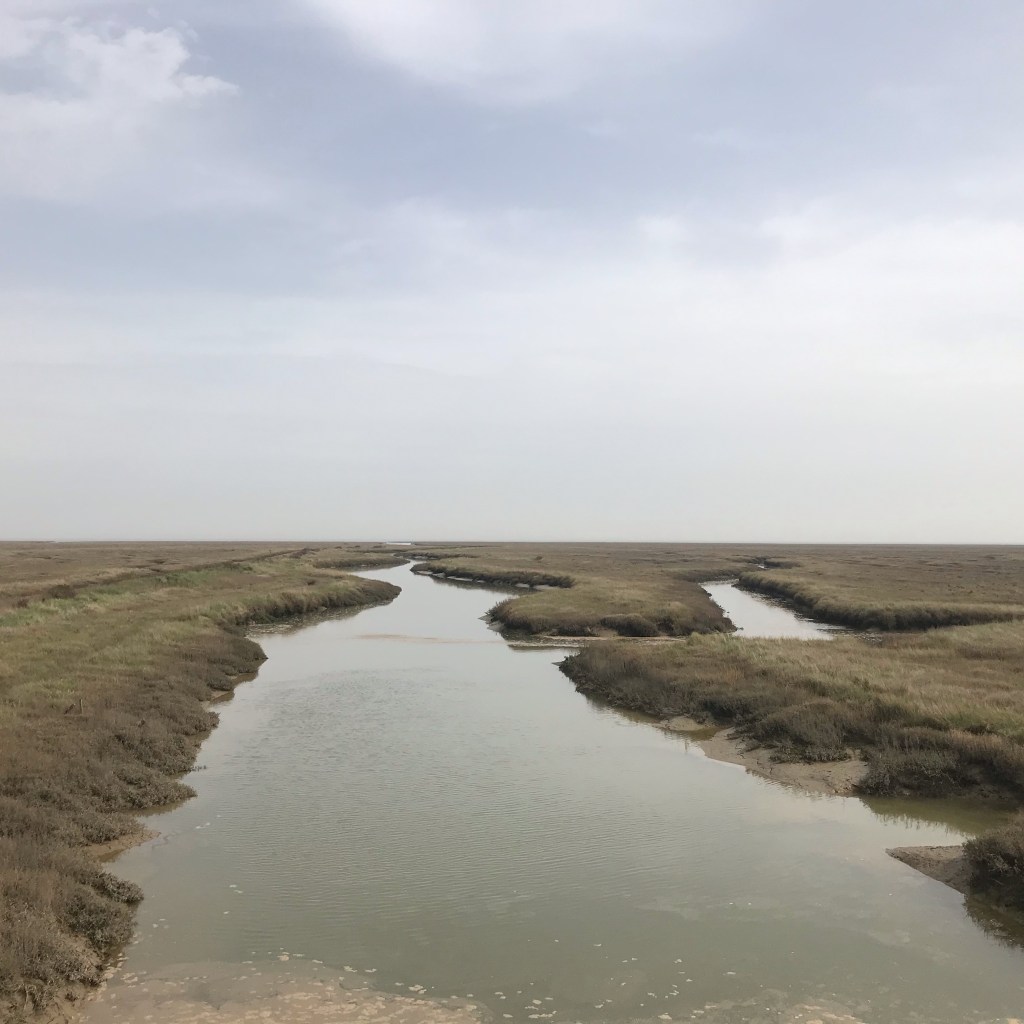
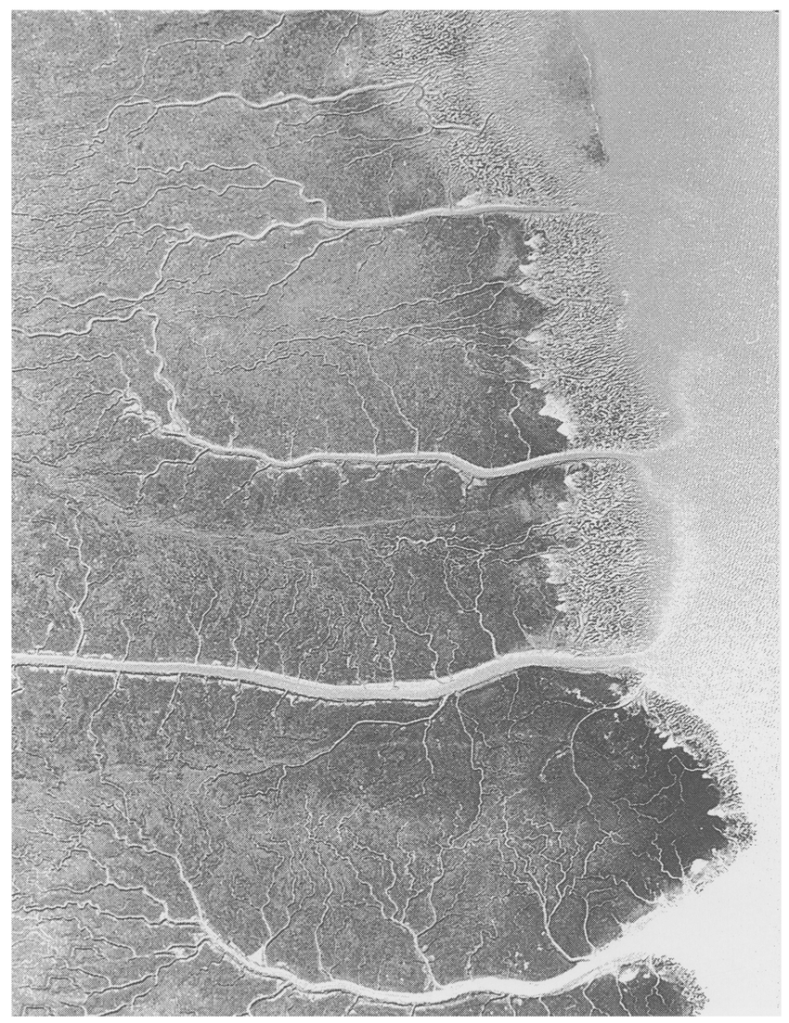
Meanwhile on the other side of the sea wall, the salt marsh is shrinking, between 1973 and 1998 1000ha of Essex salt marsh were lost, eroded away – 25% of the total salt marsh recorded as present in 1973. The hard defences creating ‘coastal squeeze‘: ‘the loss of natural habitats or deterioration of their quality arising from anthropogenic structures or actions, preventing the landward transgression of those habitats that would otherwise naturally occur in response to sea level rise in conjunction with other coastal processes. Coastal squeeze affects habitat on the seaward side of existing structures.’
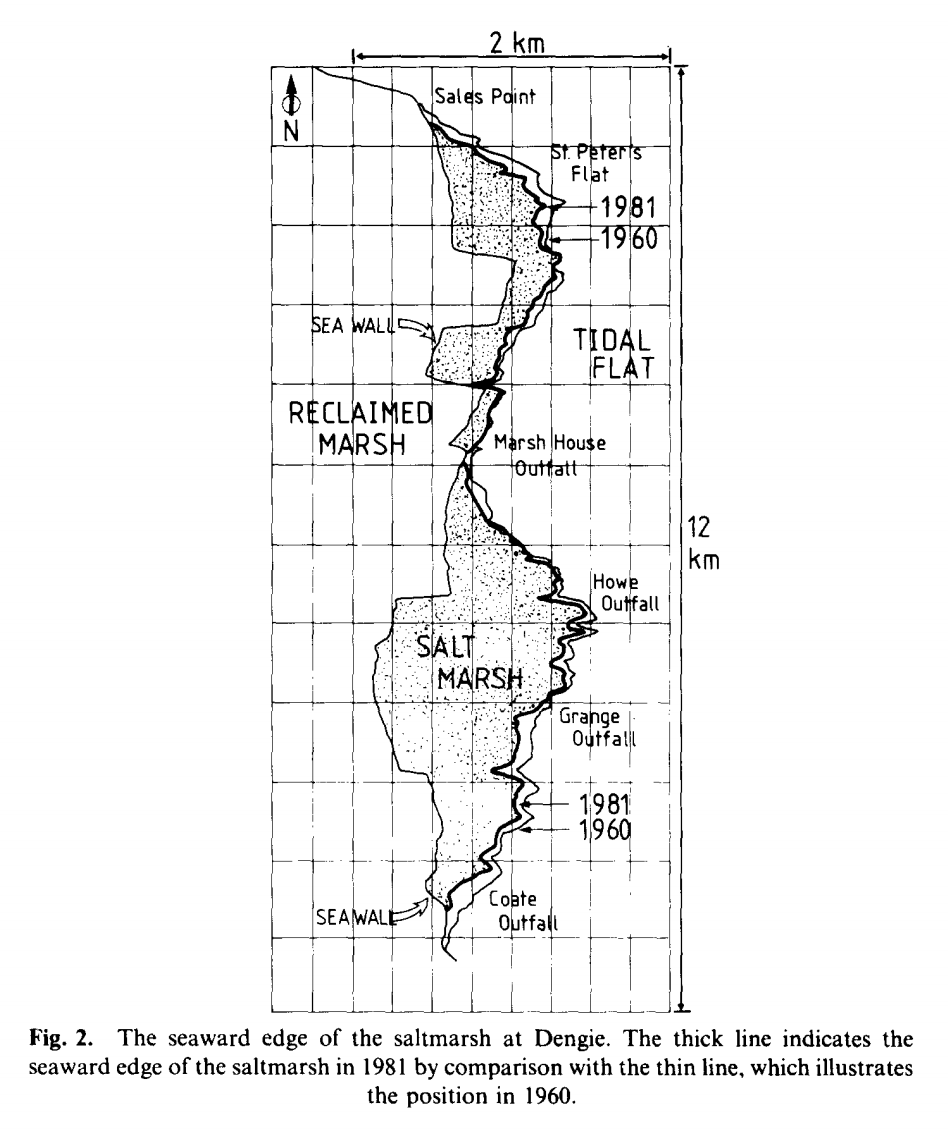
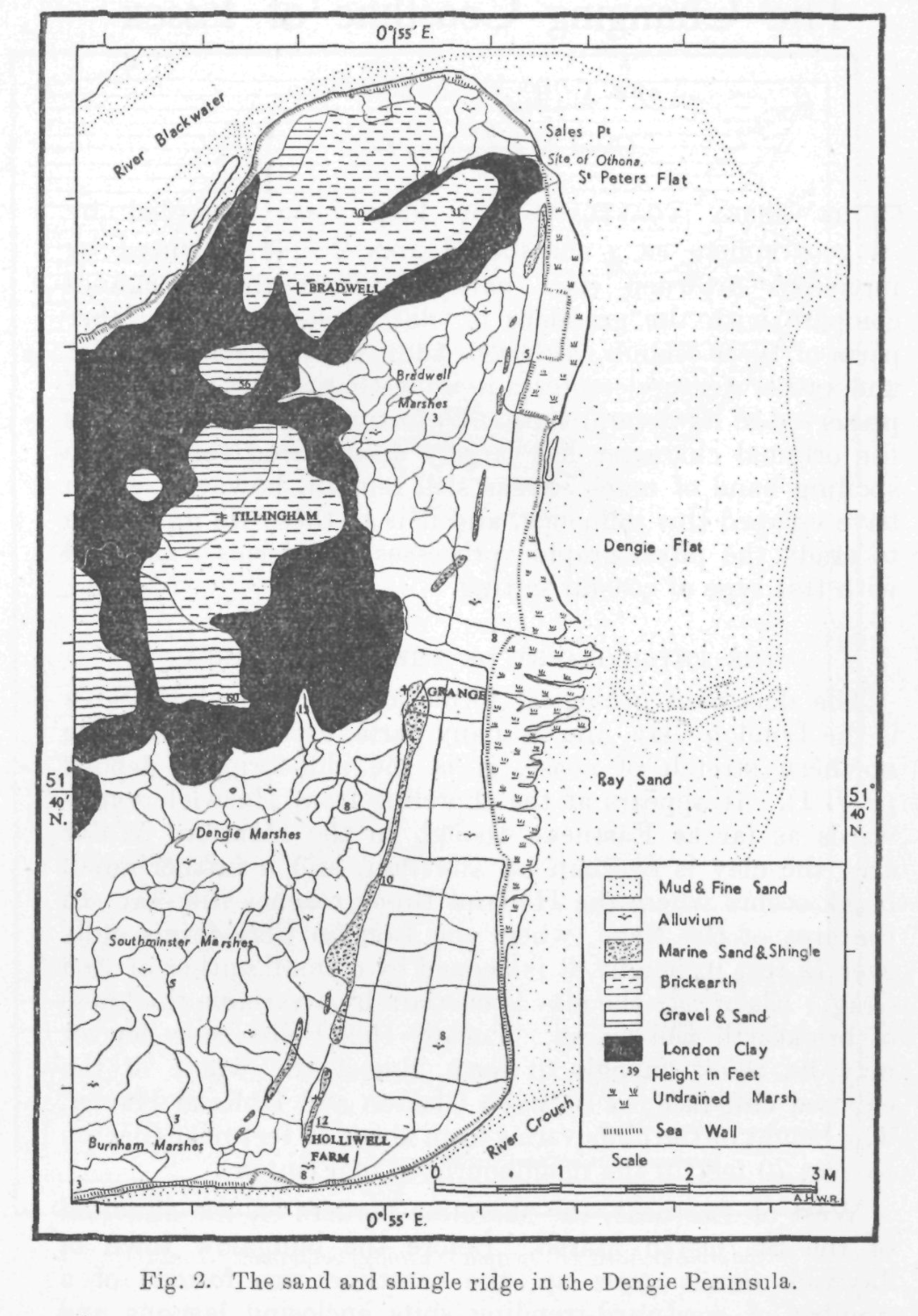
Those tidal salt marshes are part of a Grade 1 SSSI of international importance, they are carbon sinks, sequestering and storing significant amounts of coastal blue carbon from the atmosphere and ocean. Such ecosystems are now recognised for their role in mitigating climate change. So our sea defences have also catalysed a positive feedback loop – increasing carbon in the atmosphere leads to sea-level rise – our sea defences against sea-level rise cause loss of a carbon sink which accelerates sea-level rise – and our first response is build more sea defences, harder sea defences, higher sea defences.
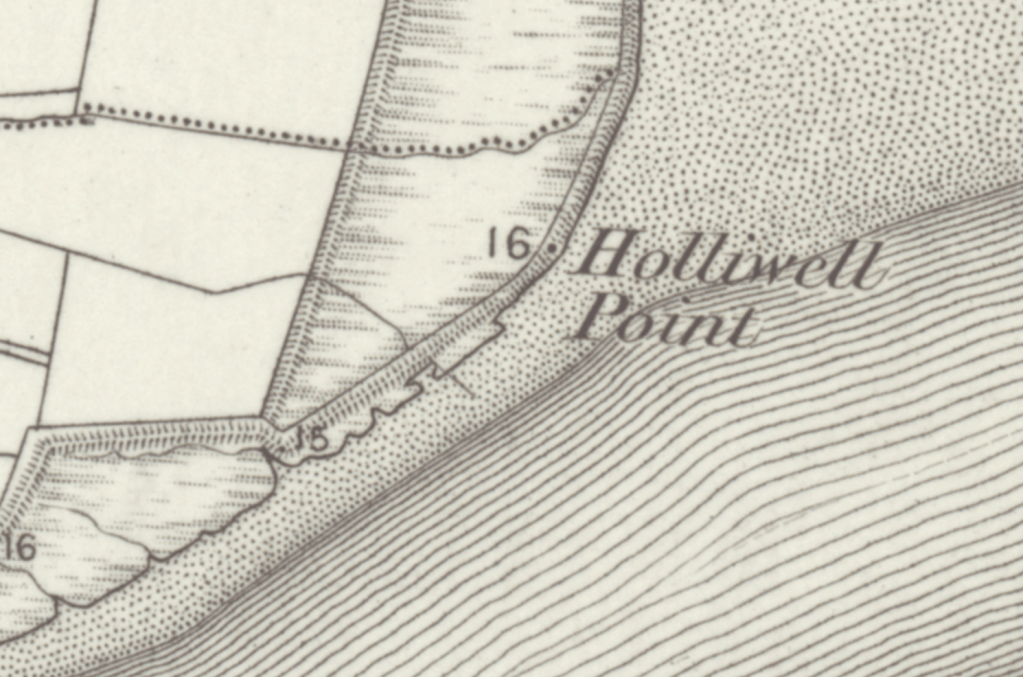
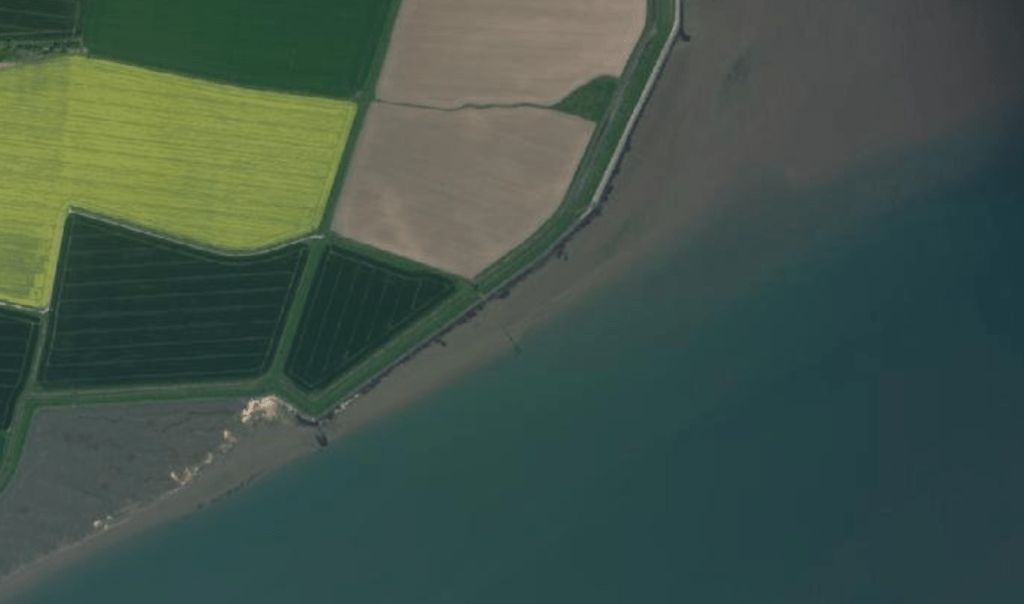
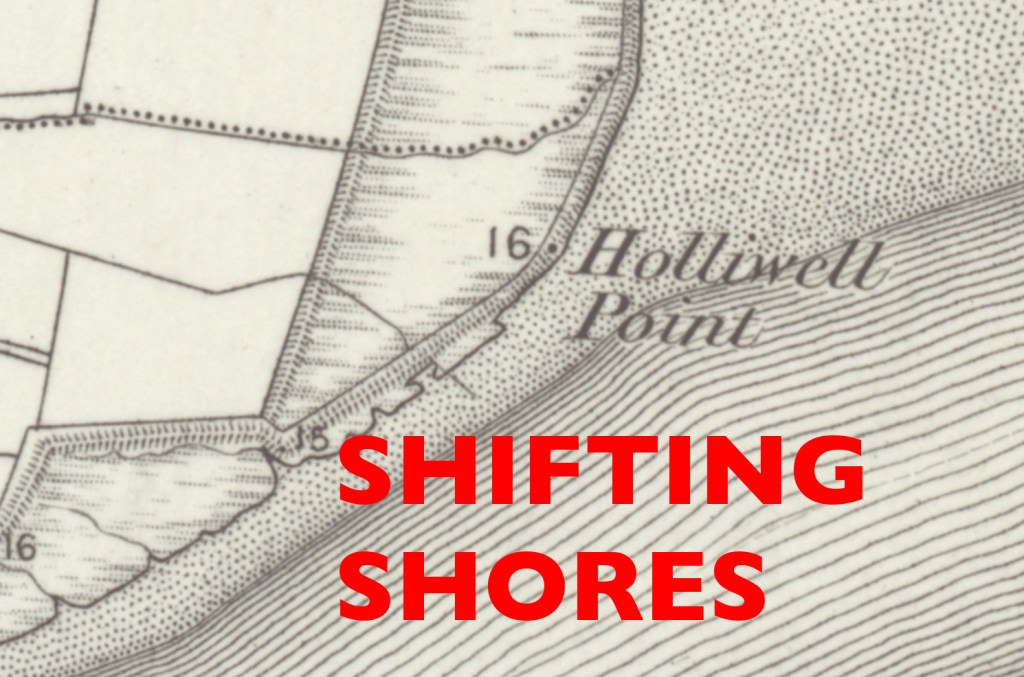
That expanse of salt marsh also keeps the full force of the sea from acting on the sea defences by dissipating wave and tidal energy. As the salt marsh shrinks, the sea gets closer, the energy that erodes sea walls increases, the maintenance costs increase and become more regular. Walkers on the sea wall going east along the Crouch’s north bank and rounding the corner at Holliwell Point can’t fail to notice that here massive slabs of concrete stand guard against open water – the salt marshes that were still visible on the 1895 OS map gone, – walled-in, drained and turned to arable fields.
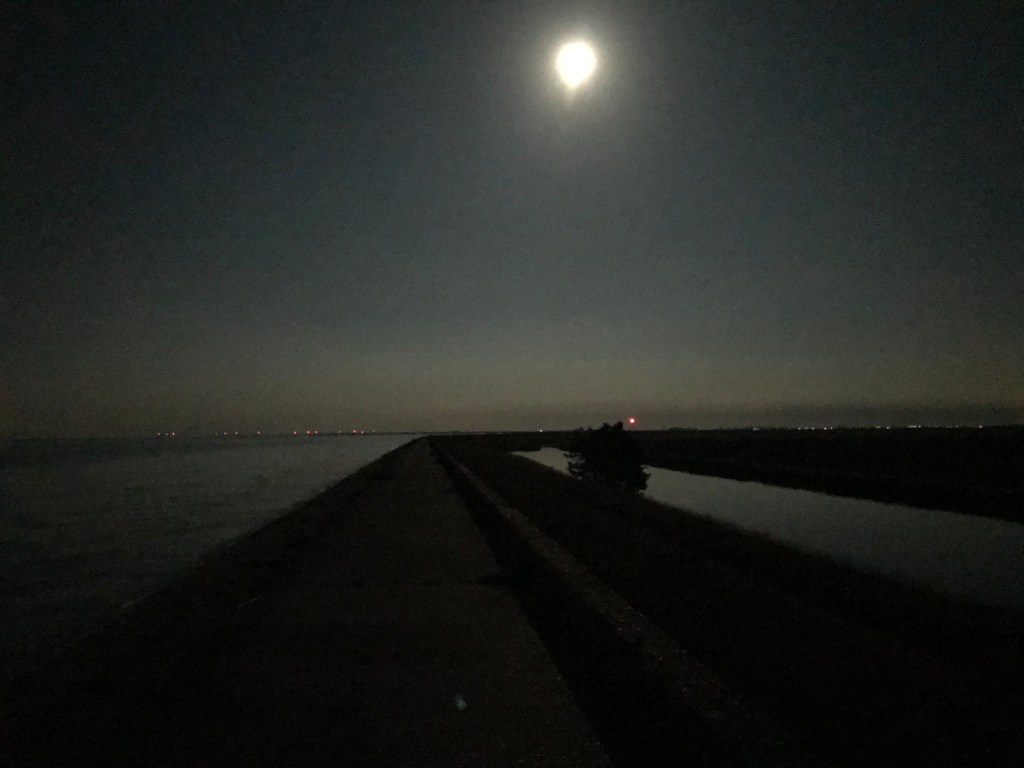
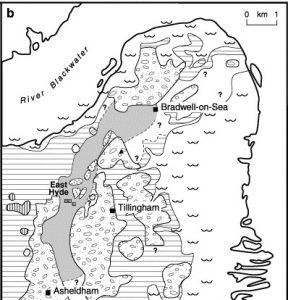
Man has been shifting the shores eastwards for centuries. Look at the Dengie close enough and you can trace the ghosts of previous strandlines. Map the locations of the Red Hills, the Monts Sal, where salt was produced and you find one. Walk the footpath north past Holliwell Farm, Coney Hall towards Deal Hall and project onwards along forbidden tracks to the location of lost Scrubwater Hall, on to Middle Wick, Court Farm, and Bridgewick Farm – and you are on a chenier, a shelly beach ridge that now sits in fields – a marsh bar that might take you all the way to St Peter-on-the-Wall. Find counter walls, everywhere from Burnham Wick to the field protrusions between Howe Outfall and Sandbeach Outfall or north of Glebe Outfall – and you’ve discovered previous coasts. By the Victorian period, plans were afoot to wall-in a vast expanse of the Dengie Flats and canalize the Blackwater and Crouch. Unrealised efforts that found echoes in the airports proposed on Maplin Sands and out, in a Johnson gran projet/folie, into the Estuary and the Shivering Sands off Whitstable.
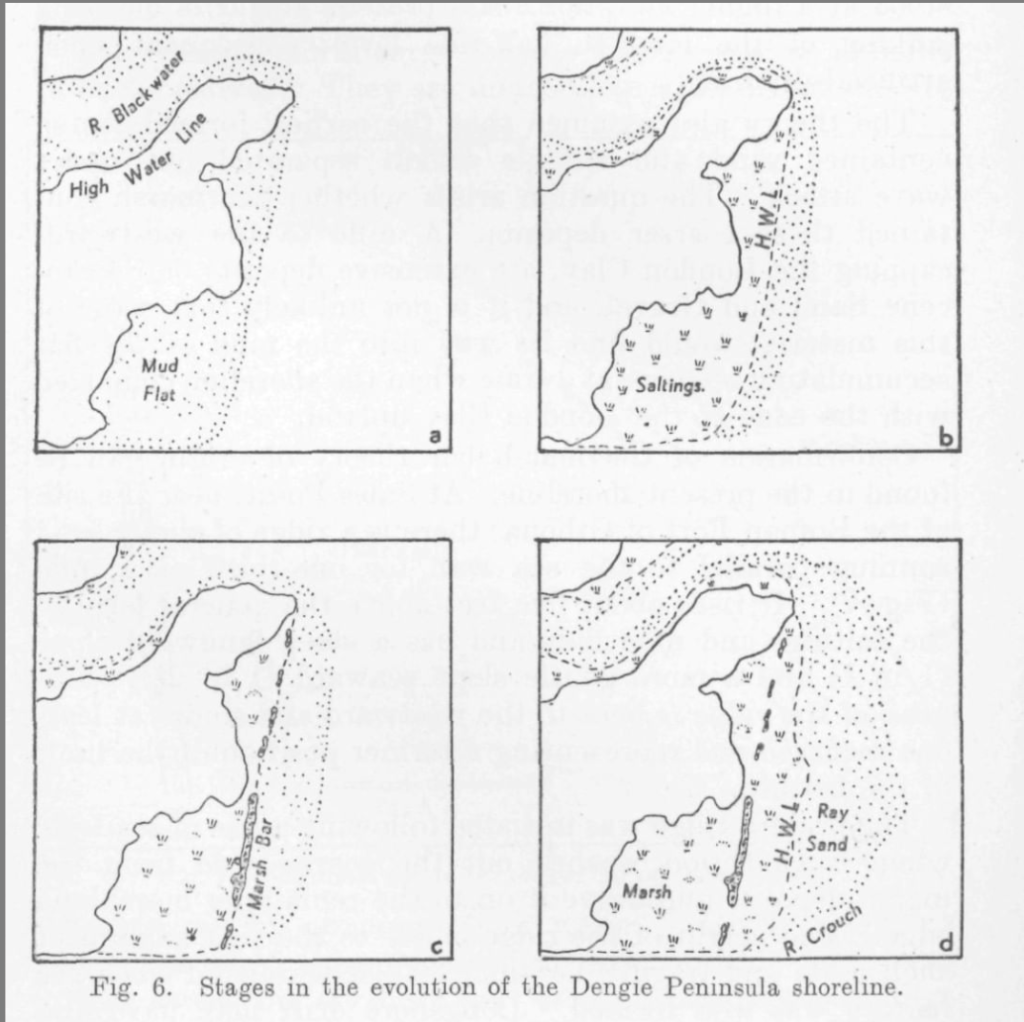
What if we decided to work with nature here? What if we let the shore shift west instead? What opportunities might we find to sequester carbon, increase biodiversity, increase natural flood transactions, avoid expensive to maintain hard barriers, generate new sustainable livelihoods, regenerate living landscapes and living seas, expand access?

 Dengie Bioregion
[…] If you’re here you can find out more about my Dengie thinking in other posts on the site. Shifting Shores might be a good place to […]
LikeLike
[…] In his write-up of the day Kevin Rushby remarked on some of the things I said, touching on my usual rants (somewhere in the day people started calling me Jamie, which I don’t normally go by but in […]
LikeLike